You signed the lease, dragged in the last box, and now you’re staring at four beige walls that feel like a dentist’s waiting room. Paint isn’t allowed. Nails make you nervous. And your deposit isn’t something you want to gamble with.
That’s where removable wallpaper ideas come in. You can change how a room feels in a single afternoon, then peel it all off when you move out. In this guide, we’ll walk through nine ideas that actually work, the wall problems that trip most people up, and how to put it up and take it down without a mess. By the end, you’ll know what to buy, where to stick it, and what to skip.
Why Removable Wallpaper Ideas Beat Paint in a Rental
Paint seems like the obvious fix, right up until your lease says you have to repaint everything white before you leave. Now you’ve paid twice and lost two weekends. Removable wallpaper ideas skip that trap, because the whole product is built to come off.
Renters are a big reason this category keeps growing. One market report says rental housing drives roughly 38% of residential peel and stick wallpaper demand. Another credits the DIY home improvement trend for pushing it into more homes. Research firms disagree a lot on exact market size, so treat the numbers loosely. The direction is clear, though: more people want a look they can undo.
Here’s what you get with peel and stick wallpaper:
- No paste or water. Many rolls just peel and stick, with no mess.
- A second chance. If a strip goes on crooked, you can usually lift it and try again.
- A cleaner exit at move-out, as long as your wall and paint are in decent shape.
- Low commitment. If you’re sick of the pattern in six months, it’s gone in an afternoon.
The catch is that it only works as well as the surface under it. So let’s start there.
Check Your Walls Before You Buy Anything
Here’s the mistake that sends most rolls back to the store: buying first, testing the wall later.
Peel and stick wallpaper wants a clean, flat, smooth surface. Home Depot’s product Q&A says the brand doesn’t recommend its wallpaper on orange peel textured walls, because the texture hurts adhesion. Even smooth walls can fail. One buyer there said her wall was clean and smooth, but the paper still wouldn’t stick.
The 60-Second Wall Test
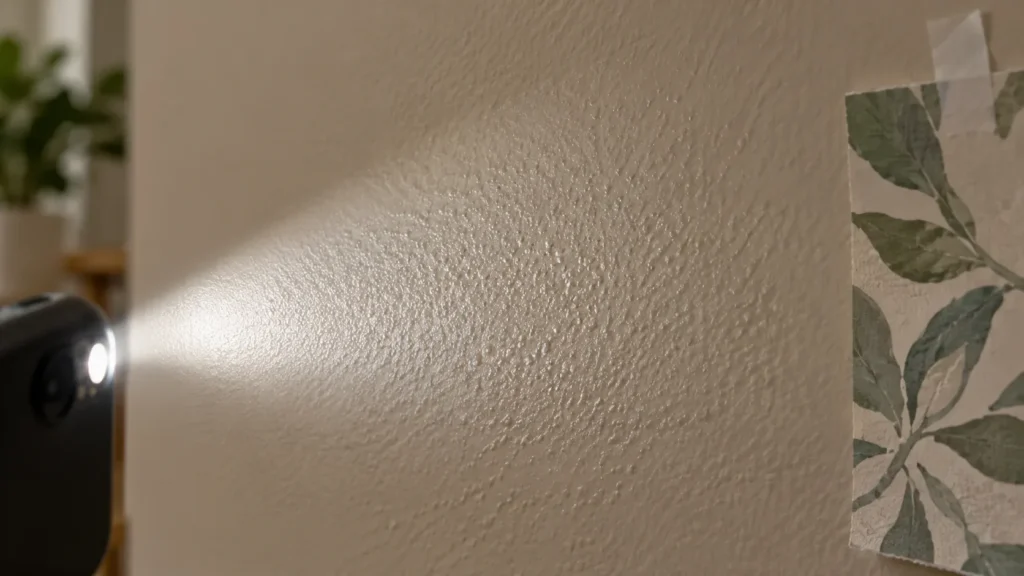
Turn off the overhead light and hold your phone flashlight flat against the wall, so the beam skims along the surface. Bumps, ridges, and dimples will jump out right away. Then run your palm over it. If it feels like fine sandpaper, you’ve got texture.
Next, stick a small piece of the paper in a hidden spot, like behind a door. Leave it a few days. If the corners curl, you’ve saved yourself a full roll of regret.
If Your Walls Are Textured
You still have options. A Texas wallpaper shop quoted by Redfin says that since walls must be completely smooth for peel and stick to hold, furniture or a bookcase may be the better choice. Doors, cabinet fronts, and framed panels are all good alternatives.
Prep That Pays Off
One reviewer on a Walmart listing pulled nails, filled holes, wiped the walls with a damp cloth, and sanded rough areas before applying. It’s boring work. It’s also what makes the paper stay put.
Accent Wall Ideas That Make the Biggest Difference
If you only try one thing, make it an accent wall.
One wall, one pattern, big payoff. HGTV’s roundup of renter-friendly designs covers floral, toile, graphic, and mural styles, and plenty more. A navy tomato-vine print gives a dark, moody secret-garden feel, while a gray-and-white twig pattern calms a room without looking plain. Pick based on the mood you want, not what’s trending, and you’ll avoid regrets.
These removable wallpaper ideas work because they commit you to one wall instead of the whole room. Less paper means less cost, less work, and a much easier removal day.
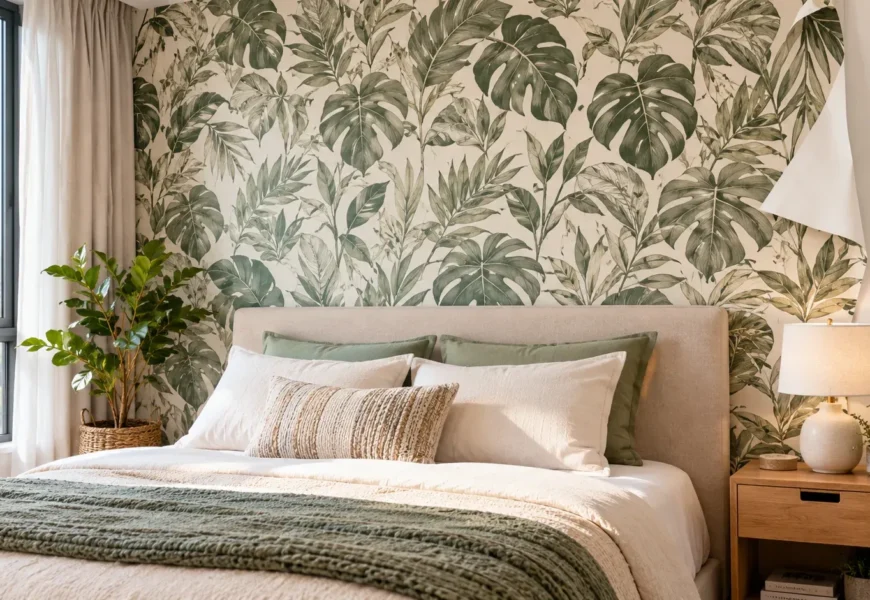
1. Behind the Bed
Skip buying a headboard. A tall pattern behind the bed frames the whole room and does the same job. Run it a little wider than the bed so it looks like a deliberate panel, not a random strip.
Go for something calm and large-scale. You’ll be staring at it from your pillow, and a very busy geometric print gets tiring fast.
2. Behind Your Desk
If you work from home, the wall behind your chair is the one everyone sees on video calls. A quieter texture, like a grasscloth look or faux shiplap for renters unsure how long the shiplap trend will last, reads as polished without distracting from your face.
Removable Wallpaper Ideas for Small Spaces
Small rooms are where wallpaper gets to show off.
Samantha Santana, a removable wallpaper designer quoted by Redfin, agrees that going loud in small spaces works. It makes sense. When there’s less wall, a bold print feels like a decision, not a risk.
3. The Powder Room
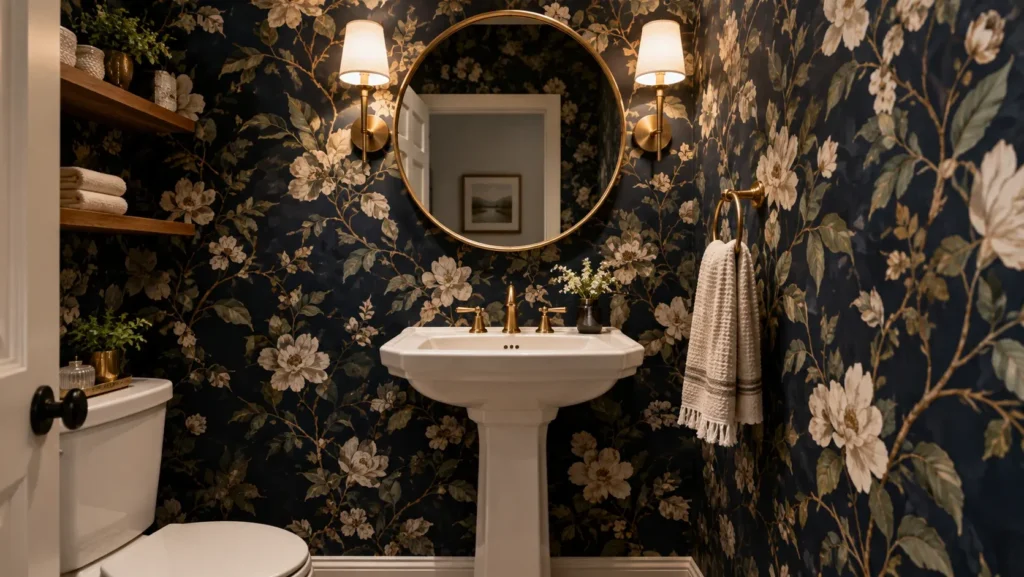
A powder room is the safest place to be brave. Nobody spends more than a couple of minutes in there. Try a dark floral or a graphic print. HGTV suggests a hand-drawn black-and-white eye design that suits a kid’s room, a powder room, or a laundry room.
Keep the paper away from direct splashes and run the fan after showers. Steam and constant moisture are what loosen adhesive over time.
4. The Entryway or Hallway
Entryways are small, plain, and judged first. A pattern here sets the tone the second someone walks in. Something cheerful, like the yellow lemon print from B&Q that one UK blogger says gives Amalfi Coast vibes, makes a dull corridor feel like a holiday.
With only a few feet of wall, check where the pattern repeats. You don’t want a motif sliced in half at the ceiling line.
Bookshelf Backing and Furniture Makeover Ideas
Can’t touch the walls? Stick it to your furniture instead.
Wallpaper doesn’t care what it’s stuck to, as long as the surface is smooth. Listings for peel and stick rolls mention using them on walls, doors, entryways, cabinets, stairs, furniture, frames, and mirrors. Furniture is also where removable wallpaper ideas feel the least risky, since nothing touches your landlord’s paint.
5. Bookshelf Backing
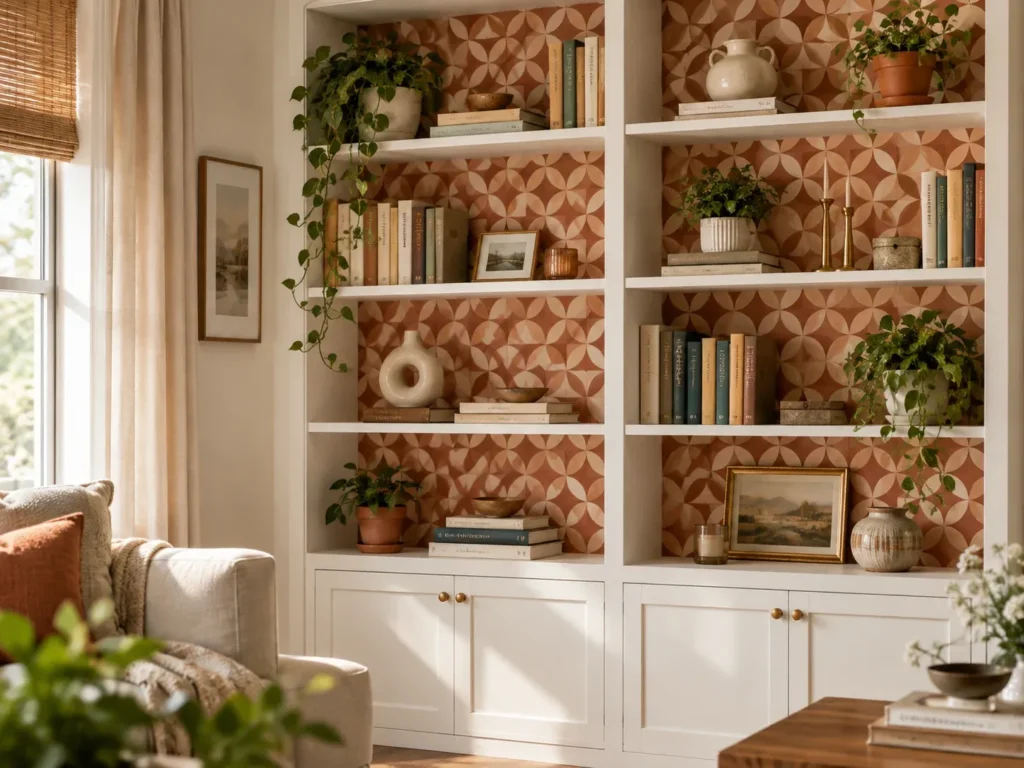
Line the back panel of a bookcase with a patterned sheet, and a boring shelf suddenly looks custom. Books and objects pop against it. You only need a small piece, so it’s cheap, too. Cut it a bit oversized, press it flat, then trim the edges with a sharp blade.
6. Dresser and Nightstand Fronts
A scuffed dresser turns into a statement piece when you cut a panel for each drawer front. Use a straightedge and measure twice. Wipe the wood first, because dust and furniture polish kill adhesion.
Here’s a bonus: if the furniture is yours, you can leave the paper on it when you move out. No peeling required.
Kitchen Backsplash Ideas Without the Tile Dust
Real tile needs grout, tools, and a landlord’s blessing. Peel and stick tile needs a clean wall and a bit of patience.
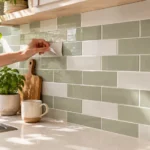
7. Peel and Stick Backsplash
Walmart listings for self-adhesive subway tile describe waterproof PVC vinyl you can wipe clean with a damp cloth, which is exactly what you want behind a sink. Of all the removable wallpaper ideas here, this one probably saves the most money compared with the permanent version.
Keep it a few inches away from burners, and check the maker’s heat guidance first. High heat can warp or loosen vinyl. Degrease the wall, let it dry completely, then press from the center outward so air has somewhere to go.
Overlooked Spots: Ceilings, Fridges, and Framed Art
Domino’s roundup of unusual spots includes the refrigerator, the ceiling, the mantel, and even a wall clock. A few of them deserve a closer look.
8. The Ceiling or an Interior Door
Domino suggests the ceiling or a door if you don’t want to line your walls with an intricate print. Ceilings are rough on your neck, so work in short strips and grab a helper. Don’t try it over a popcorn ceiling, since the texture won’t allow a good bond. A closet or bathroom door is easier, and it’s a fun surprise when someone opens it.
9. The Fridge and Framed Wallpaper Art
Covering the front of a tired fridge with a vibrant pattern can stretch its life by a few more months or years, according to Domino. Clean it well first, since kitchens leave a greasy film that fights adhesive.
Then there’s framed wallpaper. Designer Leslie Biggley, quoted in the same piece, calls it a long-time designer trick for affordable art. Cut a piece, mat it, and hang it with adhesive hooks. Out of every one of these removable wallpaper ideas, framed pieces are the easiest to take with you when you go.
How to Apply Peel and Stick Wallpaper Without Bubbles
Nobody wants a wall that looks like bubble wrap. Most failed installs come from rushing, not from bad paper, and these removable wallpaper ideas all look better when the application is clean.
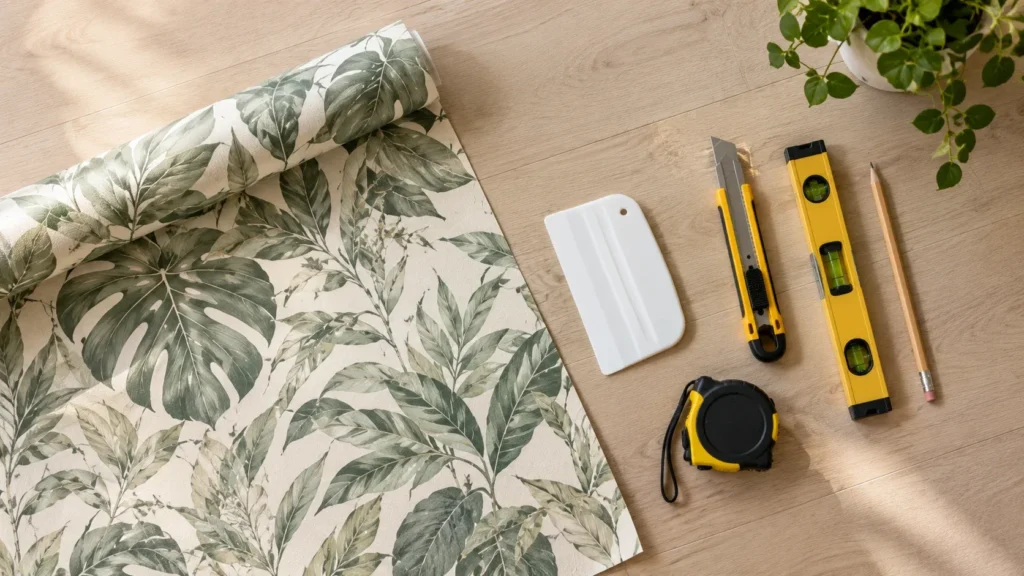
What You’ll Need
- A plastic smoother (an old gift card works).
- A sharp utility knife with fresh blades.
- A level and a pencil.
- A tape measure and a step stool.
- A damp cloth for prep.
Step by Step
- Clean the wall. Wipe it down, fill holes, and let everything dry.
- Mark a straight line. Use a level to draw a vertical guide near your starting corner. Walls aren’t always straight, so don’t trust the corner.
- Peel back a few inches. Line the top up with the ceiling and your guide. Press it in place.
- Smooth down and out. Peel the backing slowly as you go, pushing air toward the edges.
- Match the next strip. Butt the seams together, don’t overlap, and line up the pattern before you press.
- Trim the excess. Use your blade and straightedge along the baseboard and ceiling.
Pay extra attention to edges. A CBC Life guide on peel and stick decals warns that edges that aren’t pressed firmly into the wall will lift when you peel off the backing. The same piece points out that if you mess up or want to move one, you can just peel it off and stick it back. So a mistake isn’t a disaster.
Taking It Down and Keeping Your Deposit
Plan your exit before you fall in love with a pattern.
Peel slowly, at a low angle, folding the strip back on itself instead of pulling straight out. If a section resists, warm it with a hair dryer for a few seconds. Any leftover tackiness usually wipes off with warm, soapy water.
Brands make big promises here. RoomMates, for example, says its products are engineered to never leave sticky residue or damage walls. That’s the maker’s claim, though, and results depend on your paint. Cheap or flaking paint can come off with the paper.
Three things protect you:
- Test a hidden spot for a few days before committing.
- Take dated photos of the wall before you start.
- Check your lease, or send your landlord a quick message. A written okay beats a debate over the deposit later.
Plan your exit before you choose from the removable wallpaper ideas above, and you’ll move out with zero stress.
FAQs: Removable Wallpaper Ideas
1. Does removable wallpaper damage walls?
On smooth, well-painted walls it usually peels off cleanly. Trouble shows up with cheap or flaking paint, which can lift with the paper. Test a hidden spot first, remove it slowly at a low angle, and take photos before you start so you’re covered at move-out.
2. Can I try removable wallpaper ideas on textured walls?
It’s risky. Home Depot’s Q&A says orange peel texture hurts adhesion, and a wallpaper shop quoted by Redfin recommends furniture or bookcases if walls aren’t smooth. Test a sample first. If it curls, move the project to doors, cabinets, or framed panels.
3. Is peel and stick wallpaper okay for a bathroom or kitchen?
Yes, in the right spots. Choose waterproof vinyl, keep it away from direct splashes and burners, and ventilate well. Powder rooms and backsplash areas are good picks. These removable wallpaper ideas work best where steam and heat stay moderate.
4. How long does peel and stick wallpaper last?
It depends on the product, the paint, and the room. On a clean, smooth wall away from heat and steam, a decent vinyl roll can last for years. HGTV mentions one hand-drawn design that can last up to 20 years and still be removable, but that’s one brand’s claim.
5. What are the best removable wallpaper ideas for a tiny rental?
Start with an accent wall behind your bed or desk, then try the powder room or entryway. Bold prints work well in small spaces. If your walls are rough, line a bookshelf back or dresser fronts instead. Always test a sample first.
Conclusion
The best removable wallpaper ideas aren’t the flashiest ones. They’re the ones that match your walls, your budget, and your tolerance for risk. Start with the flashlight test, tape up one sample, and see how it holds for a few days.
If it sticks, pick one small project. A bookshelf back, a powder room, or a single accent wall will teach you the technique before you tackle anything bigger. You’ll learn how the paper behaves, how patient you need to be at the seams, and how much you actually enjoy the look.
And if your walls are textured, don’t give up. Furniture, doors, and framed panels get you the same pattern fix with none of the adhesion headaches.
For more ways to make a rental feel like yours, Home Depot has a handy list of renter decorating tips. Check your walls this weekend, before you order a single roll.