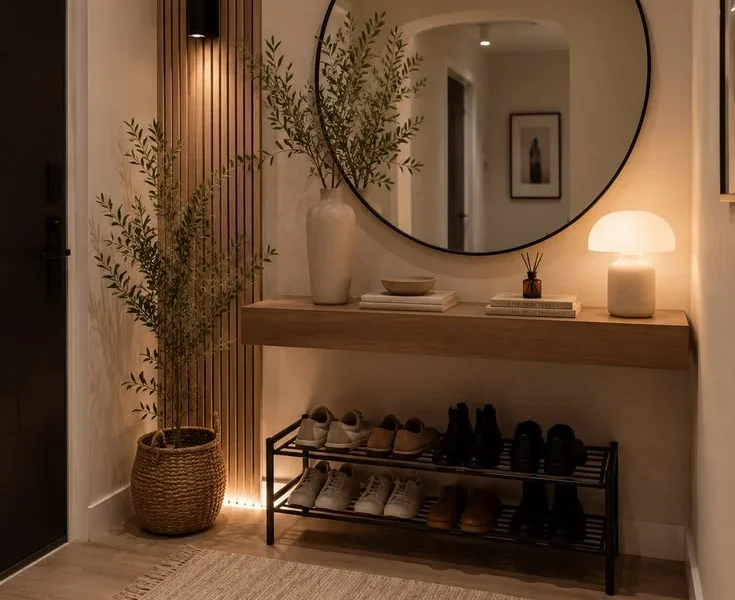
Walk into ten different homes, and you’ll likely notice ten different approaches to entryway mirror placement. Some feel deliberate and well thought out. Others look like an afterthought — a mirror hung a bit too high, slightly off to one side, or facing a direction that just doesn’t sit right. A poorly placed mirror can throw off the entire balance of a space, while the right placement does something almost magical. It makes a cramped hallway feel open, pulls light into dark corners, and gives you one last glance before you head out the door.
This guide brings together the practical knowledge you need for entryway mirror placement — sizing rules, height standards, feng shui considerations, and styling approaches that designers rely on regularly. Whether you’re working with a spacious foyer or a narrow apartment hallway, the underlying principles of good entryway mirror placement remain remarkably consistent.
Why Entryway Mirror Placement Matters More Than You Think
Your entryway sets the tone for your entire home. It’s the first space guests notice, and it’s the last space you see before stepping outside. When you get entryway mirror placement right, you create something that feels welcoming, bright, and put together. Get it wrong, though, and even a genuinely beautiful mirror can end up looking like it was placed there by accident.
There’s more to this than appearance alone. Entryway mirror placement has a real effect on how light travels through your home. A mirror positioned to catch natural light from a window or doorway can make a hallway feel noticeably brighter — sometimes almost doubling the sense of space. This makes a real difference in older homes or apartments, where entryways often end up as small, windowless boxes that feel closed in no matter how clean or tidy they are.
Then there’s the everyday, practical side of things. A well-placed mirror near your front door gives you a quick check before you leave — your hair, your outfit, maybe that one stubborn collar that won’t sit right. Interior designers sometimes call this the “last look” mirror, and its placement is rarely an accident. It’s usually positioned exactly where you’ll pass it on your way out, every single time.
Understanding Search Intent: What People Actually Want to Know
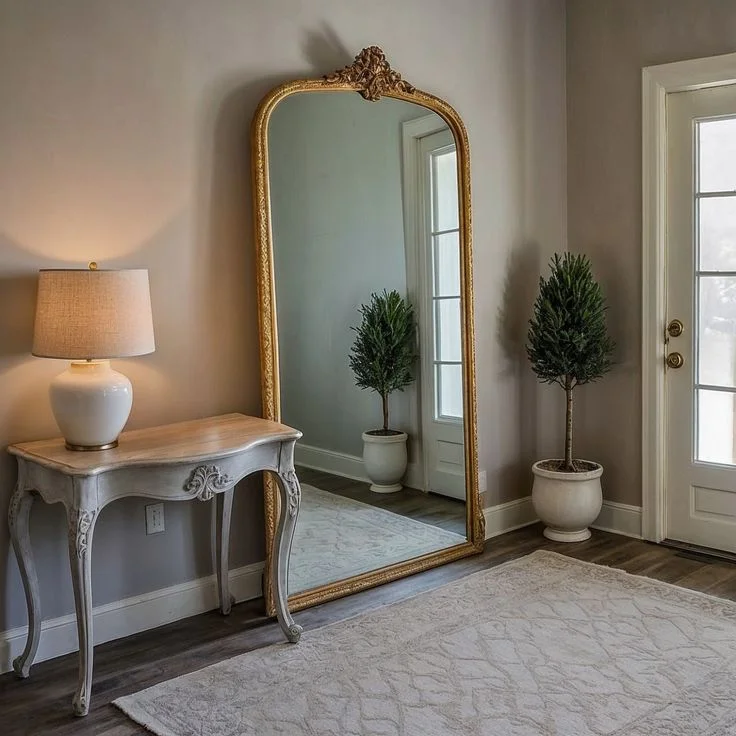
When someone searches for entryway mirror placement, they’re usually trying to work through one of a handful of common questions. Some want to know the “correct” height for hanging a mirror. Others are curious whether there’s a feng shui rule about mirrors facing front doors. And many people are, quite literally, standing in their entryway holding a mirror, trying to figure out where it should go.
This guide tries to cover all of these angles at once — the technical side (sizing, height, choosing the right wall), the cultural side (feng shui mirror guidance), and the stylistic side (foyer decor ideas). That’s because entryway mirror placement isn’t really one single decision. It’s a mix of measurements, a bit of intuition, and a touch of design thinking, all working together.
Best Wall for Mirror Placement in an Entryway
Not every wall in your entryway works equally well for a mirror. The best wall for mirror placement usually checks a few boxes: there’s enough open space, the reflection itself is pleasant to look at, and the mirror doesn’t get in the way of doors opening or people moving through.
Based on what tends to work in practice, here are the wall options worth considering, roughly in order of effectiveness:
- The wall opposite a window — This pulls natural light deeper into the space and can noticeably brighten an otherwise dim entryway.
- The wall behind a console table — A combination that’s stood the test of time, creating a natural focal point the moment you step inside.
- The wall perpendicular to the front door — This sidesteps the whole “mirror facing front door” feng shui debate while still being highly visible to anyone walking in.
- A narrow hallway side wall — In tighter spaces, a mirror here can visually widen the corridor and make it feel less closed-in.
One thing worth avoiding: a wall that reflects clutter, an open closet, or a bathroom door. Even with otherwise perfect entryway mirror placement — right height, right size — a bad reflection can undo a lot of that effort.
Entryway Mirror Size Guide
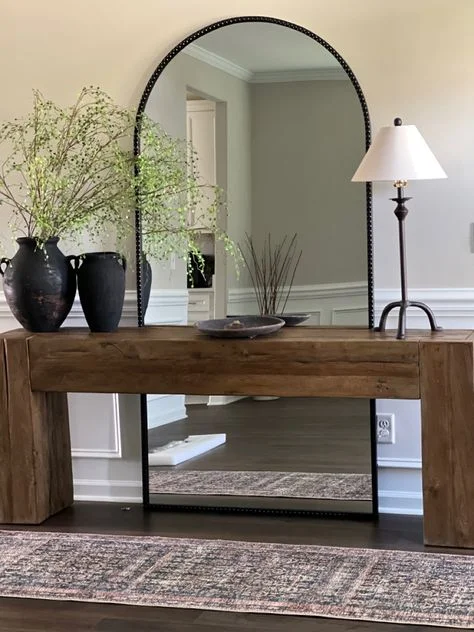
Size confusion comes up constantly with entryway mirror placement. A mirror that’s too small can look lost on a large wall, almost like it’s shrinking into the space around it. An oversized mirror, on the other hand, can overwhelm a smaller foyer and make it feel even more cramped.
Here’s a general entryway mirror size guide based on common entryway dimensions:
| Entryway Width | Recommended Mirror Width | Recommended Mirror Height |
|---|---|---|
| Under 3 feet (narrow hallway) | 12–18 inches | 24–36 inches |
| 3–5 feet (standard entryway) | 24–36 inches | 36–48 inches |
| 5–8 feet (medium foyer) | 36–48 inches | 48–60 inches |
| 8+ feet (large/grand foyer) | 48 inches or larger | 60+ inches or full-length |
A helpful rule of thumb for entryway mirror placement: the mirror should take up roughly two-thirds the width of whatever furniture sits beneath it — a console table, a bench, or even a narrow shelf. If there’s no furniture involved, the mirror can be a little larger and stand on its own as a statement piece.
Mirror Height for Hallway and Entryway Spaces
Getting the height right is probably the trickiest part of entryway mirror placement, and it’s where most do-it-yourself installations go a little sideways. Hang a mirror too high, and only the taller members of the household get any real use out of it. Hang it too low, and it starts to look like it’s sinking into the floor.
The standard guideline most professionals follow: the center of the mirror should sit roughly at eye level for the average adult — somewhere around 57 to 60 inches from the floor. This works well for the majority of households without much adjustment.
A few situational tweaks worth keeping in mind:
- Above a console table: Leave about 4 to 8 inches of space between the top of the table and the bottom of the mirror.
- Households with children: A slightly lower placement, around 54 to 56 inches, makes the mirror useful for kids as well.
- Full-length mirrors: These follow a different set of rules entirely. The bottom edge should sit close to the floor, with the top edge extending above the tallest person in the household.
- Tall ceilings (9+ feet): You can shift the mirror a bit higher, to around 62 to 64 inches, to keep the proportions balanced against the extra height.
Mirror height for hallway placement tends to run a touch lower than entryway mirrors positioned near a console, since hallway mirrors are usually seen while walking past rather than while standing still.
Mirror Above Console Table: The Classic Combination
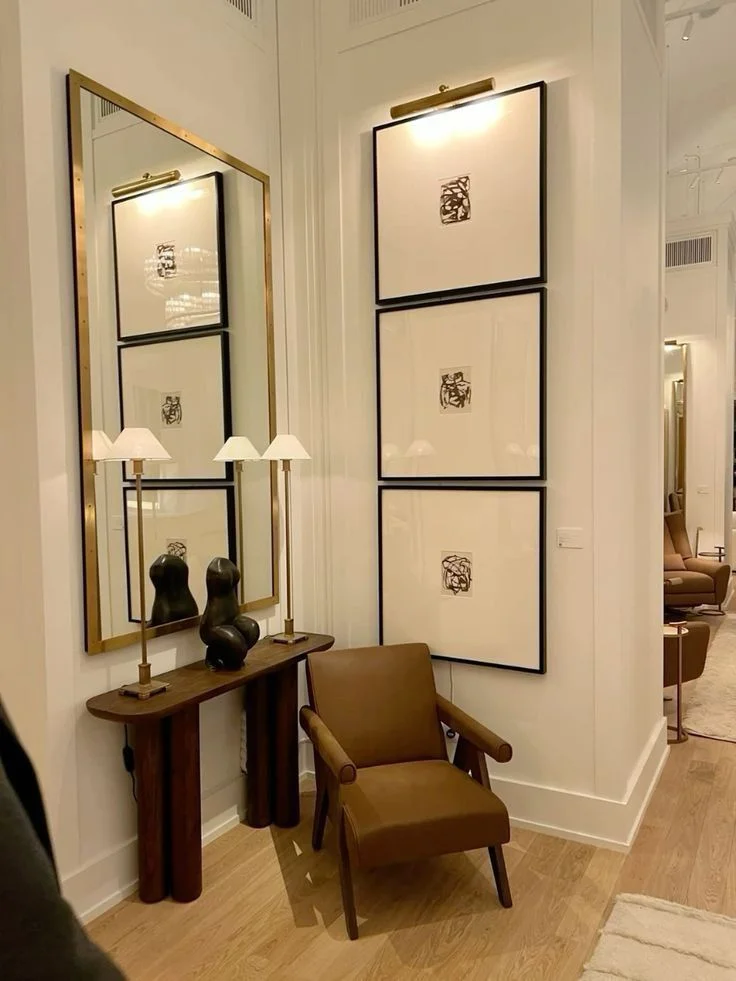
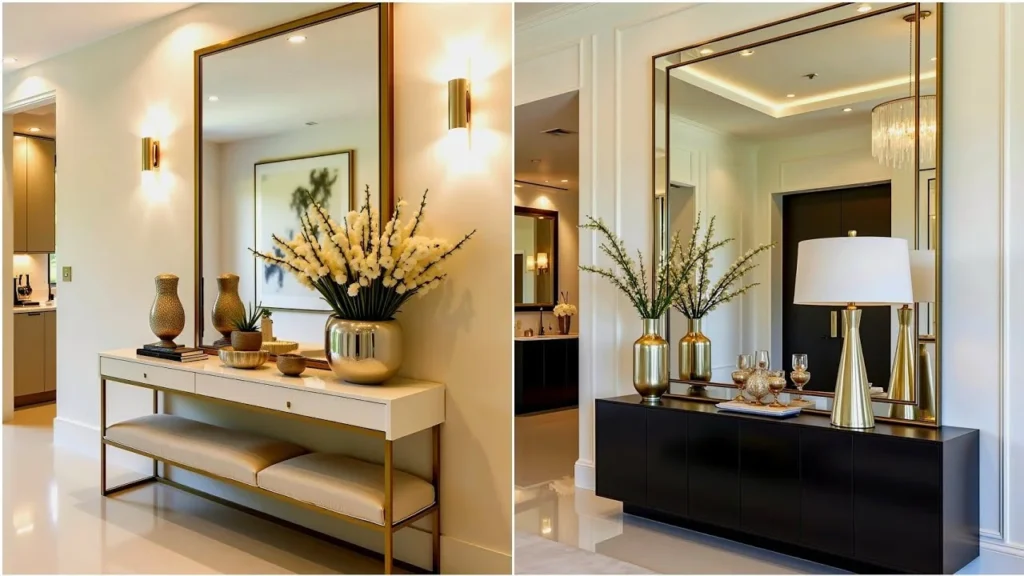
If there’s one entryway mirror placement pairing that designers keep coming back to, it’s the mirror above console table arrangement. It works because it creates a natural vertical anchor — the console grounds the space, and the mirror adds height, light, and visual interest above it.
When planning a mirror above console table setup, a few proportions matter:
- The mirror should be centered over the console itself, not the wall.
- Mirror width should fall somewhere between 75% and 100% of the console’s width to keep things visually balanced.
- Leave enough clearance so that lamps or decorative pieces on the console don’t block the bottom edge of the mirror.
- Pay attention to style — a sleek, modern console can look out of place beneath an ornate, heavily gilded mirror frame, and the reverse is true as well.
This combination also solves a practical issue many entryways face. Consoles tend to collect keys, mail, and bags, which creates clutter near the floor. A mirror placed above draws the eye upward, helping to balance out that lower-level mess without you having to do much about it.
Front Door Mirror Rules: What You Need to Know
Few topics spark as much discussion in interior design circles as front door mirror rules. Some homeowners follow certain placements without question, while others avoid them entirely — sometimes based on tradition, sometimes simply on personal preference.
The most commonly mentioned front door mirror rules include:
- Avoid placing a mirror directly facing the front door. Many traditions hold that this reflects incoming positive energy or opportunities back out the door before they have a chance to settle into the home.
- Side walls near the entrance are generally considered favorable. A mirror on a wall perpendicular to the door is widely seen as a safe and effective choice.
- Avoid mirrors that reflect a visible bed from a hallway connected to the entry. This guidance is more closely tied to bedroom feng shui, but it does come up in open-concept homes where rooms blend together.
- Mirrors should reflect something pleasant — artwork, a plant, or a well-lit area, rather than a cluttered closet or a staircase leading down.
Whether or not these traditions hold personal meaning for you, there’s a practical overlap worth noting. Mirrors placed on side walls near entryways tend to look better regardless, simply because they avoid that slightly uncomfortable “staring back” effect a mirror can create when it directly faces someone walking in.
Mirror Feng Shui Entryway Principles
In feng shui, the entryway is sometimes referred to as the “mouth of chi” — one of the most significant areas in the home for the flow of energy. Mirror feng shui entryway guidance goes well beyond the front door rule alone, touching on shape, frame material, and what the mirror actually reflects.
Some key mirror feng shui entryway considerations include:
- Shape matters. Round and oval mirrors are often associated with smoother, more harmonious energy, while rectangular mirrors with sharp corners are sometimes softened through rounded frames.
- Avoid broken or cracked mirrors entirely. In feng shui, these are believed to carry negative energy and should be replaced as soon as possible.
- Reflect light and life. Try to position mirrors so they reflect plants, artwork, or natural light rather than dark corners or storage spaces.
- Height matters too. A mirror hung too low — one that “cuts off” a person’s head in the reflection — is thought to symbolically cut off opportunities as well.
Whether or not feng shui principles hold personal significance for you, many of these ideas line up with sound design practice in general. Reflecting light, avoiding clutter, and keeping mirrors proportional all tend to make entryways more pleasant places to be, regardless of the philosophy behind them.
Mirror Facing Front Door: A Closer Look
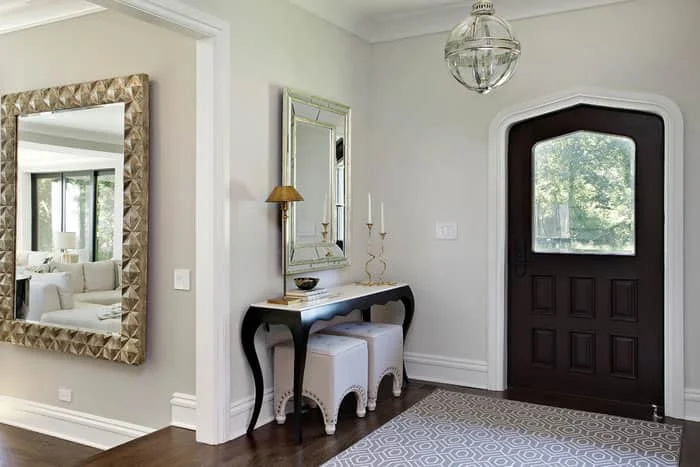
The question of whether a mirror facing front door placement is acceptable comes up again and again, and honestly, the answer depends a great deal on who you ask. From a feng shui perspective, placing a mirror directly opposite the front door is often discouraged, based on the belief that it pushes energy — and by extension, opportunities — straight back out the way they came in.
From a more practical design standpoint, though, a mirror facing front door placement can work in certain situations:
- Small entryways, where there genuinely isn’t another usable wall available.
- Long, narrow hallways, where a mirror at the far end adds depth and makes the space feel longer than it actually is.
- Grand entrances, where a large statement mirror facing the door becomes an intentional design choice rather than something that just happened by default.
If you do go this route, it can help to offset the mirror slightly rather than centering it directly across from the door, or to angle it just enough that it reflects a side area instead of the doorway itself. This approach satisfies the practical need for usable wall space while easing some of the more traditional concerns around mirror facing front door arrangements.
Round vs Rectangular Entryway Mirror: Which Should You Choose?
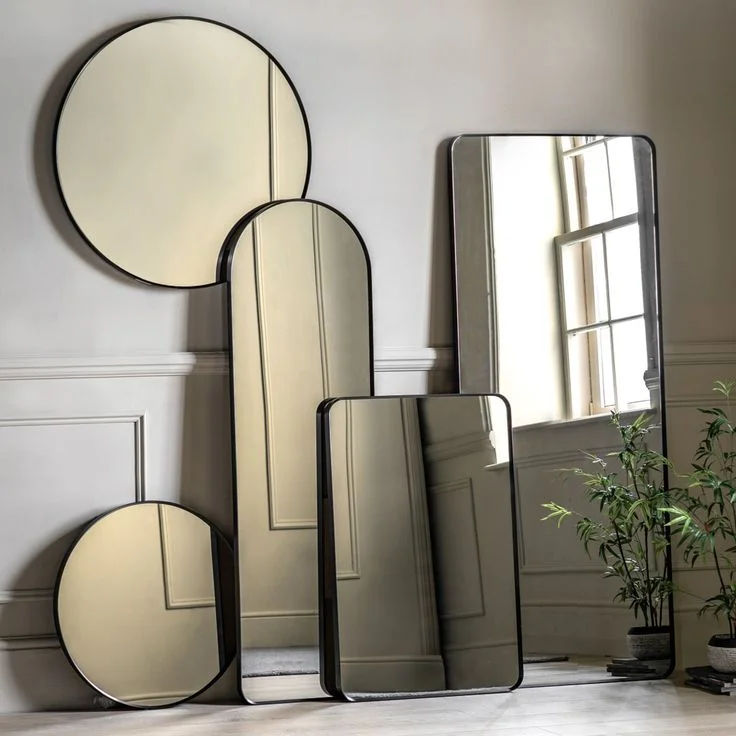
The round vs rectangular entryway mirror question often comes down to the shape of your space and the overall style you’re aiming for — but there are some real functional differences worth thinking through as well.
| Factor | Round Mirror | Rectangular Mirror |
|---|---|---|
| Best for | Small to medium entryways | Larger entryways, above consoles |
| Visual effect | Softens sharp angles, adds warmth | Provides more reflective surface |
| Feng shui association | Considered more harmonious | Neutral, depends on frame |
| Pairing with furniture | Works well standalone | Pairs naturally with rectangular consoles |
| Wall space needed | Less | More |
A round vs rectangular entryway mirror decision often comes down to what’s already in the room. If your entryway already has a lot of straight lines — a rectangular console, square door frames, linear shelving — a round mirror can add a bit of visual relief and soften things up. On the other hand, if your entryway is on the larger side and you’re after maximum light reflection, a rectangular (or even arched) mirror above a console table tends to perform better.
There’s no single “correct” answer here. That said, round mirrors have become noticeably more popular for entryways in recent years, largely because they soften what can otherwise feel like a boxy, transitional space — one you pass through quickly rather than one you actually want to spend time in.
Small Entryway Mirror Ideas for Tight Spaces
Not everyone has a sprawling foyer to work with, and small entryway mirror ideas need to do a bit more work — maximizing light and creating a sense of space without overwhelming what little room is available.
A few approaches that tend to work particularly well in small entryways:
- Vertical, narrow mirrors that emphasize height rather than width, which can make low ceilings feel taller than they are.
- Mirrored cabinet doors that double as storage and reflection — a practical option that comes up often in apartments.
- Leaning floor mirrors for entryways too narrow for wall-mounted pieces, placed in a corner at a slight angle.
- Mirror panels covering an entire wall section, creating an almost seamless reflective surface that makes the space feel noticeably larger.
- Frameless or minimally framed mirrors, which avoid adding visual bulk in spaces where every inch genuinely counts.
For small entryway mirror ideas, positioning near a light source — whether that’s a window or a wall sconce — makes a real difference in how bright the space feels. A mirror tucked into a dark corner won’t do much on its own, but one that picks up even indirect daylight can change the entire feel of a small entryway.
Statement Mirror Foyer Decor: Making It the Focal Point
While much of entryway mirror placement comes down to function, there’s also room for a mirror to take center stage. A statement mirror foyer decor approach treats the mirror less like a practical fixture and more like a piece of art in its own right.
To pull off statement mirror foyer decor successfully, a few things tend to help:
- Choose something oversized or distinctly shaped — arched, sunburst, asymmetrical, or oversized round mirrors all tend to work well in this role.
- Give it room to breathe. A statement mirror needs some negative space around it to stand out; too much surrounding decor can compete with it.
- Coordinate metal finishes rather than matching them exactly. A brass-framed mirror doesn’t need to match brass door hardware perfectly, but complementary tones help tie the foyer together.
- Use lighting to your advantage. A wall sconce or pendant placed near a statement mirror adds a bit of drama and ensures it gets noticed, even in lower light.
A statement mirror foyer decor choice often ends up becoming the anchor for the entire entryway design. Runner rugs, console tables, and wall art tend to get chosen around the mirror — not the other way around.
Step-by-Step: How to Plan Your Entryway Mirror Placement
Pulling all of this together, here’s a practical sequence for working through entryway mirror placement in most homes:
- Measure your entryway — width, ceiling height, and the dimensions of any furniture (console, bench) that will sit beneath the mirror.
- Identify your light source. Note where natural light enters and which wall would benefit most from reflected light.
- Choose your wall, following the best wall for mirror placement guidance above and avoiding direct front door alignment if possible.
- Select a size, using the entryway mirror size guide as a starting point and adjusting based on furniture proportions.
- Decide on shape — round vs rectangular entryway mirror — based on the lines already present in your decor and the wall space available.
- Mark the height, aiming for that 57 to 60 inch center-point guideline and adjusting for your household’s needs.
- Factor in feng shui considerations if they matter to you — shape, what’s being reflected, and whether to avoid a direct front door placement.
- Style around it, adding a console, lighting, or decor that complements the mirror rather than competing with it.
This order matters more than it might seem. Entryway mirror placement decisions tend to build on each other — choosing a size before measuring your wall, for instance, often leads to proportions that look slightly off and are frustrating to correct later.
Common Mistakes in Entryway Mirror Placement
Even with all of the guidance above, certain entryway mirror placement mistakes show up again and again in real homes:
- Hanging the mirror too high — if it mostly reflects the ceiling or the top of someone’s head, it isn’t doing its job.
- Overlooking what’s actually reflected — a beautifully placed mirror that reflects a cluttered coat closet undoes a lot of the effort that went into choosing it.
- Choosing size based on the wall alone — without considering furniture proportions, mirrors often end up looking disconnected from whatever sits beneath them.
- Underestimating lighting — a mirror placed in a shadowed corner won’t brighten much, no matter how large it is.
- Defaulting to a mirror facing front door placement out of habit, when a better wall is actually available.
Avoiding these issues usually comes down to patience rather than skill. Taking a bit of extra time to measure carefully, watch how light moves through the space at different times of day, and think through what the mirror will actually reflect goes a long way before you commit to a final spot.
Frequently Asked Questions About Entryway Mirror Placement
What is the ideal height for an entryway mirror?
Most professionals recommend hanging the mirror so its center falls between 57 and 60 inches from the floor, which lines up with average adult eye level. This can shift slightly depending on ceiling height and the needs of your household.
Is it bad to have a mirror facing the front door?
In feng shui tradition, a mirror facing front door placement is often discouraged, based on the idea that it reflects energy back outside. In practical terms, though, it can still work in small or narrow entryways where there’s no better wall option — angling it slightly often helps.
How big should an entryway mirror be?
It depends on the dimensions of your entryway and any furniture placed beneath the mirror. As a general entryway mirror size guide, aim for the mirror to be about two-thirds the width of the console table or furniture piece below it.
Should I choose a round or rectangular mirror for my entryway?
A round vs rectangular entryway mirror decision often comes down to the lines already present in the space. Round mirrors tend to soften boxy entryways, while rectangular mirrors offer more reflective surface and pair naturally with console tables.
What’s the best wall for mirror placement in a small entryway?
The best wall for mirror placement in a tight space is usually one that’s perpendicular to the front door and catches natural light, while avoiding direct alignment with the entrance itself.
Can a mirror go above a console table in an entryway?
Yes — a mirror above console table arrangement is one of the most popular and reliable entryway mirror placement combinations, as long as the proportions between the two pieces feel balanced.
Do feng shui mirror rules actually affect entryway design?
Mirror feng shui entryway principles influence a number of traditional design choices, particularly around shape, placement direction, and avoiding damaged mirrors. Many of these ideas align with good design practice in general, regardless of personal beliefs.
Conclusion
At the end of the day, entryway mirror placement isn’t something that needs to feel complicated or overly technical. Most of it comes down to a handful of simple things: knowing roughly where eye level sits, paying attention to how light moves through your space at different times of day, and thinking honestly about what the mirror will actually show once it’s hung.
Some of these decisions will come down to personal taste, and that’s perfectly fine. A mirror you genuinely enjoy looking at every time you walk past is worth more than one that technically follows every rule but doesn’t feel right in the space. Use the guidelines here as a starting point, adjust based on what works for your home and your routine, and don’t be afraid to step back, look at it for a day or two, and make small changes if something feels off. Sometimes the best entryway mirror placement is the one that simply makes the space feel a little brighter and a little more like home.