If you’ve ever stood in front of a tiny bathroom window trying to figure out how to get privacy without blocking every bit of daylight, you already know the problem. Small windows look simple, but they’re actually one of the trickier design puzzles in a house. That’s where good small window solutions come in — they solve for light, privacy, safety, and style all at once, instead of forcing you to pick just one.
This isn’t a list of generic decorating tips. We’re going to walk through real fixes for real rooms — bathrooms, basements, tiny homes, awkward corners — and explain why certain window treatments work better than others depending on what your window actually needs to do.
Small Window Solutions Start With Knowing What the Window’s Job Is
Before you buy anything, ask what this window is actually for. A bathroom window needs privacy first, light second. A basement window might need to meet legal safety rules before it needs to look good at all. Good small window solutions always start here — with the window’s job, not with what looks nice on a shelf at the store.
Skip this step and you’ll end up with something that looks fine in the showroom but fights you every day at home. A heavy fabric shade in a steamy bathroom will mildew. A decorative grille on a basement bedroom window could be illegal if it blocks emergency exit. Match the fix to the function first, then worry about style — that’s the whole philosophy behind good small window solutions.
Think of it like buying shoes before you know if you’re hiking or dancing. The right choice depends entirely on what you’re about to do with it. The same logic applies here, window by window, room by room. Once you know the job, the right product almost picks itself.
Small Bathroom Window Privacy: Solving the Trickiest Room in the House
Bathroom windows are usually small on purpose, but that doesn’t make them easy. You want light in the morning and zero visibility from outside, always. It’s a narrow needle to thread, and most off-the-shelf products aren’t built with that balance in mind.
This is exactly where thoughtful small window solutions earn their keep. A bathroom window sees more moisture, more temperature swings, and more privacy demands than almost any other window in the house. Get the fix right here, and every shower, every morning routine, feels a little more comfortable. Get it wrong, and you’ll notice it daily — foggy glass, warped material, or that nagging feeling someone can see in.
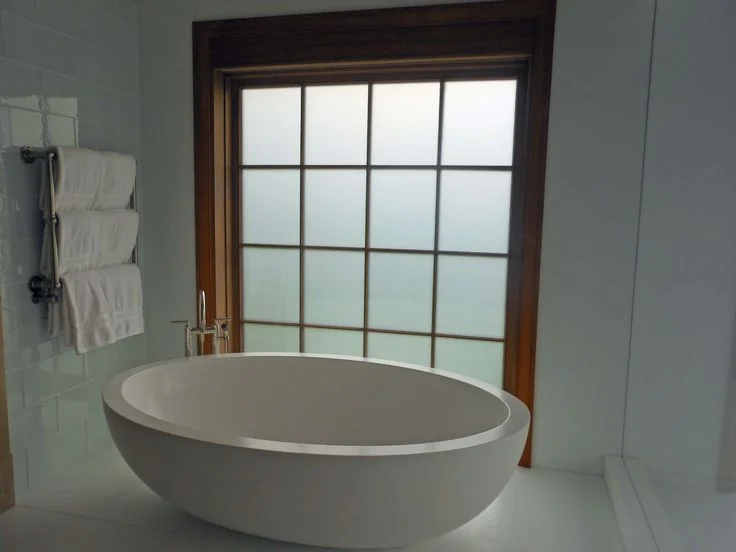
Frosted Film or Textured Glass
Applying a frosted window film is one of the cheapest small window solutions out there — often under $20 — and it lets light pour in while blurring anything on the other side. No drilling, no hardware, just a clean install with a spray bottle and a squeegee. Most rolls cover several windows, so if you’ve got more than one small window needing privacy, you can knock them all out in an afternoon.
The film comes in a few finishes too — plain frosted, rice paper texture, even subtle patterns — so it doesn’t have to look like a public restroom window. It’s also fully removable if you rent or just want to change things up later, which makes it a low-risk way to test whether frosted glass is the look you want. For renters especially, this is often the single best fix on this whole list, since it solves privacy without touching the landlord’s fixtures.
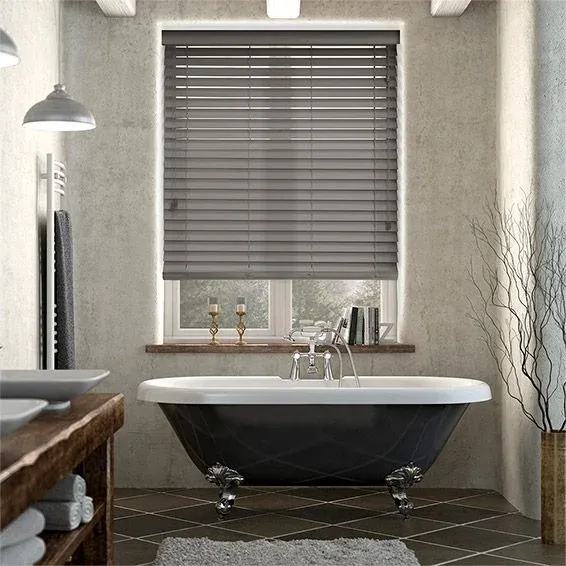
Faux Wood Blinds
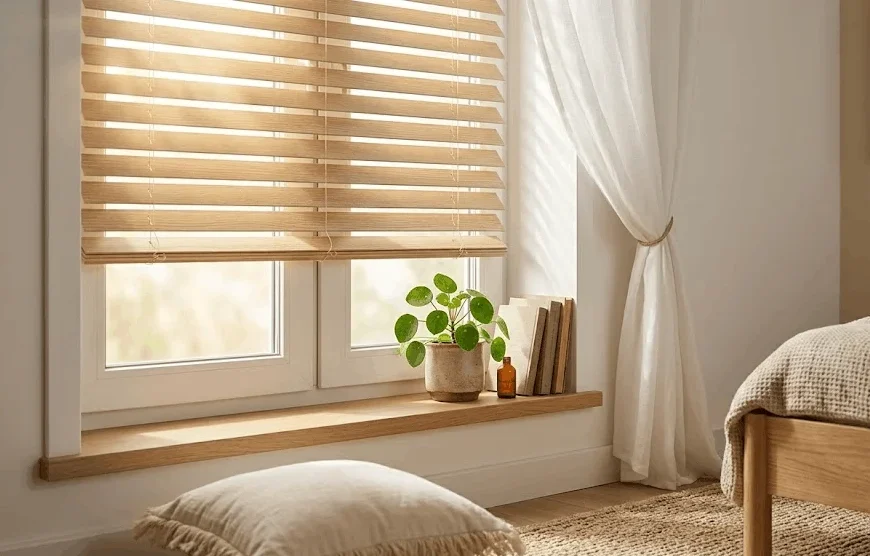
Real wood warps in humidity. Faux wood doesn’t. That’s why faux wood blinds show up again and again as the go-to pick for small bathroom windows — they handle moisture, wipe clean in seconds, and tilt to control exactly how much anyone can see from the yard. They’re also one of the more affordable small window solutions on this list, often costing less than real wood while lasting just as long in a humid room.
The slats let you fine-tune privacy throughout the day — tilt them up for a shower with the lights off, or angle them down when you want more airflow without losing coverage. Most come pre-cut in small sizes too, so you’re less likely to need custom trimming. Give the slats a quick wipe with a damp cloth once a week, and they’ll look new for years.
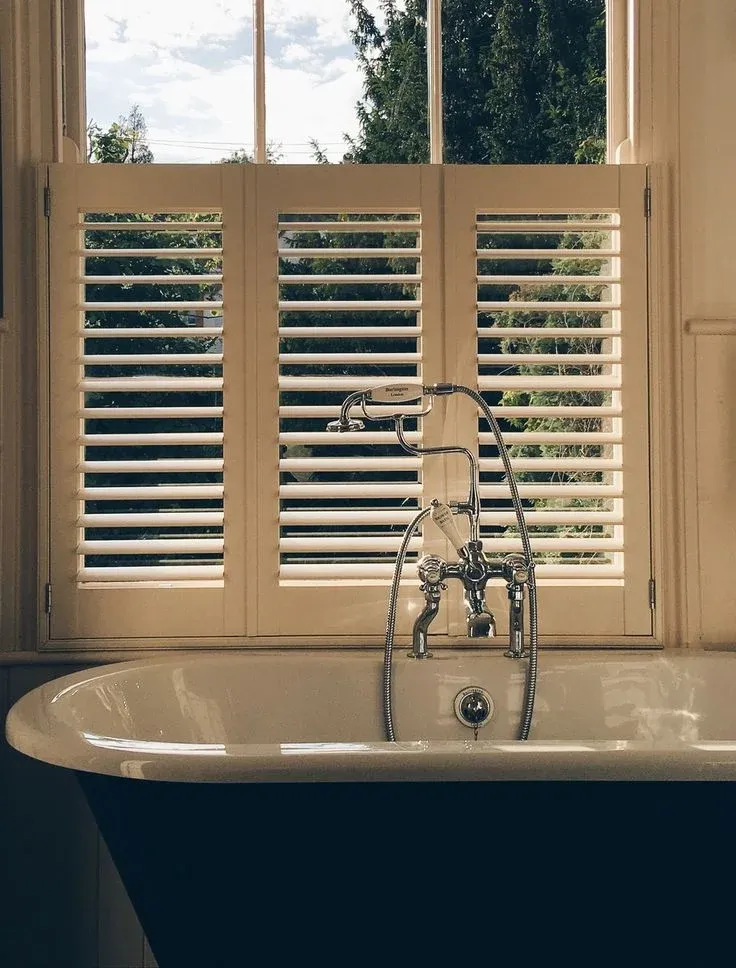
Café-Style Shutters
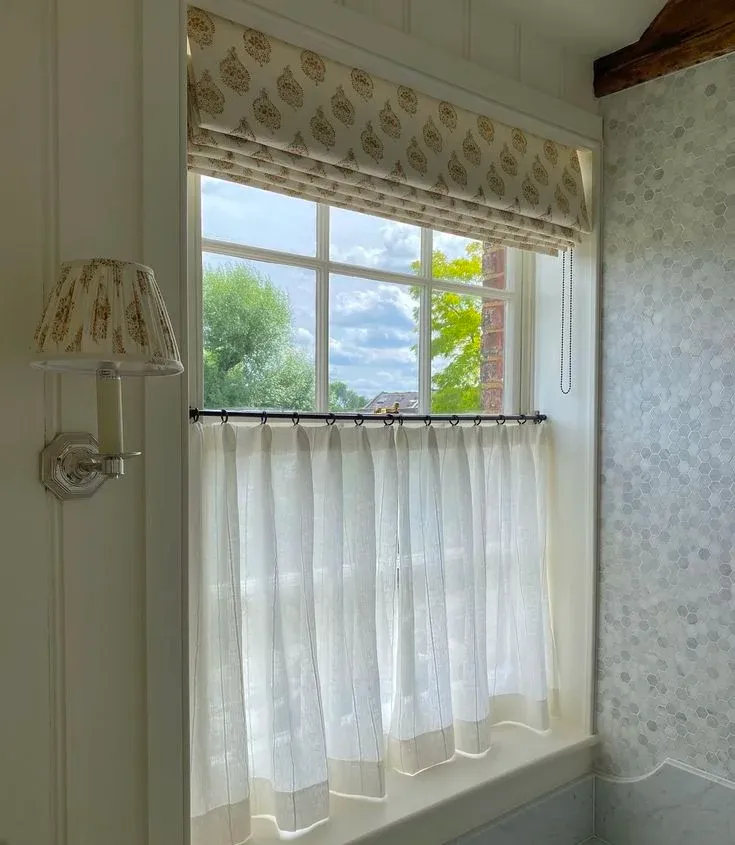
These only cover the bottom half of the window, so you get full privacy at eye level while the top stays open for light. It’s a small detail, but it makes a cramped bathroom feel less closed-in.Café-style shutters work especially well if your bathroom window sits at standing height, since that’s exactly where privacy matters most.
Above the shutter line, the glass stays bare, so morning light still floods in unfiltered. They also add a bit of texture and structure to a room that often feels flat and purely functional. It’s a small upgrade, but it tends to make the whole window feel more finished rather than just covered up.
Basement Window Solutions: Light, Safety, and the Egress Rules Nobody Explains Well
Basement windows are a different animal entirely. Here, small window solutions aren’t just about looks — they’re about code compliance, and getting this wrong can cost you later.
What “Egress” Actually Means
If your basement has (or will have) a bedroom, the window serving that room legally has to double as an emergency exit. That means it needs a net clear opening of at least 5.7 square feet, a minimum width of 20 inches, a minimum height of 24 inches, and a sill no higher than 44 inches off the floor. Grade-level basements sometimes get a slightly smaller minimum of 5.0 square feet.
Here’s why this trips people up: a window can look plenty big from the outside and still fail egress, because only the opening part counts — not the frame. A sliding window with a fixed side, for example, often falls short even though the whole unit looks large. This is where a lot of otherwise solid small window solutions quietly fail — someone picks a window based on how big it looks in the showroom, not how big the actual clear opening measures once installed.
It’s worth asking your contractor or supplier for the net clear opening number in writing before you commit to anything. A window that’s a great fit for a living room might be completely wrong for a basement bedroom, even if it’s the same overall size. When in doubt, measure the usable opening yourself with the sash fully open, not just the frame dimensions on the box.
Casement Windows Win in Tight Spaces
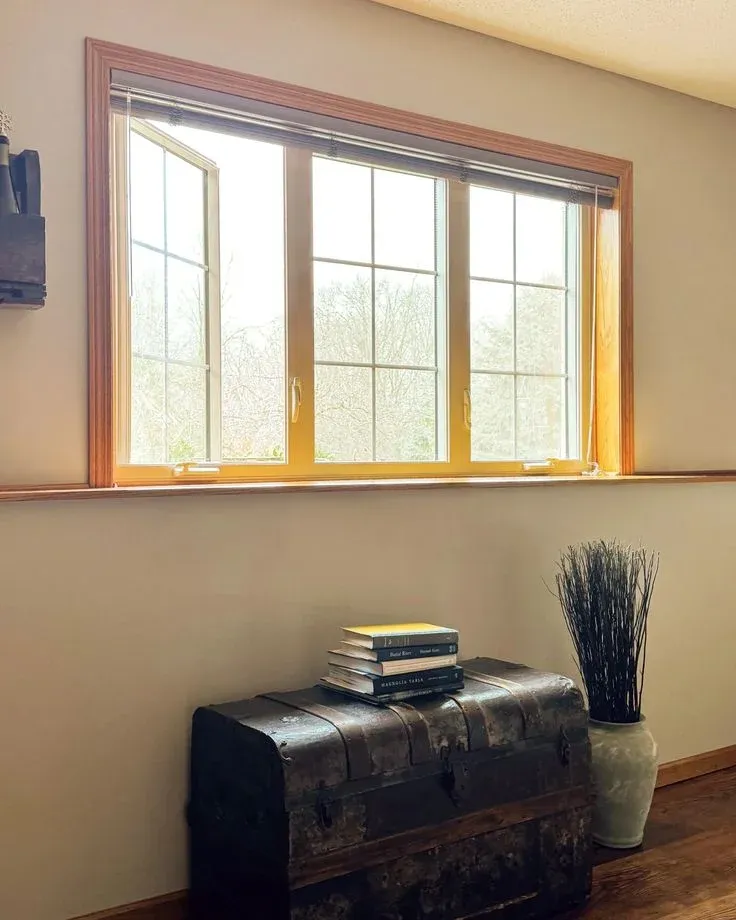
Casement windows hinge on one side and swing fully open, so nearly the entire window area becomes usable opening. That’s why a 36-inch by 48-inch casement can meet code in a rough opening that a slider or double-hung simply can’t match. If you’re short on wall space, this is often the best of the small window solutions for basements specifically.
The trade-off is that the sash needs room to swing outward, so your window well has to be deep enough to accommodate it fully open. It’s a minor planning detail, but it’s worth confirming before installation day, not after the crew shows up.
Window Wells Have Rules Too
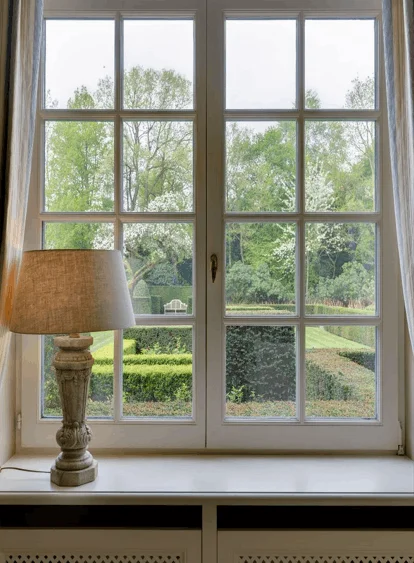
If the window sits below grade, you’ll need a window well with at least 9 square feet of floor space and a permanent ladder if it’s deeper than 44 inches. Skipping this step is one of the most common — and most expensive — mistakes homeowners make when finishing a basement.
Contractors sometimes quote the window itself without factoring in well excavation, drainage, or the ladder — so ask upfront whether that’s included in your estimate. A little planning here saves you from a failed inspection down the road, right when you’re closest to calling the project done.
Compact Window Treatments That Make a Small Room Feel Bigger
Once safety and privacy are handled, it’s time to think about how the window makes the room feel. Small space window coverings can either shrink a room visually or trick the eye into thinking it’s bigger. The difference comes down to a few small choices.
Hang the Rod High
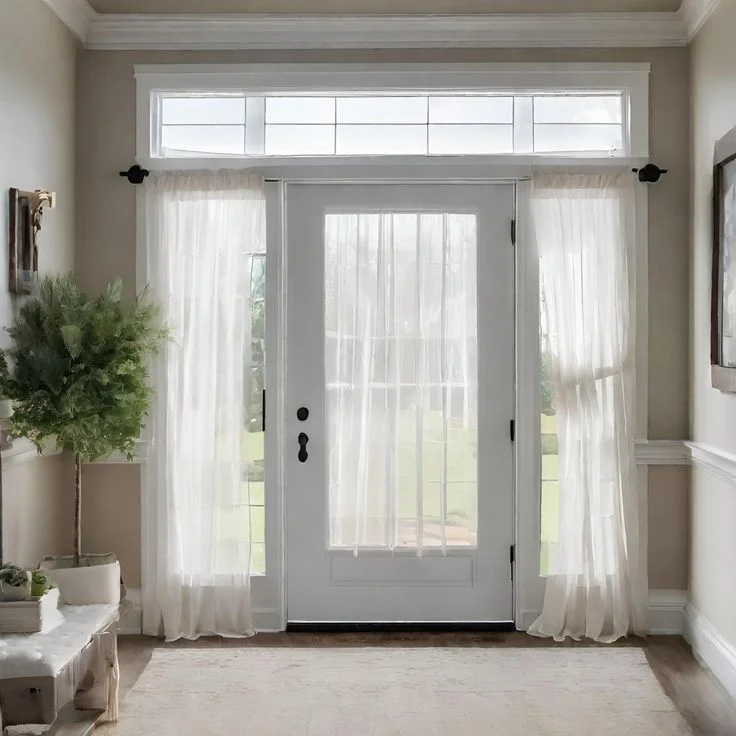
This one repeats across nearly every design blog for a reason — it works. Mount your curtain rod a few inches above the window frame instead of right on top of it. Your eye reads the extra height as part of the window, and the whole wall feels taller.
A few inches is usually enough — go too high and the curtains start to look disconnected from the window itself. Pair it with panels that reach the floor, since a gap at the bottom breaks the illusion just as much as a low rod does. It costs nothing beyond the rod you were already buying, which makes it one of the easiest upgrades on this entire list.
Go Light, Not Heavy
Bulky drapes or dark, heavy fabric will visually shrink a small window fast. Sheer curtains, light-filtering roller shades, or thin roman shades keep things airy instead of cramped.
If you love the look of layered fabric, keep the layers thin rather than skipping them entirely — a sheer panel behind a light valance still reads as airy. This is one of the simplest small window solutions to get wrong, since heavier fabric often just looks “cozier” in the store, even though it works against you at home.
Match Wall Color
A window frame painted the same shade as the surrounding wall almost disappears, drawing attention outward through the glass instead of at the frame itself. It’s a subtle trick, but it’s one of the more effective small window solutions for making a room feel less boxed in.
This works best with a matte or eggshell finish, since a glossy trim tends to catch the eye and undo the blending effect. It’s also one of the cheapest fixes here — a small can of paint and an afternoon is all it takes.
Small Window Blinds and Shades: Picking the Right Type
Not every covering fits every small window, and this is where a lot of people waste money buying something off the shelf that doesn’t actually work for their space.
Roller Shades
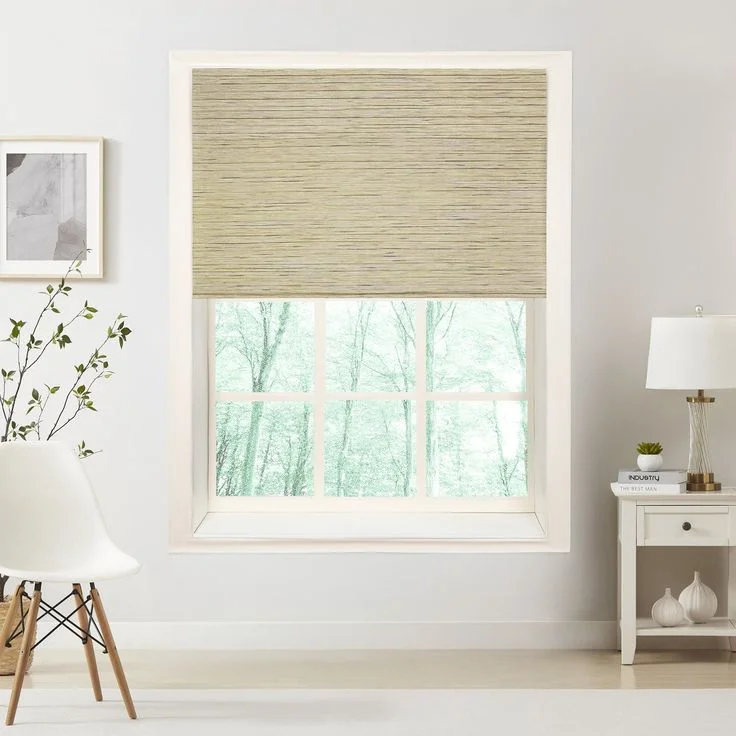
These roll into a slim cassette when open, leaving almost nothing blocking the frame. Great for kitchens, small bedrooms, or anywhere you want a clean, minimal look.
Cellular (Honeycomb) Shades
The honeycomb structure traps air, which helps with insulation — useful in drafty basements or older homes. They fold flat and fit narrow frames well, though they can trap moisture, so they’re not ideal for bathrooms.
Venetian Blinds
Their horizontal slats visually widen a narrow window, which is a nice trick if your window is tall and skinny rather than short and wide.
Custom Small Window Fittings vs. Off-the-Shelf: Is It Worth Paying More?
Standard blinds and curtains come in set sizes, and small or oddly shaped windows rarely match those sizes exactly. This is one of the more overlooked small window solutions — getting something custom-fit instead of forcing a standard size to work.
When DIY Trimming Works
For curtains, hemming tape or iron-on fabric fixes can shorten length cheaply. For blinds, many hardware stores will cut them to size for a small fee, or you can do it yourself with the manufacturer’s instructions.
When Custom Is Worth It
Angled windows, arched frames, or anything non-rectangular usually needs a custom order. It costs more upfront, but a properly fitted shade lasts longer and looks far better than something jammed into a frame it wasn’t made for.
Tiny House Window Design: Solutions for Ultra-Compact Spaces
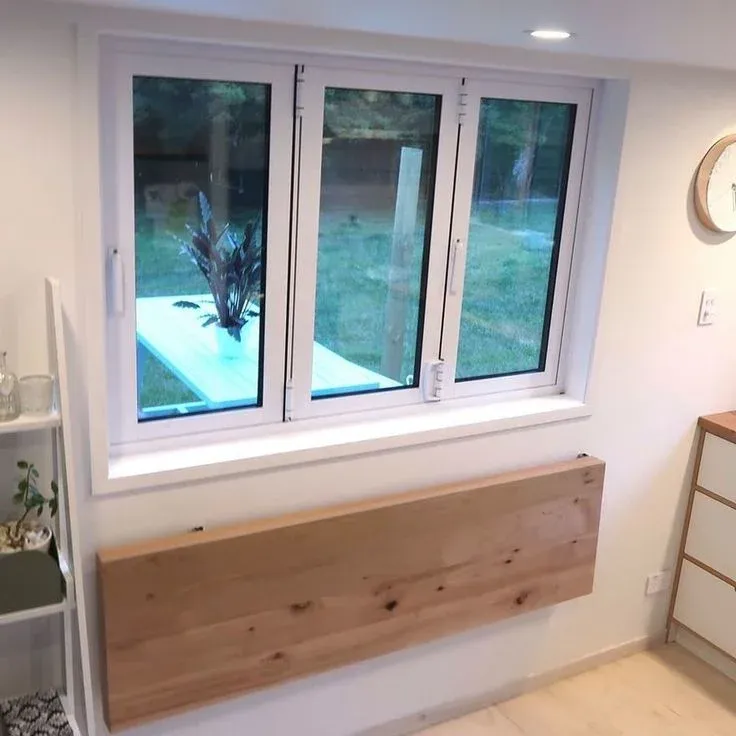
Tiny houses take the small window problem to the extreme — every inch of wall space matters, and windows often serve double duty as light sources, ventilation, and sometimes even furniture backdrops.
In tiny house window design, awning windows are popular because they open outward from the bottom, so they don’t eat up interior space when open. Sliding windows work well too, since they don’t need any swing clearance at all — handy in a home where every square foot of floor is already spoken for.
For coverings, tension-mounted curtains or magnetic blinds are common picks, since they avoid drilling into walls that might be load-bearing in unconventional ways. These are some of the more specialized small window solutions, built specifically for homes where space isn’t just tight — it’s nonexistent.
Magnetic strips work especially well on metal-framed tiny house windows, giving you a no-drill option that still holds fabric securely in place. Whatever you choose, look for lightweight materials — tiny homes are often built with weight limits in mind, and heavy hardware can add up fast.
Installation Tricks That Make Any Small Window Solution Look Intentional
Even the right product can look off if it’s installed poorly. A few small habits make a big difference:
- Mount blinds or shades inside the window frame when possible — it looks cleaner and doesn’t eat into wall space.
- Use slim curtain rods or tracks instead of bulky hardware that competes with the window for attention.
- Measure the smallest width point of the frame if you’re doing an inside mount, since small windows often aren’t perfectly uniform.
- Consider motorized options for windows that are awkward to reach, which removes cords entirely and keeps the look streamlined.
None of these tricks cost much, but together they make the difference between a window treatment that looks like an afterthought and one that looks planned from day one.
FAQs: Small Window Solutions
Do all basement windows need to meet egress code?
Only windows serving a bedroom or other habitable sleeping space need to meet egress requirements. Utility or storage basement windows don’t have the same legal size rules, though adding light and ventilation is still worth doing.
What’s the best small window solution for a steamy bathroom?
Faux wood blinds or frosted window film handle humidity far better than real wood or heavy fabric, which can warp or mildew over time in a damp bathroom.
Can I install egress windows myself?
Cutting a new opening in a foundation wall is structural work that typically requires permits and a licensed contractor, especially with poured concrete. It’s not usually a safe DIY project.
Do small windows need custom-sized blinds?
Not always. Many standard blinds can be trimmed to fit, but oddly shaped or angled small windows usually need a custom order for a proper fit.
What makes a small room feel bigger with window treatments?
Light-colored, minimal coverings and a curtain rod mounted above the frame both trick the eye into reading the window — and the room — as larger than it is.
Conclusion
Small windows aren’t a design flaw — they’re just a different kind of puzzle. Whether you’re dealing with a foggy basement window that needs to meet safety code, a bathroom window that needs privacy without losing light, or a tiny house window that has to do three jobs at once, there’s a fix that fits. The right small window solutions come down to matching the treatment to the room’s real needs first, then layering in the style choices that make it feel finished. If you’ve been putting off that one awkward window in your house, this weekend is as good a time as any to finally deal with it.