You walk into a friend’s place and something just feels right. The light is soft, there’s linen at the windows, and you want to kick off your shoes and stay all evening. Then you get home, look at your own living room, and think, “It’s fine.” Just fine.
That gap is exactly what earthy home decor closes. It isn’t about buying everything beige or turning your flat into a spa. It’s about warmth, texture and a handful of smart choices that make a home feel lived in.
Here’s what you’ll walk away with: a simple color plan, a texture formula that fixes flat rooms, room-by-room ideas, and the mistakes worth dodging. Let’s get into it.
What Earthy Home Decor Really Means (It’s Not Just Beige)
Earthy home decor is a style built on colors, textures and materials borrowed from nature: solid wood, clay, stone, jute, linen and wool. That’s the short version. The longer version is more useful, so stick with me.
Picture a walk along a dry riverbed. Nothing there is shiny or perfectly matched. Bark is rough, stone is cool, moss is soft, and the colors drift from rusty brown to muted green to sandy gray. A home that borrows that feeling gets the same calm effect.
One home brand makes a point worth repeating: the look comes from selection and intention, not from ticking boxes on a color and materials checklist. A room full of brown pieces isn’t automatically earthy. A room with a few honest materials and some breathing space usually is.
Here’s a quick test. Close your eyes and imagine touching everything in the room. If most of it would feel smooth, glossy or plastic, you’re missing the point. If you’d feel grain, weave, plaster and clay, you’re close. Notice how little of that has to do with color. It’s all about what your hands would find.
Why Earthy Tones Are Everywhere Right Now
This isn’t just a Pinterest mood. People are searching for it, and the numbers are loud.
Houzz compared U.S. searches on its site for January through March 2026 with the same months in 2025. “Rust colors” jumped 178%, “chocolate brown” climbed 153%, “mushroom color” rose 69%, and “sage” went up 55%. Texture is moving just as fast: “sandstone” searches shot up 257%, “linen wallpaper” doubled, and “limewash interior paint” rose 53%.
Houzz’s fall 2026 report points the same way. Homeowners keep moving away from minimalism and cool grays and whites, and toward warm neutrals and natural materials with a bit of imperfection in them.
What this means for you: you’re not chasing a fad. Earthy home decor has outlasted a lot of trends because it’s built on things that age well. A wooden table with a few dents looks better every year. A glossy gray sectional rarely does.
There’s one catch. Designers now warn that earth tones can slide into flat and muddy if you play them too safe. Lick’s color expert Tash Bradley calls the fix “earthy vibrancy”: grounded, nature-inspired hues with enough glow to keep them lively. We’ll build that into the palette next.
Start With an Earth Tone Color Palette
Color is the easiest place to begin, and the cheapest to change. Think in three layers. If you’re torn between two shades, pick the warmer one. Warm colors forgive mistakes in low light far better than cool ones do, and they make skin, wood and fabric look healthier.
Warm neutrals for the base
Skip stark white and cool gray. They flatten the warmth that natural materials bring. Reach for oat, sand, chalk, warm cream or soft taupe instead. These shades belong on your walls, your biggest furniture pieces and your curtains. Roughly 60% of the room should live here.
Earthy tones for depth
This is your middle layer, about 30%. Choose two or three from terracotta, rust, caramel, olive, clay or chocolate brown. More than that and the room starts to feel crowded rather than calm.
Small hits of contrast
The last 10% is where the “vibrancy” comes in. Try deep blue, oxblood, mustard or matte black. Black elements keep an earthy room looking modern instead of rustic-cabin.
Before you buy paint, test swatches on two different walls and check them morning and evening. A shade that looks warm at noon can turn muddy under evening lamps. North-facing rooms read cooler, so lean warmer there with almond white or warm cream.
Every strong earthy home decor scheme follows this layered logic. It’s less about the exact shades and more about the balance between them. Think of it like a recipe: mostly flour, some sugar, a pinch of salt. Change the ratios and the whole thing tastes different.
Layered Textures: The Fix for Flat Rooms
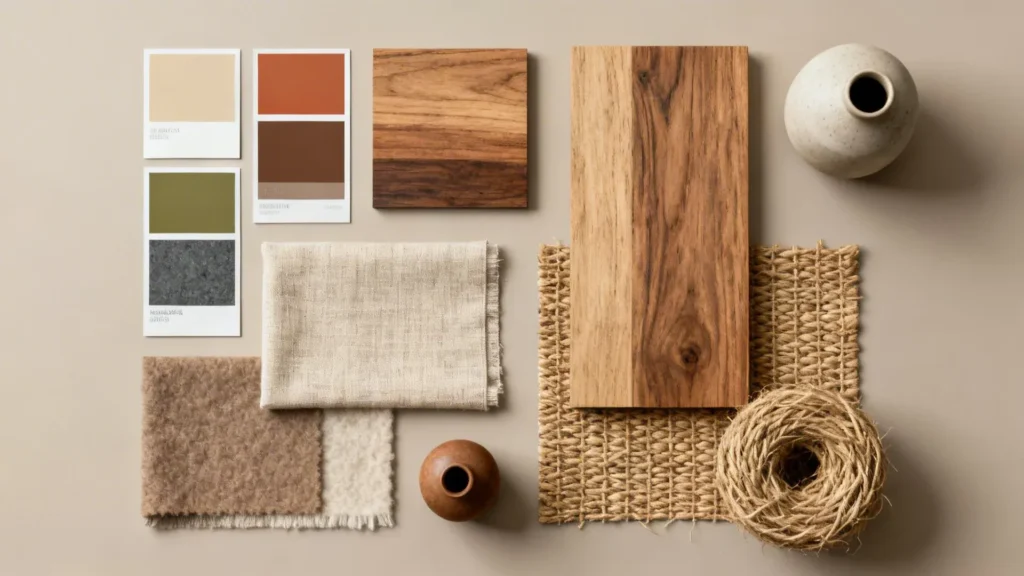
Here’s the part most guides skip. Earth tones are muted on purpose. So a room made of one smooth finish looks dull, even when the colors are lovely. Designers keep saying the same thing: layering different textures is what stops an earthy room from feeling one-dimensional.
A good rule is to put at least three distinct textures in every room. Rough, soft and smooth. Then add a fourth if it still feels thin.
Linen curtains
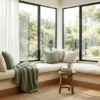
Linen is the easy win. It lets light filter through in a soft, hazy way, and it hangs with a relaxed slouch. Let the fabric kiss the floor and bunch up a little. It looks effortless, even if you ironed it twice.
A jute rug
Jute is rough, flat and grounding. Layer a smaller wool or cotton rug on top and you get contrast under your feet without spending much.
Limewash and plaster-style walls
Limewash searches on Houzz climbed 53% because the chalky, uneven finish adds old-world character that flat paint can’t. If you rent and can’t touch the walls, get a similar effect with a large textured wall hanging, a plaster-look canvas or a linen-covered headboard.
That’s the real engine behind earthy home decor: touch first, color second. Get the touch right and even a simple cream-and-brown room feels rich.
Natural Materials That Do the Heavy Lifting
You don’t need a dozen materials. You need a few good ones, used honestly.
Solid wood. It’s the backbone. A walnut coffee table or oak dining bench anchors the room and adds warm grain. Mix wood tones instead of matching them perfectly.
Rattan and cane. They add lightness. A cane-front cabinet or a rattan chair stops all that wood from feeling heavy.
Stone. Houzz pros say stone is showing up in unexpected places, like sinks, furniture and lighting. A marble tray or travertine side table is an easy first step.
Handmade ceramics. Wonky bowls and clay vases carry the “made by a person” feeling that factory pieces can’t fake. One big vase beats ten small knickknacks.
Leather. Tan or smoky leather picks up a soft patina over time and wipes clean, which makes it a smart pick if you have kids or pets.
On a tight budget? Stain plywood panels to get a rustic wall without paying for reclaimed timber. A few honest materials beat a dozen fake ones, and that’s the heart of earthy home decor.
Earthy Living Room Ideas and Bedroom Fixes
Let’s make this concrete.
Earthy living room ideas that work
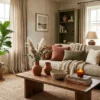
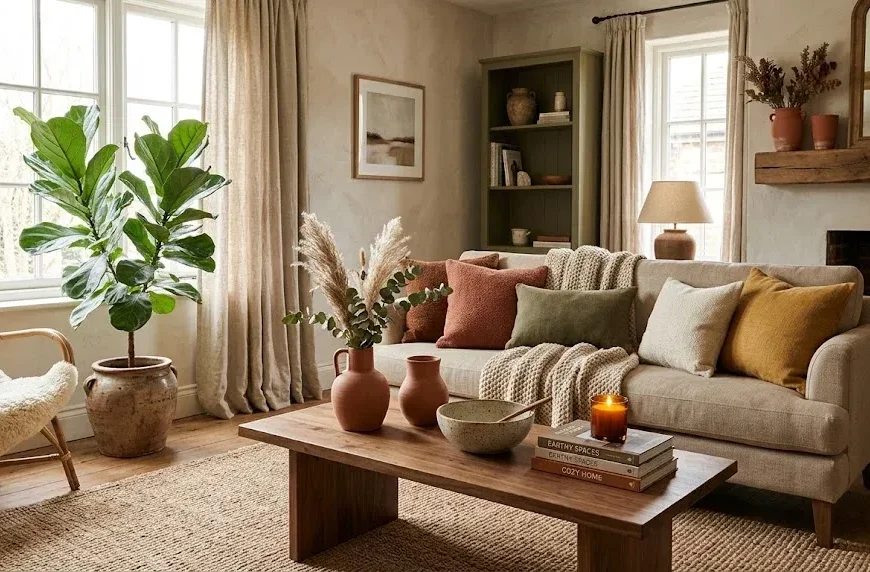
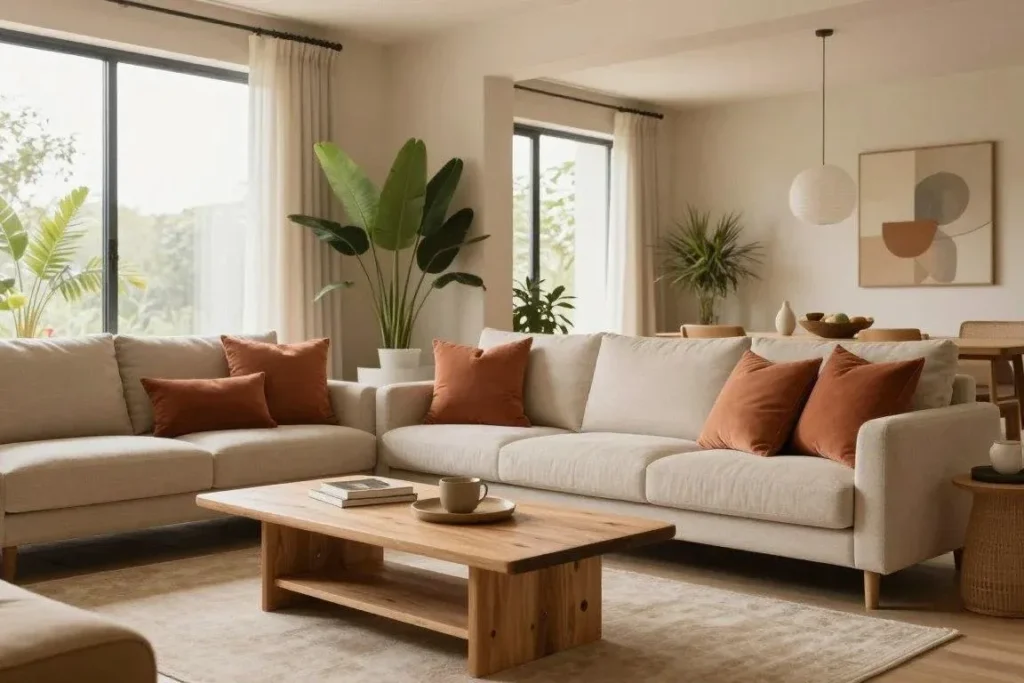
Start with a sofa that sits well with your wall color, like warm oat against a soft clay wall. Add a jute rug, a walnut coffee table, linen curtains and one rust throw. Finish with a big clay vase and a single large piece of art in rust and ochre.
Then fix the lighting. Swap cold white bulbs for warm ones, around 2700K, and use two or three lamps instead of one harsh ceiling light. Warm light is what makes earth tones glow instead of go gray. Of all the earthy living room ideas, this one costs the least and changes the most.
The earthy bedroom
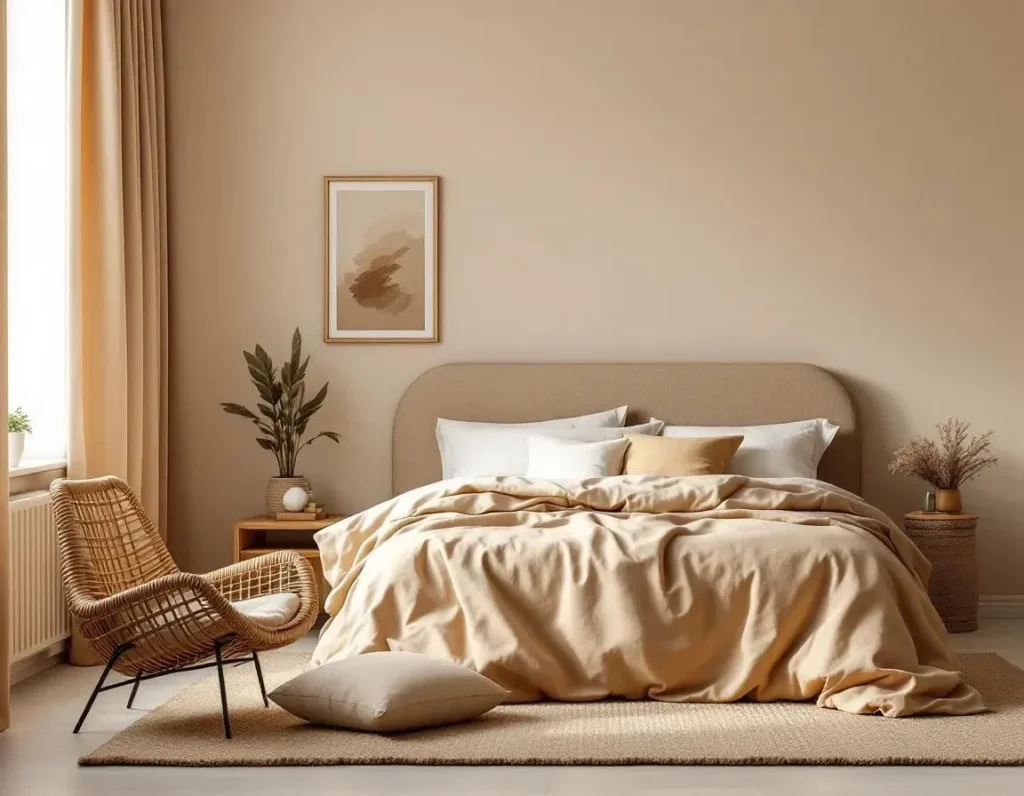
Bedrooms are where this style does its quietest work. Try camel or sand walls with pale trim so the room stays soft. Layer linen bedding in two or three shades, add wooden nightstands and tuck a rattan chair into a corner. A plant by the window finishes it.
Your earthy bedroom should feel like a hotel suite that somehow smells like home. If it starts to feel like a catalog, add one thing that’s personal: a framed photo, a vintage lamp, a thrifted bowl.
Kitchens, bathrooms and entryways
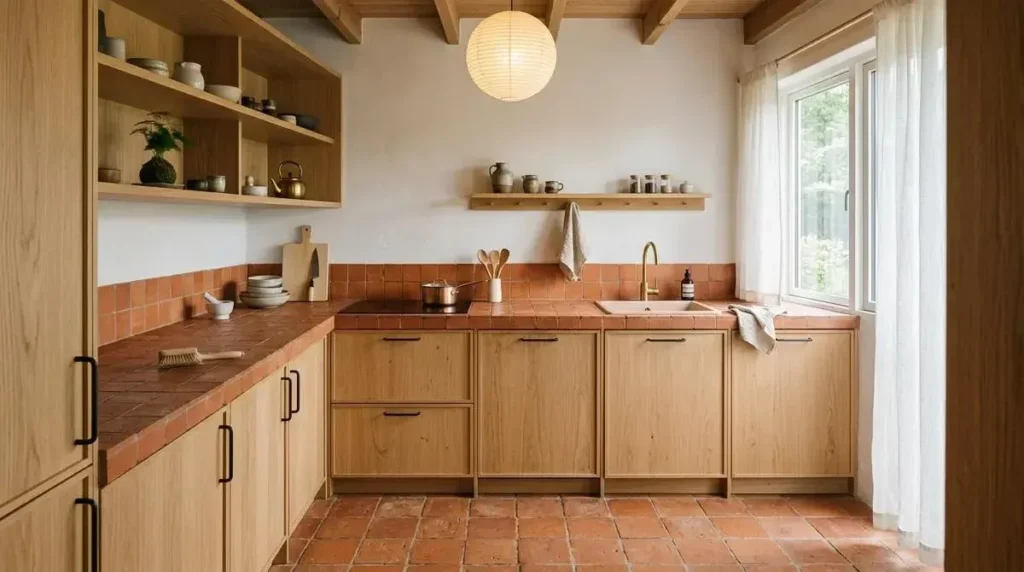
Smaller rooms are perfect for earthy touches because one change goes a long way. In the kitchen, try a wooden cutting board display, a ceramic canister set and linen tea towels in oat or rust. If you’re ready for a bigger move, Houzz saw terracotta flooring searches rise 55%, so warm clay tiles are having a moment.
In the bathroom, a stone soap dish, a teak bath mat and a woven basket for towels do the job. Add a plant that likes steam, like a fern.
At the entryway, keep it simple. A wooden bench, a jute runner and a hook rail with a woven bag hanging off it tell guests the mood of the whole home before they’ve taken their shoes off.
How to Mix Earthy Pieces With Modern Furniture
Not everyone wants a full organic makeover, and you don’t need one. Earthy home decor plays nicely with sleek, modern furniture because the contrast makes both sides look better. A clean-lined sofa looks sharper next to a nubby jute rug. A glass coffee table feels less cold with a clay bowl sitting on it.
Here’s an easy way to blend the two. Keep your existing modern anchor pieces, then add warmth around them: natural fiber rugs, wooden side tables, linen cushions and ceramic lamps. Repeat one earthy color, say rust, in at least three places so the eye connects the dots.
Matte black frames, brushed metal handles and simple shapes keep things crisp. The result looks planned instead of accidental, which is exactly what you want.
Mistakes That Make Earthy Rooms Feel Off
Here are the slip-ups that show up again and again.
Matching everything. Matching sofas, rugs and curtains in one color is about as dull as styling gets. Vary the tone and texture so pieces feel collected.
Using every natural material at once. One interior brand describes the “resort look” as rooms packed with every natural material available. Earthy rooms that feel like homes leave breathing space. Pick three or four materials and repeat them.
Going dark in a small room. Deep browns can shrink a tight space. Keep walls lighter and save the dark tones for furniture and accents.
Forgetting the walls. Bare white walls can make a room feel smaller because your eye has no sense of scale. Hang something big.
Cold lighting. Bright white bulbs make warm paint look gray and wood look tired. Choose warm bulbs and place lamps at different heights so light pools softly instead of flooding the room.
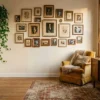
Skipping personality. Houzz pros say homeowners now want spaces that feel curated and layered, with vintage pieces mixed in. Earthy home decor should look collected over time, not bought in a single afternoon.
Plants and Biophilic Touches
“Biophilic design” searches on Houzz rose 112%, which is a fancy way of saying people want nature indoors. The good news is that it’s the easiest layer to add.
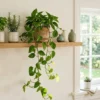
A plant specialist quoted by Gathered says houseplants lift mood and make a space feel alive. You don’t need a jungle. One large plant, like a rubber tree, does more than six tiny ones lined up on a shelf. Add a trailing pothos on a high shelf and a small herb pot in the kitchen.
Pair them with terracotta or ceramic pots in earthy shades. And if plants tend to die on you, don’t panic. Dried pampas grass or olive branches in a clay vase bring the same organic shape with zero watering.
Easy and Renter-Friendly Ways to Start
You don’t need to repaint or renovate. Pick one of these and see how it feels:
- Swap cool-toned bulbs for warm ones.
- Replace synthetic curtains with linen ones.
- Add a jute rug under the sofa.
- Put one big ceramic vase on a wooden surface.
- Change throw pillow covers to rust, olive and cream.
- Drape a textured throw over the sofa.
Do three of these and you’ll feel the difference without spending much. Secondhand shops are worth a look too. Vintage wood furniture and old pottery already carry the wear and character that earthy home decor depends on.
FAQs: Earthy Home Decor
1. What is earthy home decor?
Earthy home decor is a style built on natural materials, textures and warm, muted colors. Think wood, linen, clay, stone, terracotta and olive green. The goal is calm and warmth rather than shine and perfection, so imperfect, handmade pieces fit right in.
2. Which colors work best for an earthy look?
Start with warm neutrals like oat, sand and cream. Add depth with terracotta, rust, olive or chocolate brown. Finish with small contrast hits such as deep blue or matte black. Avoid stark white and cool gray, since they flatten the warmth natural materials create.
3. How do I stop an earthy room from feeling boring?
Layer textures. Mix something rough like jute, something soft like linen or wool, and something smooth like ceramic or stone. Add warm lighting and one contrast color. Boring usually means every surface feels the same, so change what your hands would touch.
4. Can I mix earthy home decor with a modern home?
Yes. Sleek lines and clean shapes actually make natural textures stand out. Keep your modern furniture, then add a jute rug, linen curtains, a wooden side table and a clay vase. Matte black accents help the two styles blend instead of clash.
5. Is this style expensive?
Not if you start small. Warm bulbs, linen curtains, thrifted pottery and secondhand wood furniture cost far less than a full makeover. Buy the big anchor pieces slowly, and let the room fill in over time rather than all at once.
Conclusion
Earthy home decor isn’t a style you finish in one shopping trip. It builds slowly: a wooden bowl here, a linen curtain there, a lamp that finally throws warm light. That’s what makes it feel like yours.
Remember the formula. Warm neutrals for the base, a few earthy tones for depth, small hits of contrast, and at least three textures in every room. Leave breathing space, and skip the resort look.
Your next step is simple. This weekend, pick one room. Swap one cool bulb for a warm one and add one natural texture, like a jute rug or a linen throw. Live with it for a week. Then add the next piece. Don’t rush it. A room that grows over a few months nearly always looks better than one finished in a weekend.
Your home doesn’t have to look like anyone else’s. It only has to feel good when you walk in.