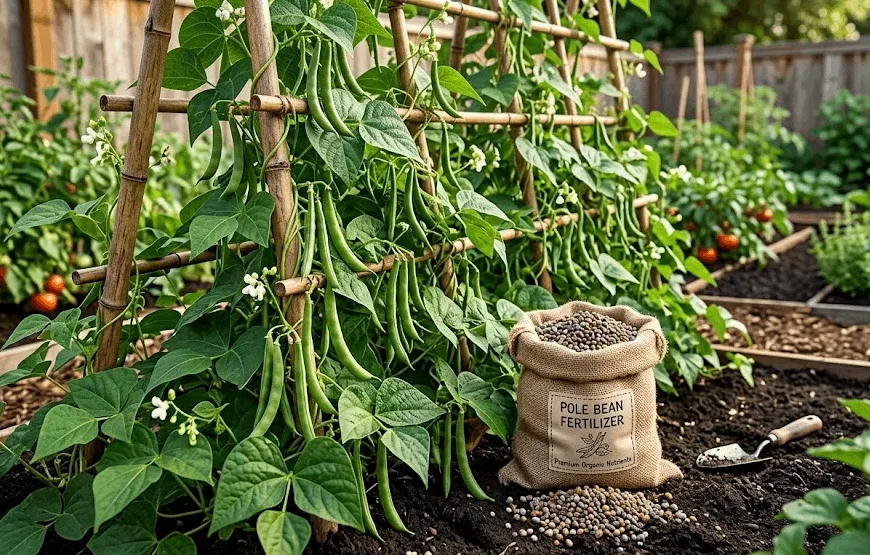
Best Fertilizer for Pole Beans: What Actually Works in Your Garden
There’s a particular kind of disappointment that comes with growing pole beans. You do everything right — prepare the bed, water consistently, train the vines up the trellis — and then halfway through summer, the leaves start to yellow, the pods stay small, or the plant just stops performing. It’s discouraging, especially after all that work.
In most cases, the issue isn’t pests or disease. It’s feeding.
Choosing the best fertilizer for pole beans comes down to understanding what these plants genuinely need — and just as importantly, what they don’t. Pole beans aren’t heavy feeders the way tomatoes or corn are. They have a different biology, and if you treat them like every other vegetable in the garden, you’ll likely end up with the same underwhelming results season after season.
This guide covers everything: NPK ratios, organic and synthetic options, feeding schedules, container growing, and how to read your plants when something goes wrong. By the time you finish reading, you’ll have a clear, practical plan for feeding your pole beans from planting day all the way through final harvest.
What Nutrients Do Pole Beans Actually Need?
Before spending money on fertilizer, there’s one thing worth understanding clearly: pole beans fix their own nitrogen.
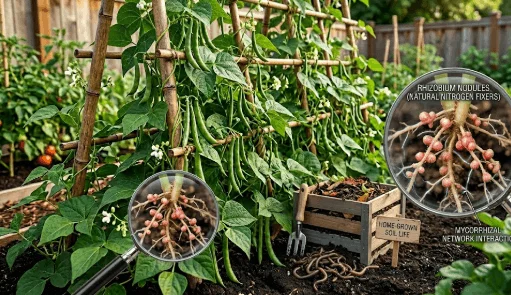
Like all legumes, pole beans form a working relationship with Rhizobium bacteria that live naturally in the soil. These bacteria attach to the plant’s roots, forming small nodules, and pull nitrogen directly from the air — converting it into a usable form for the plant. It’s one of nature’s more efficient systems, and it works remarkably well when the soil conditions are right.
The practical implication? If you load your bean bed with a high-nitrogen fertilizer, you’re not helping the plant — you’re pushing it in the wrong direction. Understanding the best fertilizer for pole beans starts here — excess nitrogen causes rapid, leafy growth. The vines look lush and full, but the plant puts most of its energy into foliage rather than flowers and pods. The harvest suffers.
What pole beans genuinely benefit from is phosphorus and potassium, along with a modest base of other nutrients:
- Nitrogen (N): Low to moderate at planting; naturally fixed after establishment through Rhizobium activity.
- Phosphorus (P): High demand — critical for strong root development, flower formation, and pod set.
- Potassium (K): High demand — supports overall plant health, stress resistance, and pod quality.
- Calcium & Magnesium: Secondary nutrients that matter especially in sandy or acidic soils.
- Sulfur: Plays a quiet but meaningful role in protein synthesis within the developing bean.
A fertilizer with a pole bean fertilizer NPK ratio of 5-10-10 or 4-8-8 is widely considered the most appropriate for this crop. The low first number keeps nitrogen in check, while the higher phosphorus and potassium levels support what matters most to a productive harvest.
Best Fertilizer for Pole Beans: Top Options Compared
There’s no single product that works perfectly for every garden. Soil type, climate, and growing method all play a role. Here’s a clear breakdown of the most effective fertilizer types, along with honest guidance on when each one makes the most sense.
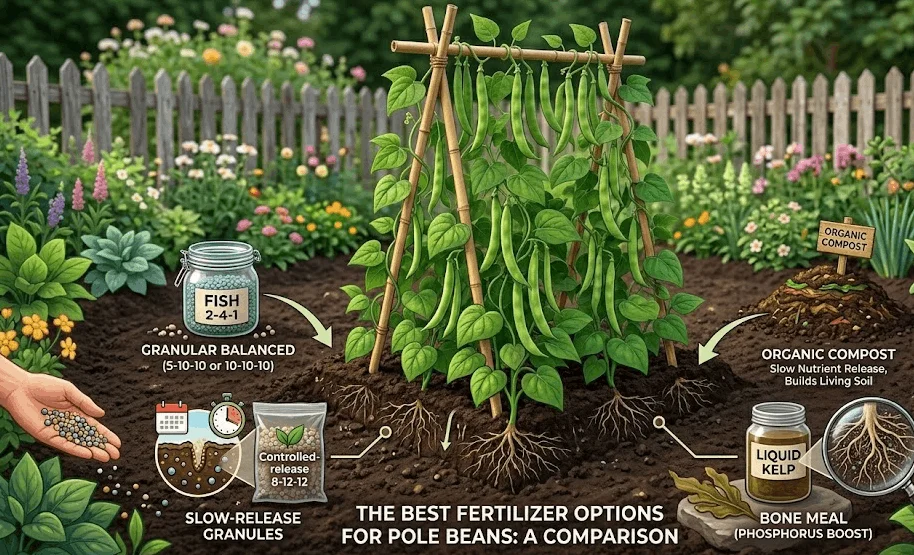
1. Granular Balanced Fertilizers (5-10-10 or 10-10-10)
For most home gardeners, a granular fertilizer is the simplest and most forgiving option. It’s straightforward to apply, releases at a steady rate, and doesn’t require the careful measurement that liquid products demand.
A formula at 5-10-10 is the preferred choice. If 10-10-10 is all you have on hand, it can work — but use it conservatively and only before planting, not during the growing season.
Work granular fertilizer into the soil about two weeks before planting. Once plants reach around 6 inches tall, a light side-dressing can support early root development. Keep applications a few inches away from the stem to avoid root burn.
Best for: In-ground gardens and raised beds with average to moderate soil quality.
2. Organic Compost
Compost doesn’t get enough credit. It’s not flashy, and it doesn’t come with bold claims on the packaging — but for pole beans, it’s one of the most reliable feeding options available.
Well-aged compost releases nutrients slowly and consistently. It improves soil texture, holds moisture during dry spells, and supports the microbial activity that makes nitrogen fixation work more efficiently. There’s also a genuine long-term benefit: regular compost use builds the kind of living soil that requires less and less intervention over time.
Work a 2-inch layer into the top 6 inches of soil before planting. A light top-dressing around plant bases mid-season can extend production when things start to slow. If you do nothing else for your bean bed, adding compost before planting will make a measurable difference.
3. Fish Emulsion (Low-Nitrogen Liquid Feed)
Fish emulsion is one of those products that divides gardeners — mostly because of the smell. But it performs well, and for pole beans in particular, it fills a gap that many other fertilizers miss.
A good fish emulsion for beans will carry an NPK around 2-4-1, where phosphorus matches or exceeds nitrogen. Applied as a soil drench or foliar spray every three to four weeks from flowering onward, it delivers micronutrients alongside its primary nutrition that genuinely support pod development and plant resilience.
The smell fades within a day or two. The results last considerably longer.
4. Bone Meal
If there’s one amendment that’s consistently underused in bean gardens, it’s bone meal. With an NPK around 3-15-0, it’s an excellent phosphorus and potassium for bean growth solution — particularly strong on the phosphorus side.
Bone meal releases slowly, which means it won’t overwhelm young roots or trigger the vegetative surge that faster fertilizers can cause. Work about a tablespoon into each planting hole, or broadcast it across the bed before tilling. It’s especially worth adding in soils that have tested low in phosphorus, which is common in heavily leached sandy soils or clay-dense beds that haven’t been amended recently.
5. Kelp Meal or Liquid Kelp
Kelp is naturally high in potassium and trace minerals, with very little nitrogen — a combination that suits pole beans well. It also contains natural compounds called cytokinins, which stimulate root growth and help plants handle heat and drought stress.
Liquid kelp applied every two weeks from first flowering through harvest has shown consistent results in supporting pod set and extending productive seasons. It works well as a standalone feed or as a complement to bone meal or compost — making it one of the smartest choices when selecting the best fertilizer for pole beans.
6. Slow-Release Granular Fertilizers
Slow release fertilizer for vegetable garden beans is worth serious consideration for anyone who prefers a lower-maintenance feeding approach. Coated granules — sometimes labeled as controlled-release or time-release — break down gradually over months, providing a consistent supply of nutrients without repeated applications.
One application at planting can carry plants through much of the season. Look for formulas around 5-10-10 or 8-12-12. These are particularly well-suited to raised beds, where nutrients tend to leach out faster than in traditional in-ground gardens.
Fertilizer Comparison Table
| Fertilizer Type | NPK Range | Best Use | Organic? | Application Timing |
|---|---|---|---|---|
| Granular 5-10-10 | 5-10-10 | In-ground beds | Sometimes | Pre-plant + side dress |
| Compost | Variable | All garden types | Yes | Pre-plant + mid-season |
| Fish Emulsion | 2-4-1 to 5-1-1 | Liquid feeding | Yes | Every 3–4 weeks |
| Bone Meal | 3-15-0 | Phosphorus boost | Yes | At planting |
| Kelp Meal/Liquid | 1-0-4 | Trace minerals + K | Yes | Bi-weekly from flowering |
| Slow-Release Granular | 5-10-10 | Raised beds, containers | Varies | Once at planting |
When to Fertilize Pole Beans: A Season Timeline
Even the best fertilizer for pole beans won’t perform well if it’s applied at the wrong time. The plant’s nutritional needs shift significantly from germination through harvest, and matching your feeding to those stages makes a real difference.
Before Planting (2 Weeks Out)
Start with a soil test if you haven’t done one recently. Aim for a pH between 6.0 and 7.0 — outside this range, nutrients become less available regardless of what you apply. Work compost, bone meal, or a low-nitrogen granular fertilizer into the top 6–8 inches of soil. This builds a nutrient base that supports the early root system before nitrogen fixation becomes active.
At Planting
Consider treating your seeds with Rhizobium inoculant powder before sowing. This step is inexpensive, takes less than a minute, and ensures the nitrogen-fixing bacteria are present and active from germination. In soil that hasn’t grown beans for several seasons, this alone can produce a noticeable improvement in plant vigor and yield.
When Plants Reach 6 Inches Tall
By this stage, nitrogen fixation is underway. The plant’s demand shifts toward phosphorus and potassium to support root expansion and early flowering. A light side-dressing of compost or a low-nitrogen granular product works well here. Avoid anything nitrogen-heavy at this point.
At First Flower Bud Formation
This is the most important feeding window in the entire season. Choosing the best fertilizer for pole beans matters most right here — potassium plays a direct role in flower retention and pod development, so switching to a potassium-focused liquid feed — liquid kelp or a diluted fish emulsion — at this stage pays real dividends. Miss this window, and you’ll likely see premature flower drop and a noticeably smaller harvest.
Mid-Harvest (4–6 Weeks After First Pods)
Plants that are still producing but starting to lose momentum can often be coaxed into several more weeks of harvest with a light compost top-dressing or a weak liquid feed. It’s a small effort with a worthwhile return.
How to Fertilize Pole Beans Organically
How to fertilize pole beans organically is one of the most common questions from home gardeners who want to avoid synthetic inputs without sacrificing yield. The good news is that an entirely organic approach works very well for this crop — perhaps better than a synthetic one in the long run, because it builds the soil biology that pole beans depend on.
Here’s a straightforward organic program:
- Bed preparation: Work 3–4 inches of aged compost into the soil a few weeks before planting.
- At planting: Add bone meal to each planting hole — about one tablespoon per plant.
- Seed treatment: Coat seeds with Rhizobium inoculant before sowing.
- Early growth: Top-dress with compost once plants reach 4–6 inches.
- Flowering stage: Apply liquid kelp every 10–14 days through the flowering period.
- Mid-season boost: If leaves begin to pale, a foliar spray of diluted fish emulsion can bring them back quickly.
This program is low in cost, manageable for any size garden, and improves soil quality with every season. Beans grown this way consistently taste better than those produced in chemically maintained soil — proof that the best fertilizer for pole beans doesn’t always come in a synthetic bag.
Fertilizing Pole Beans in Containers
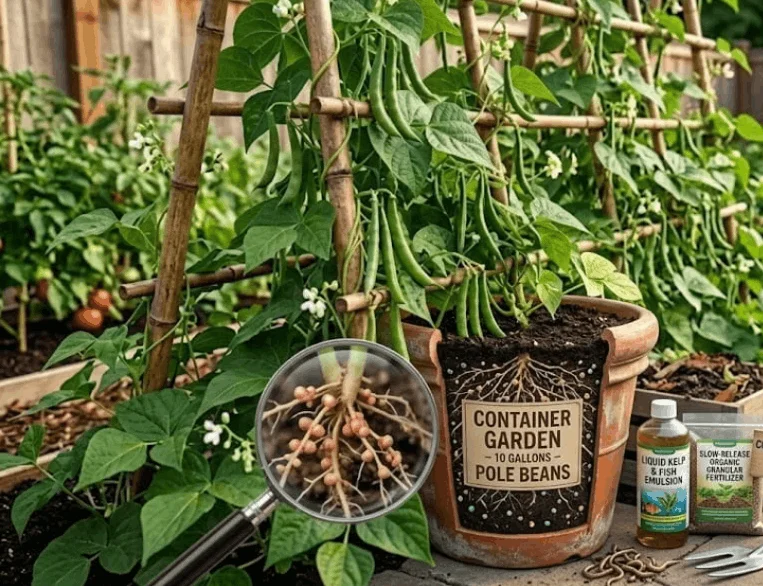
Fertilizing pole beans in containers requires a different approach than in-ground growing. The contained environment means nutrients flush out with every watering, and there’s no surrounding soil ecosystem to fill in the gaps. Plants in pots are entirely dependent on what you give them.
A few key points:
- Start with a quality potting mix that already contains compost.
- Add a slow-release granular fertilizer at planting to establish a nutritional base.
- Supplement with liquid kelp or fish emulsion every two weeks once flowering begins.
- Keep an eye on the leaves — yellowing often signals nitrogen deficiency, while crinkled or browned edges may indicate potassium or magnesium shortfall.
- Pot size directly affects productivity: a minimum of 5 gallons per plant is workable, but 10 gallons gives roots the room they need to perform well.
The best fertilizer for pole beans in containers is typically a combination of slow-release granules at planting, followed by consistent liquid feeding throughout the season. The liquid feeding is what most container gardeners skip — and it’s usually the reason yields disappoint.
Signs of Nutrient Deficiency in Pole Beans
Plants communicate clearly when something is missing. Knowing how to read those signs of nutrient deficiency in pole beans early means you can correct the problem before it costs you the harvest.
| Symptom | Likely Deficiency | Fix |
|---|---|---|
| Yellowing older leaves | Nitrogen | Compost or diluted fish emulsion |
| Purple-tinged leaves | Phosphorus | Bone meal or rock phosphate |
| Brown leaf edges | Potassium | Liquid kelp or potassium sulfate |
| Small, pale young leaves | Sulfur or iron | Sulfur-based amendment or chelated iron |
| Distorted new growth | Calcium | Agricultural lime or gypsum |
| Yellowing between veins | Magnesium | Epsom salt foliar spray (1 tbsp/gallon) |
One caution worth emphasizing: always confirm with a soil test before adding amendments. Applying a nutrient the soil already has in excess can lock out other nutrients and create a more complicated problem than the one you started with.
Common Mistakes When Fertilizing Pole Beans
Experience helps, but even seasoned gardeners repeat certain errors when applying the best fertilizer for pole beans. Here are the ones that come up most often.
Mistake 1: Applying high-nitrogen fertilizer too often This is by far the most frequent problem. The result is a beautiful, dark-green vine that produces very little. If your beans are lush but unproductive, excess nitrogen is the first thing to investigate.
Mistake 2: Skipping soil testing Adding phosphorus to soil that already contains plenty of it can block zinc and iron uptake. A basic test costs under $20 and removes all the guesswork from your fertilizer decisions.
Mistake 3: Feeding stressed plants A plant that’s wilting from heat or water shortage can’t process fertilizer effectively. Address the immediate stress first — whether that’s watering or shade — then feed once the plant has stabilized.
Mistake 4: Not using seed inoculant Without active Rhizobium bacteria in the soil, nitrogen fixation doesn’t happen at the level beans need it. The inoculant is inexpensive, widely available, and takes almost no time to apply.
Mistake 5: Over-fertilizing in containers Salt accumulation from repeated fertilizer applications causes root damage and wilting that can look deceptively like underwatering. Flush container soil with plain water every few weeks to prevent buildup.
Best Soil Amendments for Pole Beans (Beyond Fertilizer)
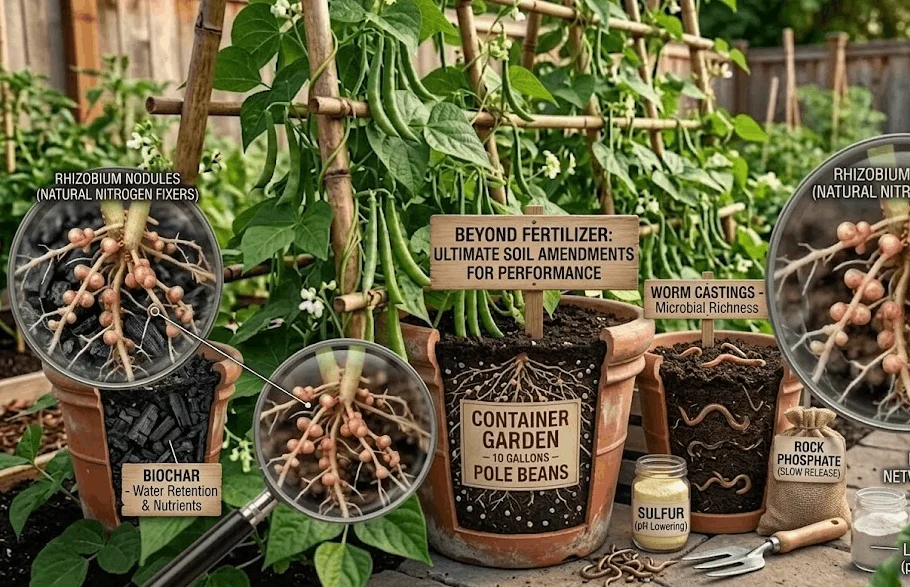
The best soil amendments for bean plants go beyond standard fertilizer. These additions don’t replace feeding, but they change how effectively the best fertilizer for pole beans is absorbed — which ultimately determines how well your plants perform.
- Biochar: Improves water retention, supports microbial populations, and holds nutrients in place in sandy soils that tend to drain too quickly.
- Worm castings: One of the gentlest, most microbe-rich amendments available — works well alongside any feeding program without risk of overfeeding.
- Rock phosphate: A slow-release phosphorus source that persists in the soil for years and builds up over repeated seasons.
- Sulfur: Useful for lowering pH in alkaline soils while also supporting protein development inside the developing bean.
- Agricultural lime or dolomite: Raises pH in acidic soils and supplies calcium and magnesium simultaneously.
These materials work behind the scenes. Healthy soil structure and the right pH level are what allow the best fertilizer for pole beans to actually reach the plant’s roots, rather than locking up in the soil or washing away with rain.
FAQ: Best Fertilizer for Pole Beans
Q: What is the best NPK ratio for pole beans?
A 5-10-10 ratio is the most widely recommended starting point. Pole beans fix their own nitrogen through root bacteria, so a low first number keeps vegetative growth in check while higher phosphorus and potassium support flowering and pod production.
Q: Should I fertilize pole beans after they start flowering?
Yes, but the type of fertilizer matters at this stage. Switch to a potassium-focused liquid feed — liquid kelp is a reliable choice. Avoid anything nitrogen-heavy once flowering begins, as it can cause flowers to drop before pods develop.
Q: Can I use 10-10-10 fertilizer on pole beans?
It can be used before planting and with restraint. During the active growing season, the nitrogen level is generally too high for beans that are already fixing their own, and it tends to push growth in the wrong direction.
Q: How often should pole beans be fertilized?
Once as a side-dress during early growth, then liquid feeding every two to three weeks from flowering through harvest. Container plants typically need more frequent applications because nutrients flush out faster.
Q: Is compost enough for pole beans?
In genuinely rich, well-maintained soil, yes. In average or depleted soil, pair compost with bone meal at planting and liquid kelp during the flowering period for consistently better results.
Q: Why are my pole bean leaves turning yellow?
Yellowing is most often linked to nitrogen deficiency or a pH that’s too low. Check pH first — below 6.0, most nutrients become unavailable to the plant no matter how much fertilizer you’ve applied.
Q: What’s the difference between pole beans and bush beans when it comes to fertilizing?
Pole beans produce over a much longer season and benefit from mid-season feeding to sustain that output. Bush beans tend to produce in a concentrated flush and generally need less ongoing nutrition.
Conclusion
Growing pole beans well is less about working harder and more about feeding them correctly from the start. The plants are capable producers — given the right soil, the best fertilizer for pole beans, and a little attention when something looks off, they’ll reward you with a harvest that runs well into the season.
The core principle stays the same regardless of your method: keep nitrogen modest, prioritize phosphorus and potassium, and let the plant’s natural ability to fix nitrogen do its job. Whether you go fully organic with compost, bone meal, and liquid kelp, or you prefer a simple granular fertilizer worked into the soil before planting, both approaches can produce excellent results when applied with some thought.
The most important shift is moving away from guessing. Test your soil, read your plants, and adjust based on what you actually see. A purple tint on the leaves means something specific. Brown leaf edges mean something else. The plants are always giving you information — the fertilizer program you build should be a response to that, not just a routine.
If you take one thing from this guide, make it this: the best fertilizer for pole beans is the one that matches what your specific soil and plants actually need, applied at the moment they need it most. That combination — the right product, the right timing, and an attentive eye — is what separates a frustrating season from a genuinely productive one.