Introduction: Why Phosphate Is the Nutrient Your Lawn Is Quietly Begging For
Most homeowners focus heavily on nitrogen. They buy the darkest fertilizer, apply it on schedule, and still end up with a lawn that looks thin, uneven, or slow to bounce back after a hard winter. It’s a frustrating cycle — and the missing piece is usually something they never considered.
The answer is often right beneath your feet.
Phosphate for lawns does something nitrogen simply cannot replicate. Nitrogen feeds the blades you see. Phosphorus — delivered to plants through phosphate compounds — feeds everything you don’t see: the root system, the seedling structure, the plant’s internal energy network. A lawn can appear reasonably healthy on the surface while its roots grow weaker with every passing season, simply because phosphate was never part of the conversation.
This guide walks through the full picture. From what phosphate actually does inside a grass plant, to how soil pH affects its availability, to choosing the right product and applying it at the right time — everything is covered here. If you’ve ever wondered why your lawn responds well to feeding but still struggles in dry spells or recovers slowly from damage, phosphate may be exactly what’s been missing.
What Is Phosphate and What Does It Do in Grass?
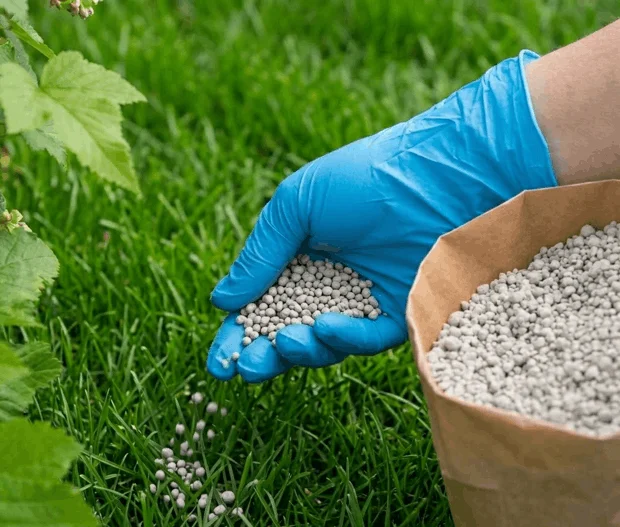
Phosphate for lawns is the plant-available form of phosphorus — the middle number in the NPK ratio printed on every fertilizer bag. Once phosphorus enters the soil solution, it’s absorbed through root tips as either monobasic or dibasic phosphate ions, depending on soil pH conditions.
Inside the grass plant, it gets to work immediately on four essential processes:
- Energy transfer — Phosphate forms the core of ATP (adenosine triphosphate), the compound that powers nearly every biological function in a living plant.
- Root development — It triggers lateral root branching and encourages roots to grow deeper, which directly improves a lawn’s ability to survive dry conditions.
- Cell division — New tissue cannot form without phosphate, making it especially important during germination and the early weeks after seeding.
- Photosynthesis support — Phosphate activates the enzymes involved in both the light and dark reactions of photosynthesis, keeping the whole energy cycle running efficiently.
This explains why phosphate for lawns tends to matter most at two distinct moments: when new grass is being established, and when an existing lawn is trying to recover from stress — whether that’s drought, disease, or heavy wear.
Reading the NPK Ratio: Where Does Phosphate Fit?
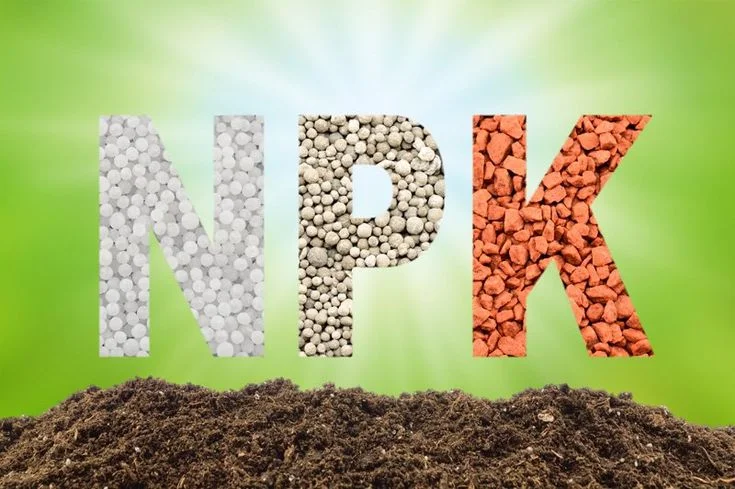
Walk down any garden center aisle and you’ll see three numbers on every fertilizer bag — something like 10-20-10 or 16-4-8. These aren’t random. They represent the percentage of nitrogen, phosphorus, and potassium in that order.
- N = Nitrogen (first number) — drives green leaf growth.
- P = Phosphorus/Phosphate (middle number) — supports roots and establishment.
- K = Potassium (last number) — builds stress resistance and overall plant health.
| NPK Example | Use Case | Phosphate Level |
|---|---|---|
| 10-20-10 | New seeding / establishment | High |
| 32-0-10 | Mature, established lawns | None |
| 16-4-8 | General maintenance | Low-moderate |
| 0-46-0 | Phosphate correction | Pure phosphate |
| 5-10-5 | Starter fertilizer | Moderate-high |
For mature, well-established lawns growing in phosphorus-sufficient soil, a low or zero phosphate for lawns formula is often perfectly adequate for routine feeding. However, for new lawns, patchy areas, or soils that have tested low in phosphorus, a product with a higher middle number makes a meaningful difference in how the grass develops.
Signs Your Lawn Has a Phosphate Deficiency
Phosphate deficiency in lawn grass is more common than many people realize, and it often goes undiagnosed for years. Certain soil types and lawn histories make it significantly more likely:
- Newly graded or disturbed soils, such as those found around new construction.
- Sandy soils that drain quickly and hold nutrients poorly.
- Highly acidic soils with a pH below 5.5, where phosphorus becomes chemically unavailable.
- Lawns that have never been soil tested or received balanced, multi-nutrient fertilization.
Visual signs that suggest a phosphate problem:
- A purple or reddish tint developing on grass blades, particularly on the undersides — this is the most consistent visual indicator.
- Slow or uneven germination when overseeding.
- Grass that remains pale or yellowish despite regular nitrogen applications.
- Poor recovery after periods of drought or winter dormancy.
- A shallow, weak root system that becomes obvious when you pull up a small plug of turf.
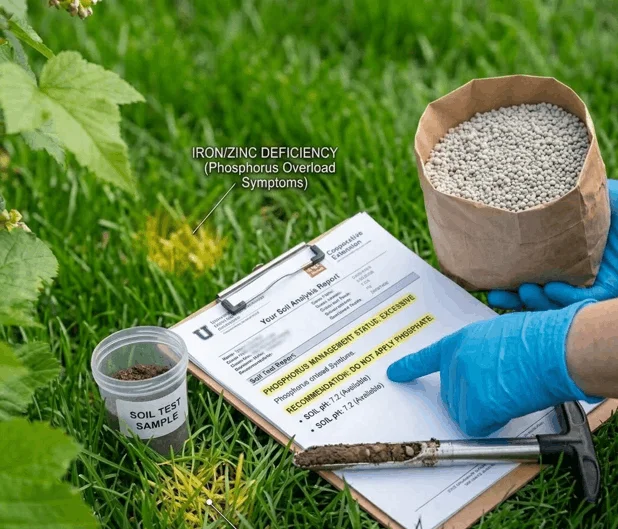
These symptoms can overlap with other deficiencies, including iron or manganese, which is why relying on visual diagnosis alone has its limits. A confirmed soil test is always the more reliable step before applying phosphate for lawns.
The Soil Test: The Step Most Homeowners Skip
There’s a straightforward truth that doesn’t get said enough: applying phosphate to a lawn that already has adequate phosphorus levels accomplishes very little. Worse, when phosphorus accumulates in soil beyond what grass can use, it begins to interfere with the uptake of zinc and iron — creating new deficiency problems in the process.
A standard lawn soil test for managing phosphate for lawns — available through cooperative extension offices, university agriculture programs, or private labs — gives you a clear picture of what’s actually in your soil:
- Current phosphorus levels, categorized as low, medium, high, or excessive.
- Soil pH, which directly controls how available phosphate is to grass roots.
- Organic matter percentage.
- Specific amendment recommendations based on your results.
How soil pH affects phosphate availability:
| Soil pH | Phosphate Availability |
|---|---|
| Below 5.0 | Very low (locked by aluminum and iron) |
| 5.5 – 6.0 | Moderate |
| 6.0 – 7.0 | Optimal |
| Above 7.5 | Reduced (locked by calcium) |
If your soil test reveals low phosphorus alongside a pH that falls outside the 6.0–7.0 window, address the pH imbalance first. Use lime to raise a pH that’s too low, or sulfur to bring down a pH that’s too high. Applying phosphate to a soil with poor pH balance is like watering a plant through a clogged pipe — the nutrient is there, but very little of it actually reaches the roots.
Best Phosphate Fertilizer for Grass: Product Types Explained
Not all phosphate for lawns products perform the same way once they hit the soil. The differences in release speed, concentration, and soil interaction matter depending on what your lawn actually needs.
1. Superphosphate (0-20-0)
This is the most widely available inorganic phosphate product, produced by treating rock phosphate with sulfuric acid. It releases phosphorus at a moderate pace and integrates well with most soil types.
Best for: Established lawns with confirmed low phosphorus based on a soil test.
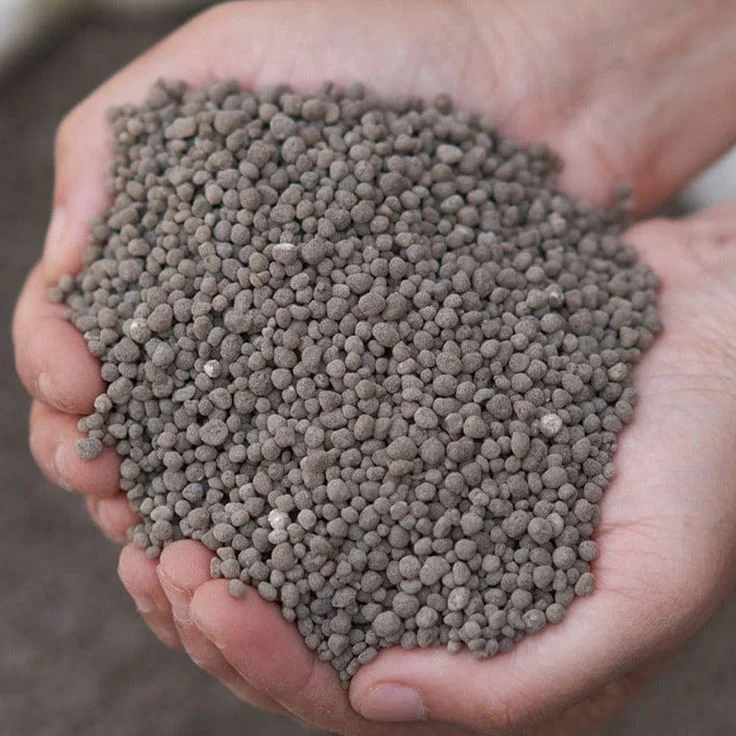
2. Triple Superphosphate (0-46-0)
A more concentrated formulation, commonly called TSP. With nearly 46% phosphate content, it’s used when a soil test shows a significant deficiency or when establishing a new lawn on particularly poor soil. The higher concentration means smaller application rates are needed — and precision matters here.
Best for: Severe phosphate deficiency or new lawn establishment on depleted soil.
3. Starter Fertilizers (e.g., 10-18-6, 5-10-5)
These balanced NPK blends are formulated specifically for seeding and sod installation. The elevated phosphate ratio supports rapid root mass development during the critical first weeks of grass establishment, when the plant is most vulnerable.
Best for: Overseeding projects, new grass seeding, and sod installation.
4. Organic Phosphate Fertilizer for Turf
For homeowners who prefer a more natural approach, several organic options work well:
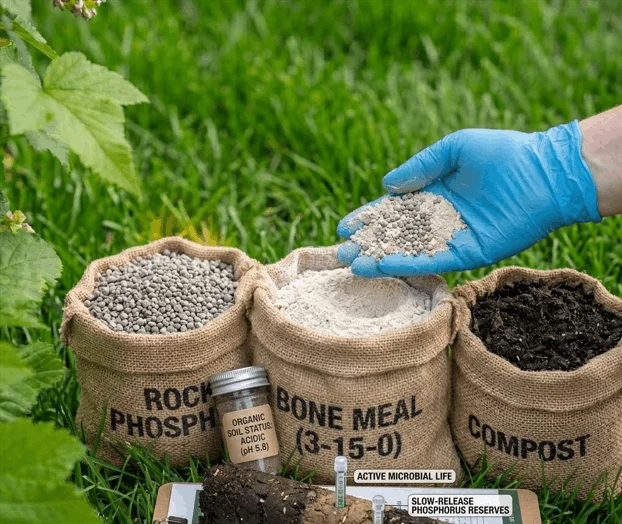
- Bone meal (3-15-0): A slow-release source derived from animal bones. It feeds soil biology while gradually building phosphorus reserves.
- Rock phosphate: Releases very slowly and works best in acidic soils where the lower pH helps break it down.
- Compost: Contains modest phosphate levels but significantly improves microbial activity, which enhances the natural phosphorus cycling that already occurs in healthy soil.
Best for: Organic lawn management programs and long-term soil structure improvement.
5. Liquid Phosphate Fertilizers
Liquid formulations, including mono-ammonium phosphate solutions, act faster than granular products and work well for foliar feeding or fertigation systems. Lawn care professionals often use them when quick correction is needed between scheduled soil tests.
How to Apply Phosphate to Your Lawn: Step-by-Step
Choosing the right product is only half the equation. How you apply it — and in what sequence — determines whether the phosphate actually reaches where it needs to go.
Step 1: Test your soil first This step isn’t optional if you want results that make sense. Phosphorus persists in soil for a long time, and applying it without confirmed need is both wasteful and potentially harmful to the broader nutrient balance.
Step 2: Choose the right product Match the product to your specific situation. Starter fertilizer for new seeding, superphosphate or TSP for confirmed deficiency correction, and organic options if you’re building a longer-term soil health program.
Step 3: Calculate the application rate The bag label provides a rate expressed in pounds per 1,000 square feet. Follow it precisely — phosphate is difficult to remove from soil once it’s been over-applied.
Step 4: Apply with a broadcast or drop spreader A rotary broadcast spreader delivers the most consistent coverage for granular phosphate products. Calibrate the spreader before you begin to avoid uneven distribution.
Step 5: Water it in Phosphate doesn’t move freely through soil on its own. A light watering after application — roughly ¼ inch — helps dissolve the granules and move phosphorus into the root zone where it becomes available to grass plants.
Step 6: Retest after 6–12 months A follow-up soil test confirms whether phosphorus levels have moved into the adequate range. This prevents unnecessary repeat applications.
When to Apply Phosphate Fertilizer to Grass
Timing phosphate for lawns correctly makes a real difference in how much of it the grass can actually use. Applying it at the wrong time — or to dormant grass — largely wastes the product.
Early spring — Once soil temperatures climb above 50°F, root activity increases. A phosphate application during this window supports that early-season root push before significant top growth begins.
At seeding time — This is the most valuable application window. Starter fertilizer with phosphate, applied at or just before seeding, consistently improves germination rates and accelerates early root system development. Miss this window and you’re starting the grass off on weaker footing.
Early fall for cool-season grasses — Fescue, Kentucky bluegrass, and perennial ryegrass do their most important growing in the fall. A phosphate application in late August or early September gives these grasses the root fuel they need heading into winter.
Post-aeration — Core aeration creates direct channels into the root zone. Applying granular phosphate immediately after aerating gives the nutrient a clear path to where it’s needed most, improving uptake efficiency considerably.
Avoid mid-summer — High heat slows or stops root activity. Phosphate applied to heat-stressed or dormant grass mostly sits unused in the top layer of soil and carries a higher risk of runoff with any significant rainfall.
Phosphate for Lawn Root Development: The Science Behind It
The phrase “root fertilizer” appears on many phosphate product labels, and it’s one of those rare marketing claims that holds up under scrutiny.
Phosphorus activates auxin signaling pathways within root cells — a biological process that initiates lateral root formation. In practical terms, phosphate for lawns delivers more branching roots, greater total surface area for water and nutrient absorption, and a root system that can reach deeper into the soil profile where moisture persists longer during dry periods.
Turfgrass research programs have documented these outcomes consistently:
- Grass seedlings growing in phosphorus-adequate soil establish 30–50% faster compared to those in phosphorus-deficient conditions.
- Root mass measured at 60 days post-seeding is significantly greater when starter phosphate was applied at planting.
- Established lawns with adequate phosphorus levels show faster, more complete recovery from drought stress than lawns where phosphorus is deficient.
This is why phosphate for lawns earns its reputation as a root-building nutrient. The results aren’t theoretical — they show up in measurable differences in root architecture, water uptake efficiency, and the overall resilience of the grass plant under pressure.
Organic vs. Synthetic Phosphate: Which Should You Use?
| Factor | Organic (Bone Meal, Rock Phosphate) | Synthetic (Superphosphate, TSP) |
|---|---|---|
| Release speed | Slow (months to years) | Fast to moderate |
| Cost | Higher per unit of P | Lower per unit of P |
| Soil biology impact | Positive | Neutral to slightly negative |
| Risk of over-application | Low | Moderate |
| Best for | Long-term soil building | Correcting confirmed deficiency |
| pH sensitivity | Higher (rock phosphate needs acid soil) | Lower |
For the average homeowner, a practical middle path works well: use a starter fertilizer with phosphate for lawns at seeding time, then rely on soil tests every few years to determine whether additional phosphate is warranted. Those running organic lawn programs can build phosphorus reserves gradually with annual bone meal applications combined with regular compost top-dressing.
Environmental Considerations: Phosphate Runoff and Your Responsibility
Phosphorus that washes off lawns and into waterways creates serious ecological problems. It feeds algal blooms, depletes oxygen in water, and harms aquatic life through a process known as eutrophication. In response, states including Minnesota, Wisconsin, Maryland, and New York have passed restrictions that prohibit phosphate fertilizer use on established lawns unless a current soil test confirms a deficiency.
Applying phosphate for lawns responsibly means following a few straightforward practices:
- Maintain a buffer zone of at least 10–15 feet from any water body, storm drain, or curb.
- Never apply phosphate when heavy rain is forecast within 24–48 hours.
- Sweep up any granules that land on pavement before they wash away.
- Familiarize yourself with your state’s phosphorus fertilizer regulations.
- Always base applications on actual soil test results, not assumption.
These aren’t just best practices — in many areas they carry the weight of law, and for good reason.
FAQ: Phosphate for Lawns
Q: How often should I apply phosphate to my lawn?
For most established lawns, phosphate is only needed every 2–4 years, based on current soil test results. Because phosphorus doesn’t leach from soil easily, it builds up over time — and over-application creates its own set of problems.
Q: Can too much phosphate hurt my lawn?
Yes. When soil phosphorus reaches excessive levels, it interferes with the uptake of zinc, iron, and manganese. This can produce visible deficiency symptoms even when those nutrients are present in the soil.
Q: Is phosphate the same as phosphorus on a fertilizer bag?
The middle number on a fertilizer label expresses phosphorus as P₂O₅ (phosphate oxide), not elemental phosphorus. To find the elemental phosphorus content, multiply the label number by 0.44.
Q: What’s the best starter fertilizer with phosphate for new grass?
Look for an NPK ratio where the middle number is roughly double the first — something like 10-20-10 or 5-10-5. Apply at the label’s recommended rate at or just before seeding for the best results.
Q: Does phosphate affect soil pH?
Not significantly on its own. Some phosphate fertilizers such as superphosphate contain sulfur, which can gradually lower pH with repeated use — but the effect is modest under normal application rates.
Q: Can I use bone meal as phosphate fertilizer for my lawn?
Yes. Bone meal, with an approximate analysis of 3-15-0, is a reliable organic phosphate source. Its slow-release nature makes it difficult to over-apply, and it supports soil microbial populations at the same time.
Q: How do I know if my lawn needs phosphate at all?
A soil test is the only reliable answer. Visual symptoms like purple-tinged grass blades or slow germination point toward a possible deficiency, but they can also reflect other nutrient issues or environmental stress. Test first, then decide.
Conclusion: Getting Phosphate Right Makes Every Other Lawn Effort Work Better
After working through all of this, a clear pattern emerges. Phosphate for lawns is not a nutrient you apply on a routine schedule the way you might with nitrogen. It’s more targeted than that — and more impactful when used correctly.
When a lawn is being established from seed, phosphate at planting time is one of the highest-return investments you can make. Those early roots determine how well the grass handles its first summer, how quickly it fills in bare areas, and how resilient it becomes over time. Skipping phosphate at that stage is a shortcut that shows up as problems later.
For mature lawns, the soil test becomes your most valuable tool when managing phosphate for lawns. Phosphorus accumulates in soil and doesn’t disappear on its own. Knowing what’s already there before adding more is both practical and responsible — it saves money, protects the environment, and prevents the secondary deficiencies that come from phosphorus excess.
The right product, applied at the right time, in response to confirmed soil data — that’s the complete picture. Whether you’re reseeding a worn section, establishing a brand new lawn, or simply trying to understand why your grass hasn’t responded the way you expected, phosphate is often the part of the equation that explains everything else.
Healthy roots grow healthy grass. And healthy roots, more often than not, start with phosphate.