You’ve just moved in. Boxes are everywhere, and the walls are bare, beige, and thin enough that you can tell what your neighbor is watching. Sound familiar?
Finding apartment wall solutions that won’t put your security deposit at risk is one of the first puzzles every renter hits.
Here’s the good news. You can quiet a noisy wall, cover a boring one, and even add storage without a single permanent change. This guide walks you through seven fixes, what each one really does, and how to undo it all when your lease ends.
You’ll also see where some popular advice falls short, so you don’t waste money on it.
Apartment Wall Solutions: What Renters Can Actually Change
Think of your apartment wall like a rental car. You can adjust the seat, pick the radio station, and clip on a phone mount. You can’t repaint it or crack open the engine. The best apartment wall solutions work the same way: they sit on, against, or in front of the wall instead of changing it.
Most renters run into the same three problems:
- Noise: thin walls that carry every conversation next door.
- Looks: flat, bland paint you aren’t allowed to change.
- Space: nowhere to put shelves, art, or bikes without drilling.
You’re far from alone. A large National Multifamily Housing Council survey of renters found that 90% want soundproof walls, and 84% say being able to customize their apartment matters. Almost everyone wants quieter, more personal walls. Most people just don’t know where to start.
So here’s the plan. We’ll check your lease first, then tackle noise, looks, hanging, and storage, in that order. Every fix is reversible, and I’ll flag the ones with a catch.
Read Your Lease Before You Buy Anything
This is the step most guides skip. Every lease is different. Some landlords are relaxed, and others count nail holes.
Most standard leases say you can’t damage or permanently change walls, floors, or cabinets. Tiny things, like adhesive hooks or a few small nail holes, are often fine, but your landlord decides.
Even the best apartment wall solutions start with a lease check. Do three quick things before you spend a dime:
- Read the section on alterations, decorating, or damages.
- Email your landlord to ask whether small nail holes and removable wallpaper are okay.
- Take dated photos of every wall on move-in day.
That last one saves arguments later. If your landlord says yes by email, keep the message. If they say no, you still have plenty of options below.
A two-minute email costs nothing. A deposit deduction can cost a lot.
Soundproof Apartment Walls Without Touching the Construction
Noise is the loudest complaint in apartment life, quite literally. An analysis of New York City’s 311 logs in 2025 showed noise complaints topped the list at 738,816 requests, and residential noise made up roughly half of them.
A Lemonade survey found that only 9% of respondents named parties as a common annoyance. The everyday stuff, like TV and music through the wall, is what wears people down.
Now the honest part. Wall thickness and density decide how much sound gets through, and builders measure that with an STC rating. Paper-thin walls sit around 33, while new construction can reach 60 or more, where most frequencies become inaudible. A blanket won’t turn a 33 into a 60.
What you can do is chip away at the problem. Here’s how the best apartment wall solutions for noise stack up.
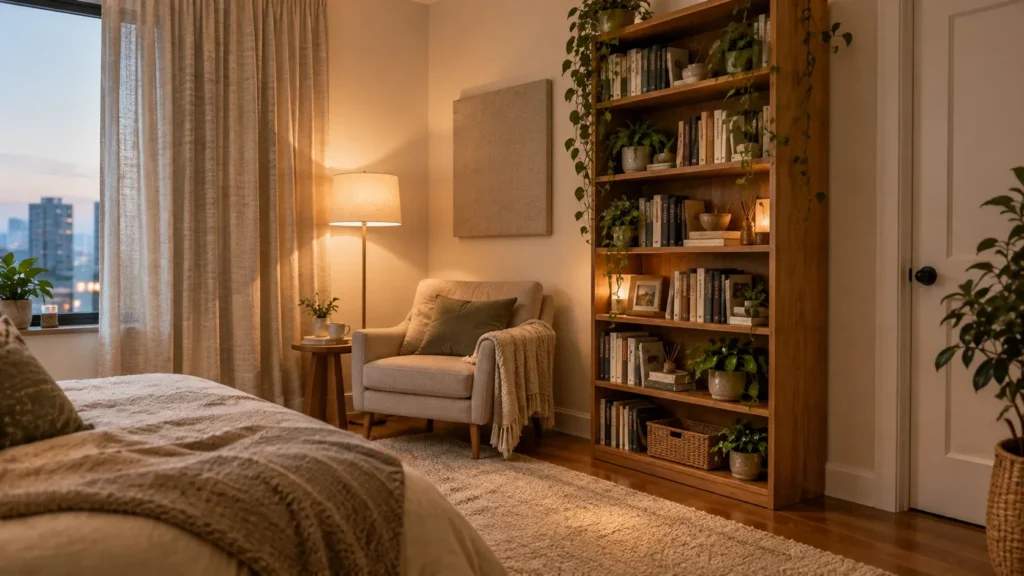
1. Park a Heavy Bookcase on the Shared Wall
The easiest fix is furniture. A tall bookcase packed with books adds mass and breaks up the path sound travels. A wardrobe works too.
Push it flush against the wall you share with your neighbor and fill it with heavy stuff. Voices won’t vanish, but they’ll lose their edge. That’s often enough to stop you from hearing every word.
2. Seal the Gaps Sound Sneaks Through
Sound behaves like water. It finds every opening. Outlets, gaps along baseboards, and the space under your door all leak noise.
Foam outlet gaskets, a door sweep, and removable weatherstripping cost very little and don’t harm anything. Switch off the breaker before you touch an outlet cover. And ask your landlord before using caulk anywhere.
This is the cheapest of all the apartment wall solutions, so start here.
3. Add Soft Layers: Panels, Heavy Curtains, and Rugs
Here’s where people get fooled. Acoustic panels mostly soak up echo inside your own room. They make the space feel calmer, but they don’t stop sound crossing the wall.
Pair panels or a thick sound-blocking blanket with the bookcase and the sealed gaps, and you’ll feel a real difference. Hang them with removable strips or putty, and check the weight rating first.
One more thing. Property managers say many noisy neighbors simply aren’t aware they’re being loud. A friendly knock on the door sometimes works faster than any product. If the noise is mild, a white noise machine can do more for your sleep than a stack of panels.
Cover Bland Walls With Removable Wallpaper and Molding
Plain walls are a quieter problem, but you stare at them every day. The goal here is to make the wall look like you chose it, while making sure everything peels off clean later. These apartment wall solutions turn flat white into something with personality.
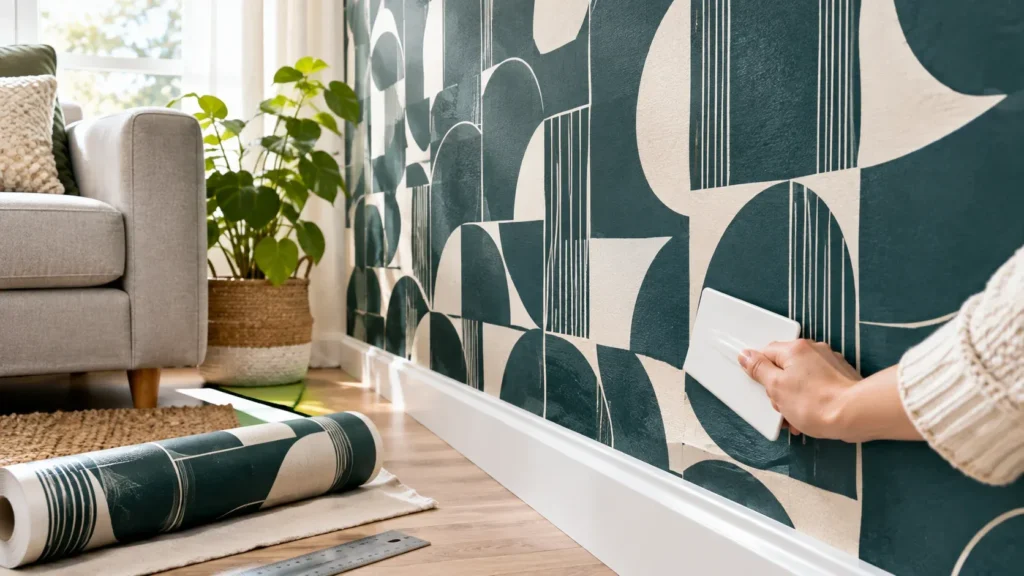
4. Try Removable Wallpaper on One Accent Wall
Peel-and-stick wallpaper is the renter’s favorite for good reason. You can finish an accent wall in a weekend, and it comes off when you leave. One decor roundup puts rolls at about $30 to $60, though prices vary by brand and store.
A few tips that save headaches:
- Pick one wall, ideally behind your couch or bed.
- Clean the wall and let it dry fully before you stick anything.
- Test a small hidden patch for a week before you commit.
- Go bold in small spaces like an entryway or reading nook.
Textured or cheap paint can hold wallpaper badly, or lift when you peel it. That’s why the patch test matters.
5. Add Peel-and-Stick Molding or a Big Tapestry
Want that picture-frame trim look without a hammer? Peel-and-stick molding kits create the look of wainscoting or wall frames without nails or paint. One renter profiled by Good Housekeeping used mounting tape to stick up picture-frame molding, so it would come off easily when she moved.
Don’t want any commitment at all? A large wall tapestry covers a huge area in minutes. For a cleaner look, bulldog clips or binder clips attached with one small screw let you swap tapestries without punching extra holes. Ask your landlord about that single screw first.
Hang Art With Wall Hanging Strips (No Drilling)
Hanging things is where most deposits get dinged. Adhesive strips fix most of that. One renter-decor guide notes that large picture-hanging strips can support frames up to 16 pounds, which covers most gallery wall pieces.
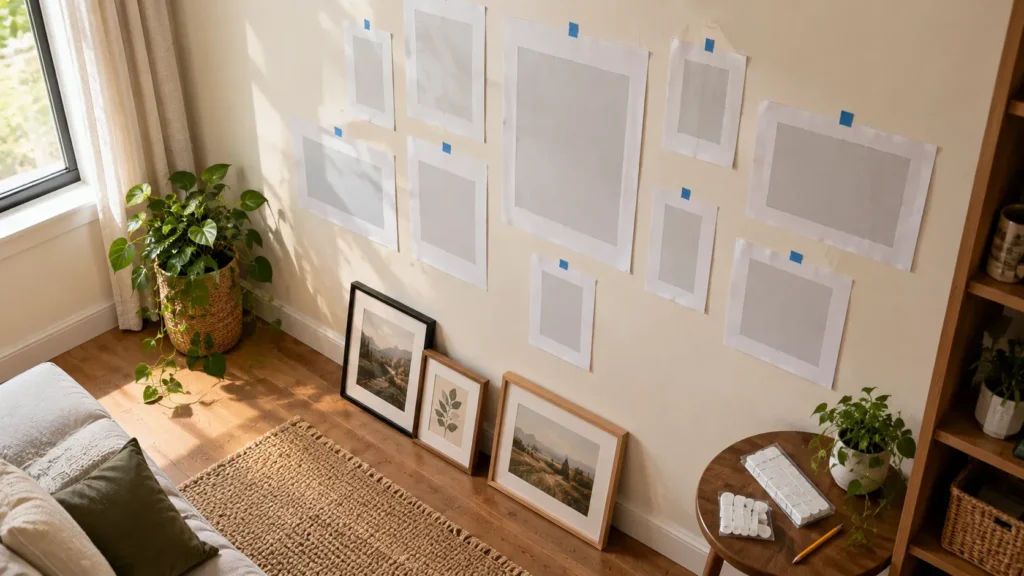
6. Build a Gallery Wall the Easy Way
A gallery wall looks planned when you plan it. Here’s the simple method:
- Trace each frame onto paper and cut out the shapes.
- Tape the paper templates to the wall with painter’s tape.
- Move them around until the layout feels right.
- Swap each template for a frame, using strips rated for its weight.
Wipe the wall first, press each strip firmly, and follow the package directions on wait time. Skip strips for heavy mirrors. Lean those against the wall on the floor instead. It looks intentional, and nothing touches the paint.
Of all the apartment wall solutions here, this is the one that makes a place feel like yours fastest.
Turn Wall Space Into Storage Without Drilling
Floating shelves need anchors, which means holes. Skip them. Your wall can still do the heavy lifting if the weight sits on the floor.
7. Use Freestanding and Leaning Pieces
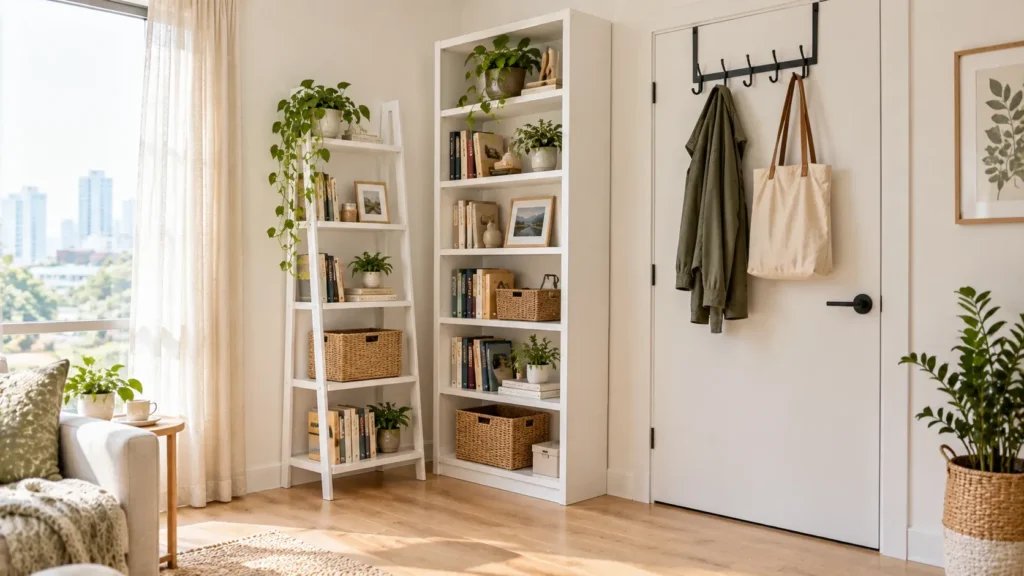
A leaning ladder shelf, a tall freestanding bookcase, or a lightweight floor-to-ceiling unit gives you vertical storage with zero damage. Good Housekeeping highlighted lightweight bookcases that are easy to mount and easy to take to your next place.
Smaller wins work too:
- Removable hooks for keys and light bags.
- A magnetic rack in the kitchen for tools.
- Over-the-door hooks for coats and towels.
What about bikes? Most wall mounts need screws into studs, so ask your landlord first or choose a floor stand. If you do get a yes, riders in one forum thread suggested hanging one bike by the front wheel and the next by the rear wheel to save space.
The smartest apartment wall solutions for storage keep weight on the floor, not on the drywall.
Quick Pick: Which Fix Fits Your Problem?
Not sure which of these apartment wall solutions to try first? Match the fix to your biggest annoyance:
- You hear your neighbors: bookcase on the shared wall, then seal the gaps, then add soft layers.
- You hate the paint: removable wallpaper or peel-and-stick molding.
- Your walls feel empty: adhesive strips and a gallery wall.
- You’re out of space: freestanding shelving and over-the-door hooks.
Start with whichever problem bugs you most. One good fix beats five half-finished ones.
Move-Out Day: Patch Holes and Peel Cleanly
Plan your exit now, because that’s where the deposit is won or lost.
For small nail holes, press in wall putty or spackle, let it dry, and sand it flat. White walls are easier to patch than colored ones, since putty often comes in white. If your landlord allows touch-ups, dab on matching paint.
For adhesive strips, pull the tab slowly and straight along the wall, not outward. Pulling out tears paint.
For wallpaper and decals, peel slowly and warm stubborn spots with a hair dryer. Don’t leave decals up for years. Some can affect the paint or pull some off when removed after a long time on the wall.
Finish by taking photos of every wall. Those pictures, next to your move-in shots, are your proof. Getting this last step right is what makes apartment wall solutions truly renter-proof.
FAQs: Apartment Wall Solutions
What’s the best way to improve walls as a renter?
The best apartment wall solutions are reversible ones: removable wallpaper, adhesive hanging strips, freestanding shelves, and a bookcase against thin shared walls. Check your lease first, take move-in photos, and choose products that peel off cleanly so your deposit stays safe.
Can I soundproof thin walls without damaging them?
Partly, yes. Bookcases, sealed gaps, heavy curtains, and removable panels reduce noise without construction. They won’t match a properly built soundproof wall, though. If the noise stays unbearable, talk to your landlord, since thin walls are a building issue, not just a neighbor issue.
Does peel-and-stick wallpaper damage paint?
Usually not on smooth, fully cured paint, but cheap or old paint can lift. Test a small hidden patch for a week first. When it’s time to remove it, peel slowly and warm stubborn spots with a hair dryer.
How much weight can adhesive hanging strips hold?
It depends on the product and the wall. One guide lists large picture strips rated for frames up to 16 pounds. Always check the package rating, clean the wall first, and lean heavier mirrors on the floor instead of hanging them.
How do I fix nail holes before moving out?
Fill small holes with wall putty or spackle, let it dry, and sand lightly. Touch up with matching paint if your landlord allows it. Of all the apartment wall solutions, patching is the last step, so photograph the finished walls for your deposit records.
Conclusion
You don’t need a full makeover. The best apartment wall solutions are small, reversible, and cheap enough to test. Start with one wall and one problem.
Here’s a simple plan. Email your landlord today and ask what’s allowed. Then push a bookcase against the shared wall, tape off a gallery layout with paper templates, or order a roll of removable wallpaper for that one blank spot.
Check the Apartment List rent statistics page if you want to see how much renters care about quiet. Then go make your walls work for you. Your deposit, and your sleep, will thank you.