Let’s be honest — nobody designs their house around the laundry room. It’s usually whatever’s left over: a closet, a hallway nook, a spot next to the garage door. But that awkward little space still has to hold detergent, dryer sheets, stain remover, extra towels, and probably a broom you keep tripping over. That’s where laundry room shelving comes in. It’s not glamorous, but it’s the difference between a room that works and one that makes you sigh every time you walk in.
In this guide, we’ll go through the shelving styles that actually hold up over time, how to pick the right one for a tiny space versus a full-size utility room, and a few mistakes people make when they rush the install. By the end, you’ll know exactly what kind of laundry room shelving fits your space and your budget.
Why Laundry Room Shelving Matters More Than You Think
Good laundry room shelving isn’t just about tidiness — it’s about function. When your supplies are stuffed in a cabinet under the sink or piled on top of the dryer, you waste time digging for stain stick every time there’s a spill. Shelving fixes that by giving everything a fixed spot.
It also matters more than people realize when it comes to home value. A laundry room ranked among the top features buyers want in a home, with 87% of buyers calling it essential or desirable — ahead of even an energy-efficient kitchen. A well-organized space with smart laundry room shelving is a small, cheap upgrade that pays off if you ever sell.
Here’s the thing though — not every shelving style works in every laundry room. A tiny closet with stacked machines needs something different than a full utility room with a folding counter. So let’s break down the main types.
Laundry Room Storage Ideas for Every Layout
When people think about laundry room storage ideas, they usually picture pretty open shelves with baskets. That’s one option, but there are a few directions you can go depending on your space and how much you want to spend.
Open shelving is the most popular choice because it’s cheap, easy to install, and keeps everyday items in reach. You just need a drill, some brackets, and about an hour. Most home improvement stores sell ready-made shelf kits, so you’re not even measuring and cutting wood yourself.
The best part is you can rearrange things anytime — no commitment like you’d have with built-in cabinets. And if you ever move, taking a few shelves down and patching the holes is way easier than ripping out custom cabinetry.
Closed cabinetry costs more but hides the mess. If you don’t want to look at bottles of bleach every time you walk by, this is worth the extra cash. It’s also the safer choice if you’ve got kids or pets wandering into the laundry room, since everything’s tucked behind a door instead of sitting out in the open.
On top of that, cabinets protect your supplies from dust and moisture, which matters more than people think in a room that’s basically a mini sauna half the time. The only real downside is you lose that quick “grab and go” convenience — you’re opening a door every single time instead of just reaching for a shelf.
A mix of both is honestly what most designers recommend. Keep one open shelf at eye level for the stuff you grab daily — detergent, dryer sheets — and put everything else behind a door. It’s a simple trick that keeps the room from looking cluttered even on a busy laundry day.
This hybrid approach is also the easiest way to get laundry room shelving that actually fits how you use the space, instead of just copying a layout you saw online. You get the convenience of open access for the essentials, plus the visual calm of closed storage for everything else. Honestly, once you try this setup, going back to all-open or all-closed shelving feels like a downgrade.
Wall-Mounted Shelving Units: The Most Practical Option
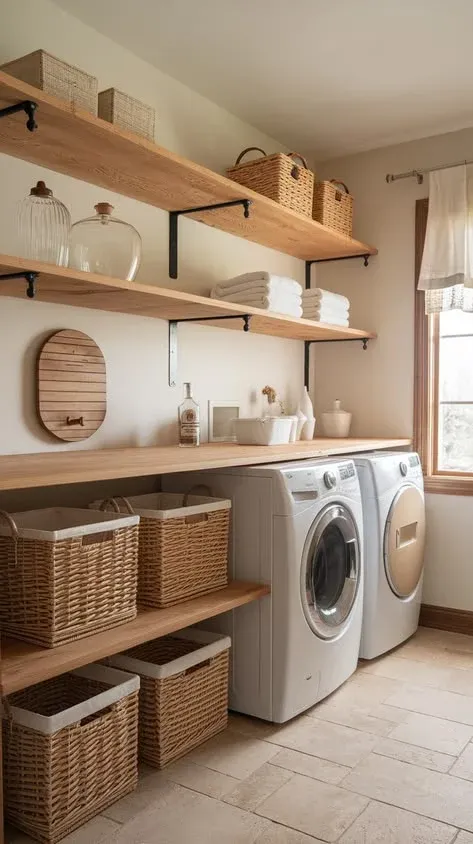
If you only add one thing to your laundry room, make it wall-mounted shelving units. Floor space in a laundry room is almost always tight, so anything you can get up on the wall is a win.
The key here is weight capacity. A shelf loaded with liquid detergent, fabric softener, and a stack of towels gets heavy fast. Look for shelving rated for at least 30-40 lbs per shelf, and always anchor into wall studs — not just drywall anchors — if you’re hanging anything substantial. A cheap stud finder from any hardware store solves this problem in about two minutes, so there’s really no excuse to skip it.
If you can’t hit a stud where you want the shelf, use heavy-duty toggle bolts instead of the plastic anchors that come in most shelf kits. It’s also worth spacing your brackets closer together than you think you need to, especially for longer shelves that tend to sag in the middle over time. A little extra effort here saves you from finding your detergent bottles shattered on the floor six months down the line.
What to Put on Wall-Mounted Shelves
- Detergent pods, powder, and liquid bottles.
- Dryer sheets and stain removers.
- Extra towels or washcloths.
- Small baskets for socks that lost their pair.
Shelving Above Washer and Dryer: Don’t Waste That Space
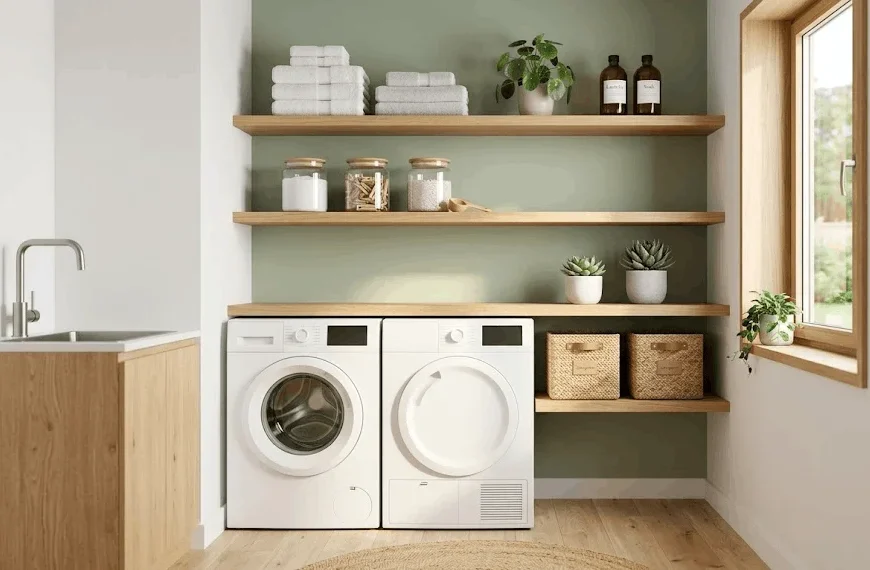
This is probably the most underused spot in the whole room. Shelving above washer and dryer units turns dead air into real storage, and it doesn’t cost much to set up.
The tricky part is height and depth. You don’t want a shelf so high you need a step stool for daily items, and you don’t want it so deep that it blocks your view or bumps your head while loading the machines. A 10-12 inch deep shelf, mounted about 15-18 inches above the appliances, usually hits the sweet spot.
One thing competitors don’t mention enough: check your dryer vent clearance before you install anything above the dryer. Some vents need airflow space that a shelf can block if it’s mounted too low. This matters more than most people realize, because a blocked vent doesn’t just hurt drying performance — it can actually become a fire hazard over time.
Before you plan your laundry room shelving layout, take a few minutes to check your dryer’s manual for the manufacturer’s recommended clearance, since it varies by model. As a general rule, leave at least a few extra inches of buffer above the vent opening even if the shelf itself sits higher up. Getting this one detail right means you get the storage you want without ever having to second-guess your dryer’s safety.
Floating Shelves for Laundry Rooms with a Clean, Modern Look
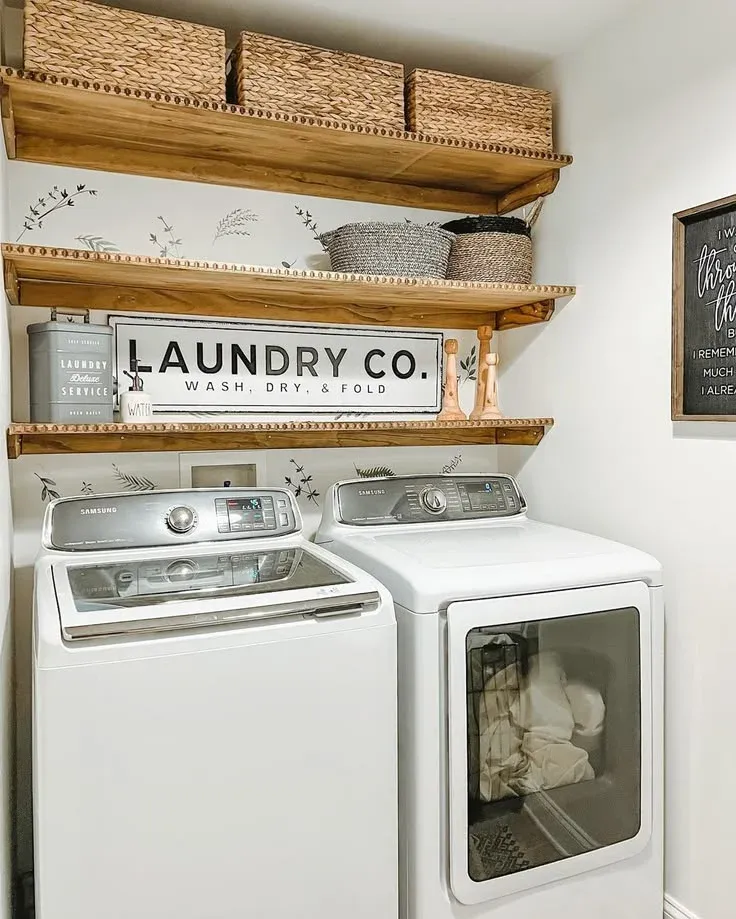
If you want something that looks more finished than a basic bracket shelf, floating shelves for laundry rooms are worth the extra step. These use hidden brackets so the shelf appears to “float” off the wall with no visible hardware.
They’re not as heavy-duty as bracket shelving, so they work best for lighter items — folded towels, decorative baskets, glass jars for pins and clips. If you’re going for that clean, styled look you see in home design photos, floating shelves are usually the pick designers reach for first. Just keep in mind that “floating” doesn’t mean weightless — most of these shelves still rely on a hidden metal bracket screwed straight into the wall, so proper installation still matters.
This style of laundry room shelving works especially well in smaller spaces, since the lack of visible hardware makes the whole wall feel less bulky and cramped. If you want a little more durability without losing the clean look, some brands make floating shelves with a thicker steel core that can handle a bit more weight than the standard version. Either way, they’re a great middle ground between something purely decorative and something built to work hard every day.
Small Laundry Room Storage Solutions for Tight Spaces
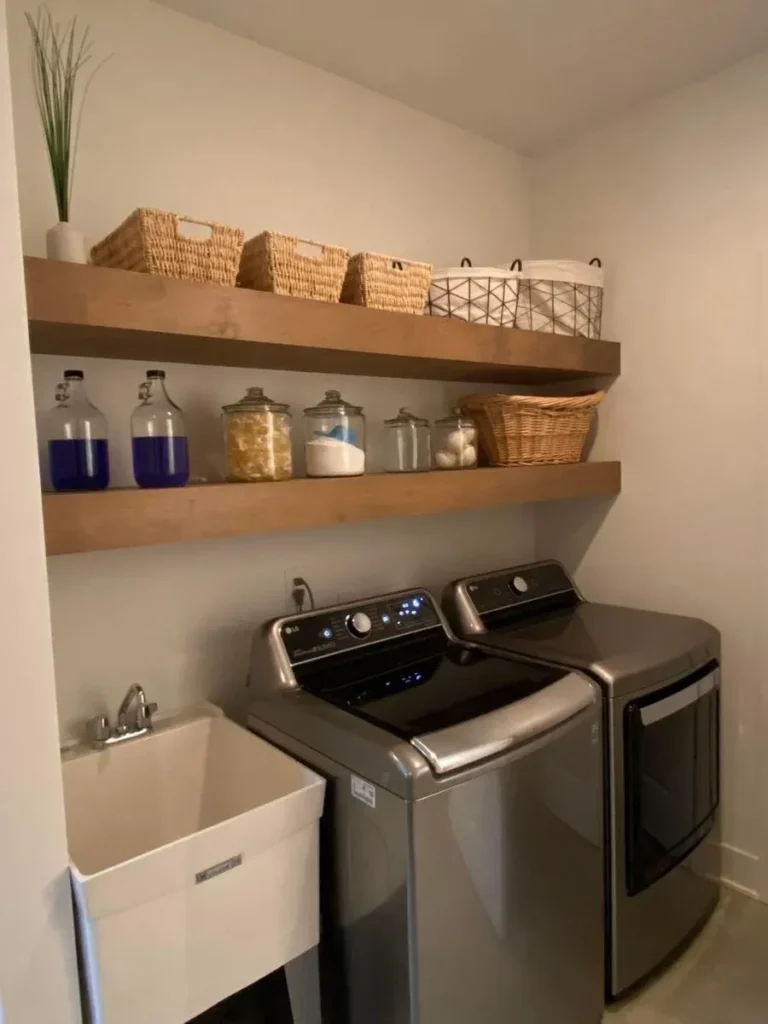
Not everyone has a full room to work with. A lot of homes have laundry tucked into a closet with stacked machines, and that changes the whole approach. Small laundry room storage solutions need to work vertically since there’s no floor space to spare.
A few things that actually help in a tight closet setup:
- A single narrow shelf above the machines for daily essentials.
- A door-mounted organizer for smaller items like stain pens and lint rollers.
- A slim rolling cart that tucks beside the dryer and pulls out when needed.
- Hooks on the side wall for a broom, mop, or ironing board.
The goal in a small space isn’t to fit everything — it’s to fit what you actually use. Anything you reach for once a year should live somewhere else in the house. A good rule of thumb: if you haven’t touched it in the last three months, it probably doesn’t belong on your daily shelf. Seasonal items like heavy-duty stain removers for holiday spills or extra ironing supplies can move to a hall closet or garage shelf instead.
This frees up your prime laundry room real estate for the things you actually use every single wash cycle. It also makes cleaning and restocking way faster, since you’re not digging through clutter to find what you need. Once you get in the habit of editing what stays, the space almost organizes itself.
Utility Room Shelves: Built for Heavier Duty
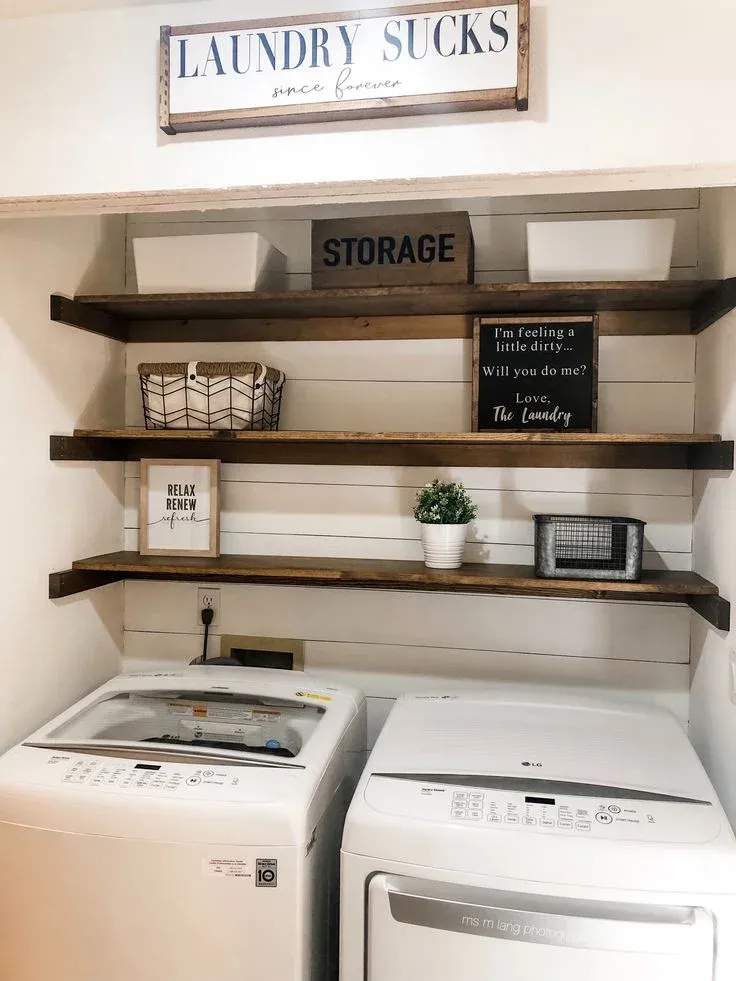
If your laundry area doubles as a utility room — meaning it also holds tools, cleaning supplies, or overflow pantry items — you need something sturdier than decorative floating shelves. Utility room shelves are usually built from metal or heavy-duty plastic and designed to hold more weight without sagging over time.
Metal Wire Shelving Units: Why They’re a Favorite
Metal wire shelving units show up in almost every utility room for a reason. They’re inexpensive, adjustable, and the open wire design means dust doesn’t collect the way it does on solid shelves. You can usually adjust the shelf height as your storage needs change, which matters if you’re storing anything from detergent jugs to seasonal decorations.
The downside is they’re not the prettiest option, so a lot of people use them in a laundry room that’s more function-first, and save the nicer floating shelves for spaces guests actually see. If looks really bother you, a can of spray paint can dress up wire shelving in an afternoon — matte black and white are the easiest colors to match with most laundry room styles.
Some people also add a simple curtain or roller shade in front of the shelving to hide the contents without spending money on real cabinet doors. Another trick is lining the bottom of each wire shelf with a thin sheet of plastic or cork, which stops smaller items from slipping through the gaps and looks a bit more finished. At the end of the day, function-first doesn’t have to mean ugly forever — it just means you’re prioritizing what works right now.
Laundry Cabinet Storage vs. Open Shelving
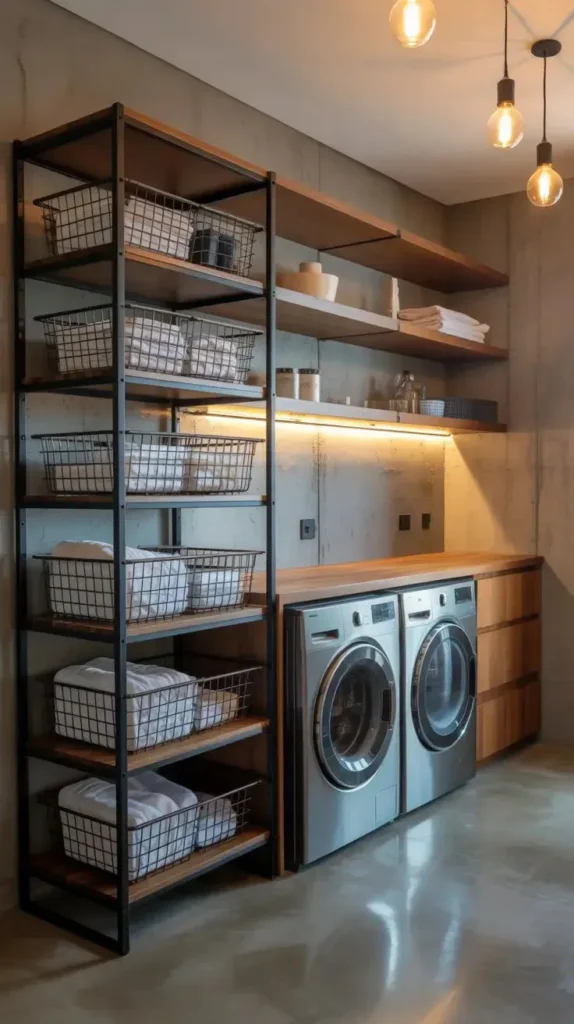
This comes down to personal preference and how much clutter you’re comfortable with on display. Laundry cabinet storage keeps things hidden and dust-free, which is great if your laundry room connects to a kitchen or mudroom people walk through regularly.
Open shelving, on the other hand, is faster to install, usually cheaper, and keeps everyday items visible so you’re not forgetting what you’re low on. A lot of homeowners land somewhere in the middle — cabinets down low for bulk supplies and cleaning chemicals (especially important if kids or pets are around), open shelves up high for the stuff in daily rotation.
Laundry Room Shelf Brackets: The Detail People Skip
Nobody thinks about laundry room shelf brackets until a shelf comes crashing down. Brackets matter more than the shelf material itself in a lot of cases, because they’re what’s actually holding the weight.
For anything heavier than a few boxes of detergent pods, go with L-brackets rated for at least 50 lbs, spaced no more than 24 inches apart. Floating shelf brackets look cleaner but hold less, so match the bracket to what you actually plan to store — not just what looks nice in a photo.
Laundry Room Organization: Making the Shelving Actually Work
Installing shelves is only half the job. The other half is laundry room organization — actually using the space in a way that keeps it functional past week one.
A few habits that make a real difference:
- Group items by type (stain treatment together, drying supplies together).
- Use clear or labeled bins so you’re not guessing what’s in each container.
- Keep the shelf you use daily at eye level, not up high or down low.
- Do a quick declutter every few months — half-empty bottles pile up fast.
This is where a lot of laundry room shelving setups fall apart. People install great shelves, then just pile stuff on randomly, and within a month it looks the same as before.
Common Mistakes to Avoid
A few things trip people up when installing laundry room shelving:
- Skipping the stud finder. Drywall anchors alone won’t hold a loaded shelf long-term.
- Going too deep. Oversized shelves eat into walking space and make the room feel smaller.
- Ignoring dryer vent clearance. Especially relevant for shelving above washer and dryer setups.
- Mixing weight-bearing needs. Don’t put your heaviest items — detergent jugs, tool boxes — on decorative floating shelves rated for light loads.
FAQs: Laundry Room Shelving
How high should laundry room shelving be above the washer and dryer?
Most guides suggest mounting shelves 15-18 inches above the appliances. This keeps items reachable without blocking your view or bumping your head while loading laundry.
What’s the best material for laundry room shelving in a humid space?
Metal wire shelving units or coated wood hold up better than raw wood or particleboard, since humidity from the dryer can cause warping over time.
Can I install floating shelves for laundry rooms myself?
Yes, most floating shelf kits come with hardware for a DIY install. Just make sure you’re anchoring into a stud for anything holding more than a few pounds.
How much weight can typical laundry room shelf brackets hold?
Standard L-brackets usually hold 30-50 lbs per shelf, depending on spacing and material. Always check the manufacturer’s rating before loading heavy items.
What should I avoid storing on open laundry room shelving?
Avoid open storage for anything toxic or attractive to kids and pets, like bleach or pods. Those are safer in closed laundry cabinet storage lower down or up high behind a door.
Conclusion
At the end of the day, laundry room shelving is one of the cheapest, most practical upgrades you can make to a space you use every single week. Whether you go with wall-mounted shelving units, a mix of open shelves and closed cabinets, or heavy-duty metal wire shelving, the goal is the same — give every item a spot so laundry day stops feeling like a scavenger hunt. Start small if you need to: one solid shelf above the machines, anchored properly, can change how the whole room functions.