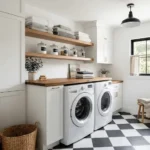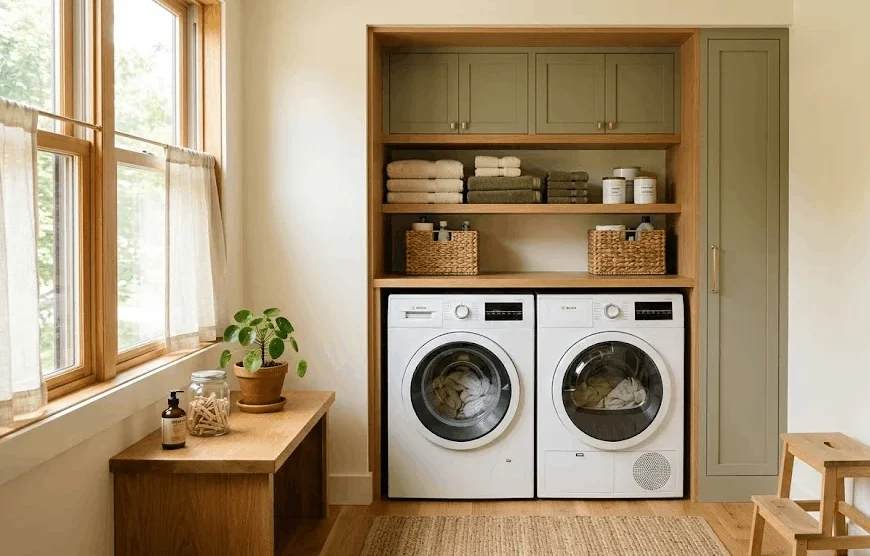
If your washer and dryer are wedged into a hallway, closet, or that weird leftover corner nobody knew what to do with, you’re not alone. Most homes don’t have a full laundry room — they have a laundry corner, and it usually looks like an afterthought. The good news is that with the right laundry corner ideas, that corner can actually function better than a full room twice its size. By the end of this, you’ll have a clear list of layouts, storage tricks, and small design moves that turn a cramped spot into something you don’t feel the need to hide.
Laundry Corner Ideas That Start With the Right Layout
Before you buy a single shelf or basket, figure out your layout. This is where most laundry corner ideas fall apart — people jump straight to decor and skip the part that actually makes the space usable day to day.
Here’s why layout matters more than anything else: you’re working with a fixed footprint, usually somewhere between 24 and 40 square feet. Every inch has to earn its place. Start by measuring your corner, then decide whether your washer and dryer will sit side by side or stacked. Side by side gives you a countertop option above the machines. Stacked frees up an entire wall for cabinets or shelving.
One thing almost every guide forgets to mention: leave enough clearance for the machine doors to swing open, especially if you’ve got a top-load washer. It sounds obvious, but it’s the number one regret homeowners bring up after a laundry corner makeover — they measured the footprint but not the door swing.
If your corner backs onto a kitchen or mudroom wall, an L-shaped setup works well too. It lets you tuck the machines into one arm of the L and use the other arm for a narrow folding counter, which solves the “nowhere to fold clothes” problem almost every small laundry space runs into.
This layout also works well if you want to keep the laundry corner visually connected to the rest of the room instead of walling it off completely. A narrow rolling cart can slide into the shorter arm of the L when you need extra counter space, then tuck away again once laundry day is done. Out of all the laundry corner ideas that work in tight, awkward spots, the L-shape tends to feel the least cramped because it gives your eye a clear path through the space instead of a dead-end wall of appliances.
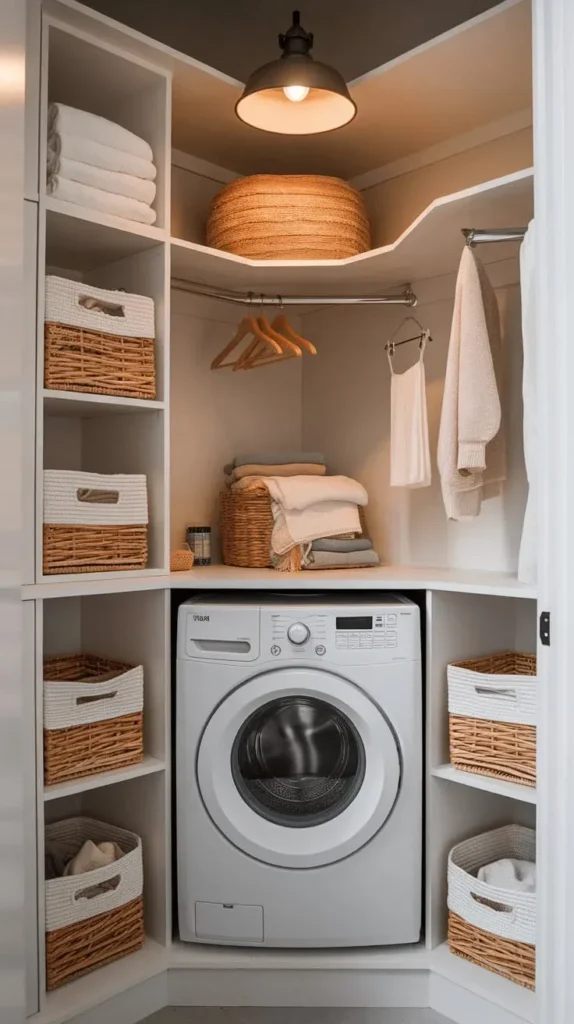
Small Laundry Room Layout Tricks for a Single Corner
A true small laundry room layout in a single corner usually comes down to three configurations: stacked, side-by-side, or L-shaped with a counter. Pick based on ceiling height and wall width, not just what looks nice in photos.
If your ceiling is under 8 feet, side-by-side with open shelving above tends to feel less boxed in. If you’ve got height to spare, stacking is almost always the better move — it frees up floor space you can use for a rolling cart, a hamper, or even a small drying rack. Ceiling height isn’t the only thing to check before you commit either.
Take a look at your door swing and hallway width too, since a stacked setup only saves space if you can actually get the machines through the doorway during install. If you’re renting, ask your landlord about weight limits on the floor before stacking, especially in older buildings with wood subfloors. Whichever direction you go, this is one of those laundry corner ideas that pays off most when you measure twice before buying anything.
A few quick layout wins:
- Use the wall directly above the machines for a shelf that doubles as a folding surface.
- Add a narrow rolling cart beside the dryer for detergent and dryer sheets you reach for daily.
- If there’s a window nearby, don’t block it with cabinetry — natural light makes a small corner feel twice the size.
Stackable Washer Dryer Setup: The Space-Saving Move Everyone Uses
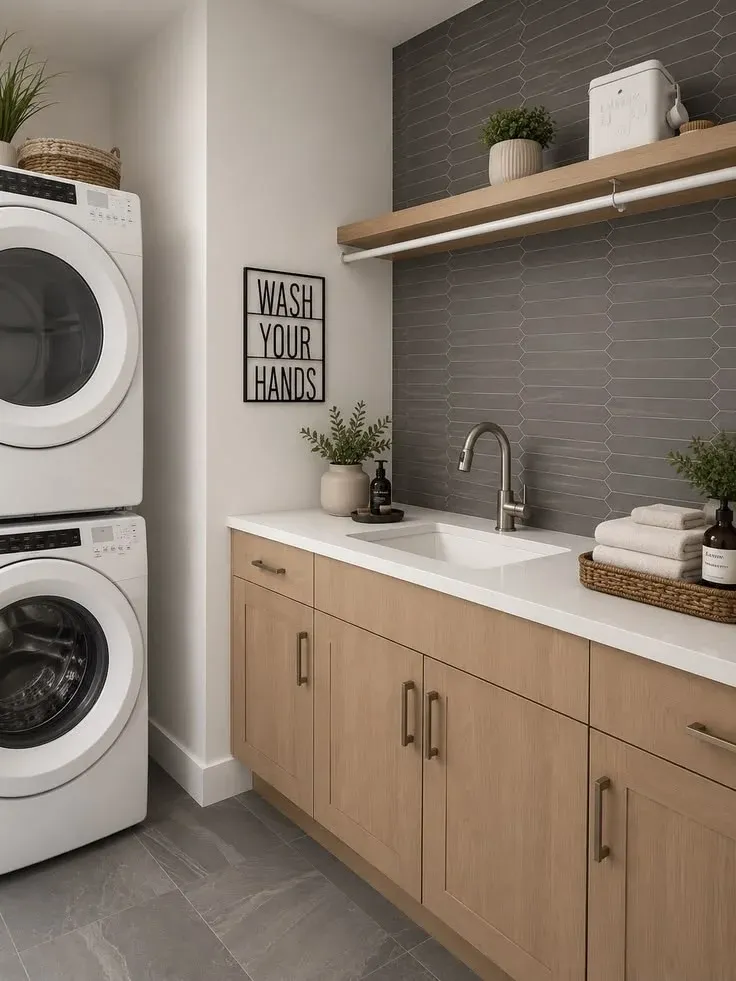
If there’s one trick that shows up in nearly every laundry corner idea worth copying, it’s a stackable washer dryer setup. Stacking the two machines instantly frees up floor space, and that space can go toward a folding counter, extra cabinets, or just breathing room.
Here’s what most articles skip: you need a stacking kit rated for your specific machine models, and you need to check that your dryer vents properly once it’s elevated. Skipping this step is how people end up with a wobbly stack or a dryer that takes twice as long to run a cycle.
A few practical notes before you stack:
- Confirm your washer and dryer are stack-compatible (front-load only, in most cases).
- Leave at least a few inches of clearance above the stack for venting and airflow.
- Anchor the stack if you’re in an earthquake-prone area or have kids or pets nearby.
Once stacked, extend your cabinets straight up to the ceiling. That vertical run is where a lot of your extra storage will come from, and it’s one of the simplest laundry corner ideas to execute in a weekend. Don’t leave the very top shelf empty just because it’s a stretch to reach — that’s prime real estate for bulky items you only need a few times a year, like a spare iron or seasonal linens.
A small step stool tucked beside the machines makes that top shelf actually usable instead of wasted space. If your budget allows, add cabinet doors instead of open shelving up top, since dust tends to collect fast on anything above eye level. Out of all the laundry corner ideas that maximize a tight footprint, going vertical after stacking is usually the highest-return move for the least amount of work.
Laundry Closet Organization That Keeps the Clutter Out of Sight
If your laundry corner is technically inside a closet, laundry closet organization becomes the whole game. You’re not just fitting machines in — you’re fitting machines, detergent, hampers, and an ironing board into a space the size of a broom closet.
Start with the door. Bypass or barn-style doors save swing space and work well in tight hallways, and even a simple curtain can hide the whole setup without needing room for a door to open. If you want it to disappear completely when not in use, this is the move.
Inside the closet, use every flat surface:
- The back of the door for a hanging organizer or ironing board hooks.
- A shelf directly above the machines for baskets of detergent pods and stain sticks.
- A tension rod near the top for hang-drying delicates right after the cycle ends.
Labeling containers helps too, especially in shared households — anyone doing laundry can grab what they need without digging through three unmarked bottles that all look the same. A simple label maker or even masking tape and a marker works fine — this doesn’t need to be Pinterest-perfect to be effective.
Group similar items together too, so stain removers sit near the hamper and detergent sits closest to the machine you’ll use it in. Kids and roommates are far more likely to put things back in the right spot when the system is obvious at a glance. Small habits like this are what keep laundry corner ideas working long after the initial setup, instead of sliding back into clutter within a month.
Laundry Corner Cabinet Ideas for Storage Without the Mess
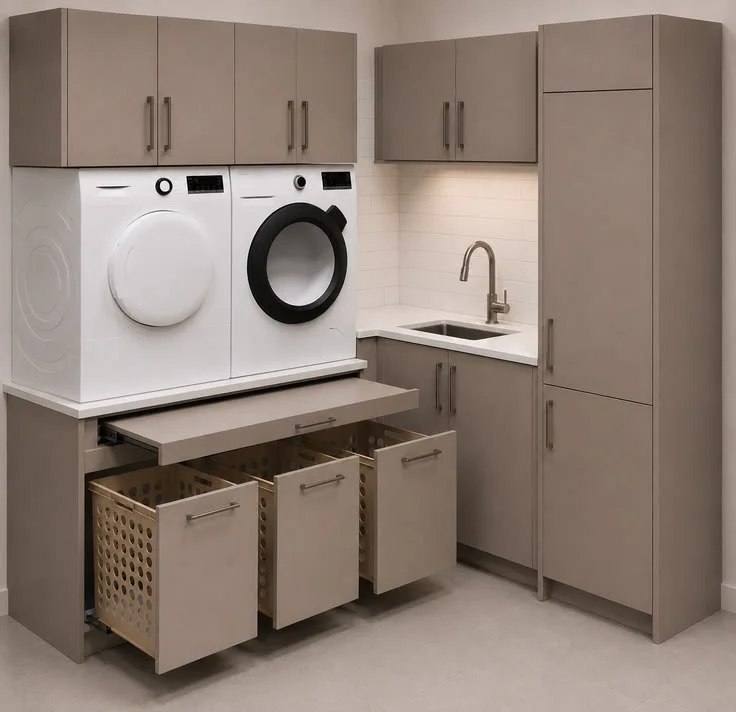
Cabinets do more heavy lifting than almost any other element in a small laundry setup, which is why laundry corner cabinet ideas come up constantly in renovation searches. A well-planned cabinet run hides the ugly stuff — detergent jugs, dryer sheets, cleaning supplies — while keeping the surface on top clear for folding.
If you’re working with an actual corner (not just a corner-adjacent wall), a corner cabinet or lazy susan setup makes use of space that usually goes to waste. Deep corners are notoriously awkward, and most people just leave them empty. A pull-out cabinet insert or lazy susan turns that dead zone into real storage.
For a tighter budget, a single kitchen-style two-door cabinet mounted above the machines does almost the same job. It doesn’t need to be custom-built to look intentional — it just needs to match your wall color or trim so it reads as part of the room instead of a bolted-on afterthought.
Check big box hardware stores or even secondhand marketplaces before buying new — a slightly dinged cabinet is an easy fix with sandpaper and a coat of paint. If you’re handy, swapping the factory hardware for a few new knobs or pulls can make a plain cabinet look custom for under twenty dollars.
Just make sure whatever you mount is rated to hold the weight of what you’re storing, since detergent jugs add up fast. Measure the width of your machines before you buy, too, so the cabinet doesn’t overhang and become a hazard you keep bumping your head on. Of all the laundry corner ideas that stretch a small budget the furthest, a repurposed or budget cabinet is usually the easiest win to start with.
Hidden Laundry Room Design: Doors, Curtains, and Clever Cover-Ups
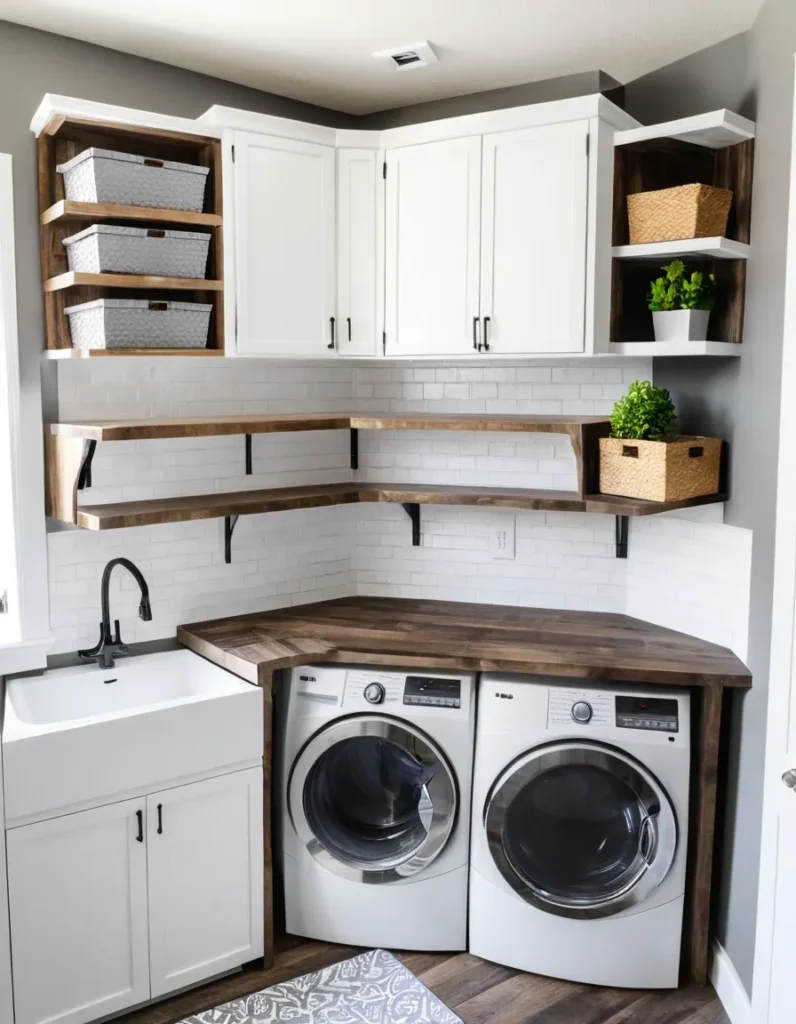
Not every laundry corner needs to be on display, and that’s where hidden laundry room design comes in. This is especially useful if your setup sits in a kitchen, hallway, or entryway where you’d rather not look at a washer and dryer every time you walk by.
Cane-paneled doors, frosted glass, or a simple fabric curtain can all do the job. The point isn’t to make the machines invisible — it’s to make the mess invisible while keeping the door light enough that it doesn’t feel like you’re closing off a room.
A trick worth stealing: use a shelf or rod just above the door frame for baskets you don’t need daily. It’s storage that stays out of your eyeline but is still within reach when you need it. This spot is easy to overlook because it sits above the natural sightline, but that’s exactly what makes it useful for things like a spare drying rack or an extra bag of clothespins.
A shallow wire basket works better here than a deep bin, since you want to be able to see what’s inside without pulling everything down. If you’re working with a curtain instead of a door, mount the rod on the wall just above the curtain track so it doesn’t interfere with how the fabric slides open.
Even a foot of clearance above a standard door frame is enough to fit a couple of slim baskets side by side. Little additions like this are what separate laundry corner ideas that just look nice from ones that actually hold everything you need.
Compact Laundry Space Design on a Budget
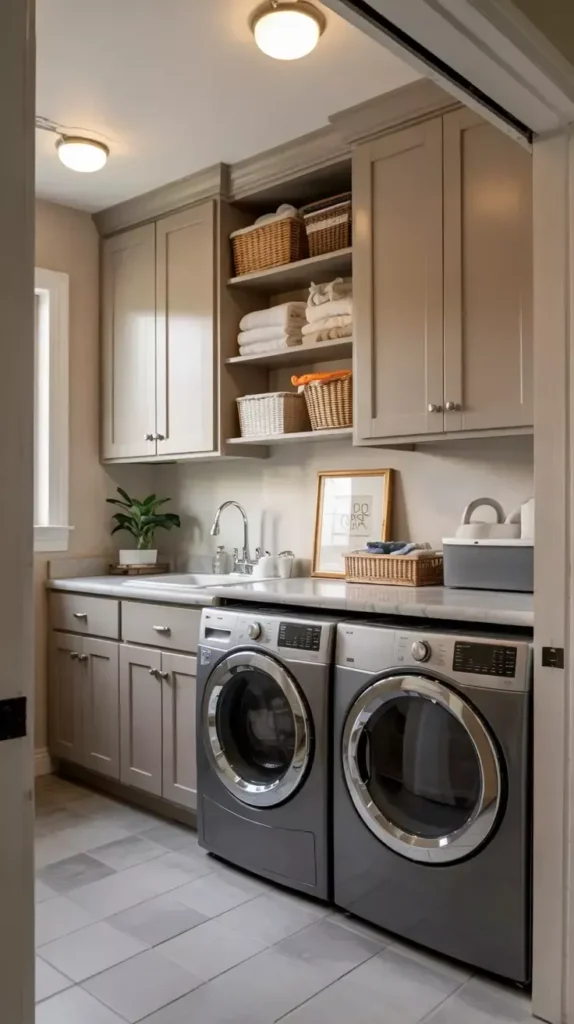
You don’t need a full renovation to pull off a good compact laundry space design. A can of paint, a few floating shelves, and one new light fixture can change how the whole corner feels without touching plumbing or electrical.
Paint is the cheapest fix with the biggest payoff. A light, soft color — sage, warm white, pale gray — makes a tight corner feel less like a closet you’re avoiding. If you want more personality, wallpaper behind open shelving adds character without covering the whole wall.
Budget-friendly wins worth trying first:
- Swap a plain overhead bulb for a warmer LED fixture.
- Add a peel-and-stick backsplash behind the machines for an easy upgrade.
- Use wire shelving instead of custom cabinetry if you’re not ready to spend on built-ins.
None of these require a contractor, and together they can make a laundry corner feel finished instead of forgotten.Tackle one change at a time instead of trying to do it all in a single weekend — even swapping the light fixture alone can shift how the whole space feels.
Take a quick photo before you start, so you have something to compare against once the small updates add up. A corner that looked like an afterthought a month ago can end up being one of your favorite spots in the house.
Laundry Area Shelving Ideas for Every Inch of Wall Space
Shelving is where laundry area shelving ideas earn their keep, especially once your machines are stacked and the floor space is freed up. Floating shelves above the machines give you a spot for baskets, folded towels, or a couple of plants without eating into your walking room.
Wire shelving is the budget option and it’s genuinely underrated — it’s inexpensive, easy to install, and works well in humid laundry spaces where wood can warp over time. If you want a more finished look, wall-mounted wood shelves cost more but blend in better with the rest of your home.
Don’t ignore corners here either. A small corner shelf, even just 12 inches wide, is often the difference between a cluttered counter and a clear one. It’s one of the smallest laundry corner ideas on this list, but it’s also one of the easiest to add without any real cost or effort.
A pre-cut floating corner shelf from a hardware store usually installs in under an hour with just a level and a drill. Use it for the stuff you reach for every single load — stain pen, dryer balls, a small dish for loose change from pockets. Out of every laundry corner ideas on this list, this one has the best payoff for the least amount of work.
FAQs: Laundry Corner Ideas
How small can a laundry corner be and still work?
Most laundry corners function well in as little as 24 to 30 square feet, especially with a stacked washer and dryer. The key is leaving clearance for doors to open and at least a narrow strip of counter space for folding.
Can I put a laundry corner in my kitchen or hallway?
Yes, as long as you have access to water lines and proper venting. Many people hide the setup behind a curtain or cane door so it blends into the room instead of standing out.
What’s the easiest way to hide an ugly laundry corner?
A curtain or bypass door is the fastest fix without renovation. Paint and a shelf above the machines also go a long way toward making the space feel intentional rather than tacked on.
Is a stacked washer dryer setup safe in an apartment?
Yes, as long as you use a manufacturer-approved stacking kit for your specific machine models and confirm proper venting for the dryer. Check your building’s guidelines if you’re in a rented unit.
Do I need custom cabinets for laundry corner cabinet ideas to work?
Not necessarily. A standard kitchen-style cabinet mounted above the machines can look just as intentional as a custom build, especially if it matches your existing trim or wall color.
Conclusion
A laundry corner doesn’t need a full room’s worth of space to actually work. Between the right layout, a stacked setup, smart cabinets, and a few shelves in the right spots, even the tightest corner can handle laundry day without turning into a daily headache. Start with one change this weekend — stack the machines, add a shelf, or hang a curtain over the mess — and build from there. You don’t need to fix everything at once to make the space feel like it’s finally working for you instead of against you.