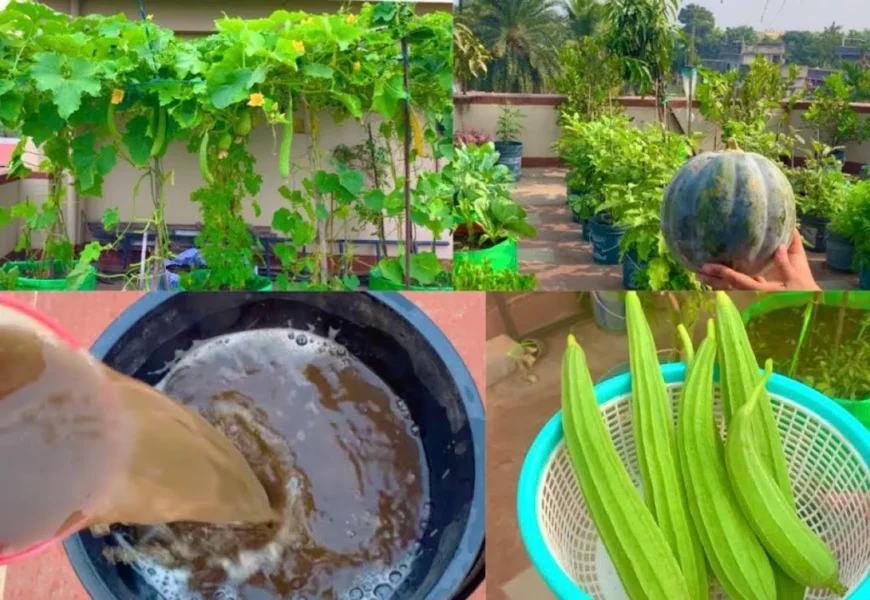
Introduction: Why Your Vegetables Are Probably Hungry
You water your garden every day. You remove weeds before they spread. Some gardeners even spend a few quiet minutes just observing their plants up close. Yet despite all that care, the vegetables still look pale. Growth is slow. The harvest is smaller than expected.
Before you blame the weather or the seed variety, consider something more basic — your soil might simply be running low on nutrients.
This happens more often than most people realize. Garden soils, even ones that were well-prepared at the start of the season, gradually lose their nutritional value. Every rainfall washes some nutrients away. Every harvest removes what the plant has absorbed. Over time, the soil gives more than it receives.
That is exactly where vegetable liquid fertilizer becomes one of the most useful tools you can have in your garden routine.
Unlike granular fertilizers that sit on the soil surface and take days or weeks to break down, liquid fertilizers are absorbed quickly — both through roots and through leaves. Many gardeners notice a visible difference within just a few days of the first application.
This guide covers the full picture: what vegetable liquid fertilizer is, how it works at a scientific level, which types are best suited for different crops, how to apply it correctly, and which mistakes to avoid so you do not end up burning your plants or wasting money on the wrong product.
What Is Vegetable Liquid Fertilizer?
In simple terms, vegetable liquid fertilizer is a nutrient solution — either concentrated or pre-diluted — that delivers essential plant food directly to the soil, root zone, or leaf surface. Because the nutrients are already in a dissolved or suspended form, plants can take them up almost immediately without any additional breakdown required.
Every complete fertilizer contains three core macronutrients: nitrogen (N), phosphorus (P), and potassium (K). These are the building blocks of healthy plant growth. But a good vegetable liquid fertilizer goes beyond just NPK. Quality formulas also include secondary nutrients like calcium, magnesium, and sulfur, as well as trace elements — iron, zinc, manganese, boron — that plants need in small but important amounts.
The key difference between liquid and granular fertilizers comes down to one word: bioavailability. When nutrients are already dissolved in water, there is no waiting period. The plant has access to them right away. That speed matters, especially during critical growth windows.
Liquid fertilizers are particularly valuable in four specific situations:
- During active growing seasons when plants are putting out new growth rapidly.
- During recovery after transplanting, pruning, or any kind of environmental stress.
- When a visible nutrient deficiency needs to be corrected quickly.
- For high-production crops — tomatoes, peppers, cucumbers, and leafy greens — that have consistently high nutritional demands.
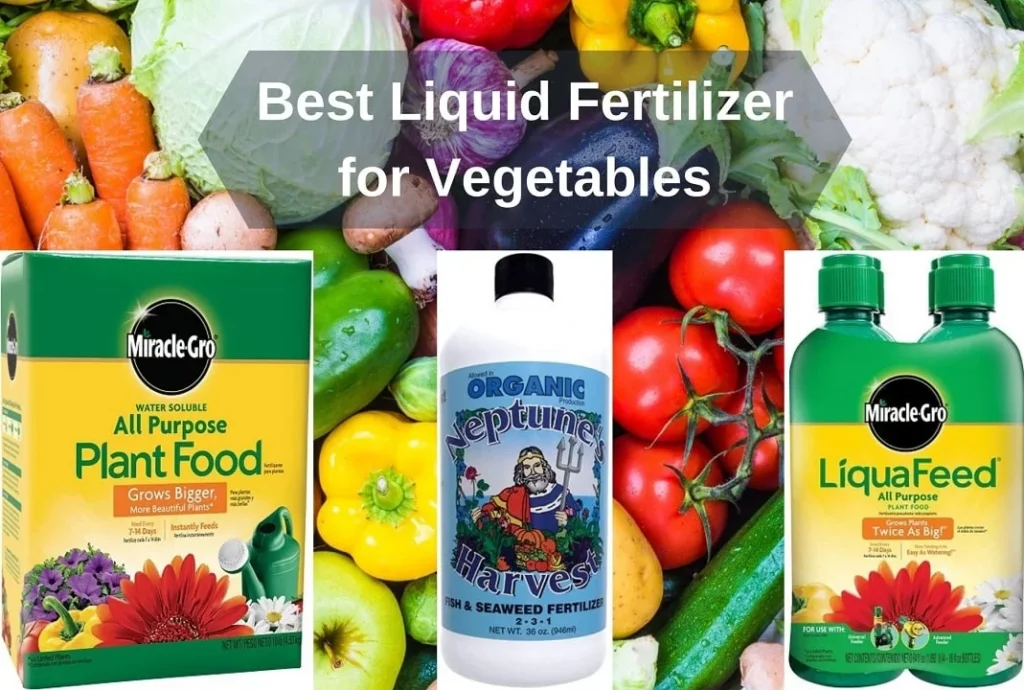
Types of Vegetable Liquid Fertilizer
Walking into a garden store and seeing rows of different fertilizer bottles can feel overwhelming. The good news is that most products fall into a few clear categories. Once you understand each one, choosing the right option becomes much easier.
Organic Liquid Fertilizers
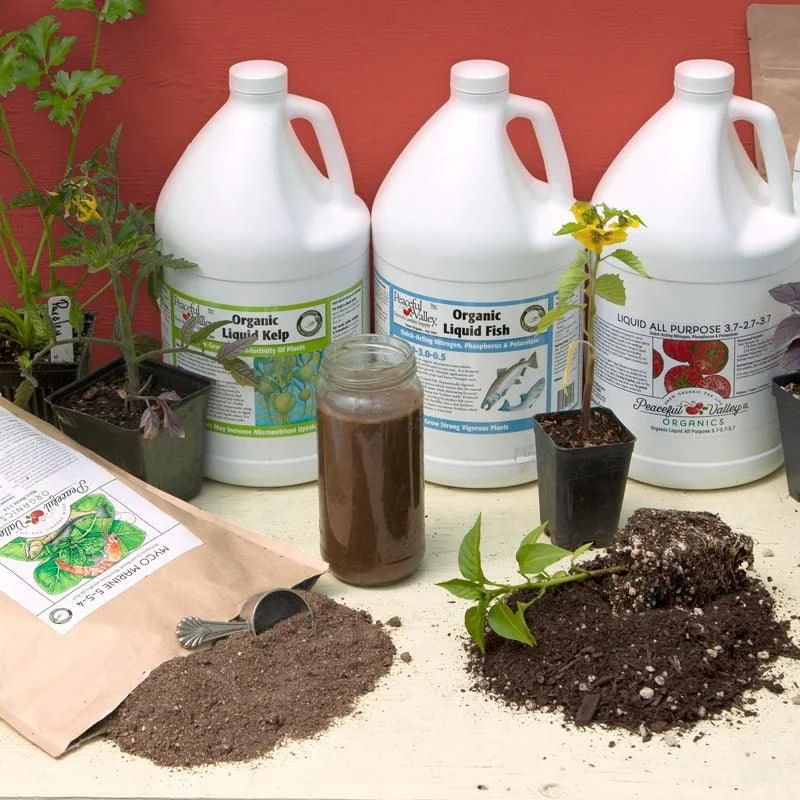
Organic liquid fertilizer for vegetables is made from natural, biological sources. Common ingredients include fish emulsion, seaweed extract, compost tea, worm castings, and bone meal liquid. These products do something that synthetic fertilizers cannot — they feed the soil as well as the plant.
Organic options encourage microbial activity in the soil, improve soil structure over time, and reduce the risk of chemical salt buildup. Their NPK numbers tend to be lower, so you may need to apply them more frequently. But for anyone growing vegetables in raised beds or kitchen gardens where long-term soil health matters, the trade-off is well worth it.
Best for: Organic growers, soil-building programs, container gardens, sensitive edible crops
Synthetic / Chemical Liquid Fertilizers
Synthetic liquid fertilizers are manufactured products with precise, consistent NPK ratios. They act fast, deliver predictable results, and are usually more affordable per application than organic alternatives. However, they contribute nothing to soil biology and can cause salt buildup in containers or poorly draining soil beds if used too heavily over time.
Best for: Fast nutrient corrections, high-output gardens, hydroponic growing systems
Water Soluble Fertilizer Concentrates
Water soluble fertilizer for vegetables typically comes as a powder or crystal that you mix into water before use. Once dissolved, it functions exactly like any other liquid fertilizer. These concentrates are highly cost-effective, easy to store, and allow you to adjust dosage with precision.
Many professional growers prefer water-soluble formulas because they can customize the NPK ratio based on the specific growth stage of their crop.
Best for: Budget-conscious gardeners, large growing areas, growers who want full control over dosing
Liquid NPK Fertilizers
A liquid NPK fertilizer for the garden gives you direct control over the nutrient balance you deliver at each stage of plant development. Growth-stage formulas are widely available — higher nitrogen during the vegetative phase, higher phosphorus during root and flower development, higher potassium during fruiting and ripening.
Matching the NPK ratio to the plant’s current stage is one of the most impactful things you can do to improve your harvest.
NPK Ratios Explained for Vegetable Gardens
| Growth Stage | Recommended NPK Focus | Purpose |
|---|---|---|
| Seedling / Early Veg | High N (e.g., 10-4-3) | Leaf and stem development |
| Pre-Flowering | Balanced (e.g., 5-5-5) | Transition support |
| Flowering / Fruiting | High P + K (e.g., 3-9-9) | Bloom set, fruit size |
| Late Season | Low N, High K (e.g., 2-4-8) | Fruit quality, disease resistance |
How to Apply Vegetable Liquid Fertilizer Correctly
Choosing the right fertilizer is only half the work. Knowing how to apply liquid fertilizer to vegetables properly is what determines whether your plants actually benefit. Poor application — wrong timing, wrong dilution, wrong method — is one of the most common reasons gardeners are disappointed with their results.
Soil Drenching (Root Zone Application)
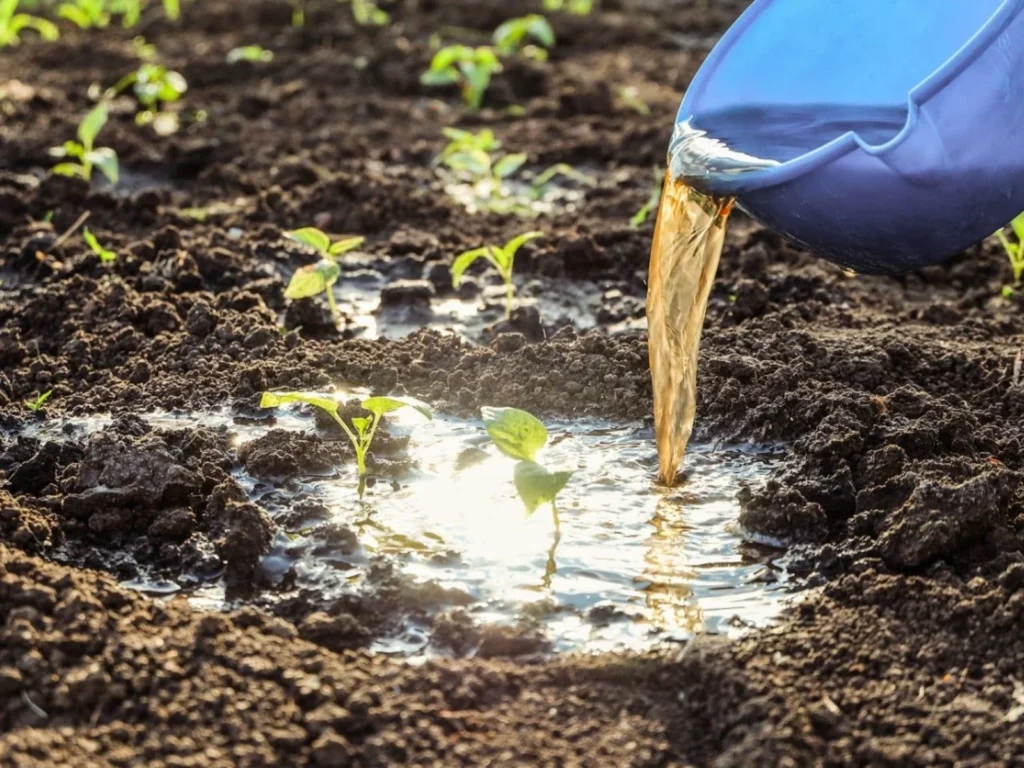
This is the most widely used method and the most straightforward. You dilute the fertilizer according to label instructions and water it directly into the soil at the base of each plant. The roots absorb the nutrients from the surrounding soil solution.
Practical tips for soil drenching:
- Water the soil lightly before you apply — if the soil is dry, concentrated nutrients can settle against the roots and cause burn
- Apply in the early morning or late afternoon; midday application under direct sun increases evaporation and can stress plants
- Follow the dilution rate on the label carefully; doubling the dose does not double the results
- For most vegetables, applying every one to two weeks during peak growth is a good rhythm
Foliar Feeding (Leaf Application)
Foliar spray fertilizer for vegetables is applied directly to the leaf surface using a fine-mist sprayer. Leaves absorb nutrients through tiny pores called stomata, and this method delivers nutrients faster than any other approach. It works especially well for correcting deficiencies that appear mid-season.
Practical tips for foliar spraying:
- Use a sprayer that produces a fine, even mist rather than large droplets
- Apply in the morning so leaves have time to dry naturally before the heat of the day
- Avoid spraying when temperatures are above 85°F (30°C) — heat causes the solution to evaporate before it absorbs
- Do not spray drought-stressed plants; stressed leaves do not absorb nutrients efficiently
Fertigation (Drip System Integration)
Gardeners with drip irrigation or soaker hose systems have a third option: injecting vegetable liquid fertilizer directly into the water supply using a fertilizer injector. This method is highly efficient — it delivers a consistent, low-dose feed with every watering cycle and reduces the labor of manual applications. It works especially well for long raised bed rows or greenhouse setups.
Best Liquid Fertilizer for Specific Vegetables
Different vegetables have different nutritional needs. What works perfectly for leafy greens may not be the right choice for tomatoes or root crops. Here is a straightforward breakdown by crop type.
Tomatoes
Tomatoes are one of the most nutritionally demanding crops in a home garden. The best liquid fertilizer for tomatoes changes as the season progresses. During the early vegetative stage, a nitrogen-forward or balanced formula encourages strong stem and leaf development. Once flower buds begin to form, shift to a low-nitrogen, high-phosphorus and potassium formula to support fruit set and development.
Calcium deserves special attention with tomatoes. A calcium deficiency shows up as blossom end rot — a dark, sunken patch at the bottom of the fruit. Look for a formula that contains chelated calcium, or add a calcium-magnesium liquid supplement to your feeding program.
Leafy Greens (Lettuce, Spinach, Kale)
Leafy greens are heavy nitrogen feeders. Their primary goal is to produce large, dense, healthy leaves, and nitrogen is what drives that process. A high-nitrogen organic liquid fertilizer for vegetables — fish emulsion or a nitrogen-rich seaweed blend — works very well for this crop category. Applying every seven to ten days keeps growth steady and consistent.
Peppers and Cucumbers
Both peppers and cucumbers benefit from a balanced formula during their early stages. Once they begin flowering and setting fruit, shift toward phosphorus and potassium support. These crops also respond positively to foliar feeding with micronutrient solutions, particularly zinc and manganese, which support flower development and fruit quality.
Root Vegetables (Carrots, Beets, Radishes)
Root crops need a different approach. Too much nitrogen encourages the plant to put its energy into leafy top growth rather than the root itself. Use a low-nitrogen, higher-phosphorus formula and apply it sparingly. Over-fertilizing root vegetables is a common reason for forked, hairy, or stunted roots.
Homemade Liquid Fertilizer for Vegetable Gardens
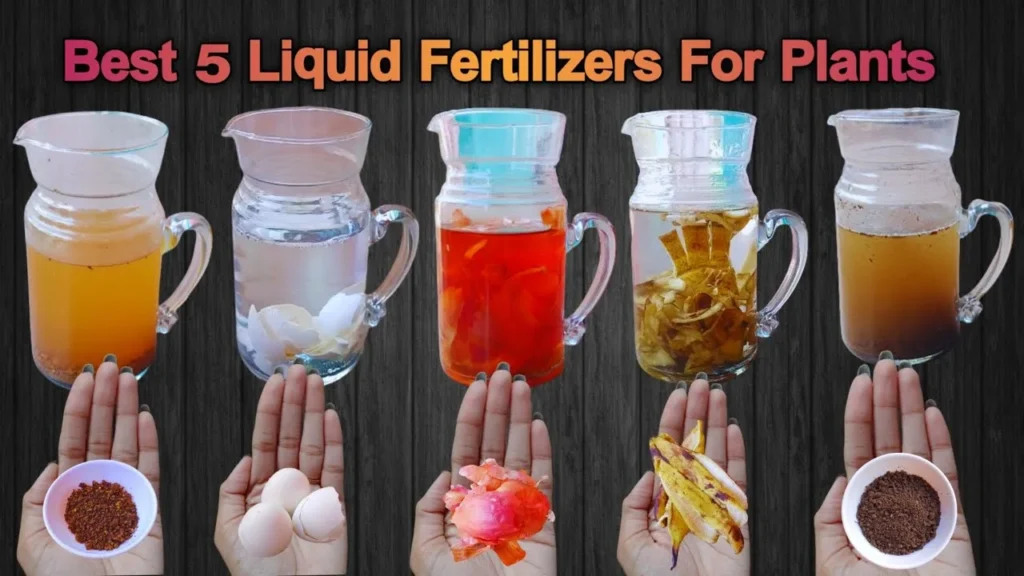
Commercial fertilizers are convenient, but they are not the only option. Homemade liquid fertilizer for vegetable gardens has a long history, and several DIY approaches are genuinely effective — especially as supplemental feeds alongside a standard fertilizing program.
Compost Tea
Steep well-finished compost in water for 24 to 48 hours. Aerate the mixture during that time if possible, then strain it and apply it as a soil drench. Compost tea delivers a wide range of nutrients and introduces beneficial microorganisms into the soil. It is not as precisely dosed as a commercial product, but as a supplemental feed it provides real, measurable benefit.
Worm Casting Liquid (Worm Leachate)
If you maintain a worm bin, the liquid that collects at the bottom is a valuable resource. Dilute it at a ratio of roughly 10 parts water to 1 part leachate before applying. This is one of the gentlest liquid fertilizers available — biologically rich and safe even for young seedlings.
Banana Peel Liquid
Soak banana peels in water for 48 to 72 hours. The resulting liquid contains a useful concentration of potassium and works as a foliar spray during the fruiting stage. It is not a complete fertilizer, but as a targeted potassium supplement during fruit development it has practical value.
Nettle or Comfrey Liquid
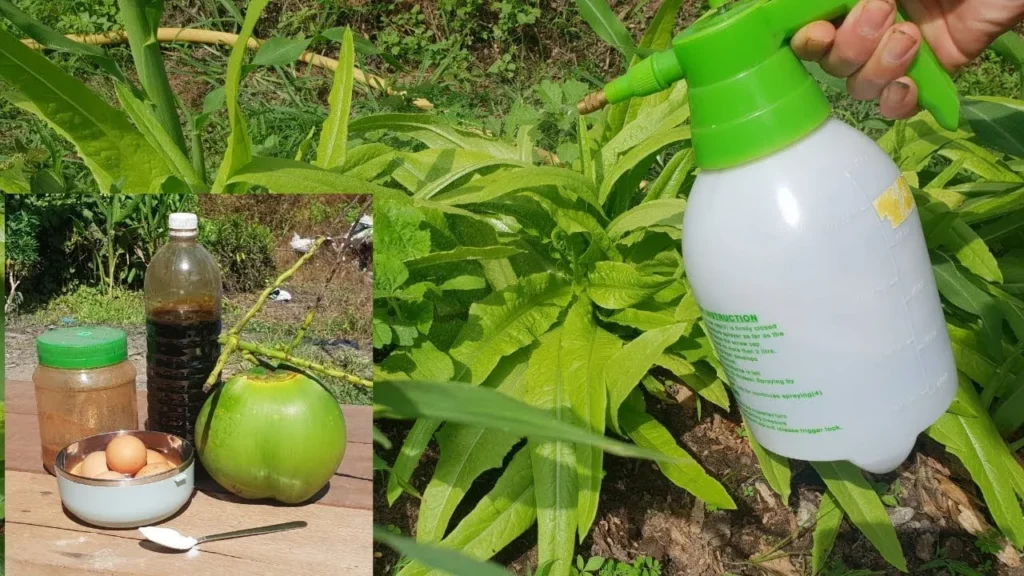
This approach has been used in European organic gardening for generations. Submerge chopped nettle or comfrey leaves in water and allow the mixture to ferment for two to four weeks. The end result is a strong-smelling but genuinely nutrient-dense liquid, particularly high in nitrogen and potassium. Dilute well before use.
Common Mistakes When Using Vegetable Liquid Fertilizer
Even experienced gardeners make these errors. Being aware of them ahead of time protects both your plants and your investment.
Over-fertilizing: This is the most frequent mistake. The assumption that more fertilizer equals faster growth is incorrect. Excess nutrients cause salt burn on roots, leaf scorch, and a condition called nutrient lockout — where an overabundance of one element blocks the plant from absorbing others. When trying a new product, start at half the recommended dose.
Applying to dry soil: Concentrated nutrients applied to dry roots cause chemical burn. Always water the soil before applying any vegetable liquid fertilizer.
Using the wrong NPK ratio for the growth stage: A tomato plant that is actively fruiting does not need high nitrogen. Applying it at that stage pushes energy toward leaf production instead of fruit. Always match the formula to where your plant is in its lifecycle.
Ignoring soil pH: Soil pH controls how available nutrients are to plant roots. A pH above 7.5 or below 5.5 locks out many essential nutrients, even if they are physically present in the soil. Test your pH and correct it before fertilizing.
Mixing incompatible products: Calcium-based products should not be mixed with sulfate or phosphate products — they react and form solid precipitates that clog sprayers and reduce effectiveness. Always check product compatibility before combining anything in a single tank.
How to Read a Vegetable Liquid Fertilizer Label
Every bottle of liquid fertilizer carries key information. Here is what to look for before you buy:
- NPK ratio — The three numbers on every label represent nitrogen, phosphorus, and potassium percentages (e.g., 5-3-4).
- Chelated micronutrients — Chelated forms are bonded to organic molecules, making them significantly more bioavailable than standard mineral forms.
- Organic certification — Products labeled OMRI Listed have been verified safe for certified organic production.
- Application rate and frequency — These are based on research and product testing; follow them carefully.
- pH range — Some formulas perform best within a specific soil pH window.
- Concentrate vs. ready-to-use — Concentrates must be diluted before use; ready-to-use products can be applied directly.
Organic vs. Synthetic Liquid Fertilizer: A Practical Comparison
| Feature | Organic | Synthetic |
|---|---|---|
| Nutrient release speed | Moderate | Fast |
| Soil health benefit | High | Low |
| Risk of burn | Very low | Moderate to high |
| Cost per application | Higher | Lower |
| Environmental impact | Lower | Higher |
| Microbial support | Yes | No |
| Shelf life | Shorter | Longer |
| Best use | Long-term garden health | Quick corrections |
When to Start Using Liquid Fertilizer in the Season
Timing your fertilizer applications correctly can have as much impact as the product itself. Here is a practical seasonal schedule for most vegetable gardens:
- Pre-planting: Work compost into the soil as your foundation; liquid fertilizer is not needed yet at this stage.
- Transplanting day: Apply a diluted, phosphorus-forward liquid to help roots establish in the new environment; avoid high nitrogen during this window.
- Two weeks after transplant: Begin your regular liquid feeding schedule once the plant shows signs of active new growth.
- Every 7–14 days: Maintain consistent feeding through the active growing and fruiting period.
- 4–6 weeks before expected frost: Stop nitrogen applications and allow plants to begin hardening off naturally.
FAQ: Vegetable Liquid Fertilizer
Q: How often should I apply vegetable liquid fertilizer?
Most formulas work best when applied every 7 to 14 days during the active growing season. High-demand crops like tomatoes and peppers often benefit from weekly feeding during peak production. Always check the label — application frequency varies between products.
Q: Can I use liquid fertilizer on seedlings?
Yes, but reduce the concentration significantly. Use roughly one-quarter of the standard dose for seedlings under four weeks old. Young roots are sensitive, and full-strength applications can cause serious damage.
Q: Is organic liquid fertilizer better than synthetic for vegetables?
Both have their place. Organic formulas build soil health over time, support microbial life, and carry a lower risk of burn. Synthetic formulas act faster and deliver more precise nutrient ratios. Many experienced growers use organic fertilizers as their primary program and synthetic products for targeted corrections when needed.
Q: Can I make my own vegetable liquid fertilizer at home?
Yes. Compost tea, worm leachate, banana peel water, and fermented nettle or comfrey are all practical DIY options. They are not as precise as commercial products, but they work well as supplements within a broader feeding program.
Q: What is the difference between foliar feeding and soil application?
Foliar feeding delivers nutrients directly through the leaf surface — fast and effective for correcting visible deficiencies. Soil application delivers nutrients through the root zone and is the foundation of any regular feeding program. Using both together produces the best results for most crops.
Q: Will liquid fertilizer burn my vegetables?
It can, but only if applied incorrectly. The most common causes are applying too-concentrated solutions, applying to dry soil, or feeding during peak midday heat. Follow dilution rates carefully, pre-water your soil, and choose appropriate application times.
Q: What is the best vegetable liquid fertilizer for container gardens?
Container-grown vegetables lose nutrients quickly through regular watering, so consistent feeding is essential. A balanced organic liquid fertilizer — fish emulsion, seaweed extract, or a worm casting blend — applied on a weekly schedule works very well for most container vegetables.
Conclusion: Feed Your Garden With Intention
Gardening rewards attention to detail, and fertilizing is no different. The plants in your vegetable garden are working constantly — building leaves, developing roots, setting flowers, swelling fruit — and all of that biological work requires a steady supply of the right nutrients at the right time.
Vegetable liquid fertilizer is not a shortcut or a quick fix. Used correctly, it is a precise tool that gives your plants exactly what they need, when they need it. Whether you choose an organic liquid fertilizer for vegetables to support long-term soil health, a water soluble fertilizer for vegetables for cost-effective flexibility, or a targeted liquid NPK fertilizer for the garden to match specific growth stages — the most important thing is that you are feeding with intention rather than guessing.
Start simple. Know your crop. Match the formula to the growth stage. Apply at the right time and at the right dose. Pay attention to how your plants respond — healthy color, steady growth, and strong yields are the clearest signals that your feeding program is working.
Over time, you will develop an instinct for it. You will recognize when a plant is hungry before the symptoms become serious. You will know which crops need more attention and which ones are relatively self-sufficient. That kind of plant knowledge, built through seasons of hands-on observation, is what separates a productive vegetable garden from one that just survives.
Feed your soil, feed your plants, and the results will follow.