Growing strawberries has never felt more within reach. A few years ago, most people assumed you needed a proper garden plot to grow real fruit at home. That assumption no longer holds. Whether you have a spacious backyard or just a balcony wide enough for two chairs, you can grow strawberries in a bag and enjoy fresh, sweet berries from your own plants. Urban gardeners, rooftop growers, and apartment dwellers have quietly made this one of the most popular growing methods around.
What makes it appealing is that bag growing is not just a compromise for people without space. In many situations, it actually outperforms traditional garden beds. You have full control over the soil quality, the drainage, and where the sun hits your plants each day. Bags can hang vertically from a fence, line the edge of a balcony railing, or sit neatly against a wall. Because the roots stay in a managed environment, plants often produce better fruit than those left to sprawl across open ground.
This guide walks through everything you need to know — which bags work best, the right soil mix, watering without overdoing it, feeding schedules, handling runners, and fixing the problems that catch most first-time growers off guard. By the end, you will have a clear picture of exactly how to grow strawberries in a bag that actually delivers a proper harvest.
Why Bag Growing Works So Well for Strawberries
Strawberries have a shallow root system. Most roots stay within 15 to 20 cm of the surface, which makes them naturally suited to containers, fabric pots, and grow bags. They do not need deep soil the way carrots or parsnips do. What they do need is warmth, consistent moisture, and soil that drains well without drying out too fast.
When you grow strawberries in a bag, you gain real, practical advantages over garden beds that are easy to overlook at first:
- Bags warm up faster in spring, which extends the growing season by several weeks in cooler climates.
- You can physically move bags to chase sunlight as the season changes.
- The soil stays loose and uncompacted because nobody walks on it.
- Pests like slugs and vine weevils are noticeably easier to manage when plants sit off the ground.
- Watering goes directly to the roots, with no runoff into surrounding soil.
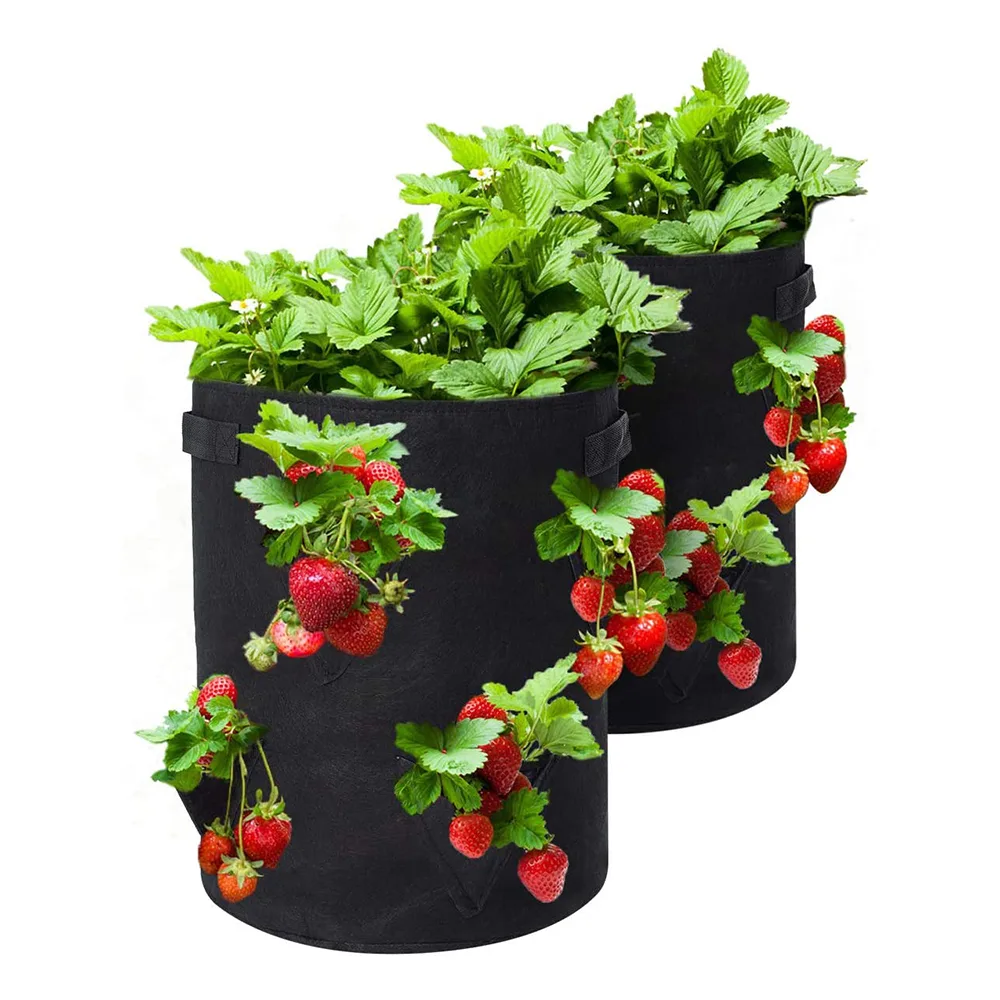
Fabric grow bags in particular have become a go-to choice for strawberries, and for good reason. The material breathes. This creates a process called air pruning, where roots naturally stop extending once they reach the bag’s edge and meet open air. That keeps the root structure compact and healthy, rather than allowing it to spiral and bind the way roots do in hard plastic containers.
Choosing the Right Bag: Types, Sizes, and Materials
Not every bag performs the same, and it is worth spending a few minutes on this decision before buying anything. The main options you will come across are fabric grow bags, polythene sacks, hanging pocket planters, and vertical strawberry planter pockets. Each one has genuine strengths and real trade-offs.
| Bag Type | Best For | Drainage | Lifespan |
|---|---|---|---|
| Fabric grow bag (felt) | Patios, rooftops | Excellent — breathes from all sides | 3–5 seasons |
| Polythene sack | Budget growing, allotments | Needs holes cut in base | 1–2 seasons |
| Vertical pocket planter | Walls, fences, railings | Good if pockets have slits | 2–4 seasons |
| Hanging grow bag | Overhead hooks, pergolas | Good — often pre-slotted | 2–3 seasons |
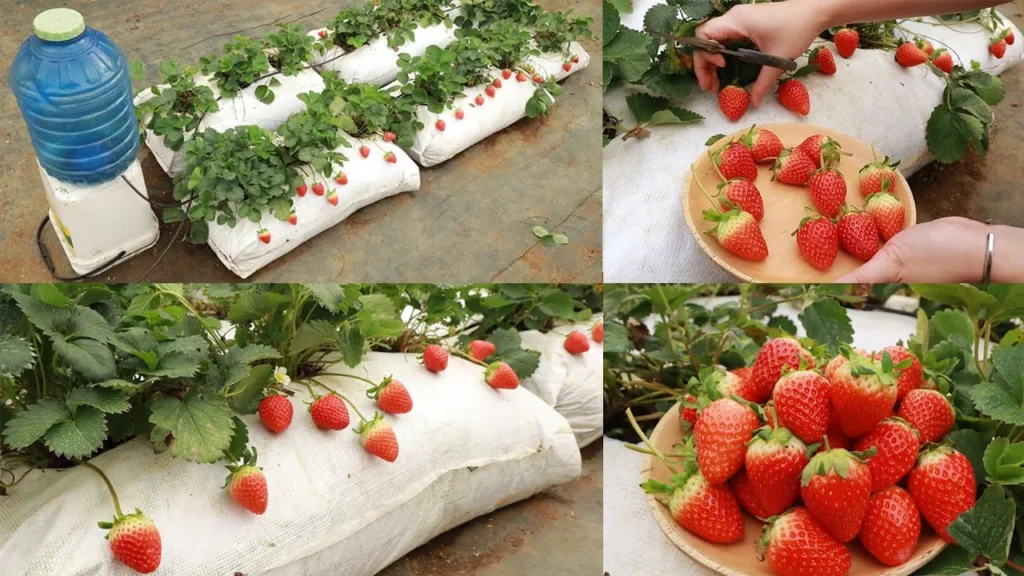
For most home growers, a 30 to 40 litre fabric grow bag holds 3 to 5 strawberry plants without crowding them. Smaller bags work for one or two plants, but the reduced soil volume means moisture levels swing much more sharply during hot weather, which puts roots under unnecessary stress.
Strawberry growing bags with drainage holes are non-negotiable. Without them, roots sit in waterlogged soil and begin to rot within days. If your bag does not come with pre-cut drainage holes, cut at least five or six slits across the base before you plant anything.
Best Soil Mix for Container Strawberries
This is the step where many people unknowingly set themselves up for a poor harvest. Strawberries strongly dislike heavy, compacted soil. They need a mix that drains freely but still holds enough moisture between waterings to keep the roots hydrated. Standard topsoil and cheap potting compost rarely achieve that balance.
The best soil mix for container strawberries brings together three components:
- Quality multipurpose compost — this forms the base and provides the organic matter and general nutrients your plants need to establish.
- Perlite or horticultural grit at around 20 to 25 percent by volume — this opens up the structure of the mix, improves airflow through the soil, and stops it from compacting over time.
- Well-rotted farmyard manure or leaf mould at around 10 to 15 percent — this contributes slow-release nutrients and helps the mix retain just enough moisture without ever becoming soggy.
Avoid using garden soil in bags entirely. It compacts badly in containers, drains poorly, and often carries weed seeds or soil-borne diseases that are difficult to deal with once established. Purpose-made container mixes designed specifically for fruits and berries give you the best foundation.
Soil pH is worth checking too. Strawberries prefer slightly acidic conditions, ideally between 5.5 and 6.5. If your compost tests above 7.0, mixing in a small amount of sulphur chips before planting will bring the pH down gradually without any need for harsh chemicals.
Planting: Step-by-Step Guide to Grow Strawberries in a Bag
Timing and planting depth are the two things that trip up most beginners. Both are easy to get right once you know what to look for.
When to plant
Early spring is the ideal window — March through April in the UK, and February through April across USDA zones 5 to 8. Bare-root runners planted in autumn give you a useful head start and tend to produce well the following summer. Avoid planting during a frost or in the middle of a heatwave.
How to plant
- Fill the bag about three-quarters full with your prepared soil mix.
- Make shallow planting holes roughly 5 cm deep, spaced 20 to 25 cm apart.
- Set each plant so the crown — the point where the roots meet the leaves — sits exactly at soil level, neither buried nor sitting too high above it.
- Firm the soil gently around the roots without pressing too hard.
- Water thoroughly until moisture comes through the drainage holes at the base.
- Place the bag in a position that receives at least six to eight hours of direct sunlight each day.
Variety selection matters more than many growers realise. Everbearing types like Albion, Seascape, and Tristar are well suited to bags because they produce several fruiting flushes throughout the season rather than one concentrated harvest in June. June-bearing varieties such as Elsanta or Honeoye deliver a larger single crop, which suits anyone planning to preserve or freeze their berries.
How to Water Strawberries in Fabric Bags
Of all the ongoing tasks involved when you grow strawberries in a bag, watering is the one that makes the biggest difference to your final harvest. Bags dry out considerably faster than in-ground beds, particularly fabric bags placed in full sun during summer. Getting this wrong in either direction causes real problems — underwatering leads to poor fruit set and wilting plants, while overwatering creates the conditions for root rot and crown rot, both of which can kill a plant surprisingly quickly.
A practical watering routine
- Push a finger 3 to 4 cm into the soil each day to check moisture levels.
- Water when the top layer feels dry but before the deeper soil has gone completely dry.
- In summer, most bags need water every one to two days; in spring and autumn, every three to five days is usually sufficient.
- Always water at the base of the plant and try to keep the leaves dry — wet foliage creates ideal conditions for grey mould (Botrytis).
- Water in the morning so that any surface moisture has time to evaporate before evening.
If you are managing more than a few bags, a drip irrigation system connected to a basic timer is a worthwhile investment for anyone who wants to grow strawberries in a bag successfully. It removes the guesswork, keeps watering consistent even when you are away, and typically pays for itself within a single season in healthier plants and better fruit.
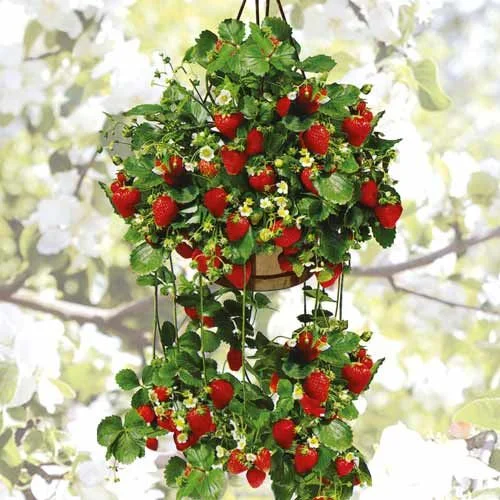
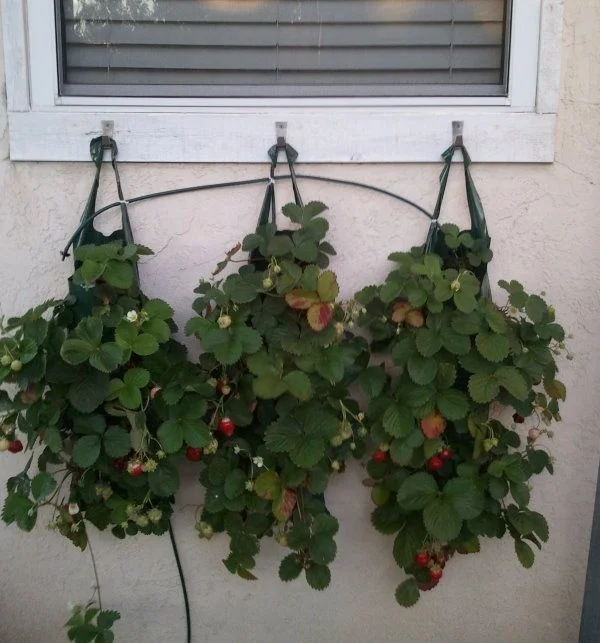
Hanging grow bags for strawberries deserve extra attention during warm weather. With all sides exposed to air, they dry out noticeably faster than ground-level bags. Check them twice a day during heatwaves. Placing a shallow saucer underneath can help slow moisture loss — just empty it daily so roots are never sitting in standing water.
Feeding Schedule: When to Fertilize Potted Strawberry Plants
Plants growing in containers burn through nutrients faster than those in the ground. Every watering cycle washes a small amount of minerals through the drainage holes. Without a consistent feeding routine, even well-planted strawberries will gradually underperform as the season progresses.
Seasonal feeding guide
| Growth Stage | Fertilizer Type | Frequency |
|---|---|---|
| Early spring (leaf emergence) | Balanced NPK (e.g. 10-10-10) or seaweed feed | Every 2 weeks |
| Flowering | High potassium feed (tomato fertilizer works well) | Weekly |
| Fruiting | High potassium, low nitrogen | Weekly |
| Post-harvest | Balanced feed + slow-release granules | Every 3 weeks |
| Winter dormancy | None — let plants rest | — |
One mistake worth knowing about before it happens: too much nitrogen after flowering pushes the plant toward leafy, lush growth at the direct expense of fruit. If your container strawberries look healthy but produce almost nothing, excess nitrogen is often the reason. Once flower buds appear, shift to a high-potassium feed and keep nitrogen intake low for the rest of the fruiting period.
Vertical Strawberry Planter Pockets: Maximising Small Spaces
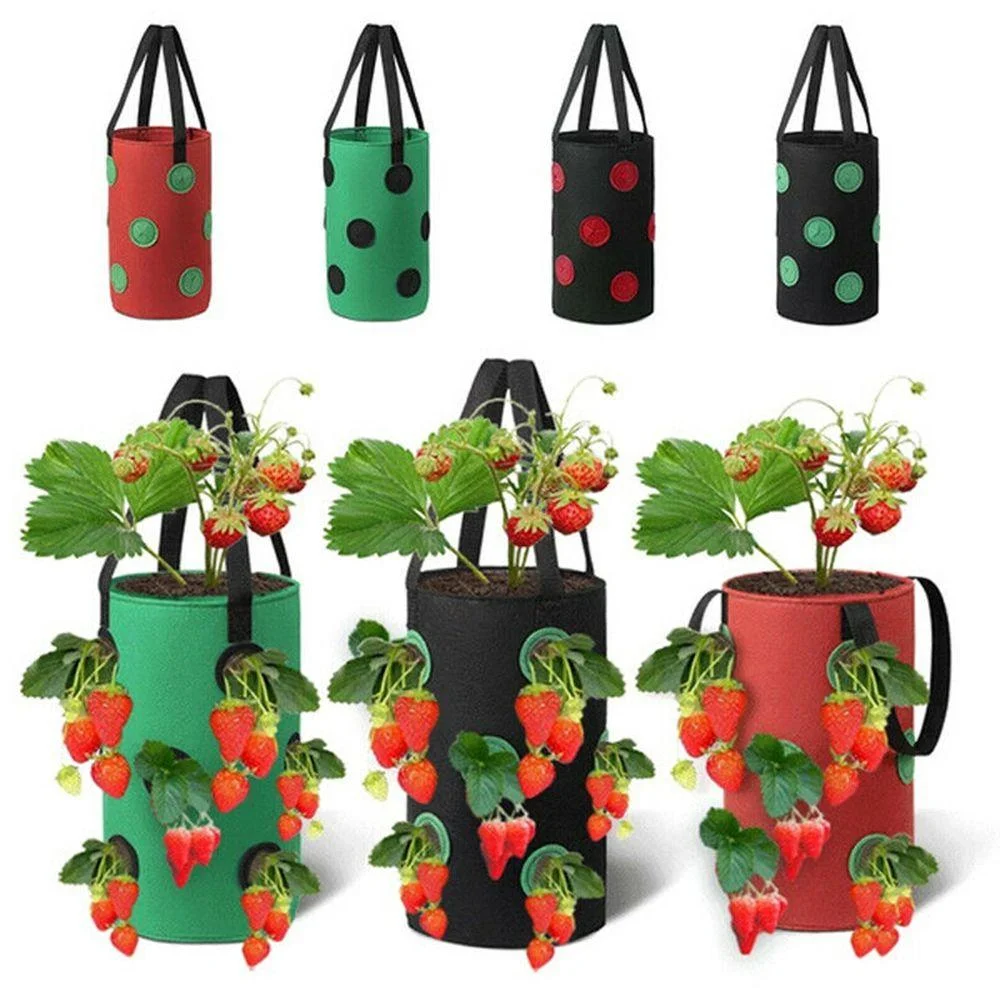
When floor space runs out, growing upward becomes the obvious solution. Vertical strawberry planter pockets allow you to grow strawberries in a bag format across an entire wall, fence, or balcony railing. A standard vertical pocket planter accommodates between 6 and 18 individual plants while taking up almost no horizontal space at all — a practical solution for small outdoor areas.
The most common challenge with vertical systems is uneven watering. Top pockets tend to dry out the fastest because water drains downward through the system. Bottom pockets often end up oversaturated as a result. Watering slowly from the top and allowing it to move through the layers at its own pace is the most reliable way to keep moisture distributed evenly.
A few balcony strawberry gardening tips that apply specifically to vertical setups:
- Rotate the planter a quarter turn each week so every pocket receives roughly equal sun exposure.
- Choose everbearing varieties, which produce fruit continuously rather than all at once — this way, some part of the planter is always fruiting.
- Check the rear-facing pockets regularly, as they often dry out faster than the front.
- Add a slow-release fertilizer granule to each pocket at planting time — this reduces how often you need to apply liquid feed through the season.
Managing Runners in Bag Containers
Strawberry runners are the long, trailing stems that grow outward from a mature plant and develop a new plantlet at the tip. They are one of the most useful features of growing strawberries — and one of the most misunderstood when it comes to container growing.
When you grow strawberries in a bag, runners behave exactly the same way they do in open ground. The mother plant sends out a horizontal stem, and a new plantlet forms where that stem touches something it can root into. Left unmanaged, the plant puts a significant portion of its energy into producing runners rather than fruit.
Should you remove runners or keep them?
- Remove them during the main fruiting period if maximum yield is the goal — cut them back as soon as they appear
- Keep selected runners if you want to propagate new plants for free — pin a runner tip into a small pot of compost placed alongside the bag, and it will root firmly within three to four weeks
- Post-harvest runners are worth saving — these become your replacement plants for next year, keeping the crop strong without spending anything
It is worth knowing that strawberry plants in bags tend to produce their best harvests in their second and third years. After the third year, fruit quality gradually declines, and replacing older plants with freshly rooted runners is the most cost-effective way to maintain a productive crop.
Common Problems and How to Fix Them
Yellowing leaves
This usually points to nitrogen deficiency, overwatering, or iron deficiency — the last of which is particularly common when soil pH has drifted above 7.0. Check drainage first, then test the pH. A chelated iron feed corrects iron chlorosis quickly and visibly within a couple of weeks.
No fruit despite flowers
Poor pollination is the likely cause, especially on sheltered balconies where bees and other pollinators may not reach regularly when you grow strawberries in a bag. Gently brushing an open paintbrush across each flower mimics what a pollinator would do and often resolves the problem immediately. Also verify that nitrogen feeding has been reduced since flowering began.
Fruit rotting before ripening
Grey mould (Botrytis cinerea) thrives wherever moisture lingers on plant surfaces and airflow is limited. Improve circulation between bags, stick to watering at the base, and remove any affected fruit or foliage as soon as you spot it. Copper-based fungicides are effective when the problem persists beyond basic cultural changes.
Vine weevil grubs
The small white grubs of the vine weevil feed on strawberry roots below soil level and can collapse a plant before you see any sign of trouble above ground. Nematode-based biological controls — specifically Steinernema kraussei — applied to bag soil in autumn are highly effective and leave no chemical residue.
Balcony Strawberry Gardening Tips for Maximum Yield
Compact fruit growing in polythene sacks and fabric bags on a balcony introduces a few considerations that ground-level growing simply does not. Space, structural weight limits, and wind exposure all become real factors worth thinking about before you scale up.
- Check your balcony’s weight limit before adding multiple bags — a 40-litre bag filled with wet compost can weigh 20 to 25 kg, and the weight adds up fast when you have several.
- Set up a windbreak if your balcony is exposed — strong, consistent wind dries bags out rapidly and can damage open flowers before they have a chance to set fruit.
- Light-coloured walls and surfaces work in your favour — reflective surfaces bounce additional light onto the plants and help warm the growing environment, particularly earlier in the season.
- Group bags close together — a cluster of bags creates a small microclimate that naturally retains more humidity and slows moisture loss from individual containers.
- Use saucers during the hottest months — shallow saucers under bags slow evaporation noticeably; just empty them each day to avoid root rot.
Overwintering: Keeping Your Bags Alive Year to Year
One of the underrated benefits when you grow strawberries in a bag is mobility. When winter arrives, you can move containers to sheltered spots that in-ground plants can never reach. Strawberries need a cold dormancy period to fruit well the following year — skipping this stage actually reduces harvest quality — but their roots are more exposed to damaging frost in bags than they would be in the ground, where surrounding soil provides natural insulation.
In USDA zones 6 and below, or anywhere that regularly sees temperatures drop below -10°C, move bags into an unheated shed, garage, or cold greenhouse before hard frost arrives. The plants need cool temperatures — ideally below 7°C — to enter dormancy properly, but the root ball should never freeze solid.
If bags must stay outside, wrap them in horticultural fleece for added insulation. Cut foliage back to around 5 cm after the first hard frost, and resist the urge to water during dormancy unless the compost has become completely dry to the touch.
FAQ: Grow Strawberries in a Bag
How many strawberry plants can I grow in a bag?
A 30 to 40 litre bag comfortably fits 3 to 5 plants. Overcrowding makes disease more likely and reduces individual plant yield. Smaller 10 to 15 litre bags are fine for one or two plants.
What is the best variety to grow strawberries in a bag?
Everbearing varieties like Albion, Seascape, and Mara des Bois consistently perform well in containers. They produce fruit across a long season rather than all at once, which suits bag growing particularly well.
Can I reuse the same bag and soil next year?
The bag itself can be reused after washing with a diluted bleach solution. The soil mix benefits from refreshing or full replacement every two years — old compost loses both its structure and its nutrient content, and plants notice the difference.
How long does it take to grow strawberries in a bag?
Most plants begin flowering within six to eight weeks of planting. First-year yields are usually modest. Second-year plants in the same bag typically produce noticeably more fruit, which is when growing in bags really starts to feel rewarding.
Do strawberries grown in bags taste the same as garden strawberries?
Yes — and the flavour is sometimes better. Because you control the water and feed inputs closely, container-grown berries often develop more concentrated sweetness. Holding back on watering slightly as the fruit ripens is a well-known technique for intensifying flavour.
Can I grow strawberries in a bag indoors?
It is possible near a strong south-facing window or under dedicated grow lights. Indoor plants require hand-pollination, at least 12 hours of light daily, and very careful watering. The lack of natural airflow also makes fungal problems more likely, so good ventilation in the room matters.
Conclusion
Learning to grow strawberries in a bag is one of those skills that rewards you quickly and keeps giving year after year. The first time you pick a ripe berry from a plant you started yourself on a balcony or patio, the method stops feeling like a workaround and starts feeling like the obvious way to do it.
There is no complicated equipment required, no specialist knowledge needed before you begin, and no large outdoor space demanded. What it does ask for is some attention — regular watering checks, a thoughtful feeding schedule, a little pruning — the kind of consistent, simple care that any patient grower can manage.
Start with one or two fabric bags, a good soil mix, and an everbearing variety suited to your climate. Pay attention to drainage from day one, feed on a proper schedule once flowering begins, and manage your runners deliberately rather than ignoring them. Those four habits alone will take you well past the results most first-time bag growers achieve.
Whether you are working with a rooftop, a narrow balcony, a small patio, or even a single sunny wall, the fundamentals do not change. Good soil, good drainage, consistent care. Grow strawberries in a bag that way, and the harvest will speak for itself.