There’s a moment every indoor grower dreads — opening the monthly electricity bill after weeks of running grow lights around the clock. The numbers are never pretty. Lighting pulls more power than almost anything else in a grow setup, whether you’re tending a few seedlings on a shelf or managing a full-scale greenhouse operation. That’s the quiet frustration pushing more growers toward the best solar powered grow lights — a solution that makes genuine financial and practical sense.
The technology has come a long way. A few years ago, solar grow lighting was mostly a curiosity — something you’d try on a small herb garden and abandon when the results disappointed. That’s changed. Full-spectrum solar LED systems now deliver real, measurable results across a wide range of crops, from delicate leafy greens to demanding fruiting plants — all without drawing power from the grid. If you’re building a remote setup, upgrading a greenhouse, or simply trying to grow more responsibly, solar-driven lighting deserves a serious look.
This guide walks through how these systems actually work, what separates good setups from poor ones, which crops respond best, and how to make a smart buying decision for your specific situation.
How Solar Powered Grow Lights Actually Work
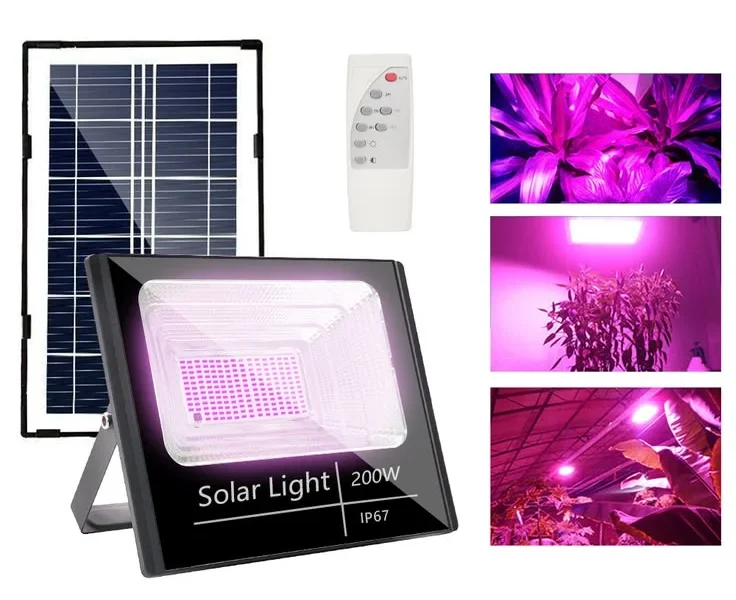
It’s worth understanding the basic mechanics before spending any money. A solar grow lighting system connects two core components: a photovoltaic (PV) solar panel that captures sunlight and turns it into usable electricity, and an LED grow light fixture that channels that electricity into the exact wavelengths plants need to grow.
During daylight hours, the panel charges a battery. That stored energy later powers the grow lights — either running in parallel with the panel during the day or taking over completely after dark, depending on how the system is wired. Higher-end setups add a charge controller between the panel and battery, which prevents overcharging and keeps the whole system running efficiently over time.
Every component in that chain matters. When shopping for the best solar powered grow lights, a high-quality solar panel paired with a weak battery produces inconsistent results. A good battery paired with the wrong LED fixture wastes energy on wavelengths plants barely use. The system is only as strong as its least capable part.
Here’s what each component actually controls:
- Solar panel wattage — sets the ceiling for how much electricity gets generated each hour of sunlight.
- Battery capacity (Ah/Wh) — determines how many hours your lights can run when there’s no sun.
- LED efficiency (µmol/J) — measures how well the fixture converts electricity into photosynthetically useful light.
- Full spectrum output — the range of wavelengths available to plants across different growth stages.
Why Growers Are Switching to Solar LED Grow Lights for Indoor Plants
The old skepticism about solar grow lighting had a reasonable foundation. Indoor plants need consistent, predictable light — and solar energy by its nature fluctuates with weather and seasons. It was a fair concern. But modern solar LED grow lights for indoor plants have largely closed that gap.
Today’s systems pair solar panels with battery storage that smooths out the variability entirely. A properly sized setup can sustain 12 to 18 hours of steady grow light output from a single day of panel charging, even when clouds roll in partway through the afternoon.
The reasons growers are making the switch go beyond just solving that old reliability problem:
- Lower operating costs over time. Once a solar system is installed and paid off, the electricity it generates costs nothing. A 300W LED setup running 16 hours daily can easily consume $175–$200 worth of grid power per year. Solar removes that recurring expense entirely.
- True grid independence. For growers on rural properties, rooftop setups, or remote greenhouse sites, solar removes the need for electrical infrastructure that can be expensive or simply unavailable.
- Room to grow. Solar systems are modular by design. Starting small doesn’t mean staying small — panels and batteries can be added as the operation expands.
- Sustainable practice. Renewable energy greenhouse lighting fits naturally into growing practices that prioritize environmental responsibility, which matters increasingly to both consumers and regulatory bodies.
Most solar grow light setups reach their break-even point somewhere between 18 and 30 months. After that, the system is paying you back.
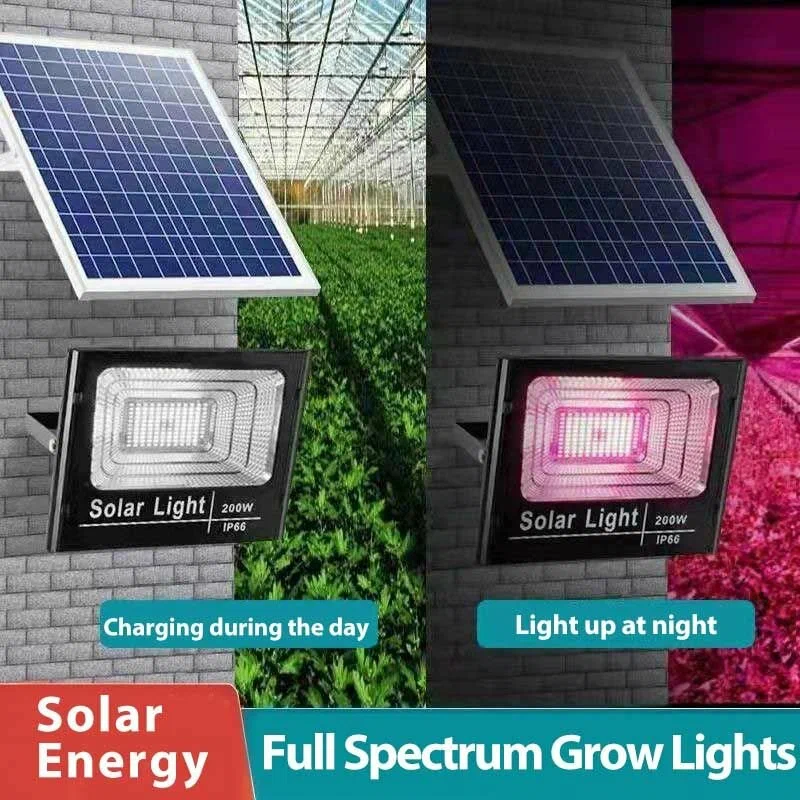
Best Solar Powered Grow Lights: What to Look For
Shopping for the best solar powered grow lights involves factors that simply don’t exist when buying a standard plug-in fixture. Here’s what actually separates a good system from one that will frustrate you.
1. Panel Wattage vs. Light Wattage Ratio
The panel has to do double duty — run the grow light and refill the battery. A reliable rule of thumb: panel wattage should be at least 1.5 to 2 times the grow light’s power draw. A 50W grow light needs a 75–100W panel to stay ahead in a reasonably sunny location.
2. Battery Capacity
The math here is straightforward: light wattage multiplied by daily operating hours equals your daily watt-hour consumption. Your battery should hold at least 1.5 times that number to give you a buffer for cloudy days and normal efficiency losses.
3. Full Spectrum Output
Plants aren’t one-size-fits-all when it comes to light. The best solar powered grow lights use full-spectrum LEDs that cover the wavelengths plants actually need:
- 400–500nm (blue) — drives vegetative growth and leaf development.
- 600–700nm (red) — supports flowering and fruit set.
- 700–800nm (far-red) — influences stem elongation and flowering triggers.
- White and green wavelengths — aid overall photosynthesis and make plants easier to visually inspect.
4. PPFD (Photosynthetic Photon Flux Density)
This is the number that tells you how much usable light actually reaches your plant canopy. Seedlings generally need 100–300 µmol/m²/s. Actively growing vegetables want 400–600 µmol/m²/s. Fruiting plants push that to 600–900+ µmol/m²/s.
5. IP Rating for Outdoor Use
Any fixture going into a greenhouse or outdoor space needs an IP65 rating at minimum. Below that, humidity and water exposure will shorten its lifespan significantly.
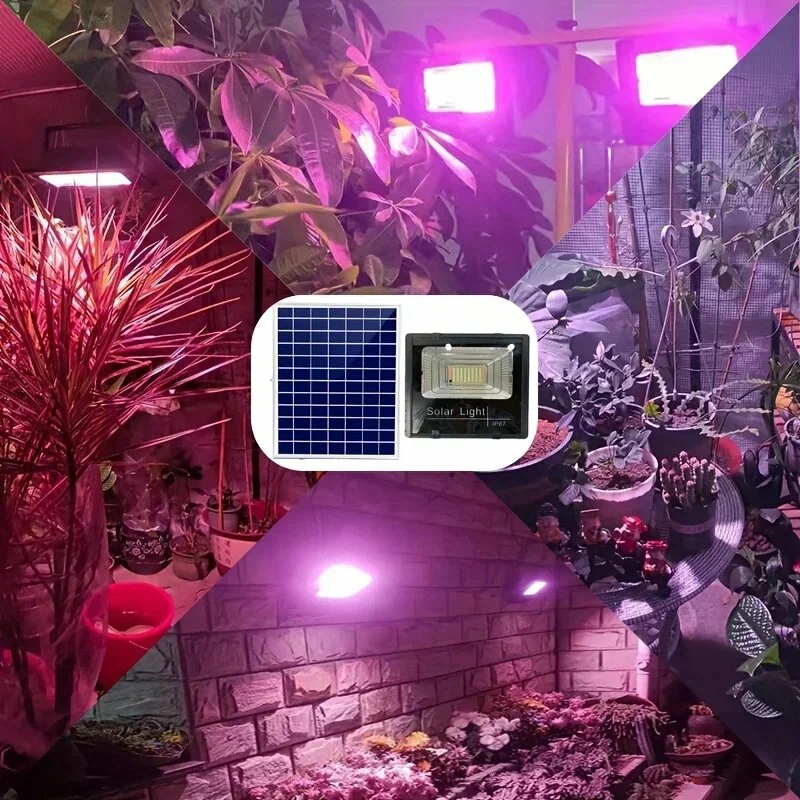
Solar Grow Lights for Vegetables: What Works Best
Vegetables tend to be the most demanding plants in any grow setup, which makes selecting the right best solar powered grow lights for vegetable production particularly important.
Leafy crops — lettuce, spinach, basil, and most culinary herbs — are the most forgiving. They perform well at moderate light intensities between 200 and 400 µmol/m²/s and don’t require extended photoperiods, which keeps the battery demands manageable. If you’re new to solar grow lighting, starting with leafy greens is a smart way to learn the system before scaling up.
Fruiting vegetables are a different situation. Tomatoes, peppers, and cucumbers are heavy light consumers, especially during flowering and fruit development. Supporting them well requires:
- A grow light of at least 100W.
- A battery bank of 200Wh or more.
- A solar array that can reliably recover the battery even during stretches of overcast weather.
Root crops like carrots and beets fall somewhere in the middle. They do particularly well in solar greenhouse setups where supplemental lighting fills in during low-light months without needing to carry the full photoperiod load.
Here’s a practical reference:
| Crop Type | Min PPFD | Recommended Light Hours | Solar System Size |
|---|---|---|---|
| Lettuce / Herbs | 150–250 µmol/m²/s | 12–14 hrs | 50W panel + 100Wh battery |
| Tomatoes / Peppers | 500–800 µmol/m²/s | 14–18 hrs | 150W panel + 300Wh battery |
| Seedlings (all types) | 100–200 µmol/m²/s | 14–16 hrs | 30W panel + 80Wh battery |
| Cannabis (legal markets) | 600–900+ µmol/m²/s | 18/12 hrs | 200W+ panel + 400Wh+ battery |
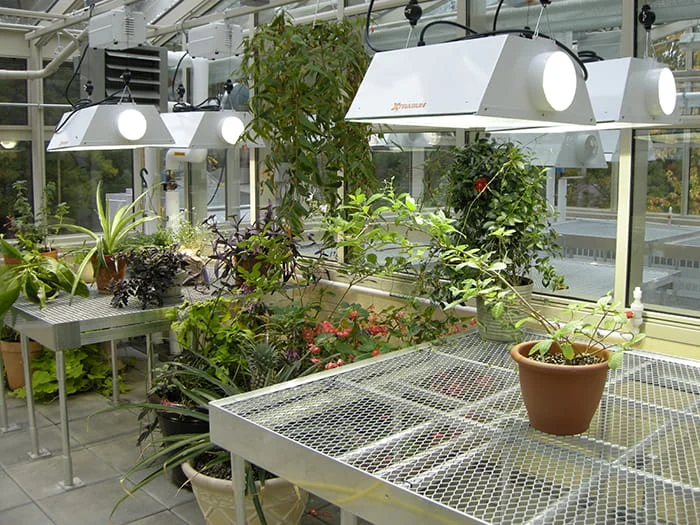
Best Off-Grid Lighting for Hydroponics
Hydroponic growers have a natural affinity for solar-powered systems, and it makes sense. Hydroponics already uses roughly 90% less water than conventional soil growing. Add solar lighting to the equation and you’re approaching something genuinely close to a self-sustaining growing system.
The best solar powered grow lights for hydroponic applications have a few characteristics that matter more here than in soil setups:
- Precise spectrum control — hydroponic plants respond quickly and visibly to changes in light spectrum, making full-spectrum or tunable LEDs a stronger choice than general-purpose fixtures.
- Timer integration — hydroponic photoperiod schedules are unforgiving; a system with programmable timers or smart controllers prevents the disruptions that stress plants and reduce yields.
- Heat management — NFT channels and DWC reservoirs are temperature-sensitive; efficient LEDs with passive cooling designs reduce the thermal load on your growing environment.
Off-grid hydroponic greenhouse setups powered by solar lighting have become increasingly practical in remote research stations, rural agricultural communities, and urban vertical farming operations where connecting to grid power is either expensive or structurally impossible.
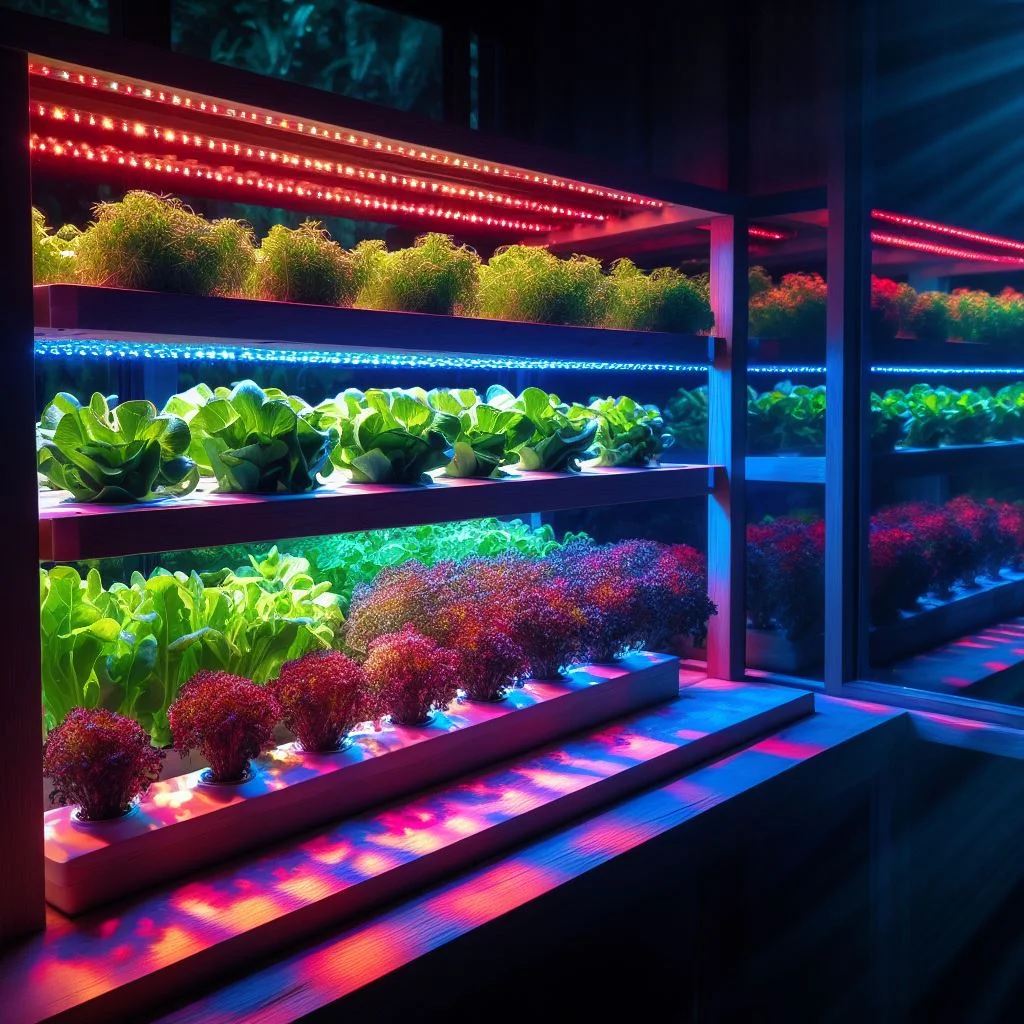
Portable Solar Plant Grow Lamps: Best Uses
Not every growing situation calls for a fixed, permanent installation. Portable solar plant grow lamps serve a real and specific need — the flexibility to move light where it’s needed, when it’s needed, without running cables across a property.
The best solar powered grow lights in portable form typically combine three components: a foldable or rollable solar panel in the 20–60W range, a compact lithium battery pack, and a clip-on or hanging LED grow fixture. The whole setup can be repositioned in minutes.
These systems work particularly well for:
- Early seed starting in late winter or early spring, when natural light is too weak and too short to support germination and early growth.
- Overwintering tropical or tender plants indoors without committing a dedicated circuit to supplemental lighting.
- Balcony and rooftop gardens where running wiring is impractical or prohibited.
- Off-grid homesteads and small-scale remote farms where a compact, moveable light source supports small food production without permanent infrastructure.
The honest limitation of portable systems is power output. Most top out at 30–50W of grow light capacity, which handles seedlings and compact leafy greens comfortably but falls short for mature fruiting plants that need sustained high PPFD levels.
Solar Panel Grow Light Efficiency: The Numbers That Matter
Efficiency is one of those terms that gets used loosely in solar product marketing, so it’s worth being precise about what the numbers actually mean for your growing results.
Solar panel efficiency measures what percentage of incoming sunlight gets converted to electricity. Standard monocrystalline panels for consumers operate at 18–22% efficiency. Premium panels push that to 23–24%. For fixed installations with adequate roof or ground space, efficiency differences matter less than price. For space-constrained setups, higher efficiency per square foot justifies the premium cost.
LED efficiency, expressed in µmol/J, tells you how many plant-usable photons the fixture produces per joule of electricity it consumes. Budget grow LEDs typically score 1.5–2.0 µmol/J. Mid-range quality fixtures land at 2.5–3.5 µmol/J. Top-tier horticultural LED products from established manufacturers now exceed 3.5 µmol/J — a meaningful difference that compounds over thousands of operating hours.
System-level efficiency connects both: the best solar powered grow lights converting 20% of sunlight into electricity feeding a 3.0 µmol/J LED results in roughly 20% of incoming solar energy reaching your plants as usable photons. That sounds modest, but it’s competitive with how much natural sunlight actually transmits through standard greenhouse glazing.
Practical steps to keep efficiency high:
- Orient panels at the correct tilt angle for your latitude — this alone can improve output by 10–20%.
- Keep panels clean; accumulated dust and debris routinely reduce output by 15–25%.
- Use MPPT (Maximum Power Point Tracking) charge controllers, which consistently outperform basic PWM controllers in real-world conditions.
- Choose LED fixtures with documented efficacy ratings from brands with established track records in horticultural lighting.
Sun-Powered Seedling Grow Lights: Starting Strong
Seed starting is one of the most rewarding applications for the best solar powered grow lights — partly because the light demands are modest, and partly because getting seedlings off to a strong start pays dividends through the entire growing season.
Seedlings need less light than mature plants, typically 100–200 µmol/m²/s, which means even a conservative solar setup handles them without strain. What seedlings do need is consistency — a reliable photoperiod, gentle spectrum, and stable intensity day after day.
The practical advantages of solar for seed starting are straightforward:
- Reliable photoperiod control — seedlings benefit from 14–16 hours of light daily, and a properly sized solar battery system delivers that consistently without manual management.
- Blue-rich spectrum support — most full-spectrum solar LEDs provide ample blue wavelengths, which drive the compact, sturdy growth that makes for strong transplants.
- Low power draw — a 20–40W grow light is sufficient for a standard seedling tray, meaning even a modest panel and battery combination handles the job.
One practical note: seedlings are sensitive to both excessive intensity and heat. Start with fixtures mounted 4–6 inches above the canopy and raise them as growth progresses. Most purpose-built solar LED seedling systems include adjustable mounting hardware for exactly this reason.
For growers using the best solar powered grow lights to start seeds in late winter when daylight hours are short and panel output is at its annual low, sizing the battery bank for at least 48 hours of autonomous operation provides a meaningful buffer against consecutive cloudy days.
Top Features to Demand in the Best Solar Powered Grow Lights
After working through dozens of systems at different price points and in different growing contexts, certain features consistently separate setups that perform reliably from those that disappoint within the first season.
Smart charge controllers are non-negotiable. Overcharging and deep discharge are the two leading causes of battery failure in solar systems. A quality MPPT controller prevents both and pays for itself in extended battery life.
Waterproof ratings and sealed connectors matter more than most buyers realize initially. IP65-rated fixtures and weatherproof connection points prevent the moisture-related failures that cut short the lifespan of otherwise solid systems.
Spectrum-specific LEDs over generic white bulbs. General-purpose LED bulbs aren’t built to deliver the red-blue spectrum ratio that plant photosynthesis requires. Purpose-built horticultural LEDs allocate output to the wavelengths that actually drive plant growth.
Modular system design gives you the ability to expand without replacing. The best setups are built around standard connectors and component interfaces that allow panel capacity, battery storage, and light fixtures to be upgraded independently.
Manufacturer warranty and accessible support — solar grow light systems are generally low-maintenance, but when something does fail, having reliable support matters. Prioritize brands that stand behind their products with meaningful warranty terms.
Common Mistakes When Buying Solar Grow Lights
Even growers with years of experience make these errors when buying the best solar powered grow lights for the first time.
Undersizing the panel is the most common and most frustrating mistake. It’s easy to base calculations on ideal clear-sky conditions rather than actual average daily sun hours for your location. Always calculate based on real regional solar data, not manufacturer peak output figures.
Ignoring battery temperature performance catches many growers off guard. Lithium batteries lose significant capacity in cold conditions — sometimes 20–30% at temperatures just below freezing. If your grow space or battery enclosure is unheated through winter, factor that degradation into your capacity calculations.
Assuming any LED will work as a grow light is a common shortcut that produces poor results. A generic white LED bulb and a horticultural grow LED may draw the same wattage but deliver completely different outcomes for plant growth. The spectrum distribution makes all the difference.
Poor light uniformity from a single central fixture creates bright spots and shadowed areas that produce uneven growth across a canopy. Distributing multiple smaller fixtures across the growing area produces more consistent plant development than one large central light.
FAQ: Best Solar Powered Grow Lights
Q: Can solar powered grow lights actually replace grid-powered grow lights?
Yes, for most home and small commercial growing applications. Proper system sizing is what makes it work — panel wattage, battery capacity, and light output all need to be matched to your specific crops and local solar conditions.
Q: How many hours per day do solar grow lights run?
A properly sized system can sustain grow light operation for 12–18 hours daily. Most growers configure systems for 14–16 hours during vegetative growth stages and reduce to 12 hours during flowering.
Q: Are solar grow lights good for hydroponics?
Yes. Solar LED systems pair naturally with hydroponic setups, particularly in greenhouse or semi-outdoor environments where panels receive solid sun exposure. The precise, consistent spectrum from LEDs benefits hydroponic plants noticeably.
Q: What’s the best solar grow light for vegetables?
It depends on the crop. Leafy greens work well with a 50–100W LED and a 100–150W panel. Fruiting crops like tomatoes and peppers need a 150W+ system with expanded battery capacity to sustain the longer photoperiods and higher PPFD they require.
Q: How long does a solar grow light system last?
Quality solar panels carry 25-year performance warranties and frequently outlast them. LED fixtures typically run 50,000–100,000 hours. Batteries — specifically lithium iron phosphate (LiFePO4) — last 2,000–5,000 charge cycles, translating to roughly 6–15 years of daily use.
Q: Do solar grow lights work on cloudy days?
Solar panels continue generating electricity on cloudy days, typically at 10–25% of rated output. A well-sized battery bank bridges those low-generation periods so grow lights operate normally regardless of short-term weather changes.
Q: What’s the most efficient type of solar panel for grow light systems?
Monocrystalline silicon panels offer the best balance of efficiency and cost for most growers. Where installation space is limited, premium monocrystalline panels deliver the highest power output per square foot available at the consumer level.
Conclusion
Making the shift to solar powered growing isn’t just about cutting electricity costs — though the savings are real and they add up quickly. It’s about building a grow setup that works on its own terms, independent of the grid, aligned with how plants actually grow, and built to last for years without significant recurring costs.
The best solar powered grow lights today are genuinely capable of supporting serious growing operations. The gap between solar and grid-powered lighting has closed considerably, and in many situations — remote setups, off-grid greenhouses, hydroponic installations, seed starting operations — solar is now the smarter choice, not just the greener one.
Start by matching your system to your actual crop requirements. Understand what your plants need in terms of PPFD, photoperiod, and spectrum. Size your panel and battery honestly based on real local solar conditions. Choose LEDs that are built specifically for horticultural use. And build in some room to expand, because once you experience the operational freedom of a solar grow setup that runs reliably on its own, the tendency is to grow more.
The initial investment in the best solar powered grow lights requires thought and planning. But growers who get that planning right consistently find the payoff — in lower bills, greater independence, and healthier plants — worth every hour of preparation.