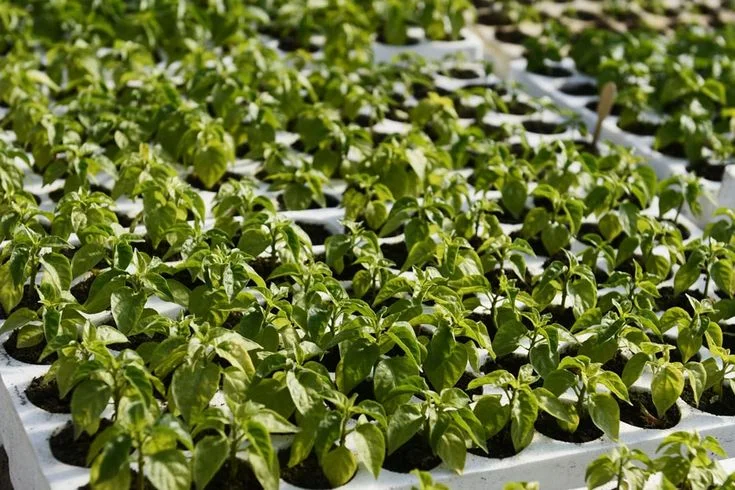
There’s a specific kind of frustration that comes with planting pepper seeds in soil, watering them carefully every day, and then watching absolutely nothing happen for three weeks. If you’ve been there, you already know how discouraging it feels. Pepper seeds — particularly hot varieties like habanero, ghost pepper, and jalapeño — are some of the slowest and most unpredictable germinators in the home garden world.
That’s precisely why so many experienced growers have moved away from direct soil sowing for their pepper seeds. Instead, they rely on one straightforward technique: germinate pepper seeds paper towel style.
This isn’t a trend or a quick fix someone invented for social media. It’s a time-tested, science-supported pre-germination method that gives seeds exactly what they need — consistent warmth, steady moisture, and adequate oxygen — to crack open and sprout reliably. In many cases, seeds started this way sprout days earlier than those planted directly in soil.
This guide covers everything from the biology behind why peppers are stubborn germinators to the exact steps for using the paper towel method, troubleshooting failures, and transplanting your sprouted seeds safely into growing mix. Whether you’re working with sweet bell peppers or rare superhot varieties, this process works reliably across all Capsicum species.
Why Pepper Seeds Are Difficult to Germinate
It helps to understand the biology before getting into the method. Pepper seeds aren’t difficult to germinate because of poor seed quality — they’re difficult because of what they were designed for.
Peppers belong to the genus Capsicum, a plant family native to the tropical and subtropical regions of Central and South America. These plants spent thousands of years adapting to warm, humid environments with consistent temperatures. Cold soil, unpredictable spring weather, and dry conditions are the opposite of what they evolved in. When soil temperatures fall below 60°F (15°C), pepper seeds don’t try to grow — they simply wait. And while they’re waiting in cold, damp soil, they often rot. That biological reality is the strongest argument for choosing to germinate pepper seeds paper towel method — you control the environment instead of depending on unpredictable soil conditions.
Several biological factors contribute to slow or failed germination:
- Seed coat thickness — Pepper seeds have a firm outer layer that needs sustained moisture to soften enough for the embryo inside to push through.
- Temperature sensitivity — The ideal capsicum seed germination temperature falls between 80°F and 90°F (27°C–32°C). Even a modest drop below this range can delay sprouting by weeks.
- Age and viability — Seeds lose the ability to germinate over time, especially when stored in warm or humid conditions. A pepper seed viability test using the paper towel method is one of the most practical ways to check old seed stock before committing it to soil.
- Capsaicin content — Some research points to a connection between high capsaicin levels in superhot varieties and naturally reduced germination rates. The plant’s own chemical compounds may play a role in slowing the process.
Understanding these factors is what makes the paper towel approach so valuable. It removes the guesswork by giving you direct control over moisture and temperature — two things that soil simply can’t offer with the same consistency.
What Is the Paper Towel Germination Method?
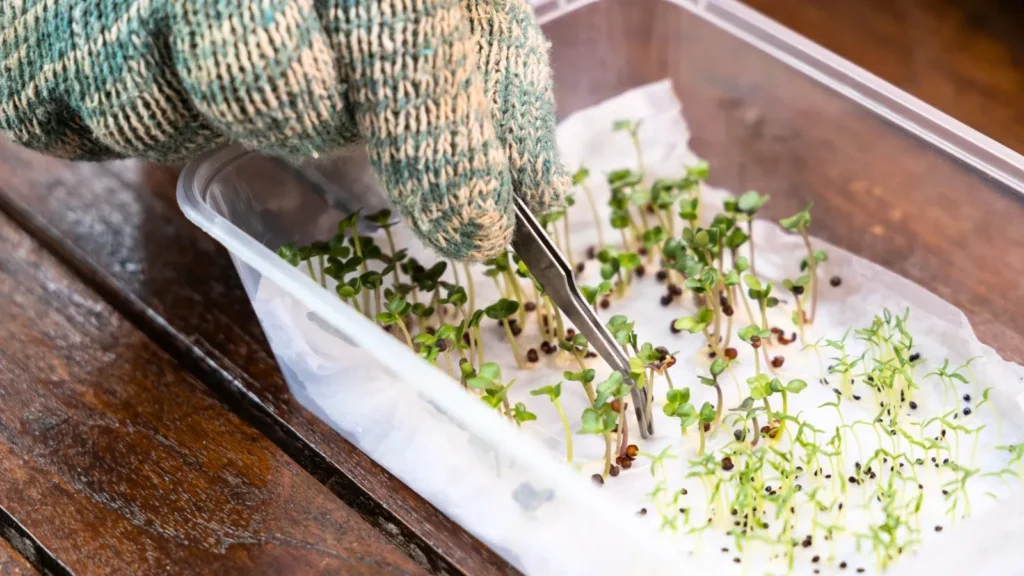
Many experienced growers choose to germinate pepper seeds paper towel style because the wet paper towel seed starting method works by placing seeds between layers of damp paper towel, sealing them inside a warm environment, and allowing them to sprout naturally before moving them into soil or seed-starting mix.
It’s a form of controlled pre-germination that offers several real advantages over planting directly in soil:
- Provides steady moisture without the risk of waterlogging
- Lets you watch germination progress each day without digging around in soil
- Significantly reduces the time between planting and visible sprouting
- Makes it easy to identify non-viable seeds before wasting valuable growing space
- Works especially well for indoor pepper seed starting during late winter or early spring when outdoor conditions aren’t yet suitable
This method is used by professional growers, competitive chili cultivators, seed breeders, and home gardeners alike. It’s not a beginner’s workaround — it’s a legitimate horticultural practice with a solid track record.
Supplies You Need to Germinate Pepper Seeds Paper Towel Method
One of the best things about this method is how little it requires. There’s no specialized equipment needed to get started.
| Supply | Purpose |
|---|---|
| Paper towels (white, unscented) | Holds moisture evenly without becoming waterlogged |
| Ziplock bags or sealed containers | Creates a stable, humid environment for germination |
| Pepper seeds | Fresher seeds produce more reliable results |
| Clean water (room temperature) | Hydrates the towel without temperature-shocking seeds |
| Permanent marker and labels | Tracks varieties and start dates across multiple batches |
| Seedling heat mat (optional but recommended) | Maintains optimal capsicum seed germination temperature |
One thing worth noting: avoid printed paper towels, scented tissues, or anything with lotion or chemical additives. These materials can release compounds that interfere with germination or damage the delicate roots once seeds begin to sprout.
Step-by-Step: How to Germinate Pepper Seeds Paper Towel Method
This is the core process. Each step matters, so read through the full sequence before you begin — especially if you’re working with expensive, rare, or limited seed stock.
Step 1 – Dampen the Paper Towel Correctly
Take a full sheet of white paper towel and wet it thoroughly under room-temperature water. Then wring it out firmly with both hands. The goal is a towel that feels evenly moist throughout — not one that drips when held up.
This moisture level is where a lot of beginners go wrong. Too dry, and the seed coat never softens enough to allow sprouting. Too wet, and the seeds sit in standing moisture and begin to rot. The right feel is similar to a well-wrung kitchen sponge — damp all the way through, but releasing no liquid when squeezed. This damp paper towel germination balance is something every grower learns to respect quickly — because when you germinate pepper seeds paper towel method, moisture control is truly the foundation of the entire process.
Step 2 – Lay Out Your Seeds
Fold the damp paper towel in half lengthwise. Place your pepper seeds along one half of the towel, spacing them at least half an inch apart from each other. Then fold the other half of the towel back over the seeds so they’re sandwiched between two moist layers.
If you’re testing multiple pepper varieties in one session, organize seeds in clearly labeled rows. Keeping varieties separated at this stage saves a lot of confusion once sprouting begins. Also avoid crowding seeds together — once radicles emerge, tangled roots make transplanting significantly harder.
Step 3 – Seal Into a Bag
Place the folded, seed-filled towel into a ziplock bag. Seal it but leave a small amount of air trapped inside. That pocket of air provides oxygen and helps maintain a stable humid environment — essentially a small greenhouse around your seeds.
Write the pepper variety name and the start date directly on the outside of the bag with a permanent marker. This small habit becomes very useful when you’re managing several varieties at once or comparing germination times across different batches.
Step 4 – Find a Consistently Warm Location
This step is where many people unknowingly undermine the entire process. They seal their bags carefully, place them on a kitchen counter, and check back in two weeks wondering why nothing sprouted. The answer, almost every time, is temperature.
Room temperature in most homes — typically 68°F to 72°F (20°C to 22°C) — is simply too cool for reliable pepper seed germination. The optimal capsicum seed germination temperature is between 80°F and 90°F (27°C to 32°C), and maintaining that range consistently is what separates successful germination from failed attempts. This temperature reality is precisely why so many experienced growers prefer to germinate pepper seeds paper towel style — a small sealed bag sitting on a heat mat holds warmth far more efficiently and consistently than an open tray of soil ever could.
Here are warm locations that work well:
- On a seedling heat mat set to 85°F — the most reliable and consistent option available.
- On top of the refrigerator — the motor generates heat that typically raises the surface temperature 5–10°F above room temp.
- Near a heat vent — provides warmth, though airflow can dry out bags over time.
- Inside an oven with only the light on — oven lights generate enough warmth to hold the interior at roughly 80°F–85°F.
One location to avoid: direct sunlight through a window. Bags can overheat rapidly in direct sun, reaching temperatures that kill seeds rather than germinate them. Warm and dark is a better combination than bright and variable.
Step 5 – Check Daily, Handle Minimally
Open the bag once each day to allow a brief exchange of fresh air and to check on progress. Look at the moisture level — if the towel appears to be drying out, mist it lightly with a spray bottle. Avoid rewetting aggressively. The goal is to restore the original moisture level, not soak the towel all over again.
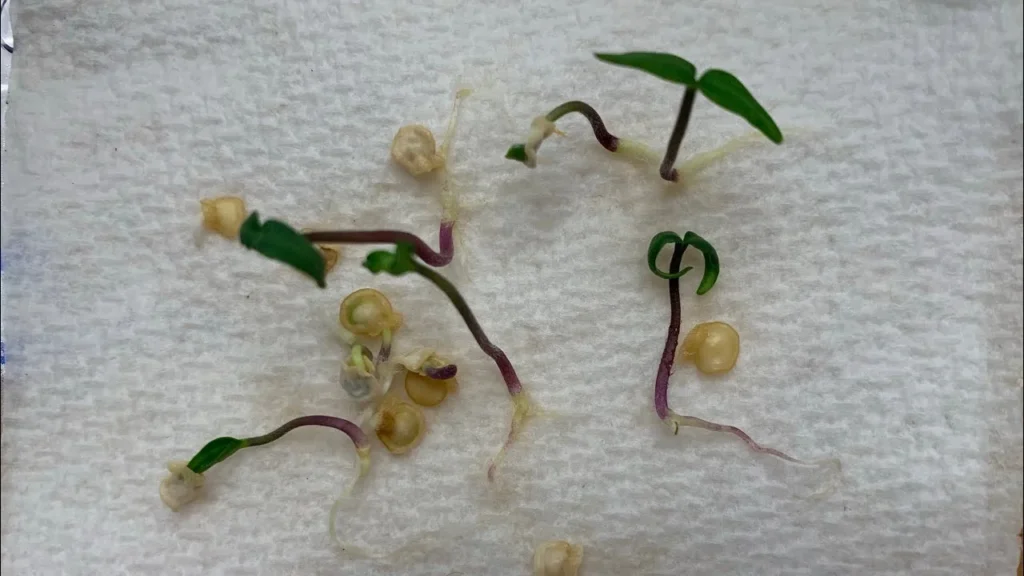
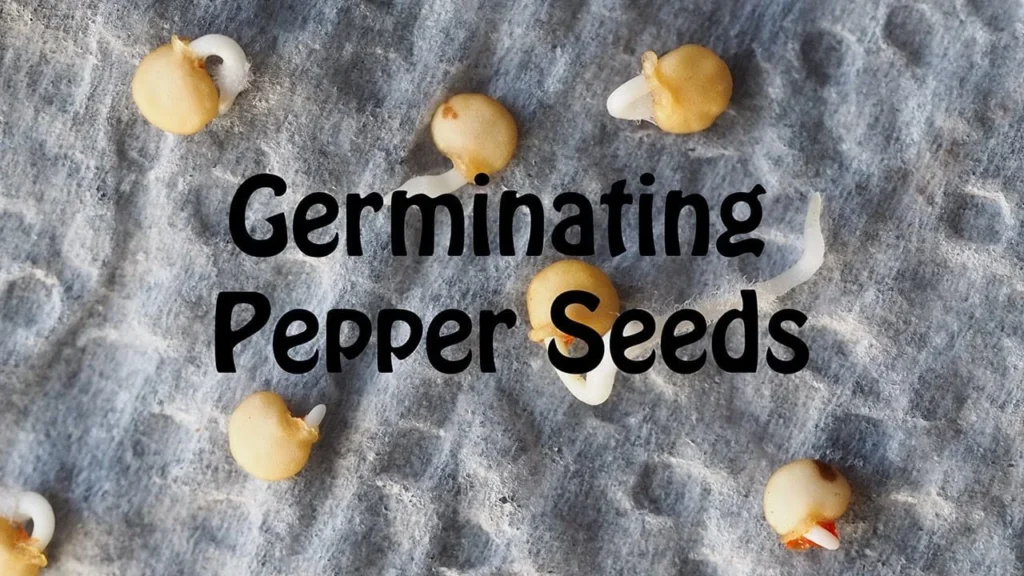
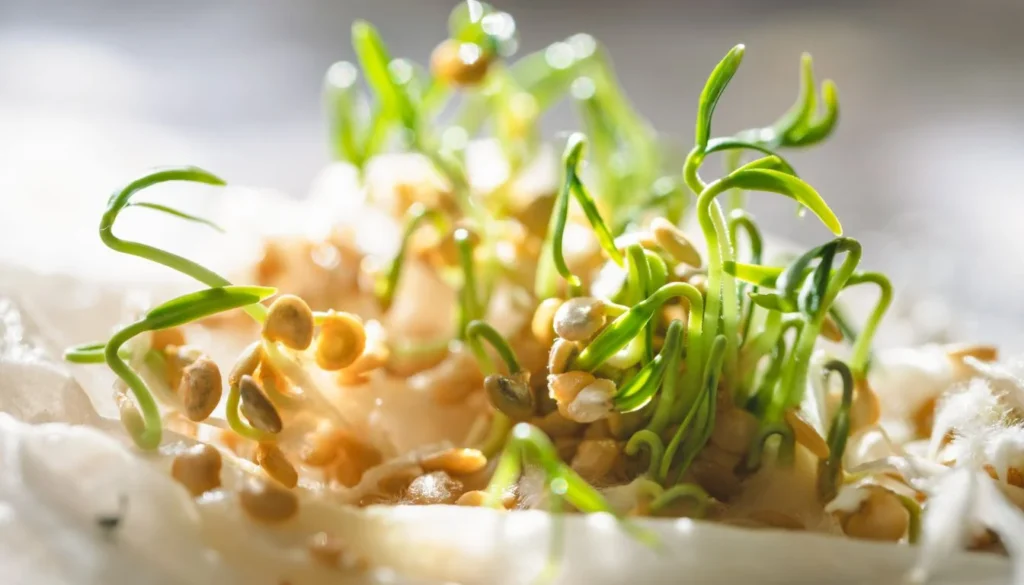
You’re watching for the radicle — the small white root that is the first visible sign of germination. Once you see it emerging from any of your seeds, that seed is ready to move into soil when the root reaches the right length. You don’t need to wait for a stem or leaves. When you germinate pepper seeds paper towel method, spotting that small white radicle pushing through the seed coat is your clearest confirmation that everything — moisture, warmth, and seed quality — came together exactly as it should.
Step 6 – Track Pepper Seedling Germination Time
Germination speed varies considerably depending on variety and temperature. Understanding realistic timelines prevents premature discouragement.
| Pepper Type | Average Germination Time (Paper Towel Method) |
|---|---|
| Bell Pepper | 5–10 days |
| Jalapeño | 7–10 days |
| Cayenne | 7–12 days |
| Habanero | 10–21 days |
| Ghost Pepper (Bhut Jolokia) | 14–30 days |
| Carolina Reaper | 14–35 days |
Superhot varieties consistently fall at the longer end of these ranges. It’s completely normal to check on a Carolina Reaper or ghost pepper batch at day 12 and see nothing yet. Some seeds from rare or older stock take four to six weeks even under ideal conditions. Patience here is not optional — it’s part of the process.
How to Use This as a Pepper Seed Viability Test
Beyond its role as a germination method, the paper towel technique serves as one of the most practical pepper seed viability tests available to home growers. If you have seeds that are two or three years old, or seeds that were stored in less-than-ideal conditions, this approach lets you evaluate them before dedicating pots, soil, and growing space to seeds that may not perform.
The process is straightforward:
- Place exactly 10 seeds from your stock on a labeled damp paper towel.
- Maintain optimal temperature conditions for two to three weeks.
- Count how many seeds successfully sprout.
How to read your results:
- 8–10 out of 10 sprout → Strong viability; plant at normal density.
- 5–7 out of 10 sprout → Moderate viability; sow extra seeds per cell to compensate.
- 3–4 out of 10 sprout → Poor viability; source fresh seeds if the variety is available.
- 0–2 out of 10 sprout → Seeds have likely lost viability; replacement is recommended.
Properly stored pepper seeds — kept in a cool, dry, dark location, ideally in sealed packets — can remain viable for two to four years. After that window, germination rates decline noticeably, and superhot varieties tend to lose viability faster than standard types.
Transplanting Germinated Pepper Seeds Without Causing Damage
Getting seeds to sprout is only part of the job. Transplanting germinated pepper seeds successfully requires care and timing, because the radicle — that first delicate root — is far more fragile than it looks.
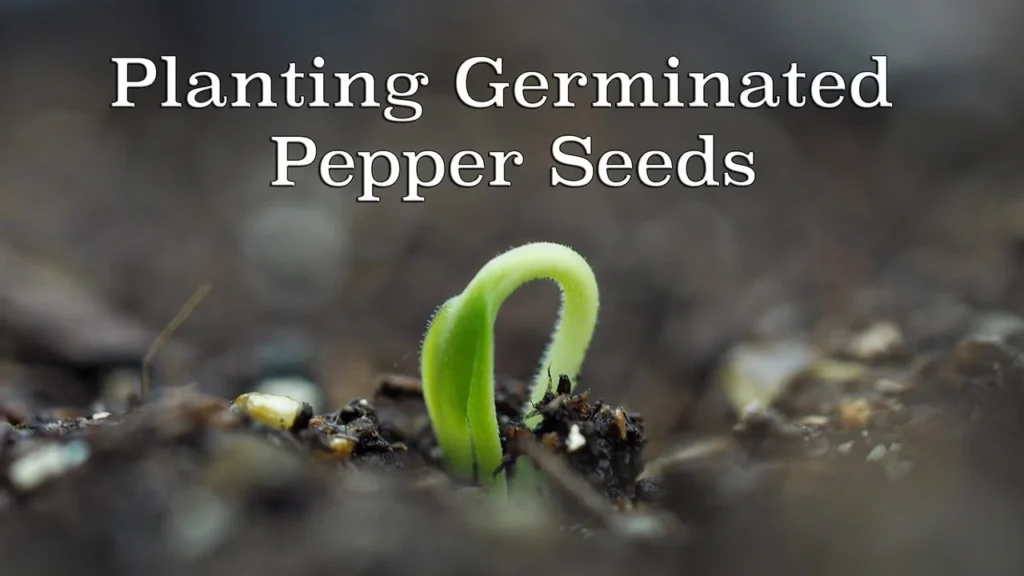
Wait for the right stage. Move seeds into soil when the radicle is between ¼ and ½ inch long (6–12mm). At this length, the root is developed enough to establish itself in soil quickly, but still short enough to handle without excessive risk of breakage. Waiting until the root grows much longer makes the process harder and increases the chance of damage.
How to transplant carefully:
- Pre-moisten your seed-starting mix in small cells or pots before you begin
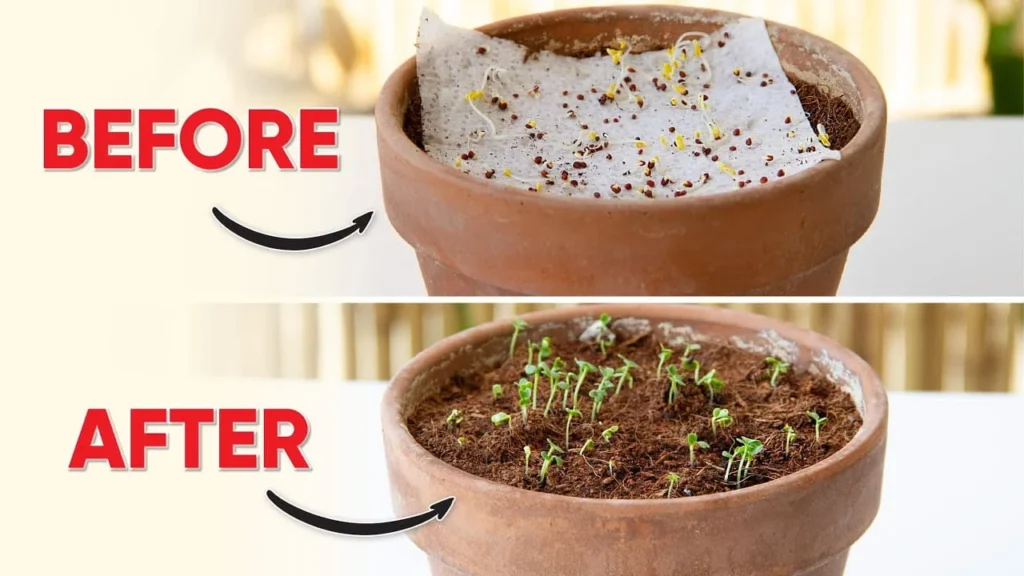
- Use a toothpick, clean tweezers, or the tip of a pencil to gently loosen each seed from the paper towel — work one seed at a time
- Make a small planting hole about ¼ inch deep in the center of each cell
- Place the seed with the radicle pointing downward into the hole — the root goes into the soil, not the seed casing
- Cover lightly with a small amount of seed-starting mix and do not press down firmly
- Mist the surface gently with a spray bottle and place under grow lights or near a warm, bright window
The single most common mistake at this stage is rushing. Growers who pull seeds by the radicle or tear the paper towel roughly lose sprouted seeds unnecessarily. If the towel has dried slightly and is sticking to a seed, don’t force it. Add a small amount of water to that area and wait a few minutes before trying again. When you choose to germinate pepper seeds paper towel style, you invest real time and attention into bringing each seed to this point — and that investment deserves a careful, unhurried finish rather than a rushed transfer that puts healthy sprouted seeds at unnecessary risk.
Pepper Seeds Not Sprouting? Common Problems and How to Fix Them
Even with careful preparation, germination doesn’t always go as expected. Here are the most frequent reasons that the germinate pepper seeds paper towel method produces poor results — and what to do about each one.
Temperature Is Too Low
Low temperature is the single most common cause of germination failure. Anything consistently below 75°F will slow most pepper varieties significantly, and temperatures below 65°F may prevent germination entirely. Use a thermometer to verify the actual temperature of your germination spot rather than estimating by feel.
Paper Towel Moisture Is Off
Both extremes cause problems. A soggy towel creates conditions where seeds rot before they can sprout. A towel that’s too dry prevents the seed coat from softening. To successfully germinate pepper seeds paper towel method, check moisture levels during your daily inspection and adjust with a light mist if needed.
Seeds Are Old or Poorly Stored
Seeds kept in warm kitchens, humid bathrooms, or unsealed packets lose viability quickly. Even seeds from the previous growing season can underperform if storage conditions weren’t right. When in doubt, run a viability test before starting a full batch.
Using the Wrong Paper Towel
Thick quilted towels hold too much moisture and can suffocate seeds. Scented or lotion-infused tissues introduce chemicals that can inhibit germination. Stick to plain, single-ply white paper towels for consistent results.
Not Waiting Long Enough for Superhot Varieties
Ghost peppers, Carolina Reapers, scorpion peppers, and similar varieties routinely take three to five weeks at optimal temperatures when you germinate pepper seeds paper towel style. Discarding the bag at day 10 because nothing has happened yet is one of the most common and preventable mistakes growers make with superhot seeds.
Practical Tips From Experienced Growers to Improve Results
These are approaches used regularly by serious pepper cultivators to increase germination rates and reduce losses:
- Pre-soak seeds for 8–12 hours in plain room-temperature water before placing them on the paper towel. This softens the seed coat and accelerates moisture absorption, which can shave days off germination time.
- Wet the towel with chamomile tea instead of plain water. Chamomile contains mild antifungal compounds that help reduce mold development during the germination period.
- Add a small amount of diluted hydrogen peroxide to your wetting water — roughly 1–2 drops per cup — to discourage mold growth without harming the seeds themselves.
- Maintain a germination log. Recording which varieties sprouted at what temperature, in how many days, and at what germination rate builds useful data over multiple seasons.
- Use a heat mat with a temperature controller rather than relying on a fixed output setting. Precise control at 85°F consistently outperforms the guesswork of using an unregulated heat source.
Indoor Pepper Seed Starting: Getting the Timing Right
The decision to germinate pepper seeds paper towel style fits naturally into a broader indoor pepper seed starting strategy, but timing the start date correctly is just as important as the germination technique itself.
Peppers require a long growing season. Most varieties need between 100 and 150 days from germination to first harvest, which means starting seeds too late in the season leaves plants underdeveloped when outdoor planting time arrives. Starting too early without sufficient light creates another problem — long, weak, leggy seedlings that struggle to establish once transplanted.
A practical indoor starting schedule:
- 10–12 weeks before last frost → Begin superhot varieties (Carolina Reaper, ghost pepper, 7 Pot varieties)
- 8–10 weeks before last frost → Start standard hot and sweet pepper types
- 6–8 weeks before last frost → Start fast-maturing or smaller-fruited varieties
If your last frost date is around May 15, that puts the start window for superhot peppers at late February to early March — which aligns well with indoor seed starting under grow lights.
Paper Towel Method vs. Direct Soil Sowing: A Practical Comparison
| Factor | Paper Towel Method | Direct Soil Sowing |
|---|---|---|
| Germination Speed | 3–7 days faster on average | Slower |
| Progress Visibility | Daily monitoring is easy | Hidden underground |
| Seed Viability Testing | Simple and accurate | Not practical |
| Risk of Seed Loss | Lower — no rot from overwatered soil | Higher |
| Transplant Handling | Required — adds minor risk | None |
| Best Application | Rare seeds, viability testing, early indoor starts | Bulk planting with fresh seeds |
FAQ-Germinate Pepper Seeds Paper Towel
Q: How long does it take to germinate pepper seeds paper towel method?
Most standard pepper varieties sprout within 5 to 14 days when kept at 80°F–90°F. Superhot varieties like ghost pepper and Carolina Reaper regularly take 3 to 5 weeks even under ideal conditions.
Q: Do I need a heat mat to germinate pepper seeds in a paper towel?
A heat mat isn’t strictly required, but it makes a meaningful difference. Maintaining a consistent temperature at 85°F (29°C) is the most reliable way to hit the optimal capsicum seed germination temperature throughout the process.
Q: Can I use the paper towel method to test old pepper seeds?
Yes — this is actually one of its most valuable applications. Running a pepper seed viability test before committing old seeds to soil saves time, space, and growing resources significantly.
Q: When should I move sprouted seeds into soil?
Once the radicle reaches ¼ to ½ inch in length, it’s the right time for transplanting germinated pepper seeds into pre-moistened seed-starting mix. Work carefully and avoid handling the root directly.
Q: Why are my pepper seeds not sprouting in the paper towel?
The most common causes are low temperature, seeds that are too old, incorrect moisture levels in the towel, or insufficient waiting time for slow-germinating superhot varieties.
Q: Is the paper towel method better than planting directly in soil?
It depends on what you’re growing and why. For rare or limited seeds, viability testing, or getting an early indoor start, the paper towel method has clear advantages. For large-scale planting with fresh seed stock, direct sowing into trays remains a practical option.
Q: Can I reuse the paper towel throughout the germination period?
One towel typically works fine for a full germination cycle. Replace it immediately if you notice any mold, discoloration, or deterioration of the paper.
Conclusion
Learning to germinate pepper seeds paper towel style is one of those small shifts in approach that genuinely changes how you grow. Once you see how much faster and more reliably seeds sprout under controlled moisture and temperature conditions, it becomes difficult to go back to direct soil sowing — especially for varieties that are hard to find or expensive to replace.
The method itself isn’t complicated. A damp towel, a sealed bag, consistent warmth, and a little patience are really all it takes. But the details matter. Getting the moisture level right, maintaining proper temperature, handling sprouted seeds carefully, and understanding realistic germination timelines for each variety — these are the things that separate growers who get consistent results from those who keep wondering what went wrong.
Start with the varieties you care most about. Run a viability test on any older seed stock you’ve been holding onto. Keep a simple log of your results. Over time, every attempt to germinate pepper seeds paper towel method builds a clear picture of how your specific seeds perform under your specific conditions — and that knowledge is genuinely useful season after season.
Pepper growing rewards patience and attention. The paper towel method just gives you a better starting point.