You open the closet to grab a jacket, and a suitcase lands on your foot. We’ve all been there.
Tiny apartment storage is a different game from regular organizing. New studios average just 460 square feet, and in a city like Boston the typical new apartment is closer to 747 square feet. Your stuff didn’t shrink to match.
The fix isn’t buying more bins. It’s a handful of rules about where things live and why. Below are seven of them, all renter-friendly, and none need a drill. By the end you’ll know what to cut, what to stack, and how to get your floor back.
Tiny Apartment Storage Starts With Editing What You Own
Here’s what most guides skip: the bins come second. Before you buy a single organizer, you need to know what’s going into it.
Good tiny apartment storage only works when it holds things you actually use. Otherwise you’re tucking clutter into prettier boxes and calling it a system. The KonMari method (keep what sparks joy) is the famous version of this idea. You don’t have to go that far, but the spirit is right.
Try the three-pile test
Pick one category, say clothes, and pull everything out. Make three piles: keep, donate, and unsure. Put the unsure pile in a box, write the date on it, and tuck it away. If you haven’t opened that box in three months, it goes. No guilt trip required.
Do this with one category at a time. Trying the whole apartment in one afternoon is how people quit at 2 p.m. with everything on the floor.
Store by how often you use it
This part changes everything. Sort what you’re keeping into three zones:
- Daily: keys, work bag, everyday dishes, the jacket you wear most. These live at arm height.
- Weekly: workout gear, spare towels, the blender. Mid-level or slightly out of reach.
- Seasonal: winter coats, holiday decor, camping gear. Top shelf, under the bed, or the back of the closet.
What this means in practice: your hardest-to-reach spots finally get a job, and the stuff you grab every morning never sits behind a pile of luggage.
Rule 2: Go Vertical With No-Drill Tiny Apartment Storage
Look at your walls. Most renters use the bottom third and leave the rest empty.
That’s a waste, because the cheapest tiny apartment storage upgrade is almost always vertical. You gain capacity without losing an inch of floor. And you don’t need to put a single hole in the wall to do it.
Leaning shelves and cube towers
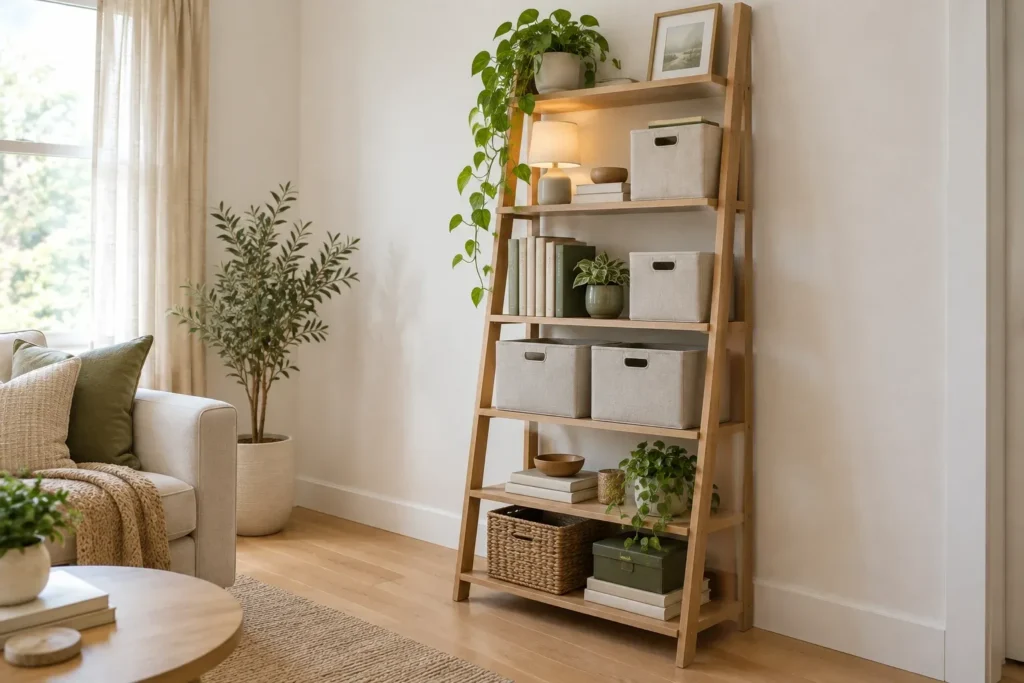
A freestanding leaning shelf needs no hardware. It rests against the wall and holds books, plants, and baskets. Cube towers work the same way and stack to whatever height your ceiling allows. Toss fabric bins in the cubes and the whole thing looks tidy instead of busy.
One safety note: keep heavy items on the bottom shelves and lighter ones up top. A top-heavy shelf and a curious cat don’t mix. If your lease allows it, anchor tall units.
Adhesive hooks and tension rods
Adhesive hooks are great for light stuff. Popular versions are rated for up to 7.5 pounds, so think keys, scarves, and tote bags, not your winter parka. Check the weight rating on the box, and press firmly for the full time listed.
Tension rods are the underrated star here. Wedge one inside a closet to double your hanging space. Put another under the sink for spray bottles. Squeeze one between two shelves and hang mugs or scarves from it.
Magnetic strips add one more trick. Stick one inside a cabinet door or on the side of the fridge, and metal tools, tins, and spice jars suddenly have a home.
Honest take: none of these look fancy on their own. Together they turn a bare wall into a working one.
Rule 3: Turn Your Bed Into a Hidden Storage Drawer
Your bed is probably the biggest piece of furniture you own. The space underneath it is probably full of dust. Let’s fix that.
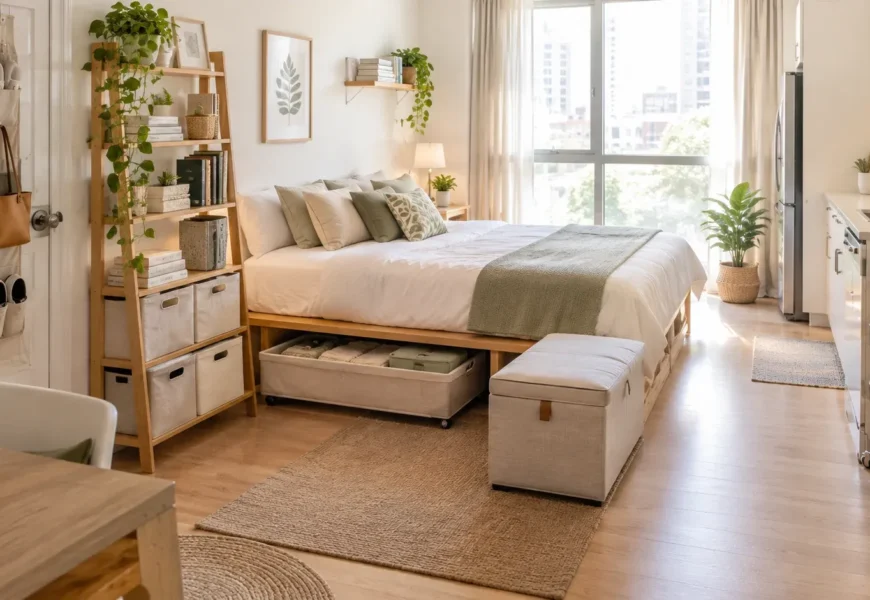
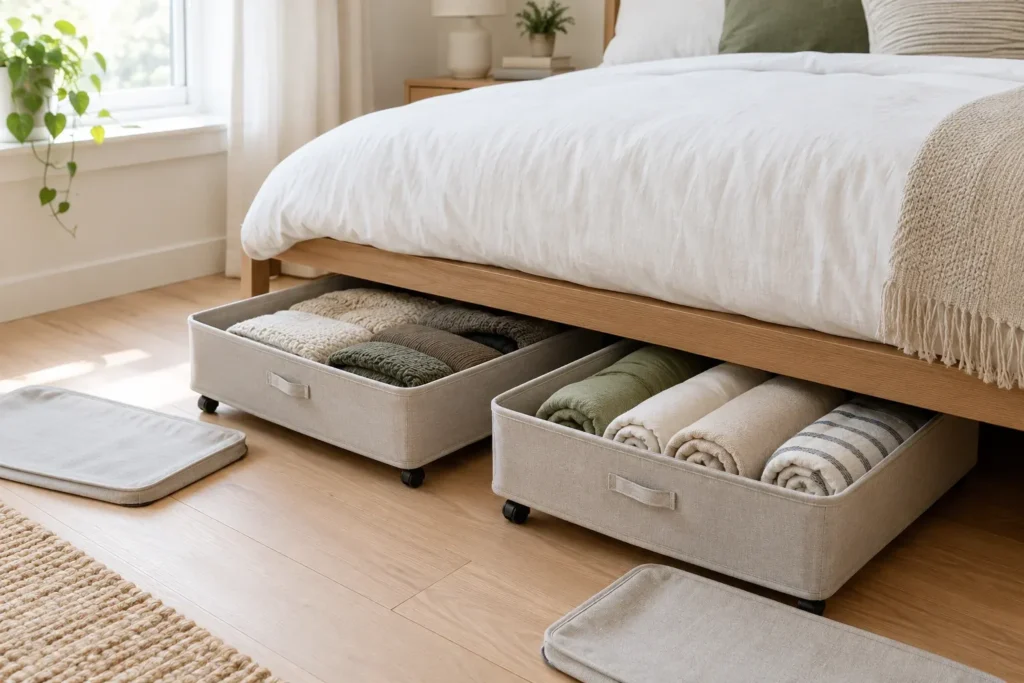
Under-bed storage is the quiet hero of tiny apartment storage. It’s out of sight, it’s close to where you get dressed, and it holds a surprising amount.
What goes under there
Flat, wheeled bins slide out easily, and that matters more than you’d think. If a bin is a pain to pull out, you’ll stop using it. Good candidates:
- Off-season clothes.
- Extra bedding and towels.
- Shoes you don’t wear daily.
- Luggage (nest small bags inside the big one).
If your bed sits too low
Bed risers lift the frame a few inches and open up room for bins. They’re cheap, and they’re easy to undo when you move out. If you’re shopping for a new frame, a storage bed with built-in drawers or a lift-up base keeps everything in one piece.
Keep it from turning into a black hole
Use containers with lids or zip covers so dust stays out. Label the ends, since you’ll be looking at the side of a bin, not the top. And do a quick check each season. Whatever you haven’t touched since last spring probably doesn’t need to live under your mattress.
Vacuum bags work well for puffy things like comforters and bulky sweaters. Just skip them for anything that needs to stay fluffy, like down jackets you wear often.
Rule 4: Pick Multifunctional Furniture That Earns Its Space
Every piece in a small place needs a second job. If it only does one thing, ask whether it deserves the floor space.
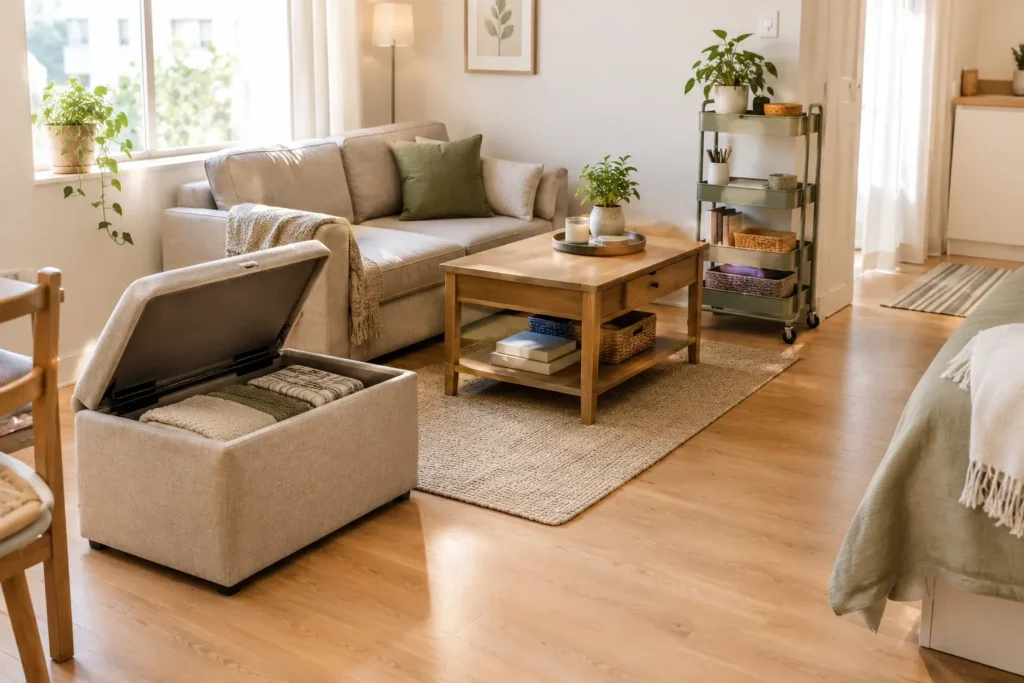
Smart tiny apartment storage often hides in the furniture itself. A few pieces worth the money:
- Storage ottoman. It’s a footrest, extra seat for guests, and a blanket closet in one. Hard to beat.
- Coffee table with drawers or a lift-up top. Remotes, board games, and chargers all disappear.
- Dresser as a TV stand. One design site points out that in a studio, a dresser can hold clothes, serve as a TV stand, and divide the room.
- Entry bench with cubbies. Shoes underneath, bag on top, keys in a basket beside it.
- Rolling cart. Pantry at breakfast, bar cart at night, bathroom shelf next week.
For more ideas on layouts and furniture choices, Apartment Therapy’s small-space storage roundup is worth a skim.
Measure twice, buy once
This is where people get burned. A gorgeous cabinet that blocks the door swing isn’t storage. It’s an obstacle. Tape the footprint on the floor with painter’s tape and walk around it for a day. If you keep bumping into it, skip it.
Check the depth, too. A 12-inch-deep bookshelf gives you most of the storage of a 16-inch one without eating your walkway. In a narrow room, those four inches matter.
Furniture with raised legs or wheels helps as well. Seeing the floor underneath makes a room feel bigger.
Rule 5: Claim Doors, Corners and Cabinet Insides
Some of the best storage space in your place is already there. You just walk past it every day.
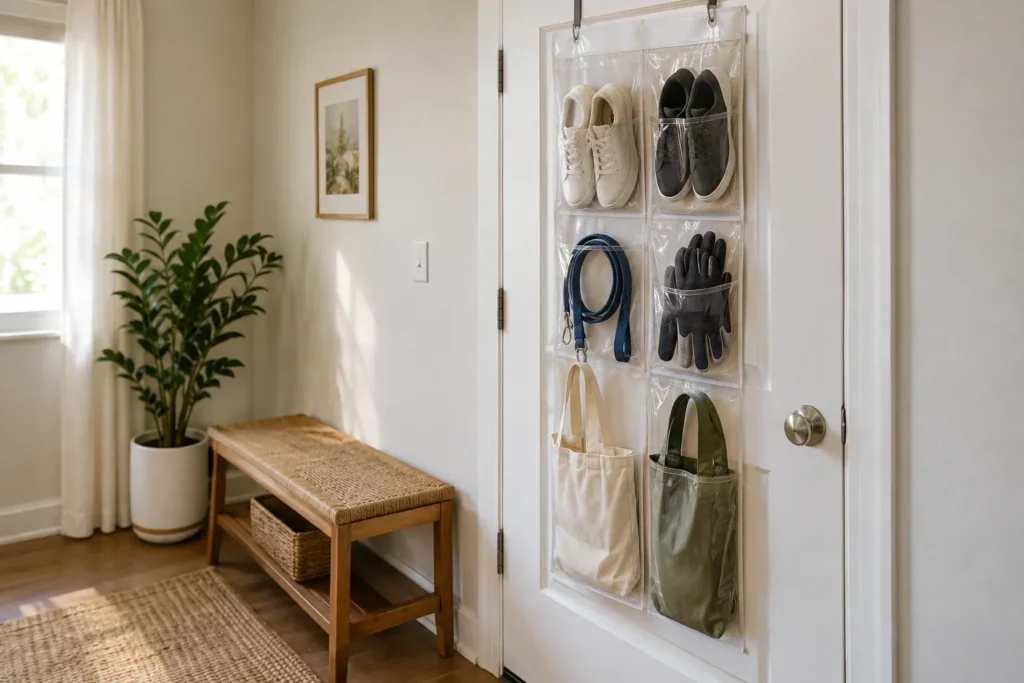
Start with doors. An over-the-door organizer turns the back of a bedroom, bathroom, or pantry door into a vertical shelf, and it takes about ten seconds to install. No tools, no holes. Clear pockets let you see what’s inside. They work well for:
- Shoes and sandals.
- Cleaning supplies.
- Snacks and pantry items.
- Hair tools and toiletries.
For tiny apartment storage near the entrance, the back of the front door is gold. Hang a slim organizer for gloves, dog leashes, and reusable bags, and you’ve built a launch pad that keeps those things off your counter.
Cabinet doors count too
Stick a small rack or a few hooks inside a cabinet door. Measuring spoons, pot lids, cutting boards, and cleaning brushes all fit. Close the door once before you commit to make sure the added thickness doesn’t stop it from shutting.
Don’t forget the corners
Corners are where storage goes to die. A freestanding corner shelf or a slim tall tower fills that dead zone. A narrow unit uses about the footprint of a dinner plate and holds a stack of books, a plant, or a couple of baskets.
Corners used well make a room feel bigger, too. Your eye gets a clean edge instead of a heap of stuff.
Rule 6: Tiny Apartment Storage in the Kitchen and Bathroom
Kitchens and bathrooms are small to begin with, and they hold the most small things. Both rooms need their own approach.
Kitchen: go up, go in, go mobile
Cabinets usually waste the air above your dishes. Shelf risers and stackable organizers fix that, giving you two levels where you had one. A rolling cart can slide beside the fridge and act as a mini pantry. A magnetic knife strip frees up a whole drawer.
If a cabinet is deep, pull-out organizers keep things from vanishing in the back. Corner cabinets love a lazy Susan. A tension rod inside a cabinet lets flat pans stand upright instead of stacking, so you stop digging for the one you need.
Bathroom: use the toilet and the shower
An over-the-toilet cabinet or a slim freestanding unit gives you room for towels and spare toilet paper. Baskets hanging from the shower head hold shampoo and razors. A basic corner shelf stands on its own in the tub area.
Under the sink, a two-tier organizer separates cleaning products from skin care and stops bottles from toppling every time you reach in.
The key to tiny apartment storage in these rooms is containers that fit your exact shelf. Measure first, then shop. A bin that’s half an inch too wide is a bin you return.
If you want more renter-friendly layout ideas, Home Depot’s small apartment guide covers hanging organizers and furniture sizing.
Rule 7: Hide What You Can’t Cut
You’ve edited. You’ve stacked. You’ve gone vertical. But some stuff has to stay: the vacuum, the spare blanket, the hobby gear. Now the goal is making it disappear.
Visual clutter makes a small room feel smaller, even when everything is technically put away. As one design writer puts it, less visible clutter means your place will look bigger.
Closed bins beat open shelves
Cube storage looks calm when you use closed fabric bins instead of leaving things in view. Pick matching colors. Matching containers read as one clean block instead of twenty random objects.
Give one surface a rule
Keep one surface per room mostly empty. Maybe it’s the kitchen counter, or your nightstand. That empty space gives your eye somewhere to rest.
Add a closet organizer
If you have a closet, multi-level hanging organizers and slim hangers can almost double what fits. Fold sweaters on hanging shelves, put accessories in hanging pockets, and get shoes off the floor.
The one-in, one-out habit
This habit keeps everything else working. When something new comes in, something leaves. Buy a jacket, donate a jacket. It sounds strict, but it takes ten seconds and saves you from redoing this whole overhaul next year. Good tiny apartment storage is a system you maintain, not a project you finish.
Curious how your space compares? RentCafe’s national apartment size report breaks down average sizes by city.
FAQs: Tiny Apartment Storage
How do I add storage to a small apartment without drilling holes?
Lean on freestanding shelves, tension rods, over-the-door organizers, and adhesive hooks within their weight rating. Add furniture that stores things, like an ottoman or a bed with drawers. For tiny apartment storage that won’t put your deposit at risk, these options add real capacity without a single hole.
What furniture should I buy to maximize storage?
Start with a storage ottoman, a coffee table with drawers, and a bed with built-in storage or risers. A dresser can double as a TV stand. Measure first so nothing blocks doors or walkways. For tiny apartment storage, pieces with two jobs are worth the money.
What if my apartment has no closet?
Use a freestanding wardrobe or a rolling garment rack, and add hooks and tension rods for extra hanging space. Store off-season clothes under the bed. A dresser with deep drawers handles folded items, and over-the-door hooks catch bags and coats. Aim for one hanging zone and one folded zone.
Where should I start organizing a small space?
Start by decluttering. Pull out one category, sort it into keep, donate, and unsure, and only then buy containers. Organizing things you don’t need just hides the problem. Once you know what’s staying, group it by how often you use it so daily items stay within reach.
How do I keep a small apartment from looking cluttered?
Use closed bins instead of open shelves, match your containers, and keep at least one surface mostly empty. Put cords and everyday items in drawers or lidded boxes. Following a one-in, one-out rule keeps new stuff from piling back up and undoing your work.
Conclusion
Here’s the short version. Edit before you buy. Sort by how often you use things. Climb the walls without drilling. Put your bed, furniture, and doors to work. Hide whatever’s left in closed bins.
You don’t need to do it all in one shot. Try this:
- Saturday morning: run the three-pile test on one category. Start with clothes.
- Saturday afternoon: grab a tape measure and note your under-bed gap, shelf depths, and door heights.
- Sunday: buy only what you measured for, set it up, and put the seasonal stuff away.
That’s a plan most people can finish in two days, and it costs a fraction of what a storage unit would.
The point of tiny apartment storage isn’t to own less for the sake of it. It’s to make your home easier to live in, so you can find your keys, cook dinner, and open the closet without a suitcase landing on your foot.
Check your under-bed gap tonight with a tape measure, then set aside one bag to donate.