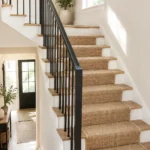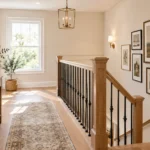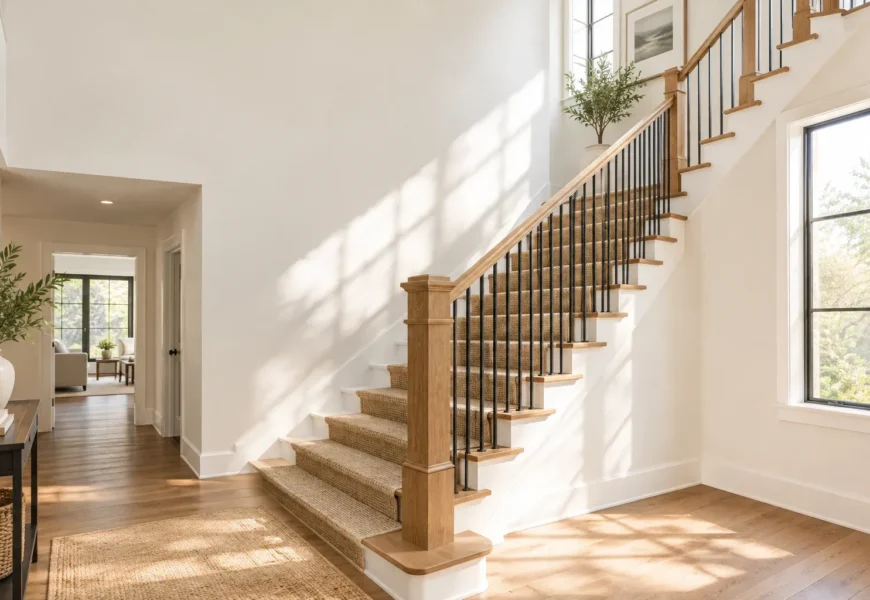
Stand at the bottom of your staircase for a second and really look at it. Chances are, the railing is doing a lot more work than you give it credit for — it’s the thing your hand touches every single day, and it’s also one of the first things a guest notices when they walk in. If yours feels dated, wobbly, or just plain boring, you’re in the right place. This roundup of staircase railing ideas covers materials, styles, code basics, and rough costs, so you can walk away knowing exactly what direction fits your home and your wallet.
Staircase Railing Ideas Start With the Right Material
Before you fall in love with a photo on Pinterest, it helps to know what you’re actually choosing between. Most staircase railing ideas boil down to five material families: wood, wrought iron or metal, glass, cable, and composite. Each one changes the whole feel of a stairway, and each comes with its own upkeep, so it’s worth thinking through before you commit.
Wood feels warm and familiar. Metal feels sharp and architectural. Glass opens up a space. Cable railing splits the difference between modern and industrial. Composite is the low-fuss option that mimics wood without the sanding and staining. None of these is “the best” when it comes to staircase railing ideas — it really depends on your home’s style, how much maintenance you’re willing to do, and what you’re trying to say when someone walks through your front door.
Wood
Classic, easy to match with existing trim, and simple to paint or stain if your taste changes later.
Wrought iron or steel
Durable and a little dramatic — great for period homes or anyone who wants a statement piece.
Glass
Clean and modern, especially good for small stairwells where you don’t want a bulky rail blocking light.
Cable
A newer favorite for minimalist and coastal-style homes, using thin horizontal or vertical cables instead of spindles.
Composite
Looks like painted wood but shrugs off moisture and rot, which matters a lot for outdoor stairs.
Modern Staircase Handrail Ideas for a Sleek Look
If your home leans contemporary, modern staircase handrail ideas tend to favor clean lines over ornamentation. Think slim steel rods instead of thick, carved spindles. Think black metal against pale oak treads. Think fewer visual breaks and more open sightlines.
One trend worth trying among today’s staircase railing ideas: pin-mounted railings, where the glass or metal infill attaches directly to the side of the tread instead of sitting on top of it. This keeps the walking surface completely clear and makes a small staircase feel bigger than it is. Another approach is going high-contrast — a matte black rail against white walls reads as intentional and architectural rather than “we just didn’t finish decorating yet.
If you’re renovating a mid-century or transitional home, a light wood handrail paired with slim metal balusters gives you the best of both worlds: warmth on the surface your hand actually touches, with a lighter, airier structure underneath it.
Wooden Staircase Railing Designs for Warmth and Character
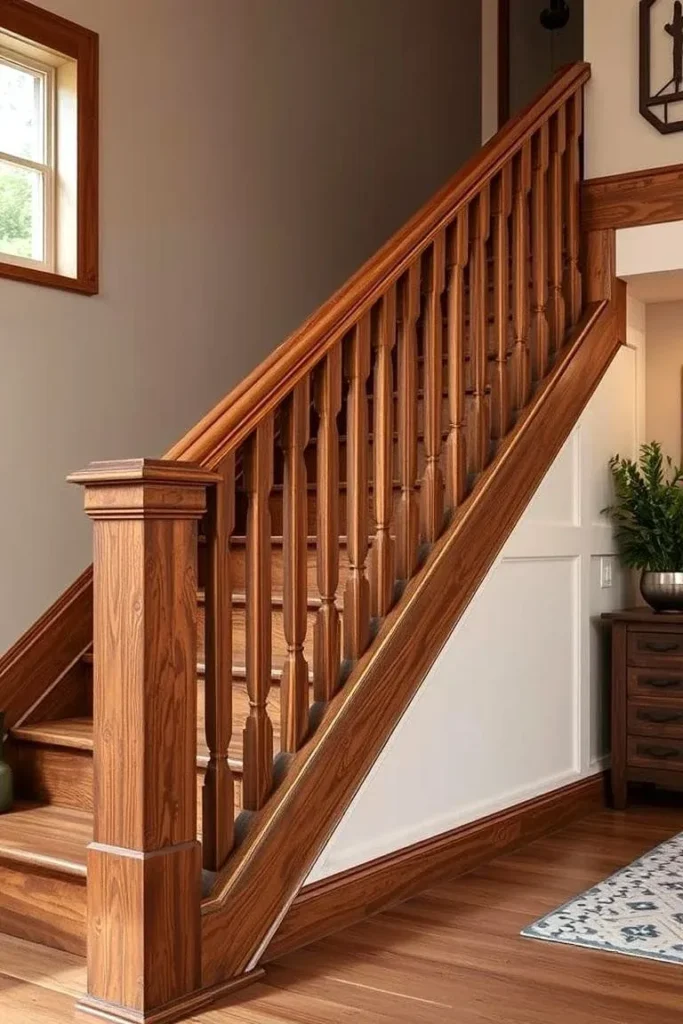
There’s a reason wooden staircase railing designs never really go out of style — wood ages well, it’s forgiving to repair, and it works in almost any decor. Oak has been the go-to for generations because it’s strong and takes a stain beautifully, but walnut, maple, and even reclaimed barnwood have all had moments in the spotlight.
Here’s a tip a lot of homeowners miss when exploring staircase railing ideas: you don’t have to replace the whole staircase to get a fresh look. Custom-milled wood balusters — twisted, fluted, or simply squared off — can completely change the character of an existing rail system without touching the treads or stringers underneath. Painting the balusters a contrasting color (charcoal against a natural wood handrail, for example) is another easy way to modernize an older wooden rail without a full rebuild.
For farmhouse or coastal interiors, a simple square-baluster wood railing painted white still reads as timeless. For something more traditional, turned spindles with a curved handrail add a sense of craftsmanship that a lot of newer homes are missing.
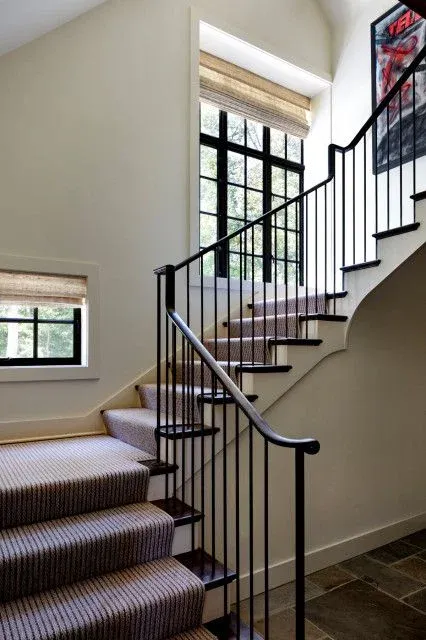
Wrought Iron Stair Railings for Timeless Style
Wrought iron stair railings show up constantly in high-end custom homes, and it’s not hard to see why — the material can be shaped into almost anything, from simple straight balusters to elaborate scrollwork. If you want one of the staircase railing ideas that feels substantial and a little formal, this is usually the direction to go.
Mixing materials is common here too. A lot of designers pair wrought iron balusters with a wood handrail and wood newel posts, which softens the look and keeps things from feeling too heavy or industrial. Black powder-coated iron is the most popular finish right now because it holds up well and pairs with almost any wall color.
One thing to keep in mind: wrought iron takes longer to install than a prefab wood kit, since a lot of it is custom-fabricated or welded on-site. If you’re set on this look, plan for a longer timeline than a simple swap-and-go project.
Glass Railing for Stairs When You Want an Open Feel
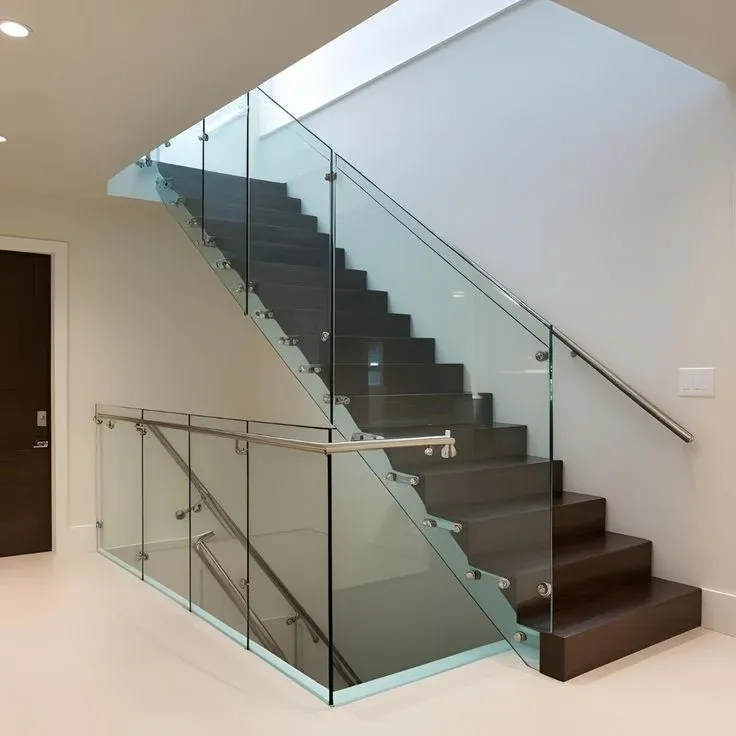
Glass railing for stairs is one of the fastest ways to make a stairwell feel less closed-in. Because there’s nothing chunky blocking your line of sight, light travels through the space instead of getting trapped behind spindles. This works especially well in open-concept homes, lofts, or any staircase near a window where you don’t want to lose the view.
Tempered glass panels mounted with metal standoffs are the most common setup among modern staircase railing ideas, and pairing them with black stainless steel hardware gives the whole thing a bold, minimalist edge. Frameless glass tends to cost more but looks the cleanest; framed panels are a bit more budget-friendly and slightly more forgiving during installation.
The trade-off is maintenance — glass shows fingerprints and dust more than any other material on this list, so if you’ve got kids or pets running up and down the stairs constantly, be honest with yourself about how often you’ll actually wipe it down.
Staircase Spindles and Balusters — Small Detail, Big Impact
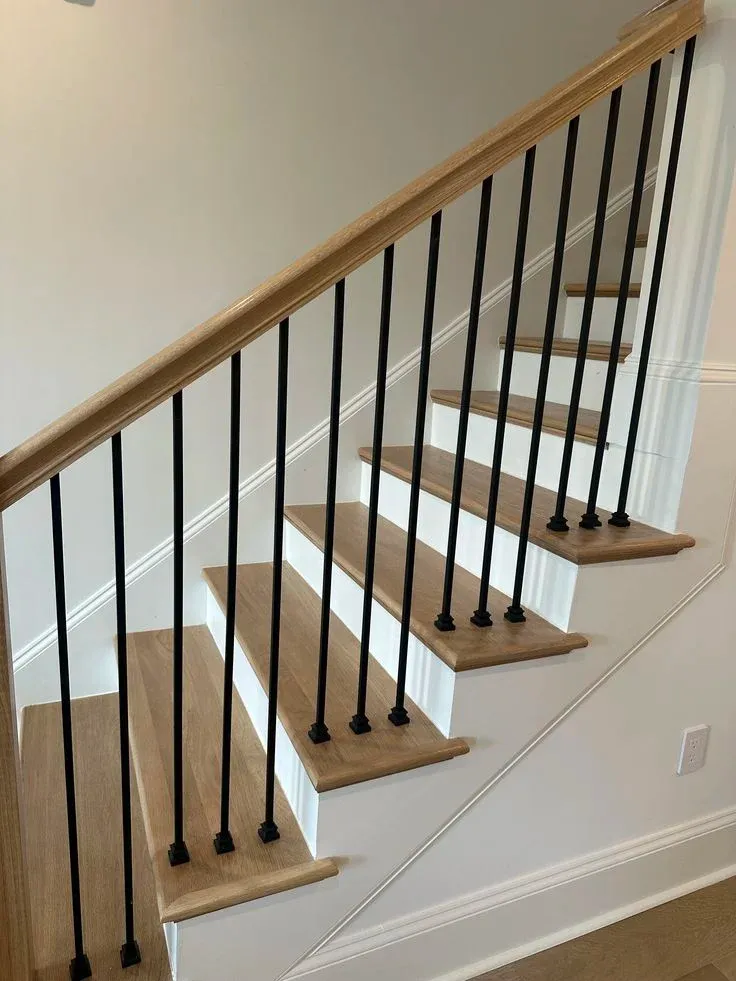
It’s easy to overlook, but staircase spindles and balusters do more to set the tone of your railing than almost anything else. When you’re weighing staircase railing ideas, spacing, shape, and material all change the mood dramatically. Wide-set slim steel rods feel modern and airy. Closely spaced turned wood spindles feel traditional and cozy. Twisted iron balusters feel a little more Old World.
If a full railing replacement isn’t in the budget right now, swapping just the balusters is a smart middle ground. You keep the existing handrail and newel posts (assuming they’re structurally sound) and just update the vertical pieces — it’s one of the more affordable staircase railing ideas out there, and it can be done in a weekend by a handy homeowner or a carpenter in a day.
Outdoor Staircase Railing Options
Outdoor staircase railing options need to handle rain, sun, and temperature swings, so material choice matters even more here than indoors. Pressure-treated wood is budget-friendly and can be stained or painted, but it needs upkeep every few years. Composite railing costs a bit more upfront but skips the sanding and re-staining entirely, which is worth it if you’d rather spend weekends doing literally anything else.
Cable railing has become a favorite for decks and porches because it doesn’t block the view of a backyard or landscaping, and aluminum balusters powder-coated black give a wrought-iron look without the rust risk. Whatever you choose from these staircase railing ideas, check with your local building department first — outdoor stairs often have separate code requirements than interior ones, especially around height and load capacity.
DIY Staircase Railing Makeover
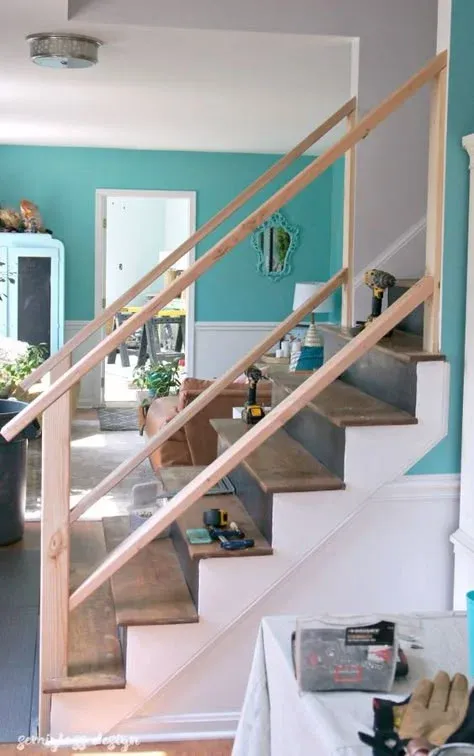
Not every staircase railing idea requires a contractor. A DIY staircase railing makeover can be as simple as sanding and repainting an existing wood rail, or as involved as swapping balusters yourself with basic tools. Kee Klamp-style pipe fittings have become popular for DIY builds because they use set screws instead of welding — you just need a hex key and a level to put together a sturdy industrial-style railing.
If you’re going the DIY route, here’s what to keep in mind:
- Measure twice before cutting anything — stair angles are rarely as simple as they look.
- Check your local code for handrail height and baluster spacing before you buy materials.
- Test the strength of any existing newel posts before reusing them; a wobbly post undermines the whole railing.
- Start with a small section (like a landing) before tackling the full run, so mistakes are cheap to fix.
Even a modest DIY refresh — new paint, updated balusters, or a stained wood cap on an old metal rail — can bring any of these staircase railing ideas to life and make a staircase look brand new for a fraction of a full replacement.
What Building Codes Say About Staircase Railing Height and Spacing
Before you fall too far down the design rabbit hole, it’s worth knowing the numbers building inspectors actually check. Under the 2024 International Residential Code, stair railing height must fall between 34 and 38 inches, measured from the nose of the tread, and railings need to withstand at least 50 pounds of force per linear foot. A handrail is required on any staircase with four or more risers.
Baluster spacing follows what’s often called the “4-inch sphere rule” — a 4-inch ball shouldn’t be able to pass through any gap in the guard rail, which is meant to keep small children from slipping through. It’s a detail a lot of DIYers miss when exploring staircase railing ideas, and it’s usually the first thing an inspector checks. Local codes can vary slightly from the national standard, so it’s always smart to call your building department before finalizing your staircase railing ideas, especially if you’re doing structural work.
How Much Does a Staircase Railing Upgrade Cost
Costs vary a lot depending on material, length, and whether you’re hiring a pro or doing it yourself. As a rough guide, expect somewhere in the range of $20 to $120 per linear foot installed, with wood on the cheaper end and custom wrought iron or glass on the pricier end. A straightforward wood or metal baluster swap on an existing rail will cost far less than a full custom glass or cable system, which often requires professional fabrication and installation.
Get at least two or three quotes before committing to any of these staircase railing ideas, especially for wrought iron or glass, since pricing swings widely by region and by how much custom fabrication is involved. And remember — permits may be required for structural changes, which adds a bit to the timeline and budget.
FAQs: Staircase Railing Ideas
What’s the most affordable staircase railing idea?
Repainting or restaining an existing wood railing is the cheapest option, often costing just the price of primer and paint. Swapping balusters while keeping the handrail and newel posts is the next most budget-friendly upgrade.
Can I install a staircase railing myself?
Yes, especially with pipe-fitting kits or prefab wood systems that use set screws instead of welding. Just check local height and spacing codes first, and confirm any existing posts are structurally sound before reusing them.
What height should a staircase railing be?
Under the 2024 IRC, residential stair railings should sit between 34 and 38 inches above the tread nose. Always double-check with your local building department, since some areas amend the national code.
Is glass railing hard to maintain?
Glass shows fingerprints and dust more than wood or metal, so it needs more frequent wiping down. It’s still a popular choice for modern homes because of how open and bright it makes a stairwell feel.
Do I need a permit to change my staircase railing?
It depends on your location and whether the work is structural. Simple cosmetic updates like repainting or baluster swaps usually don’t need one, but full rail or post replacements often do — check with your local building department before starting.
Conclusion
Your staircase doesn’t have to stay stuck in whatever decade it was built. Whether you go big with a full glass or wrought iron replacement, or start small by repainting spindles and swapping a handrail, there’s a staircase railing idea here that fits your home, your timeline, and your budget. Take a look at your current railing this weekend — check the height, check the wobble, check whether it actually matches the rest of your home — and decide which of these directions feels right to start with.