You bought the plant, set it on the shelf, and stepped back to admire your work. Two weeks later, it’s leaning toward the window like it’s planning an escape.
Sound familiar? Good shelf plant decor comes down to two things: how the shelf looks and whether anything on it stays alive. Most guides cover one and skip the other. We’re going to cover both.
By the end, you’ll know how to balance a shelf, which trailing plants earn their spot, what to do with a dark corner, and which small habits keep leaves green. No fancy tools and no jungle-sized budget. Just a handful of rules that stylists and plant people both swear by. Think of it as a shelfie guide that comes with a survival plan.
1. Shelf Plant Decor Basics: Start With Light, Not Looks
Here’s what nobody says out loud: great shelf plant decor starts with light, and a shelf is a rough place for most plants.
A bookcase is basically a shadow box. Light usually arrives from one side, and the deeper a plant sits, the less it gets. So pick the plant for the spot, not the spot for the plant.
Try a quick test. Stand at the shelf around midday and ask yourself: could I read a book here without turning on a lamp? If yes, you’ve got medium light. If you’re squinting, it’s low light. That one check shapes every choice that follows.
Measure each shelf separately
Shelves in the same unit rarely get the same light. The top one near a window can be bright while the bottom one is gloomy. Soltech’s shelf guide says to match each plant to the measured light on its own shelf, not the overall brightness of the room. A free light-meter app on your phone isn’t perfect, but it separates “bright” from “basically a cave.”
Sort your shelves into zones
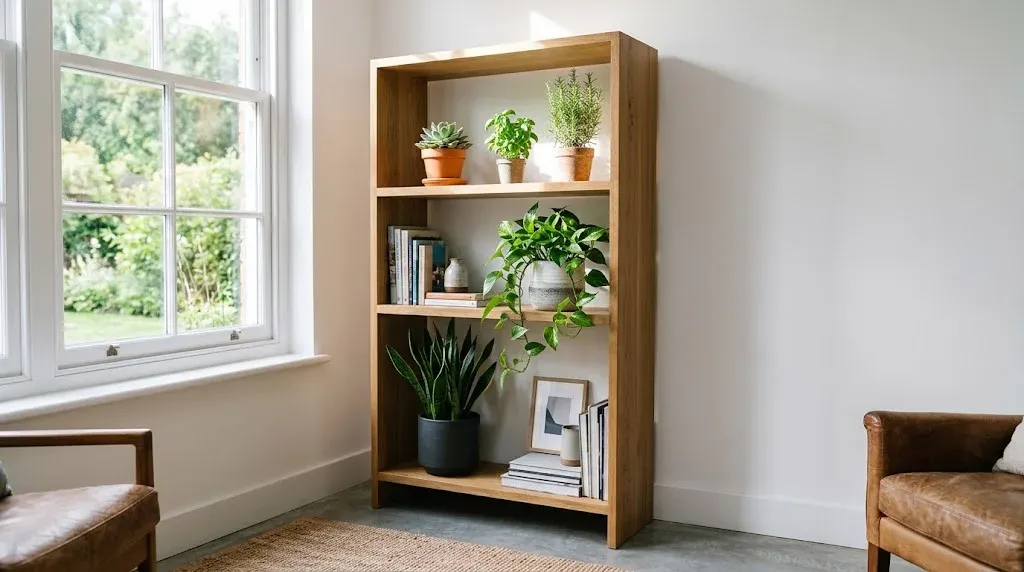
- Bright zone (right by a window): herbs, succulents, string of hearts.
- Medium zone (a few feet back): philodendron, pothos, peperomia.
- Low zone (deep bookcase or far corner): ZZ plant, snake plant, or a grow light.
Once you know your zones, the styling gets a lot easier.
2. Balance the Shelf Like a Stylist
Ever notice how some shelves look effortless while others look like a yard sale? Usually it’s structure, not money. The good news is that shelf plant decor follows the same simple rules designers use for books and objects.
Heavy at the bottom, light on top
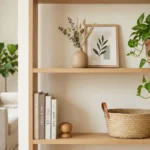
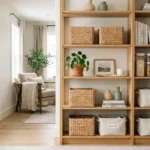
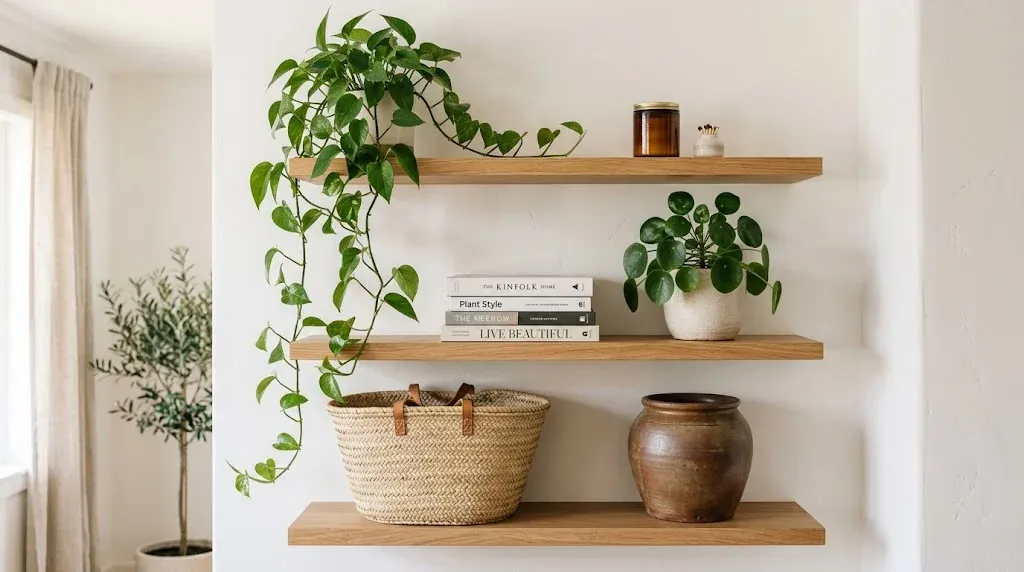
Pottery Barn’s advice is to put the largest, bulkiest items on the bottom shelf and stack lighter ones as you go up, which makes the whole unit feel grounded. With plants, that means a big pot or basket on the lowest shelf and a trailing vine up top where it can drape.
Group in odd numbers
Three items beat two or four. Try one plant, one stack of books, and one small object like a candle or a ceramic dish. Then repeat the trick on the next shelf with a different mix so the eye keeps moving.
Mix heights and leave breathing room
Put a tall plant next to a low one. Let a vine spill over an edge. Then leave a gap. Empty space isn’t wasted space. It’s what makes plants look chosen instead of crammed.
Don’t forget the top of the unit
If your bookcase is stuffed with books, run the greenery along the top. Pottery Barn suggests filling the main shelves with books and keeping all the plants up top. Ladder shelves and floating shelves work the same way, as long as the plants have room to hang.
3. Let Trailing Plants Do the Heavy Lifting
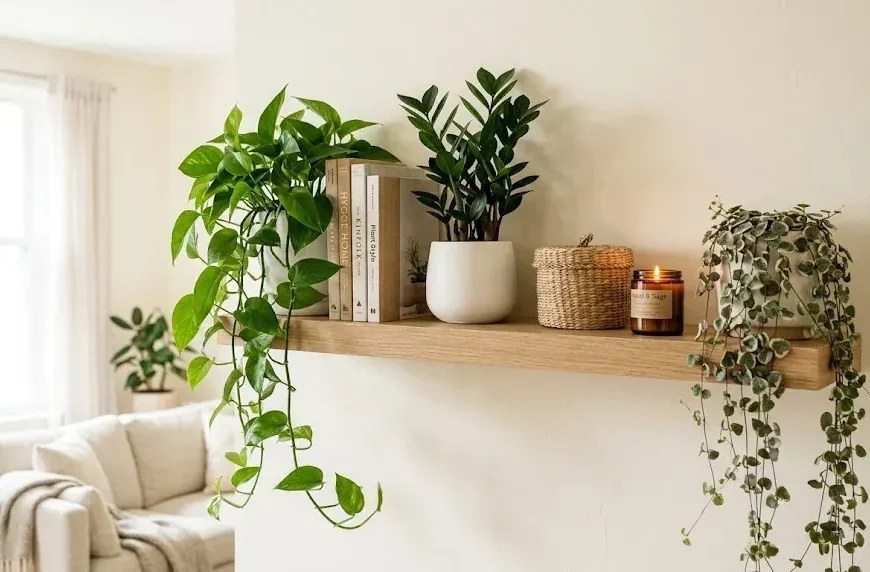
Trailing plants are the secret behind every “wait, how did you do that?” shelf. They soften hard edges and connect one shelf to the next. Here’s how to use them in your own shelf plant decor without making a mess.
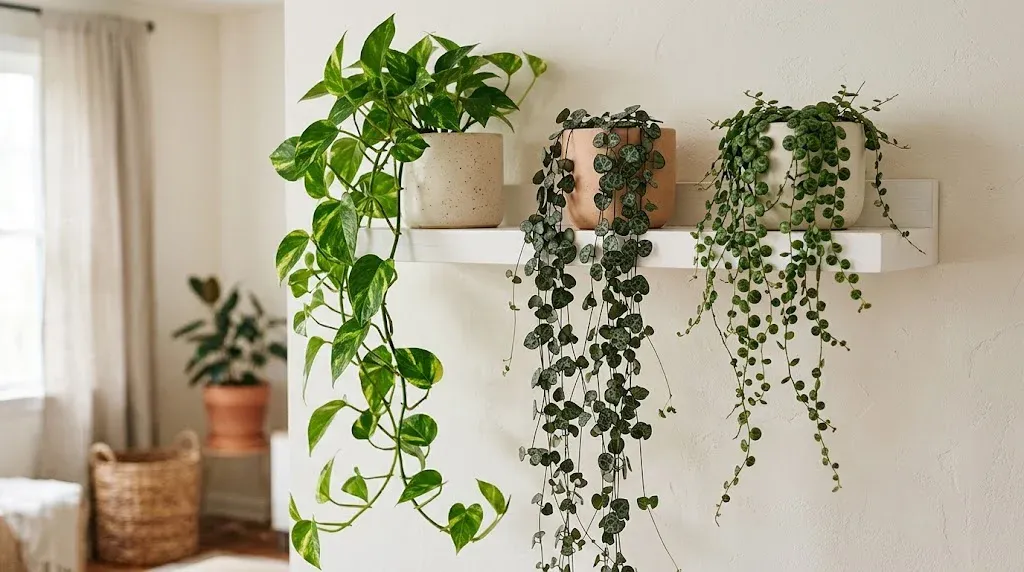
Pothos
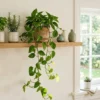
The reliable choice. Heart-shaped leaves, fast growth, and it forgives missed waterings. Park it on a top shelf and let it fall.
Heartleaf philodendron
Similar look, a bit softer and darker. It adapts to a wide range of spots, including rooms with only low or artificial light.
String of hearts and string of pearls
These are the showstoppers. The Little Botanical rates string of hearts as its top trailing pick, but both want bright light, so keep them near a window. A string of pearls spilling over a white shelf is hard to beat.
Peperomia rotundifolia (trailing jade)
Small, compact, and cute. The Little Botanical calls it one of the ultimate trailing plants for shelves, perfect for that popular shelfie look.
Quick tips for trailers
- Let the top half of the soil dry before watering. The Houseplant Doctor warns that overwatering and root rot are common with trailing plants.
- Prune about a quarter of the vine length once a year in spring, and root the cuttings for free plants.
- Don’t permanently tie vines along the shelf edge. You’ll need to lift the pot to water it.
- Pets in the house? Pothos and philodendron are toxic if chewed. Check the ASPCA’s plant list before you buy.
4. Match Low Light Plants to Your Shelf Honestly
“Low light” is the most stretched phrase in plant shopping. One roundup of dark-room plants points out that many lists include plants needing indirect light, which is different from dim or no light.
So here’s an honest rule: low light plants tolerate low light. They don’t love it. Growth slows, colors fade, and flowers disappear. That’s fine for greenery, as long as you expect it.
Costa Farms suggests prayer plant, calathea, snake plant, pothos, philodendron, peace lily, ZZ plant, nerve plant, hoya, and ferns for shelves with a little indirect light. I’d sort that list by toughness:
- Toughest: ZZ plant, snake plant, pothos.
- Middle: philodendron, peace lily, hoya.
- Fussier: calathea, prayer plant, ferns (give them the medium zone).
For shelf plant decor in a dim room, stick to the toughest group and let pots, books, and art carry the style. Save succulents and herbs for a window or a grow light, because they’ll stretch and sulk on a dark shelf.
One more tip: buy small. Costa Farms recommends younger, compact plants because shelves don’t leave much room for spreading. You can always repot later.
5. Add a Grow Light Where Windows Can’t Help
Maybe your shelf lives in a hallway. Or a basement office. Or behind the couch. A grow light fixes that, and modern ones don’t look like a science lab. Pairing a slim LED bar with your shelf plant decor is easier than you’d think.
Here’s how it works:
- Soltech says a full-spectrum grow light running 12 to 16 hours a day can keep shelf plants thriving far from a window, and a slim bar mounted under a shelf reaches the plants below.
- Distance matters more than wattage. The Missouri Botanical Garden notes that light drops off dramatically as the fixture moves away, so keep it close to the plants.
- Use a plug-in timer. Most setups run somewhere between 8 and 16 hours depending on the plants, and plants need a dark period too.
- Keep plants of similar height on the same shelf so one light suits them all. Short plants can sit on a small box to get closer.
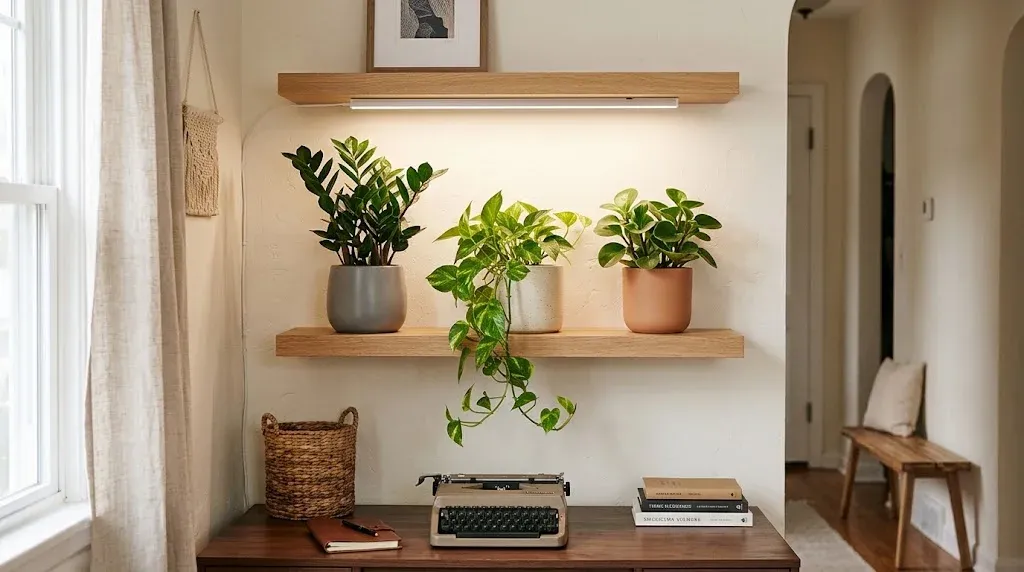
The Missouri Botanical Garden also points out that white reflectors and a white-painted surrounding area bounce more light back to the plants. A white shelf already does some of this for free.
6. Style by Room and Pick Containers That Earn Their Spot
Every room changes your shelf plant decor a little. Here’s how to adapt.
Kitchen
Use open shelves near the window for pothos or a few herbs. Wayfair suggests contrasting the earthy greenery with bright white dinnerware. It looks fresh, and the plants get regular attention because you’re always in there.
Bathroom
Home Beautiful suggests placing a trailing plant in the shower niche, since many indoor plants do well in bathrooms. Ferns and pothos like the humidity. Just make sure there’s some window light.
Home office
A shelf above the desk with tumbling plants can turn an office into an urban jungle, and neutral-toned pots keep it interesting without clutter. It’s also a nice view during long calls.
Living room
This is where you can go big. Use a bookcase, a ladder shelf, or a wall of floating shelves, and anchor the base with one large leafy plant.
Choose containers on purpose
Containers can make or break your shelf plant decor. A UK survey found clay, stone, ceramic, and concrete planters were the most popular ways to display indoor plants. Stick to two or three materials per shelf so it looks collected, not random. Woven baskets add texture, too.
One non-negotiable: put a saucer under every plant to protect books and wood from water. Better yet, keep the plant in its plain nursery pot and slip it inside a decorative one. You can pull it out to water and let it drain.
7. Keep Them Alive: Habits and When to Go Faux
A pretty shelf that’s half dead isn’t pretty. A few small habits fix most problems:
- Rotate. Costa Farms says shelf plants need turning every few days, or the side facing the interior can die back.
- Check soil often. Higher shelves dry out faster than lower ones.
- Dust the leaves monthly with a damp cloth. Dusty leaves absorb less light.
- Feed lightly. A diluted houseplant fertilizer every few waterings is plenty.
Is it worth the effort? Most people say yes. A 2025 Floral Marketing Fund survey found people buy houseplants less often than before but own more of them, and nearly 97 percent of buyers say plants make them feel happier. That helps explain why shelf plant decor stuck around after the pandemic plant craze cooled. Even 2026 forecasts lean toward hardy picks: Patch Plants expects ZZ plants, snake plants, and drought-tolerant succulents to headline the year.
And what about faux?
No shame in it. If a shelf truly gets no light, a few artificial plants beat a dying real one. Mixing both is a smart move in shelf plant decor: keep real plants on shelves you can reach, and put faux trailing vines on the high, hard-to-water spots. Dust them every month or two so they don’t give themselves away.
FAQs: Shelf Plant Decor
1. How do I start with shelf plant decor as a beginner?
Pick one shelf, test its light, and buy two forgiving plants like pothos and a snake plant. Add one decorative pot and a few books. Beginners get the best results with shelf plant decor by keeping it simple and adding more plants slowly.
2. What are the best plants for a shelf with little light?
ZZ plants, snake plants, and pothos are the toughest options. Philodendron and peace lily handle dim spots too. Remember that low light means tolerance, not love. Growth will be slow, so consider adding a small grow light if the shelf is very dark.
3. How far should a grow light be from shelf plants?
Close. Many slim LED bars work well a few inches above the plants, roughly 3 to 6 inches, though you should follow the product instructions. The closer the light, the stronger it is. Use a timer and watch for leaf scorch.
4. Can I put plants on a bookshelf with books?
Yes. Put a saucer under every pot, keep plants away from book spines, and avoid overwatering. Taking the plant to the sink to water, then letting it drain, protects your books. Rotate the plants every few days for even growth.
5. Are faux plants okay for shelf plant decor?
Absolutely. If a shelf gets almost no light, faux plants look good and need no care. Mixing real and artificial works well: use real plants where light and access are good, and faux on high or dark shelves. Dust them regularly.
Wrap-Up: Your Shelf, Sorted
Here’s the short version. Pick plants for the light you actually have. Put heavy things low and light things high. Let trailing plants soften the edges. Add a grow light where windows can’t help. And build a few simple habits so everything stays green.
Great shelf plant decor isn’t about owning more plants. It’s about putting the right ones in the right spots and giving them a little attention. You don’t need a perfect shelf on day one. Start with one.
Your next step is simple. This weekend, do the midday reading test on one shelf, then move or swap a single plant based on what you find.