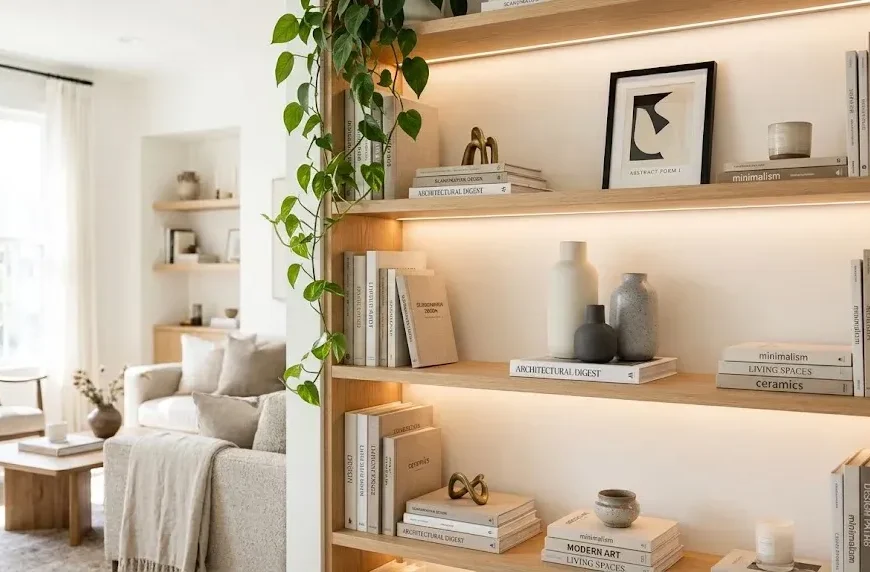
You spent a whole Saturday arranging your shelves. Every item has a spot. And yet, when you step back, something feels off. It looks busy, or flat, or just a little sad.
Sound familiar? Odds are you’re running into a few classic shelf decorating mistakes, and the good news is that none of them need a shopping trip to fix. Most come down to spacing, scale, and a bit of restraint.
In this guide, you’ll learn the seven problems designers see most often, why they happen, and what to change. You’ll also get a simple order to work in, so you’re not staring at a pile of knick-knacks wondering where to begin. Grab a coffee. Let’s sort your shelves out.
Why Shelf Decorating Mistakes Happen to Everyone
Here’s the thing about shelf decorating mistakes: they almost never come from bad taste. They come from good intentions. You love your things, an empty shelf feels like wasted space, so you fill it. Then you add one more candle. Then a plant. Suddenly the whole display looks like a yard sale.
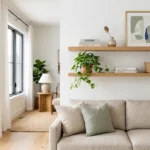
Designers see this all the time. The advice that keeps coming up is to give each shelf some empty space so your eyes get a break between objects. Empty space isn’t a failure. It’s part of the design.
A shelf isn’t a storage unit with a nice view. It’s more like a stage. Every object is an actor, and when forty of them are shouting at once, nobody gets heard.
Think of a well-styled shelf like a good playlist. You want a few loud songs, a few quiet ones, and some gaps between tracks. Without the quiet parts, it’s just noise.
One quick tip before we start. Take a photo of your shelves right now. A photo flattens a scene the way a stranger’s eye does, so problems you’ve gone blind to jump out right away. You’ll also have a before shot to compare against, which is weirdly satisfying.
The seven problems below cover nearly everything that goes wrong. You probably have two or three of them at home right now, and that’s completely normal. Fix them one at a time and you’ll see a difference fast.
Mistake 1: Filling Every Inch and Leaving No Negative Space
If you only fix one thing on this list, fix this one.
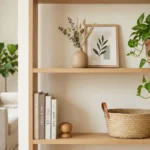
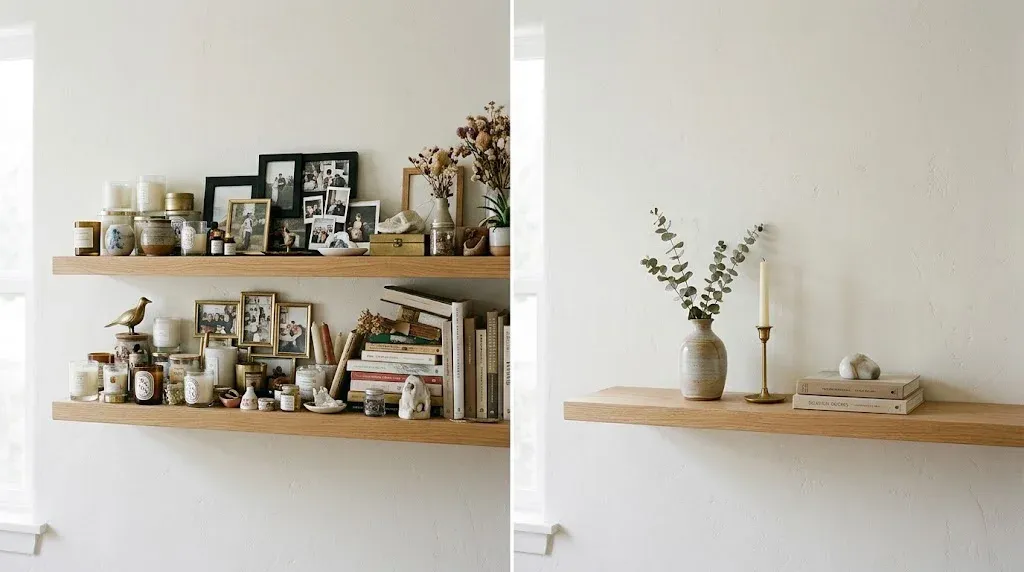
Negative space is the empty area around and between your objects. It sounds like wasted room, but it’s what makes everything else look intentional. Cram a shelf edge to edge and your eye has nowhere to land. Designers like Rachel Browne recommend giving each shelf the same amount of open space, so the whole unit feels even.
Overcrowding is easily the most common of all shelf decorating mistakes, partly because it feels generous. More stuff, more personality, right? Not quite. Personality comes from choosing, not collecting.
Here’s a rough rule of thumb: leave about a third of each shelf visibly empty. Some styling sites say pulling out roughly 30 to 40 percent of items is the fastest upgrade, and they float a loose split of 60% books, 25% decor, and 15% open space. Treat those as starting points, not laws.
How to fix it:
- Empty the shelf completely.
- Put back your favorites, one group at a time.
- Stop when it feels slightly underfilled. That’s usually right.
- Box up the leftovers and swap them in later if you miss them.
Mistake 2: Using Objects That Are All the Same Height and Scale
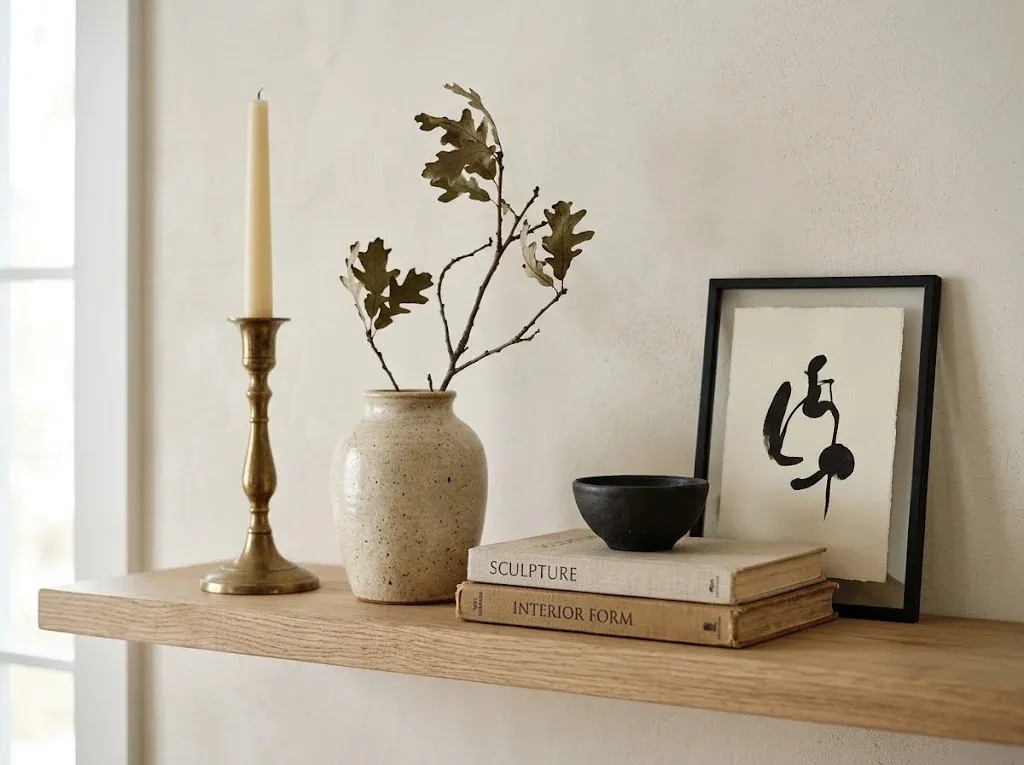
Walk past a shelf where every item is about eight inches tall and you’ll feel it before you can name it. It looks flat, like a row of soldiers. One designer notes that a shelf that holds attention nearly always has one piece rising above the others.
Varying height and scale gives the eye a path to follow. Tall, medium, low. Chunky, slim. Your gaze bounces up and down instead of sliding straight across.
This matters most on long shelves. A tiny vase on a four-foot floating shelf gets swallowed. One oversized bowl, though, looks deliberate. Size is a statement.
Height also helps with awkward gaps. If a shelf feels half empty, a tall branch or a leaning mirror fills the vertical space without adding clutter.
A good test: squint at your shelf. If the tops of your objects make a flat line, you need a taller piece somewhere.
Quick fixes:
- Add one tall piece, such as a candlestick, a branch in a vase, or a leaning framed print.
- Stack a few books flat and set a small object on top to make a mid-height step.
- Swap two tiny items for one bigger one.
Mistake 3: Skipping a Color Palette
Colorful is fine. Random is the problem. When a red vase, a teal bowl, a yellow candle, and orange book spines all compete, your shelf feels chaotic even if everything is neatly placed.
You don’t need everything to match. In fact, perfectly matched shelves look stiff. One designer, interviewed by House Digest, starts with a small set, usually three or four, of colors, textures, and finishes that echo what’s already in the room. That’s a smart limit because it keeps things interesting without turning into a free-for-all.
For example, say your sofa is grey and your walls are warm white. Your color palette for the shelf could be black, natural wood, and one soft green. Now every object has to fit at least one of those. Shopping and sorting both get easier.
A lot of shelf decorating mistakes with color are really mistakes with book spines. A rainbow of jackets can read as visual noise. Some designers turn spines inward, because showing the pages instead keeps the books from stealing the spotlight. It’s a bit controversial, but it works.
Quick fixes:
- Pull out anything that doesn’t fit your palette.
- Use texture, like ceramic, wood, and linen, to add interest without adding more color.
- Try painting the shelf itself, since colorful painted shelves are a 2026 trend. Just keep your palette tight.
Mistake 4: Lining Everything Up in One Straight Row
Symmetry feels safe. One object on the left, one on the right, one in the middle, repeat. The result looks like a store display for something nobody wants to buy.
Perfect symmetry is one of those shelf decorating mistakes people defend the hardest, because it looks tidy. But tidy and stylish aren’t the same thing.
Think in clusters instead. Aim for a couple of small clusters on each shelf instead of one unbroken line of objects. Odd numbers tend to look more natural, so a group of three beats a group of four.
Another trick is zig-zagging. Place a dark item on one shelf, a light one diagonally above it, then a plant on the next diagonal. The same goes for frames and bowls. Try keeping a diagonal pattern so similar items never sit directly above, beside, or below each other.
Here’s what this means in real life: your shelf should look like it built up over time, not like it arrived from a catalog.
Quick fixes:
- Group items in twos or threes, with a visible gap between groups.
- Lean a framed print or small artwork against the back wall instead of lining it up.
- Mix book stacks: some vertical, some flat, a few on a lean.
Mistake 5: Ignoring Visual Weight
Visual weight is how heavy something looks, whatever it actually weighs. Dark, large, and dense items look heavy. Pale, small, and see-through ones look light.
The classic error is putting all the chunky dark stuff on the top shelf. It makes the whole unit feel like it might tip over. Flip it. One design guide recommends putting something big and heavy on the lowest shelf to give the whole arrangement a base, like oversized coffee table books, a basket, or a long wooden bowl.
Then think left to right. If the left side has a big dark vase, balance it with a stack of books and a plant on the right. It doesn’t have to be equal. It just has to feel balanced, like a seesaw with a heavy kid sitting closer to the middle.
Here’s an easy check. Take a photo and squint at it. The darkest, heaviest spots should be spread around, not clumped in one corner. If one area looks like a dark blob, move something.
Another thing: glass, acrylic, and light wood have low visual weight, which makes them perfect for upper shelves where you want things to feel airy.
Mistake 6: Forgetting Shelf Lighting
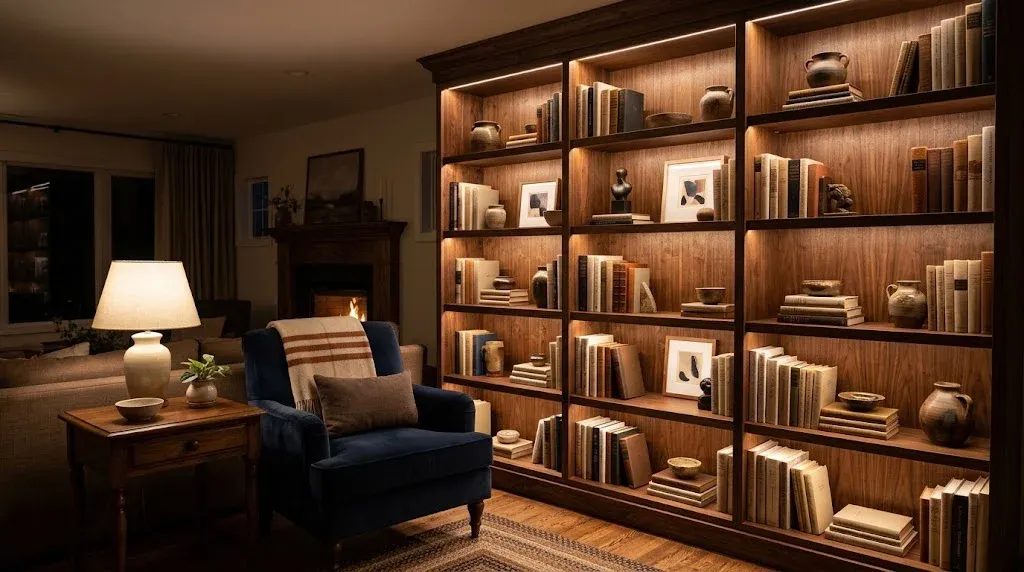
You can style a shelf beautifully and it can still look dull. Why? Flat or harsh light kills depth. Apartment Therapy’s designers point out that poor or glaring light can undo even a nicely styled shelf, and they suggest small spotlights, table lamps, or LED strips.
Lighting is the one fix on this list of shelf decorating mistakes that almost nobody talks about, which is a shame, because it’s often the cheapest.
Picture a typical living room at night. One overhead light, and the shelves sit in shadow along the wall. You can’t see textures, and everything melts into one brown blur. Add a stick-on LED strip under a single shelf and the whole thing glows.
Your options:
- Rechargeable stick-on LED strips, which are great for renters.
- A small table lamp placed beside or on the shelf.
- A slim picture light above a built-in unit.
One more thing: go warm. Bulbs around 2700K flatter wood, ceramics, and book spines far better than cold white ones. And if you’re renting, battery-powered puck lights with a remote peel off without leaving marks.
Mistake 7: Forgetting That Shelves Have to Work
Pretty but useless is one of the sneakiest shelf decorating mistakes of all. If you can’t reach your remote, chargers, or kids’ books, you’ll dump them on the shelf anyway, and your styling will fall apart within a week.
The fix is zones. Keep the display zone at eye level and above. Keep the everyday zone low, with baskets and lidded boxes that conceal daily clutter while keeping essentials easy to grab.
Sentimental stuff is the other trap. Not every souvenir, birthday card, and ceramic mug deserves a spot. Choose the pieces that make you smile and rotate the rest. A shelf is a highlight reel, not an archive.
There’s a flip side, too. An architectural designer quoted by TBS News calls treating every inch of a shelf as storage the biggest error. So split the job: one or two shelves for display, one for the stuff you actually use.
On top of that, dust is real. Anything on open shelves needs wiping, so fewer pieces also means less cleaning.
Quick fixes:
- Use lidded boxes or baskets on lower shelves.
- Rotate decor every season so favorites get their turn.
- Give your keys, remote, or charger a home so they don’t wander onto the display.
Your 30-Minute Plan to Fix Shelf Decorating Mistakes
Feeling overwhelmed by all these shelf decorating mistakes? Don’t be. Here’s the order that works, because doing things in the right sequence saves you from redoing half of it.
- Take a before photo. You’ll thank yourself later.
- Clear one shelf, or the whole unit if you’re feeling brave. Dust everything while it’s empty.
- Sort items into piles: books, ceramics, frames, plants, everyday stuff. Anything that doesn’t fit your palette goes in a box.
- Anchor the bottom shelf with your heaviest, darkest pieces.
- Add height with one tall object per shelf.
- Build two or three clusters per shelf and zig-zag them. Leave gaps.
- Tuck baskets into the lower shelves for everyday items.
- Add one living thing, like a trailing plant, to soften the straight lines.
- Switch on some warm light and take an after photo.
A single shelf usually takes about ten minutes once you get the hang of it. A full built-in might take an hour. Either way, don’t aim for perfect. Aim for noticeably better. You can always restyle later, and the best shelves look collected over time rather than arranged in one afternoon.
Want a second opinion while you work? Homes & Gardens’ list of 17 bookshelf styling mistakes goes even deeper, including ignoring the back wall and wasting vertical space.
FAQs: Shelf Decorating Mistakes
What are the most common shelf decorating mistakes?
The big ones are overcrowding, using items of the same height, skipping a color palette, lining everything in a straight row, and ignoring lighting. Most shelf decorating mistakes come down to too much stuff and not enough contrast. Remove a third of your items first and the rest often sorts itself out.
How many items should I put on one shelf?
There’s no magic number, but two or three small groupings per shelf works well. Each grouping might hold one to three objects. Leave a visible gap between groups and keep roughly a third of the shelf empty. If it feels crowded, it probably is.
Should books go vertical or horizontal?
Both. Mix vertical rows with a few horizontal stacks so the shelf has rhythm. Horizontal stacks also work as little platforms for small objects. Avoid jamming books edge to edge, and keep any that stick out past the shelf front to a minimum, since they look messy.
How do I style shelves if I own a lot of stuff?
Use baskets and lidded boxes for practical items, and display only your true favorites. Rotate pieces every few months so nothing gets forgotten. Think of the shelf as a rotating gallery. Everything else can wait in a closet until its turn comes around.
Do I need to buy new decor to fix my shelves?
Usually not. Rearranging what you own fixes most problems. Remove items, regroup them, vary heights with stacked books, and borrow pieces from other rooms. Fixing shelf decorating mistakes is mostly editing, not shopping. If you do buy anything, make it a lamp or a basket.
Conclusion
Here’s the good news. Almost everything on this list gets fixed by taking things away, not buying more.
Once you start spotting shelf decorating mistakes in your own home, you can’t unsee them. That’s actually a gift, because every single one is a small, free fix.
Give your shelves breathing room. Vary heights and scale. Keep your color palette tight. Anchor the bottom with heavy pieces, then light the whole thing warmly. Do that, and even a budget bookcase starts to look like it came from a designer’s home.
And remember, nobody’s shelves are perfect. They’re meant to change with you. Swap a few pieces every few months and the whole thing keeps feeling fresh.
So here’s your next step: pick one shelf this weekend, take everything off, and put back only half. Then stand back and look. You’ll know right away. If you want to go deeper, reread the mistake that bugged you most and start there.