You cleared the clutter, painted the walls white, and bought a sleek sofa. So why does your living room feel like a waiting room?
That’s exactly the gap organic modern decor fills. It keeps the calm, simple look you wanted and adds the warmth you’re missing, using wood, linen, stone, and soft curves. Nothing fancy. Nothing fussy.
This guide walks you through it in plain English. You’ll learn how to build an earthy color palette, which natural materials to buy first, how to style your living room, bedroom, and kitchen, and which mistakes leave a room looking flat. Grab a coffee. Let’s make your home somewhere you actually want to sit down.
What Is Organic Modern Decor and Why Is It Everywhere?
Think of organic modern decor as modern design with a softer heart. You start with clean lines and uncluttered rooms. Then you warm things up with natural materials, earthy colors, and shapes that look like they grew instead of being stamped out in a factory.
Here’s an easy way to picture it. Modern style is a crisp white shirt. Rustic style is a heavy flannel. Organic modern is a linen shirt: neat, relaxed, and comfortable the second you put it on.
So why is everyone talking about it? Because it fixes the biggest complaint about minimalism. Stark rooms look great in photos but feel chilly when you actually live in them. Natural textures warm the space without piling on clutter. Designers have a handy rule of thumb: when a room feels too slick, add texture. When it feels too rugged, calm down the shapes.
The timing helps too. In a survey of 86 interior design pros, 56% said homeowners are moving toward wellness design, and one designer said organic and biophilic looks push back against our ever-growing digital world. Calm rooms full of natural materials fit that mood perfectly.
Japandi vs Organic Modern: Which One Are You Going For?
These two get mixed up all the time, and honestly, that’s fair. Both lean on natural materials, quiet colors, and a lot of calm.
The difference is mostly in the feel:
- Japandi: serene, sparse, and intentional. Furniture sits low, and black often shows up as a grounding accent. Empty space counts as part of the design.
- Organic modern: relaxed, soft, and tactile. You’ll see rounder shapes, more variety in texture, and a slightly more collected look.
Organic modern decor is a bit looser, so it forgives a few extra throw pillows. Japandi usually doesn’t.
One naming note. You’ll also see “modern organic” used online. Designers use the two terms interchangeably for the same style. Same room, flipped words.
Not sure which one you prefer? If you love cozy layers, go organic modern. If a nearly empty shelf makes you exhale, try Japandi. Plenty of the best rooms borrow from both, so you don’t have to pick a side.
Build an Earthy Color Palette That Doesn’t Feel Boring
Here’s where most people trip. They hear “neutral” and buy seven shades of gray. Cool grays are exactly what made minimalism feel cold in the first place.
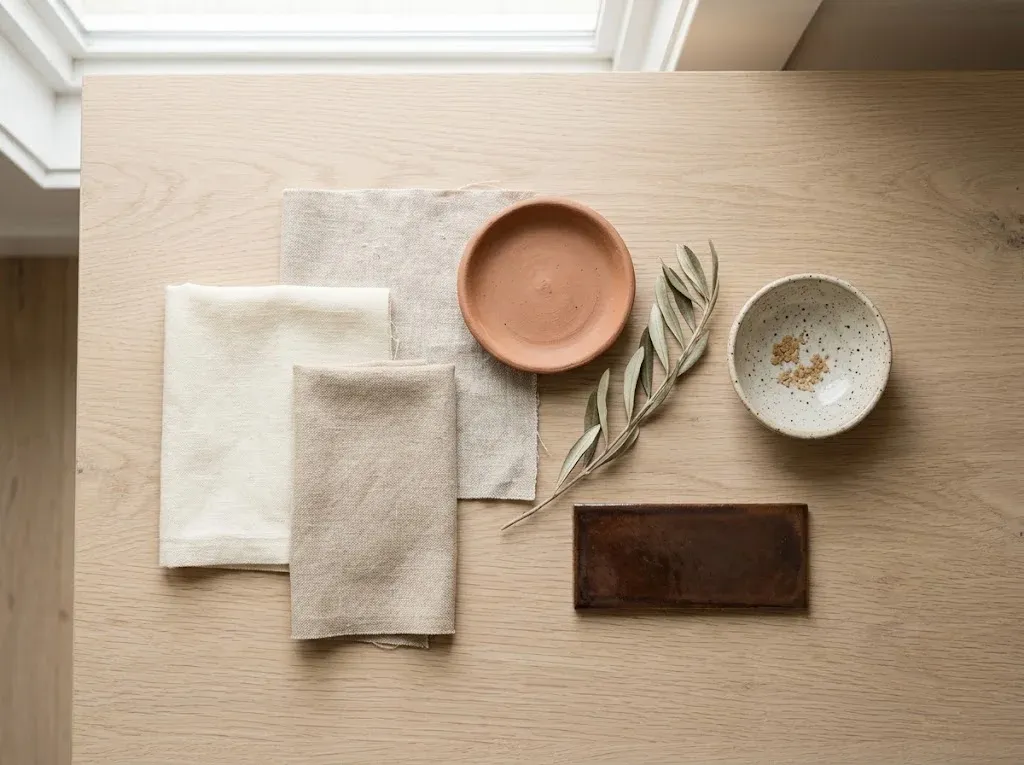
A good organic modern decor palette runs on warm neutrals instead. Think cream, oatmeal, sand, and warm white, with a few deeper earth tones for contrast. If you want a simple formula, try a 60/30/10 split:
- 60% base: warm white, cream, or soft oatmeal on walls and your biggest pieces.
- 30% support: sand, tan, greige, or light oak.
- 10% grounding: clay, olive, deep green, or chocolate brown.
That last 10% matters more than it looks. It’s what stops the room from melting into one beige blur.
Designers are heading the same way. In 1stDibs’ 2026 survey, chocolate brown was the top color designers expected to use, named by 33% of respondents.
Quick tip: test paint swatches on two walls and look at them in the morning, afternoon, and evening. Warm neutrals can swing pink or yellow depending on your windows. And keep bright, saturated colors to a minimum. One rust cushion works. A neon one doesn’t.
Natural Materials and Layered Textures: Where the Warmth Comes From
If the palette is the outfit, natural materials are the fabric. This is where organic modern decor earns its warm reputation.
Pick Three or Four Materials, Not Ten
The easiest way to keep things calm is a short material list. For example: oak, linen, travertine, and a touch of black metal. Repeat them across the room and everything feels connected. Toss in too many finishes and it starts to look like a clearance showroom.
Layer Textures Like You’re Getting Dressed
Pair something smooth with something rough. A chunky wool throw on a smooth linen sofa. A rough ceramic vase on a polished wood table. A jute rug under a sleek coffee table. Each layer adds depth without adding clutter.
Good natural pieces to look for:
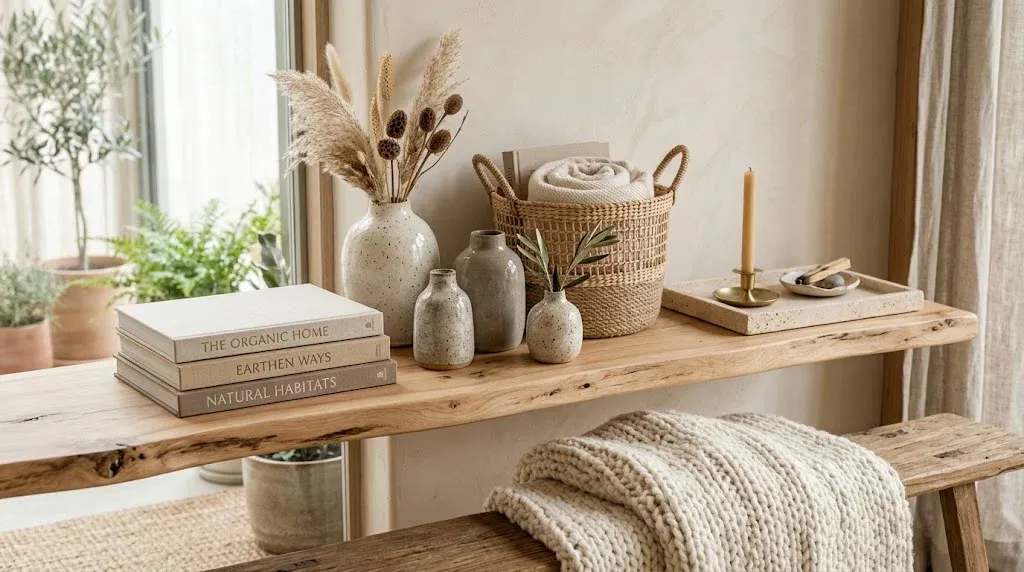
- Live-edge wood shelves or side tables.
- Handmade pottery with slightly uneven glazes.
- Woven baskets and rattan accents (wicker and rattan furniture kept its appeal, cited by 27% of designers).
- Linen curtains and bedding.
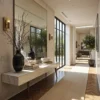
- Travertine or honed stone trays and tables.
Where to Splurge and Where to Save
Spend on the things you touch every day: your sofa, dining table, and bedding. Save on pottery, baskets, and throws. And here’s a tip that surprises people: solid secondhand wood usually beats a thin new piece that only copies the look. Estate sales and local marketplaces are goldmines for this.
Organic Shapes and Curved Furniture
Straight lines are the backbone of modern design. Organic shapes are the softener.
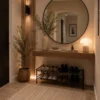
Start with one curve per zone. A sofa with a rounded arm. A round or oval coffee table. An arched mirror leaning against the wall. A pebble-shaped vase on the shelf. Each one breaks up the boxiness and makes the room feel less rigid.
Irregular shapes work too. In the same 1stDibs survey, irregularly shaped rugs landed among the top five furniture and lighting trends for 2026, cited by 21% of designers. Picture a rug shaped like a flat river stone. It sounds odd, but it relaxes a square room fast.
Don’t overdo it, though. If every single item is curvy, the room starts to look like a cartoon. Keep straight lines in the architecture, shelving, and window frames, and let curves show up in furniture and accessories. That contrast is the whole trick.
On a tight budget? Swap a square side table for a round one, or hang one round mirror. Small change, big payoff.
Organic Modern Living Room: A Simple Step-by-Step Plan
Let’s turn all of this into something you can do this weekend. Here’s how to apply organic modern decor to the room you use most.
- Clear the surfaces. Take everything off shelves and tables. Put back only what you love.
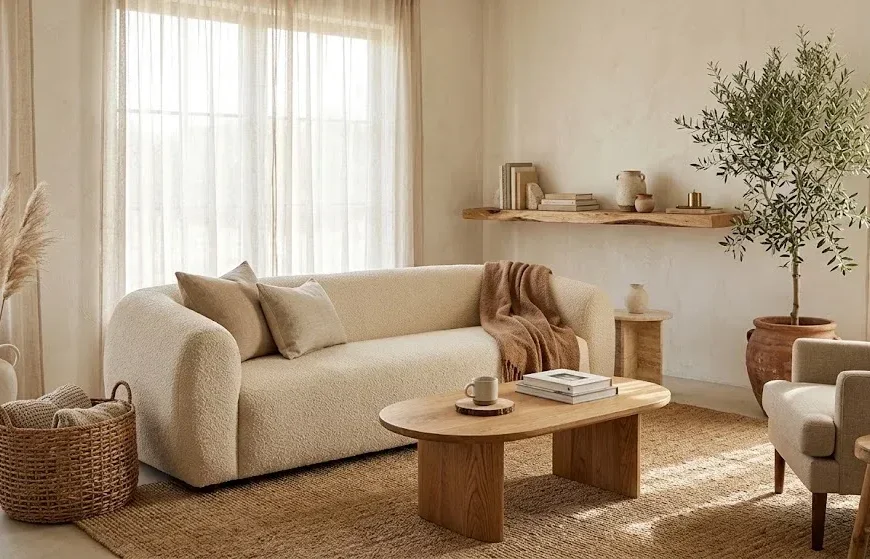
- Anchor with a neutral sofa. Cream, oatmeal, or warm gray works, ideally with a soft, rounded silhouette.
- Add a wood coffee table. Visible grain beats a glass top every time.
- Ground it with a natural rug. Jute, wool, or a wool-jute blend adds instant texture.
- Hang linen curtains. Sheer or semi-sheer panels keep the light soft.
- Style in threes. Group accessories in odd numbers: a ceramic vase, a stack of books, a small bowl.
Organic Modern Bedroom Ideas
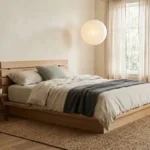
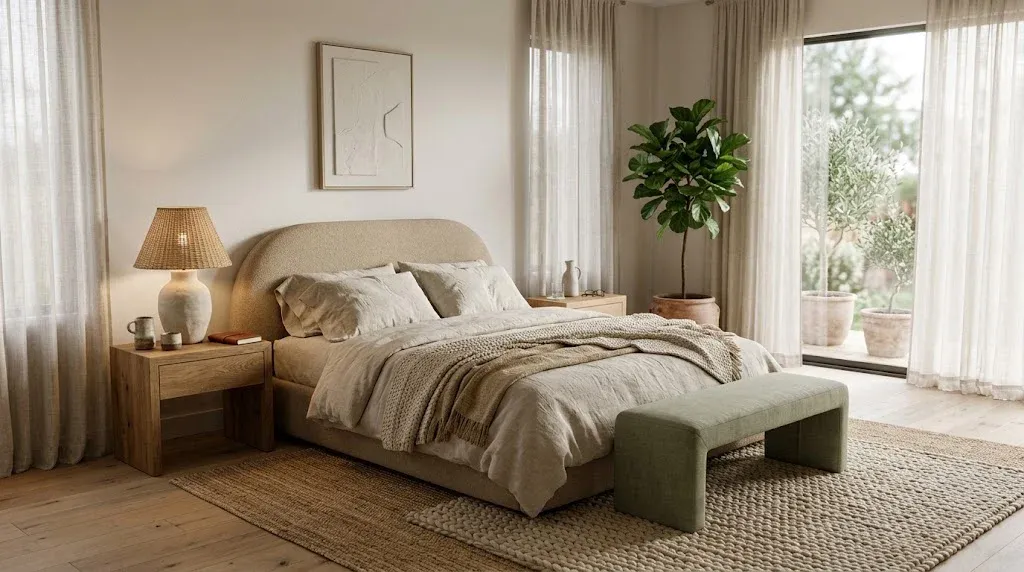
The bed does most of the work here. Go for linen bedding in oatmeal or sage, a wood or softly upholstered headboard, and simple wooden nightstands. Add one large plant and keep the nightstand surfaces clear. Organic modern decor works best in a bedroom when it stays quiet: fewer pillows, more texture.
Organic Modern Kitchen Ideas
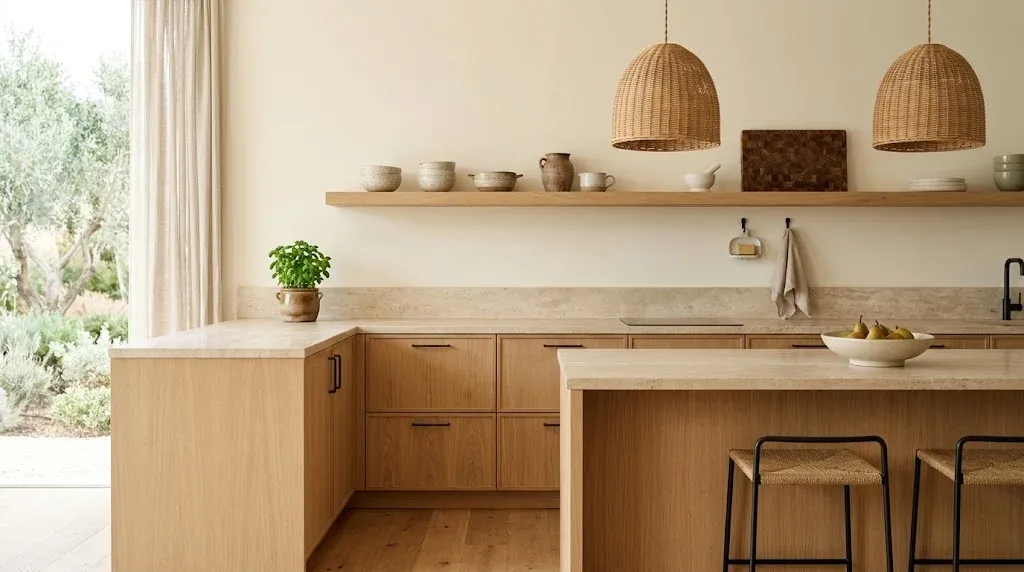
You don’t need a renovation. Swap cabinet hardware for matte brass or black, add an open wood shelf, set out handmade bowls and a wooden cutting board, and hang woven pendant lights over the island. Natural stone counters look great, but a butcher-block section is a smart budget alternative.
Lighting and Plants: The Finishing Touches
Lighting can make or break the look. Harsh white bulbs turn warm wood flat and lifeless. Choose warm bulbs around 2700K and layer your light: a floor lamp, a table lamp, maybe a wall sconce. Shades made from paper, linen, or woven fibers diffuse the glow so it feels soft instead of glaring. It’s one of the easiest upgrades in organic modern decor, and it costs far less than a new sofa.
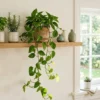
Plants are the other half. This is biophilic design in action: bringing nature inside so a room feels alive. You don’t need a jungle. One large plant per room is plenty. Easy picks include snake plants, pothos, rubber plants, or an olive tree if you have a bright window.
Not a plant person? Dried branches or pampas grass in a ceramic vase do the job beautifully. If you go faux, buy good ones and skip anything with a plastic shine.
Finally, protect your natural light. Sheer linen curtains let the sun in while cutting glare. A bright room with warm textures almost always feels better than a dim one with expensive furniture.
5 Mistakes That Make the Look Fall Flat
Even with the right ingredients, a room can go sideways. Here are the slip-ups we see most.
1. Going all beige, all the time. Without contrast, a warm room turns into oatmeal soup. Add one deep tone or a dark accent so the eye has somewhere to land.
2. Skipping texture. Neutral colors only work when texture does the heavy lifting. If every surface is smooth, the room feels flat no matter how pretty the palette is.
3. Buying fake “natural” pieces. Plastic rattan and wood-print laminate give themselves away fast. Real materials are the whole point of organic modern decor, and they age better too.
4. Over-accessorizing. This is a minimalist’s style. Edit until the room can breathe, then edit once more. If you’re unsure about an object, take it out for a week and see if you miss it.
5. Using cold lighting. Bright white bulbs undo all your hard work. Warm up the light first, before you buy anything else.
One bonus mistake: matching everything. A room where the coffee table, shelves, and side tables are all the exact same wood tone looks like a furniture set. Mix two or three tones instead.
Is This Style Going Out of Fashion?
Short answer: not really. In the 2026 1stDibs survey, designers pointed to maximalism and eclectic mixing as big aesthetics, yet organic modernism held steady, suggesting persistent appeal beside bolder looks. The survey from the year before had organic modernism at 31%, so it’s been a consistent player.
What does that mean for you? Build the foundation with timeless stuff: a good sofa, real wood, linen, and a calm palette. Then rotate accessories as trends shift. Want a bolder moment? Add a burgundy cushion or a dramatic piece of art. Organic modern decor is flexible enough to handle it, because the base stays quiet.
FAQs: Organic Modern Decor
What does organic modern style mean?
Organic modern decor blends clean-lined modern design with natural materials, earthy colors, and soft shapes. The goal is a calm, uncluttered room that still feels warm and lived in. Think linen, wood, stone, and handmade ceramics instead of glass, chrome, and high-gloss finishes.
How is organic modern different from Scandinavian design?
Scandinavian rooms lean bright and airy, with white walls and pale woods. Organic modern is earthier and slightly moodier, with warm neutrals, deeper accents, and more texture. Both value simplicity, but organic modern usually feels cozier and a bit more layered.
Can I get this look on a budget?
Yes. Organic modern decor rewards patience more than spending. Start with textiles, baskets, and pottery, then hunt for solid secondhand wood furniture. Put your money into one or two big pieces, like a sofa, and fill the rest of the room slowly over time.
Can renters pull this off?
Absolutely. Swap bulbs for warm ones, add a jute rug, hang linen curtains, and bring in plants and wood accessories. None of it needs a drill. Peel-and-stick options and good lighting cover a lot of ground when you can’t repaint walls.
Which colors work best?
Warm whites, cream, sand, and oatmeal make a great base. Add olive, clay, or chocolate brown for depth. Skip cool grays and very bright shades, because they fight the soft, earthy mood that makes the style work.
Conclusion
You don’t need a big budget or a full remodel to make a minimalist home feel warm. You need a handful of good decisions: warm neutrals, a few real materials, softer shapes, kinder lighting, and a plant or two. That’s organic modern decor in a nutshell.
Start small. Pick one room, clear the surfaces, and add one new texture, like a wool throw or a jute rug. Live with it for a week. Then add one more layer. Rooms built slowly almost always feel better than ones bought in a single weekend.
So here’s your practical next step: walk to your living room shelf this weekend, take off half of what’s on it, and put back only the things that feel warm and personal. You’ll see the difference in about ten minutes.