You’ve seen the photos. Crisp linen, a woven pendant light, morning sun spilling across pale wood floors. Then you try it at home and somehow end up with a beach rental gift shop.
Here’s the thing: good coastal bedroom decor has very little to do with seashells and anchors. It’s about how the room feels when you walk in. Calm, open, a little sun-bleached.
In this guide, you’ll get the colors, textures, furniture, and lighting that actually work. We’ll also cover the mistakes that make a room look cheap, plus ideas for small spaces and tight budgets. You don’t need an ocean view. You just need a plan.
What Coastal Bedroom Decor Really Means
Think of it as a vacation you can sleep in. Coastal bedroom decor is a mood first and a style second. The mood is light, breezy, and uncluttered. The style just hands you the tools to get there.
Most designers split the look into a few flavors, and knowing which one you want will save you money.
Classic coastal
This is the one you picture first: white and blue, stripes, a few nautical touches, maybe shiplap walls. It’s cheerful and traditional. It’s also the easiest to overdo.
Modern coastal
Same relaxed spirit, fewer props. This version moves away from theme-heavy decor toward natural elements and simplicity. Think neutral palettes, clean lines, and a handful of well-chosen textures.
Coastal grandmother
Softer and cozier. Slipcovered chairs, stripes mixed with florals, vintage finds, a bit of wicker. It feels collected rather than styled.
One more thing: geography matters. Experts say mixing looks inspired by different coasts can be an error, since California and New England offer different cues. Pick the coast you actually love, then stay loyal to it.
Why Coastal Bedrooms Are Everywhere Right Now
This isn’t just a Pinterest fad. Houzz’s countdown of the most-saved bedroom photos from mid-December 2025 to mid-March 2026 placed “Coastal Layers” ninth. People save this look because it’s calming, and calm is in short supply.
Color is heading the same way. Pinterest’s 2026 forecast says icy, cool blue tones will show up everywhere, including bedroom walls. Think glacier, not sailboat.
There’s a counter-trend, too. Houzz UK reports black bedroom searches up 79% and dark green bedrooms up 46% year over year. Moody rooms are having a moment. What this means for you: if you want the opposite of moody, a light, airy approach to coastal bedroom decor is a real alternative, not just a default.
Pick a Coastal Color Palette That Won’t Look Like a Gift Shop
Color is where most people slip first. Bright blue on every wall reads like a costume, not a calm retreat. One roundup of common mistakes warns against painting walls bright blue instead of warm neutral shades.
Start with a soft base
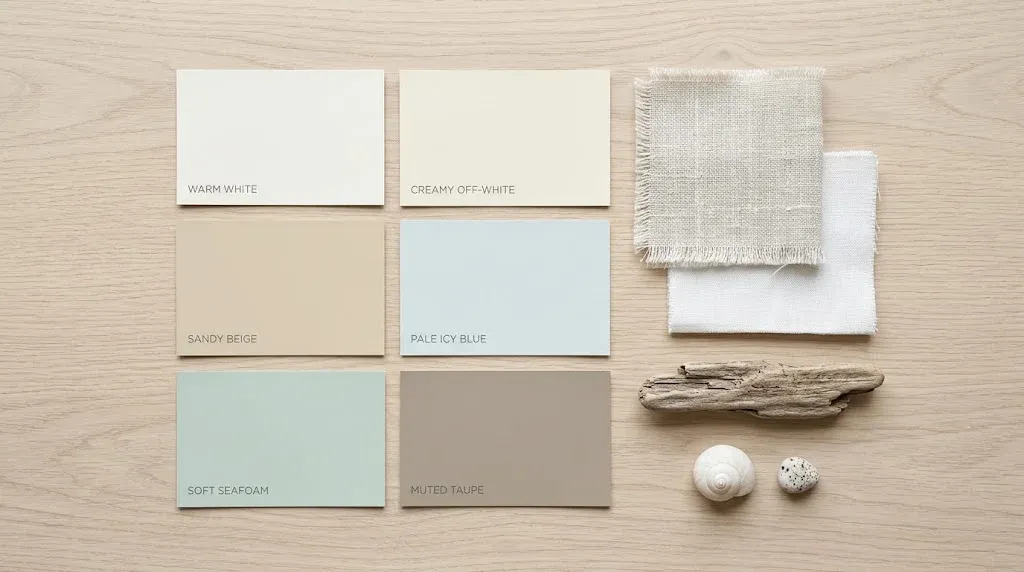
Go for warm white, creamy off-white, or pale sandy beige on the walls. A creamy white like Sherwin-Williams Greek Villa gives a sun-washed feel and suits bedrooms that don’t get much natural light.
Add the water colors in small doses
Pale blue, soft seafoam, a hint of sage. Use them on bedding, curtains, or a throw. Light seafoam green adds a cool, refreshing touch without overpowering the room.
Ground it with earthy tones
Muted gray, pale taupe, and natural stone colors keep a light room from feeling washed out.
Not a blue person?
Skip it. A neutral coastal bedroom built from white, sand, and wood still reads as coastal because of the textures. Here’s a simple formula for your coastal bedroom decor palette: roughly 70% base color, 20% secondary, 10% accent. That’s my rule of thumb, not a law, but it keeps things from getting busy.
Layer Natural Textures So the Room Doesn’t Feel Flat
If your room feels flat, it’s usually a texture problem rather than a color problem. Even two or three different textures can create a layered room. Texture is what makes coastal bedroom decor feel expensive instead of themed.
Materials worth using
- Rattan and wicker: nightstands, chairs, pendant lights, baskets.
- Jute or sisal: a rug under the bed.
- Linen and cotton: bedding and curtains.
- Whitewashed or limed wood: dressers, headboards, bedside tables.
HGTV points out that whitewashed, pickled or limed wood can look dated in other styles but works beautifully with coastal. Jute can feel rough underfoot, so layer a softer rug on top or keep it at the foot of the bed.
How to layer the bed
Start with white or cream sheets. Add a light duvet. Fold a textured coverlet across the foot. Then add two or three pillows: one stripe, one solid, one pattern. Breathable cotton and linen beat heavy fabrics every time, because a coastal bed should feel light, not stuffy.
Steer clear of heavy materials. Wool, brick, and leather can make a beach-style space feel heavy and dark.

Choose Furniture and Lighting That Set the Mood
Lighting does more work than any accessory you’ll buy. In coastal bedroom decor, it’s the difference between “airy” and “just white.”
Furniture
Upholstered pieces in soft linen or cotton blends feel cozy without clashing with natural materials. Small room? Open-leg designs keep furniture from blocking visual space. For nightstands, a whitewashed or wicker piece adds charm without weight. Skip shiny finishes. Matte and washed looks suit the style far better.
Lighting
Layer three sources: a woven pendant or rope chandelier overhead, a pair of table lamps, and warm, dimmable sconces for the evening. If your room gets little natural light, a mix of lamps, wall fixtures, and ceiling lights can fill the gap.
Windows
If you can’t change the window frames, white, lightweight curtains make a small bedroom look bigger and brighten a dark room.
Finally, scent. A clean linen or sea salt candle finishes the mood. Just keep the room ventilated so it doesn’t get overpowering.
Wall Art and Accessories Without the Clichés
This is where restraint pays off. One or two subtle nods to the sea are enough.
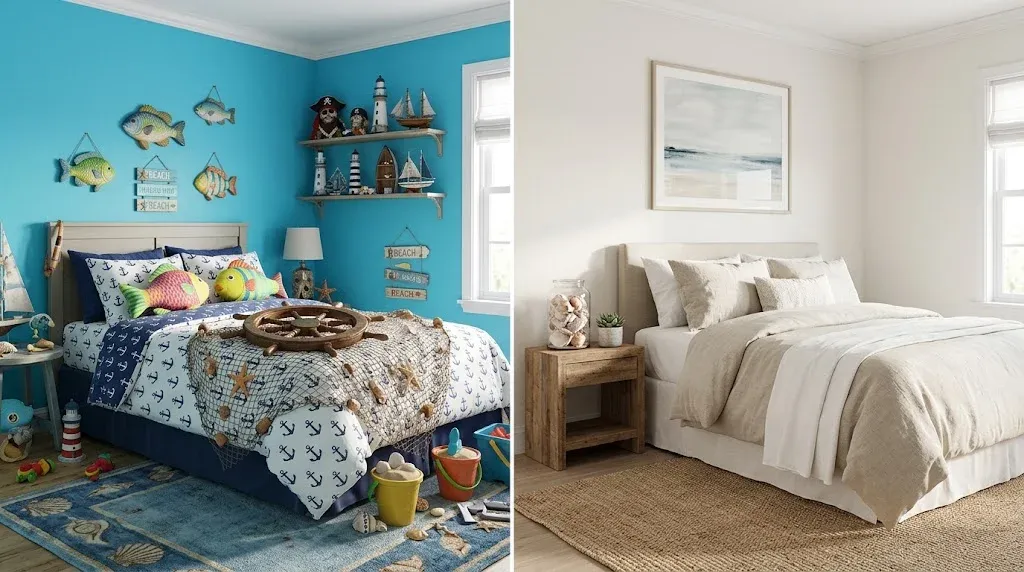
Instead of sailing ships and maps, hang abstract seaside art, a quiet horizon photograph, or a single elegantly framed shell study. One large piece above the bed does more than a gallery wall of tiny frames.
Accessories follow the same logic. A glass jar of shells on a shelf looks like something you picked up on a walk. A wall of fish sculptures looks like a bait shop. Hanging fish decor and displayed anchors are both called out as dated or cliché.
Add something alive, too. House plants, like a fiddle-leaf fig, are a great way to decorate a natural coastal bedroom.
The same goes for every other piece of coastal bedroom decor on your shelves: choose fewer, better things, and leave empty space between them.
Small Spaces, Tight Budgets, and Rentals
Small coastal bedrooms
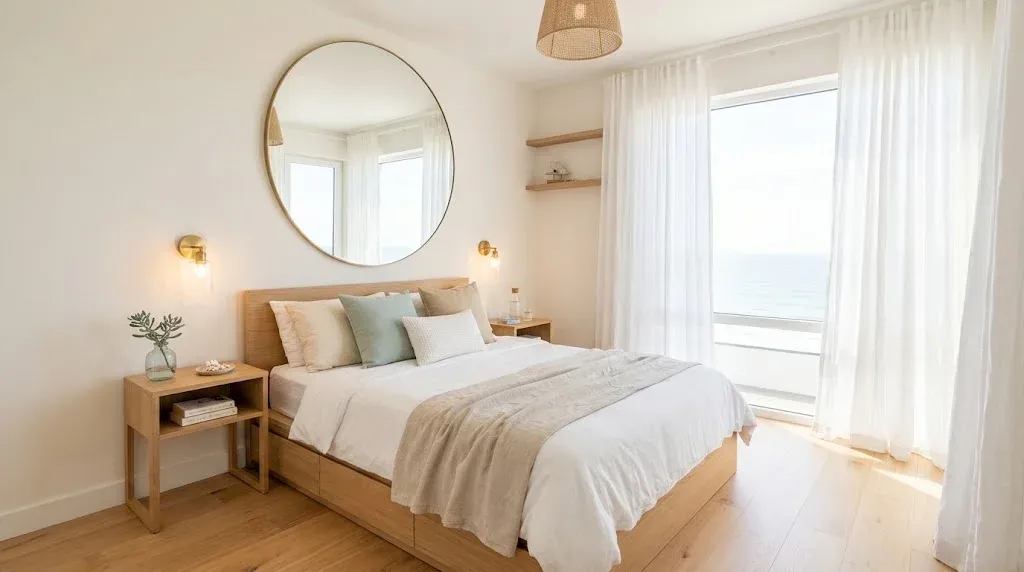
Light walls and open floor space do most of the heavy lifting. Keeping as much floor visible as possible makes a room feel bigger. A storage bed, wall-mounted lights, and one large mirror all help bounce light around. Hang curtains high and wide so the window looks bigger than it is. For small-room coastal bedroom decor, fewer pieces always beat more.
Budget
You don’t have to buy everything at once. Spend where you touch and look first: bedding, then a rug, then lighting. Thrift a dresser and whitewash it yourself. Swap a pricey gallery wall for one large print. Doing coastal bedroom decor on a budget is mostly about patience, so buy one good piece a month rather than a whole set at once. And shop your own house first. Baskets, glass jars, and a stack of linen towels can all do double duty.
Renters
Can’t paint? Use plug-in sconces, removable wallpaper, floor-length curtains, and a big woven basket for blankets. They’re easy to pack when you move.
No beach nearby?
You don’t need to live near the water or hire a designer to get a good coastal look. The style is about how a room feels, not the exact items in it. Get light, texture, and breathing room right, and the rest follows.
Five Mistakes That Make Coastal Bedrooms Look Cheap
If your coastal bedroom decor feels off, it’s probably one of these:
- Theme overload. Literal motifs like anchors, fishnets, and shell-covered frames turn a room into a theme park. Aim for a feeling instead.
- Bright blue everywhere. Use it as an accent. Let warm whites and sand tones carry the walls.
- Too much stuff. An overcluttered room is a no-no in coastal decor, so don’t neglect negative space. If a shelf looks full, remove one item.
- Dark, heavy materials. Chunky dark wood and thick fabrics fight the airy look. Wash, lighten, or swap them.
- Forgetting comfort. A room can look gorgeous and still sleep badly. If you live somewhere hot and humid, choose breathable bedding and let air move. Looks matter, but sleep matters more.
FAQs: Coastal Bedroom Decor
1. What colors work best for a coastal bedroom?
Start with warm white or sandy beige, then add soft blue, seafoam, or sage in small amounts. Muted taupe and driftwood tones ground the room. Icy blues are trending for 2026. Keep bright, saturated blue for a pillow or throw, not whole walls.
2. How do I avoid a cheesy look?
Treat coastal bedroom decor as a mood, not a theme. Skip anchors, fish, and ship wheels. Use natural textures like linen, jute, and rattan, add one or two quiet nods to the sea, and leave plenty of empty space. Quality materials do more than motifs ever will.
3. Can I do this if I don’t live near the beach?
Absolutely. The style is about light, texture, and calm, not geography. Choose soft colors, breathable fabrics, and natural materials, and let sunlight in. Adjust for your climate too: lighter fabrics if it’s warm, a light knit throw at the foot of the bed if it’s cool.
4. How do I decorate a small coastal bedroom?
Use pale walls, white curtains, and open-leg furniture so the floor stays visible. Add one large mirror and layered lighting. Keep accessories minimal, since clutter shrinks a small room fast. A storage bed can replace a bulky dresser and free up floor space.
5. Is it expensive to pull off?
It doesn’t have to be. Coastal bedroom decor works with a few smart buys: good bedding, a jute rug, and a woven light. Add thrifted wood pieces in a whitewashed finish and large-format prints. Buy slowly, and let the room come together over a few weekends.
Conclusion
Great coastal bedroom decor isn’t about buying a whole new room. It’s about editing what you have and adding a few things that make the space breathe.
Here’s a simple plan for the next two days. Strip your bed down to white or cream sheets and add one textured throw. Take everything off your nightstand except a lamp and one object you love. Open the curtains and see how the light moves. Then decide on one palette: base, secondary, accent.
That’s it. If something still feels flat, add a texture. If something feels busy, take it away. You’ll learn more from living with the room for a week than from scrolling another hundred photos.
Start with one change this weekend, then build slowly. Rooms that feel calm usually got there one thoughtful choice at a time.