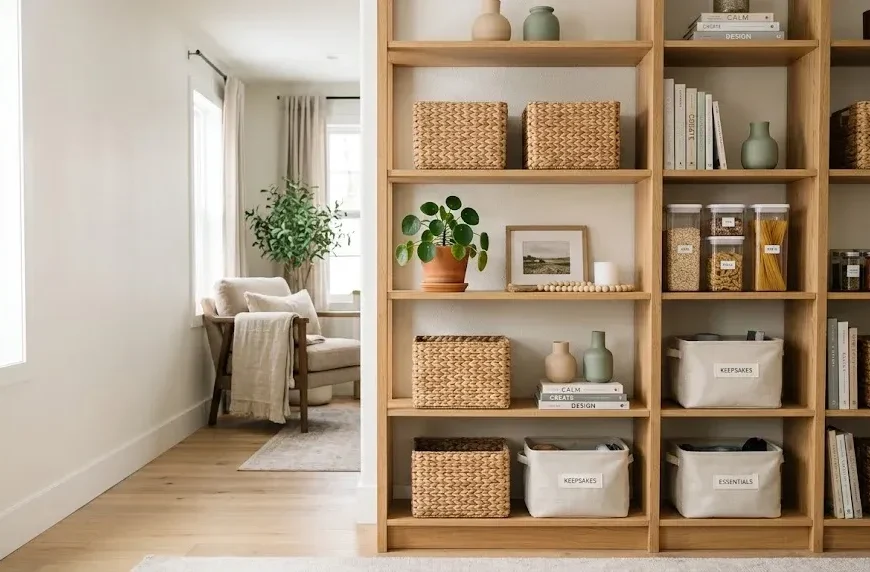
You tidied the shelf on Sunday. By Thursday, it looks like a yard sale again.
Sound familiar? You’re not lazy, and your shelf isn’t cursed. Most shelf organization ideas fail because they focus on how a shelf looks for one afternoon, not how you actually use it all week.
This guide fixes that. We’ll walk through a simple four-step method you can use on any shelf, from a living room bookcase to a pantry. You’ll learn how to sort, contain, and style your stuff, plus how to keep it neat with about five minutes of effort a week. Grab a coffee and let’s get started.
Why Most Shelf Organization Ideas Don’t Last (and What Works Instead)
The trouble with most shelf organization ideas is that they skip the boring first step: figuring out what the shelf is actually for. People buy pretty baskets, line things up, snap a photo, and call it done. Then real life shows up.
Here’s what usually goes wrong:
- The shelf holds too much, so nothing gets breathing room.
- Things that belong together are scattered across different shelves.
- Containers don’t match, so even a sorted shelf looks messy.
- Nothing has a clear home, so clutter creeps back in.
The good news is that each of those problems has a simple fix, and the fixes work whether you’re sorting books, mugs, or craft supplies. Home organizers quoted by Homes & Gardens keep coming back to the same few moves: baskets for naturally messy items like cables and toys, plenty of negative space, and the rule of three.
Why bother? A 2024 survey for The Container Store found that 80% of people feel more motivated when their home isn’t cluttered, and nearly half say their home’s organization affects their mental health. So a tidy shelf isn’t about vanity. It’s a small win you see every day.
Our version of shelf organization ideas follows four steps: define the job, group into zones, contain and label, then style and maintain. Let’s take them one at a time.
Start With the Job Your Shelf Has to Do
Before you buy a single bin, ask one question: what is this shelf for?
A shelf by your front door has a different job than a shelf above your desk. The entryway shelf needs to catch keys, mail, and bags in about ten seconds. The desk shelf holds reference books and a few supplies you grab all day. Once you know the job, deciding what stays gets much easier.
Be honest here. A shelf that tries to do four jobs usually does none of them well.
Empty it completely
Pull everything off. Yes, everything. Dust the shelf, then look at each item as you pick it up. You’ll quickly spot things that don’t fit anymore.
Sort into three piles
- Keep here: used often, or truly loved.
- Move elsewhere: useful, but it belongs in another room.
- Let go: broken, duplicate, or untouched for a year.
Got shelves full of souvenirs and keepsakes? Rotate them. Keep a few out, box up the rest, and swap them every season. The display stays fresh, and you’re not dusting forty knickknacks.
Here’s a trick designers like: photograph the empty shelf. Spending a minute with a blank canvas helps you plan instead of just refilling it out of habit. That’s the real secret behind the best shelf organization ideas. They start with function, then add looks.
Not sure where to begin? Start with the shelf that annoys you most. A quick win builds momentum.
Group Items Into Zones With Baskets, Bins, and Labels
Here’s the thing about clutter: it’s usually just stuff with no home. Zones give everything an address.
Think of your shelf as a small neighborhood. Batteries, tape, and chargers live on one block. Board games live on another. Kids’ art supplies get their own corner. When every item has an address, putting things back takes two seconds.
Pick containers that match
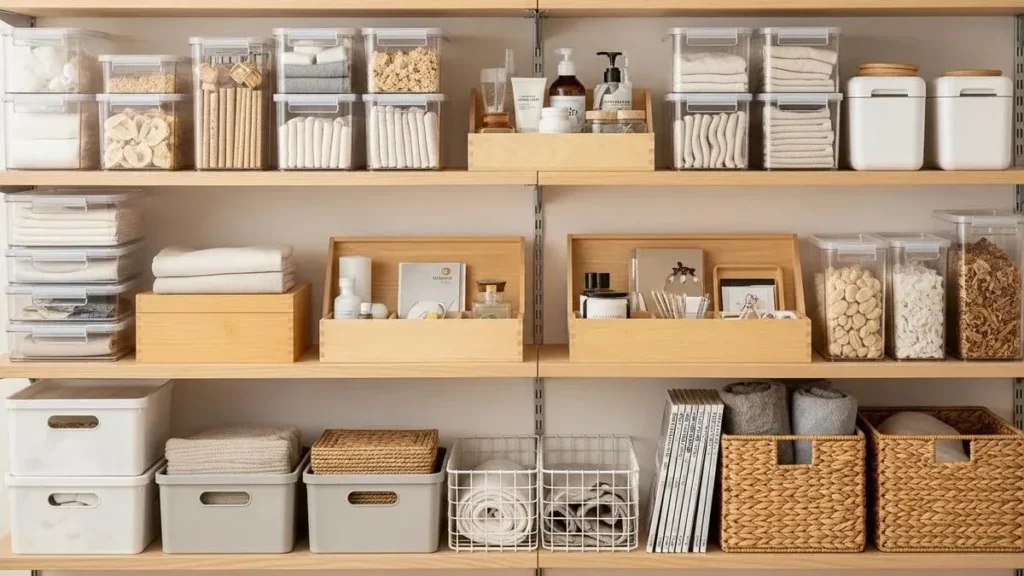
Mismatched bins make a sorted shelf look chaotic. Stick with one or two materials, like woven baskets plus clear acrylic boxes, so the shelf reads as one calm unit. Measure your shelf’s depth and height first so containers sit flush and nothing hangs over the edge.
Use lidded baskets for things that look naturally messy, such as cables, remotes, and small toys. Keep open bins for items you grab daily.
Label everything
Labels cost almost nothing and save you from the dreaded “where did this go?” moment. Chalkboard tags work if contents change often. Simple printed labels look sleek if you want a modern feel.
Add shelf dividers
Professional organizers love acrylic shelf dividers because they stop stacks of towels, sweaters, or folders from slumping into each other. They’re cheap, and they work on almost any shelf.
What this means is you don’t need a big budget. A few matching bins, a label maker, and a set of dividers can transform a basic shelf. These shelf organization ideas work in a nursery just as well as in a garage.
On top of that, take a photo of your finished shelf. It becomes your reset picture, so you can restore the look in minutes.
Use Vertical Space With Shelf Risers, Lazy Susans, and Hooks
Look at your shelf from the side. How much empty air sits above your stuff? That gap is wasted storage. Measure the space between your tallest item and the shelf above it. If you’ve got more than a few inches, a riser or stacking bin will earn its keep.
Shelf risers
A riser is a small platform that adds a second level to one shelf. Cups go on top, plates underneath. Cans sit in tiers so you can read every label. Real Simple’s 2025 home project added risers to tall pantry shelves to stop things from piling up in messy stacks.
Lazy Susans and turntables
These solve the “something’s hiding in the back” problem. Spin it, grab what you need. Real Simple’s organizer suggests keeping condiments on a turntable on a shelf instead of crowding the fridge door. Budget stores sell them for a couple of dollars, and they’re great for sorting craft supplies by type.
Hooks under the shelf
Hang mugs from small hooks beneath a shelf, spaced so you can lift one out without bumping its neighbor. In an entryway, hooks on or under the shelf hold hats, coats, and leashes.
Here’s a rule of thumb: go up before you go out. Adding vertical space is almost always cheaper than buying more furniture, and it’s the heart of smart shelf organization ideas for tight homes.
Kitchen and Pantry Shelf Organization That Saves You Time
Kitchen shelves take a beating. You open them with wet hands, grab things in a hurry, and shove stuff back wherever it fits.
Organize by how you cook
Put everyday items at eye level: cooking oil, salt, daily plates. Heavier or rarely used pieces, like a stand mixer, go lower or higher. If mornings revolve around coffee, give one shelf to the espresso maker, kettle, and mugs.
Keep similar things together, too. Baking supplies in one spot, breakfast items in another. You’ll stop opening three cabinets just to find the vanilla.
Decant when it makes sense
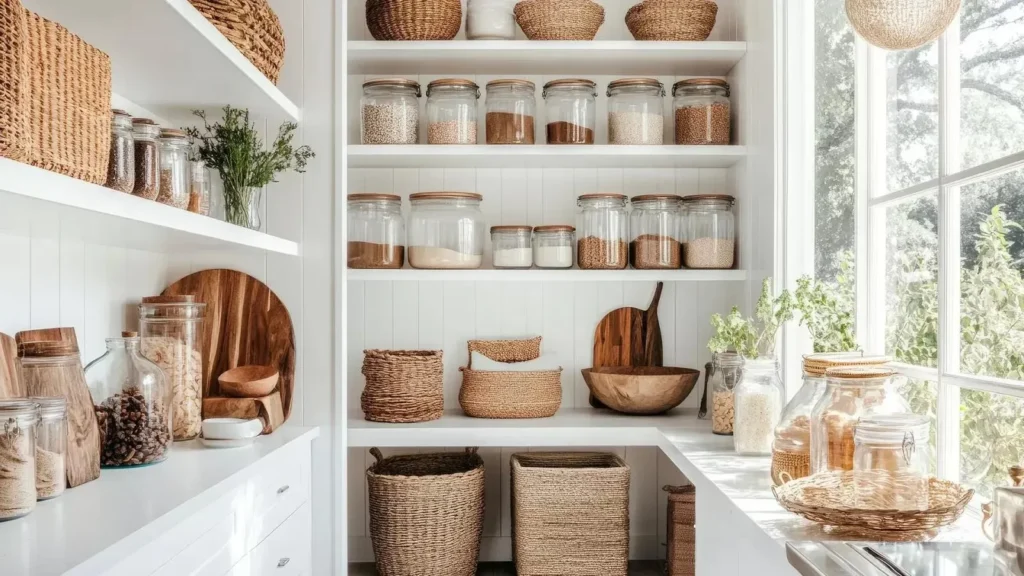
Matching jars for flour, sugar, and pasta look good, and you can see what’s running low. Since everything on open shelves is in plain view, it’s worth buying matching containers.
Fix the corner
Corner shelves are a pain. A lazy Susan turns that dead zone into a spinning snack station, and everything stays within reach.
Be honest about what you use
One pro organizer suggests regularly reviewing your kitchen shelves and being honest about what you really use. If you haven’t touched something in a long while, it’s just collecting dust and taking up room.
Good pantry shelf organization comes down to visibility. If you can see it, you’ll use it before it expires. None of these shelf organization ideas need a remodel, just an afternoon and a few containers.
Make Open Shelves Look Calm With Negative Space and the Rule of Three
Organized and calm aren’t always the same thing. You can sort a shelf perfectly and still feel visual noise. That’s where shelf styling comes in.
Leave negative space
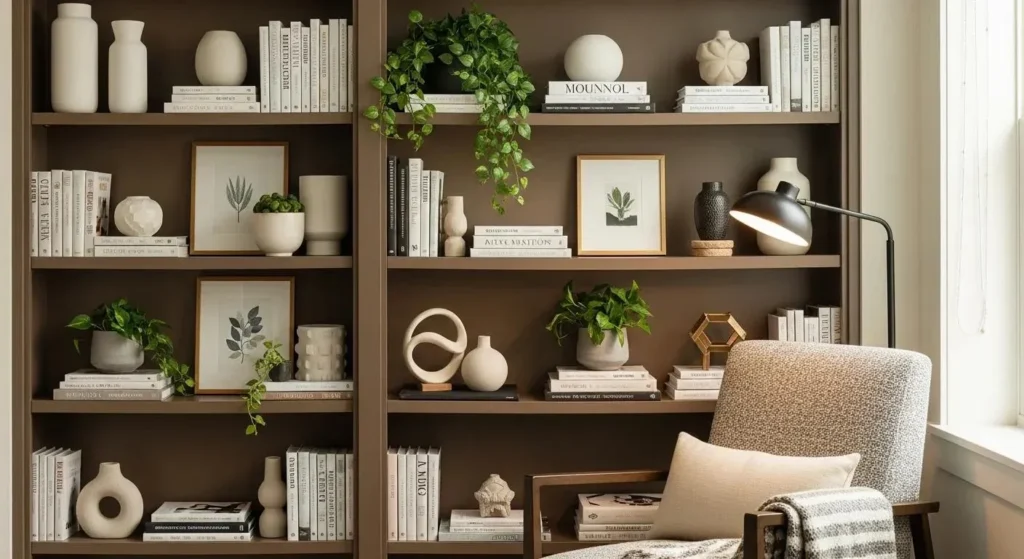
Designers repeat this one constantly: give items room to breathe. Cramming every inch makes a shelf look chaotic, even if it’s tidy, so try to leave a similar amount of empty space on each shelf. That keeps the whole unit feeling balanced.
Use the rule of three
Group items in odd numbers. A tall vase, a medium frame, and a small plant make a nice trio. Start with your tallest piece as the anchor, then balance it with something that echoes its color or shape.
Keep a simple palette
Pick two or three colors. Repeating a finish, like black frames or natural wood, ties mixed objects together so the shelf reads as one set instead of a pile of random things. Not sure about color? Stick with neutrals and let one bold object steal the show.
Sort books your way
Books give you plenty of options: by color, genre, author, or series. Color looks stunning, but one reader on Goodreads pointed out that it splits up series. A fair middle ground is to sort by genre first, then group by spine color inside each section.
Stand some books upright and lay a few flat. The flat stack works as a divider or a little plinth for a candle or small plant.
Still feeling busy? Remove one item. It’s an old stylist trick, and it almost always works. Good styling is part art, part editing, and these shelf organization ideas for open shelves are really about restraint.
Small Space and Renter-Friendly Fixes
Not everyone can drill into walls or build floor-to-ceiling units. Good news: you don’t have to.
Floating and corner shelves
Adhesive-mounted floating shelves can work, but be careful with weight. Check how much your screws and brackets can hold before you load them up, and keep your heaviest books off lighter-duty shelves. Corner shelves are another winner because they use a spot nobody else wants.
Furniture with hidden storage
Hollow benches, ottomans, platform beds with drawers, and nightstands with extra shelves add storage without adding visual clutter. Look for pieces that do double duty so you’re not adding yet another bookcase.
One in, one out
In a small home, even a little extra stuff looks cluttered. For every new thing you bring in, donate one, so the editing stays gradual and clutter never builds up.
Other rooms, same method
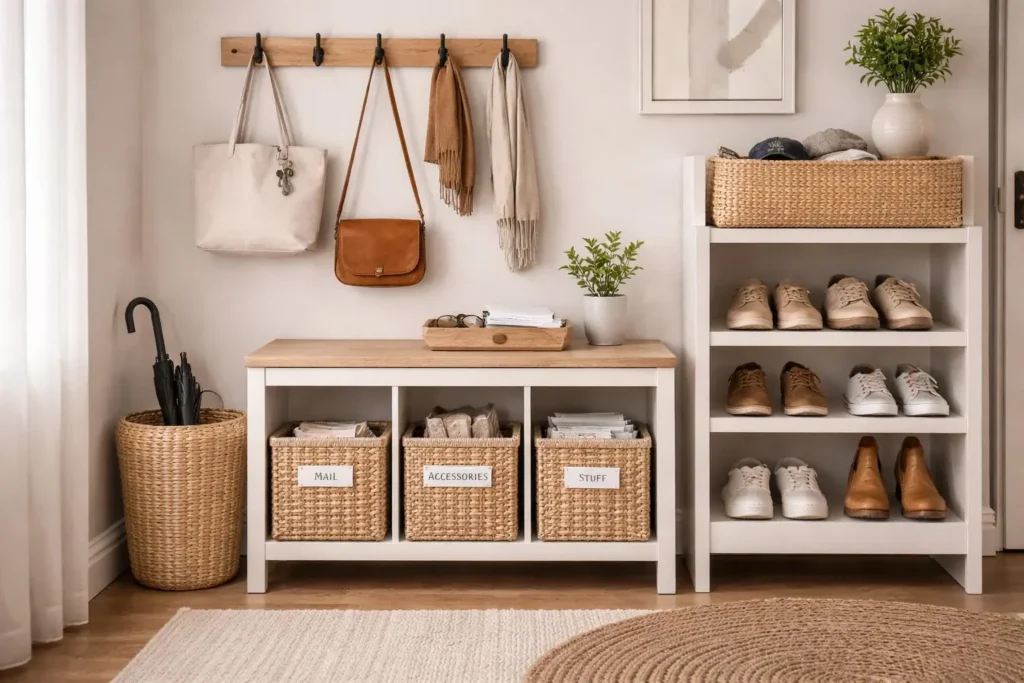
A garage can take floor-to-ceiling units or a shelf-and-cabinet combo. A home office does well with baskets and dividers. An entryway shelf with bins and hooks keeps the drop zone in check. A kids’ room can use low bins with picture labels so little ones can tidy up on their own.
For renters, the smartest shelf organization ideas are the ones that leave no holes in the wall and move with you when your lease ends.
Keep It Tidy With a Five-Minute Weekly Reset
A good system is one you’ll actually use. Here’s a quick routine you can finish before your coffee cools:
- Put back anything that wandered off.
- Wipe one shelf and the tops of your containers.
- Check that labels still match what’s inside.
- Pull out anything that doesn’t belong.
- Remove one item if the shelf feels busy.
Pick the same day each week and tie it to something you already do, like Sunday morning coffee. Skipped a week? No guilt at all. Just pick it back up next weekend. Keep a small basket nearby for strays so the reset takes minutes, not hours.
Real Simple’s organizer says systems should reflect the real rhythms of your household. So if your kids drop toys on the shelf every afternoon, add a basket at their height. Don’t fight your habits. Design around them.
On top of that, a Talker Research survey for The Container Store found that 77% of people agree every item should have a designated space. Your zones and labels do exactly that, which turns tidying into a two-second job instead of a decision.
Every season, do a bigger check. Rotate decor, donate what’s been ignored, and re-measure if you’ve bought something new. Treat the best shelf organization ideas like a habit, not a project.
FAQs: Shelf Organization Ideas
How do I make my shelves look less cluttered?
Start by removing anything you don’t love or use, then leave some empty space on each shelf. Put naturally messy items in lidded baskets and group decor in odd numbers. The most effective shelf organization ideas for a cleaner look are simple: fewer items, matching containers, and room to breathe.
How do you organize a bookshelf?
Pick one main system: genre, author, series, or color. Many people sort by genre, then group by spine color within each section. Mix upright books with a few stacked flat, and leave small gaps for a plant or frame so the shelf doesn’t feel packed.
What’s the best way to organize shelves in a small space?
Go vertical first. Add shelf risers, hooks under shelves, and corner shelves to use empty air. Choose furniture with hidden storage, and follow a one-in, one-out rule. Small spaces show clutter fast, so shelf organization ideas built around fewer, better-placed items work best.
What containers work best for organizing shelves?
Choose one or two matching materials, such as woven baskets and clear acrylic bins. Lidded baskets hide cables and toys, while open bins suit daily items. Add acrylic dividers for stacks, and measure your shelf depth first so everything sits flush instead of sticking out.
How often should I reset my shelves?
A five-minute weekly reset keeps things under control: return strays, wipe the surface, check labels, and remove one item if it looks busy. Then do a bigger review each season to rotate decor and donate anything you haven’t touched. Consistency matters more than a perfect setup.
Final Thoughts: Pick One Shelf and Start
You don’t need a free weekend, a big budget, or a picture-perfect home to get this right. You need one shelf, a few matching containers, and about an hour.
Quick recap: decide the shelf’s job, sort and let go, group things into zones, add height with risers and hooks, then style with negative space and keep it up with a weekly reset. That loop works on any shelf in any room.
Here’s your next step. Pick the shelf that bugs you most and run the four steps this weekend. Empty it, sort it, contain it, label it. Then set a reminder for five minutes next Sunday.
The best shelf organization ideas aren’t the fanciest ones. They’re the ones that fit how you really live. Start small, stay consistent, and in a month you’ll wonder why you put up with that messy shelf for so long. Check your messiest shelf this weekend, before the clutter wins again.