You moved in with a car full of boxes and big plans. Three weeks later, the floor is a maze and the only empty thing in the room is the wall. Sound familiar?
You’re not alone. The average new US apartment is about 910 square feet (per RentCafe via PropertyCasualty360), and $1,500 a month buys only around 703 square feet nationwide. Smart apartment wall storage is the cheapest way to win some of that room back.
Below, we’ll cover what your walls and lease allow, then seven ways to use vertical space, and what each one can realistically hold. By the end, you’ll have a plan you can start this weekend.
Apartment Wall Storage Starts With Your Walls and Your Lease
Here’s the part most guides skip. Before you buy a single hook, find out what you’re allowed to do and what your wall can actually take. Good apartment wall storage is mostly homework and a little shopping.
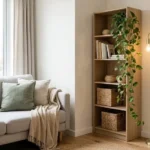
Why bother? Because floor space is the one thing you can’t add, and walls are where you still have room. A tall bookcase eats a foot or two of floor. The same books on a wall shelf take up no floor space at all.
Figure out what your wall is made of
Knock on it. A hollow sound usually means drywall, which needs anchors or studs for anything heavy. A solid, dull thud points to plaster or masonry.
Older buildings are the tricky ones. Renters in one forum thread warned that brick or lath-and-plaster walls need a masonry bit and proper anchors. Concrete is tougher still, since it takes a rotary hammer to drill, so plenty of people stick to no-drill options there.
Read the lease, then take photos
Leases differ. Some allow small picture-hook holes, while others prohibit any wall penetration. Before you plan any apartment wall storage, email your property manager, ask what’s okay, and save the reply.
Then photograph every wall, corner, and baseboard with timestamps before you hang anything. It takes ten minutes and can save you an argument over your security deposit at move-out.
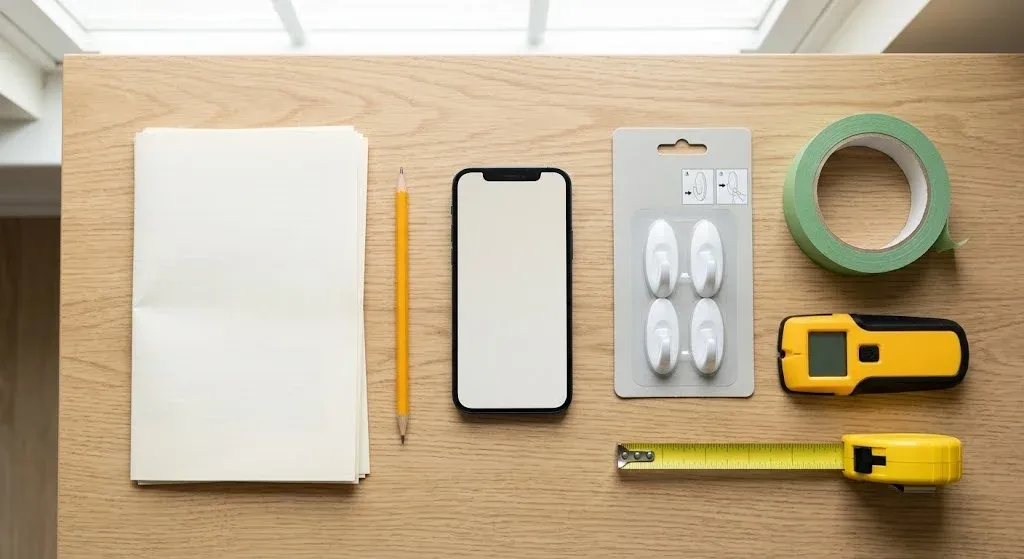
Think in three zones
Here’s a simple way to plan. Keep daily items like keys, mugs, and hats between waist and shoulder height. Put lighter décor and display pieces higher up. Anything heavy goes low, ideally into a stud.
1. Wall Hooks and Rails: The Easiest Win
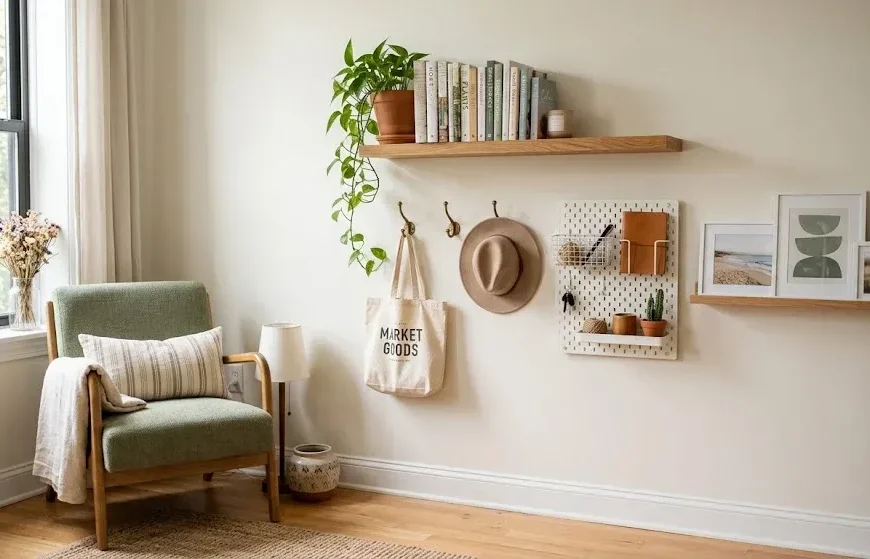
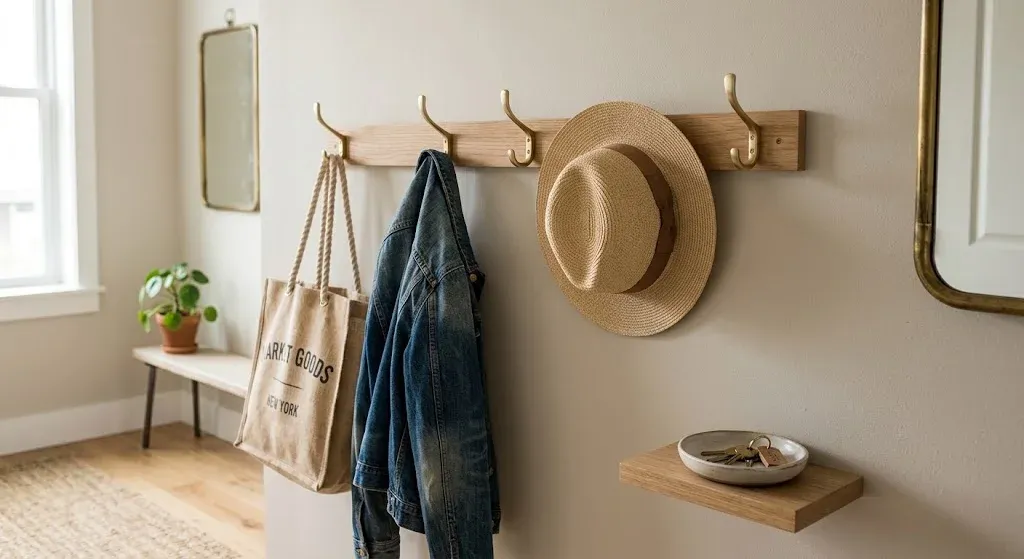
If you only do one thing for your apartment wall storage this month, do hooks. They’re cheap, quick to install, and useful in almost every room. Hooks and rails keep counters and floors clear by holding lightweight items like towels, utensils, hats, and bags.
Adhesive hooks are the renter’s best friend. Apartment Therapy’s roundup of tested drill-free finds includes them (see their renter-friendly picks), and for good reason: no holes, no deposit drama. A few tricks help them last:
- Wipe the wall with rubbing alcohol first so the adhesive grips.
- Press firmly, then wait before you load them. The package tells you how long.
- Stay well under the weight capacity. A wet towel weighs more than you’d think.
Got a heavy winter coat? Give it a proper screw-in hook. For flexibility, mount one rail and hang S-hooks from it. You can slide things around in seconds, which is handy when your needs change with the seasons.
2. Tension Rods and Leaning Shelves: Zero Damage
Some of the best storage never touches your paint. Spring tension rods squeeze between two walls, so they work well in a closet or a narrow nook for hanging bags, cleaning supplies, or scarves. Floor-to-ceiling tension poles hold themselves up with pressure alone and can carry adjustable shelves, plant hangers, or baskets.
Then there’s the leaning shelf. It’s the ladder-style unit that rests against the wall, and one renter guide puts its realistic limit at 10 to 20 pounds. Stick soft felt pads on the top corners so it doesn’t scuff the wall, and keep the heavy stuff on the bottom rungs.
Strictly speaking, neither is true apartment wall storage, since nothing mounts to the wall. But you get the same vertical payoff, and your landlord has nothing to object to. If your lease bans even a pinhole, start here.
3. No-Drill Wall Shelves: Great for Light Stuff
Let’s be honest about no-drill wall shelves. In one forum thread, commenters argued that anything without drilling can’t support much weight. They’re partly right. Adhesive shelves aren’t for your cast-iron pans.
What they do well is light, small stuff: a Wi-Fi router, a trailing plant, picture frames, a candle or two. One budget model advertises a 30-pound limit on a shelf about a foot wide. Treat a number like that as the best case, not a promise.
Three rules keep these shelves where you put them:
- Load the shelf to half its rating at most.
- Check your wall texture. Heavily textured paint is a common reason adhesives let go.
- Don’t overload it. One renter guide calls overloading the single most common reason a no-drill shelf fails.
Catch yourself stacking books on one? Move up to the next tip.
4. Floating Shelves: When Drilling Is Worth It
Sometimes a couple of small holes beat a lifetime of sagging adhesive. If you plan to store books, dishes, or anything heavy, drilling is the safer call, as long as your lease allows it.
Here’s the short version of doing it right:
- Find the studs with a stud finder. They’re usually 16 inches apart, though older buildings vary.
- Screw into a stud when you can. If you can’t, use anchors rated for the load, not the cheap ones from the junk drawer.
- Mind the depth. For most apartment shelves, 6 to 10 inches deep is the usual range.
Moving out? Fill each hole with spackle, sand it smooth, and dab on matching paint. Some renters figure the landlord has to repaint between tenants anyway, but don’t bank on that. Ask first. This is where apartment wall storage stops being a stopgap and starts feeling like built-in furniture.
5. Pegboard or Wall Grid: Storage That Rearranges Itself
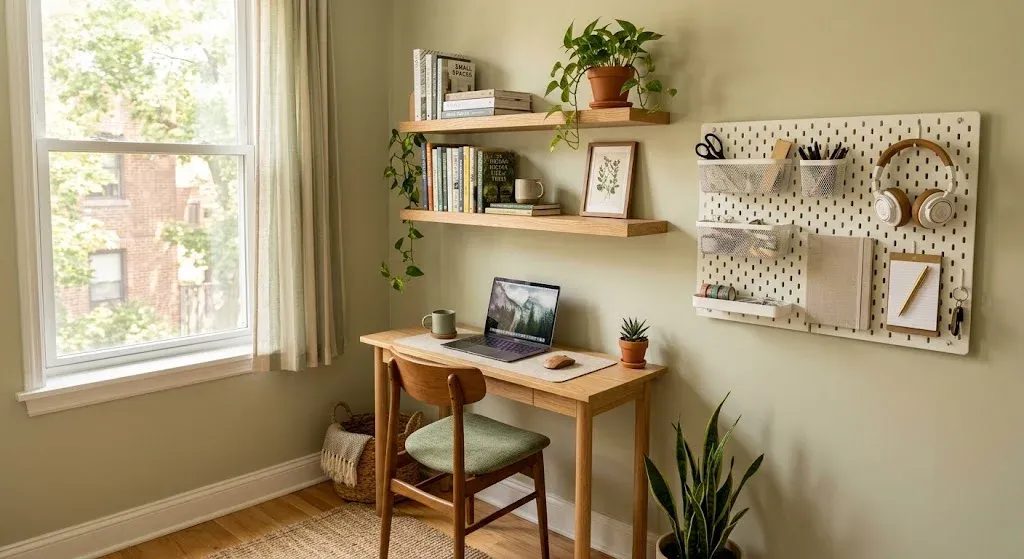
A pegboard is the Swiss Army knife of walls. Pegboards and wall grids work well for lightweight belongings like tools, hats, and craft supplies, especially in work and hobby areas. The big win is flexibility. Move a hook, add a basket, swap a shelf, and the whole layout changes without a single new hole.
Pegboard is great for:
- A home-office corner (cables, headphones, scissors, notebooks).
- A craft or hobby wall.
- An entryway (keys, leashes, bags).
Mounting is the catch. Most pegboards get screwed up, so the same lease rules apply. Wall grids vary, so check how each one attaches before you buy. Whichever you pick, this kind of apartment wall storage works best when you keep the loads light and the layout simple.
6. Over-the-Door Storage and Picture Ledges: Use the Gaps
Look at the back of your door. Seriously. Over-the-door storage is a staple of DIY apartment guides, and it needs no tools. Think shoes, cleaning supplies, wrapping paper, or pantry overflow.
Now look at the gap beside your bookcase. If a shelving unit sits an inch or two off the wall, you can tuck slim picture ledges into the space to hold long items like wrapping paper rolls. It’s the kind of trick you’ll wish you’d thought of yourself.
Here’s another one: turn display into storage. One design feature wall uses wooden panels with see-through compartments to hold sunglasses and watches. It’s décor and apartment wall storage at once, and your morning routine gets easier.
7. Go High: Overhead Shelves and Bike Hangers
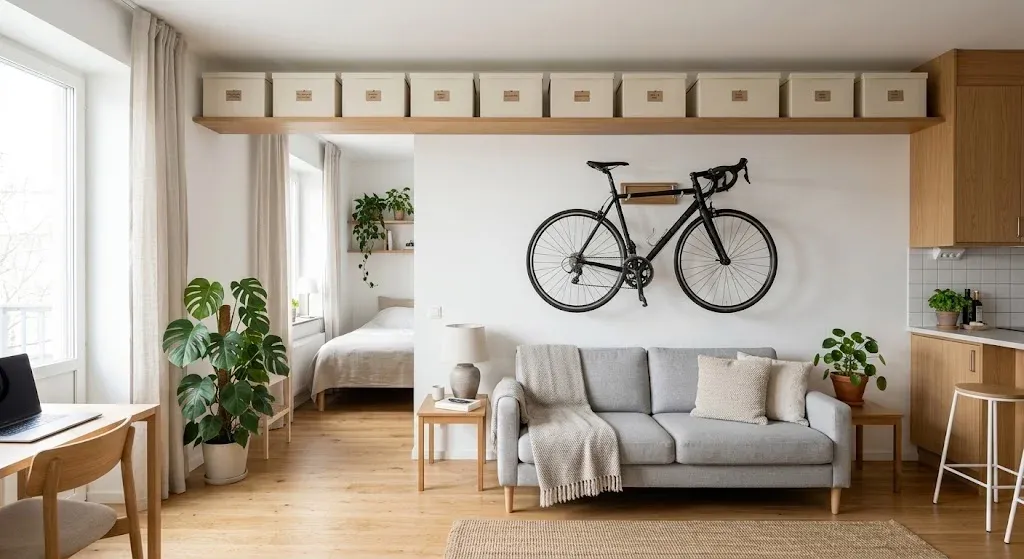
Most people stop at eye level, so the top of the room goes unused. Ceiling and overhead storage is often overlooked, and it’s perfect for things you reach for twice a year: holiday decor, spare linens, luggage.
A single shelf running high along a wall keeps those items out of sight and off the floor. Use a step stool, and keep the heaviest things lower down.
Own a bike? Hanging it on a wall is one way to save floor space. Because it’s heavy, mount it into studs, not just drywall. That’s vertical storage at its smartest, and some of the best apartment wall storage you can add, especially in a studio.
Apartment Wall Storage Ideas, Room by Room
Not sure where to start? Match the idea to the room.
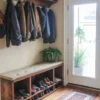
- Entryway: Hooks for bags and coats, plus a narrow ledge for keys and mail.
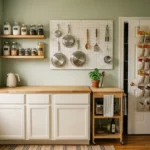
- Kitchen: A rail with hooks for utensils, and a shelf for glasses and bowls.
- Bathroom: Hooks for towels and a tension rod for cleaning supplies. Pick adhesives that tolerate moisture.
- Bedroom: A slim shelf beside the bed for your phone and a book, and a small panel for jewelry and watches.
- Living room or desk: A shelf over the desk for your printer, and a few floating shelves for books.
Pick one room, finish it, then move on.
FAQs: Apartment Wall Storage
1. Can I put shelves in a rental apartment?
Often yes, but it depends on your lease. Some landlords allow small holes and others don’t, so ask in writing first. If drilling is off the table, adhesive shelves, tension poles, and leaning shelves can handle light items without touching the wall.
2. Do wall shelves damage rental walls?
Drilled shelves leave small holes you can patch with spackle and paint. Adhesive ones can peel paint if you yank them off, so warm the adhesive gently and pull slowly. Photograph your walls before you start, so you can show their original condition.
3. What’s the safest renter-friendly option for apartment wall storage?
For light items, adhesive hooks, tension rods, and leaning shelves are your lowest-risk apartment wall storage choices. Nothing gets drilled, and everything comes off cleanly. Just stay under the weight ratings and keep heavier belongings on the floor or in drilled, stud-mounted units.
4. Which kind of wall shelf holds the most weight?
A floating shelf or bracket shelf screwed into studs holds the most. Anchors in drywall work for moderate loads, while adhesive shelves hold the least. Always check the rating and load a shelf well below its stated limit.
5. Where should I put wall storage in a small apartment?
Look for the spots doing nothing: the back of the door, the wall above your desk, the gap beside a bookcase, and the space high along the ceiling line. The best apartment wall storage uses space you’ve stopped noticing.
Conclusion
You pay rent on every square foot, and that includes the vertical ones. Using them well doesn’t take a big budget or a toolbox. It takes a little planning.
Start with the boring stuff: know your wall, read your lease, take photos. Then match the tool to the load. Hooks and tension rods handle light things, no-drill shelves take small items, and studs and anchors carry the heavy stuff. Keep your apartment wall storage simple, and leave some empty wall so the room can breathe.
Here’s your next step. This weekend, photograph your walls, email your property manager, and put up one set of hooks. That’s it. You’ll feel the difference by Monday.