You found the apartment. Great light, fair rent, a landlord who actually answers texts. Then you open the lease and spot the line every renter dreads: no nails, no screws, no holes.
Suddenly those bare walls feel like a very expensive blank page.
Here’s the thing, though. Damage free decorating is completely doable, and it doesn’t mean living in a beige box. You just need the right tool for each job and a few habits most people skip.
We’ll walk through seven methods that work, from adhesive strips to leaning art, plus what to do when something goes wrong. By the end, you’ll know what to buy, what to skip, and how to get your full deposit back.
What Damage Free Decorating Really Means
Damage free decorating means putting things on your walls, or around them, in a way that leaves the surface exactly as you found it. No holes. No sticky gunk. No bald patch of paint when the frame comes down.
Sounds simple, but there’s a catch. “Damage-free” is a promise printed on a package, not a guarantee. When Consumer Reports tested adhesive strips and hooks from several brands, the strips handled small, light items fine, but the testers wouldn’t recommend them for anything heavy, and the writer admitted she nearly always ruins some paint on removal.
And the stakes are real. A 2026 renter-decor roundup cites an Apartment List survey saying over 70% of renters worry about wall damage, with repairs reportedly running $50 to $500 per hole.
Think of it like packing a suitcase. A light jacket and a bowling ball don’t go in the same bag. Same logic here: posters, mirrors, and shelves each need their own approach.
So the real skill isn’t finding one magic product. It’s matching your method to three things: how heavy the item is, what your wall is made of, and how long it’ll stay up. Get those right and the rest is easy.
1. Adhesive Strips: Get the Setup Right
Most renters start here, and most make the same three mistakes. Adhesive strips are the workhorse of damage free decorating, but they’re only as good as your prep.
Match the strip to the weight
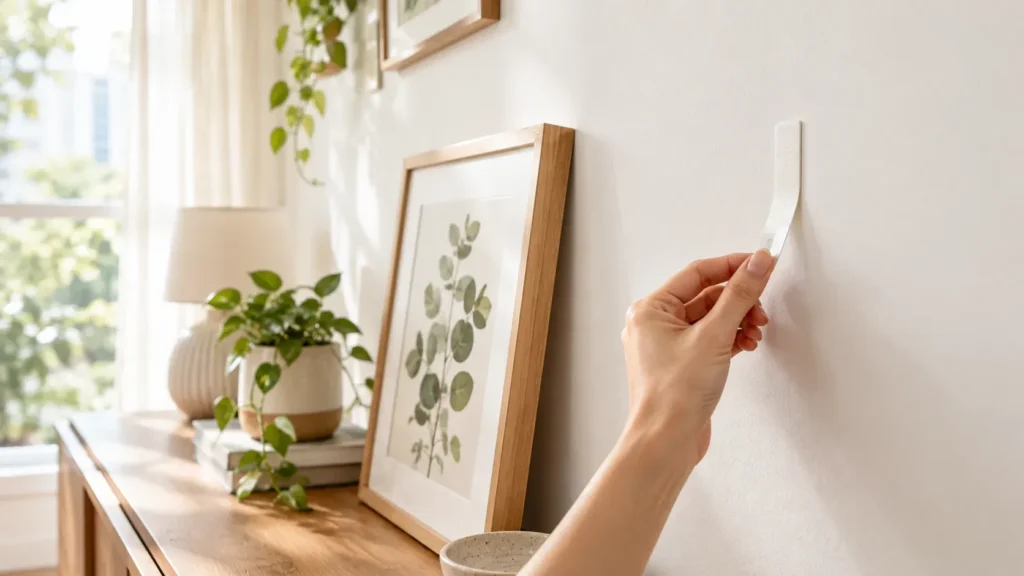
Picture hanging strips usually come in medium, large, and extra-large, rated for roughly 10, 16, and 20 pounds. Treat that number as a ceiling, not a target. An 8-pound frame? Grab the 16-pound strips. Spare capacity is cheap insurance.
Prep the wall
Wipe the spot with rubbing alcohol so dust and grease don’t weaken the bond. Keep the room between 50°F and 105°F, and if the wall was painted recently, wait a full seven days so the paint can cure. Skip wallpaper completely, and never hang anything heavy over a bed.
Remove them the slow way
Hold the top of the strip and pull it straight down toward the floor. Slowly. Yanking outward is how paint ends up on the strip instead of the wall.
Do those three things and damage free decorating with strips goes from a gamble to a pretty safe bet.
2. Heavy-Duty Hooks for Mirrors and Big Frames
This is where damage free decorating gets a little gray.
A 12-pound mirror in a thin frame? Extra-large strips can do it. A 40-pound antique with a brass frame? That’s a different animal, and strips alone won’t cut it.
For heavier pieces, there are options that skip studs and tools. 3M’s CLAW drywall hangers are rated for up to 65 pounds, with no tools, no studs, and no large holes left behind. You can read the details on 3M’s heavy-hanging page. Monkey Hooks and similar styles support art up to 150 pounds and leave a hole about the size of a pinhead.
Let’s be honest, though. A pinhole is still a hole. It’s tiny, and a dab of spackle usually makes it disappear, but if your lease says zero holes, don’t risk it. Read the wording, or send your landlord a quick email.
When in doubt, use the next trick. Some pieces are simply too heavy to hang in a rental.
3. Lean It, Don’t Hang It
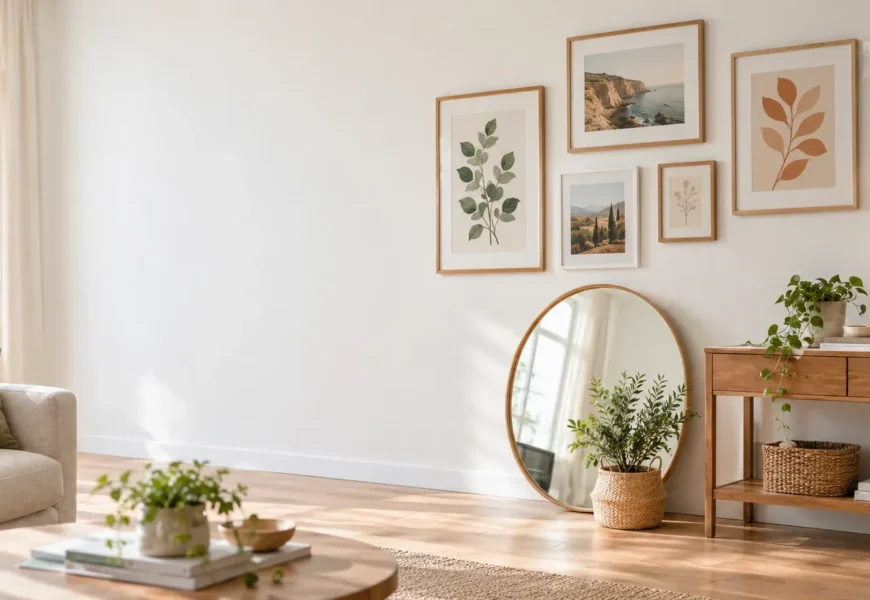
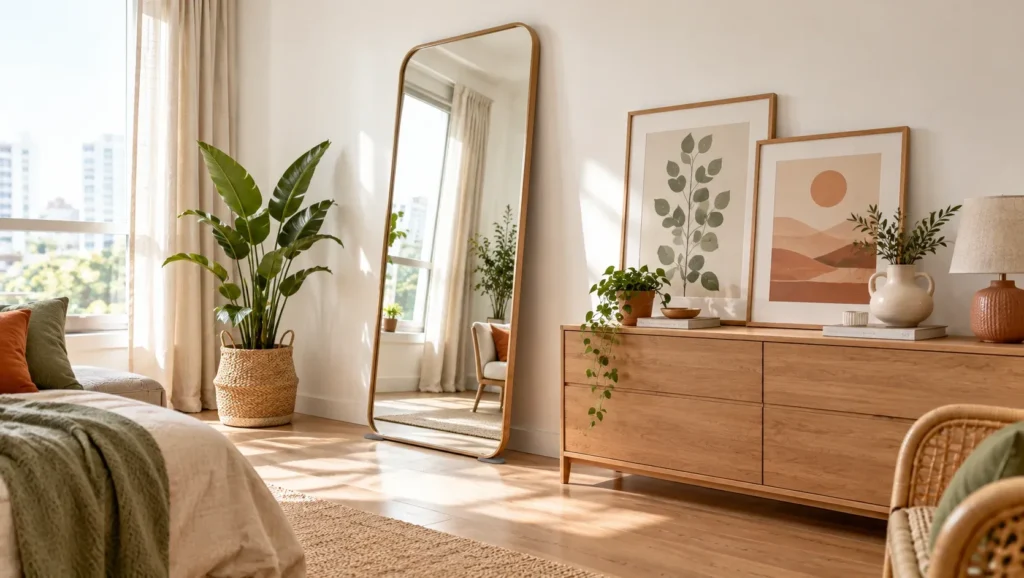
The most reliable way to avoid wall damage is to never touch the wall. Leaning is the laziest form of damage free decorating, and it might be the best-looking.
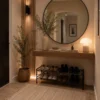
Set large frames on a dresser, console, bookshelf, or straight on the floor, and let them rest against the wall. Overlap a small frame in front of a big one. Mix heights. Add a plant or a candle at the edge. It looks collected rather than hung, which is a very current look.
Floor-length mirrors are the classic example. Propped from the floor up, one can make a small studio feel noticeably bigger, and it asks nothing of the wall.
A few practical points:
- Put felt or rubber pads under the bottom edge so the piece doesn’t slide.
- Keep tall mirrors away from doorways and walkways.
- If you have kids or pets, wedge the piece securely or pick a lower, wider frame.
Also, skip adhesive shelves. Consumer Reports testers found none of the strips they tried should hold shelves or other heavy items, so a picture ledge on a dresser is a safer substitute.
4. Tension Rods and Other Pressure Tricks
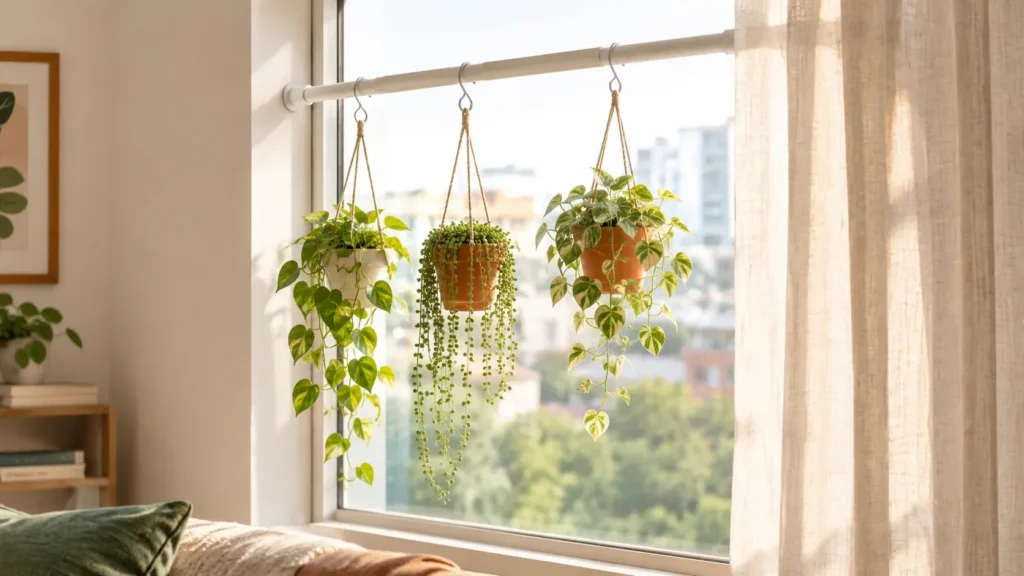
Tension rods might be the most underrated tool in damage free decorating. They hold by pressure alone, so there’s no adhesive, no screw, and nothing to peel.
Here are ways renters use them:
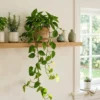
- A rod across a window frame to hang a few small plants.
- A rod inside a closet for extra hanging space.
- Light curtains to split a studio into a “bedroom” and a “living room”.
- A rod with clips to display postcards or lightweight prints.
Twist the rod until it’s snug against both sides. Then come back the next day and check it hasn’t loosened. Pressure holds drift over time, especially with anything near the weight limit.
Keep rods for light loads. A curtain or a few plants? Perfect. A heavy tapestry soaked with dust and humidity? Not so much.
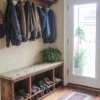
They also work vertically. A floor-to-ceiling rod makes a decent plant stand or a spot to hang bags and scarves in a small entryway.
5. Poster Putty and Washi Tape for Light Pieces
For unframed prints, posters, and lightweight tapestries, you don’t need heavy gear.
Poster putty is cheap and reusable. Knead a small ball, press it behind each corner, and you’re done. Use it for tapestries and paper goods, not frames. Test it somewhere hidden first, since putty can leave faint oily marks on some matte paints.
Washi tape is the fun one. It’s a safe way to attach lightweight objects without stripping the paint underneath. People use it to build “floral walls” out of cheap fake flowers, frame a postcard collection, or outline a design right on the wall.
A few tips:
- Press it down gently, never hard.
- Peel at a low angle, almost flat against the wall.
- Don’t leave it up for months in a sunny spot, because heat and light bake adhesives on.
Both options shine for temporary seasonal looks. Swap in fall prints in October, then switch to something brighter in spring. Nothing is a long-term commitment, which is the point.
6. Build a Gallery Wall Without Paint Damage
A gallery wall is the ultimate test of damage free decorating, because one wall holds a dozen frames.
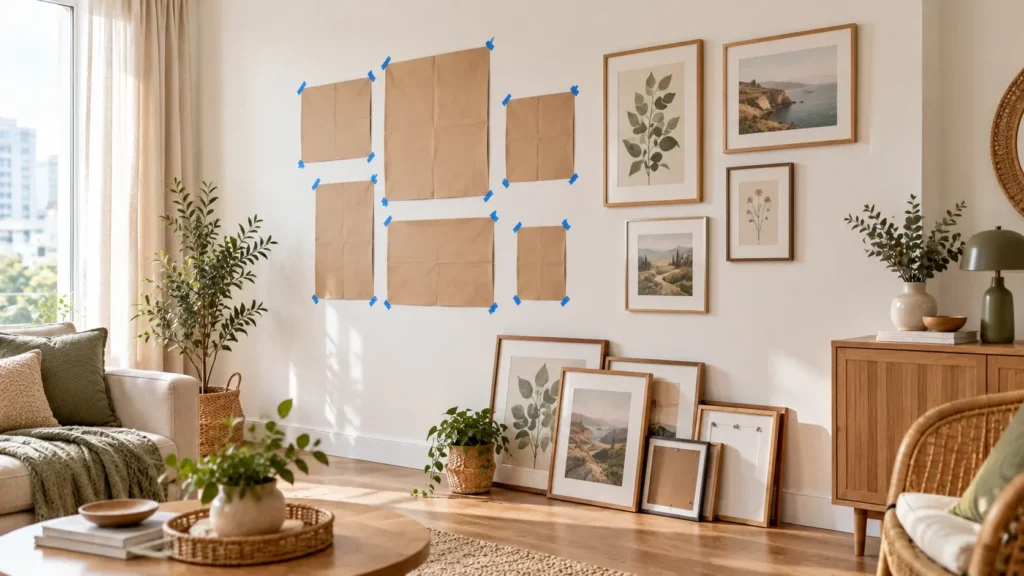
Start on the floor, not the wall. Trace each frame on kraft paper or newspaper, cut the shapes out, and tape the paper templates to the wall with painter’s tape. Move them around until the layout feels right. Take a photo. Then swap each template for the real thing, one at a time.
A few rules save you time:
- Pick one anchor piece and build around it.
- Leave 2 to 3 inches between frames.
- Use acrylic fronts instead of glass to cut the weight.
- Add up the total weight before you buy strips.
Unframed prints? Use small poster strips at the corners. For frames, use a pair of picture hanging strips on the back, and add a tiny strip at the bottom corners so the frame doesn’t tilt.
Mix materials too. Canvas, wood, and a woven piece break up a grid of identical black frames.
7. Go Big With Rugs, Lamps, and Removable Wallpaper
Not every damage free decorating win happens on the wall. Sometimes the best fix is looking down.
An area rug covers stained or worn flooring, adds warmth, and costs far less than most wall projects. Washable rugs make life easier if you have pets. Floor and table lamps do more for mood than any framed print. Warm bulbs, a couple of light sources at different heights, and your room instantly feels finished.
Then there’s peel-and-stick wallpaper. It’s a great option for an accent wall, but use it carefully. Try a small hidden patch first, make sure the paint is fully cured, and skip rough or textured walls where it won’t stick. Also check your lease, because some landlords count it as a modification even when it peels off cleanly.
If you want something even simpler, add plants, throw blankets, and big baskets. They bring color and texture without touching a single wall.
What to Do If the Paint Peels Anyway
Even careful damage free decorating sometimes goes sideways. Don’t panic, and don’t keep pulling.
If a strip won’t release, stop. Warm it with a hair dryer on low heat for about 30 seconds to soften the adhesive, then try again slowly. If it’s still stuck, slide dental floss behind it and saw gently to separate the strip from the wall.
If a small chip of paint does lift, here’s the fix:
- Peel off any loose flakes.
- Fill the spot with a thin layer of spackle.
- Sand it flat once dry.
- Dab on matching paint, and ask your landlord for the leftover color if you can.
Protect yourself ahead of time, too. Snap photos of your walls on move-in day, and again before you leave. If a dispute comes up over your security deposit, dated photos are your best evidence.
FAQs: Damage Free Decorating
Do Command strips damage paint?
They can. On clean, fully cured paint, removed slowly straight down, they usually come off cleanly. Rushed removal, humid rooms, cheap flat paint, or too much weight all raise the risk. Test one strip in a hidden spot first, before you commit to a whole wall.
How do I fix small wall damage if it happens?
Remove loose paint flakes, fill the spot with a thin layer of spackle, sand it smooth, and dab on matching paint. For tiny pinholes, spackle alone is usually enough. Take move-out photos so you can show the wall’s condition if your landlord asks questions.
Can I hang a heavy mirror without holes?
Extra-large strips handle lighter mirrors, up to about 20 pounds. For anything heavier, damage free decorating usually means leaning the mirror against the wall on the floor or a sturdy piece of furniture, since hanging heavy pieces nearly always means at least a tiny hole.
Does this work on wallpaper or textured walls?
Usually not well. Adhesive strips need smooth, clean surfaces, and they can pull wallpaper off. On textured walls they often don’t bond at all. Try leaning art, tension rods, or lamps and rugs instead.
Do I still need my landlord’s permission?
Always check your lease. Damage free decorating is allowed in most rentals, but some leases ban adhesives, wallpaper, or even removable hooks. A short email asking for written approval takes two minutes and can save you an argument over your deposit.
Conclusion
You don’t need to decorate the whole apartment in one go. Pick the wall you see first when you walk in and treat it as your test run.
Check your lease for any rules about adhesives or wallpaper. Weigh the first piece you want to hang. Match it to the right strip or hook, prep the surface, and put it up. Wait a few days and see how it holds before you commit to a full gallery wall.
That slow start is the smartest move in damage free decorating. It lets you catch problems early, learn how your walls and paint behave, and figure out which tools you actually trust.
Your space can feel like yours without leaving a trace. Keep it light, keep it flexible, and when you move out, your walls will look just like the day you arrived.
Grab one pack of strips and one frame this weekend and try it.