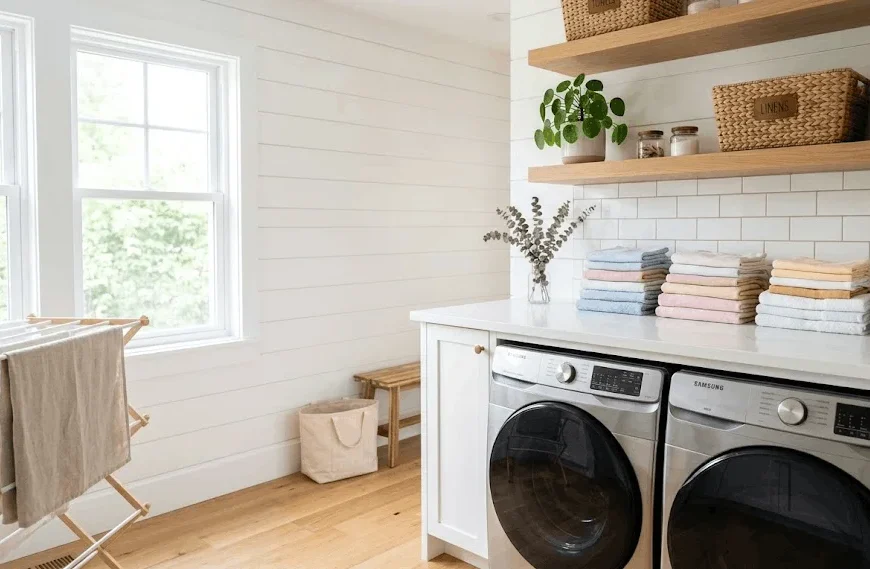
Let’s be honest — most laundry rooms don’t have a folding spot. They have a dryer with a pile of clean clothes sitting on top, slowly getting wrinkled while you tell yourself you’ll deal with it later. Sound familiar? A laundry folding station fixes that. It gives you one dedicated spot to sort, stack, and fold, so clean clothes stop turning into a guilt pile. In this guide, I’ll walk you through the setups that actually hold up in real homes, not just in photos, plus the mistakes that make people rip out their folding counter within a year.
What Is a Laundry Folding Station, Really?
A laundry folding station is just a flat, dedicated surface built specifically for folding clean laundry — nothing more complicated than that. It can be as simple as a laundry folding table you set up in a corner, or as built-in as a laundry cabinet with countertop spanning the length of your washer and dryer. What separates a good one from a bad one isn’t the materials. It’s whether the surface is at a comfortable height, has enough room to actually spread clothes out, and sits close enough to your machines that you’re not carrying wet laundry across the house.
Here’s the thing most people get wrong: they treat the folding surface as an afterthought. They install the washer, the dryer, maybe a shelf, and then realize there’s nowhere flat to actually fold anything. Building the folding area into the plan from day one — even in a small space — changes how often you actually use it.
It’s a bit like buying a desk without checking if a chair fits under it. The washer and dryer get all the attention because they’re the “real” purchase, and the folding surface just gets whatever leftover space happens to be nearby. That’s backwards. You use the folding spot every single laundry day, sometimes twice a day if you’ve got kids or a big household. A laundry folding station that’s cramped, oddly angled, or too far from the dryer turns into a spot you avoid, and the clothes pile up somewhere else instead.
Planning it early also means you can size everything around real usage instead of guesswork. You’ll know exactly how much surface area you need, where the baskets go, and whether shelving above makes sense before a single cabinet gets installed. Retrofitting a laundry folding station later is always more expensive and more limited than building it in from the start.
Why a Dedicated Surface Changes Everything
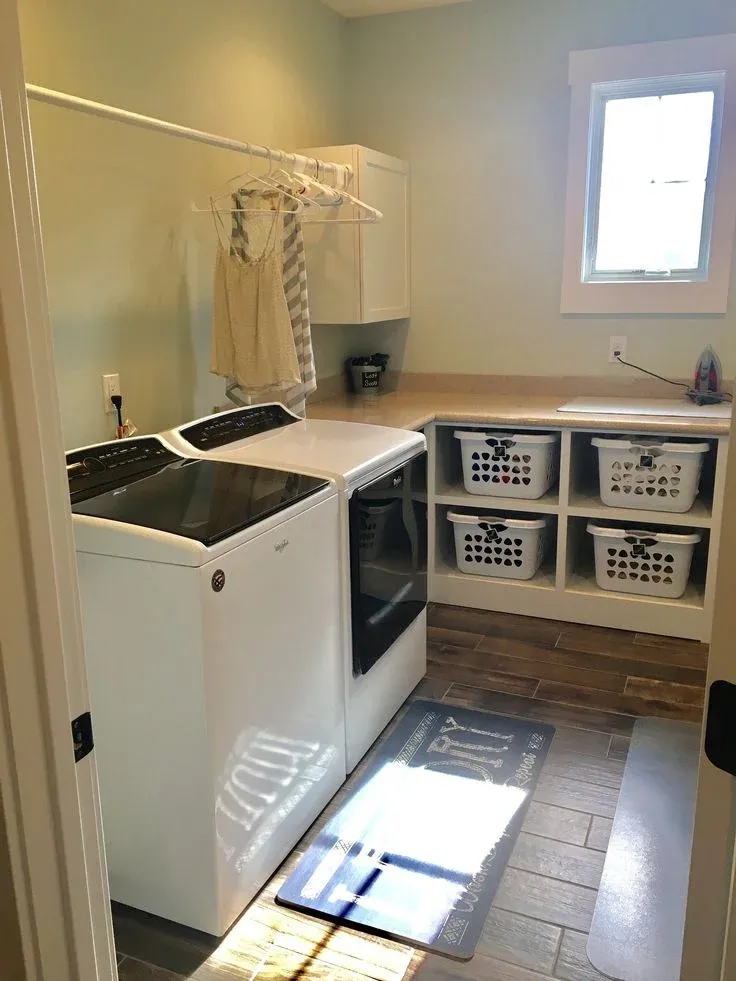
When there’s no clear spot to fold, clothes end up on the bed, the couch, or the top of the dryer (which, by the way, vibrates during the next cycle and dumps your neatly folded stack onto the floor). A proper folding station removes that friction. You wash, you dry, you fold right there, and the clothes go straight into baskets or drawers instead of migrating through three rooms first.
Getting the Height Right (This Is Where Most People Mess Up)
Before you build or buy anything, get the height sorted. This is the single most common mistake in laundry room organization ideas you’ll find online — people copy a Pinterest photo without checking if the height actually suits them.
Design research on this generally lands in the same range: a laundry folding table typically works best somewhere between 30 and 36 inches high, which is comfortable for most people and sits roughly at waist level, which helps cut down on back strain during a long folding session. If you’re taller, you might want to nudge that higher. One design breakdown that specializes in ergonomics notes that the most comfortable folding height sits about 2 to 4 inches below elbow height, with most households landing around 36 inches and taller users preferring closer to 38 or 40.
That said, don’t just match your kitchen counter without thinking it through. Standard kitchen countertops run about 36 inches, which works for a lot of laundry rooms, but it isn’t automatically the best height for folding efficiency — kitchen tasks involve cutting and downward pressure, while folding is more about spreading and stacking, which some designers say is more comfortable a couple inches lower.
Think about the actual motion for a second. Cutting vegetables is a downward push, so a higher counter protects your wrists and shoulders. Folding a fitted sheet is closer to a spreading, gathering motion, which naturally wants a slightly lower surface so your arms aren’t working against gravity the whole time. That small difference adds up over a 20-minute folding session.
This is exactly why so many people build a laundry folding station and then quietly stop using it — the height was copied from a kitchen renovation instead of tested for folding. If you’re on the fence, grab a stack of books or a temporary board, set it a couple inches under your kitchen counter height, and fold a real load on it before committing to cabinetry. Your back will tell you fast whether it’s right. A laundry folding station built around your actual folding motion, not just matched to existing counters, is the one you’ll still be using in five years.
Width and Length Matter Too
Height gets all the attention, but size matters just as much. A width of about 18 to 24 inches gives you enough room to fold without feeling cramped, and a length of 48 to 72 inches gives you a full surface to work with. If you’re building a built-in laundry counter over top-loading machines, leave breathing room on either side — designers recommend somewhere between 18 and 42 inches of free counter space next to the appliances if you can spare it.
It’s tempting to shrink the surface down to save space, but a laundry folding station that’s too shallow just creates a different problem: sleeves, pant legs, and sheets end up hanging off the edge, dragging on the floor while you fold. That defeats the whole purpose of having a dedicated spot in the first place. If you’re tight on room, it’s better to go narrower in width and longer in length rather than the other way around — folding needs horizontal reach more than depth.
If you’re sharing the space with two machines side by side, don’t forget to measure door swing and lint trap access before finalizing your counter length. A laundry folding station that looks perfect on paper can still block a dryer door in real life, and that’s a frustrating mistake to discover after the countertop is already installed.
Laundry Folding Station Ideas for Small Spaces
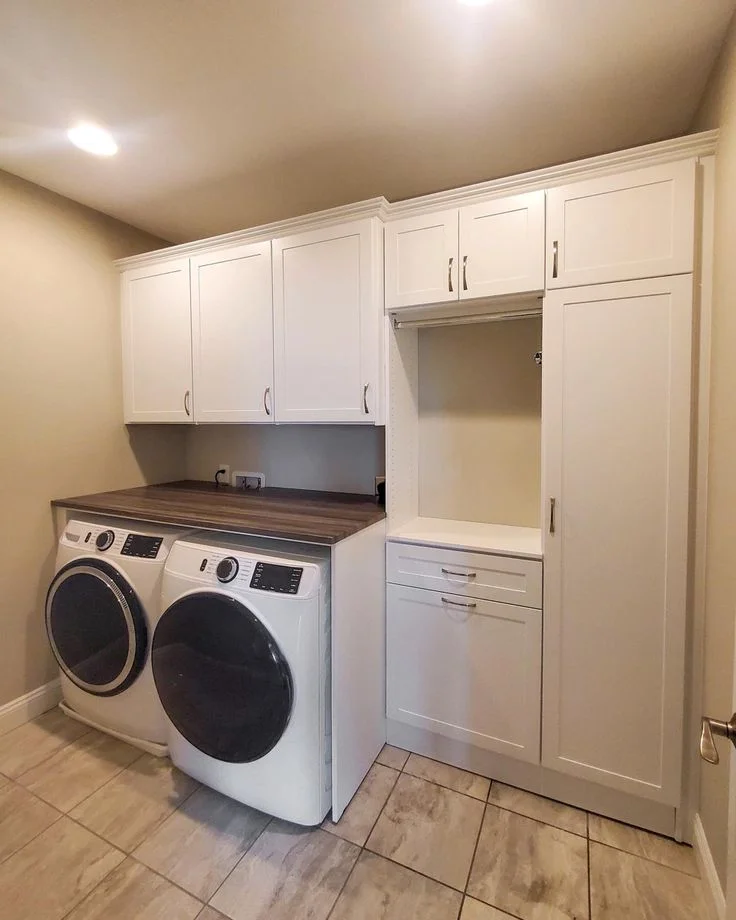
Not everyone has a spare room for this. If you’re working with a closet, a narrow hallway, or a shared utility nook, here’s where a laundry folding station actually earns its keep — because in tight spaces, every design decision matters more.
Wall-Mounted Fold-Down Tables
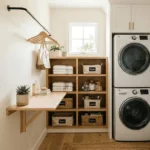
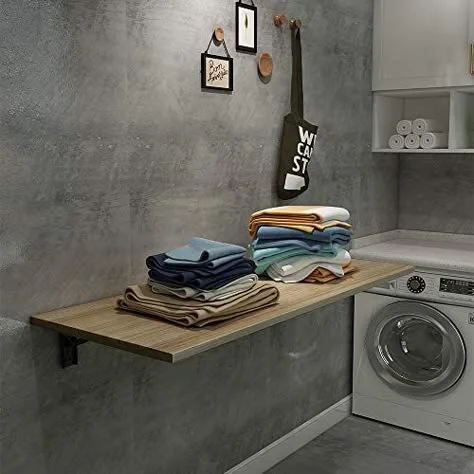
If floor space is your enemy, a fold-down table mounted to the wall is the move. Fold-down tables, countertops built above the appliances, and vertical storage are the ideas that consistently work best in small laundry spaces. You flip it down when you need it, fold it flat when you’re done, and get your floor space back immediately. It’s one of the simplest DIY laundry folding counter projects you can tackle in a weekend, and it doesn’t require ripping out cabinetry.
Countertops Over the Appliances
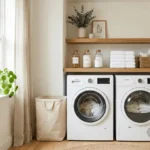
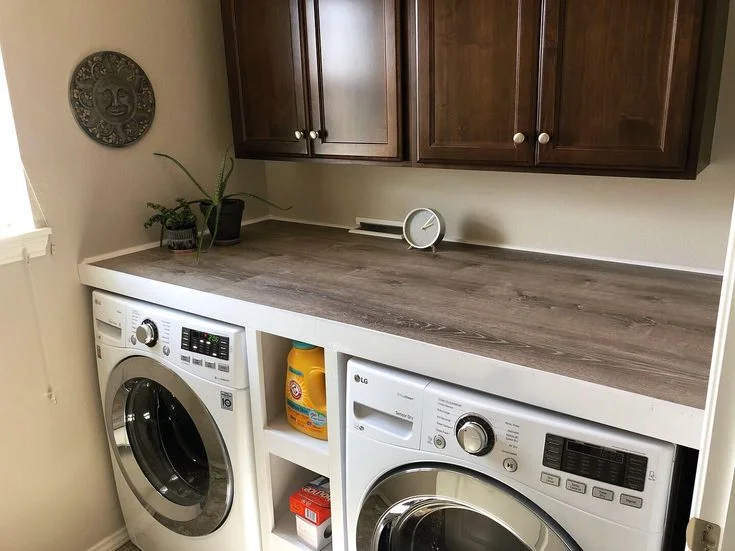
This is probably the most common setup people search for, and for good reason. Building a countertop directly over your washer and dryer turns dead space into a working folding station without eating into the room’s footprint at all. Pair it with a laundry sorting station underneath — a couple of pull-out bins for darks, lights, and delicates — and you’ve solved two problems with one build.
Slide-Out Boards for Closets
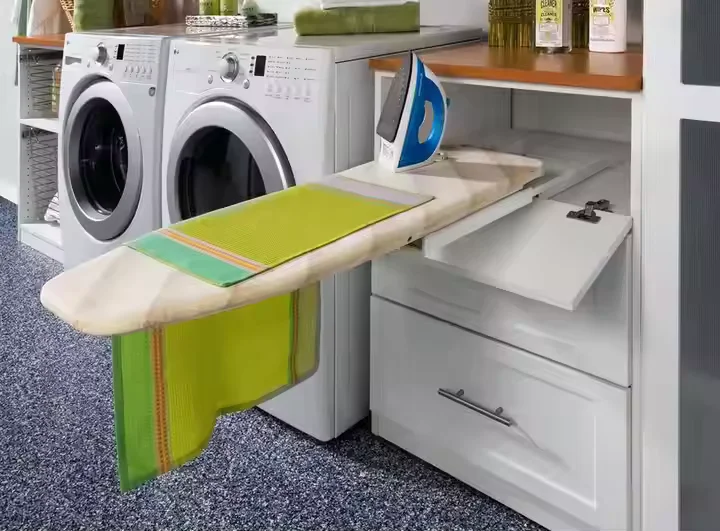
If your machines live in a closet, a slide-out folding board tucked below a shelf is a smart workaround. You pull it out to fold, push it back in when you’re done, and the closet still closes like normal the rest of the time.
Building a Multi-Purpose Folding Station
Here’s a mistake I see constantly: people install cabinets everywhere except where they need a flat surface, because cabinets photograph well and folding space doesn’t feel like “storage.” But a folding station that also handles sorting, stacking, and short-term storage will get used far more than a station that’s just a bare table.
Add Storage Bins Underneath
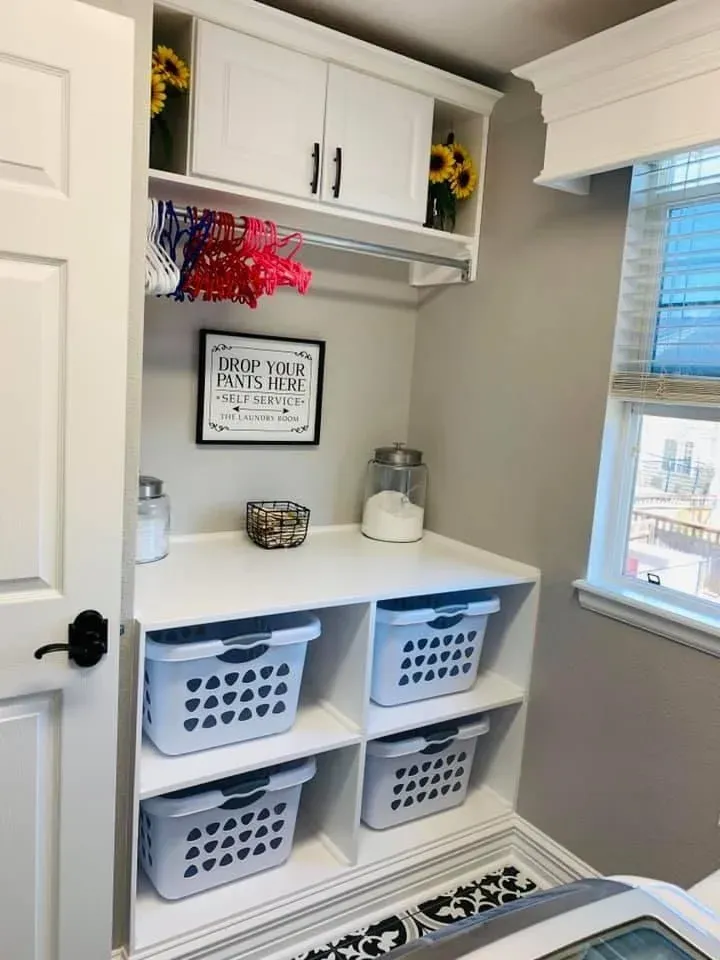
A folding station with storage bins solves the sorting problem before you even start folding. Instead of one big overwhelming pile, clothes get separated as they come out of the dryer — kids’ clothes in one bin, towels in another, whatever system works for your household. This turns your setup into more of a laundry sorting station than just a flat table, and it cuts down actual folding time because you’re not constantly re-sorting mid-task.
Shelving and Cabinets Above
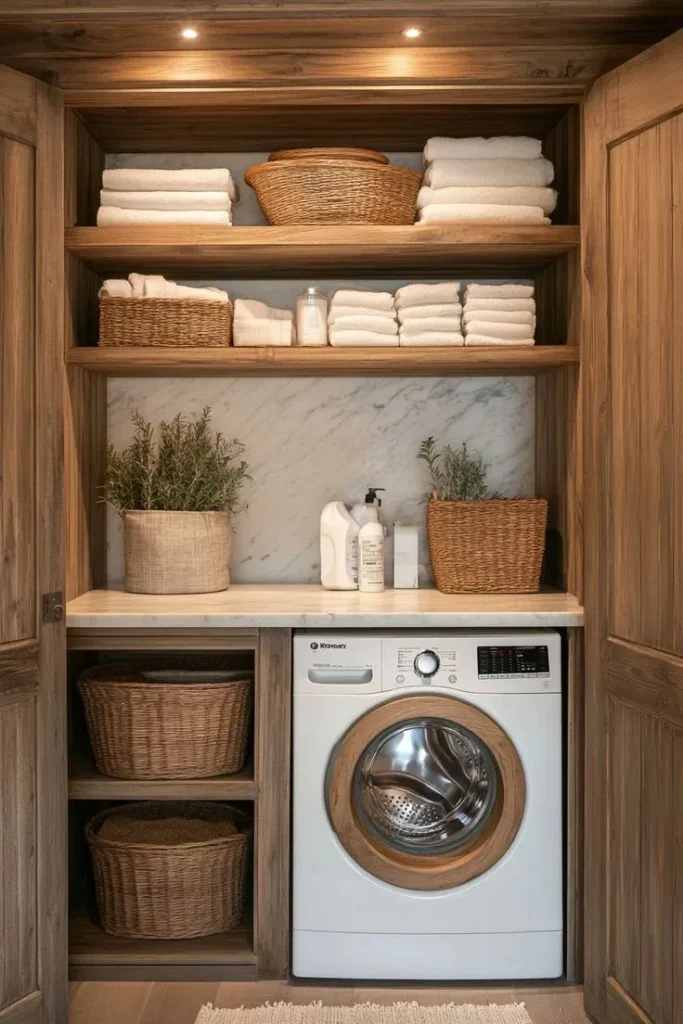
Open shelving or cabinets above the folding surface keep detergent, dryer sheets, and stain remover within reach without cluttering the countertop itself. This is one of the easiest utility room storage solutions to retrofit, even if you already have a folding table installed — you’re just adding vertical storage, not rebuilding the whole setup.
Just keep heavier items like large detergent jugs on lower shelves, and save the top shelf for things you grab less often. It only takes an afternoon to mount a couple of brackets and boards, but it changes how usable the whole station feels.
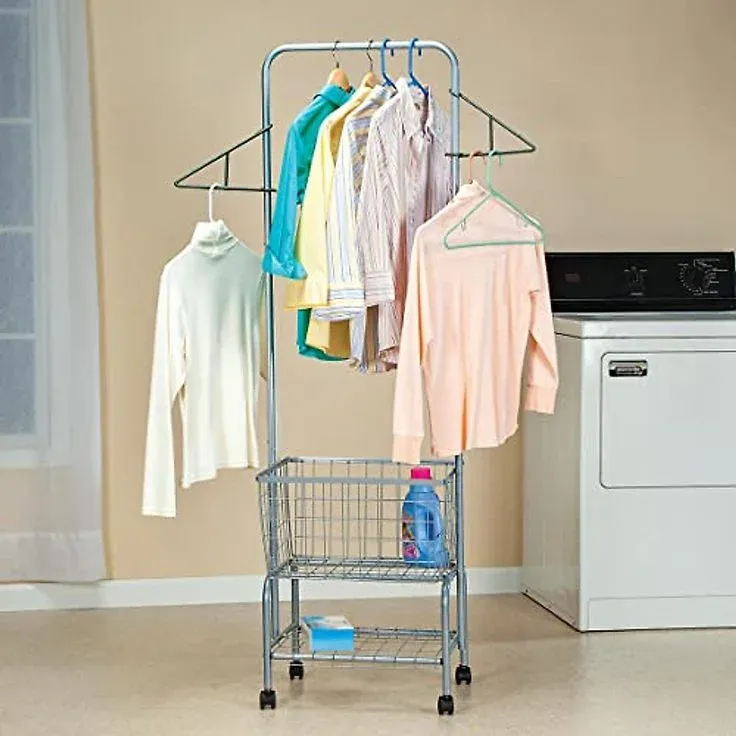
Rolling Carts for Flexible Spaces
If you don’t have room for a fixed laundry cabinet with countertop, a rolling cart with a flat top works as a mobile folding station. Roll it in front of the dryer when you’re folding, roll it out of the way when you need floor space back. It’s not as polished as a built-in, but it’s a fraction of the cost and works in almost any layout.
Look for a cart with locking casters, so it doesn’t drift while you’re folding a heavy load of towels. A butcher block or laminate top holds up better than a wire-shelf design, since you need a solid, flat surface rather than gaps clothes can catch on. Lower shelves on the cart double as a spot for baskets or detergent, so you’re not sacrificing storage just because you went mobile.
Mudroom and Combo Laundry Setups
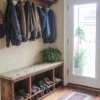
If your laundry room doubles as a mudroom, entryway, or drop zone for backpacks and shoes, a mudroom laundry combo setup needs to do more work than a standalone laundry room does. The folding surface still matters, but it usually needs to share space with hooks, bench seating, and shoe storage.
The trick here is zoning. Keep the folding station on one side, away from foot traffic, so it doesn’t get buried under school bags and jackets the moment someone walks in. A bench with a hinged top can double as extra folding surface in a pinch, which is handy in smaller mudroom combos where every square foot has to earn its place.
Think about the natural path people take when they walk in the door — shoes off, bag down, jacket on a hook. Your laundry folding station needs to sit outside that flow, not in the middle of it, or it’ll get treated like a dumping spot instead of a workspace. Even a couple of feet of separation, like tucking it around a corner or behind a half-wall, makes a real difference in whether it stays clear.
Labeling zones can help too, especially in a busy household. A small sign, a different floor tile, or even just a rug under the bench signals “this area is for folding” without you having to say it out loud every day. Over time, a laundry folding station with a clear boundary trains everyone in the house to respect it, which means less clutter creep and more actual folding getting done.
Making It a Space-Saving Laundry Organizer
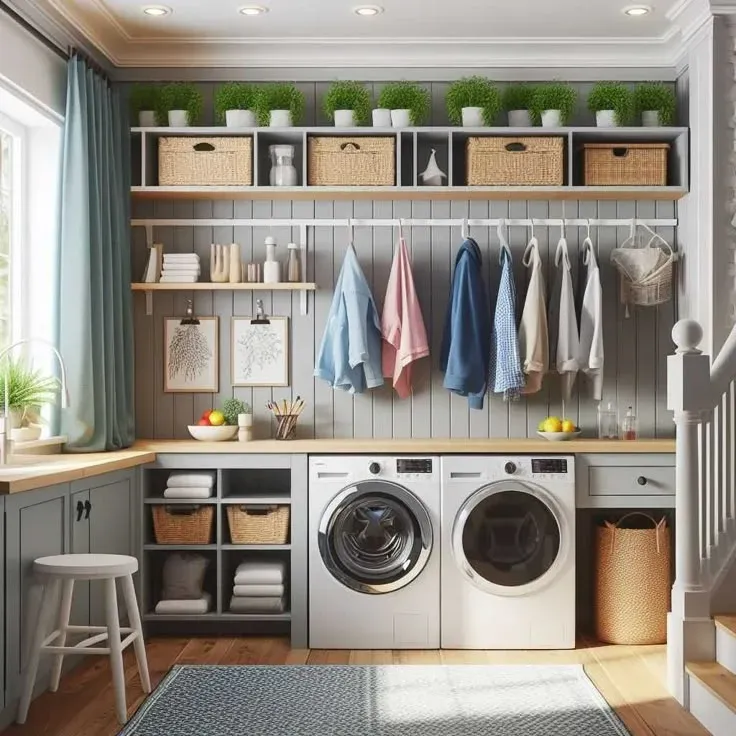
If your goal is squeezing function out of a genuinely small footprint, think about the whole wall, not just the counter. A space-saving laundry organizer setup usually layers a few things together: a narrow folding counter, a rod above it for hang-drying, a couple of slim vertical dividers for trays or baskets, and cabinets that go all the way to the ceiling instead of stopping at a standard height. None of these individually solve the space problem, but stacked together they turn a cramped corner into something genuinely usable.
One more practical note — if the folding area is also going to double as a general workspace where you’re standing rather than leaning over, a height in the 42 to 48 inch range gives more comfortable clearance than a standard counter height would.
Common Mistakes to Avoid
A few things trip people up over and over when planning a laundry folding station:
- Building it too high or too low without testing the height with a temporary surface first.
- Skipping storage underneath, which means baskets end up on the floor anyway.
- Ignoring lighting — a dim folding area makes it hard to spot stains or match socks.
- Placing it too far from the dryer, which just adds an extra trip carrying warm laundry.
- Choosing a surface that’s too shallow, so anything larger than a t-shirt hangs off the edge.
FAQs: Laundry Folding Station
What height should a laundry folding station be?
Most people find 34 to 36 inches comfortable, which matches standard countertop height. If you’re taller, aim closer to 38 inches. Testing with a temporary surface before building is the easiest way to avoid getting it wrong.
Can I build a laundry folding station without extra floor space?
Yes. Wall-mounted fold-down tables and countertops built directly over your washer and dryer are the two most common solutions for tight laundry rooms, and neither requires additional square footage.
How wide should a laundry folding station be?
Somewhere between 18 and 24 inches wide works for most homes, with a length of 48 to 72 inches giving enough room to spread out a full load without things hanging off the edges.
Do I need storage built into my folding station?
It’s not required, but it helps a lot. Adding bins or baskets underneath turns your folding station into a sorting station too, which cuts down on the back-and-forth of separating laundry after the fact.
What’s the cheapest way to add a folding surface to my laundry room?
A rolling cart with a flat top or a simple fold-down wall table are the most budget-friendly options. Both give you a real laundry folding station without any renovation work.
Conclusion
A laundry folding station doesn’t need to be fancy to work. It needs the right height, enough surface area, and a little storage nearby so sorting and folding happen in the same spot instead of three different rooms. Whether you’re working with a full laundry room or a single closet, start with the height and size basics, then layer in storage as your space allows. If your current setup is just the top of the dryer, this weekend is a good time to change that.