Introduction
Stand in your front hall for a minute and look around. Where do the shoes go? The coats? The keys you’re always digging for on your way out the door? If the walls feel like they’re closing in while you try to answer these questions, you’re dealing with a problem that’s more common than most people realize.
Narrow entryways show up in all kinds of homes, especially older houses built before open-concept layouts took over. But even newer builds often squeeze the entry into a tight corridor, saving the square footage for living rooms and kitchens instead. Either way, the result is the same: a small, awkward space that’s the first thing you and your guests see every single day.
Here’s the part that matters, though. A cramped entry doesn’t have to stay cluttered or feel unwelcoming. With the right narrow entryway ideas, even a hallway that’s barely two feet wide can become a functional space that sets a good tone for the rest of your home.
In this guide, we’ll go through layout, furniture, storage, lighting, and decor—all based on what genuinely works when space is tight. We’ll also point out a few mistakes people tend to make when furnishing a small entry, so you can skip them entirely.
Understanding the Narrow Entryway Challenge
Before getting into narrow entryway ideas, it helps to understand why these spaces feel so restrictive to begin with. Most entry hallways measure somewhere between 30 and 48 inches wide. That’s just enough room for one person to walk through—and not much else. Fitting in a bench, a shoe rack, and coat hooks on top of that can feel nearly impossible.
A few things tend to work against you in these spaces:
- Traffic flow: People need a clear path through, without bumping into furniture every time they walk by.
- Door swing: Front doors usually open inward, and that swing eats up floor space you might have been counting on.
- Limited wall space: Nearby doors, closets, and other rooms often leave very little open wall to work with.
- Natural light: Many entryways have no windows at all, which makes them feel even smaller and darker than they actually are.
Once you’ve identified which of these apply to your space, finding narrow entryway ideas that actually fit becomes much more manageable. The goal here isn’t to recreate some elaborate mudroom you saw online—it’s to figure out what your household genuinely needs on a daily basis, and build around that.
Start With a Functional Layout Plan
Before trying out any narrow entryway ideas, take a moment to think about how your family actually uses the front door. Do the kids dump their backpacks the second they walk in? Does everyone kick off their shoes right at the entrance? Is this also where the dog’s leash lives, hanging on whatever hook happens to be closest?
Map Your Daily Habits
Spend a few days just paying attention to what piles up near your front door. This simple observation tells you exactly what kind of storage to prioritize. A busy household with three kids and a dog has very different needs than someone who works from home and rarely uses the front entrance at all.
Measure Twice
In a small space, even a couple of inches can make or break a piece of furniture. Take the time to measure:
- The total width of your hallway.
- How much depth you have before the door swings open.
- The height up to your ceiling, in case vertical storage is an option.
- The distance to your nearest closet or adjoining room.
Once you have these numbers written down, shopping becomes much easier. You’ll know what fits before you order it, which saves you the hassle of returns later.
Furniture-Based Narrow Entryway Ideas
This is where most of the visible change happens. The trick with a tight entry isn’t finding smaller versions of regular furniture—it’s choosing pieces that were designed to be slim from the start.
Slim Console Table Entryway Setups
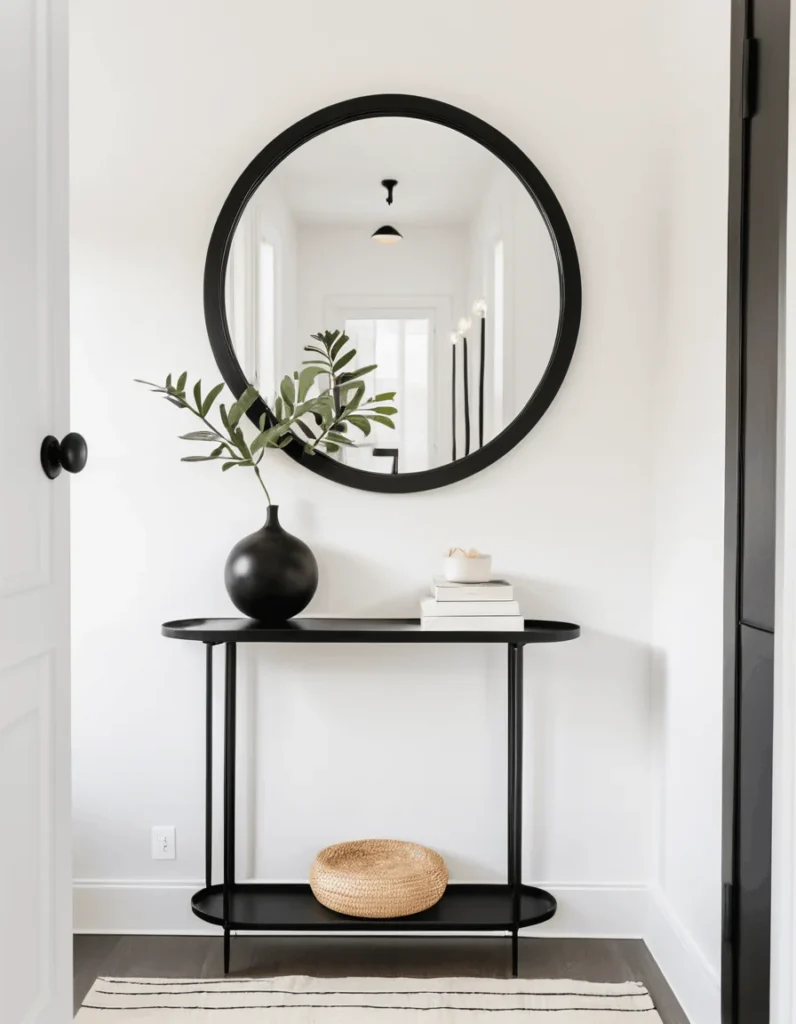
A slim console table entryway setup is one of the most popular narrow entryway ideas, and it’s easy to see why. It gives you a landing spot for keys, mail, and bags, without taking up much walking room at all. Look for tables under 12 inches deep—plenty of console tables made specifically for hallways come in at just 8 to 10 inches, which still leaves over 24 inches of clearance in a 36-inch-wide hallway.
A small tray or bowl on top makes a noticeable difference too. It gives loose items like keys and sunglasses a place to land, rather than letting them spread across the entire surface.
Entryway Bench for Small Spaces
Among narrow entryway ideas, an entryway bench for small spaces does double duty. It gives you somewhere to sit while putting on shoes, and many models come with built-in storage underneath. Benches with lift-up seats or cubbies are especially useful as narrow front hall furniture, since they cover seating and shoe storage without needing any extra floor space.
If even a small bench won’t fit, there are other options. A narrow ottoman with storage inside works well, and so does a wall-mounted flip-down seat that folds flat against the wall when you’re not using it.
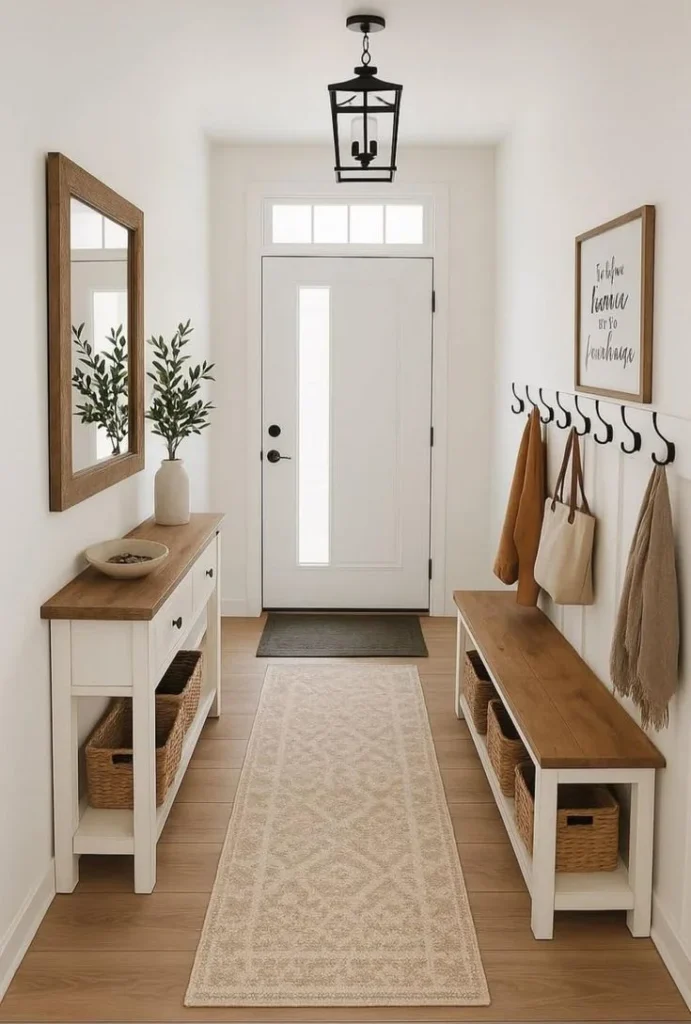
Narrow Front Hall Furniture Worth Considering
A few other pieces are worth looking at if you’re trying to make the most of a tight space:
- Wall-mounted shelves (around 6 to 10 inches deep) for keys, mail, and small decor items.
- Slim shoe cabinets, sometimes labeled as “shoe slim cabinets,” usually around 8 to 9 inches deep.
- Coat racks with narrow footprints, including freestanding tree-style versions.
- Umbrella stands that can be tucked into a corner.
When shopping for narrow entryway ideas, check the depth before buying. Width is usually obvious from photos, but depth is what actually determines whether you’ll be bumping into the thing every time you walk past.
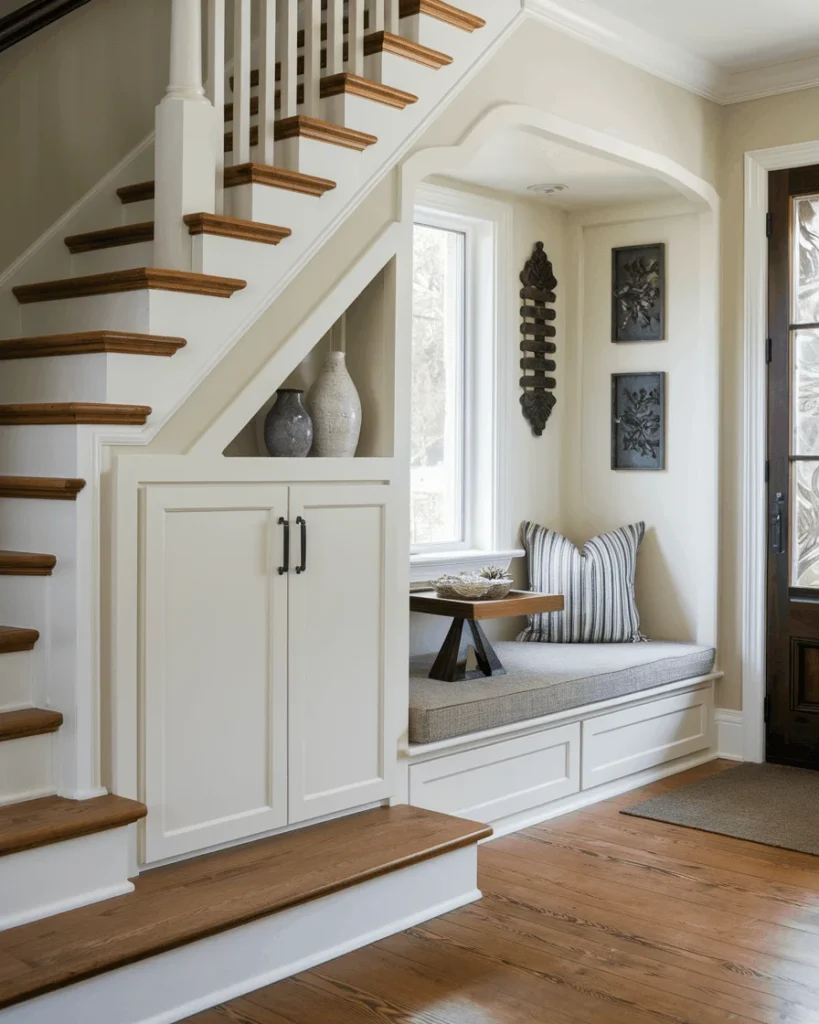
Storage Solutions for Tight Entryways
When people search for narrow entryway ideas, storage is usually the first thing on their mind—and for good reason. Without somewhere to put things, even a nicely decorated entry turns into a mess within a week.
Small Entryway Storage Solutions That Maximize Vertical Space
When floor space is limited, the walls become your best resource. Some small entryway storage solutions that make the most of vertical space include:
- Wall-mounted hooks placed at different heights, so both adults and kids can use them.
- Floating shelves installed above a console table.
- Pegboard systems, which can be rearranged as your needs change.
- Over-the-door organizers, if you have a coat closet nearby.
A simple row of hooks can often replace a coat rack entirely, freeing up floor space for whatever matters more to your household.
Entryway Wall Organizer Systems
An entryway wall organizer brings several functions together in one unit—hooks, small shelves, a mirror, and sometimes even a mail slot. Among narrow entryway ideas, this kind of system is especially useful because it replaces what would otherwise be several separate pieces of furniture with one wall-mounted setup.
When choosing one, look for:
- A mirror, which doubles as a quick check before heading out and helps the space feel larger.
- At least three or four hooks.
- A small shelf or cubby for keys and sunglasses.
- A chalkboard or cork board section, if you like leaving notes for family members.
Small Mudroom Ideas When You Don’t Have a Mudroom
A lot of homes with narrow entryways don’t have a separate mudroom—the hallway has to handle everything. Borrowing a few small mudroom ideas can help, even if you’re working with just a stretch of hallway:
- A boot tray near the door keeps wet or muddy shoes contained.
- A drip mat underneath the tray protects your flooring.
- A small basket can hold gloves, hats, and other seasonal items.
- Giving each family member their own hook cuts down on coat pile-ups by the door.
None of these require any construction work. They’re really just about being intentional with the space you already have.
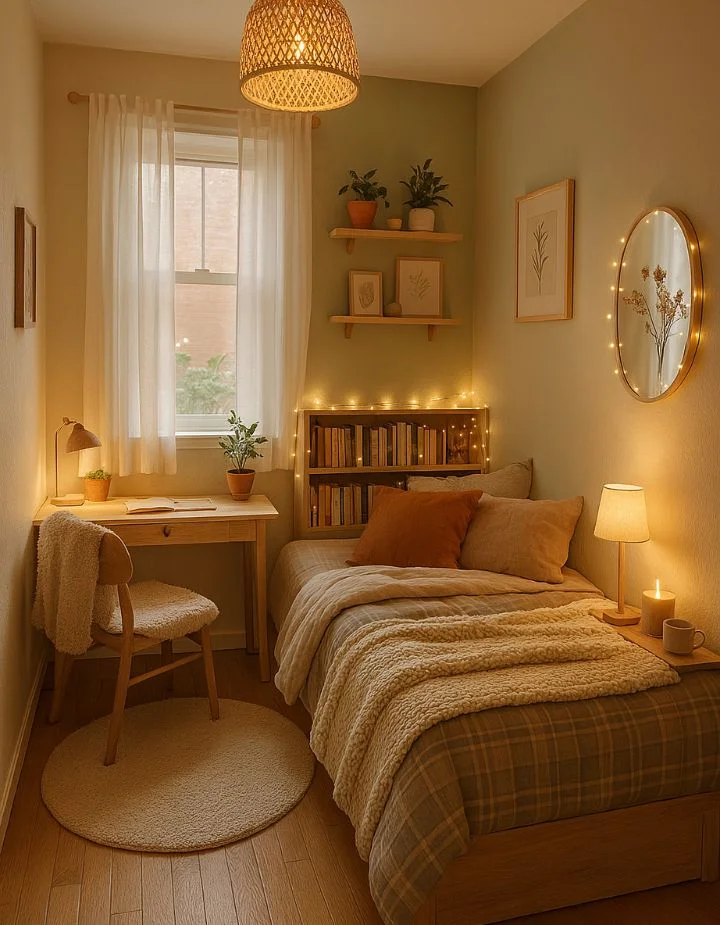
Decor and Visual Strategies for Narrow Entryways
Function comes first, but how a space looks affects how it feels every time you walk through it. A few thoughtful decor choices can turn a tight hallway from a bottleneck into something that actually feels designed.
Narrow Hallway Decor That Adds Depth
Good narrow hallway decor is about creating the illusion of more width and length than you actually have. A few approaches that tend to work well:
- Mirrors placed near a light source reflect that light and can make the space feel almost twice as large.
- Vertical stripes or paneling draw the eye upward, which makes ceilings feel higher than they are.
- Light, neutral wall colors—soft whites, warm grays, pale greens—reflect more light than darker tones do.
- A runner rug in a pattern that complements the space can make the hallway feel like a designed room, rather than a leftover corridor.
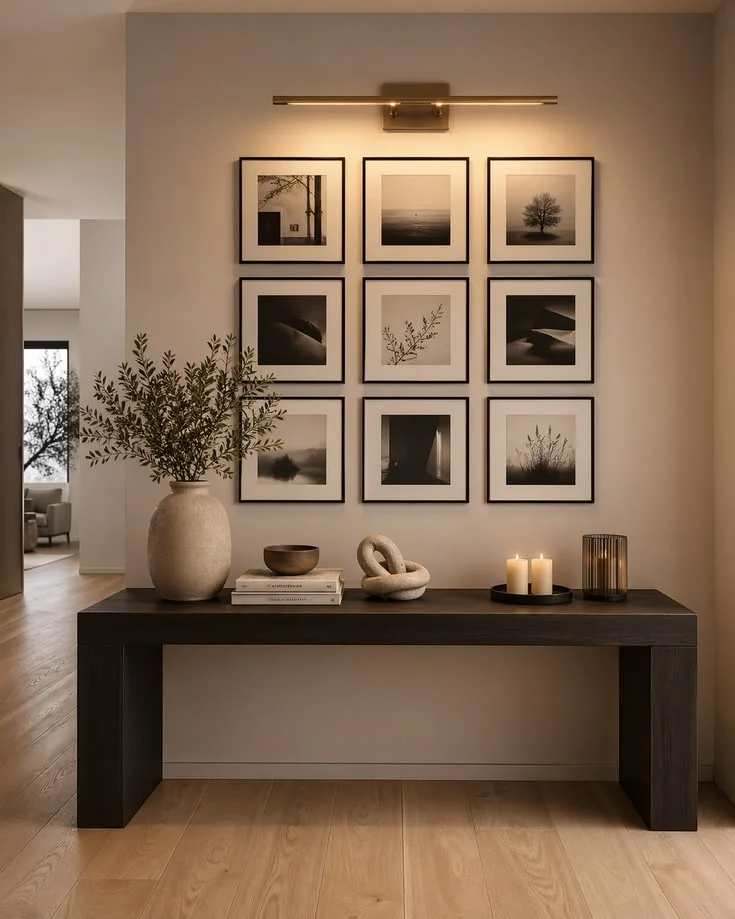
Compact Foyer Design Principles
Good compact foyer design comes down to restraint. Instead of trying to squeeze in everything you’d find in a larger entryway, pick two or three things to focus on and let them carry the space:
- One statement piece—a mirror, a piece of art, or an interesting light fixture.
- One functional storage element—a bench, console, or wall organizer.
- One softer touch—a runner, a small plant, or a textured basket.
It can be tempting to fill every bit of wall space, but resist that urge. In compact foyer design, a little empty space actually helps the room feel calmer and less chaotic.
Tight Entryway Layout Tricks With Lighting
Lighting might do more for a tight entryway layout than anything else on this list. A dim, shadowy hallway feels smaller than it is, and not particularly welcoming either. A few easy fixes:
- Swap out a single overhead fixture for one with a warmer color temperature, somewhere around 2700K to 3000K.
- Add a plug-in sconce or a battery-operated wall light if running new wiring isn’t an option.
- Use a mirror to bounce existing light further down the hallway.
Narrow Entry Decorating Tips by Budget
You don’t need a full renovation to make a difference here. These narrow entry decorating tips are organized by budget, so you can see what’s realistic at each level.
| Budget Level | What to Prioritize | Example Items |
|---|---|---|
| Under $100 | Hooks, mirrors, baskets, paint | Wall hooks, small mirror, woven basket, peel-and-stick wallpaper |
| $100-$300 | Console tables, runners, lighting | Slim console table, entry runner rug, plug-in sconces |
| $300-$700 | Benches, wall organizers, custom shelving | Storage bench, built-in wall organizer, floating shelf set |
| $700+ | Custom millwork, built-ins | Custom bench with cubbies, built-in cabinetry, professional lighting install |
Most households notice a real difference once they’re in the under-$300 range, which honestly covers most of the practical narrow entryway ideas worth pursuing.
Common Mistakes With Narrow Entryways (And How to Avoid Them)
Even with good intentions, a few mistakes show up again and again in small entry spaces.
Buying furniture that’s too deep. A console table that looks slim in photos can turn out to be 16 to 18 inches deep in person—more than enough to block a comfortable path in a 36-inch hallway. Always check the depth listed in the specs, not just the width and height.
Overcrowding with decor. Too many frames on the wall, multiple rugs layered together, or stacked baskets can make a small space feel busier rather than more put-together.
Ignoring door swing. If furniture is placed without considering how far the front door opens inward, it ends up in the way every time someone comes in or goes out.
Choosing dark colors throughout. Darker palettes can look striking in photos, but an all-dark narrow hallway without enough light can start to feel like a tunnel.
Skipping the “drop zone” entirely. Without a clear spot for keys, mail, and bags, these items end up wherever—on the floor, on the stairs, anywhere convenient. And once that happens, even the best decorating effort starts to unravel pretty quickly.
Putting It All Together: A Sample Narrow Entryway Plan
Let’s say you’re working with a hallway that’s about 36 inches wide and 6 feet long. Here’s one way the pieces might come together:
- Wall 1 (the longer stretch): An 8-inch deep floating shelf with hooks underneath, and a mirror above it.
- Wall 2 (near the door): A slim console table, around 10 inches deep, with a tray for keys and a small lamp.
- Floor: A runner rug in a durable, easy-to-clean material.
- Lighting: A warm-toned overhead fixture, plus the console lamp for evenings.
- Storage extras: A boot tray by the door, and a small basket on the console for gloves or sunglasses.
This setup brings together nearly every category of narrow entryway ideas we’ve covered—storage, seating, decor, and lighting—without trying to do too much in too little space.
FAQ: Narrow Entryway Ideas
What is the minimum width needed for entryway furniture?
Most slim console tables and wall-mounted shelves work fine in hallways as narrow as 30 inches, as long as the furniture itself is no more than 8 to 10 inches deep. That typically leaves over 20 inches of clearance for walking through.
How do I add storage to a narrow entryway without a closet?
Wall-mounted hooks, an entryway wall organizer, and a slim shoe cabinet tend to be the most space-efficient options. In general, vertical storage works better than floor-based storage when you’re tight on space.
What colors make a narrow entryway look bigger?
Light, warm neutrals—think soft white, pale beige, or light gray—paired with a mirror that reflects natural or artificial light can make a narrow hallway feel noticeably more open. Darker colors can still work, but they usually need stronger lighting to avoid feeling cramped.
Do I need a bench in a small entryway?
Not necessarily. If a full-size bench won’t fit, a wall-mounted flip-down seat or a small storage ottoman can give you a place to sit for shoes without taking up permanent floor space.
What’s the best flooring for a narrow entryway?
Durable, easy-to-clean materials—tile, luxury vinyl plank, or a washable runner rug over hardwood—tend to hold up best. Entryways deal with more foot traffic, dirt, and moisture than almost any other room in the house, so flooring that can handle that is worth prioritizing.
Conclusion
At the end of the day, a narrow entryway isn’t something you need to apologize for or hide. It’s just a space with a few extra constraints—and once you understand those constraints, working with them gets a lot easier.
You don’t need to copy every idea in this guide. Pick the ones that match how your household actually lives. Maybe that means a slim console table and a couple of well-placed hooks. Maybe it’s a small bench and a mirror that makes the whole hallway feel brighter. Either way, small changes tend to add up faster than people expect in spaces this size.
Give it some time, adjust as you go, and don’t be afraid to move things around until it feels right. A narrow entryway that works well for your family is always going to beat a picture-perfect one that doesn’t.