You know that awkward corner in your room that’s been collecting dust, random chargers, and that one thing you don’t know where else to put? Yeah, that one. Good news — with the right corner shelf styling, that ignored spot can become one of the most eye-catching areas in your home.
Corner shelves are genuinely underrated. They use space most people waste completely. But styling them well? That’s where most people get stuck — either it looks too cluttered, too bare, or just… random.
In this guide, you’ll get 10 practical, tested tips for corner shelf styling that work in real homes — not just in magazine photoshoots. From choosing what to put up there, to arranging it so it actually looks good, we’ve got you covered.
Why Corner Shelf Styling Feels So Hard (And Why It Doesn’t Have to Be)
Let’s be honest. Most of us have stood in front of a shelf, moved the same three objects around five times, and still felt like something was off. You’re not alone — according to a 2024 IKEA survey, 63% of homeowners said their shelves felt cluttered and unintentional.
The problem isn’t your stuff. It’s the approach.
Corner shelf styling follows a few simple visual rules that nobody ever teaches. Once you know them, arranging a shelf starts to feel less like guesswork and more like putting together a playlist — you just know what flows.
Here’s the foundation: your eye needs variety in height, texture, and purpose. A shelf with all same-height objects of similar material will always look flat, no matter how nice each piece is individually.
Think of it like a good conversation — you need highs, lows, pauses, and a little surprise to keep it interesting.
The same way a great playlist doesn’t play the same tempo back to back, your shelf shouldn’t repeat the same size, shape, or finish in a row. Break the pattern on purpose. Put something rough next to something smooth. Place something tall beside something that sits low and wide.
And don’t forget empty space — it’s not wasted space. A small gap between objects gives your eye a place to rest, which actually makes everything around it look more intentional. The best styled shelves aren’t the fullest ones. They’re the most considered ones.
10 Corner Shelf Styling Tips That Actually Work
1. Start With the Rule of Odd Numbers
This is the single biggest styling secret most people have never heard of — and it changes everything.
Always group objects in threes or fives, never twos or fours. Our brains find odd-numbered groupings more visually interesting because they create natural tension and movement. Two identical candles sitting side by side? Predictable. Add a small plant between them? Now it’s a corner shelf vignette that draws the eye in.
Try this: pick three objects of different heights — one tall, one medium, one low — and place them together on one section of your shelf. Step back. Notice how it already looks more intentional.
This rule alone will upgrade your corner shelf styling immediately.
And if you’re not sure what counts as “tall” or “low” — don’t overthink it. A candle, a small ceramic bowl, and a trailing plant already give you three different levels without trying. You don’t need to go shopping for anything new.
The beauty of this rule is that it works with whatever you already own. Raid your windowsill, your bookcase, your kitchen counter. Chances are you already have three objects at home that follow this principle — you just haven’t put them together yet.
Once you try it in one spot, you’ll start seeing your entire home differently. Every surface becomes an opportunity to apply the same thinking — and that’s when corner shelf styling stops feeling like a chore and starts feeling like something you actually enjoy.
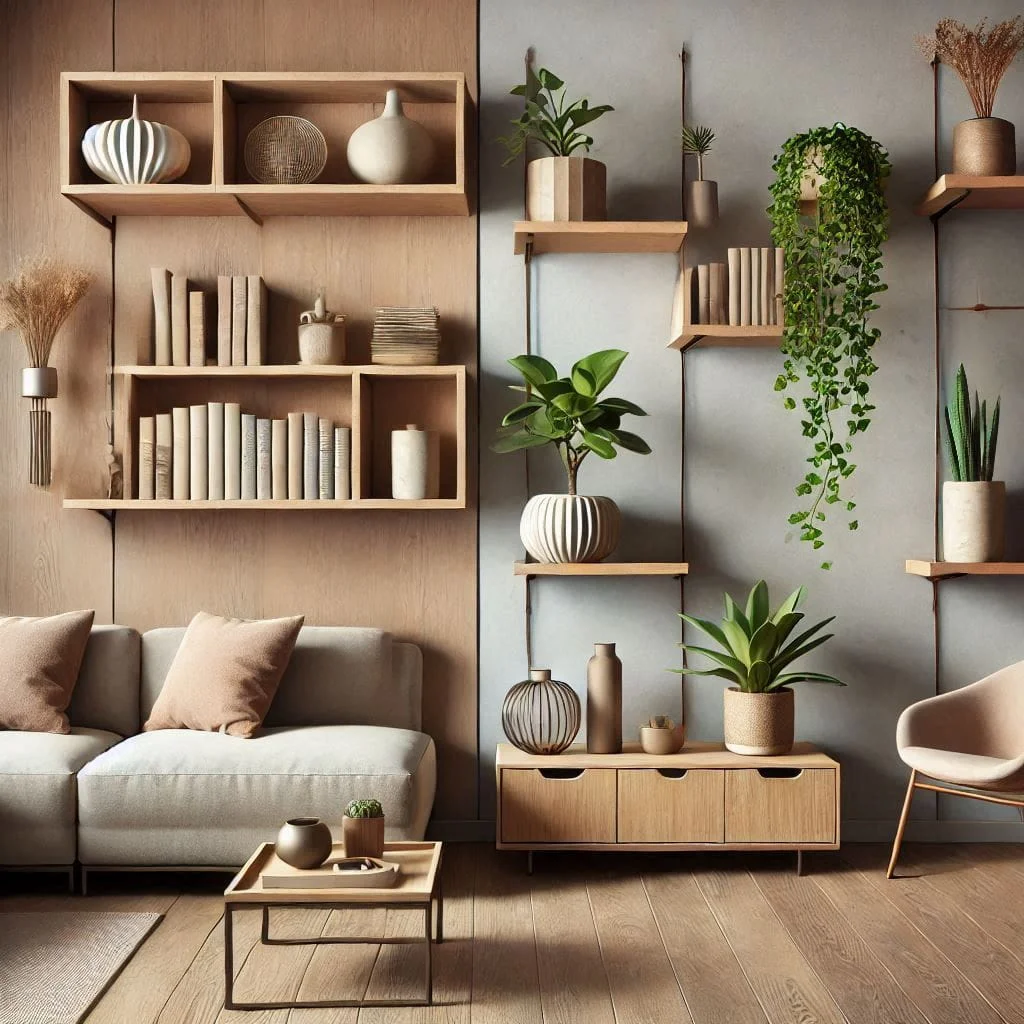
2. Vary Your Heights Intentionally
Flat lines are boring. Imagine your shelf like a city skyline — you want peaks and valleys, not a flat horizon.
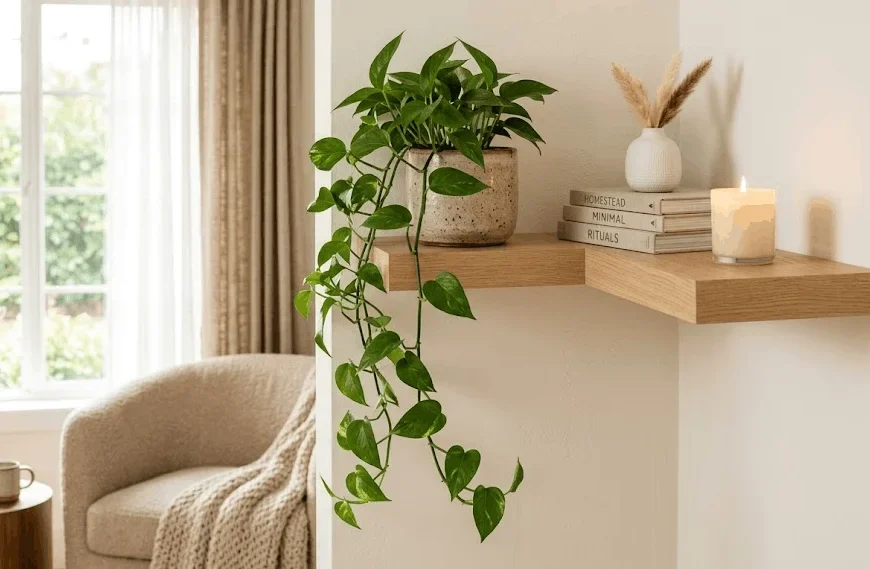
When placing items on your floating corner shelf arrangement, think in levels. A tall vase or candle holder at the back, a medium-sized book or small sculpture in the middle, and a tiny figurine or succulent at the front. This layering creates depth.
You can also use books lying flat (horizontally stacked) as risers. Stack two or three paperbacks flat and place a small object on top — instant height variation with zero extra cost.
3. Anchor With One Statement Piece
Every well-styled shelf has an anchor — one piece that the eye goes to first. Everything else supports it.
For living room corner shelf styling, this might be a large trailing plant, a framed print leaned against the wall, or a sculptural vase. For a bedroom corner, it might be a lantern or a stack of your favorite books.
Whatever you choose, make it larger than the other objects around it. Size difference creates hierarchy, and hierarchy tells your eye where to look — which is what makes a shelf feel “designed” rather than just filled.
For a home office corner, your anchor might be something as simple as a bold-colored binder, a small framed quote, or even a unique desk plant that’s slightly taller than everything else around it. It doesn’t have to be expensive or decorative — it just has to be the biggest, most grounding presence on that shelf.
Think of your anchor piece the way you’d think of a lead singer in a band. Everyone else on stage supports the performance, but there’s one voice the audience follows. Your shelf works exactly the same way — everything else is background, and your anchor is the thing people actually remember when they walk out of the room.
Once you identify your anchor first, the rest of the styling decisions become much easier. You’re no longer arranging random objects — you’re building a scene around one clear focal point.
Whatever you choose, make it larger than the other objects around it. Size difference creates hierarchy, and hierarchy tells your eye where to look — which is what makes a shelf feel “designed” rather than just filled.
4. Bring in a Corner Shelf Plant Display
Plants are the easiest win in corner shelf styling.
A corner shelf plant display adds life, color, and organic texture that no purchased decor item can replicate. The trick is to choose plants based on your shelf’s light situation first, not just looks.
Low light corners: Pothos, ZZ plant, snake plant.
Bright corner near a window: Trailing ivy, string of pearls, succulents.
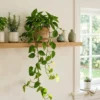
For visual interest, mix a trailing plant that drapes over the shelf edge with a compact upright plant. That contrast of movement versus stillness adds so much character to a corner shelf vignette with almost zero effort.
5. Apply the “Something Living, Something Meaningful, Something Pretty” Framework
This is a loose framework that works for almost any shelf, anywhere.
- Something living = a plant, fresh flowers, even a moss ball.
- Something meaningful = a photo, souvenir, book you love.
- Something pretty = a candle, a ceramic, a woven basket.
When you balance these three types across your shelf, it feels curated rather than random. It tells a story about who lives there. And that’s what separates styled shelves from storage shelves.
You can mix and match across your corner bookshelf organization or floating shelves — just make sure all three types are represented somewhere in the full arrangement.
If you’re staring at your shelf and something feels off but you can’t figure out why — run this checklist first. Is there anything living on it? Is there at least one object that means something to you personally? Is there something that’s just purely beautiful with no other job? Nine times out of ten, one of those three is missing.
It sounds simple because it is. But simple frameworks are exactly what make the difference between a shelf that looks pulled together and one that looks like a waiting room table. You don’t need a design degree to make it work — you just need a quick mental checklist before you step back and call it done.
And here’s the best part — this framework is completely flexible. It works whether your style is rustic, minimalist, maximalist, or somewhere in between. A cactus counts as something living. A thrifted ceramic counts as something pretty. Your grandmother’s old cookbook counts as something meaningful. The categories are wide open — what matters is that all three show up.
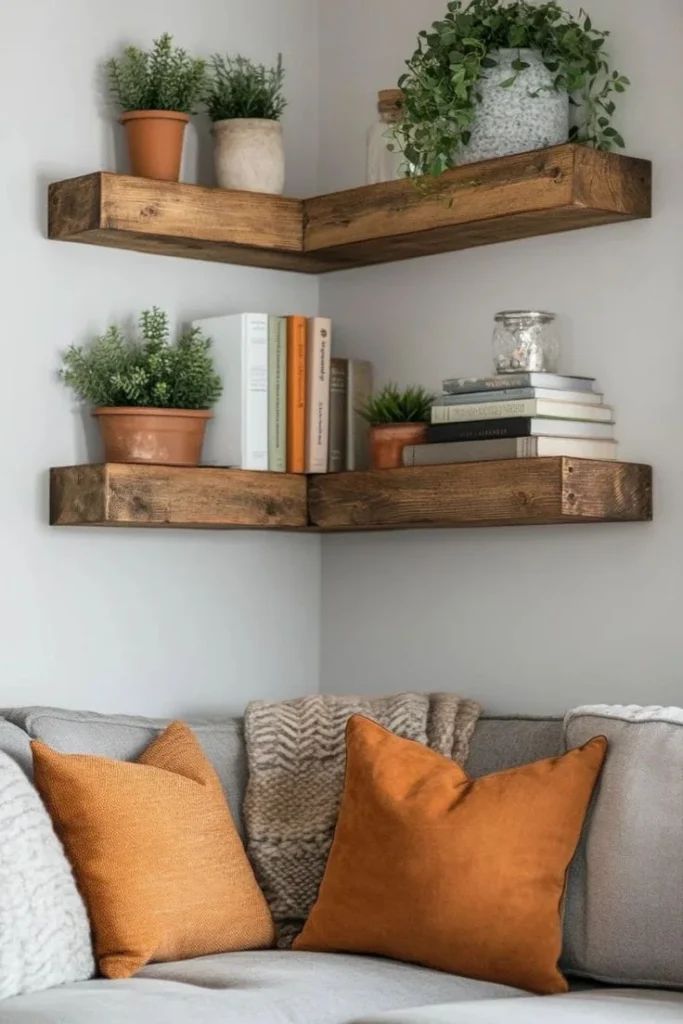
6. Don’t Underestimate the Power of Books
Books might be the most versatile prop in corner shelf styling — and people either use too many or completely ignore them.
Used right, books add color, height variation, and personality. Here’s how to use them well:
- Color-code a section — group books by spine color for a deliberate, gallery-like look.
- Mix vertical and horizontal stacking — some upright, some flat, never all one way.
- Face a cover outward — if you have a beautiful book cover, turn it to face the room instead of hiding the spine.
For corner bookshelf organization, resist the urge to fill every inch. Leave some breathing room. A shelf that’s 75% full almost always looks better than one that’s 100% packed.
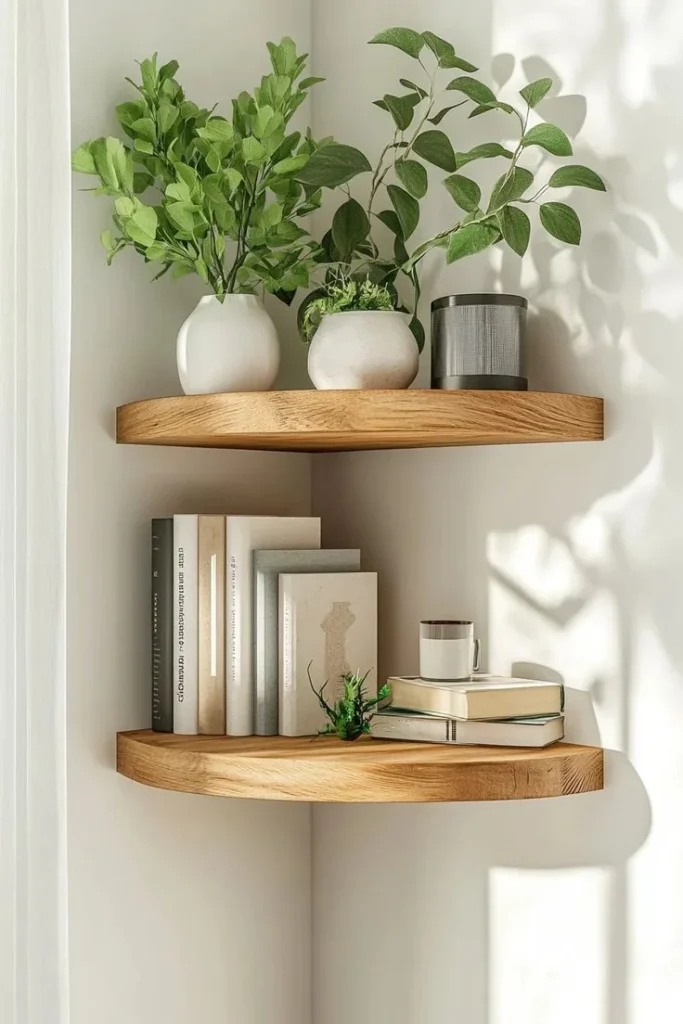
7. Layer Textures, Not Just Colors
Color gets all the attention in corner shelf decor ideas, but texture is actually doing most of the heavy lifting.
A ceramic pot, a woven basket, a wooden block, and a glass vase — even if they’re all in neutral tones — will create visual richness because they each reflect light differently and feel different to the eye.
This is especially important for rustic corner shelf decoration or natural/organic style shelves. The appeal of rustic styling isn’t just the warm tones — it’s the contrast of rough wood grain against smooth ceramics, or woven textures next to matte painted surfaces.
When planning your corner shelf styling, run your checklist: Do I have something matte? Something shiny? Something rough? Something soft? If all four are present, your shelf will feel layered and considered.
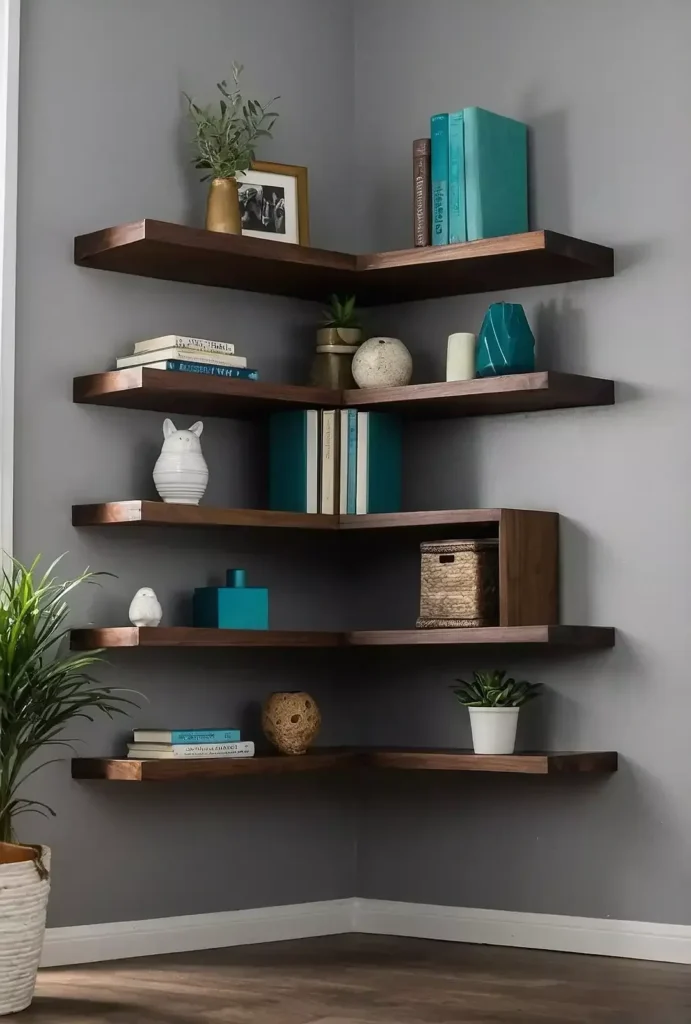
8. Use the Right Approach for Small Spaces
A small corner shelf display needs a different strategy than a large bookcase wall.
The biggest mistake in small corner spaces is overcrowding. With limited real estate, every single object needs to earn its spot. Here’s how to think about it:
- Stick to 3–5 objects maximum per shelf tier.
- Scale matters — oversized objects on a small shelf will look jammed; undersized objects will look lost.
- Go vertical — tall, slim objects use height without eating floor space.
For a minimalist corner shelf design, less is genuinely more. One beautiful object with intentional space around it will always outperform seven mediocre objects crammed together. Negative space isn’t emptiness — it’s breathing room that makes everything else look better.
9. Work With Your Room’s Existing Style
Your corner shelf shouldn’t look like it belongs in a different house.
Corner wall shelf ideas need to connect with the room they’re in. If your living room has warm wood tones and soft linen textures, your shelf should echo that — not suddenly go chrome and glass. If your bedroom is cool-toned and minimal, a shelf full of bright, eclectic objects will feel jarring.
For living room corner shelf styling, look around the room first. What colors are dominant? What materials keep showing up? Now bring those same elements onto your shelf. Repetition creates cohesion, and cohesion makes a room feel intentional.
You don’t need to match everything exactly — just make sure things are in conversation with each other.
10. Edit Ruthlessly After You Arrange
This is the step most people skip — and it’s honestly the most important one.
Once you’ve placed everything, step back and look at your corner shelf styling from across the room, not up close. Distance reveals things you can’t see when you’re right in front of it.
Ask yourself:
- Does one area feel heavier than the rest?
- Is anything too similar in height, color, or material to its neighbor?
- What could I remove that wouldn’t be missed?
The goal isn’t to fill the shelf — it’s to make it look like someone made thoughtful choices. Editing is what takes your corner shelf vignette from “I put some stuff on a shelf” to “that was clearly arranged with intention.”
Remove one thing. Then another. See how it feels. Most of the time, a shelf with slightly less on it will look more polished than a shelf with everything on it.
Room-by-Room Corner Shelf Styling Ideas
Living Room
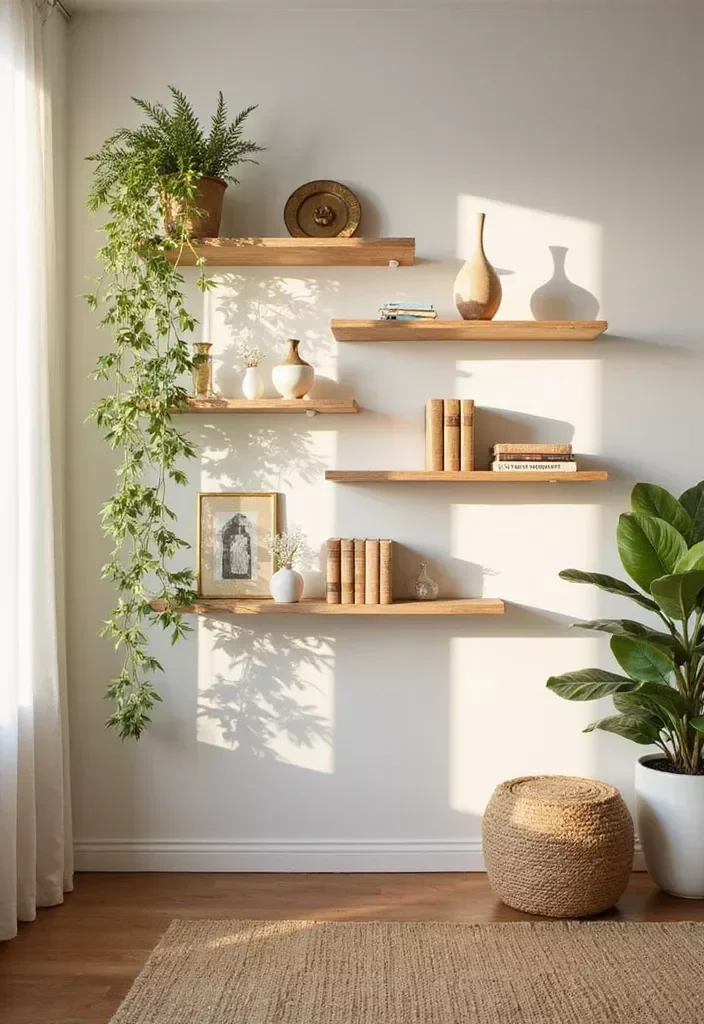
For living room corner shelf styling, lean into personality. This is a space people see, so your shelf can be bolder. Try a tall plant as the anchor, art books stacked flat as a base for small objects, and a mix of candles and ceramics for warmth.
Bedroom
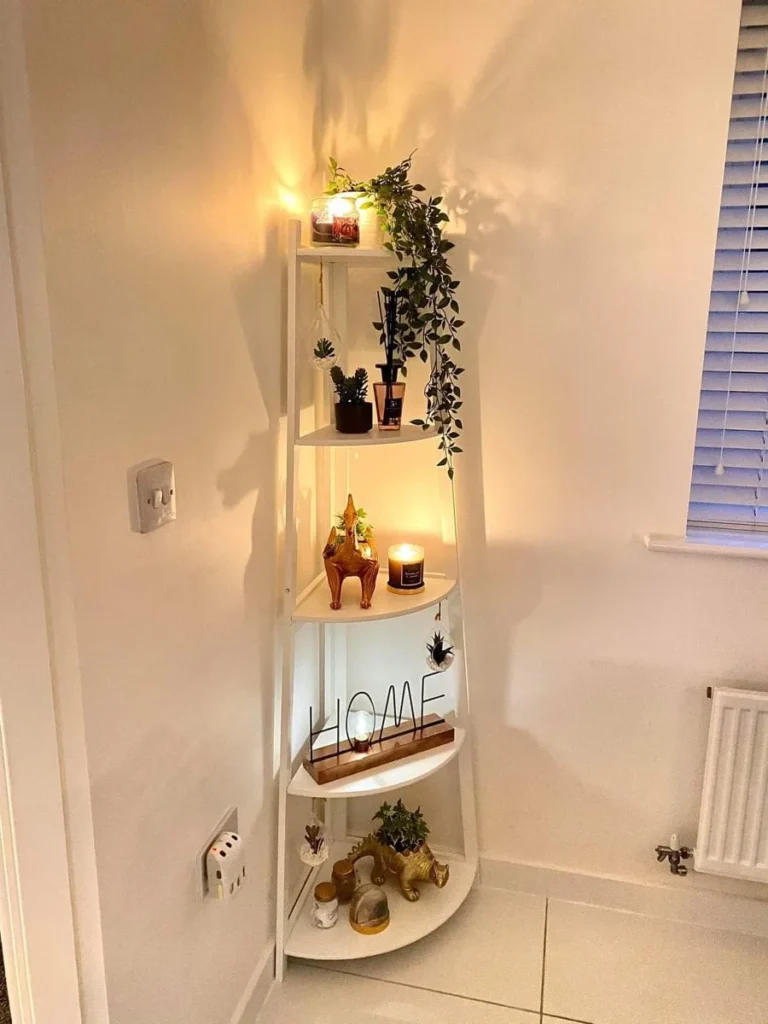
Keep it calm. A minimalist corner shelf design works beautifully in bedrooms — one plant, one meaningful object, one small lamp or candle. You don’t need much. The shelf should add to the restful feeling, not distract from it.
Home Office
Corner bookshelf organization is king here. Keep it functional but add one or two personal touches — a plant, a framed photo, a small object that makes you smile. Functional doesn’t have to mean sterile.
Bathroom
Small shelves in bathrooms thrive on corner shelf plant display styling. A small pothos in a ceramic pot, some rolled towels, a candle — simple, clean, effective. Just make sure whatever you choose can handle humidity.
FAQs: Corner Shelf Styling
Q1: What should I put on a corner shelf?
The best corner shelves mix three types of objects: something living (a plant or flowers), something meaningful (a book, photo, or souvenir), and something decorative (a candle or ceramic). This combination makes any shelf feel curated rather than random. Aim for 3–5 items per tier and vary heights.
Q2: How do I style a corner shelf without it looking cluttered?
The key to clean corner shelf styling is editing. After arranging, step back and remove at least one or two items. Overcrowding is the number one shelf mistake. Leave breathing room between objects — negative space actually makes everything on the shelf look better, not emptier.
Q3: How many items should be on a shelf?
For a standard corner shelf tier, 3–5 objects is the sweet spot. For a small corner shelf display, stick to 3. More than 5 on a small shelf usually tips into cluttered territory. Apply the rule of odd numbers — group in threes or fives for the most natural visual balance.
Q4: Do plants work well on corner shelves?
Absolutely. A corner shelf plant display is one of the easiest ways to add life and texture to any room. Trailing plants like pothos work especially well because they drape over the shelf edge and add movement. Just check your light levels first and choose plants that match your corner’s natural light.
Q5: What’s the difference between a styled shelf and a cluttered one?
Intention. A styled shelf has variety in height, texture, and type of object — and it has space between things. A cluttered shelf is usually all the same height, same material, or simply too full. The fastest fix is to remove objects until each remaining piece has room to breathe.
Conclusion
Here’s the truth about corner shelf styling — it’s not about spending money on new things. It’s about being intentional with what you already have.
Once you understand the basics — odd numbers, height variation, texture layering, and the discipline to edit — every corner in your home becomes an opportunity instead of a problem. And the great thing is, you can start today, with whatever’s already sitting on your shelf right now.
Rearrange three things using the rule of odds. Add one plant. Remove one thing that’s just filling space. See how different it looks.
Corner shelf styling isn’t a big project. It’s a series of small, considered decisions. And every one you make moves your space from feeling like a collection of stuff to feeling like a home.
Start with one corner this weekend. You’ll be surprised what a difference it makes.