You walk into a friend’s place and everything just works. A warm lamp in the corner. A worn wooden sideboard. A rug that looks like it has stories to tell. Then you glance at your own place and see a flat-pack bookshelf and a beige couch.
Here’s the good news: vintage apartment decor doesn’t need a big budget, a big space, or your landlord’s blessing. It needs a plan, some patience, and a few smart shopping habits.
In this guide, we’ll cover what counts as vintage, where to find the good stuff, how to avoid the antique-shop look, and which safety checks to run before anything comes home. By the end, you’ll know exactly where to start.
Vintage Apartment Decor 101: What You’re Actually Shopping For
Before you spend a cent, get the vocabulary straight. Vintage apartment decor is all about real pieces from a past era, not new things made to look old. Most designers and dealers call something vintage when it’s at least 20 years old but under 100.
Here’s the quick breakdown:
- Vintage: roughly 20 to 99 years old, like a 1960s teak sideboard or a 1980s brass lamp.
- Antique: 100 years or older, which today means anything from before the 1920s.
- Retro: brand-new items designed to copy an older look.
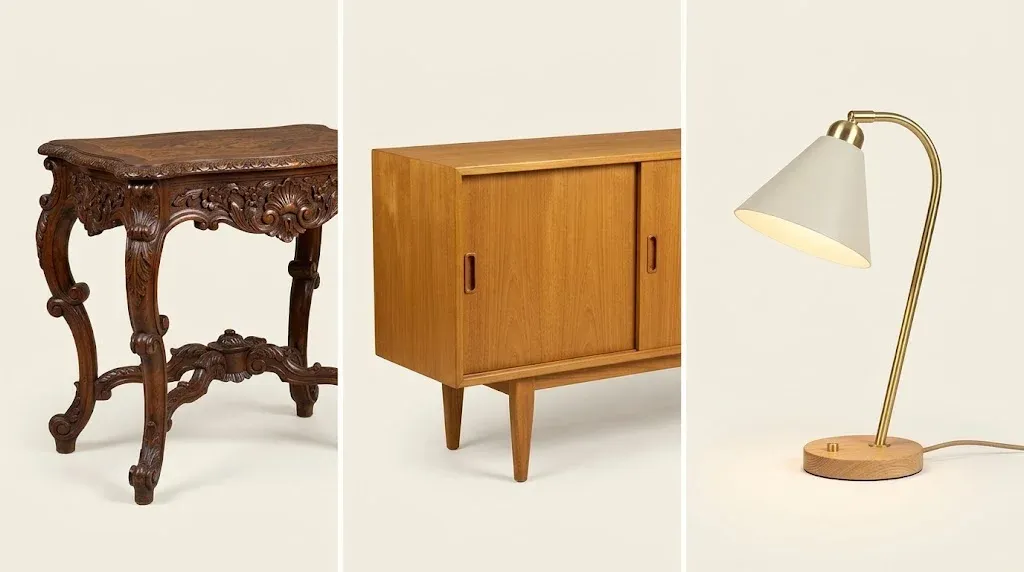
That antique vs. vintage line matters at the checkout. Antiques usually cost more and often work best as display pieces. Vintage furniture is easier to live with every day, and it’s easier on your wallet. Apartment Therapy breaks down the age rules if you want a second opinion.
So why is this style booming? Younger shoppers are driving it. Pinterest’s Fall 2025 trend report found searches for secondhand decor jumped 283%, and “secondhand kitchens” spiked by more than 1,000%, as reported by Fast Company. A 2025 BRC-Opinium survey also found Gen Z was the most likely group to buy or sell secondhand items in nearly every category.
This isn’t a niche hobby anymore. It’s how a lot of people furnish a home now.
Pick One Era and One Mood Before You Shop
Here’s where most people go wrong: they buy whatever’s cute, then wonder why nothing goes together. Walk into a flea market without a plan and you’ll leave with a ceramic frog, three mismatched frames, and a headache.
Skip that. Pick one era you love and one mood you want.
Era ideas: mid-century modern (clean lines, teak, tapered legs), 1970s warm (rust, mustard, rattan), Art Deco (brass, mirrors, bold geometry), or cottage style (florals, painted wood).
Mood ideas: cozy, bright, moody, or playful.
Once you’ve picked, vintage apartment decor gets much easier because every purchase has a job to do. You’re no longer asking, “Do I like this?” You’re asking, “Does this fit my plan?”
Use the anchor-and-accent method
Think of your room like an outfit. You need one or two statement pieces and a handful of smaller things that support them.
- Choose an anchor. A vintage armchair, a sideboard, or a coffee table. Something with presence.
- Add two or three accents. Lamps, a mirror, a ceramic vase, a framed print.
- Leave breathing room. Empty space isn’t wasted space. It’s what makes your good pieces look good.
Love an eclectic style? You can still mix eras. Just repeat one thread, like warm wood tones or brass details, so the room feels collected instead of chaotic.
Match the era to your space
Not every style suits every apartment. If you rent a small studio, mid-century modern is your friend because those pieces tend to sit on slim legs and keep the floor visible. If your place gets lots of natural light, soft 1970s tones feel warm instead of heavy. And if your apartment is on the darker side, Art Deco brass and mirrors can bounce light around. Walk through your space at different times of day before you decide.
Hunt Smart: Thrift Store Finds, Flea Market Runs and Estate Sale Wins
Great pieces hide in plain sight. You just need to know where to look and when to show up.
Where to shop
Whatever route you pick, vintage apartment decor rewards the patient shopper. Visit often and visit early.
- Thrift stores: Best for small thrift store finds like lamps, frames, and glassware. Ask staff when new stock goes out. Weekday mornings are often quieter.
- Flea markets: Go early for the best selection, or late if you want to haggle. Be friendly, be polite, and ask, “What’s your best price?”
- Estate sales: These are gold for vintage furniture and mid-century modern pieces because a whole household is for sale. Check listings the week before, and look for markdowns on the final day.
- Online marketplaces: Facebook Marketplace is great for local pickup, so you can inspect pieces in person. Etsy and Chairish cost more but offer wider choice.
What should you spend?
Prices swing wildly depending on rarity and where you shop. One guide puts most vintage pieces somewhere between $20 and $500 each. For a renter, here’s a ballpark (my own rule of thumb, not gospel):
- Small accents like vases, frames, and bowls: $5 to $30.
- Lamps and mirrors: $20 to $100.
- Rugs: $50 to $250.
- One anchor piece: $100 to $400.
A budget-friendly approach? Buy one great anchor, then fill in with thrift store finds. Vintage apartment decor doesn’t need to be expensive to look expensive. It needs to look chosen.
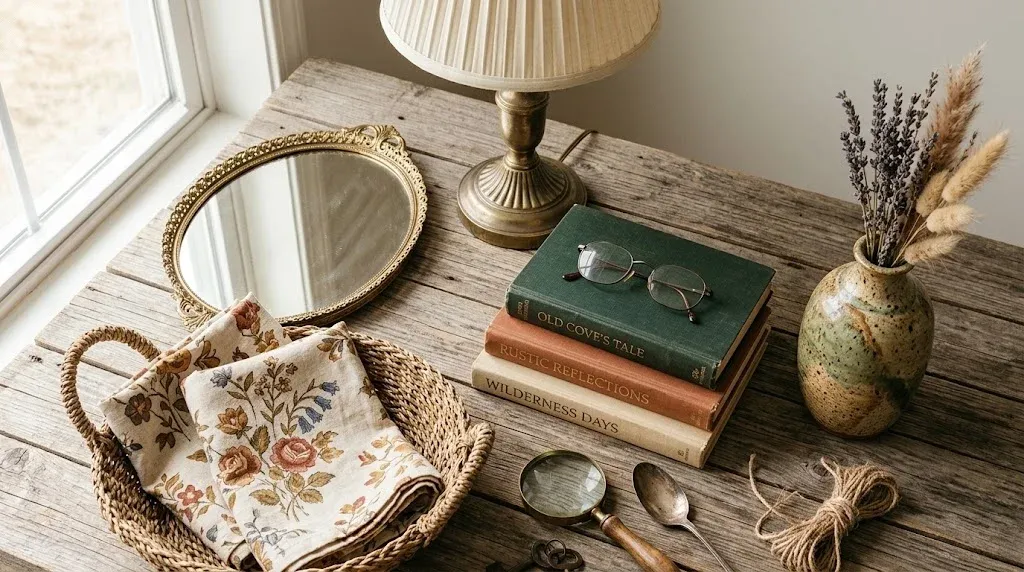
Three mistakes to dodge
- Buying a piece because it’s cheap, not because it fits your plan.
- Matching everything. A matched set looks like a showroom, not a home.
- Skipping measurements. Vintage furniture is often smaller or oddly proportioned, so bring a tape measure.
Let Vintage Lamps Do the Heavy Lifting in a Small Apartment
Want the biggest change for the least money? Look up. Or at least, look at your lighting.
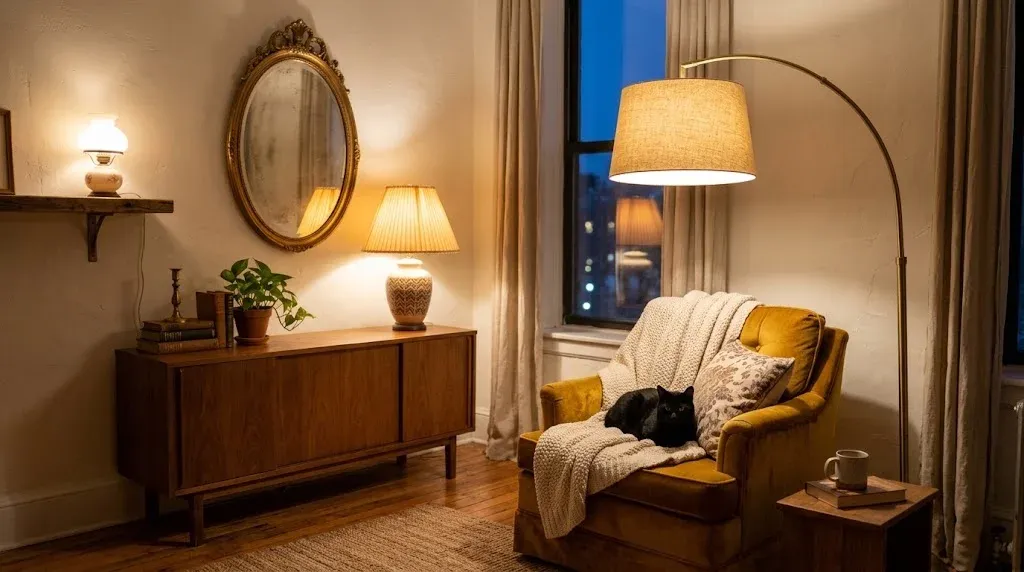
Most rentals come with one harsh overhead light that flattens everything. Fix that with layers. In a small apartment, vintage apartment decor works best when lighting does two jobs at once: it lights the room and it acts as sculpture.
Try the three-light rule
Aim for at least three light sources in your main room:
- A floor lamp to fill a dark corner. A vintage arc lamp or a slim brass floor lamp draws the eye upward and frees up surface space.
- A table lamp on a sideboard or nightstand. Ceramic bases from the 1960s and 70s are easy to find and full of character.
- A small accent lamp on a shelf or desk for a soft glow in the evening.
Use warm bulbs, around 2700K, so everything feels cozy. Frosted globes or filament-style bulbs suit exposed fixtures nicely.
Borrow light with a mirror
A vintage mirror across from a window bounces daylight around and makes a small apartment feel bigger. Look for ornate gold frames, rounded Art Deco shapes, or simple wood-framed ovals. Mirrors from thrift stores are often cheap, and a quick wipe is all they need.
One catch: older lamps need a safety check. We’ll cover that in a few minutes, so hold off plugging in anything until you’ve read it.
Mix Old and New So Your Place Doesn’t Feel Like a Museum
A home that’s 100% vintage can feel like a stage set. Designers say the same thing: an apartment packed with old pieces turns into a museum, and a few tasteful accents are usually enough. Done right, vintage apartment decor feels collected, not themed.
The trick is to mix old and new on purpose. A simple starting point is a 70/30 split, with roughly 70% modern, everyday pieces and 30% vintage ones. Not a law. Just a guardrail.
Easy ways to mix old and new
- Modern sofa, vintage coffee table. The clean lines of the sofa let the older table shine.
- Sleek shelving, vintage objects. Stack old books, add a brass candlestick, and tuck in a ceramic vase.
- Contemporary bed, vintage nightstands. Mismatched nightstands look charming, not messy, if the wood tones are close.
- Retro decor as a filler. Can’t find the real thing? A new retro piece can sit next to a true vintage item. Just don’t pay vintage prices for it.
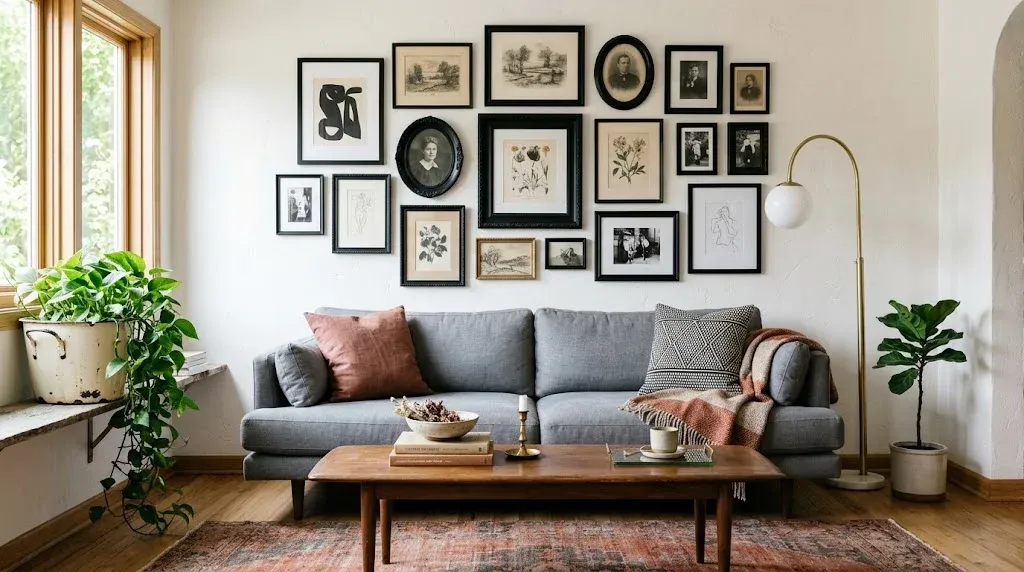
Build a gallery wall that doesn’t look chaotic
A gallery wall is a vintage apartment decor favorite because thrifted frames are cheap and endlessly varied. Keep it tidy by painting mismatched frames the same color, or by sticking to one frame finish like black or gold. Lay everything on the floor first, then copy the layout onto the wall.
A quick real-life example
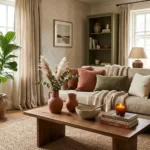
Picture a plain white living room with a gray sofa. Add a thrifted walnut coffee table, a pair of ceramic lamps from a flea market, and a vintage rug in faded reds. Hang one oversized framed print behind the sofa. That’s it. Three vintage pieces, one modern sofa, and the whole room suddenly has a point of view. Total cost? Often under $300 if you shop patiently.
Before you leave any room, try this: remove one thing. If the space still looks good, it was too much.
Use Renter-Friendly Tricks That Protect Your Deposit
Your lease says no nails. Your style says otherwise. Luckily, renter-friendly decorating has come a long way.
- Command strips and hooks work well for lightweight frames and mirrors. Check the weight rating and follow the instructions closely.
- Lean your art. Large vintage prints or mirrors can rest on a dresser, shelf, or floor. It looks relaxed and needs zero holes.
- Vintage rugs hide tired flooring, add pattern, and make a small apartment feel layered. Use a rug pad so nothing slides around.
- Swap the hardware. Replacing cabinet pulls with antique brass ones is a cheap upgrade. Store the originals in a labeled bag and put them back when you move out.
- Use textiles. Vintage linens, quilts, and embroidered pillow covers add softness without a single screw.
- Try thrifted planters. A ceramic jar or old enamel pot makes a plant look intentional.
Want one more? Use removable wallpaper on a small area, like the back of a bookshelf. It adds pattern and peels off cleanly in most cases.
Here’s why this matters: vintage apartment decor travels well. Most pieces are movable, which is a big part of the appeal for renters. Buy things you love, and they’ll follow you to your next place.
Run a Safety Check Before Anything Comes Home
Pretty doesn’t mean safe. Older pieces can hide problems, and a good-looking lamp isn’t worth the risk. The best vintage apartment decor is the kind you can live with without worry, so here’s a short checklist.
Lamps and lighting
Check the cord first. If it feels brittle, looks frayed, or is covered in cloth, plan on rewiring or skip it. One UK lighting specialist charges around £90 to rewire an average table lamp, including new parts and a safety test. In the US, a local lamp repair shop can usually give you a quick quote.
Lead is another issue. Lead solder and paint were common in lighting made before the 1970s, so let a professional handle any restoration that disturbs old finishes.
Painted furniture and ceramics
Lead paint is a concern in painted furniture, ceramics, and dishware made before 1978. If you suspect lead, don’t sand or scrape the surface, since that releases particles into the air. Bob Vila has a helpful guide on how to test for lead paint. And skip eating or drinking from old ceramics unless you know they’re safe.
Wood, pests, and smells
Termites can hitch a ride on secondhand wood furniture, frames, and wooden decor. Look for tiny holes, powdery dust, or tunnels. Give each piece a sniff test, too. A strong musty smell can point to mold, and it rarely goes away.
Clean before you display
Give every piece a proper wash before it earns a spot in your home. Wipe wood with a damp cloth and mild soap, then dry it right away. Soak glassware in warm, soapy water. Wash fabrics on a gentle cycle, or dry-clean delicate ones. Skip harsh chemicals on old finishes, since they can strip the very patina you paid for.
Your quick in-store checklist
- Wobble-test every chair and table.
- Open every drawer and check the back panel.
- Inspect the lamp cord and plug.
- Look underneath for holes and stains.
- Ask where it came from and whether anyone has tested it for lead.
FAQs: Vintage Apartment Decor
What counts as vintage in home decor?
Generally anything 20 to 99 years old. Antiques are 100 or older, and retro means new items styled after older eras. Age isn’t the only factor, though. Condition, craftsmanship, and a clear link to a specific period matter too, so look for pieces that truly represent the era they came from.
How do I mix vintage and modern furniture?
Start with a modern base, like a sofa or bed, then add one or two vintage anchors. Repeat a color or wood tone across old and new pieces so they feel connected. A rough 70/30 split works well for most apartments, but trust your eye.
Is vintage apartment decor expensive?
Not necessarily. Thrift stores and flea markets offer small accents for under $30, while rare designer pieces cost far more. Set a budget, buy one anchor piece you love, and fill in with cheaper finds. Patience beats a big wallet every time.
Can I use vintage apartment decor in a small rental?
Yes. Use leaning art, adhesive hooks, vintage rugs, and lamps instead of drilling or painting. Choose a few well-chosen pieces rather than filling every surface, and keep furniture on slim legs so the floor stays visible and the room feels open.
Is it safe to use thrifted lamps?
Only after a check. Look for frayed or cloth-covered cords, loose sockets, or damaged plugs. If in doubt, have a lamp shop rewire it with a modern cord and grounded plug. Lead was common in older paint and solder, so avoid sanding or scraping old finishes.
Conclusion
You don’t need to overhaul your whole place. Pick one corner, one era, and one small budget. Maybe it’s a thrifted lamp, a vintage mirror, and a secondhand rug under your favorite chair.
The best vintage apartment decor grows slowly. Each piece tells you a little about what you actually like. Over time, your place starts to feel less like a rental and more like a home with a point of view.
Remember the basics: choose an anchor, mix old and new, use renter-friendly tricks, and check every piece for safety before it moves in. Skip the pressure to finish fast. The slow hunt is half the fun.
So here’s your next step: measure one wall this weekend, set a $100 limit, and visit one thrift store or flea market. Bring a tape measure, a flashlight, and a little patience. Your future favorite piece is probably already sitting there, waiting for someone to notice it.