You know that corner of the room where everything just lands? Mail, chargers, a stack of books you swear you’ll start next week. It begins small, then slowly takes over.
Good living room shelves fix that fast. They lift clutter off the floor, give your favorite things a proper home, and make a bare wall look finished. The wrong ones, though, sag, crowd the room, or come crashing down at 2 a.m.
This guide covers how to choose the right type, get the size right, hang shelves safely, and style them so they look good without much effort. You’ll leave knowing exactly what to buy and how to set it up.
How to Choose Living Room Shelves That Fit Your Space
Choosing living room shelves starts with one simple question: what will they actually hold? Books are heavy. Plants need light. Picture frames weigh almost nothing. Answer that first and everything else gets easier.
Here’s how the main types compare.
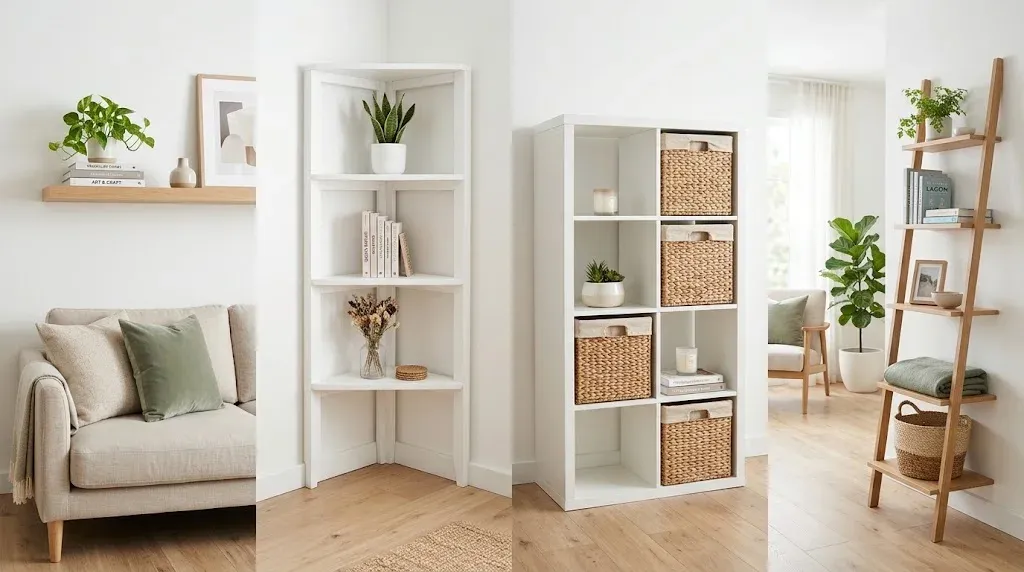
Floating Shelves
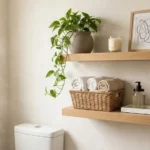
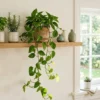
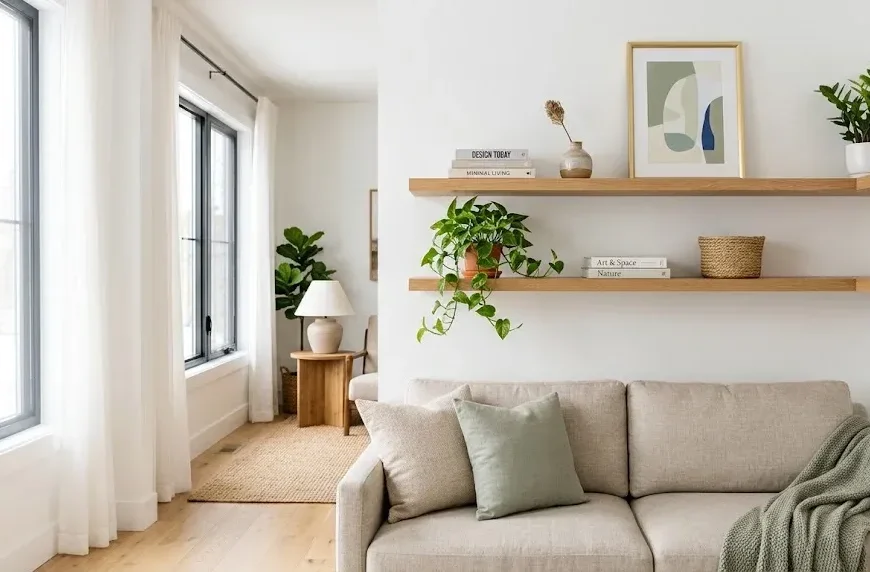
These mount to the wall with hidden brackets, so the wall looks clean and the floor stays free. Floating shelves suit plants, framed prints, and a few favorite books. They’re only as strong as the wall behind them, so read the installation section before you buy.
Corner Shelves
Almost every living room has one awkward corner nobody uses. Corner shelves turn that dead spot into storage without stealing floor space. Stagger a few at different heights and the corner looks planned, not leftover.
Bookcases and Cube Shelves
If you own a lot of stuff, a freestanding bookcase beats wall shelves. Cube shelves are even more flexible. You can mix open cubes with baskets and move things around as your collection grows.
Ladder and Picture Ledge Shelves
Ladder shelves lean against the wall with no drilling, which makes them a favorite for renters. Picture ledges are slim and cheap, and they’re great for art you like to swap out.
Material matters too. Wood adds warmth, metal looks lighter, and glass feels airy but shows every fingerprint. Pick what matches your sofa and floor, not whatever is trending this month.
Shelf Depth, Height and Spacing: Getting the Size Right
Size is where most people slip up. A shelf that looks perfect in a store can feel enormous on your wall.
Start with shelf depth. Most living room shelves run about 10 to 12 inches deep, enough for books and décor without jutting far into the room. A Singapore furniture retailer suggests 25 to 30 cm for a similar job. Go much deeper and items disappear into the back while dust piles up where you can’t reach. Go much shallower and books tip forward.
Height depends on your room. In smaller spaces, units around 60 inches or lower tend to work, while 72 to 84 inches suits larger rooms where you want real impact.
Spacing gets easy once you measure your tallest items first. Most hardcovers need roughly 10 to 12 inches of clearance. Vases and sculptures need more. Leave a little extra headroom so you can slide things in and out without knocking everything over.
Here’s a simple rule for weight. Keep heavier, frequently used items on lower shelves and lighter decorative pieces higher up. It keeps the whole unit balanced and goes easier on your wall.
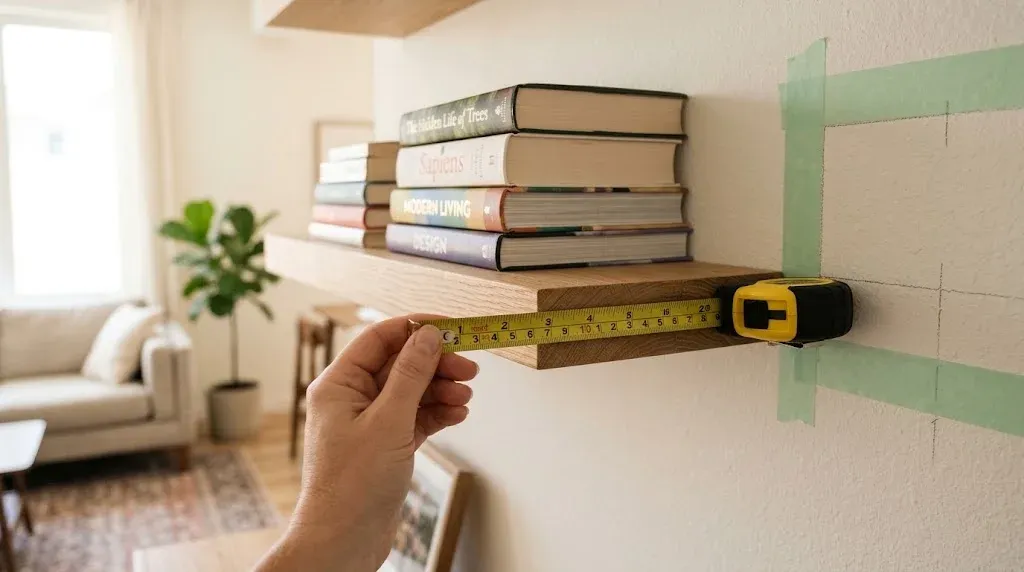
One last trick: stick painter’s tape on the wall in the shape of the shelf before you buy. You’ll see the real size in about ten seconds, and it’s much cheaper than returning a bookcase.
Open Shelving vs Closed Storage: What Works Better?
Open shelving looks great in photos. In real life, it’s honest to a fault. Everything you own is on display, including the stuff you’d rather hide.
Here’s the trade-off. Open shelves make a room feel lighter because your eye travels past them instead of hitting a flat door. They also show off your personality. But they demand tidiness, and they collect dust.
Closed storage hides the mess. Doors and drawers swallow remotes, cables, board games, and kids’ toys. The downside? A whole wall of doors can feel heavy and boxy.
So what do most people end up doing? A mix. One furniture guide points out that many well-functioning rooms use open shelves on top with drawers or doors below. You get a display zone at eye level and a hiding zone at floor level.
Designers are moving the same way, at least in kitchens. They say open shelving in 2026 is becoming more restrained and intentional instead of running along entire walls. The idea carries over to the living room nicely.
If you can’t decide, try a few open living room shelves above a closed cabinet. Put the pretty things up top and the remote controls and chargers behind a door.
Small Living Room Storage: Shelves That Don’t Crowd the Room
Small rooms punish bulky furniture. The fix is to use your walls instead of your floor.
If floor space is tight, wall-mounted shelves are a practical option. Floating shelves and corner shelves both keep the floor visible, which makes any room feel bigger. Ladder shelves work well too, since they’re narrow at the top and need no mounting.
Height helps as well. Placing shelves above eye level draws the eye upward and can make a compact room look taller. Hang one or two high, then keep the lower wall clear.
Color is the other lever. Slim living room shelves in a pale finish nearly disappear into the wall. IKEA’s design team notes that simple finishes help shelves blend into the interior instead of dominating it, which is exactly what you want when space is tight.
A few more small living room storage ideas:
- Use baskets on lower shelves to hide cables, throws, and toys.
- Choose one tall unit instead of several short ones. One big shape looks calmer than five small ones.
- Keep walkways at least a stride wide. If you have to turn sideways, the shelf is too deep.
Don’t fill every inch, either. A small room with a half-empty shelf feels more spacious than a full one.
How to Hang Floating Shelves So They Don’t Sag
A floating shelf looks like magic until it starts to lean. The reason is simple. Because there’s no visible support, any weight on the shelf pulls hard on the wall anchors like a lever.
That’s why your wall matters more than your bracket. One manufacturer’s guide says its heavy-duty shelves can carry 90 to 100 lbs when mounted into two studs and 135 to 150 lbs with three studs, and it doesn’t recommend drywall anchors alone. That’s one brand’s numbers, so always check your own shelf’s rating. Still, the pattern holds across the board: wall studs beat anchors, every time.
When no stud is in the right spot, anchors can work for lighter loads. For drywall, butterfly or toggle anchors are the right pick, and it’s smart to stay near the low end of an anchor’s weight rating.
Here’s the process:
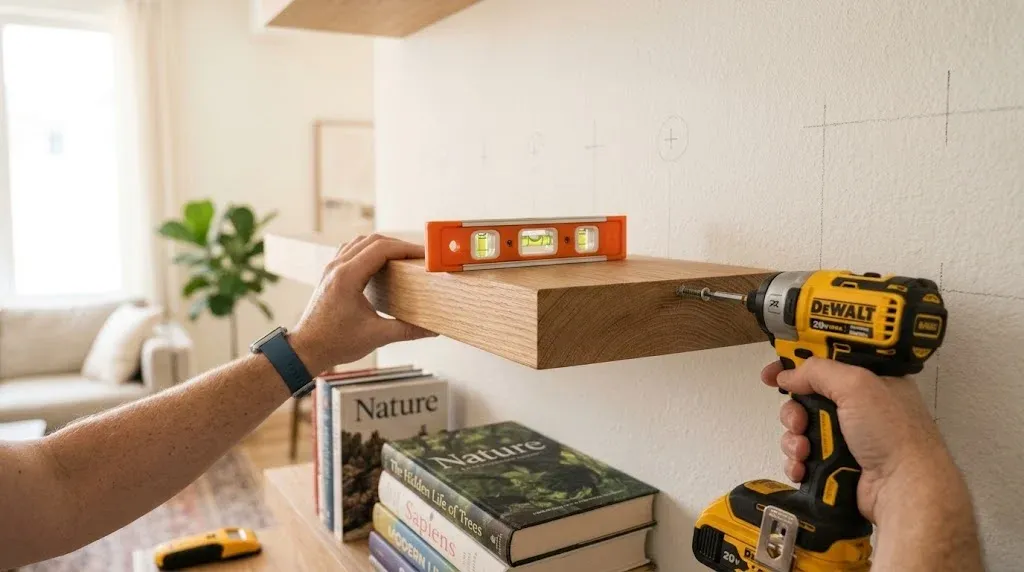
- Find your studs. Slide a stud finder along the wall and mark each one with a pencil.
- Mark your height. Hold a level against the wall and draw a straight line.
- Drill pilot holes. This stops the wall from cracking and makes screws go in straight.
- Mount the bracket. Screw into studs wherever you can, and add anchors in the remaining holes.
- Slide the shelf on and test it. Add items gradually, not all at once.
When you hang living room shelves that will hold books, aim for studs every time. Books add up faster than you’d think.
Shelf Styling: Decor Ideas That Look Collected, Not Cluttered
Here’s where living room shelves go from storage to something people actually notice. And the good news is, you don’t need a designer.
Start from zero. Take everything off. A blank shelf lets you see what you actually have to work with.
Place your big pieces first. Large art, a framed photo, or a stack of oversized books gives each shelf an anchor. Build around those.
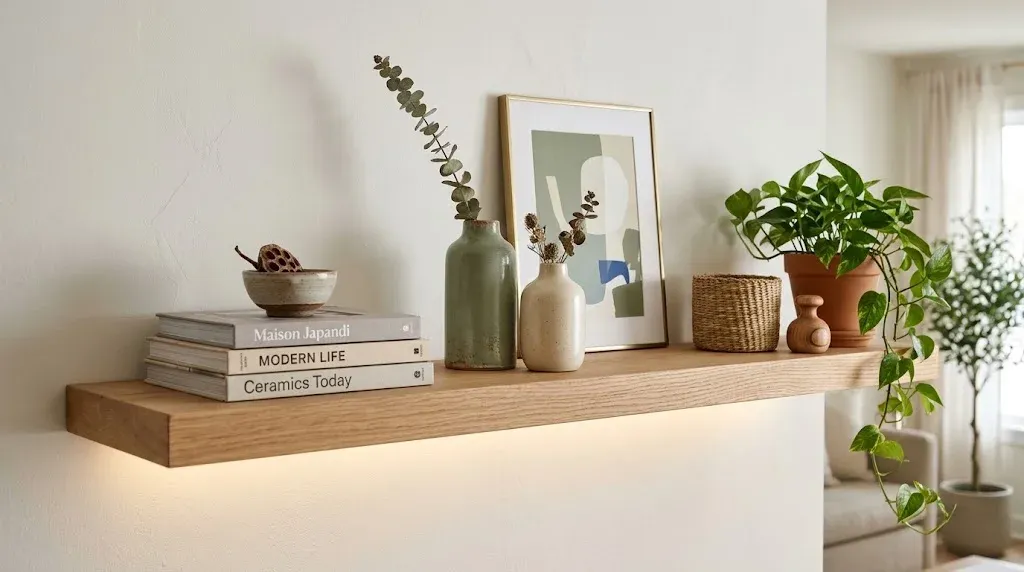
Think in odd numbers. Interior designers keep coming back to this one. Grouping things in threes feels natural, and leaving some areas empty gives items room to breathe so the shelf feels curated rather than crowded.
Mix heights. Here are some combos that work:
- A short stack of books with a small bowl on top.
- Two vases, one tall and one short, sitting side by side.
- A framed print leaning against the back, with a candle in front.
- A plant on one end, balanced by a basket on the other.
Plants are the easiest upgrade. One blogger notes that plants can become the main reason to have floating shelves at all, and greenery softens hard lines.
Step back often. After placing a few things, walk across the room and look from a distance. What looks balanced up close can look lopsided from the sofa.
Finally, hide the boring stuff. Woven baskets and lidded boxes can hold remotes, charging cables, and small odds and ends, so your living room shelves stay tidy even on a messy week.
What’s Trending for Shelves in 2026
A few shifts are worth knowing about, especially if you’re planning a bigger upgrade.
Built-in storage is hot. Yelp’s 2026 summer report found searches for built-in cabinets rose 13,389 percent compared with the previous year. That’s a huge jump, and it shows people want storage that looks custom without a full renovation.
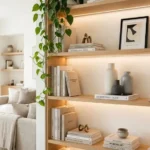
Lighting is another one. Designers are pairing shelving with lights, and one 2026 industry post names lit floating shelves as a major design trend. You don’t need a pro to try it. Small battery puck lights or thin LED strips can highlight specific groupings after dark and give the wall a warm glow in the evening.
Color on the inside is catching on too. One design outlet points to wallpaper or paint on the back of shelves to add depth and color where you least expect it. It’s a cheap move that makes plain living room shelves look custom.
And as mentioned earlier, the overall mood is “less, but better.” Instead of one long run of identical boards, think a couple of well-placed units with room around them.
Five Mistakes to Skip
These are the slip-ups that show up most often with living room shelves:
- Buying before measuring. Use painter’s tape first. Always.
- Ignoring the wall. Drywall, plaster, and brick each need different anchors. Check what you have.
- Overloading. Even sturdy shelves have limits. Spread heavy items across more than one shelf.
- Filling every gap. Empty space is part of the design.
- Matching everything. Five identical frames look like a showroom. Mix textures and sizes so it feels like your home.
FAQs: Living Room Shelves
How deep should shelves in a living room be?
Most land between 10 and 12 inches deep, according to one retailer, which fits books and decor comfortably. That depth gives enough room for display items without sticking far into the room. Smaller spaces can go slimmer, while heavy book collections may want a bit more.
What should I put on my shelves?
Mix books, framed photos, plants, and a few meaningful objects. For living room shelves, group items in threes, vary heights, and leave some space empty. Baskets and lidded boxes can hide remotes and cables, so everyday clutter stays out of sight.
Do floating shelves need to go into studs?
Not always, but studs are much stronger. Anchors can work for lighter loads, yet one guide says drywall anchors alone are not recommended for its heavy-duty shelves. If you plan to stack books, find the studs first.
Which shelves work best in a small living room?
Wall-mounted floating shelves, corner units, and ladder shelves save the most floor space. The best living room shelves for a small room are slim, pale in color, and hung a little higher, so the eye travels up and the room feels roomier.
How much weight can a floating shelf hold?
It depends on the bracket, the shelf, and what it’s fixed to. One manufacturer lists 90 to 100 lbs on two studs and 135 to 150 lbs on three. Always check your own shelf’s rating, and load it gradually.
Conclusion
Good living room shelves do three jobs at once: they store things, show off what you love, and make the room feel finished. The trick is to get the basics right first. Pick a shelf type that fits your stuff, measure before you buy, mount into studs whenever you can, and leave some breathing room when you style.
Here’s a simple plan for this weekend. Grab a tape measure and painter’s tape, and mark where you’d put a shelf. Check your wall with a stud finder. Then decide what goes on it before you order anything.
Small, steady steps beat a big overhaul. Start with one wall and one shelf, and see how it feels.