You finally unpacked the last box. The books are on the shelf, a plant sits nearby, and somehow the whole thing still looks like a storage unit. Sound familiar?
Bookshelf styling trips up almost everyone, and it has nothing to do with taste. Nobody ever tells you the order to do things in. This guide fixes that. You’ll learn how to clear the shelves, build a base with your books, add height and layers, and finish with objects that feel like you.
Whether you own a built-in, a budget unit, or one wall shelf in a rented flat, the same rules apply. By the end, you’ll know how to style a bookshelf in a single afternoon, using mostly things you already own.
1. Bookshelf Styling Starts With a Clean Slate
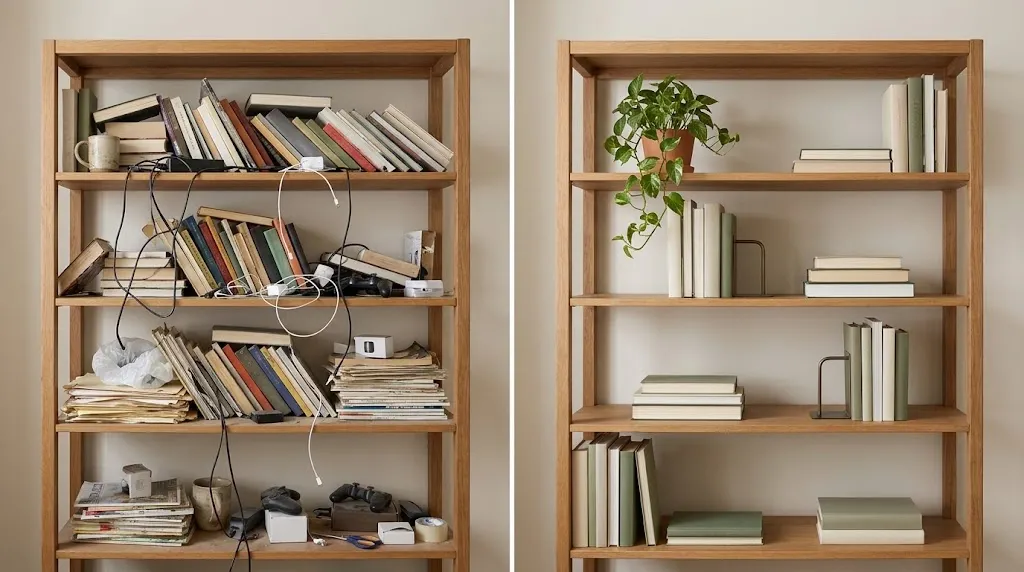
Here’s the part most people skip: you can’t style what you can’t see.
Bookshelf styling goes so much smoother when you begin with empty shelves. Pull everything off. Yes, everything. Park it on the floor or a spare table, and wipe each shelf down while it’s bare. It feels dramatic, but it works like clearing your desk before a big project.
Now sort the pile into three groups: books, objects, and stuff that doesn’t belong. That third pile is usually the biggest. Loose chargers, old receipts, the takeaway menu from last spring. Those go in a drawer or the bin, not back on the shelf.
Edit Before You Arrange
Be a little ruthless here. If you haven’t opened a book in years and you don’t love how it looks, pass it to a friend or donate it. Your shelf should hold things you’d be happy to see every day. Fewer, better items beat a packed shelf every time.
Measure Your Shelf Gaps
Grab a tape measure and jot down the height of each gap. This tiny step saves you from the classic loop of placing a vase, finding it’s too tall, and starting over. It also tells you which shelves can handle a big piece, like a lamp or a framed print, and which need low, flat items.
Finally, snap a photo of the empty shelves. You’ll want it later when you check your progress from a distance. If you’d like a second opinion on the process, this six-step shelf guide from Homemade Lovely is a friendly companion read.
2. Build Your Foundation With Books
Books are the backbone of any shelf, even if you only own a handful. Think of them as the base layer of an outfit. Everything else sits on top.
Mix Upright Rows With Horizontal Stacks
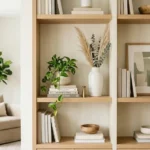
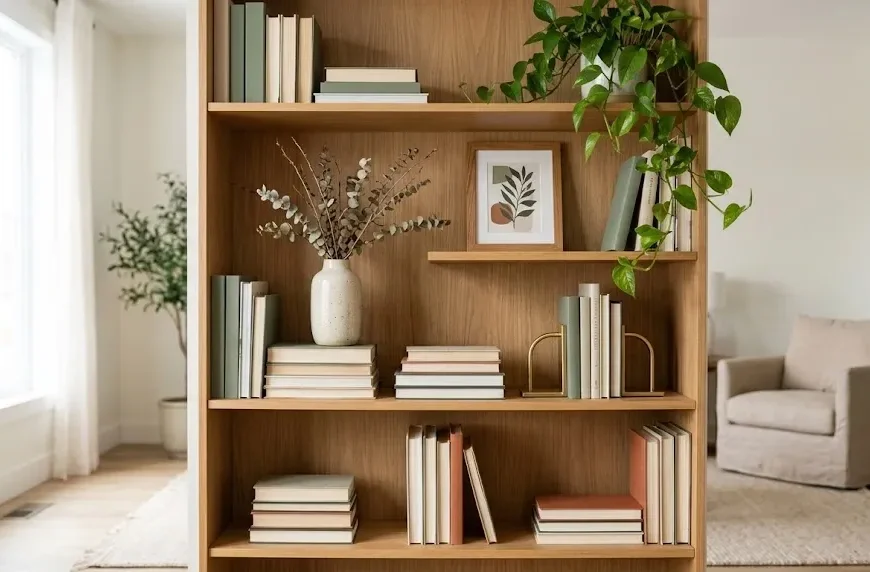
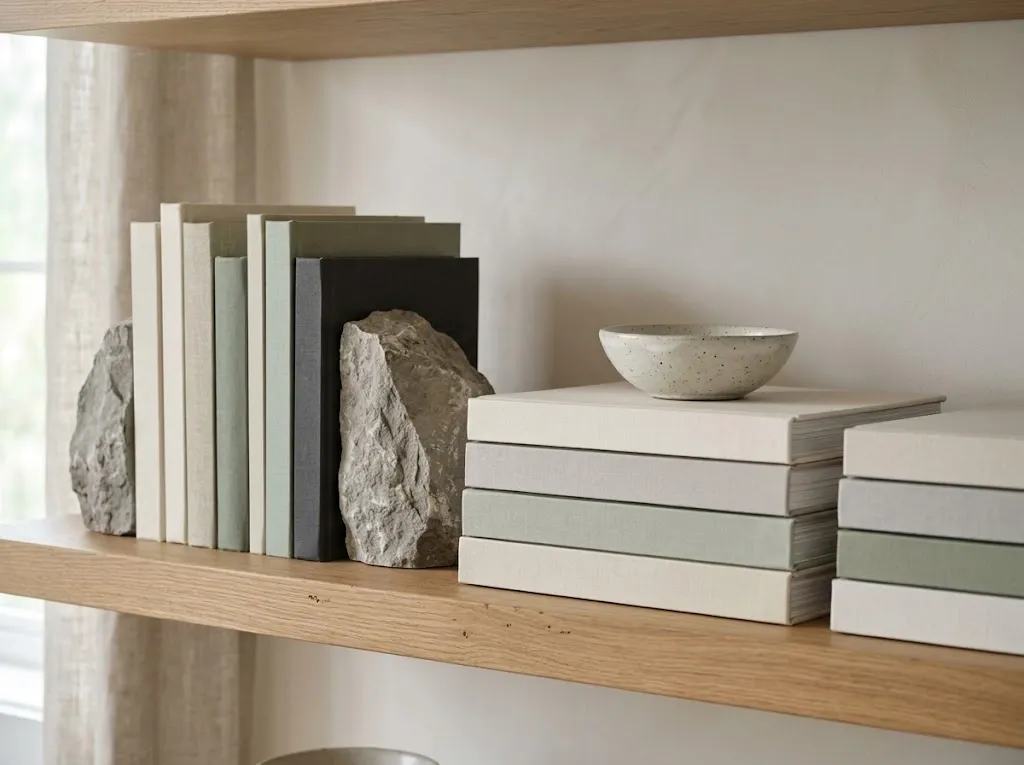
Here’s a trick designers use constantly: don’t line every book up like a school library. Fill part of a shelf with upright books, then stack a few flat beside them. Stacking books horizontally gives you a ready-made platform. A small bowl, a candle, or a ceramic figure can sit right on top, which adds height variation without buying a thing.
Use bookends to stop upright rows from slumping into the gap. Heavy, simple ones work best. Plain stone or wood bookends blend in, while a quirky pair can become part of the display.
Give Coffee Table Books a Starring Role
Big coffee table books are your secret weapon. Their sturdy spines and bold covers look great, and they make perfect risers. Lean one against the back of the shelf with its cover facing out, or lay two flat as a pedestal for a vase.
Mostly paperbacks? No problem. Group them tightly so they read as one solid block, and save the prime spots for your prettiest hardbacks.
Honestly, the easiest bookshelf styling move you can make is changing how your books sit. One shelf of stacks and one of upright rows already looks more intentional than ten identical rows.
3. Use Height Variation and the Rule of Three
Ever notice how a shelf with everything at the same height feels flat? It’s like a row of soldiers. Height variation is what makes the eye travel.
Aim for a loose triangle on each shelf: one tall item, one medium, one low. Designers call this the rule of three. Odd numbers tend to feel more natural than pairs, which can look stiff and staged.
Pick One Focal Point
Choose a hero for each section. It could be a large framed print, a big vase with a few branches, or a table lamp. Everything else plays a supporting role. Without a focal point, the eye bounces around with nowhere to land, so the shelf feels busy even when it’s tidy.
Balance by Weight, Not by Mirror
Perfect symmetry looks formal. For a relaxed vibe, balance the shelf by visual weight instead. A tall plant on the left can be offset by a chunky book stack and a small frame on the right. Squint at the shelf. If one side looks heavier, shift things until it settles.
One mistake to avoid: lining everything up along the front edge. Pull a few items back and nudge others forward. Small changes in depth make a shelf feel collected rather than lined up for inspection.
Good bookshelf styling is mostly about balance, not about buying more stuff. For example, moving a single vase from one end of a shelf to the other can change the whole look in about ten seconds.
4. Layer Things and Leave Some Negative Space
Empty spots feel scary, so most of us fill them. Try not to.
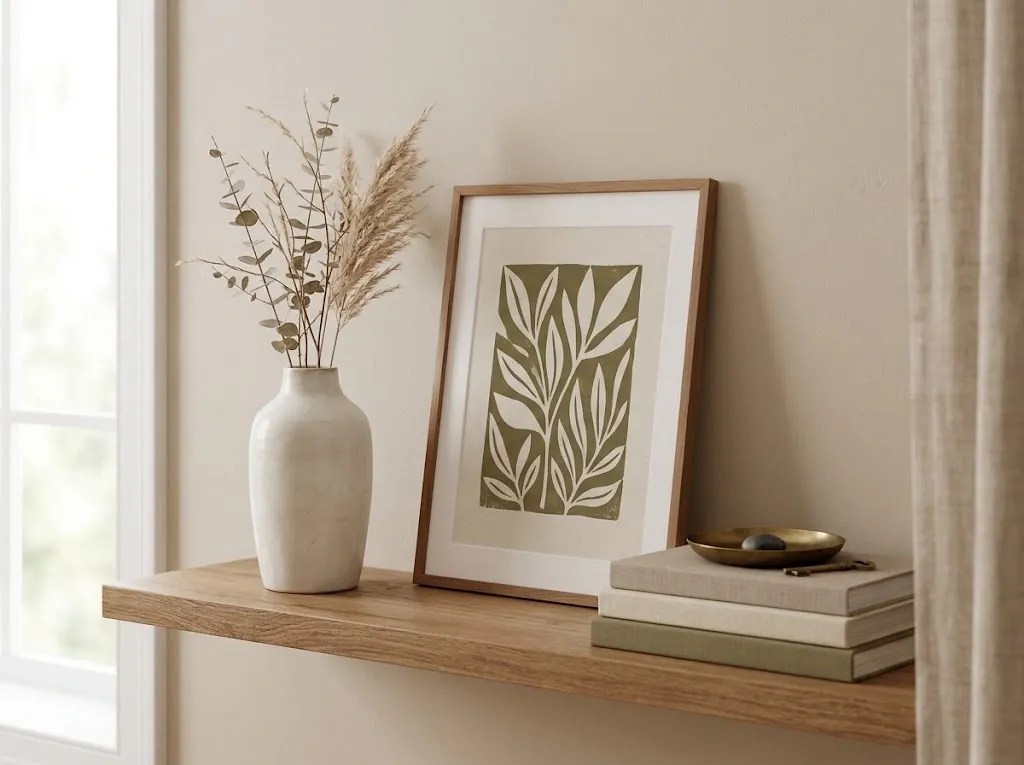
Negative space, the plain empty areas between objects, is what lets your favorite pieces stand out. Think of it like pauses in a conversation. Without them, nothing lands. If you have built-in bookshelves, remember that the back panel is part of your canvas too, and bare patches of it help the objects pop.
Layering Adds Depth
Layering simply means putting smaller things in front of larger ones. Lean a small frame in front of a big print. Set a low bowl before a taller vase. Place a short stack of books beside a plant. Each layer adds depth, and depth is what makes a flat surface look rich.
Corral the Small Stuff
Tiny trinkets scattered along a shelf read as clutter. A small tray, dish, or basket turns five random bits into one deliberate group. Use one tray per shelf at most, or you’ve just moved the clutter into a new container.
Leave at least one shelf, or half of one, mostly empty. Bookshelf styling needs that pause the way a song needs a rest. If your shelf still feels busy after you’ve finished, the fix is usually taking something away. In bookshelf styling, removing one item often does more than adding three.
Here’s a quick test. Step back about two meters and take a photo. Your phone camera shows you the clutter your eyes have learned to ignore.
5. Add Decorative Objects, Picture Frames, and Plants
Once your books and big pieces are in place, it’s time for the fun part. This is where a shelf starts to look like yours.
Think in Small Vignettes
A vignette is a mini scene made of two or three things that belong together. For example, a short book stack, a small ceramic bowl, and a brass candle holder. Build a few of these across your shelves rather than scattering decorative objects one by one. Vignettes give the eye a place to rest, and they make a big shelf feel far less overwhelming.
Frames, Art, and Mementos
Picture frames add personality and a vertical shape that breaks up all those horizontal lines. Mix sizes and finishes, and lean them instead of hanging them. A travel photo, a child’s drawing, or a postcard from a friend all count. They give a shelf something no store-bought accessory can. For more ideas on layering art and accessories, Caitlin Wilson’s shelf-styling lesson breaks it down well.
Bring in Something Living
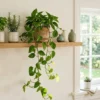
Plants soften all the hard edges. A trailing pothos on a top shelf spills down beautifully, while a small succulent suits a tight gap. Short on light? A good faux plant works fine, and nobody will judge you.
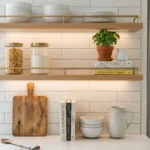
You don’t have to spend a cent here. Raid the kitchen for a pretty jug, borrow a vase from another room, or use a stack of coasters as a mini riser. Bookshelf styling is really about arranging what you love, and that can start with what’s already in your home.
Mix textures too. Wood, glass, ceramic, and metal side by side keep a neutral shelf from feeling dull.
6. Choose a Color Plan That Fits Your Room
Color is the quickest way to make a shelf look pulled together. The trick is picking a plan and sticking with it.
Color-Coordinated Books
Sorting books by color has become hugely popular. Rainbow rows look playful, while a single-tone shelf looks calm and modern. If your collection feels messy, color-coordinated books are an easy way to bring order. The trade-off? Finding a specific title takes longer. Some people keep a “working” shelf organized by subject and a “display” shelf sorted by color.
What About Backward Books?
Spines-in books, with the pages facing outward, give a soft, neutral look. Plenty of designers like it. Plenty of book lovers hate it, since you can’t read a single title. If you try it, keep it to a small section and save your favorite spines for the rest.
Paint the Shelves Themselves
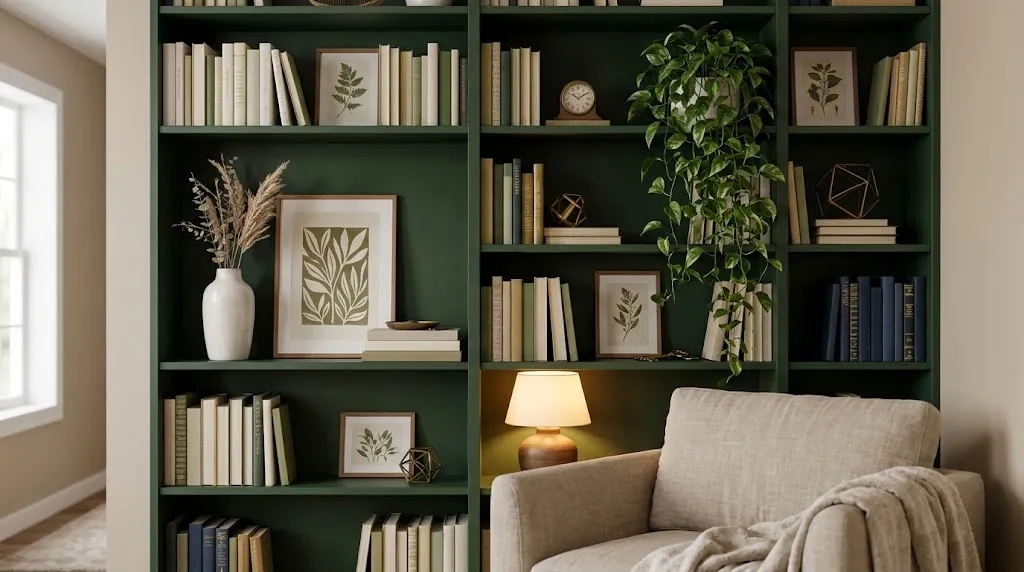
Designers are now suggesting that people paint their shelves so they stand out, instead of blending them into the wall. Deep green, navy, or warm terracotta can make built-in bookshelves look custom, and they make objects pop. If you rent, tuck a painted board or some peel-and-stick wallpaper behind the shelves instead.
A good rule: pick two or three accent colors from your room and repeat them on the shelf. That repetition is what makes bookshelf styling feel cohesive instead of random.
7. Bookshelf Wealth, Book Drenching, and What’s Trending in 2026
You’ve probably seen “bookshelf wealth” floating around social media. It’s a celebration of shelves packed with books and objects you actually love, and it was earmarked as the biggest interior design trend of 2024. It hasn’t gone away.
The newest twist is book drenching. Homes & Gardens covered it in April 2026 as a trend that wraps an entire room in books, color, and character. Picture floor-to-ceiling shelves that make a big room feel snug. Interest in shelving is climbing too, since shelving searches rose 850% year on year on Press Loft. People clearly want storage that looks good.
Do you need a wall of books to join in? Not at all. Here’s how to use the trend your way:
- If you love books, lean in. Fill a whole wall if space allows.
- If you own few books, mix in art, ceramics, and plants, and leave gaps.
- If you rent, use freestanding units. They look just as good as built-ins.
Trends are a menu, not a rulebook. Bookshelf styling that fits how you actually live will outlast any hashtag.
And if you’re short on time, even a ten-minute bookshelf styling refresh each season keeps things from going stale. Swap one plant, rotate a frame, restack a few books. Done.
FAQs: Bookshelf Styling
1. How many items should I put on one shelf?
Aim for three to five groupings per shelf, depending on its width. Stick to odd numbers, mix heights, and leave around a third of the space open. If you’re unsure, start with fewer pieces and add one at a time until the shelf feels balanced.
2. How do I make my shelves look less cluttered?
Edit first. Remove anything that doesn’t earn its spot, then group small items on trays. Good bookshelf styling leaves visible empty space and repeats a few colors across shelves. If it still feels busy, take away one more item before you add anything new.
3. Can I style shelves without many books?
Absolutely. Use frames, ceramics, plants, baskets, and a few large art books as your base. Leave more negative space than you would with a full library, and group things in threes so the shelf looks planned rather than sparse.
4. Is color-coding books worth it?
It can be, if you want a calm, polished look. It makes bookshelf styling easier because color does the organizing for you. The downside is hunting for specific titles. A mixed approach works well: color-sort your display shelves and keep reference books grouped by subject.
5. How often should I restyle my shelves?
Whenever it starts to bore you, though seasonal swaps are an easy habit. Change two or three items every few months, such as a plant, a frame, or a stack of books. Small tweaks keep the shelf feeling fresh without a full redo.
Conclusion
Here’s the short version. Clear everything off, sort what’s worth keeping, and build from the books up. Mix stacks with upright rows, vary the heights, layer smaller pieces in front, and leave room to breathe. Then add a plant, a frame, or one object with a story behind it.
The best part about bookshelf styling is that nothing is permanent. If a layout bores you in three months, move things around. No paint, no tools, no drama.
Don’t wait for the perfect weekend, either. Pick one shelf tonight, empty it, and rebuild it using the rule of three. Take a photo, step back, and tweak. Once one shelf looks right, the rest follow quickly.
Your next step is simple: clear one shelf before the weekend and see how it feels.