You’re standing in front of your shelves with an armful of stuff. Books, a candle, that bowl from your trip, a few frames. You set everything down, step back, and something still feels off. Sound familiar?
Good shelf styling ideas don’t depend on expensive pieces. They depend on a handful of simple moves that designers repeat in every home, and you can borrow all of them. In this guide, you’ll get a step-by-step method, the rules that make a shelf feel balanced, and the mistakes that make one look cluttered. By the end, you’ll be able to style any shelf in a single afternoon.
Shelf Styling Ideas Start With a Blank Slate
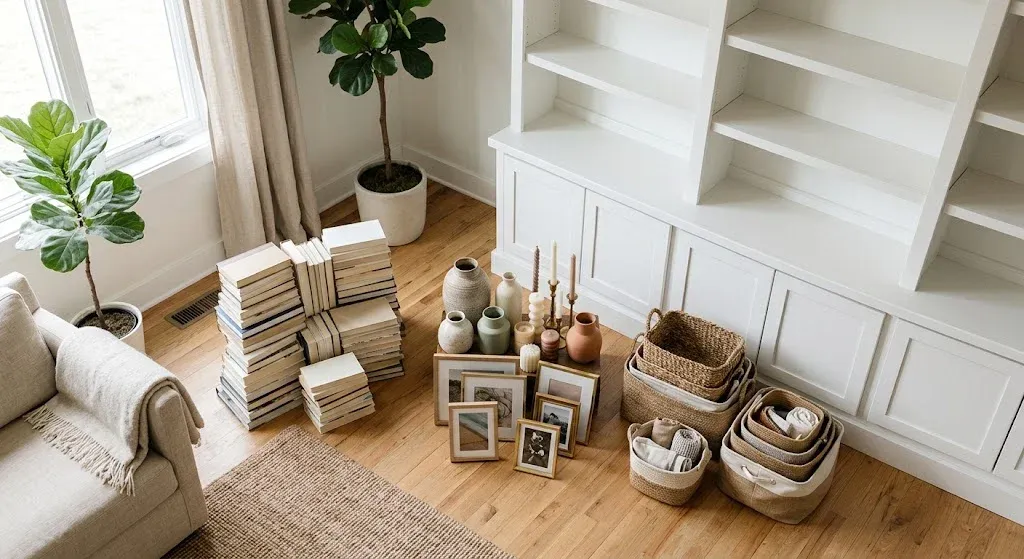
Here’s the first of our shelf styling ideas, and it’s the one most people skip: take everything off the shelves. All of it.
It feels like extra work, I know. But if you style around what’s already there, you end up with the same arrangement in slightly different spots. A bare shelf shows you the real size of the space, and it lets you see each object fresh, almost like shopping in your own home.
Don’t stress if this takes longer than expected. Styling built-in shelves can be challenging, even for experienced designers, and they do it for a living.
Sort Before You Place
Make three piles:
- Display: things you love or that look good.
- Hide: practical stuff like chargers, paperwork, and spare batteries.
- Let go: anything broken, boring, or kept out of habit.
Try to display about half of what you pulled out. One designer featured by Western Living lays out everything she wants on a shelf and usually ends up using only half of it. That’s a handy gut check.
Wipe Down, Then Step Back
Dust the shelves while they’re empty, then really look at them. Are they deep or narrow? Light or dark? Do they sit against a busy wall? Those details decide what will work. A dark shelf can handle bright objects. A pale shelf in a white room can take something with real weight.
Pick a Color Palette Before You Pick Objects
Color is the fastest way to make a random pile of stuff look intentional. Choose two or three colors plus one wood or metal tone, and stick to them. The best shelf styling ideas for beginners almost always start here, because a tight palette forgives a lot of other mistakes.
Neutrals are the easiest starting point. Think white, cream, and black with a bit of green from a plant, or sandy beige with warm wood. Neutral doesn’t mean boring. It means each object gets to show off its shape and texture.
Want more color? Pull one shade from something you already own, like a rug or a favorite painting, and repeat it two or three times across the shelf.
Deal With Book Spines
Books are the tricky part, since covers arrive in every color at once. You have a few options:
- Group books by color so they read as soft blocks of tone.
- Turn the spines inward so only pages show, a look Homes & Gardens describes as one of the more controversial recent trends.
- Mix horizontal stacks with upright rows, so the colors break up naturally.
Whichever you pick, repeat the choice. If one shelf gets color-blocked books, carry the same idea down the unit so the whole thing feels planned.
Don’t Forget the Shelf Itself
Stylists suggest adding darker tones at the back of light shelves, and brighter pieces on dark or wooden ones. That contrast gives your eye something to land on.
Use the Rule of Three and the 3:3 Grid
You’ve probably heard of the rule of three. Odd numbers, especially groups of three, tend to look more natural than even ones. Two objects can feel like a matching pair. Three feel like a small story. Most shelf styling ideas you’ll find online come back to this rule at some point.
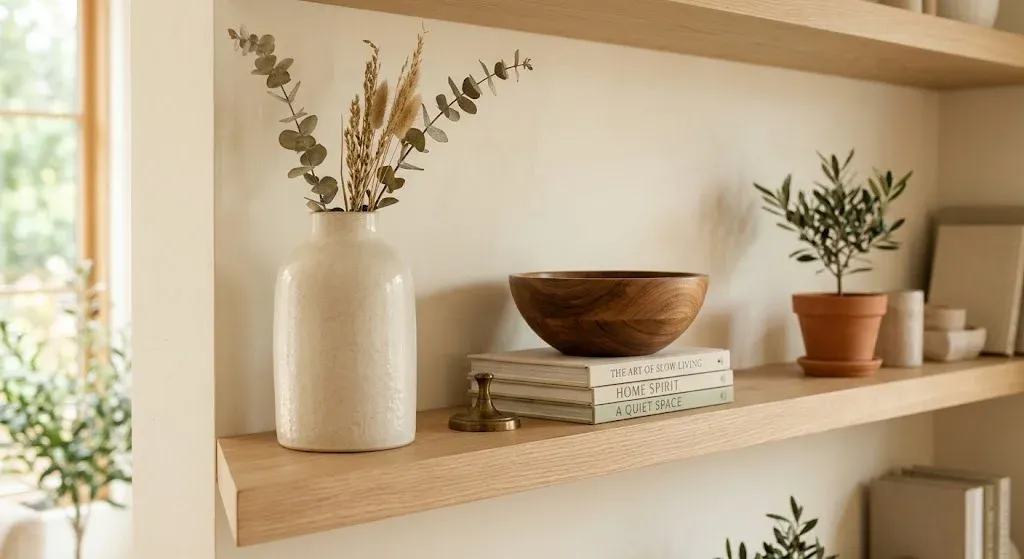
Try it with a tall vase, a medium bowl, and a short stack of books. Together they form a loose triangle for the eye to follow.
Try the 3:3 Grid
This newer twist is getting attention. Ideal Home describes mentally dividing your shelving into a three-by-three grid, so it’s easier to judge visual weight. Here’s how to use it: picture the grid over your shelf, then check that your heaviest, darkest pieces don’t all land in one box. If the top left is crowded and the bottom right is bare, move something across.
Repetition helps with big units, too. One stylist repeats similar groupings across multiple columns and rows for a cohesive look. If you have several columns of shelves, repeat a similar group in each so the whole thing feels planned instead of random.
Treat Rules as Guides
Symmetry and asymmetry both work. A symmetrical shelf feels calm and formal. An asymmetrical one feels relaxed. What matters is that visual weight is spread evenly. A big dark vase on the left can be balanced by two smaller, lighter objects on the right.
Layer Heights With Anchors and Stacks
If a shelf feels flat, everything on it is probably the same height. It looks like a row of soldiers. Varying heights fix that, and the fix is layering.
Start With Anchors
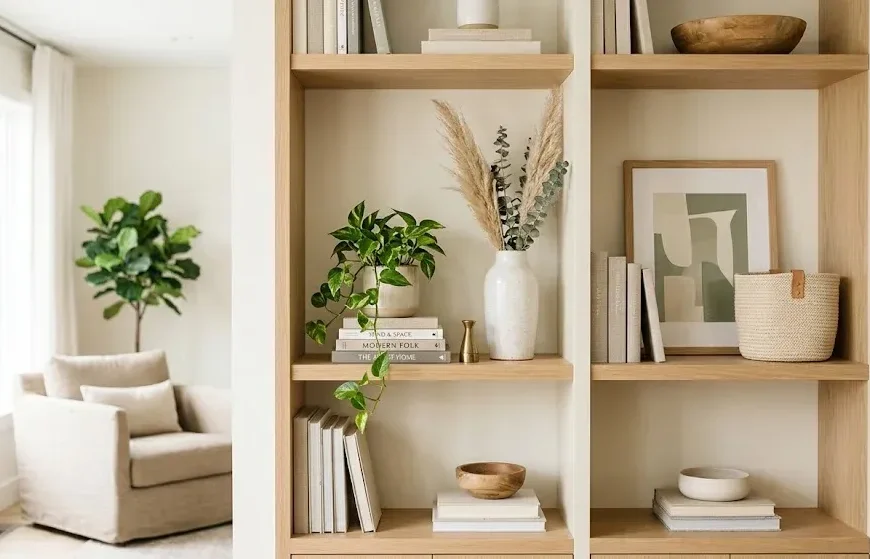
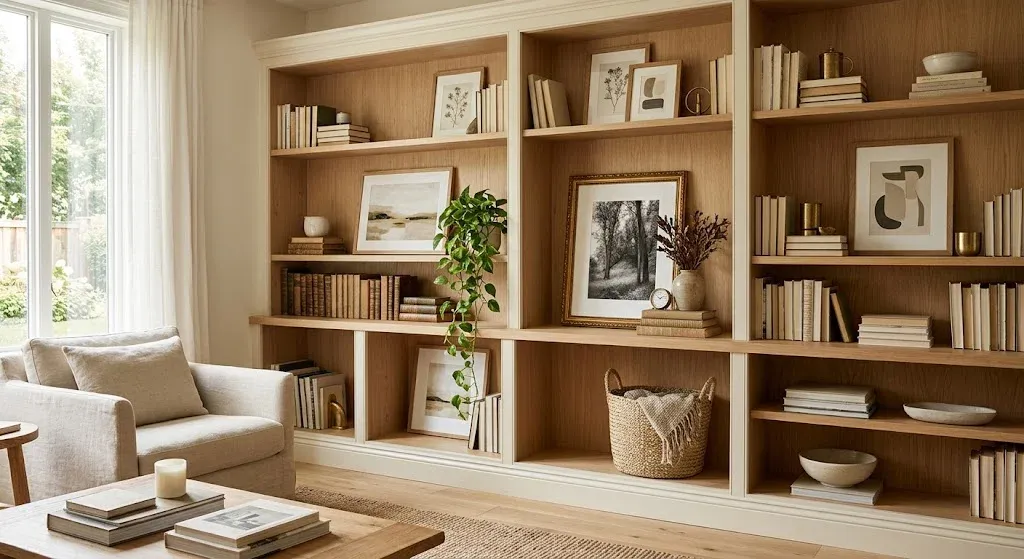
Anchors, or statement pieces, are your biggest items: a large vase, framed art, a chunky basket, an oversized book. Think of each one as the focal point of its shelf. Place them first, and alternate sides instead of putting them all on one side or down the middle.
Use Books as Pedestals
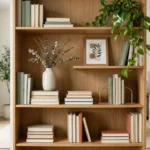
Stack a few books flat and set a small object on top. You’ve added height without buying a thing. Stack large to small, with the small book on top. Turn the spine out so the title shows. Then mix it up: a horizontal stack in one spot, an upright row in another.
Mix Shapes, Too
Height isn’t the only variety to chase. Pair a round bowl with a tall candlestick and a rectangular frame. Add bookends to hold up an upright row, which also lets you leave gaps instead of cramming books edge to edge. Layering helps too: set a smaller piece in front of a larger one so the shelf has depth.
These shelf styling ideas cost almost nothing, since you’re mostly rearranging what you own.
Leave Negative Space on Purpose
Here’s the part nobody wants to hear: empty space is a design choice. Designers quoted by Apartment Therapy say to leave some room so the eye can rest and appreciate the displayed items. A simple test works well. If you can’t see the shelf surface between your objects, it’s too full.
Spot the Clutter Culprits
Homes & Gardens lists a dozen things that make shelves look cluttered. A few come up again and again:
- Too many small trinkets with nothing in common.
- Storage boxes and organizers that don’t match.
- Loose papers and mail.
- Souvenirs and keepsakes all out at the same time.
A good habit: start with fewer items than you think you need. You can always add a piece, but removing one after you’ve fallen in love with the arrangement is much harder.
Take a Photo Test
Snap a photo of your shelf and look at it on your screen. It’s easier to spot a lopsided arrangement in a picture than in person. A designer interviewed by 1stdibs recommends exactly this trick.
Rotate Instead of Piling Up
Keep a small box for the overflow. Swap a few pieces in and out with the seasons, so your shelf stays fresh and your mementos don’t pile up. The smartest shelf styling ideas often involve taking something away, not adding one more thing.
Add Life, Art, and a Few Personal Touches
A shelf with only decorative objects can feel like a showroom. Strong shelf styling ideas always leave room for personality, and three things get you there.
Bring in Greenery
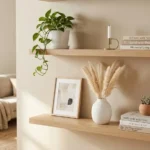
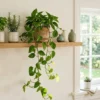
Something living changes the whole mood. A trailing plant softens hard edges, and a small potted one adds a pop of green near a stack of books. Prefer low maintenance? Dried stems in a vase look great and ask for nothing. John Lewis highlights both fresh blooms and the dried-flower trend.
If a shelf gets very little light, faux greenery is fine. Nobody’s checking. Just pick a stem with some variation in leaf color so it doesn’t look plastic.
Lean Your Art
Hanging every print on the wall is optional. Lean framed art against the back of the shelf and layer objects in front of it. Emily Henderson’s team says the trick with leaning art is to layer, layer, layer, and it gives you color and height at once. It also works well for renters who’d rather not drill holes.
Keep Mementos Grouped
Photos, travel finds, and a kid’s art project all belong. Just group them. Put three meaningful pieces together in one spot instead of scattering twenty across every shelf. A grouped cluster reads as a collection. Scattered ones read as clutter.
Style Small Spaces, Floating Shelves, and Rentals
Not everyone has floor-to-ceiling built-in shelves. Small shelves need a lighter hand.
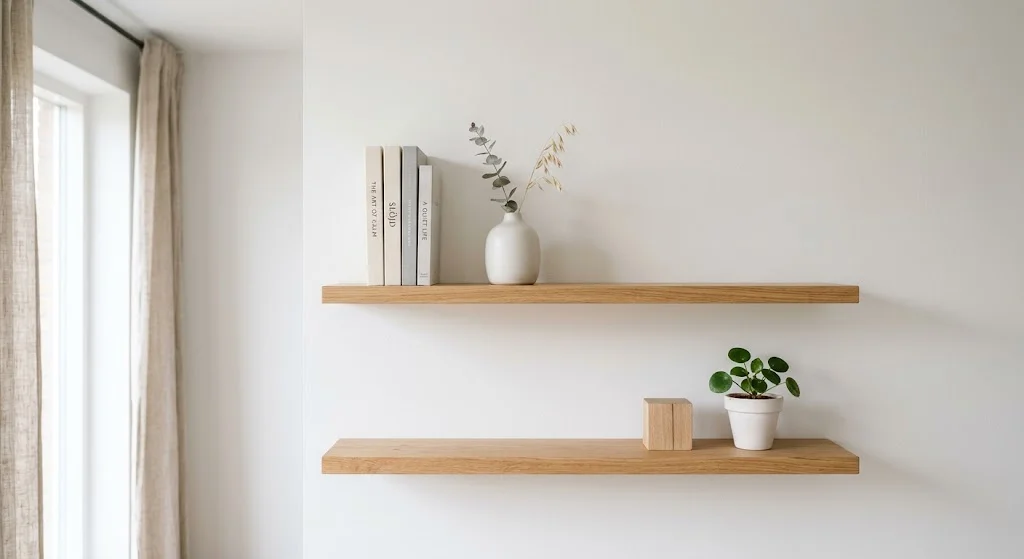
Floating Shelves: Two or Three Things
A floating shelf looks best with a tiny edit. Try one anchor, one smaller object, and one soft element like a plant. That’s it. Leave the rest bare. One blogger recommends picking only two or three things so the shelf doesn’t look cluttered.
Hide the Everyday Stuff
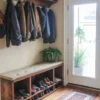
Baskets are the secret weapon here. They add height, they hide the things you need but don’t want to see, and they look good doing it. Keep your keys and mail in a tray or lidded basket so they don’t spread across the shelf. Match the baskets in material or color, because mismatched organizers make shelves feel busy.
Match the Room
A kitchen shelf should hold kitchen things: matching jars, a cutting board, a small plant. Skip coffee table books in the kitchen, and skip salt and pepper shakers on living room shelves. These shelf styling ideas keep things practical and pretty at the same time.
Renter-Friendly Options
Don’t want to drill? Freestanding bookcases, ladder shelves, and leaning art all give you display space without a single hole in the wall. Style them the same way you would built-ins.
What’s Trending in 2026
If you want fresh shelf styling ideas for this year, three trends stand out.
- Painted shelves. House Digest reports that designers are painting shelves so they stand out instead of blending into the wall.
- Book drenching. Homes & Gardens describes covering a living room in shelves of books for a cozy, intimate effect.
- Horizontal stacks and backward books. Designers use both to create visual breathing room.
If painted shelves tempt you, test the color on the back panel first. You can always add the rest later.
Here’s the thing about trends: they work best as one accent in a shelf built on solid basics. Everything earlier in this guide still applies. A bold painted shelf with a clear palette, three-object groupings, and some breathing room will look great. Throw in all the trends at once and you’ll be back to clutter.
A Quick Trend Test
Ask yourself three questions before copying a trend: Would I still like this in a year? Does it fit my color palette? Can I undo it in an hour? If the answer to all three is yes, go for it.
A One-Afternoon Plan You Can Follow Today
Want it all in one place? Here’s a simple schedule, start to finish.
- Minutes 0-15: Clear the shelves, wipe them down, and sort your piles.
- Minutes 15-25: Choose your color palette and set aside anything that doesn’t fit.
- Minutes 25-40: Place anchors first, then add books for height and groups of three.
- Minutes 40-50: Add greenery, art, and one personal touch.
- Minutes 50-60: Take a photo (your own shelfie), then remove one thing.
That last step matters more than it sounds. Almost every shelf looks better after one final cut. One interiors blogger likes to style a space, then come back after a night’s sleep. Fresh eyes catch what tired ones miss.
Set a timer if it helps. Shelf styling feels endless when you let it, and a clear deadline keeps you from fussing over a candle for twenty minutes.
FAQs: Shelf Styling Ideas
What are the easiest shelf styling ideas for beginners?
Start by clearing the shelf and choosing a two or three color palette. Then place your biggest items first, add books for height, and group smaller objects in threes. Those shelf styling ideas work on any shelf, from a tiny floating ledge to full built-ins, and they need almost no budget.
What is the rule of three for shelves?
It’s a guideline that says odd-numbered groups, usually three, look more balanced and interesting than even ones. Try pairing a tall, medium, and short object together. It’s a starting point, not a strict law, so move things around until the grouping feels right to your eye.
How do I make my shelves look less cluttered?
Remove half of what’s there, then group what’s left. Hide practical items in matching baskets, keep loose papers off the shelf, and leave visible gaps between objects. If you can’t see the shelf surface, it’s too full. Rotate mementos seasonally instead of displaying them all at once.
How do I style shelves without using many books?
Use baskets, ceramics, framed art, and plants as your anchors, and stack a few books only as pedestals. Leaning art adds height and color. These shelf styling ideas work especially well for floating shelves and rentals, where you want a lighter look with plenty of negative space.
How many items should go on a shelf?
There’s no magic number, but two or three groupings per shelf is a solid start. Fewer items work for floating shelves, more for full bookcases. Use the empty-surface test: leave enough gaps that each object has room to stand out. Edit until it feels calm.
Conclusion
The good news about shelf styling ideas is that none of them are permanent. Move a vase, swap a book stack, pull one item out, and you’ve got a new look in five minutes. Start with a blank slate, pick a palette, use odd-numbered groups, layer your heights, and leave room to breathe. Then add a plant, a leaning print, and one thing that makes you smile.
You don’t need a designer or a big budget. You need an hour, a clear surface, and the willingness to remove one more thing than feels natural. If you want to read more from the pros, Homes & Gardens’ shelf guide, Apartment Therapy’s list of clutter mistakes, and Ideal Home’s 3:3 rule piece are all worth a few minutes.
So here’s your next step: pick the one shelf in your home that bugs you most, clear it off this weekend, and try the afternoon plan above. Take a photo before and after. Once that one works, you’ll know exactly how to tackle the rest.