You know the corner I mean. It’s too narrow for a chair, too wide to ignore, and somehow it’s where your tote bags, a half-dead plant, and the vacuum end up living.
Here’s the thing: in a small place, that corner might be the most useful square foot you have. Smart apartment corner storage can pull clutter off your counters, your floor, and the arm of your sofa. And you don’t need a contractor or a landlord’s blessing to pull it off.
In this guide, you’ll learn how to measure a corner the right way, which setups work in each room, what they cost, and when to leave a corner empty. Let’s start with why corners are worth the effort.
Why Apartment Corner Storage Works (and When It Doesn’t)
Apartment corner storage works because corners sit outside your walking path. Nobody trips over a shelf tucked against two walls, and you don’t give up the middle of the room to get it.
Space is the real issue. The average new US apartment reached 910 square feet in 2025, a gain of 13 square feet over 2024, according to RentCafe. That sounds roomy until you look closer. Studios average just 460 square feet and one-bedrooms about 735. Seattle’s new units come in at only 645. At those sizes, a corner isn’t a leftover. It’s real estate.
Think of the back of a kitchen cabinet. Most people ignore it, yet it can hold as much as the front if you use it well. Corners are the same: quiet, out of the way, and perfect for things you need often but don’t need to see.
There’s a catch, though. A corner can turn into a dumping ground within two weeks. Storage only works when each shelf or bin has a job. So before you buy anything, decide what the corner will hold. Keys and mail? Cleaning supplies? Spare blankets? Pick one category and let it drive every choice.
And some corners just aren’t worth filling. We’ll get to those near the end. First, grab a tape measure.
Measure First: Shelf Depth, Height, and Wall Anchors
Here’s a mistake almost everyone makes. You fall for a shelf online, order it, and discover it sticks out so far the door won’t open. Ten minutes with a tape measure fixes that. For any apartment corner storage plan, write down four numbers:
- Width along each wall.
- Usable depth, meaning how far you can stick out before blocking a door swing or walkway.
- Height, from the floor to the ceiling or to the first obstacle, like a window sill, light switch, or vent.
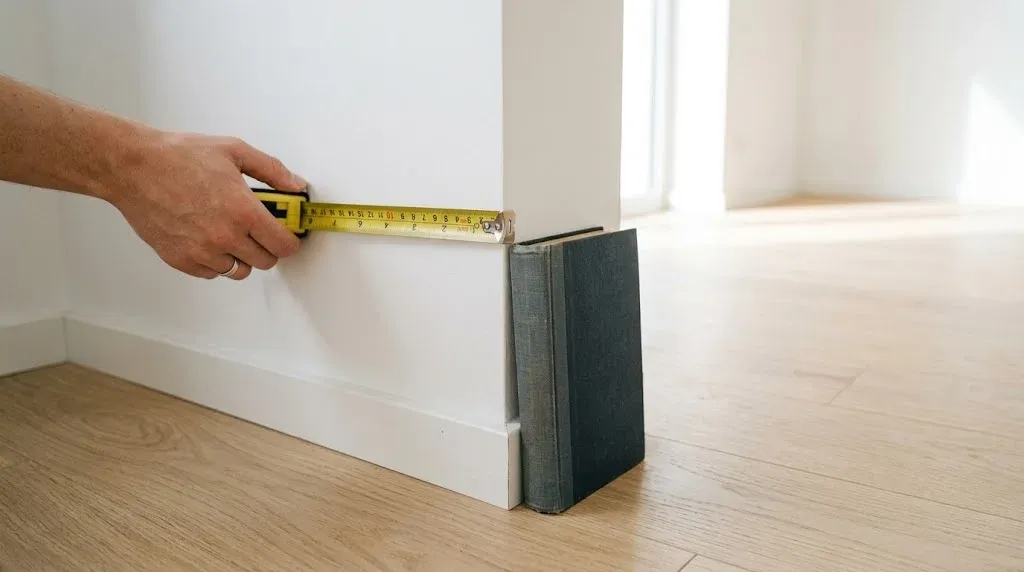
- Squareness. Hold a hardcover book in the corner. If you see a gap, the corner isn’t a true 90 degrees.
That last check matters more than you’d think. Triangle shelves look cheap when the walls aren’t square, and plenty of older buildings aren’t. One home-improvement guide makes the same point: some corners simply aren’t square enough for a triangle shelf. A narrow, straight unit pushed against one wall often looks better than a corner piece forced into a crooked angle.
Shelf depth deserves its own mention. One writer described a corner beside her sofa, only 7 inches deep, that rejected every side table she tried. Her fix was to match the shelf depth to the corner first and worry about extra storage later. Shelves around 8 to 12 inches deep handle books, jars, and baskets nicely without eating your floor space.
Finally, wall anchors. Tall, narrow units can tip. The U.S. Consumer Product Safety Commission runs a campaign on anchoring furniture, and it’s worth a look if you have kids or pets. If your lease bans drilling, don’t worry. We’ll cover no-drill options shortly.
Living Room Corner Shelves and Floating Shelves
The living room is where corners usually get the most attention and the least function. Let’s fix that with two ideas.
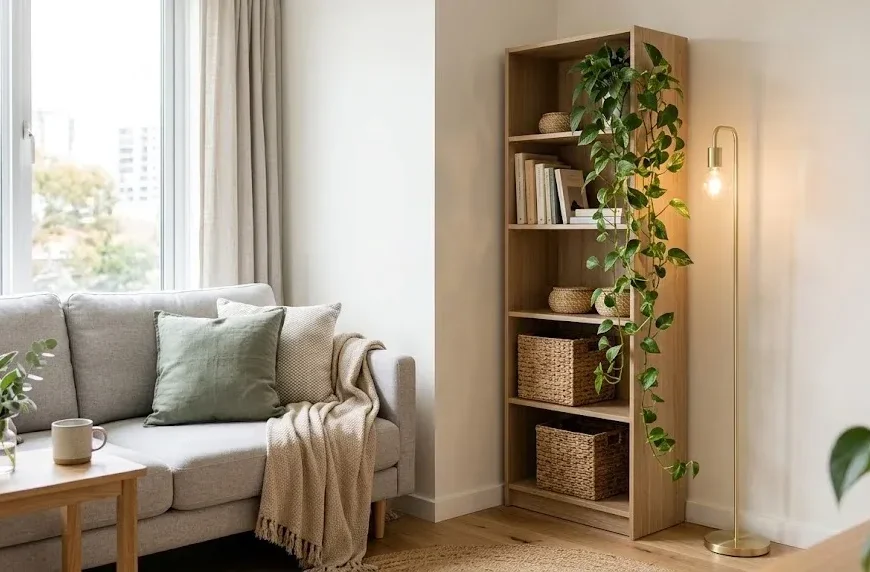
Idea 1: A Tall, Narrow Corner Shelving Unit
Vertical storage is your best friend here. A slim open shelving unit, five or six shelves high, uses wall space instead of floor space. Fill the bottom with baskets for remote controls, chargers, and throw blankets. Put books or a few favorite objects at eye level. Leave the top shelf for something light, like a plant.
Floating shelves are a good alternative if the floor beside your sofa is tight. Stack three of them in a corner and you get wall-mounted storage that leaves the floor clear for a vacuum. Just check that your lease allows a few screw holes first.
One rule for open shelving: use bins for the small stuff. Loose cables and takeout menus look messy fast. Baskets hide that mess in one move.
Idea 2: An L-Shaped Storage Bench
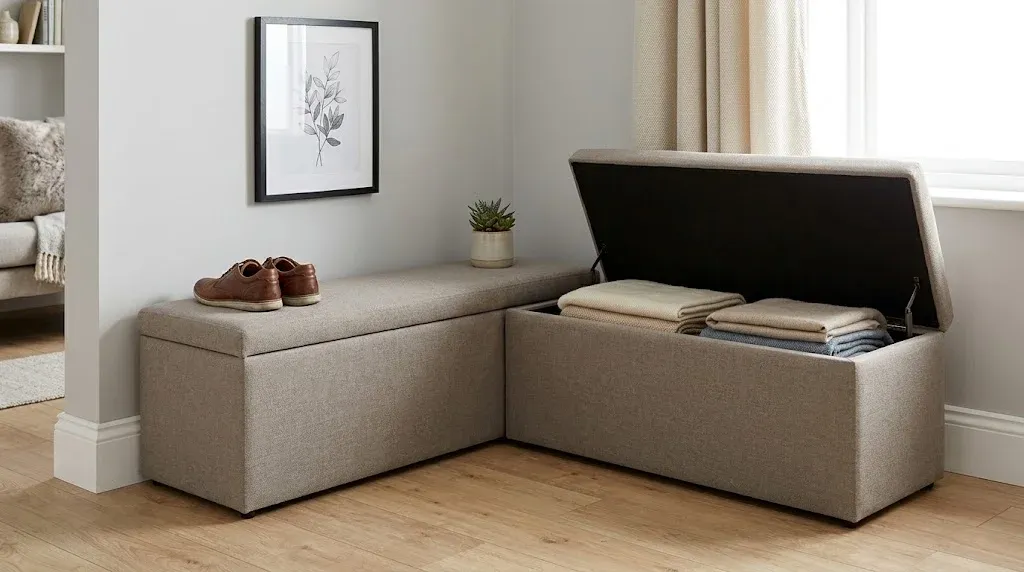
One simple trick is placing two storage benches at right angles around a corner, which adds storage and seating while keeping the bench out of the way of the room. It’s multifunctional furniture at its easiest. Shoes, board games, and winter blankets all disappear into the benches, and guests get somewhere to sit when the sofa is full.
This setup suits apartment corner storage in a tight living room because it solves two problems at once. You want seating. You want hidden space. One piece does both. Measure the bench first so it doesn’t block a heating vent or an outlet.
Kitchen and Bathroom Corners That Hold More Than You’d Expect
Kitchens and bathrooms are where clutter fights back hardest. The good news? Their corners are often the most wasted.
Idea 3: Deep Utility Shelves in the Kitchen Corner
A cramped kitchen gets easier when your counter stays clear. One example unit measures around 30 inches wide, 14 inches deep, and 63.7 inches tall, with enough room for jars, small appliances, and paper towels. Freestanding units like that need no tools, so they’re a smart fit for renters.
Put the heavy things low. Stand mixers and slow cookers go on the bottom shelf. Pantry jars go in the middle. Paper goods go up top. If you share the space, a label maker keeps roommates honest.
Idea 4: A No-Drill Shower Corner
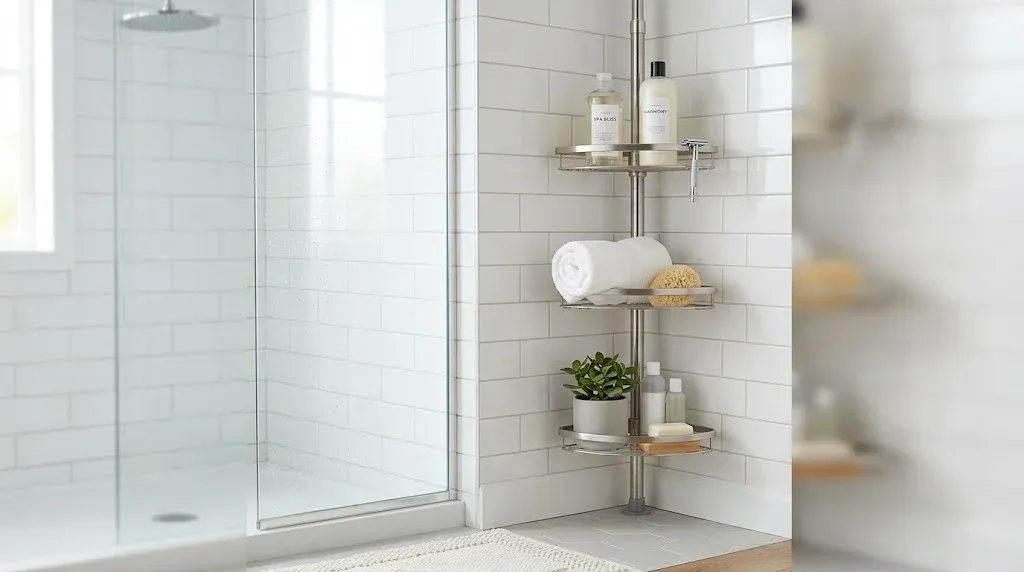
Tile is tough to drill, and most renters shouldn’t try. A shower-adjacent corner also shouldn’t need a freestanding cart that just collects damp towels. Instead, try a tension pole caddy that wedges between floor and ceiling, or a corner shelf held by strong adhesive made for tile. Keep daily items like shampoo and razors on the middle shelves. Anything you rarely use should live somewhere else entirely.
Rust is the thing to watch. Cheap metal poles corrode in humid bathrooms, so look for stainless steel or coated finishes. For small apartment storage in a bathroom, a few well-chosen shelves beat a crowded cart. Smart apartment corner storage here means picking pieces that survive steam.
Bedroom and Closet Corners
Bedrooms hide a lot of wasted space, and you rarely notice it until clothes start piling up on a chair.
Idea 5: The Awkward Closet Corner
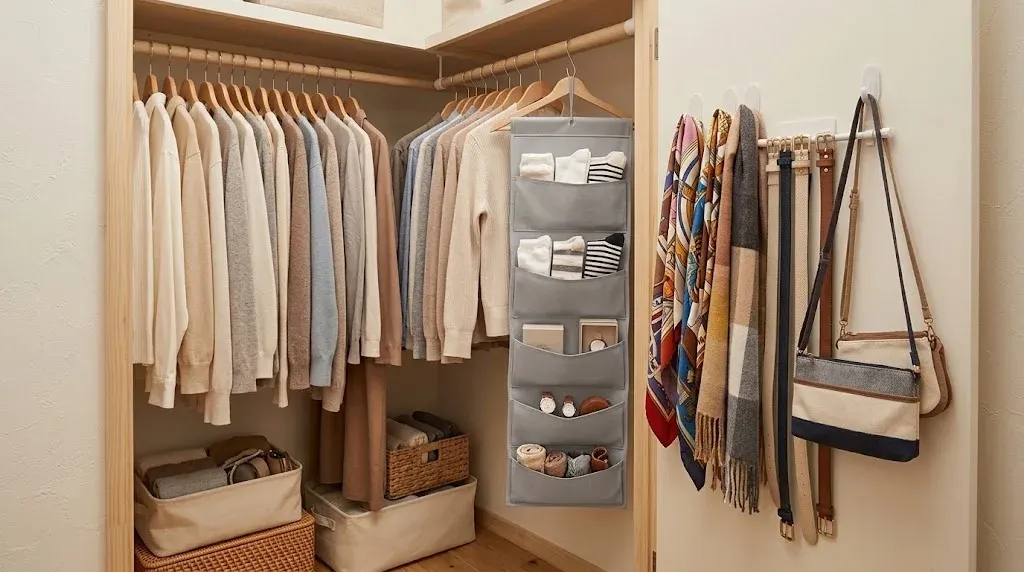
Closet corners are the classic dead zone. Hangers don’t reach, shelves don’t fit, and things get shoved in and forgotten. Angled storage, hooks, tension rods, and slim hanging helpers can make that corner easier to reach and much easier to keep tidy.
Start by emptying the corner completely. Then sort what comes back. Lightweight things like scarves, belts, and small bags go on hooks. Items you use weekly stay near the front. Occasional pieces, like a formal clutch or a spare duffel, go deeper in. Small fabric organizers hanging from the rod handle socks and accessories without a single screw.
Idea 6: A Slim Corner Tower or Small Vanity
For bedrooms, slim corner wardrobes or sleek corner drawers can add storage, and a small vanity or dressing table is a good fit if space is tight. A drawer tower is great for T-shirts and workout gear. A tiny vanity doubles as a desk and a skincare station. Pair it with a floor lamp, and the corner feels finished.
This is where apartment corner storage and comfort overlap. A tidy corner that holds your clothes means fewer piles on the chair, and you’ll feel the difference every morning.
Renter-Friendly Apartment Corner Storage Without Drilling
Most of the ideas above work without a drill. Still, plenty of renters worry about their deposit, so let’s be clear about what’s safe. Freestanding apartment corner storage is the lowest-risk route: units that stand on the floor, lean on the wall, or wedge into place.
Your no-drill toolkit:
- Tension poles that press floor to ceiling and hold shelves or baskets.
- Adhesive hooks and strips, used strictly within their weight limits.
- Freestanding shelving with anti-tip straps (ask whether one small screw hole is okay).
- Over-the-door organizers for the wall space near a corner.
- Leaning ladder shelves that rest at an angle against the wall.
Read your lease first. Many landlords allow small holes, and some will approve them in writing if you ask. A two-minute email can save your deposit. If you want visual inspiration, Apartment Therapy’s roundup of awkward corner ideas is worth a scroll.
Idea 7: The Entry Corner
Entry corners collect everything: mail, leashes, keys, spare batteries. In a corner like that, open shelving can turn small items into permanent visual noise. So go closed or semi-closed. A tall basket on the floor, a slim cabinet, or a tension pole with a few hooks keeps the pile off the ground. Add one small tray for keys. Everything else gets a home or leaves the entry.
When to Skip Storage and Leave the Corner Alone
Not every corner needs a fix. The smallest corner often needs the clearest edit, not the most storage. If your room already has enough places to put things, another shelf just becomes another surface for clutter.
Try this test. Count how many items you’d put in the corner right now. If it’s fewer than five, you probably don’t need a unit. You need a decision about what to keep.
For a corner that’s too small for furniture, designers lean on decorative choices instead. A statement floor lamp is a common pick. A real pothos or philodendron adds a softness that an empty wall can’t. And a lamp gives you warmer light at night than a harsh ceiling fixture.
You can also hang art across the corner or add a mirror to bounce light around. Neither needs a shelf. The best apartment corner storage plan sometimes ends with “no storage.” That’s okay.
What It Really Costs
People assume this stuff is expensive. It isn’t, if you stay realistic. One retailer guide suggests budgeting roughly $80 to $150 per corner, plus wall anchors if your lease allows installation.
Here’s a ballpark sense of price tiers. These are my rough estimates, and they shift, so check current listings:
- Under $30: adhesive hooks, small baskets, a single floating shelf.
- $30 to $80: a tension pole caddy, a slim ladder shelf, fabric organizers.
- $80 to $150: a freestanding corner shelving unit or kitchen utility shelves.
- $150 and up: storage benches, drawer towers, small vanities.
Buy in stages. Start with the cheapest piece that fixes your biggest annoyance, then live with it for a week. If it works, add more. Spending $120 on apartment corner storage you actually use beats spending $300 on pieces that don’t fit your life.
FAQs: Apartment Corner Storage
What can I put in the corner of my living room?
A tall, narrow open shelving unit works well. So does an L-shaped storage bench, a floor lamp, or a large plant. If the corner is tiny, skip furniture entirely and use a lamp. Good apartment corner storage starts with shelf depth, so measure before you buy.
What is the best corner shelf for a small room?
Slim, floor-standing units or stacked floating shelves usually win because they use vertical storage and keep floor space open. Check that your walls are square before buying a triangle shelf. Depths between 8 and 12 inches suit most small rooms and everyday items.
How much weight can a corner shelf hold?
It depends on the shelf, the material, and how it’s mounted. Always check the manufacturer’s rating. Shelves fixed with proper wall anchors hold far more than adhesive ones. On freestanding units, keep heavy items low, and never go past the stated limit on hooks or strips.
Can renters add corner storage without damaging walls?
Yes. Tension poles, freestanding shelving, adhesive hooks, and over-the-door organizers need no drilling. Renter-friendly apartment corner storage also means reading your lease and asking your landlord in writing about small anchor holes before you put anything up.
What are the best storage options for bedroom corners?
A slim corner tower or drawer unit, a small vanity, or hooks and tension rods in a closet corner all work. Choose based on what you store most, like clothes or accessories. Add a floor lamp, and the corner looks finished instead of leftover.
Conclusion
Corners are easy to ignore, but they’re often the cheapest way to gain space. A tape measure, a clear purpose, and one well-chosen piece can turn a pile-up spot into the most useful part of the room.
Here’s the quick version. Measure width, depth, height, and squareness. Match the setup to the room: open shelving in the living room, a tension pole in the bathroom, hooks in the closet, a bench or basket at the entry. Anchor anything tall. Skip storage when a corner is too small to earn it. And keep your lease in mind the whole way.
You don’t have to tackle every corner at once. Pick the one that bugs you most. Maybe it’s the spot beside the sofa, or the stack of bags behind the bedroom door. Start there, and build your apartment corner storage one corner at a time.
So check your tightest corner this weekend, before another tote bag lands in it.