You move in, drop the boxes, and look around. Bare white walls. Harsh ceiling lights. A lease that says no nails. Sound familiar?
You’re in good company. Harvard’s Joint Center for Housing Studies reported that 22.7 million US renter households, about half of all renters, were cost burdened in 2024. Nobody wants to pour money into a place they’ll leave. That’s exactly why temporary home decor works so well. It adds color, comfort, and personality without leaving a permanent mark. Below, you’ll get seven ideas that work, the mistakes that trip people up, and simple ways to protect your security deposit.
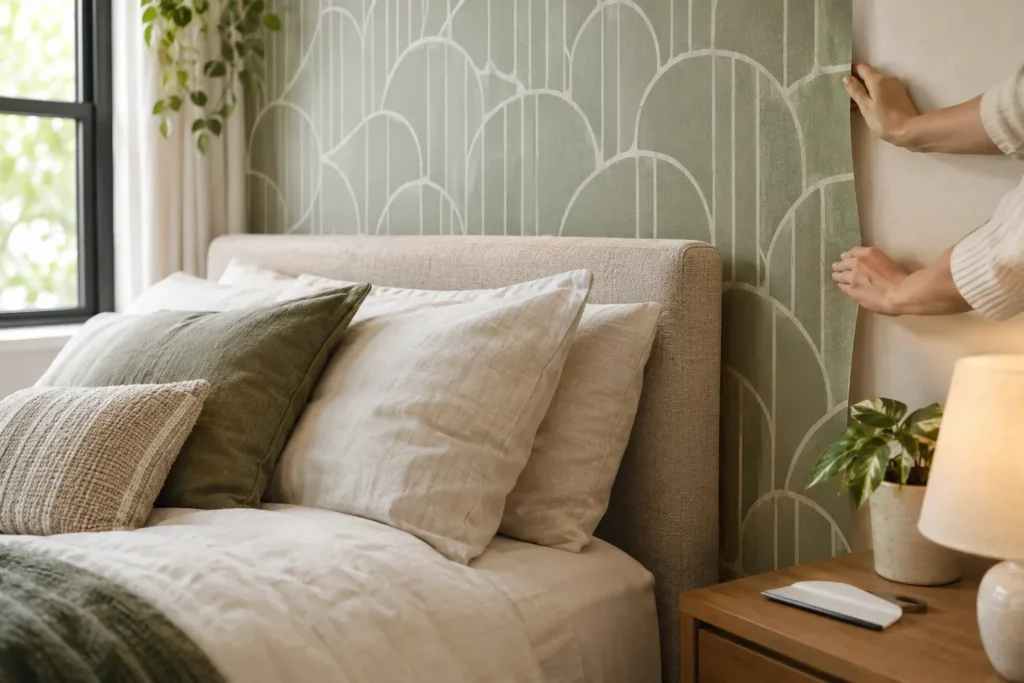
1. Temporary Home Decor Starts With Peel-and-Stick Wallpaper
If you only try one piece of temporary home decor, make it removable wallpaper. One accent wall can change the mood of an entire room, and it leaves when you do. You don’t need to wallpaper everything either. A panel behind a desk, a section behind the bed, or the back of open shelving gives you plenty of impact with less material and easier removal. HGTV’s renter roundup, updated in June 2026, still features temporary wallpaper among its top ideas. The trend isn’t going anywhere.
Test the wall first
Here’s where people get burned. One wallpaper retailer warns that walls need to be completely smooth for peel-and-stick to hold. Heavy texture is a gamble.
Fresh paint is another trap. One guide says Command advises waiting seven days after painting before using its strips, and it makes sense to give wallpaper the same grace period. Stick a small test patch behind a door before you commit to a whole wall.
Ask before you stick
Removable wallpaper leaves no permanent mark, so it rarely breaks a standard lease. Still, send your landlord a quick message. If they agree, get it in writing, since even a text or email protects you in a deposit dispute.
Think beyond walls
Not ready to wallpaper a wall? Try the back of a bookcase or the side of a fridge. One renter peeled wallpaper off her studio fridge in under ten minutes, with hardly any residue left behind. It’s a low-stakes way to see how the adhesive behaves before you go bigger.
2. Build a Gallery Wall With Command Strips and Adhesive Hooks
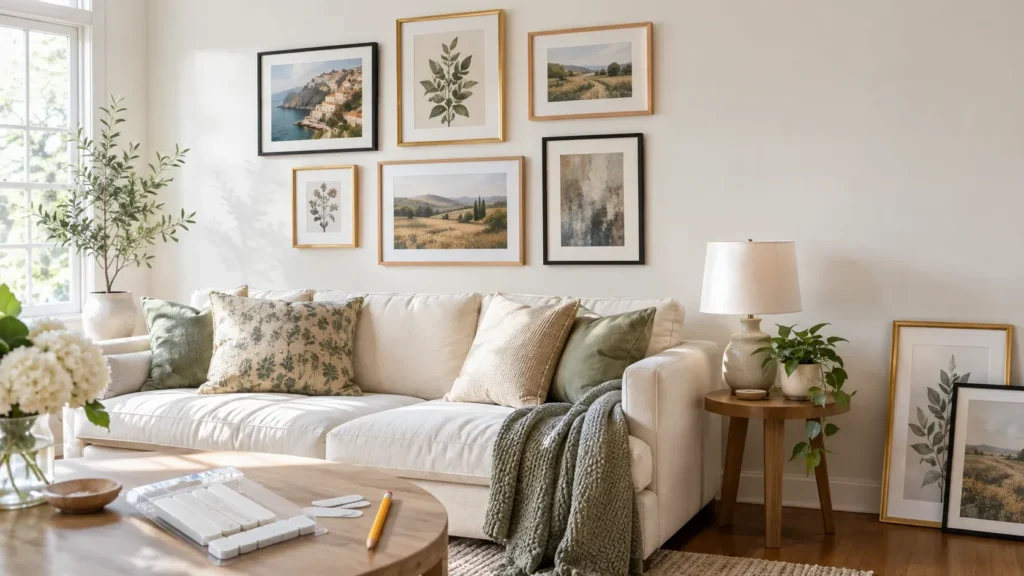
A gallery wall says more about you than one big print ever could. Done well, it’s the easiest win in temporary home decor, because you can build it without a single hole and rearrange it whenever your taste changes.
Start on the floor. Lay everything out first, then transfer the layout to the wall so you aren’t constantly moving adhesive. Over a sofa, you could try two medium prints, a pair of postcards in slim frames, a family photo, and one small woven piece. Keep the outer edges balanced and the whole thing feels planned instead of random.
Trust the weight rating
Every pack of strips lists a weight limit. Believe the pack, not a random blog post. You’ll see claims online that certain strips hold 16 pounds, but check the rating on the actual product you buy. When in doubt, use more strips than seems necessary.
Application matters too. Press each strip firmly for at least 30 seconds and let it set before hanging anything. Rushing this step is the number one reason frames end up on the floor at 2 a.m.
Lean instead of hang
Some pieces are just too heavy. For those, lean them. A large mirror on the floor, a canvas on a dresser, or a framed print on a shelf all look relaxed and intentional. Leaning pieces also lets you shift them around whenever you like.
If you do need to hammer a few small nails, check your lease first. Some allow it as long as you fill the holes before you leave.
3. Swap Harsh Ceiling Lights for Portable Lighting and Plug-In Sconces
Lighting might be the most underrated part of temporary home decor. Rental ceiling fixtures tend to be flat and unflattering, and you usually can’t replace them. So work around them.
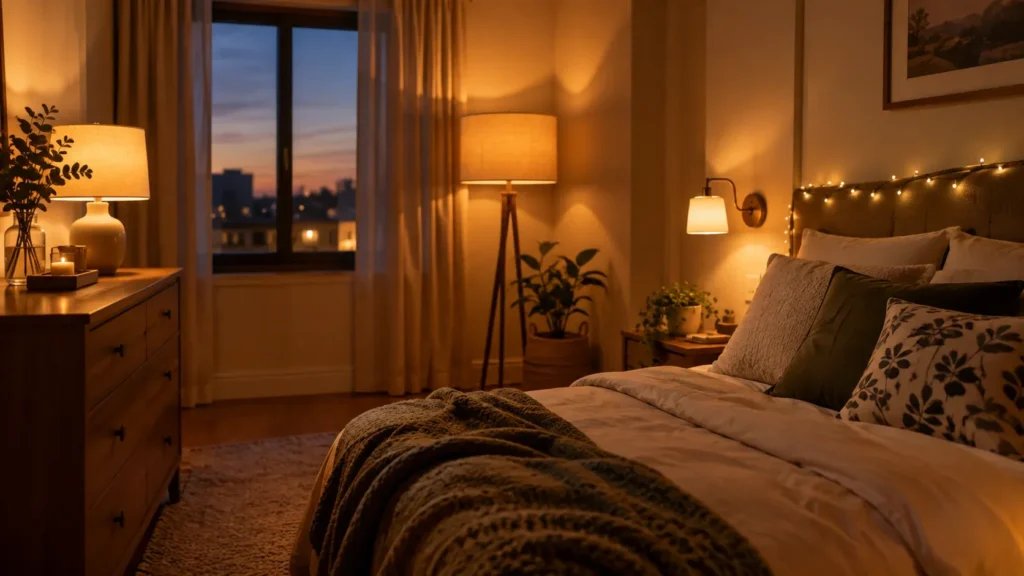
Lamps and candles create a softer evening glow, and because you control those fixtures, they can move with you to your next place. That’s the real win here. Every lamp you buy is an investment you carry out the door.
Layer your light
Think in three layers. Put a table lamp on a dresser, a floor lamp in a corner, and a plug-in sconce beside the bed or sofa. Three sources at three different heights make a room feel designed instead of assigned. Choose warm white bulbs, usually labeled around 2700K, so the room feels cozy rather than clinical.
Plug-in sconces are great for renters because they run off an outlet instead of hardwiring. Look for ones that mount with adhesive or a single small hook, and check your lease before using even that.
Add some sparkle
String lights can run along a wall using temporary adhesives and brighten up a whole room. Try framing a headboard wall, or draping them over a bookshelf. If you’re building a budget plan for temporary home decor, lighting delivers the biggest mood change per dollar, and none of it stays behind when you leave.
4. Hide Ugly Floors With Area Rugs and Temporary Flooring
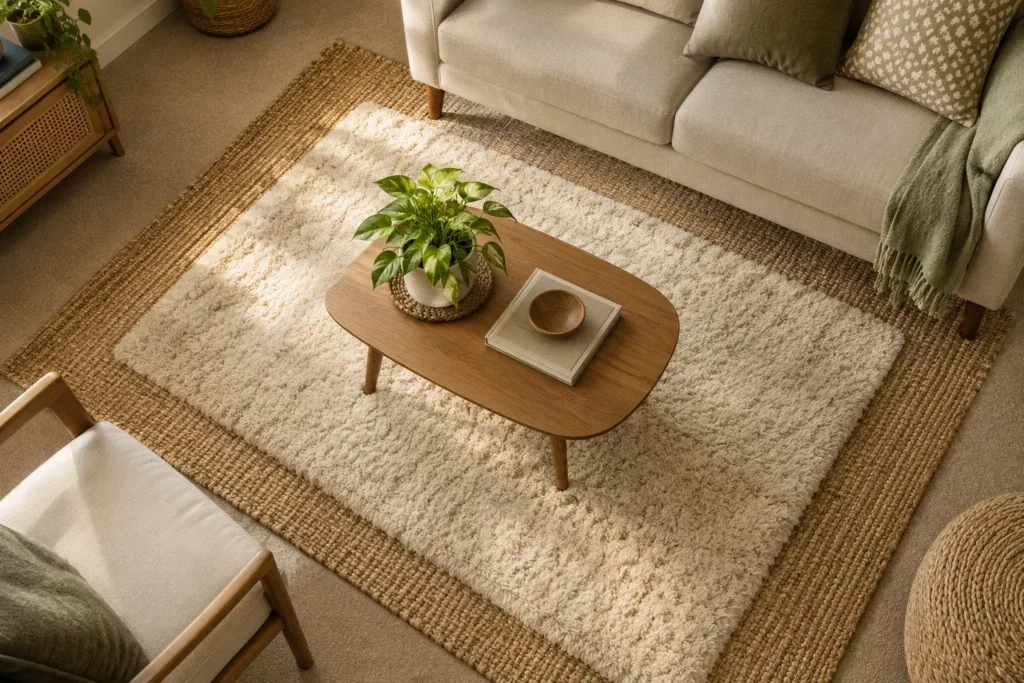
Stuck with carpet in a color nobody would choose? Layer over it. One designer covered an ugly teal carpet by spreading rugs wall to wall, mixing a sheepskin with a Moroccan shag. You can copy that trick with two or three rugs you’d happily take with you.
The same thinking applies to floors in temporary home decor: choose pieces that cover the problem without becoming one. A few sizing rules help:
- In a living room, put at least the front legs of your sofa and chairs on the rug.
- In a bedroom, let the rug extend past both sides of the bed.
- Add a rug pad. It stops slipping and protects the floor underneath.
What about peel-and-stick tiles?
Peel-and-stick vinyl tiles and area rugs can both make a big difference in a rental with unappealing flooring. Tiles give you a fresh look in kitchens and bathrooms without grout or tools.
That said, floor tiles tend to be the riskiest item on this list. Floor adhesive can be stickier than wall adhesive, and some surfaces don’t release cleanly. Test one tile in a closet corner, wait a few days, and peel it back before you commit to the whole room. Ask your landlord too. A no-risk rug is almost always the safer first move.
5. Dress Windows With Tension Rods and Curtains
Bare windows and cheap blinds can make a room feel like a waiting room. Curtains fix that fast. They add privacy and warmth without permanent changes, and tension rods go up without nails.
A tension rod sits snugly inside the window frame, held by pressure alone. That makes it one of the simplest wins in temporary home decor, especially for small bedrooms and bathrooms. Choose a sturdy rod for heavier fabric, and wipe the inside of the frame first so the rubber ends grip properly.
Try no-nail brackets
If you want curtains hung wider than the frame, look at brackets built for rentals. No-nail curtain rod brackets come down easily at move-out and leave the walls undamaged. Check the weight limit, though. Lined curtains can be surprisingly heavy.
Small hardware, big payoff
Over-the-door organizers and tension rods add utility and style without permanent installation. A tension rod under the kitchen sink, an organizer on the bathroom door, or a rod across a closet for extra hanging space all make a small place feel less cramped.
Quick styling tip: pick curtains that hit the floor or just skim it. Short curtains make windows look stubby, while longer ones draw the eye up and make ceilings feel taller.
6. Use Removable Decals and Peel-and-Stick Tiles Where They Count
Decals are wallpaper’s smaller cousin. They work like peel-and-stick wallpaper but cover a much smaller area, which makes them perfect for a nursery wall, a hallway, or the space above a desk. These smaller moves in temporary home decor are also easier to remove and cheaper to replace.
Kitchens and bathrooms
Boring tile? Waterproof decals come in lots of colors and patterns and can perk up dull tile. Peel-and-stick backsplash can change a kitchen’s feel without costing you your deposit. Clean and dry the surface well, because grease is the enemy of adhesive.
Fabric and washi tape
On a budget? Starched fabric makes a removable stand-in for wallpaper if you can’t justify the price. You soak the fabric in liquid starch, smooth it onto the wall, and it peels away later.
For a farmhouse look, washi tape can fake a shiplap wall with no power tools. Run horizontal lines, add a few plants, and nobody will guess it’s tape.
Keep costs low
You don’t need to buy everything at once. If money is tight, start with hanging strips and one decal set. Stack a few of these small wins together and your temporary home decor starts looking intentional instead of improvised. For more ideas, Home Depot’s renter decorating tips cover artificial plants, mirrors, and room dividers too.
7. Layer In Plants, Scent, and Soft Furnishings You Can Pack Fast
Walls and floors do the heavy lifting, but the little things make a place feel lived in. Start with textiles. Throw pillows, rugs, curtains, and blankets add warmth and personality, and they pack up easily when you move. That last part matters. Think of your soft furnishings as the stuff you’d grab first in a fire drill, but happier.
Add some green
Real plants are lovely if you can keep them alive. If not, artificial plants won’t attract bugs or need watering, and they’ve gotten far more realistic in recent years. Cluster a few in odd numbers, mix heights, and tuck one into a corner that feels empty.
Don’t forget your nose
Scent is the sneakiest trick in temporary home decor. Fragrance has a strong emotional link to the feeling of home, so a candle, diffuser, or room spray in a scent you love can make a new place feel familiar the first night.
Buy slowly
It’s tempting to rush out and buy a trendy bundle. Resist. The advice from one decorator: skip the on-trend pieces you’ll tire of and curate things you’ll love long term, which gives you a head start once you buy a home. A few real favorites beat a cart full of filler. Thrift stores, estate sales, and flea markets are great for one-of-a-kind items with character.
FAQs: Temporary Home Decor
Does peel-and-stick wallpaper damage walls?
Used correctly, it rarely does. It works best on smooth, fully cured paint. Textured or freshly painted walls are riskier, so test a small patch first. Follow the manufacturer’s removal instructions, peeling slowly at a low angle, and wipe off any leftover residue with a damp cloth.
Do I need to tell my landlord about temporary home decor?
It’s smart to ask, even for removable items. Most standard leases don’t forbid peel-and-stick wallpaper or adhesive strips, but a quick message protects you. If your landlord says yes, save the text or email. That small step makes any deposit dispute at move-out far simpler.
How do I hang art without nails?
Use picture-hanging strips rated for your frame’s weight, press them firmly for 30 seconds, and let them set. For heavier pieces, lean them on a dresser, shelf, or the floor. Plan your layout on the ground first so you only stick each strip once.
What’s the cheapest way to start with temporary home decor?
Begin with picture-hanging strips and one set of decals, then add a lamp or a rug. These small buys give you the biggest visual change for the least money, and they all come with you when you move. Thrift stores are great for frames and lamps.
Can I use removable wallpaper on textured walls?
You can try, but results are hit or miss. Peel-and-stick needs a smooth surface to bond well, and heavy texture can cause bubbling or peeling. If your walls are textured, use the wallpaper on furniture, a bookcase back, or a smooth door panel instead.
Conclusion
You don’t need a big budget or a landlord’s blessing for every change. You need a plan and a few smart products. Start small. Pick one wall for removable wallpaper, one corner for a lamp, and one spot for a gallery wall. Test your adhesives in a hidden area first, check your lease, and keep any landlord approval in writing.
Remember what makes temporary home decor work: everything you buy should be easy to move, easy to remove, and easy to love. Whether you’re in a rental for a year or a decade, the space can feel like yours from day one.
So here’s your homework. This weekend, tape a measuring tape across the wall you stare at most. Then order one swatch of peel-and-stick wallpaper or a pack of picture-hanging strips. That’s it. Start there, and the rest follows.