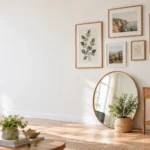
You move in, drop the last box, and look around. White walls. A ceiling light that buzzes. Cabinet knobs that were stylish around 1994. It’s fine, but it isn’t yours.
Most renters know that feeling. The good news is that landlord friendly upgrades can fix it without turning your security deposit into a bargaining chip later. In this guide, you’ll get seven reversible changes that cost little and are easy to explain to a property manager. You’ll also learn how to ask for permission, what to document, and how to leave the place in great shape. By the end, you’ll know what to do this weekend, what to ask about first, and what to leave alone.
Why Landlord Friendly Upgrades Are Worth the Effort
Think of landlord friendly upgrades as borrowing a space instead of rebuilding it. You make the place work better and look better, then hand it back the way you found it. Done right, everybody wins.
Here’s why this matters. The typical security deposit renters reported paying in 2025 was $795, and 83% of recent renters paid one. That’s real money sitting in somebody else’s account. Getting it back isn’t a given, either. One 2026 round-up of deposit statistics says only 42% of recent renters got their entire deposit back, and it draws that figure from Zillow’s renter research.
So the risk is real. But so is the cost of living in a place that feels like a waiting room. Dim lighting, cramped storage, and bare walls you stare at every night wear you down over a twelve-month lease. A few smart changes fix that. Some even help your landlord. A freshly caulked tub or a cabinet door that opens all the way? No property manager complains about those.
What this means is you don’t have to pick between a good deposit and a home you enjoy. You just have to pick the right kind of change.
We’ll use one simple test through this guide. If you can undo it in an afternoon and nothing is left behind, it’s probably safe. If it needs drilling, a patch kit, or a licensed pro, ask first.
Before You Touch Anything: Lease, Permission, and Photos
Here’s the unglamorous part. It’s also the part that saves you the most money.
Start with your lease agreement. Look for sections on alterations, repairs, and decorating. Some leases ban nails entirely. Others allow a few small holes. Every lease is different, so don’t assume your last apartment’s rules carry over. Smart landlord friendly upgrades always start with what the paperwork actually says.
Next, take photos. Walk through on move-in day and shoot every wall, floor, appliance, and closet with a timestamp. It sounds obvious, yet Roost’s renter research found only about 40% of renters take pictures of their unit at move-in. If a dispute ever comes up, those photos are your best evidence.
Third, get every yes in writing. A text can get lost. An email thread can’t. Bankrate’s guide to rental renovations gives the same advice: if your landlord approves a change, get that permission in writing. Your request should spell out:
- What you plan to change and where.
- The product or paint color.
- How long it will stay.
- How you’ll restore it, or whether you’d like to leave it behind.
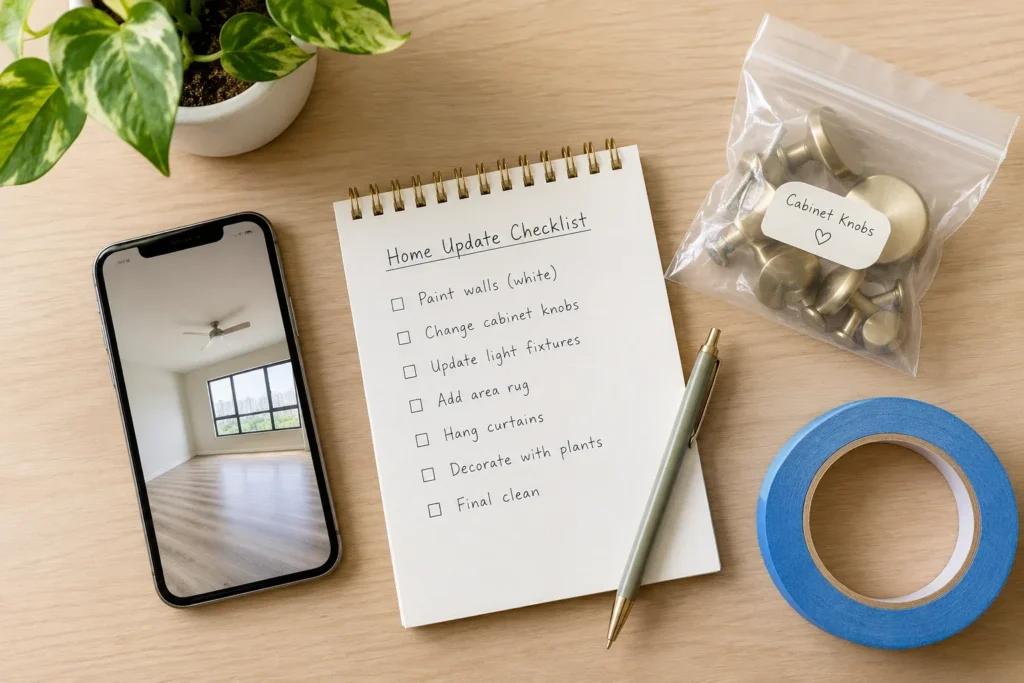
Finally, start a simple move-out checklist in your phone notes today. Every time you change something, add a line: what you did and where the original is stored. Future you will be grateful.
Easy Wins You Can Make Without Asking
These four need no paint, no drilling, and almost no adhesive on your walls. They’re the safest landlord friendly upgrades on this list, so start here. Still, glance at your lease first, just to be sure.
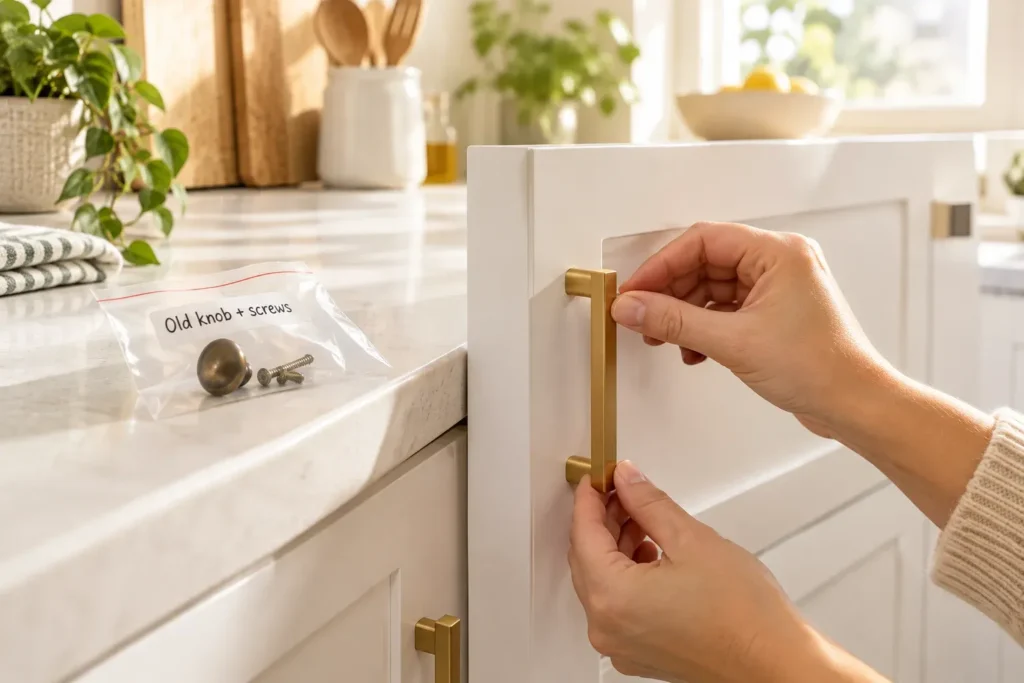
1. Swap Cabinet Knobs and Pulls
Hardware is the jewelry of a kitchen. New pulls change how your cabinets look in about twenty minutes, and a 10-pack of knobs runs roughly $16 to $25.
The rule is simple: keep every original knob, pull, and screw so they can go back on before you leave. Put them in a labeled zip bag and tape it inside a drawer you won’t forget about.
Measure before you buy. If your current pulls have two screws, the new ones need the same center-to-center spacing, or you’ll be tempted to drill. Don’t. Drilling new holes in a rental requires permission, and cabinets are expensive to repair.
2. Add Plug-In Lighting
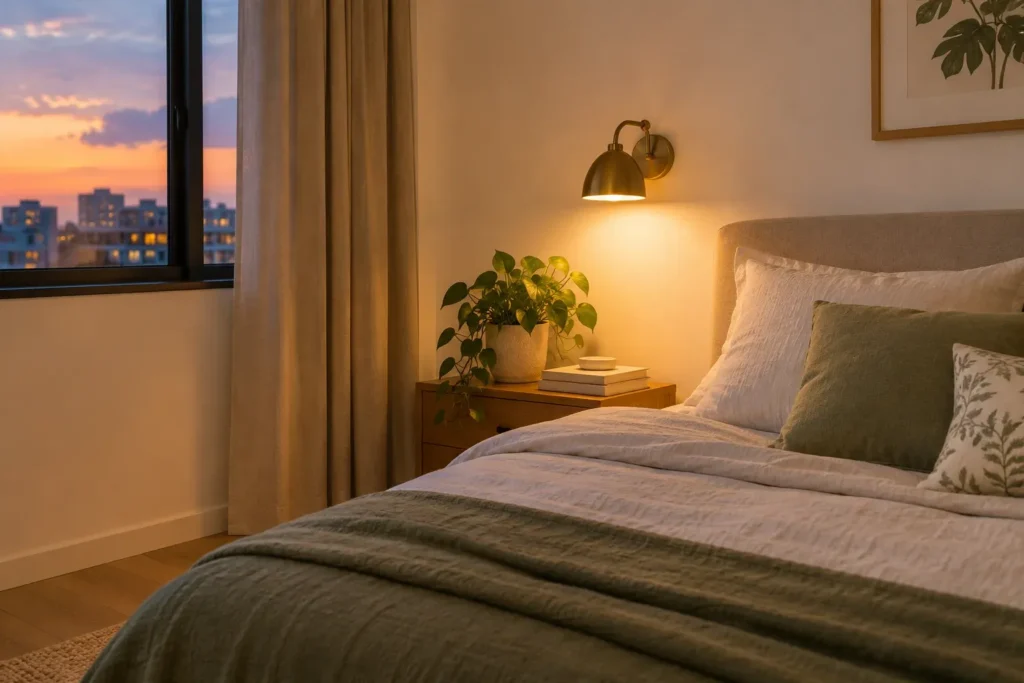
Bad lighting makes every room feel cheaper than it is. If your overhead light is harsh or just plain ugly, work around it instead of replacing it.
Plug-in sconces beside the bed, a floor lamp in the corner, or a rechargeable light by your desk change the mood without touching any wiring. Swapping bulbs helps too. Bright white daylight bulbs work well in kitchens and bathrooms, while warmer bulbs feel cozier in bedrooms and living rooms. Even a dated fixture looks better with the right bulb in it.
Best part: every lamp comes with you when you move.
3. Stick On LED Strips and Motion Lights
Dark closets, dim pantries, and shadowy kitchen counters are common rental annoyances. Adhesive LED strips under cabinets fix the counter problem for a few dollars. Rechargeable motion-sensor lights solve closets and stairwells.
A few tips make removal painless. Clean the surface with rubbing alcohol before you stick anything. Press firmly for thirty seconds. When it’s time to take them down, warm the adhesive with a hairdryer and peel slowly instead of yanking.
4. Layer Rugs, Curtains, and Plants
A big rug hides tired flooring and makes a room feel finished. Curtains do the same for windows, and they matter more than you’d think. Many landlords install basic blinds that you often can’t remove, so curtains on a tension rod or a no-drill rail let you soften them. Bankrate’s reporting puts curtain upgrades at roughly $50 to $100.
Plants cost almost nothing and add life to any corner. Containers on a shelf or stand won’t touch the walls.
Do these four and you’ll have knocked out the landlord friendly upgrades that change your daily routine the most, without leaving a trace.
Reversible Surface Treatments: Peel-and-Stick Done Right
Peel-and-stick has a reputation as the miracle cure for a boring rental. That’s mostly deserved. Not entirely.
These are the landlord friendly upgrades that look most dramatic, which is exactly why they deserve a little caution. Surfaces are where deposit disputes tend to start.
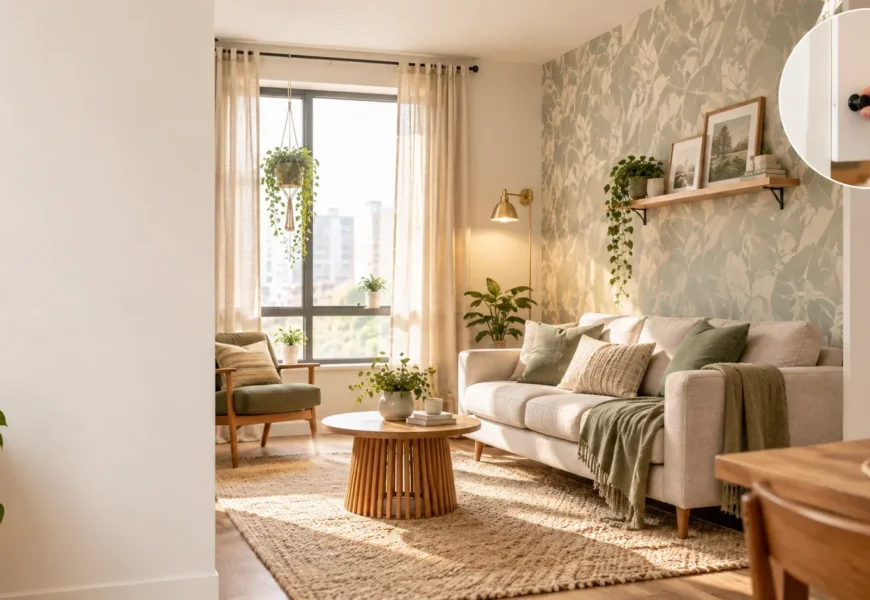
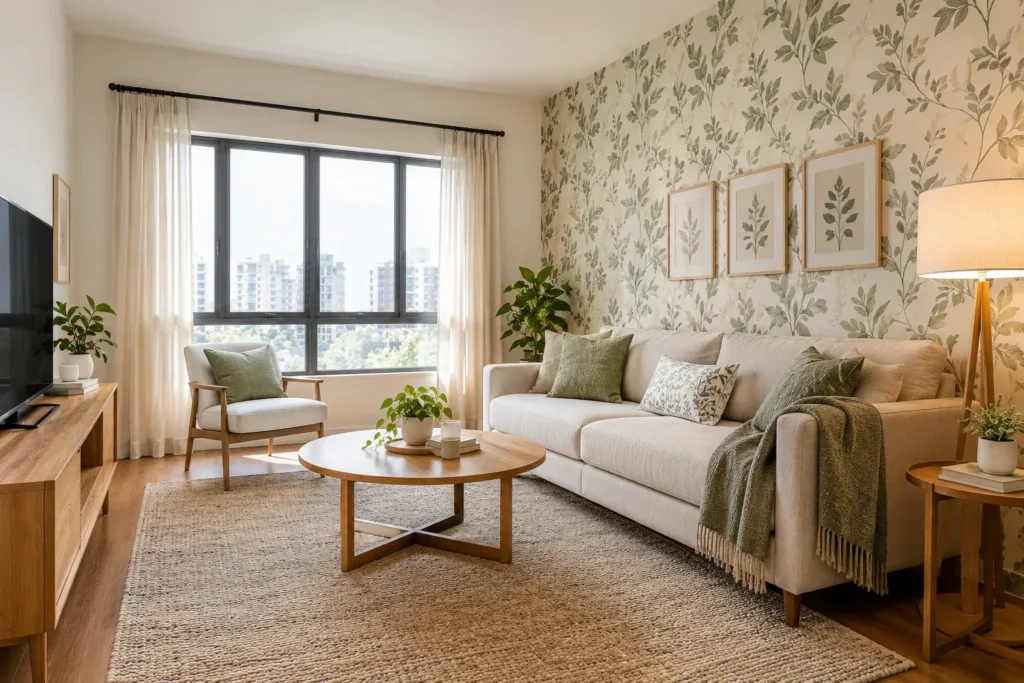
5. Peel-and-Stick Wallpaper for One Accent Wall
An accent wall behind your bed or sofa can change a whole room. Peel-and-stick wallpaper is the usual route because it’s cheaper and more renter friendly than traditional paper.
But “removable” doesn’t always mean “harmless.” One recent roundup warns that peel-and-stick wallpaper, backsplash, and wall panels can still lift paint or damage drywall when removed. A few ways to protect yourself:
- Apply it to smooth, primed walls. Textured walls can reduce adhesion and removability.
- Test a small patch in a hidden spot, like behind a door, and leave it for a week or two before peeling it off.
- Stick to one wall. Costs also climb fast on big surfaces, as NBC Select points out.
- Mention it to your landlord. Some will say yes happily, and you’ll have it in writing.
6. Removable Backsplash and Contact Paper
Kitchens are the hardest room to change in a rental because so much of the space is fixed, including cabinets and countertops. That’s where peel-and-stick tile and contact paper shine.
A peel-and-stick subway tile backsplash over a bare wall behind the stove or sink can make a kitchen look intentional. Contact paper on a scratched shelf or drawer liner hides the damage and protects the surface underneath. One Los Angeles renter reportedly refreshed a “landlord special” kitchen for $325 in paint, peel-and-stick tile, and hardware swaps.
Use the same patch-test rule here. And skip any surface that’s greasy or peeling already, since the adhesive won’t hold and may pull the finish with it.
Upgrades That Need a Yes From Your Landlord First
Some changes aren’t sneaky-reversible. They just aren’t yours to make alone.
Plenty of landlord friendly upgrades become deposit fights because someone skipped this step. Rental agreements typically prohibit permanent structural changes like replacing flooring, rewiring outlets, or repainting without written permission.
7. Paint, With Permission
Paint is one of the easiest ways to transform a room in a single afternoon. It’s also one where the landlord usually has the final say. You’ll typically be expected to repaint to the landlord’s standard or pay a pro to do it, so ask first and share the exact color you have in mind.
A light neutral gets approved far more easily than deep navy. Price it out, too: HomeAdvisor puts a DIY room paint job at roughly $200 to $300.
Other Changes to Ask About
- Light fixtures. If you really want a new pendant, hire a licensed, insured electrician, then swap the original back before you leave or offer the upgrade to your landlord.
- Flooring. Even snap-and-lock planks need permission before they go down.
- Built-ins and vanities. You might hate them. They’re still part of the lease.
What the Landlord Should Handle
Not everything is an “upgrade.” If the shower head is broken, your landlord should be responsible for replacing it. Report problems in writing first. Upgrading a working fixture is your call, but save the original.
How to Pitch Landlord Friendly Upgrades to Your Landlord
Asking is a skill. The renters who get a yes usually treat it like a short proposal rather than a favor.
When you pitch landlord friendly upgrades, a property management trainer quoted in a recent roundup suggests approaching it like a proposal: explain what you want to do, why it matters to you, and how you plan to handle it. Keep it short and specific.
Here’s an example you can steal:
Hi [Name], I’d love to paint the living room a light gray and swap the kitchen cabinet pulls. I’ll use a matching finish, keep the original hardware, and restore anything you prefer at move-out. Would you be okay with that in writing?
Think about what your landlord actually cares about: protecting the property and keeping it easy to rent. Frame your idea that way. Landlord-side advice for rentals points out that the biggest gains come from kitchens and bathrooms, so ideas like a fresh splashback, a new faucet, or re-caulking the tub tend to land well. Even small jobs like swapping old doorknobs or re-caulking the tub can increase the value of an apartment.
Offer something in return. Before and after photos, a promise to restore everything, or an offer to leave a nice upgrade behind all make “yes” the easy answer.
Your Move-Out Checklist
Your landlord friendly upgrades only protect you if you undo the right ones at the right time. Start about two weeks before your move.
- Put the originals back. Hardware, bulbs, outlet covers, shower heads. Pull out your labeled bags.
- Remove adhesives slowly. Wallpaper, tile, and LED strips come off with patience and a hairdryer.
- Patch the small stuff. Nail holes are minor but real, and worth fixing before you hand over the keys.
- Wipe down surfaces. Clean walls, shelves, and counters.
- Take fresh photos. Match your move-in shots, same rooms and angles, with timestamps.
- Send a short note. Email your landlord a summary of what you restored and attach the photos.
That last step takes five minutes and gives you a paper trail. If anything gets questioned later, you’re already covered.
FAQs: Landlord Friendly Upgrades
Can I make upgrades without asking my landlord?
Yes, for removable, non-damaging ones like plug-in lamps, rugs, and curtains on tension rods. Anything involving drilling, paint, flooring, or electrical work needs approval. Read your lease first, since some ban even small nail holes. When you’re unsure, a short email protects you.
What are the best landlord friendly upgrades on a small budget?
The best landlord friendly upgrades under $100 are cabinet hardware swaps, plug-in sconces, adhesive LED strips, and a good rug. They’re cheap, portable, and easy to reverse. Start with whatever annoys you daily, usually lighting, and take everything with you when you move.
Does peel-and-stick wallpaper ruin walls?
It can. Removal sometimes lifts paint or damages drywall, especially on textured or cheaply painted walls. Test a small hidden patch for a week or two before committing. Use smooth, primed walls, peel slowly, and photograph the test spot so you have proof of how it came off.
Who pays if my shower head or faucet is broken?
Usually your landlord, since working fixtures are generally their responsibility. Report the problem in writing first. If you just want a nicer one, swapping is fine as long as you save the original and reinstall it before you leave.
How do I protect my deposit after making upgrades?
Stick to landlord friendly upgrades that are reversible, documented, and approved in writing. Take move-in and move-out photos, keep all original hardware, and send your landlord a short summary of what you restored. That paper trail makes deposit disputes much easier to win.
Conclusion
You don’t need a big budget or a landlord who loves renovation to make a rental feel like yours. A new set of pulls, a couple of lamps, a rug, and one well-placed accent wall can change how you feel walking in after work.
The pattern is simple. Read the lease, photograph the unit, keep the originals, and ask in writing before anything permanent. Follow that, and landlord friendly upgrades stay what they should be: small, reversible changes that make daily life better and leave your deposit alone.
So here’s your next step. This weekend, pull out your lease, read the alterations section, and take photos of every wall. Then pick one upgrade from this list and do it.