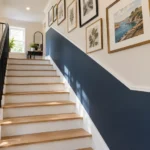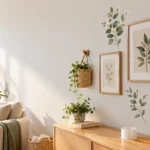
You moved in, unpacked the last box, and looked up. Beige walls. Beige carpet. A light fixture that came free with the building. Sound familiar?
Here’s the thing. Most of us don’t want to renovate a place we don’t own. We just want it to feel like ours, without an email from the landlord about deductions six months after move-out. That’s where renter friendly decor comes in. Done well, it looks custom, costs less than you’d expect, and comes off clean when your lease ends. No power tools required.
Below, you’ll get a simple lease-check system, six damage-free upgrade areas, and three budget plans ($50, $200, and $500). Whether you’re in a studio or a shared house, the same rules apply. Grab a coffee and let’s make your rental feel like home.
Why Renter Friendly Decor Starts With Your Lease
Before you buy a single roll of anything, read your lease. Yes, it’s boring. But renter friendly decor only works when you know your building’s rules. Every landlord draws the line somewhere different, which is why the same wallpaper is fine in one apartment and a deposit fight in the next. There’s no one-size-fits-all definition of what counts as allowable decor.
The money side matters too. A record 22.7 million renter households were cost-burdened in 2024, which is almost half of all U.S. renters. When rent already takes that big a bite, losing a deposit over a few careless holes really stings.
Use the three-bucket check
Sort every idea on your wishlist into one of three buckets:
- Ask first: painting, drilling into studs, swapping light fixtures.
- Usually fine: rugs, plants, floor lamps, tension rod curtains, adhesive strips.
- Read the fine print: peel and stick wallpaper, removable backsplash, window film.
Most of what you’ll do lives in the middle bucket. The other two just need a quick email.
Ask in writing
Here’s a message that works: “Hi [Name], I’d like to put removable wallpaper on one wall and use adhesive strips for art. I’ll take everything down before move-out. Is that okay?” Screenshot the reply. Written permission is what you’ll point to at your move-out inspection.
Two more habits protect you. Photograph every room the day you move in, and ask how your landlord treats small nail holes. Some landlords see them as normal wear and tear, while others deduct repair costs. Knowing which one you’ve got saves a lot of guessing.
Removable Wallpaper and Peel and Stick Wallpaper Done Right
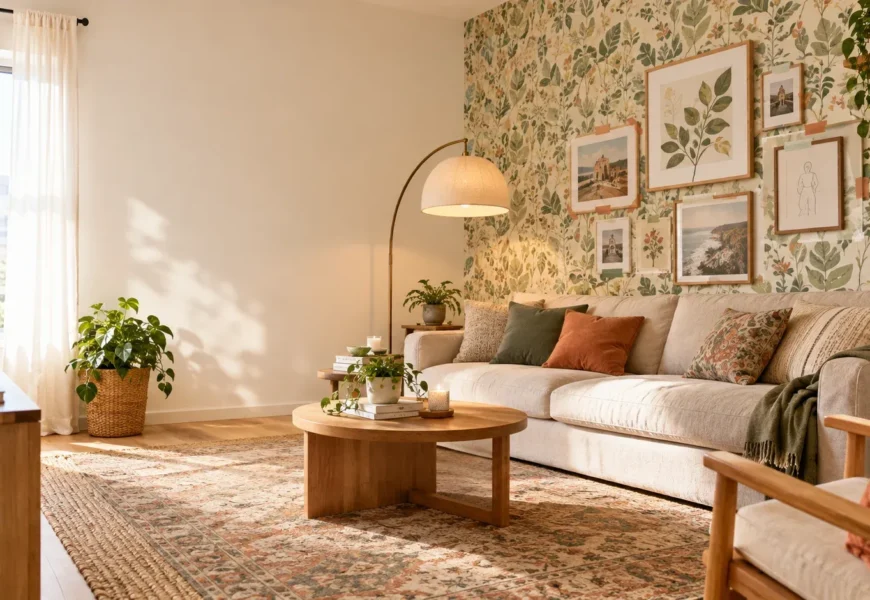
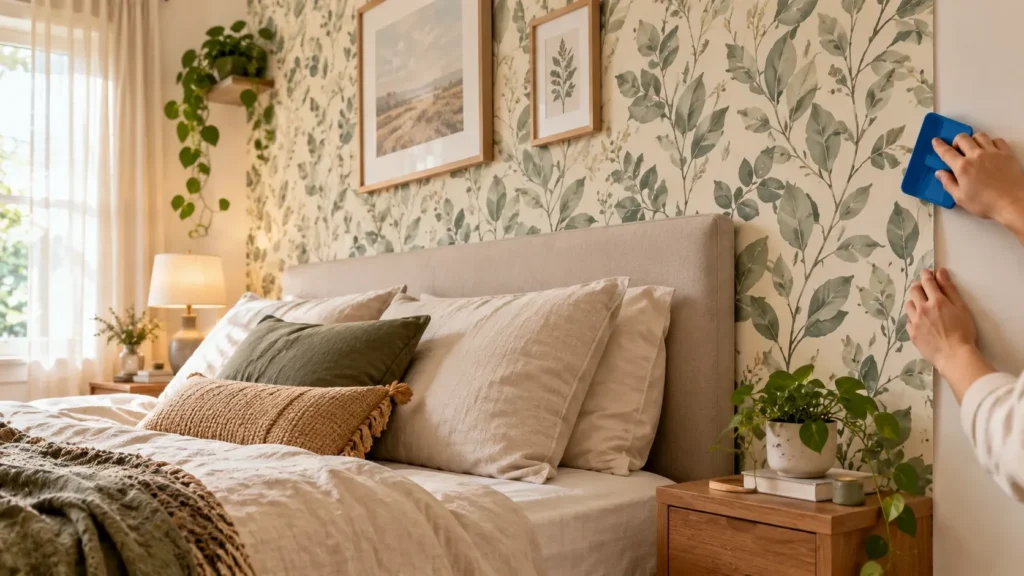
Nothing changes a room faster than one bold wall. That’s why removable wallpaper is the headline act of renter friendly decor, and also the one people mess up most.
Where it works best
Smooth, painted, fully cured walls. Think behind the bed, behind the sofa, or inside a bookshelf. One accent wall gives you the drama without papering the whole room. Textured walls are trouble, because adhesive can’t grip the bumps, and you’ll get bubbles and curling corners. Bathrooms and kitchens need waterproof, vinyl-based options, so read the label before you buy.
The honest downsides
Peel and stick wallpaper is sold as damage-free, and it mostly is. One blogger who has removed it from over a dozen walls says the worst outcome is usually a thin layer of paint lifting in small patches. Cheap paint or a fresh coat raises that risk. So test first. Stick a strip somewhere hidden, leave it for a week, then peel it. If the paint holds, go ahead.
Also, buy an extra roll. Pattern matches are hard to fix once a batch sells out.
Install and removal tips
- Wipe the wall clean and let it dry completely.
- Use a level for your first strip so the pattern doesn’t drift.
- Ask a friend to help with wide rolls.
- At move-out, peel slowly at a low angle, and warm stubborn spots with a hairdryer on low.
If you really can’t stick anything to your walls, build a freestanding backdrop instead. A thin plywood sheet with two small legs, painted or papered, can lean behind a sofa or dresser. Add felt pads to the bottom, and it moves with you.
Gallery Wall Without Nails: Damage-Free Hanging
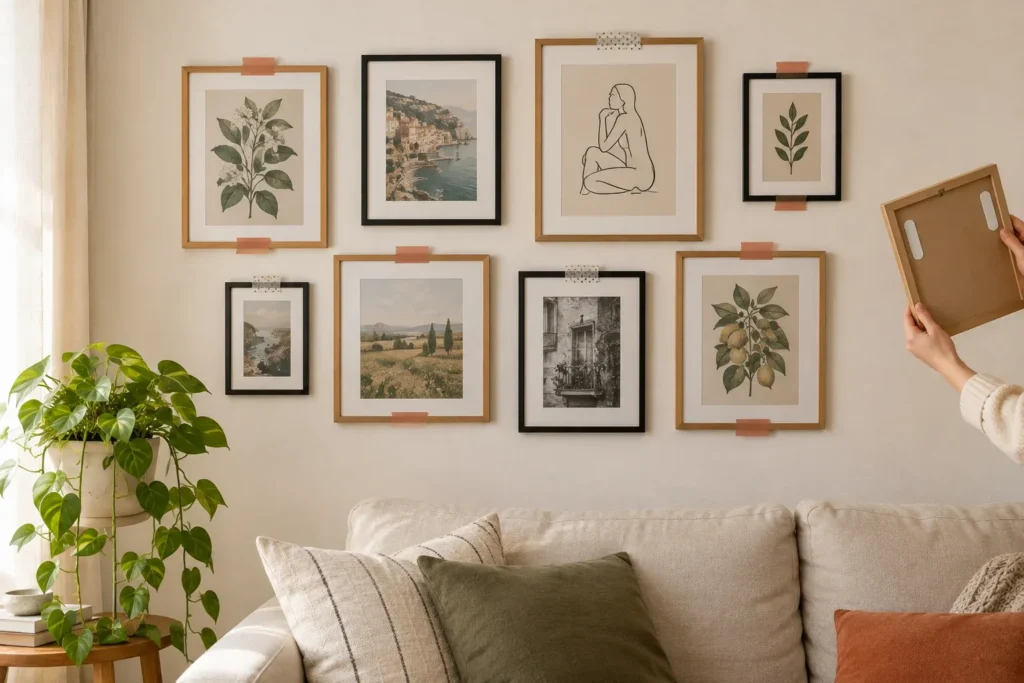
Art is what makes a place look lived in. Damage-free hanging is the backbone of renter friendly decor, so it pays to get it right.
Adhesive strips, used properly
Adhesive strips are popular for a reason. They also fail when people skip the directions. The product instructions say to wait seven days after painting so the paint can cure, and to avoid using them for valuable items or anything over a bed. Match strip size to frame weight, press firmly for 30 seconds, and wait an hour before hanging. To remove one, hold the tab and pull straight down toward the floor, never out from the wall.
Plan before you stick
Cut paper templates to the size of each frame and tape them to the wall with low-tack tape. Step back, move things around, and only then put strips on the real frames. Keep two to three inches between pieces, and hang the center of the cluster around eye level.
Frames without hardware
Washi tape turns loose prints into framed-looking art. Lay your grid out on the floor first, tape the corners, then add a tape border for that frame effect. It peels off in seconds, and you can rearrange the whole wall on a whim.
Lean, don’t hang
Big mirrors and heavy frames shouldn’t go on adhesive at all. Lean them against the wall on a dresser, console, or the floor. Layering a few pieces at different heights looks intentional, and it carries zero risk to your paint.
Lighting That Needs No Wiring
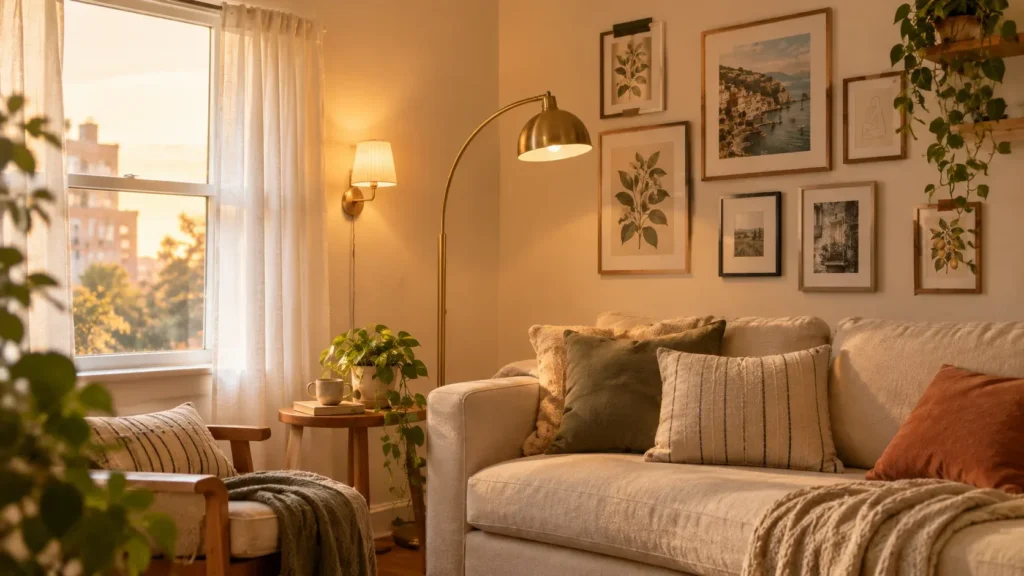
Most rentals come with one harsh ceiling light per room. It flattens everything. Fixing that might be the most underrated move in renter friendly decor.
Start with lamps. A floor lamp in the corner and a table lamp at eye level will change the mood immediately. Swap cool white bulbs for warm ones, and the room stops feeling like a waiting area.
Then try plug-in wall sconces. They give you the look of built-in lighting with a cord you can tuck along the wall. Check weight limits, and if one needs a single screw hole, ask your landlord first.
Layer three kinds of light if you can: a general glow, a task light for reading, and a small accent lamp on a shelf. If you’d love to replace a ceiling fixture, that’s an ask-first project. Keep the original in a labeled box, and reinstall it before you leave.
One more trick: a lamp in each corner pulls your eye outward, so the room feels bigger. Thrifted floor lamps work as well as new ones, especially with a fresh shade. And if a bulb keeps flickering in a built-in fixture, tell your landlord instead of fixing it yourself.
Area Rugs: The Fastest Way to Hide Rental Floors
Tired carpet, scuffed laminate, yellowing vinyl. Rugs cover all of it. For under $150, a big rug is renter friendly decor at its most efficient, and it goes with you to the next place.
Go bigger than you think
Small rugs float and make rooms feel choppy. In a living room, at least the front legs of your sofa and chairs should sit on the rug. In a bedroom, aim for the rug to peek out about 18 to 24 inches on both sides of the bed.
Layer for texture
A flat jute rug as your base, with a smaller patterned rug on top, gives you depth and hides stains. Add a rug pad underneath so nothing slides. Choose a felt or natural rubber pad, since some cheap rubber backings can stain vinyl. It also protects the flooring from scratches, which helps at move-out.
Rugs also do a quiet job in open floor plans. They mark out where the living room stops and the dining area starts, which makes one big room feel like two.
Don’t forget entryways and hallways. A narrow runner makes a bland corridor feel like part of the home, and it saves the flooring from muddy shoes. Washable rugs are worth the extra few dollars if you have pets or kids.
Curtains, Window Film, and Tension Rods
Windows are where rentals usually look the most bare. Curtains fix that fast, and they’re the quiet workhorse of renter friendly decor.
Tension rod curtains
A tension rod sits inside the window frame and holds itself in place with pressure. No drilling, no anchors. It works best with light or medium curtains, since heavy fabric can pull the rod down. For anything heavy, look at the weight rating before you buy.
Removable window film
Window film adds pattern and privacy without blinds or hardware, and it peels off when you move. It’s also a way to get privacy without installing curtain rods or blinds. Frosted styles work well on bathroom windows and ground-floor apartments.
Work with what’s there
Your landlord probably installed basic blinds. Leave them up. Layer curtains in front of them, and you get softness and light control while the originals stay in perfect condition. If your landlord okays a standard rod, hang it wide and high, since that makes the window look bigger.
Color and length matter more than fabric. Go for white or soft neutral panels if you want light, or a deep color if you want the room to feel snug. Whatever you choose, let the panels reach the floor. Short curtains make a window look like an afterthought.
Kitchen and Bathroom Fixes: Removable Backsplash and Peel and Stick Tile
Kitchens and baths are where renter friendly decor gets tricky. Heat, steam, and grease all attack adhesive, so the stakes are a little higher.
Removable backsplash
Waterproof decals and peel and stick panels can hide a dated backsplash behind the stove or sink. Clean the surface with degreaser first, since any oily film makes the adhesive slide. Keep panels a few inches away from the burner, because direct heat can warp them. Measure the space twice and order a little extra. And if the wall behind is textured or greasy tile, do a test panel first.
Peel and stick tile: test first
This is the one to be careful with. Commenters on one well-known design blog say peel and stick tile can leave residue behind. Stick a single tile in a corner, wait a few days, and peel it. If it leaves goo behind, cover the floor with a rug instead.
Swap the small stuff
Cabinet knobs, towel bars, and shower curtains change a room more than you’d think. If you swap hardware, put the originals in a labeled bag and tape it inside a cabinet so they’re waiting for you at move-out.
In the bathroom, a shower curtain in a bold pattern is the cheapest decor swap there is. Add a bath mat and matching towels, and you’ve refreshed the room without touching a single fixture.
A Budget Rental Makeover: $50, $200, and $500 Plans
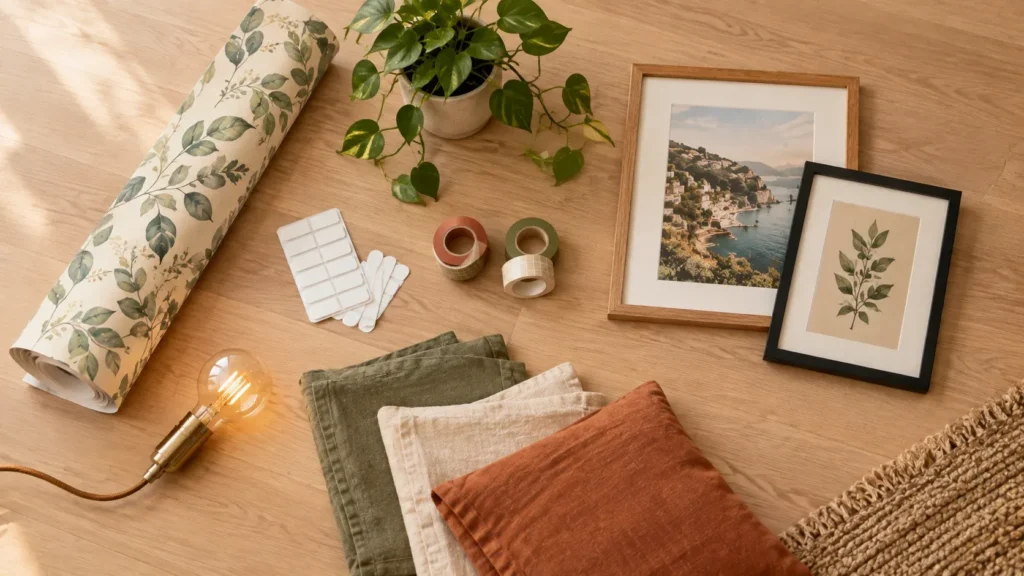
You don’t need a big budget to make a difference. The cheapest renter friendly decor is often secondhand, and the best stuff is portable, so nothing you buy is wasted when you move. Thrift stores, flea markets, and Facebook Marketplace are your friends here.
The $50 refresh
- Adhesive strips and a few frames from a thrift store.
- Washi tape for a quick gallery wall.
- One or two plants, real or good-looking fake.
- New throw pillow covers.
The $200 upgrade
- A floor lamp and warm bulbs.
- One roll or two of removable wallpaper for a single accent wall.
- Tension rod curtains in a fabric you love.
- A new shower curtain and matching towels.
The $500 makeover
- A large area rug with a felt pad.
- A pair of plug-in wall sconces.
- Curtains plus window film for the bare windows.
- A freestanding backdrop or a full wall of wallpaper behind the bed.
These are rough ballparks. Prices swing depending on where you live and what you find secondhand. Start with the pieces that do the most work in renter friendly decor: lighting and a rug. Then add wallpaper once you’ve tested a patch. Everything on this list can go in a moving box when your lease ends.
Do the $50 tier first even if you plan to keep going. It teaches you what your walls will tolerate before you spend bigger.
FAQs: Renter Friendly Decor
Do I need my landlord’s permission to decorate a rental?
Not for everything. Rugs, lamps, plants, and most adhesive strips are usually fine. Painting, drilling, and replacing fixtures typically need approval. Since renter friendly decor varies by lease, check yours first and get any bigger requests approved in writing. Photograph everything at move-in too.
Does peel and stick wallpaper damage walls?
Usually not, but it can lift a thin layer of paint, especially on cheap or freshly painted walls. Test a small hidden strip for a week before committing. Remove it slowly at a low angle, and warm stubborn spots with a hairdryer on low heat.
Will adhesive strips ruin my paint?
Not if you follow the directions. Wait seven days after painting, match the strip to your frame’s weight, and press firmly. To remove, hold the tab and pull straight down toward the floor. Never yank outward, which is what tears paint.
What’s the cheapest way to start decorating a rental?
Begin with lighting and textiles. A thrifted lamp, warm bulbs, and new pillow covers cost little and change the mood fast. Add a few frames on adhesive strips next. Secondhand renter friendly decor also goes with you when you move, so nothing is wasted.
Can I paint my rental?
Only with written permission. Many leases ban painting, but some landlords say yes if you repaint to the original color at move-out. If the answer is no, use removable wallpaper or a freestanding painted board for the same color hit. Ask before you pick up a brush.
Conclusion
Renter friendly decor isn’t about settling for less. It’s about being smart with what’s reversible and honest about what isn’t. Once you know your lease, most of the fun stuff is fair game.
Here’s the short version. Read your lease and get any big asks in writing. Lock in lighting and a rug first, because they change a room the most. Use adhesive strips the right way, with the paint fully cured. Test every peel and stick product on a small patch before you commit. And keep your originals, from cabinet knobs to light fixtures, in labeled bags.
You also don’t have to do it all at once. Pick one room and one project. A lamp and a rug can be done in an afternoon. A wallpaper wall can wait for next weekend.
So here’s your next step: this weekend, open your lease, snap move-in photos of every room, and send that one email to your landlord. Then order the strips, and start with the wall you stare at most.