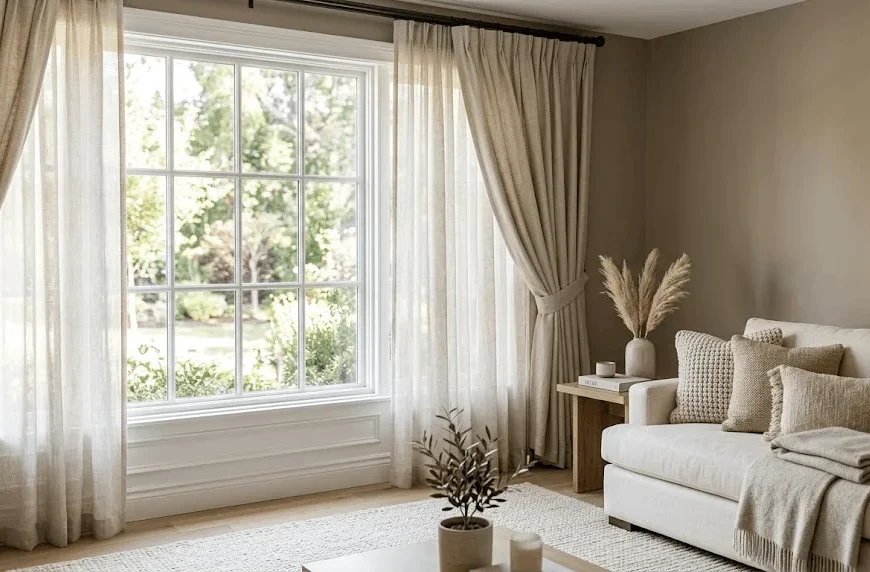
Stand in your living room and look at your windows for a second. Bare glass? Sad, sagging curtains from three apartments ago? A blind that’s been stuck at a weird angle since last spring? You’re not alone — window styling is one of those things everyone means to get to eventually. But here’s the thing: living room window styling is often the single fastest way to make a whole room look pulled together, and you don’t need a full renovation to do it.
This guide walks through what actually works right now, based on what’s trending in 2026 and what real homeowners get stuck on — not just generic “hang some curtains” advice.
Why Living Room Window Styling Matters More Than You Think
Most people focus on furniture first and treat windows as an afterthought. That’s backwards. Living room window styling affects how much light comes in, how big or small the room feels, and honestly, it’s often the first thing people notice when they walk in — even before the couch.
Think about it this way: a window is basically a giant frame on your wall. Leave it bare and the room feels unfinished, even if everything else is perfect. Dress it well, and suddenly the whole space feels intentional. That’s the difference between a room that looks “fine” and one that looks designed.
This is exactly why living room window styling deserves more attention than it usually gets. It’s one of the few upgrades that touches everything else in the room at once — the light, the color palette, even how big or small the space feels.
A well-styled window pulls your eye toward it in a good way, almost like a piece of art you didn’t have to hang. And unlike a full furniture overhaul, it’s something you can change on a weekend without spending a fortune. Once you start noticing how much a window sets the tone for a room, it’s hard to walk past a bare one again.
Start With Curtain Ideas for Living Room Windows
Curtains do more heavy lifting than almost anything else in the room. They add color, texture, and softness — three things a living room usually needs more of. That’s really the heart of good living room window styling — using fabric to soften all the hard edges a room naturally has, from flat walls to boxy furniture. A single well-chosen curtain can tie together a color scheme that otherwise feels scattered. And once you get the fabric right, everything else in the room — the sofa, the rug, the art — suddenly feels like it belongs together.
Pick a Fabric That Matches Your Climate and Lifestyle
If you’ve got kids or pets, go with something durable like cotton or a linen blend — it hides wear and washes easily. In warmer climates, lightweight linen or sheer cotton lets air move without cooking the room. Cold climates call for heavier fabric like velvet or a thick cotton blend that actually holds in warmth. It’s a small decision, but getting the fabric weight right is one of the most overlooked parts of living room window styling.
Too heavy in a warm climate and the room feels stuffy by mid-afternoon. Too light in a cold one and you’ll feel every draft that sneaks through the glass. Think of fabric weight the same way you’d think about picking a jacket — it needs to match the season, not just the style you like.
Hang Them High and Wide
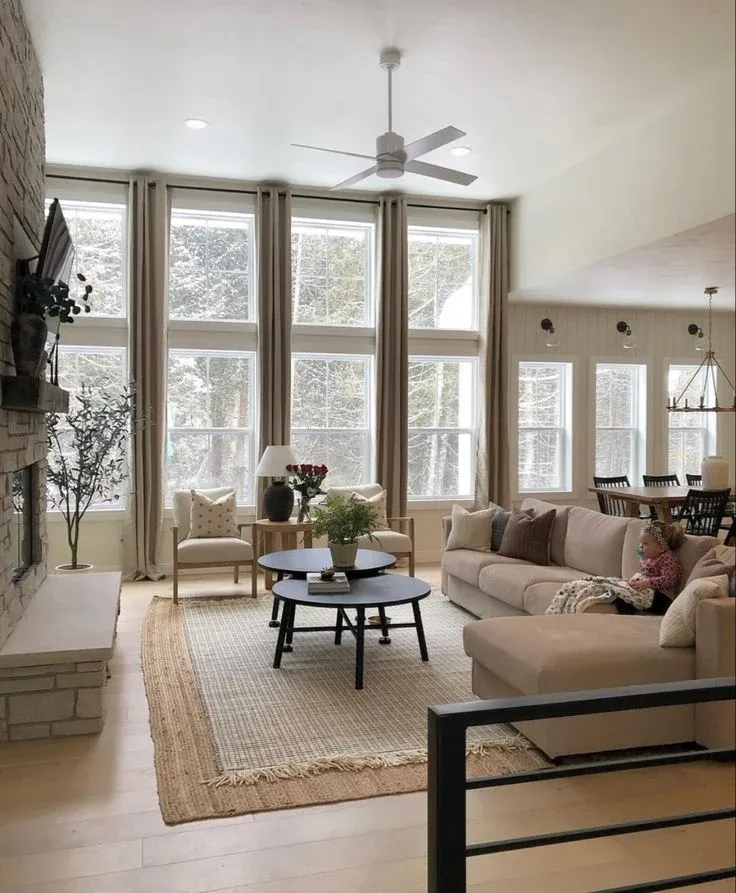
This is the one trick almost every designer agrees on: hang your curtain rod closer to the ceiling than to the top of the window frame, and extend it a few inches past the window on each side. It tricks the eye into thinking the ceiling is taller and the window is bigger. It costs nothing extra — just a different placement. This one adjustment alone can transform basic living room window styling into something that looks custom-designed.
Most people default to mounting the rod right above the window frame, which actually makes the ceiling look lower than it is. Moving it up just six to ten inches changes that instantly. The same goes for width — extending the rod past the window frame lets you push curtains fully open during the day, so they frame the glass instead of covering part of it. It’s the kind of detail that costs you nothing but a few extra screw holes, yet it’s often the first thing people notice, even if they can’t quite say why the room looks better.
Layered Window Treatments Are the Big 2026 Trend
If there’s one idea worth stealing from this year’s design trends, it’s the layered look — pairing sheer curtains with heavier drapes instead of picking just one. The sheer layer softens daylight and adds privacy during the day, while the heavier drape closes off the room and blocks light at night. It’s practical and it looks more finished than a single panel ever could.
This combination is becoming known as the “double-dressed” window, where sheer curtains act as a real design feature instead of just a placeholder before the “real” curtains go up. If your living room windows currently have one flat panel of fabric, this is the upgrade to make. It’s one of the easiest ways to level up living room window styling without touching furniture, paint, or anything else in the room.
During the day, the sheer layer stays closed and gives you a soft, glowing kind of privacy that still lets light through. At night, you pull the heavier drape across for full coverage and a cozier feel. The two layers also give you more flexibility than a single curtain ever could — you’re not stuck choosing between light and privacy, you get both depending on the time of day. And visually, the extra layer of fabric just makes the window look fuller and more finished, even before you add any other decor around it.

Window Blinds for Living Room Spaces: When They Make More Sense
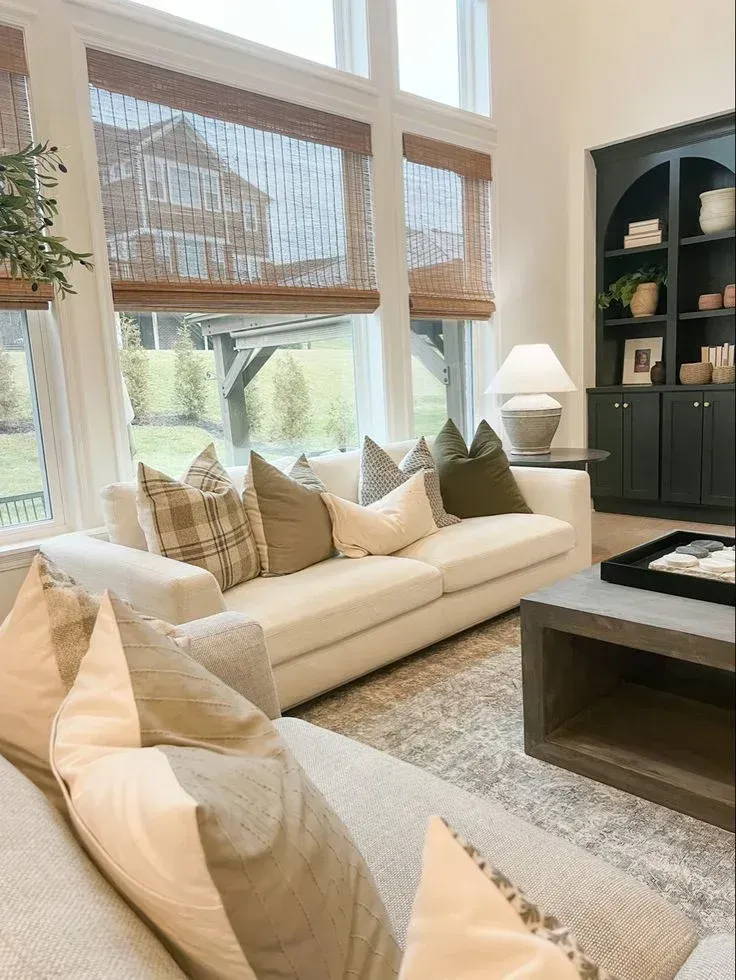
Curtains aren’t always the answer. If you want precise light control — say, for movie nights or a room that gets brutal afternoon sun — window blinds for living room windows might be the better call. Cellular or honeycomb blinds are worth a look too, since they trap air in their structure and help keep the room warmer in winter.
The smartest move for a lot of living rooms is combining both: a blind close to the glass for function, and curtains around it for warmth and style. That’s essentially the layered treatment idea again, just applied with blinds instead of a second curtain. This combo comes up constantly in living room window styling because it solves two problems at once — light control and visual warmth — without forcing you to compromise on either.
The blind handles the practical side, blocking glare during the day or giving you privacy at night with one quick adjustment. The curtains then soften all those hard lines and add the color or texture the room actually needs. It’s a low-effort way to get a designer-style layered look, even if you’re not ready to commit to a full double-curtain setup.
Bay Window Decorating Ideas Worth Trying
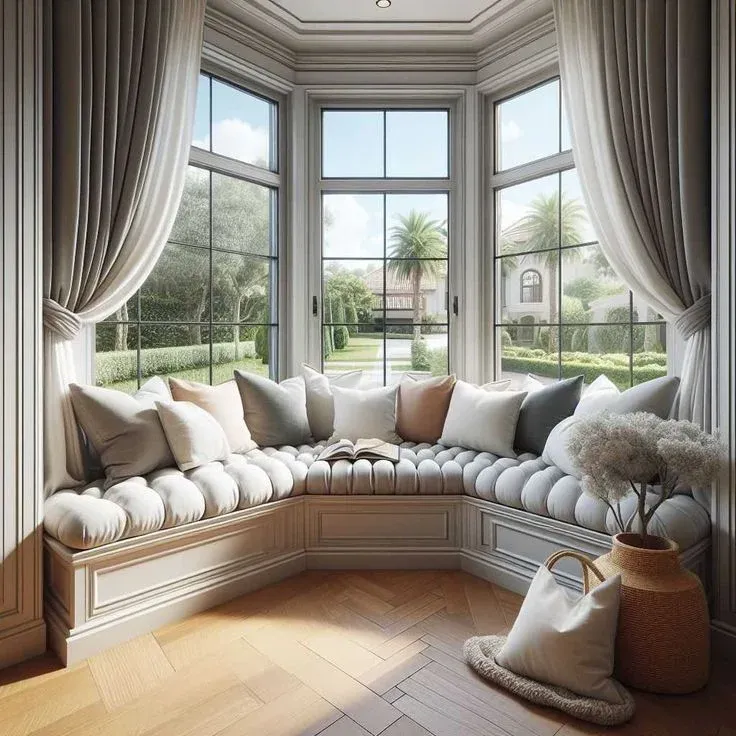
Bay windows are a gift and a headache at the same time. They bring in gorgeous light and architectural character, but they’re awkward to dress because of the angles.
Here’s what tends to work:
- Plantation shutters on each pane, which keep the lines clean and give you privacy without fighting the angles.
- A single curved curtain rod that follows the bay’s shape, so one continuous drape wraps the whole window.
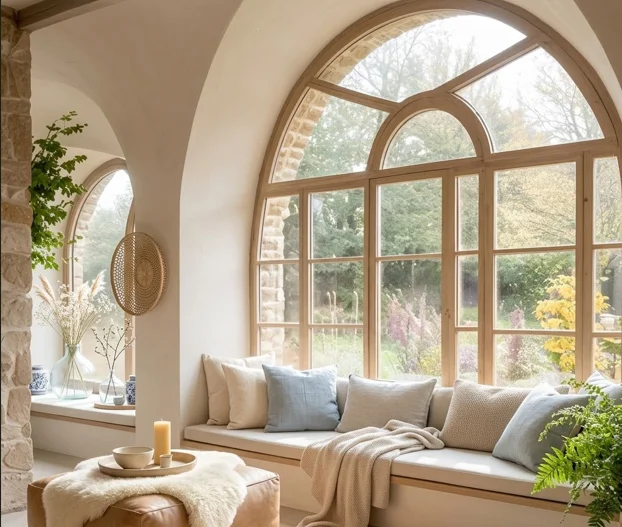
- A built-in bench or window seat underneath, turning the awkward space into the coziest spot in the room.
If you’ve got a bay window, don’t try to force it to act like a normal flat window. Lean into the shape instead. This is one of the most common mistakes in living room window styling — trying to make an unusual window disappear instead of working with what it actually is. A bay window’s angles are a feature, not a flaw, and treatments that follow the curve or the angle usually look far more intentional than ones that fight it.
Once you stop trying to flatten it out, the styling choices actually get easier, since you’re working with the room’s natural shape instead of against it. And practically speaking, leaning into the shape often opens up extra seating or display space you wouldn’t get with a standard window.
Living Room Valances and Smaller Details
Valances had a reputation for looking dated, but they’re having a bit of a comeback, especially paired with a simple curtain underneath. A valance hides the curtain rod and hardware, which gives the whole setup a cleaner, more finished edge. Pair a plain valance with patterned curtains, or a patterned valance with plain curtains — just don’t do busy patterns on both, or it starts to look cluttered.
Small hardware details matter more than people expect too. Finials, rings, and the curtain rod itself used to be an afterthought, but sleeker, more architectural hardware is now treated as part of the design rather than something to hide. A brushed brass or matte black rod, for example, can act almost like jewelry for the window — subtle, but noticeable once you start paying attention to it. Even the rings themselves make a difference; metal rings sliding smoothly along a rod look far more polished than plastic hooks that catch and bunch the fabric.
If you’re on a budget, upgrading just the hardware is one of the cheapest ways to make an existing curtain setup look more expensive. It’s the kind of detail most guests won’t consciously clock, but it’s exactly what makes a room feel finished instead of thrown together. Pair the right hardware with a curtain you already love, and the whole window suddenly reads as designed rather than default.
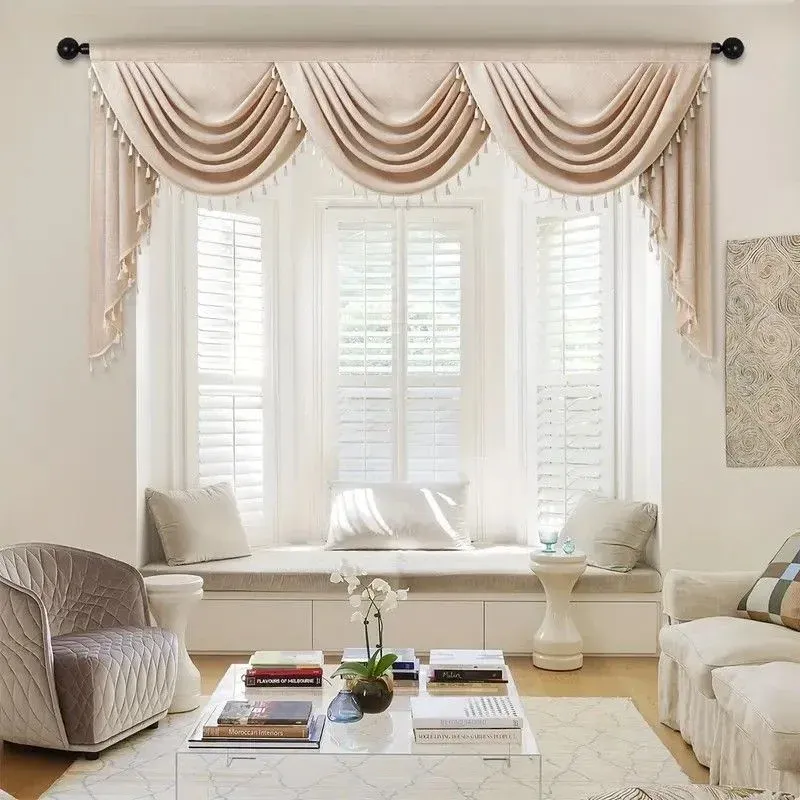
Sheer Curtains Living Room Setups That Don’t Feel Flimsy
Sheer curtains living room combinations get a bad rap for looking cheap, but the trick is fullness. A thin, flat sheer panel looks like an afterthought. A sheer panel with generous width — more fabric than the window actually needs — reads as intentional and soft instead of bare.
Pair sheers with a pinch pleat or ripple-fold header for cleaner vertical lines, and let them puddle slightly at the floor if you want a more luxurious look, or keep them hovering just above the floor for something more tailored. This kind of small header detail is often what separates basic living room window styling from something that looks properly designed. A pinch pleat gives you tight, structured folds that read as more formal, while a ripple-fold header creates soft, even waves that feel more relaxed and modern.
Neither is “better” — it really comes down to whether your room leans traditional or contemporary. The floor length matters just as much as the header, since a puddle adds a romantic, old-world feel while a hover just above the floor keeps things crisp and current. Whichever combination you choose, consistency is what makes it look intentional — matching the header and length across every window in the room ties the whole space together.
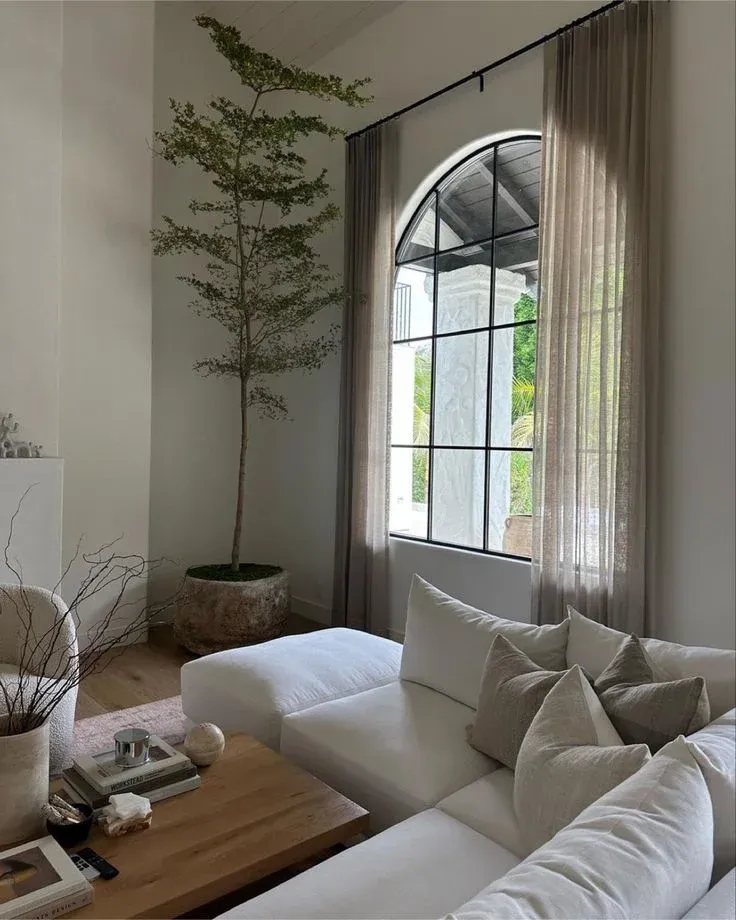
Don’t Ignore Window Trim and Molding Ideas
This part gets skipped constantly, but window trim and molding ideas can change how the whole window reads before you even add fabric. A fresh coat of paint on outdated trim, or adding simple molding where there was none, gives the window a cleaner frame — literally. If your living room leans traditional, wider trim with a bit of detail works well. For modern spaces, thin, flush trim (or none at all) keeps things minimal.
It’s easy to overlook trim when you’re focused on curtains and hardware, but it’s actually one of the foundational layers of living room window styling — everything else gets built on top of it. Think of trim as the frame around a painting: even the best curtains will look slightly off if the frame underneath is chipped, yellowed, or mismatched with the wall color. The good news is this is one of the cheapest fixes on this entire list — a can of paint and an afternoon can completely change how the window looks.
If your trim is in decent shape but just outdated in color, even switching to a crisp white or a tone that matches your wall can make the whole window feel new. It’s a small, unglamorous step, but it quietly supports everything else you put in front of it.
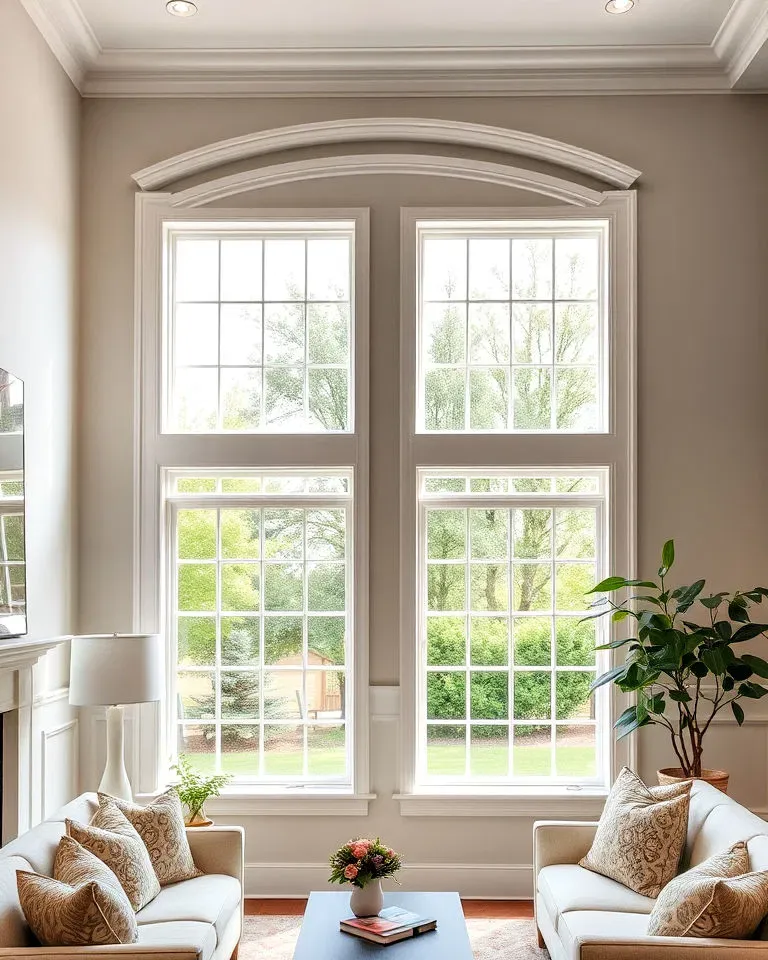
Natural Light Living Room Design: Don’t Block What You Don’t Have To
A lot of window styling mistakes come from over-covering a window that didn’t need it. If natural light living room design is your priority, skip heavy layering altogether on bigger windows and stick to a single sheer panel, a simple shade, or nothing but clean trim. Save the heavier, layered treatments for windows that face busy streets, harsh afternoon sun, or need to double as blackout for a TV wall.
It’s worth asking yourself what the window is actually working against before you start layering things onto it. A north-facing window with soft, indirect light rarely needs the same treatment as a west-facing one that gets hit with glare every afternoon. When in doubt, add less first — you can always layer more fabric on later, but it’s harder to undo a window that already feels heavy and closed in.
FAQs: Living Room Window Styling
Do living room curtains need to touch the floor?
Not always. Touching or lightly puddling the floor gives a softer, more luxurious look, while curtains that hover just above the floor look cleaner and more tailored. Either works — it depends on the overall style of your living room window styling.
How high should I hang curtain rods in a living room?
Most designers hang the rod several inches above the window frame, ideally closer to the ceiling. This makes the window look bigger and the ceiling look taller, which is one of the simplest upgrades in any room.
Are blinds or curtains better for a living room?
It depends on your priorities. Blinds give precise light and privacy control, while curtains add warmth and softness. Many living rooms use both together for flexibility.
What’s the best window treatment for a bay window?
Plantation shutters or a curved rod that follows the bay’s shape both work well. A window seat underneath also makes an awkward bay window feel intentional instead of just filled with fabric.
Are valances outdated for living rooms?
Not anymore. Valances paired with simple curtains underneath are showing up again in 2026 designs, mainly because they hide hardware and add a finished, tailored look without much extra effort.
Conclusion
Good living room window styling isn’t about picking the trendiest option — it’s about matching the treatment to what the window and the room actually need. A small window in a cozy reading nook doesn’t need the same treatment as a big bay window facing the street. Look at your light, your privacy needs, and your room’s overall style, then pick from the ideas above rather than trying to use all of them at once.
If you’re planning a refresh this season, start small: fix your curtain height and width first, since that single change makes the biggest visual difference for the least effort. Then build from there.