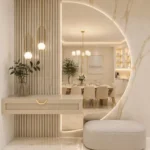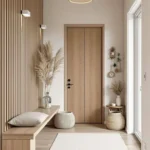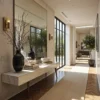
Your foyer is the first thing guests see when they walk through your door — and the last thing you glance at before heading out. Even if yours is barely bigger than a closet, that doesn’t mean it has to feel like one. Small foyer decorating is genuinely one of the most rewarding home projects you can take on, because even small, thoughtful changes can shift how an entire space feels.
This guide walks through everything — furniture choices, lighting, wall decor, storage, and budget tips — grounded in practical, real-world advice for anyone working with a tight entryway.
Why Your Foyer Matters More Than You Think
Most people don’t think much about their foyer until it quietly becomes a dumping ground for shoes, bags, umbrellas, and yesterday’s mail. Yet interior designers consistently treat the entryway as one of the most emotionally significant spaces in a home.
A well-considered foyer signals order and personality before a guest ever reaches the living room. For smaller homes and apartments especially, the entryway pulls double duty — it functions as both a transitional zone and a practical storage area at the same time.
When small foyer decorating is handled with intention, the space stops feeling like an afterthought. It doesn’t need to be large to feel layered, warm, or stylish. It just needs a clear direction and a few well-chosen pieces.
Start With a Clear Vision: Style First, Then Function
Before purchasing a single piece of furniture or hanging a mirror, it helps to decide on a visual direction. Are you drawn to minimalist foyer design with clean lines and calm neutral tones? Or do you prefer something warmer — layered textures, rich colors, and a more collected feel?
Here are a few directions that work particularly well for small entryway spaces:
- Minimalist: White walls, a slim console table, one simple piece of art, concealed storage.
- Coastal: Light wood tones, a natural fiber rug, simple hooks, soft blues or sandy neutrals.
- Modern Farmhouse: Shiplap-style wall panels, black iron hooks, a wooden bench.
- Urban Eclectic: Bold wallpaper on one wall, mixed metal finishes, a statement mirror.
Your style choice shapes every decision that follows — furniture scale, color palette, lighting type, and accessories. Getting clarity early saves money and prevents the scattered, piecemeal look that makes small foyer decorating feel more cluttered than it actually is.
Small Entryway Furniture: What Actually Fits and Works
Choosing the right furniture is the most critical decision in small foyer decorating. Oversized pieces don’t just look wrong — they make narrow spaces feel genuinely suffocating.
Console Tables
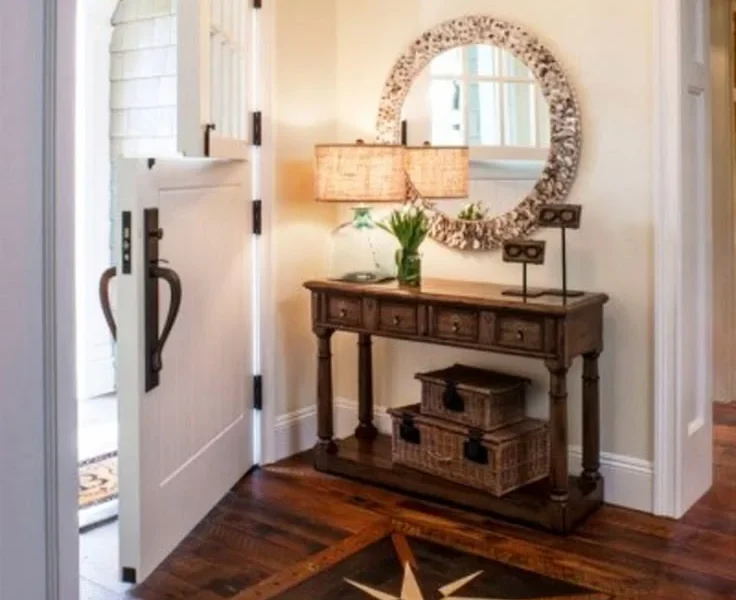
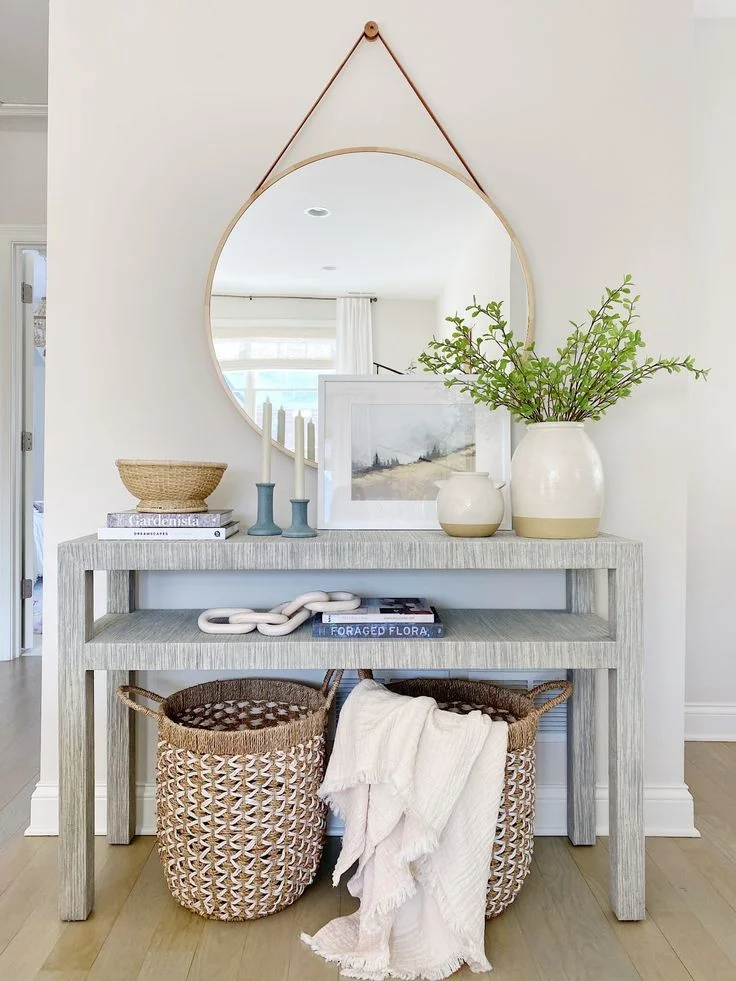
A slim console table, ideally between 10 and 14 inches deep, gives you a surface for keys, mail, and a few decorative touches without eating into your walking path. Look for options with a lower shelf for baskets or shoes. Brands like IKEA (the HEMNES and LEKSVIK lines), Article, and West Elm carry narrow designs that work reliably well in compact entryways.
Benches and Storage Ottomans
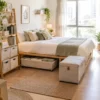
If you have even three feet of usable wall space, a small upholstered bench with hidden storage underneath can genuinely change how the space functions. It gives you a place to sit while putting on shoes and neatly conceals clutter at the same time. A bench between 36 and 48 inches wide tends to be the sweet spot for small foyer furniture — substantial enough to be useful, compact enough not to crowd the space.
What to Skip
- Bulky armchairs that interrupt the flow of movement.
- Large freestanding coat racks that extend into the walking path.
- Console tables deeper than 16 inches in very narrow hallways.
The underlying principle is simple: every piece should earn its floor space by serving more than one purpose.
Foyer Storage Solutions That Don’t Look Like Storage
One of the real challenges in small foyer decorating is managing the daily influx of items — shoes, bags, dog leashes, mail, umbrellas — without making the space feel like a utility room. The good news is that smart storage can be both functional and attractive.
Wall-Mounted Hooks
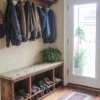
A well-placed row of hooks is one of the most underrated tools in a small entryway. Mounted at roughly 60 to 68 inches from the floor, they keep coats and bags accessible without crowding the space. Mixing double hooks and single pegs adds visual variety while giving you flexibility for items of different sizes.
Floating Shelves
Open floating shelves installed above a console table or bench create vertical storage without claiming any additional floor space. Uniform baskets or bins on the shelves keep things visually tidy. Labeling bins by family member takes it a step further and makes the system easy for everyone to maintain.
Over-the-Door Organizers
In very tight spaces, the back of the front door often goes completely unused. An over-the-door organizer with pockets or hooks can hold scarves, sunglasses, reusable bags, and more — without occupying a single square inch of floor space.
Foyer Storage Comparison
| Storage Type | Best For | Space Required | Cost Range |
|---|---|---|---|
| Wall-mounted hooks | Coats & bags | Minimal | $15–$80 |
| Floating shelves | Bins & decor | Low | $20–$100 |
| Storage bench | Shoes & misc. | Medium | $80–$300 |
| Console with shelf | Keys & mail | Low | $60–$250 |
| Over-door organizer | Small items | None | $10–$40 |
Small Foyer Lighting Ideas That Change Everything
Lighting is one of the most consistently overlooked elements of small foyer decorating — yet it has an outsized effect on how the space reads. A dark entryway feels tight and cold. A well-lit one feels larger, cleaner, and more welcoming from the first step inside.
Overhead Lighting
If your foyer already has a ceiling fixture, consider swapping it for something with a bit more character. A small statement pendant or a semi-flush mount with a warm bulb — ideally in the 2700K to 3000K color temperature range — immediately lifts the feel of the space. Even a modest fixture change can cost under $100 and takes less than an hour to install.
Wall Sconces
In narrow hallways or foyers where ceiling lighting alone feels flat, wall sconces flanking a mirror are a classic, effective solution. They cast light in multiple directions, making the space feel brighter without harsh overhead glare.
Natural Light Amplification
If your foyer has even a small window, treat it as a genuine asset. Keep window treatments minimal — a simple linen panel or nothing at all — and position a mirror directly across from the window to reflect natural light back into the space.
Layered Lighting
The most successful small foyer lighting ideas combine at least two light sources: ambient overhead lighting and one accent or secondary source such as a sconce, a table lamp on the console, or a picture light. Even in a very small space, two light layers create depth and warmth that a single bulb overhead simply cannot replicate.
Entryway Wall Decor: Putting Vertical Space to Work
When floor space is scarce, walls become your most valuable decorating resource. Thoughtful entryway wall decor can make a small foyer feel curated and intentional rather than cluttered or bare.
Mirrors
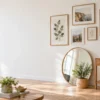
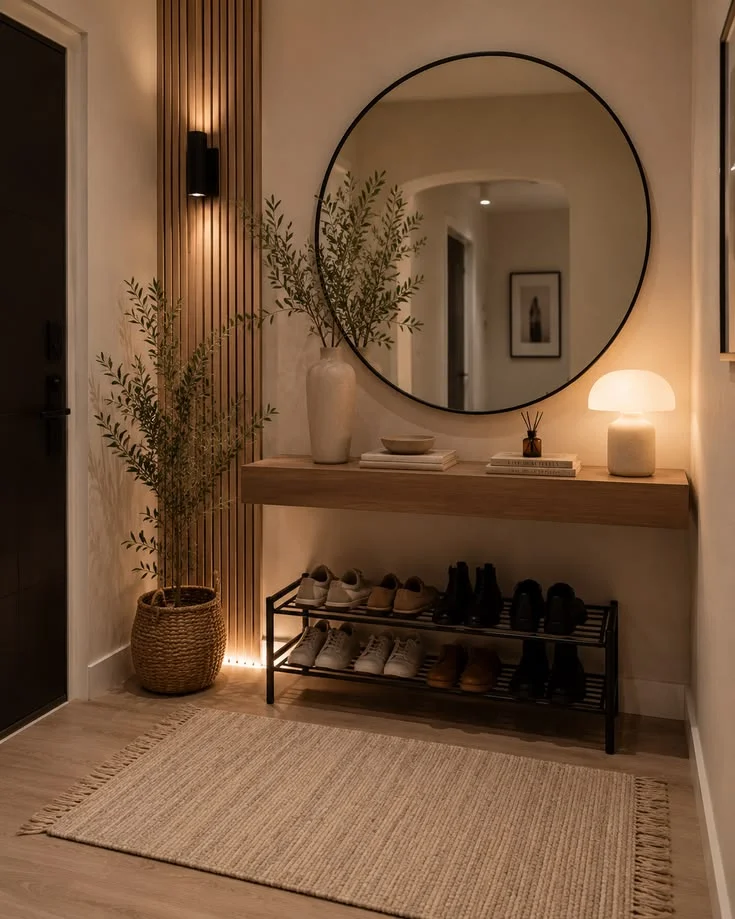
A large mirror — particularly one that extends close to ceiling height — is one of the most reliably effective tools in interior design. It creates the visual impression of more depth, bounces light around the room, and serves a practical purpose all at once. Leaning a full-length mirror against the wall instead of hanging it gives the space a less formal, more relaxed feeling that suits modern and eclectic styles well.
Gallery Walls
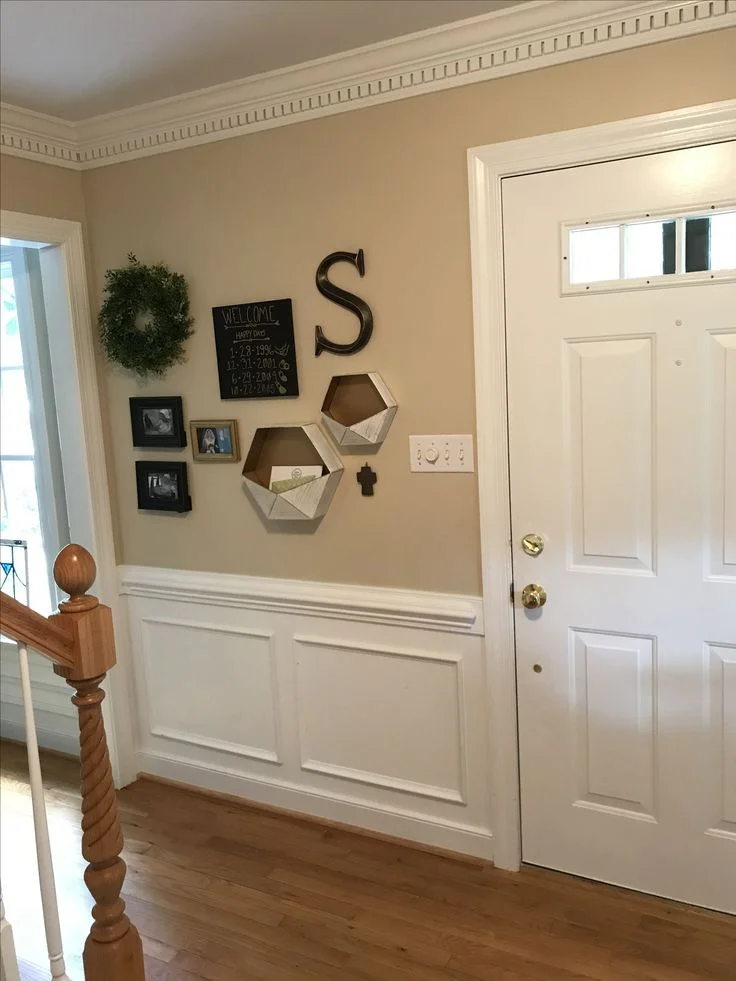
A focused gallery arrangement of three to five pieces can add real personality without overwhelming a small space. Keeping all frames in one finish color helps the arrangement feel cohesive, and positioning artwork at or just above eye level keeps it grounded rather than floating.
Wallpaper or Accent Paint
Because a foyer is small, you have the freedom to be bolder than you might be elsewhere in the home. A single wall of wallpaper — a botanical print, a geometric pattern, or a rich textured design — creates a strong focal point. What feels like a major commitment in a larger room becomes an easy, low-risk statement in a foyer.
Peg Rails and Shaker Rails
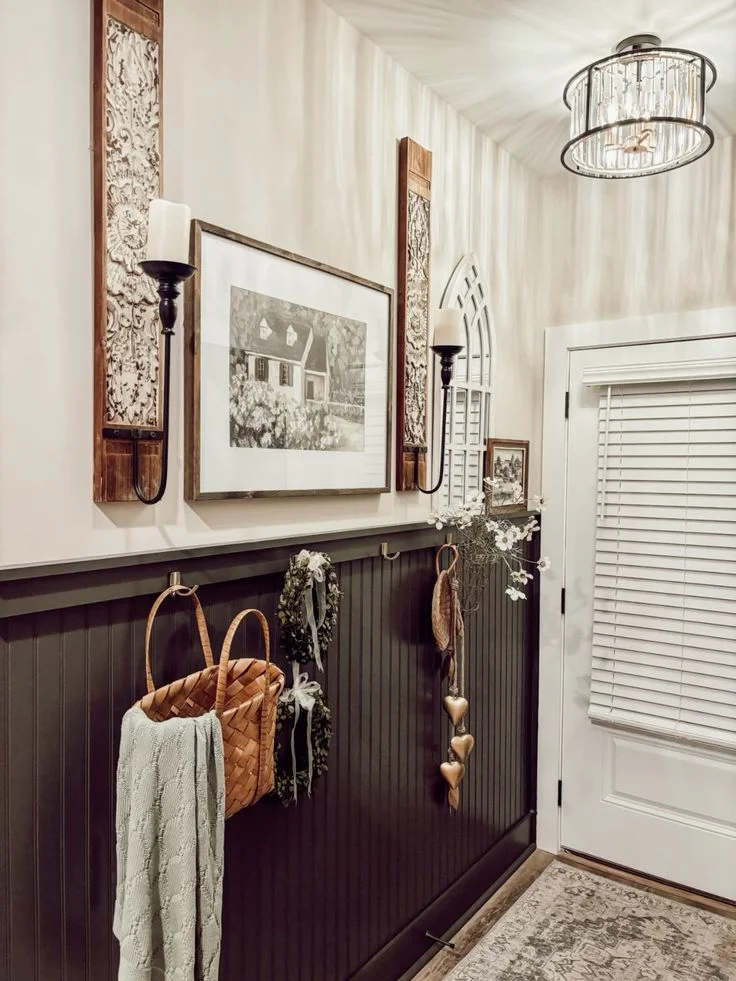
Shaker-style peg rails draw from a long tradition of functional simplicity, and they translate beautifully into modern entryways. Hanging everyday coats and bags alongside a small framed print or a woven basket turns a purely practical wall element into something that also reads as intentional decor.
Compact Entryway Organization: Systems That Actually Hold Up
Even the most beautifully styled small foyer decorating falls apart if the organization system doesn’t match how your household actually operates day to day. The best systems are simple enough to follow without thinking.
The One-Touch Rule
Every item that enters the foyer should have a designated home that takes exactly one motion to reach. Keys go directly on the hook. Shoes go straight onto the rack. Bags hang immediately rather than landing on the floor. When a system requires two or three steps, it tends to break down within a week.
Personal Zones
In households where multiple people use the entryway, assigning each person their own designated section — a hook, a basket, a shelf area — prevents the common problem of one person’s things spilling into everyone else’s space. Color-coded baskets make this approach especially effective for households with younger children.
The Weekly Reset
Even well-organized entryways accumulate small amounts of clutter over the course of a week. A five-minute reset each Sunday — clearing the console surface, wiping things down, returning misplaced items to their homes — keeps the space looking sharp and functioning properly.
Narrow Hallway Decor: When the Foyer Is Really a Corridor
Many homes, particularly older builds and urban apartments, have entryways that function more like narrow hallways than defined foyer spaces. Small foyer decorating in a corridor layout calls for a slightly adjusted approach.
- Keep furniture pushed to one side to protect the walking path.
- Use vertical lines in artwork, wall paneling, or wallpaper to draw the eye upward and make ceilings feel taller.
- Avoid rugs with horizontal stripe patterns — they visually compress the length of the space.
- Run a runner rug along the length of the hallway to lead the eye forward and create a sense of depth.
For lighting in narrow hallways, consistency matters more than drama. A series of evenly spaced small flush-mount fixtures or sconces prevents the dim, cave-like atmosphere that single-point lighting tends to produce in long, tight spaces.
Small Apartment Entryway: Creating Space Where There Isn’t Any
In many apartments, there is no architectural foyer at all — just a square of flooring just inside the front door that opens directly into the main living space. Small foyer decorating in this situation is about creating the suggestion of a distinct entry zone rather than decorating one that already exists.
Define the Area With a Rug
A rug placed just inside the door immediately signals that this is the entry, even without walls to define it. Choose something durable and low-maintenance — natural fiber, indoor-outdoor weave, or a flat-pile design — that can handle regular foot traffic.
A Freestanding Entryway Unit
A tall freestanding organizer — one that combines hooks, shelves, and a small bench — creates a self-contained entry zone that doesn’t depend on walls for installation. It works particularly well in open-plan apartments where nothing can be wall-mounted easily.
A Visual Boundary
A slim console table or narrow bookshelf placed with one end toward the wall can act as a soft visual divider between the entry area and the living space. It doesn’t close off the room, but it gives the entryway a sense of separation that open-plan layouts otherwise lack.
Foyer Makeover on a Budget: Meaningful Results Without Major Spending
A complete small foyer decorating refresh doesn’t require a renovation-level budget. Some of the most impactful changes cost less than $50 and take an afternoon.
High-Impact, Lower-Cost Changes
- Paint the front door a rich, bold color — deep navy, forest green, or matte black — for $20 to $40 in paint.
- Replace the light fixture with something more distinctive; budget options from hardware stores can look far more expensive with the right warm bulb.
- Add a mirror from a discount home store for $25 to $40 — even a simple, inexpensive mirror noticeably changes how the space feels.
- Install adhesive hooks for a quick, damage-free organization upgrade that takes minutes.
- Lay a new rug over existing flooring to add warmth and define the space instantly.
Where to Invest If You Have the Option
If you have a modest budget to allocate strategically, put it toward a quality console table or a well-built storage bench. These pieces take daily use, anchor the space visually, and have a longer lifespan than most accessories.
Minimalist Foyer Design: When Restraint Is the Right Choice
For homes with a clean, spare aesthetic, minimalist foyer design is a natural approach to small entryway spaces. It removes the pressure of filling every inch and instead focuses on getting a few things exactly right.
The core principles:
- Hold the color palette to two or three tones at most.
- Select furniture with visible legs — pieces that sit off the floor visually reduce bulk and make the space feel lighter.
- Edit with discipline — if something doesn’t serve a specific function or add genuine visual value, it doesn’t belong in the space.
- Treat empty wall and surface space as a deliberate choice, not a gap to fill.
Minimalism is especially well-suited to small foyer decorating because restraint naturally addresses the overcrowding problem that small entryways face. When there is less to look at, what remains reads more clearly.
FAQ: Small Foyer Decorating
Q: What is the most important element in small foyer decorating?
Functional storage comes first. A visually appealing foyer that can’t contain daily clutter will look messy within a day. Get the organization right, then layer in the style.
Q: How do I make a small foyer look bigger?
A large mirror, a light and cohesive color palette, furniture with legs, layered lighting, and a clear walking path all contribute to making a small space feel more open than it is.
Q: What rug size works best in a small foyer?
A 2×3 or 3×5 rug suits most small foyers. In a narrow hallway, a 2×6 or 2×8 runner is more proportional. Make sure the rug lies flat and doesn’t catch on the door when it opens.
Q: Is wallpaper a good idea in a small foyer?
It often works better in small spaces precisely because the scale is manageable. A bold pattern on one wall creates a focal point without the long-term commitment it would represent in a larger room.
Q: What lighting works best in a small entryway?
Combining an overhead fixture with at least one secondary light source — a sconce, a small table lamp, or a picture light — creates the depth and warmth that a single ceiling bulb cannot provide on its own.
Q: How do I create a foyer in an open-plan apartment?
Use a rug to define the zone, a freestanding entryway unit to consolidate storage, and a console table or slim shelf as a soft visual divider between the entry area and the main living space.
Q: What is the most budget-friendly foyer upgrade?
Painting the front door a rich, bold color and adding an inexpensive mirror are consistently the two highest-impact, lowest-cost changes in any small foyer makeover.
Conclusion
Small foyer decorating is, at its core, an exercise in clarity. When you work with limited space, every choice carries more weight — which is actually an advantage. There is less room for unnecessary filler, and that constraint tends to push toward more considered, more personal results.
Start with the basics: a clear style direction, storage that genuinely works for your household, and lighting that makes the space feel welcoming rather than dim. From there, the decorative layer — mirrors, wall decor, a well-chosen rug — falls into place naturally.
Whether you are working with a defined foyer, a narrow hallway, or simply a square of flooring inside an apartment door, the same principles apply. Keep it functional. Keep it intentional. And give the space the attention it deserves — because first impressions, in homes as in life, tend to matter more than we expect.