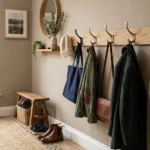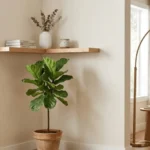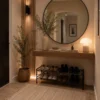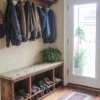
Your front door opens — and within seconds, a feeling forms. It might be warmth, calm, or quiet welcome. Or it might be the low-level stress of shoes piled up, hooks overloaded, and a narrow wall doing absolutely nothing useful. That first moment matters more than most people realize. The good news is that you don’t need extra square footage or a large budget to change it. A thoughtful tiny entryway makeover can shift the entire feeling of your home from the very first step inside.
This guide walks through everything that actually works: smart storage, practical decor, budget-friendly approaches, and design thinking built specifically for tight, awkward foyer spaces. Whether your entry is a 3-foot strip in an apartment or a narrow hallway that leads straight into your living room, the ideas here apply directly to your situation.
Why Your Entryway Deserves More Attention Than You’re Giving It
The entryway is easy to overlook. It’s a transitional space — neither fully inside nor outside — and that in-between nature makes it the last room people think to improve. Interior designers, however, treat it as one of the most valuable spaces in a home.
Research on residential design and first impressions consistently shows that entry spaces shape how visitors perceive the cleanliness, organization, and overall style of a home. A well-considered tiny entryway makeover quietly signals that the rest of the space has been thought through too.
There’s also a practical side to this. Entryways are high-traffic zones. Keys, bags, shoes, coats, umbrellas — everything moves through here at least twice a day. Without a clear system, clutter builds faster here than anywhere else in the home. With one, your daily routine gets noticeably smoother. You stop losing things. You leave on time. Small changes in this one spot have effects that reach well beyond it.
Start With a Clear Plan Before You Buy Anything
The most common mistake people make when starting a tiny entryway makeover is shopping before they’ve measured. A piece of furniture that looks perfect online can become an obstacle in real life if it blocks the door swing or takes up too much floor space.
Before anything else, measure the width, height, and depth of your available space. Note which way the door opens. Check whether the walls can support shelving before you commit to anything heavy.
Then ask yourself three honest questions:
- What actually needs to live here? Shoes, coats, bags, mail, keys — be specific.
- Who uses this space every day? A single person has very different needs than a family with kids and pets.
- What’s the light situation? Natural light, overhead only, or almost none?
Your answers will shape every decision that follows. A minimalist with one bag and one coat needs a completely different setup than a household of four managing backpacks, sports gear, and muddy boots.
Small Entryway Storage Ideas That Actually Work
Storage is the foundation of any successful tiny entryway makeover. The goal is simple: maximum function from minimum floor space. That usually means thinking differently about the space you already have.
Go Vertical, Not Horizontal
The wall above your head is the most underused storage space in most entryways. Floating shelves installed at varied heights create natural zones — upper shelves for baskets and infrequently used items, mid-height for everyday bags, lower pegs for coats and jackets within easy reach.
A pegboard system is one of the most practical options available at any price point. It’s flexible, inexpensive, and easy to reconfigure as your needs change. IKEA’s SKÅDIS pegboard, for example, costs under $30 and can be outfitted with hooks, baskets, and narrow shelves to hold considerably more than its footprint suggests.
Use the Back of the Door
Most people never think about the back of their front door. An over-door organizer with fabric pockets can hold shoes, scarves, gloves, small bags, and even outgoing mail — all without touching a single wall. For a cleaner look, choose organizers in linen or canvas rather than clear plastic, which tends to look cheap over time.
Slim Console Tables With Hidden Storage
A slim console table — 10 to 12 inches deep — fits into almost any narrow space without creating a bottleneck. Look for one with a drawer for small items like keys and lip balm, and a lower shelf for baskets. Pair it with a mirror above and you have a classic tiny entryway makeover combination that adds both function and the illusion of more space.
Narrow Hallway Decor Tips That Open Up the Space
Decorating a narrow hallway the same way you’d decorate a wide room is a reliable way to make it feel smaller. The visual rules are genuinely different here, and once you understand them, the decisions become straightforward.
Light wall colors come first. Soft whites, warm creams, and pale greiges reflect available light and push walls outward visually. Darker colors can look beautiful in the right context but tend to compress a narrow space.
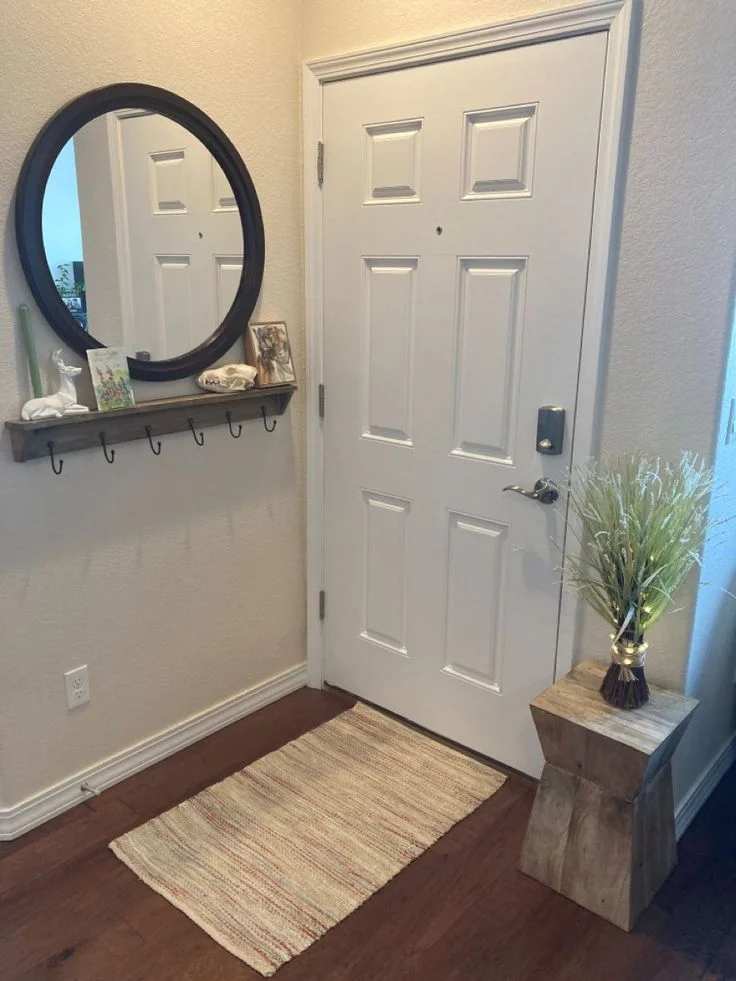
A large mirror is the single most effective tool. A floor-length mirror or a wide horizontal one hung at eye level can nearly double the perceived depth of a hallway. It doesn’t require any renovation — just the right placement.
Keep the floor as clear as possible. Every object resting on the floor of a narrow hallway reduces its perceived width. A rug is fine — it actually helps by defining the zone and adding warmth — but shoes, bags, and random items stacked on the floor eat into the visual space quickly.
Layer your lighting. A single overhead fixture creates flat light and harsh shadows. Adding a small sconce or a plug-in wall light brings warmth to the space and makes it feel more considered. In entryways with no natural light at all, this makes a noticeable difference.
Budget Foyer Transformation: Real Results Without Overspending
A meaningful tiny entryway makeover doesn’t require a designer or a large budget. Some of the most effective changes cost very little. What they require is intention, not money.
Start with paint. A fresh coat is consistently the highest-return home improvement project available. A small entryway uses no more than one gallon. Choose a semi-gloss finish for trim and doors — it’s easier to wipe clean and reflects more light than flat or eggshell finishes.
Shop secondhand. Entryway furniture shows up constantly at thrift stores and estate sales. A vintage coat rack, a solid wooden bench, an old mirror with good bones — these pieces carry more character than their flatpack equivalents and often cost a fraction of what you’d pay new.
Make your own wall art. A framed print, a small gallery wall, or a botanical pressed between glass adds genuine personality for under $20. The entryway is a contained space, which makes it one of the easiest places in a home to experiment with art without it feeling overwhelming.
Swap out hardware. If you already have furniture in the entryway, changing the drawer pulls, hooks, or knobs is one of the quickest visual upgrades available. Brass, matte black, and ceramic options are widely available and can shift the look of a piece entirely.
A complete tiny entryway makeover on a $100–$200 budget is genuinely achievable. The key is focusing on one or two functional improvements and one decorative one, rather than trying to do everything at once.
Compact Mudroom Design: Function First for Family Homes
When a household includes children, pets, or regular outdoor activity, the entryway carries a heavier load. A compact mudroom design approach addresses this even without a dedicated mudroom space.
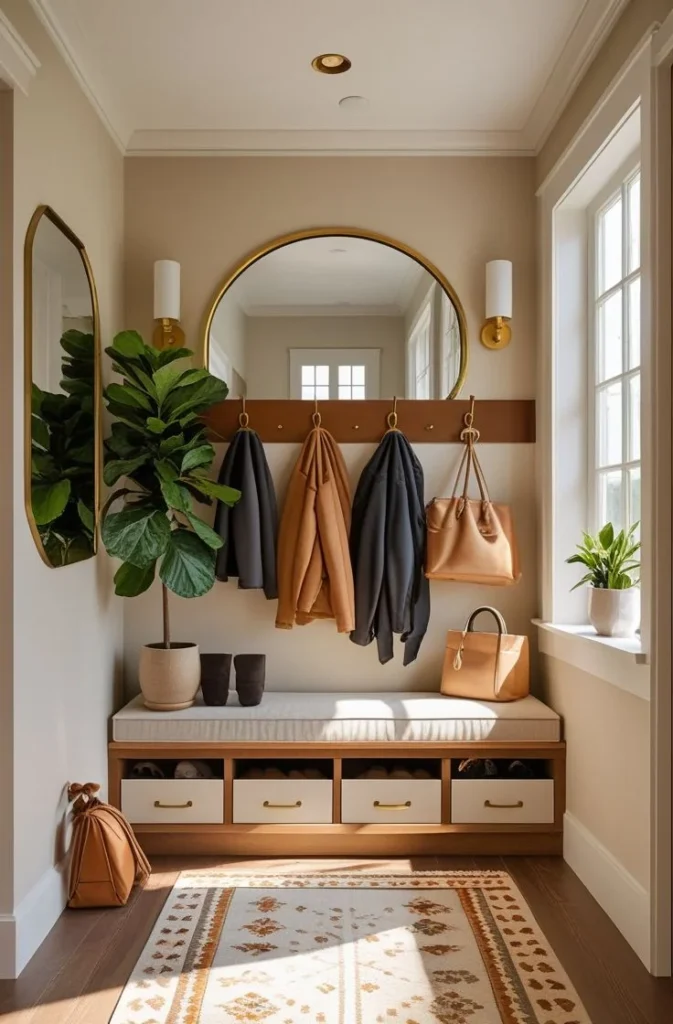
The central principle is simple: every category of item needs a permanent home. Shoes have a rack or cubbies. Coats have hooks — at adult height and child height. Bags have a shelf. Backpacks have a designated spot that doesn’t change. When the system is clear and consistent, the space stays organized with very little effort from anyone.
Built-in cubbies represent the ideal for family entryways, but they’re expensive and time-consuming to install. A more practical alternative is modular cube shelving — IKEA’s KALLAX line, configured horizontally and fitted with baskets and fabric inserts, replicates the look of built-ins at a fraction of the cost and can be reconfigured as needs change.
For households dealing with wet weather regularly, a boot tray near the door is a small addition that prevents real damage. A matte metal or ceramic tray collects umbrella drips and muddy shoes without looking like an afterthought.
DIY Entryway Bench With Storage: A Weekend Project Worth Doing
A storage bench is one of the hardest-working pieces you can add to a tiny entryway makeover. It gives people a place to sit while putting on shoes — which matters more than it sounds — and provides hidden storage for the items that otherwise end up on the floor.
Building one yourself is more approachable than most people expect. A basic DIY entryway bench can come together from:
- Two IKEA KALLAX shelf units placed on their sides.
- A piece of plywood cut to match the dimensions as a seat top.
- Foam padding and fabric for a simple upholstered surface.
Total materials run between $80 and $150 depending on fabric choice and finish. The result is a custom-sized piece that fits the exact dimensions of your space — which matters considerably in a tiny entryway makeover where off-the-shelf furniture rarely fits perfectly.
For those who’d rather not build, ready-made storage benches and lift-top ottomans offer similar function and are widely available at home goods retailers, often on seasonal sale.
Small Space Wall Hooks and Shelves: The Right Hardware Makes a Difference
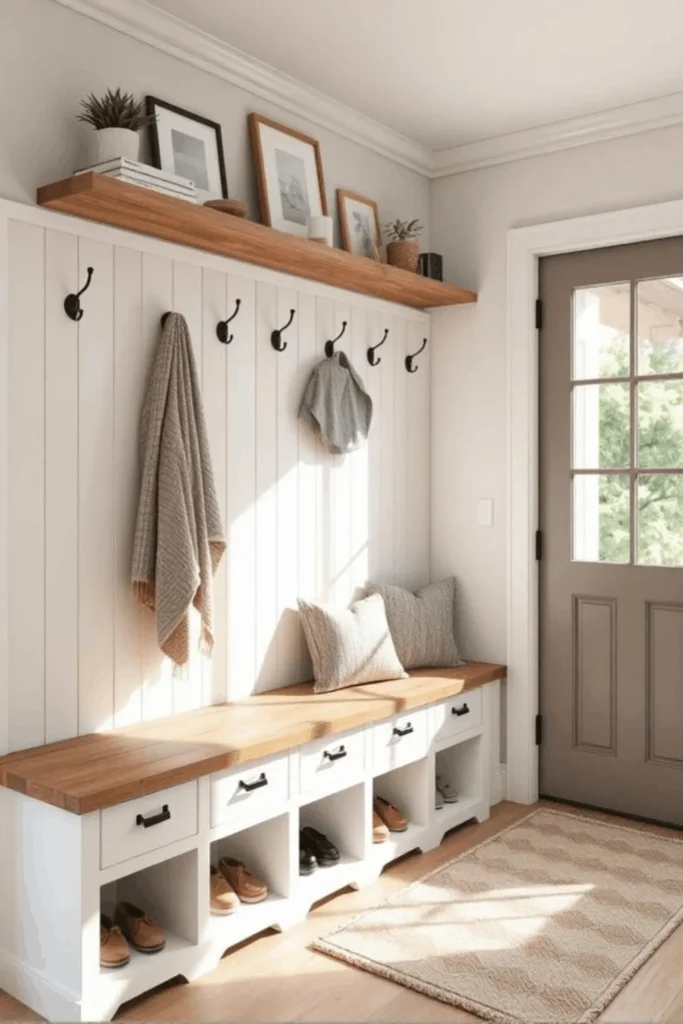
Hardware quality matters more in a small entryway than most people expect. Cheap hooks flex under the weight of a coat and bag, pull from walls over time, and make the entire space feel less reliable. In a tiny entryway makeover, this is one area worth spending a little more on.
Double hooks outperform single hooks in compact spaces. They allow a coat and a bag to share one mount without either one getting crushed or falling off.
Floating shelves with invisible brackets look noticeably cleaner than bracket-supported shelves and take up less visual space on the wall. Installed at 60 to 72 inches from the floor, they keep the lower zone open and uncluttered.
Combination units — a shelf with hooks positioned underneath — are among the most space-efficient options available. They serve two purposes from a single wall anchor point, and many versions include a small tray or rail along the bottom for additional catch-all storage.
For renters concerned about wall damage, heavy-duty adhesive hook systems from brands like Command offer a practical alternative. They’re not as permanent as screwed hardware, but they hold reliably for lighter items and remove cleanly when the time comes.
Apartment Entryway Decorating Ideas for Renters
Renting adds real constraints — no permanent holes in walls, no paint in many cases, no structural changes of any kind. Despite that, a tiny entryway makeover in a rented apartment is entirely possible. It just requires working within the limits rather than against them.
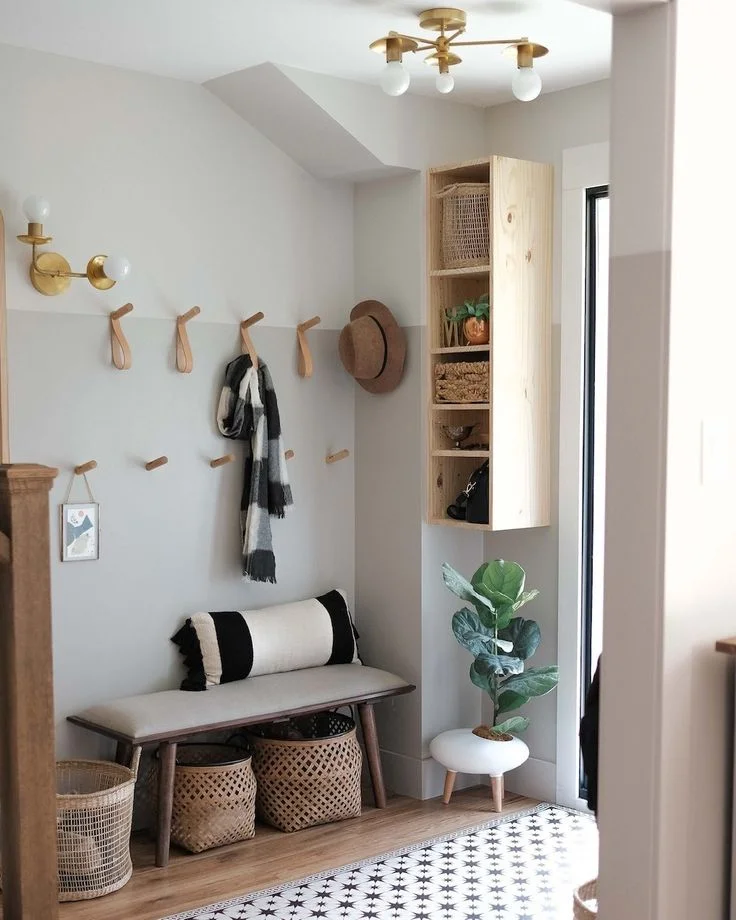
Freestanding furniture is the foundation. A slim console table, a ladder shelf, a freestanding coat rack — none of these need wall anchors, and all of them move with you when the lease ends.
Removable wallpaper has genuinely improved. Peel-and-stick options today are far more convincing and durable than earlier versions. A single accent section behind a console table can transform the feel of an entryway dramatically. Brands like Chasing Paper and Tempaper offer a wide range of patterns and remove without damaging painted walls.
An area rug defines the zone. In an open-plan apartment where the entry runs directly into the living area, a rug creates a visual boundary that makes the entryway feel like its own space. Choosing something that contrasts with the floor — a graphic pattern over a neutral surface, or a solid color over wood — makes the definition cleaner.
Plug-in lighting fills the gap. Most rental apartments come with a single ceiling fixture in the entry, if anything at all. A plug-in pendant light with the cord routed along the ceiling and down the wall adds a layer of warmth and intentionality that no overhead bulb can match.
Minimalist Entryway Furniture: Less Is More in a Small Space
In a small entryway, minimalism isn’t just an aesthetic preference — it’s a practical one. A tiny entryway makeover built on minimalist principles consistently outperforms approaches that try to add more storage solutions on top of one another.
The minimalist entryway works with a short list of elements:
- One surface — a console table or a floating shelf.
- One mirror.
- Three to five hooks, no more.
- One textile — a rug or a runner.
- One or two small objects chosen deliberately.
That’s the whole setup. The discipline required is resisting the pull to add things. Each additional item in a small entryway competes for visual attention, and the cumulative effect is a space that feels busier and smaller than it needs to be.
When selecting furniture, prioritize pieces with clean lines and legs that lift them off the floor. That gap between the furniture and the ground is a small detail, but it makes the floor appear larger and the room feel less heavy.
First Impression Home Decor: Making It Personal Without Overdoing It
Function and storage matter, but a tiny entryway makeover is also about the feeling a space creates. The entry is where the character of a home first shows itself, and a few well-chosen personal touches make a real difference.
Some approaches that work well without adding clutter:
- A single plant or stem. A pothos in a simple pot, a snake plant in a corner, or one stem in a bud vase adds life without demanding attention. Plants also soften the hardness of walls, floors, and furniture in a way that’s difficult to replicate with objects alone.
- A scented candle or diffuser. Scent leaves an impression in a way that’s easy to underestimate. A consistent, pleasant scent in the entry becomes part of how your home is remembered.
- Art that means something. A map of a city that matters to you, a print in your preferred palette, a photograph — something chosen for a reason rather than to fill space.
- One seasonal element. A small wreath, a seasonal vase, a textured throw draped over the bench — updating one item per season keeps the space feeling current without requiring a full redesign each time.
Entryway Organization Hacks for Maintaining the Makeover
The most beautiful tiny entryway makeover will fall apart within weeks without habits to support it. These practical systems keep the space working long after the initial effort:
- One-in, one-out for shoes. Every new pair brought in means one pair goes back to the closet. This single rule prevents the most common entryway problem.
- A weekly mail sort. Five minutes once a week to go through whatever has landed in the entry tray prevents the slow accumulation of paper that makes any small space feel chaotic.
- Named hooks. When hooks are assigned — this one for coats, this one for bags, this one for the dog’s leash — they stay organized. Generic hooks attract everything and hold nothing well.
- A basket for misplaced items. Rather than letting things that belong in other rooms accumulate on surfaces, keep a small basket for exactly that purpose. Carry it through the house once a day and redistribute what’s inside.
Comparison: Entryway Storage Solutions at a Glance
| Solution | Cost Range | Space Required | Best For |
|---|---|---|---|
| Over-door organizer | $15–$40 | Zero floor space | Rentals, small apartments |
| Floating shelves + hooks | $30–$100 | Wall space only | Narrow hallways |
| Slim console table | $60–$200 | 10–14″ depth | Most entryways |
| Storage bench (DIY) | $80–$150 | 18–24″ depth | Families, shoe storage |
| Modular cube shelving | $100–$300 | Floor + wall | Family mudroom zones |
| Built-in cubbies | $500–$2,000+ | Structural | Permanent homes |
FAQ: Tiny Entryway Makeover
Q: What’s the most important thing to add to a tiny entryway?
A: A hook or coat rack addresses the most immediate problem — where to put things the moment you walk in. It’s inexpensive, quick to install, and makes a noticeable difference from day one.
Q: How do I make a tiny entryway look bigger?
A: Use a large mirror, keep wall colors light, clear the floor as much as possible, and choose furniture with visible legs rather than pieces that sit directly on the ground.
Q: Can I do a tiny entryway makeover without drilling holes?
A: Yes. Freestanding furniture, over-door organizers, adhesive hooks, and removable wallpaper are all renter-friendly options that cause no wall damage.
Q: What’s a realistic budget for a small entryway makeover?
A: A functional and well-designed makeover is achievable for $100–$300. Paint, a few hooks, a mirror, and a rug cover the essentials in most small spaces.
Q: How do I stop my entryway from getting cluttered again?
A: Build systems rather than relying on willpower. Every item that lives in the entryway needs a designated home. When storage reaches capacity, items go elsewhere — not on top of each other.
Q: What plants work well in a small entryway?
A: Pothos, snake plants, ZZ plants, and cast iron plants all tolerate low light well, which is important since most entryways don’t receive strong natural light.
Q: Is a rug necessary in an entryway?
A: Not strictly, but it’s one of the most efficient additions you can make. It defines the zone, catches dirt at the door, adds warmth underfoot, and brings color and texture without taking up any floor space.
Conclusion
A tiny entryway makeover is one of the most rewarding home improvement projects you can take on — not because it’s dramatic, but because the results are felt every single day. The moment you walk through your front door and everything has a place, the whole home feels more settled.
You don’t need a large space to make it work. You need a clear plan, storage that fits your actual habits, and a few personal touches that make the space feel like it belongs to you. Start with what bothers you most — the clutter, the lack of hooks, the darkness — and fix that one thing first. The rest builds naturally from there.
Small spaces, handled with intention, can feel remarkably complete. Your entryway is proof of that.