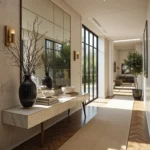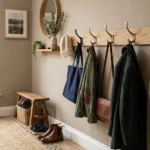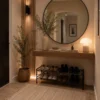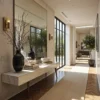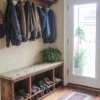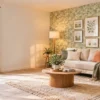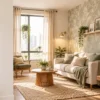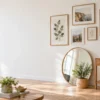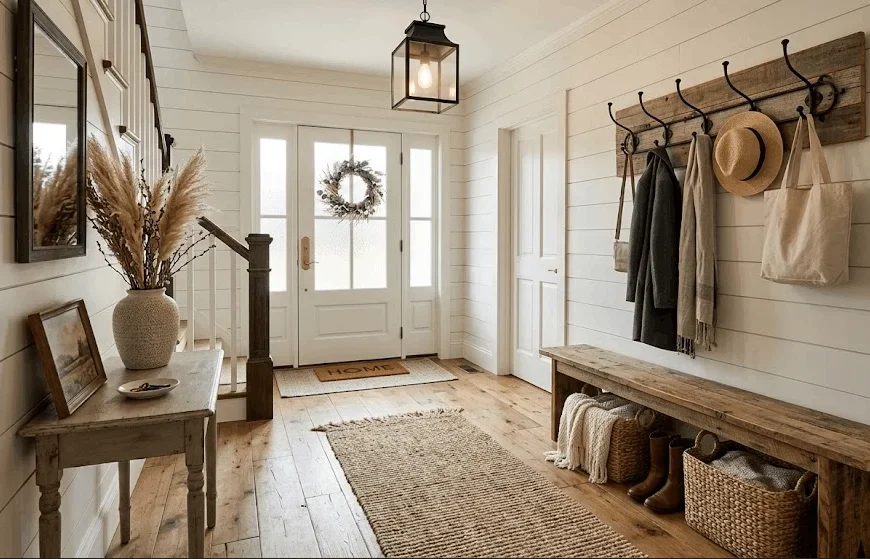
Your entryway speaks before you do. The moment someone steps through your front door, they form an impression — not just of your home, but of the people who live in it. That first glance at your foyer tells a story. And when that story is told through farmhouse foyer ideas, it tends to say something like: warm, grounded, real.
What makes the farmhouse style so enduring isn’t trend-chasing. It’s the opposite. It draws from 19th-century American rural homes — spaces built for function first, where beauty came from honest materials and skilled hands. Wide-plank floors, hand-forged iron, linen, wood, stone. Nothing fake. Nothing fussy. That authenticity is exactly why farmhouse foyer ideas have stayed relevant while so many other interior trends have come and gone.
The other thing worth knowing upfront: you don’t need a big budget or a large space. Some of the most striking farmhouse entryways are compact, inexpensive, and built around just two or three well-chosen elements. This guide covers all of them — walls, lighting, storage, color, hardware, and the small finishing details that pull everything together.
What Actually Makes a Foyer Feel “Farmhouse”?
This is a fair question to ask before spending any money. The word “farmhouse” gets applied to a lot of things that don’t really earn it — mass-produced signs, generic shiplap wallpaper, cookie-cutter barn door hardware. Real farmhouse foyer ideas have more depth than that.
At its core, the farmhouse aesthetic is about materials that age well and decor that serves a purpose. It doesn’t perform. It doesn’t try too hard. A farmhouse entryway has hooks that actually hold coats. A bench that people actually sit on. Floors that show a little wear without looking neglected.
The characteristics that define the look:
- Natural materials — reclaimed wood, stone, jute, linen, unfinished cotton.
- Earthy, muted color palettes — warm whites, soft grays, aged creams, taupes.
- Functional simplicity — every piece has a reason to be there.
- Worn and weathered textures — distressed finishes, patinated metals, aged wood.
- Layered warmth — rugs over hardwood, textiles on benches, plants in corners.
Modern farmhouse foyer ideas blend these traditional roots with cleaner, more contemporary lines. The result is a style that feels both timeless and livable — which is probably why so many people are still drawn to it.
Shiplap Entryway Walls: The Signature Farmhouse Element
Walk into almost any farmhouse-inspired entryway and you’ll likely find shiplap on at least one wall. Originally used as exterior cladding on barns and outbuildings, shiplap was a purely practical material — overlapping boards cut to shed rain and wind. When it moved indoors, it brought that same sturdy, unpretentious character with it.
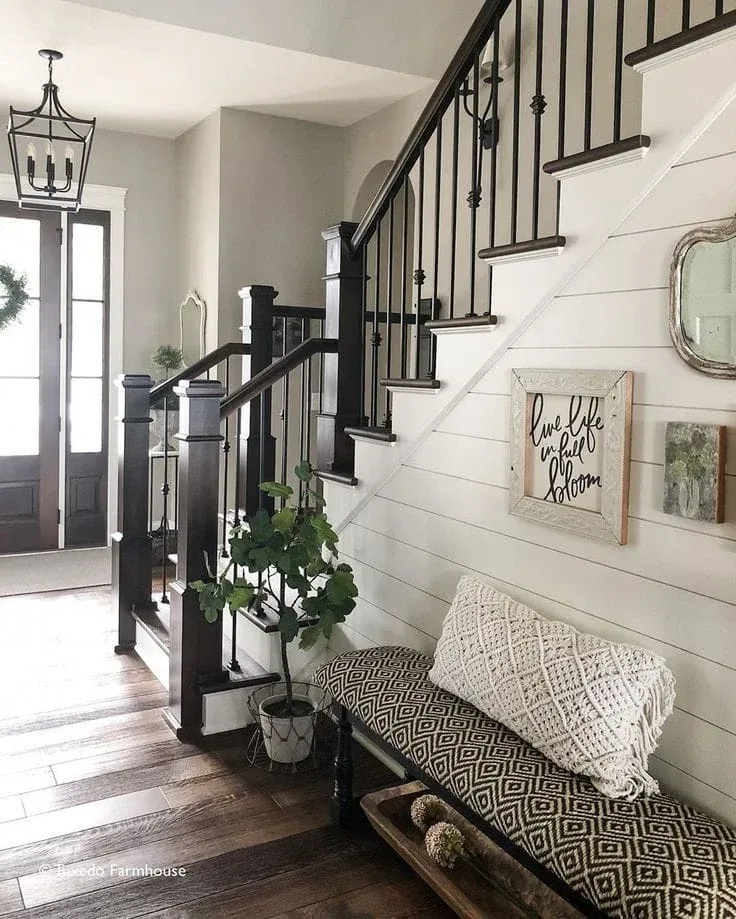
In a foyer, shiplap creates immediate visual depth. The horizontal lines elongate the wall, the small shadow gaps between boards add subtle texture, and the overall effect reads as both relaxed and intentional. Painted in a warm white, it brightens without feeling sterile. Left in its natural wood tone, it adds genuine warmth.
A few practical notes on installation:
- Real pine shiplap boards give the most authentic result; MDF planks work well for tighter budgets.
- Leave roughly ⅛ inch between boards — that small gap creates the characteristic shadow line.
- Finish with eggshell or semi-gloss paint in high-traffic foyer zones so the surface stays cleanable.
- Reach for warm whites like Sherwin-Williams Alabaster or Swiss Coffee rather than bright, cool whites — the warmth makes a noticeable difference.
One of the reasons shiplap works so well as a backdrop for other farmhouse foyer ideas is its neutrality. It doesn’t compete with iron hooks, lantern sconces, or a vintage mirror. It simply holds the space together.
Rustic Entryway Decor: Building Texture in Layers
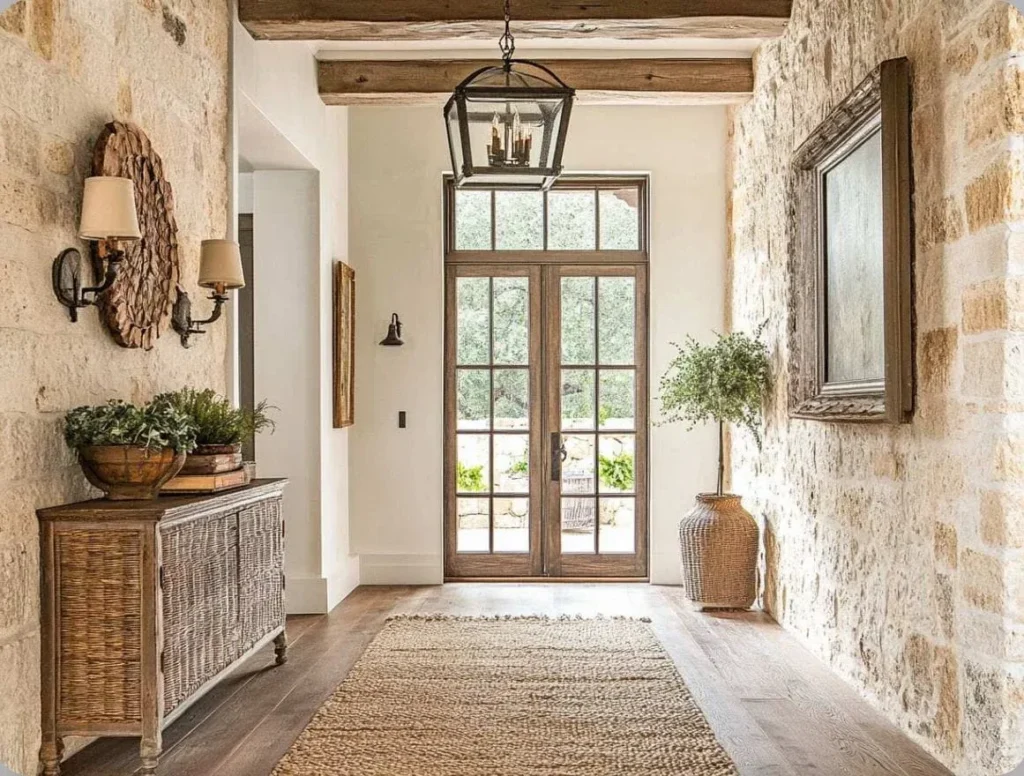
Rustic entryway decor done well doesn’t look like a collection of antiques pulled from different places and stacked together. It looks like a space that developed naturally — a few things added over years, each with a reason for being there.
The best approach to rustic decor in farmhouse foyer ideas is to think in layers, building from the ground up.
Layer 1 — Foundation
Start with floors and walls. Wide-plank hardwood in a honey or driftwood tone anchors the space immediately. If tile is already in place, stone-look porcelain or encaustic cement tiles with a handmade quality carry the rustic aesthetic just as effectively.
Layer 2 — Functional Furniture
This layer carries the most visual weight. A wooden bench with a distressed finish, a weathered console table, an old ladder leaning in the corner as an informal display. These aren’t decorative objects — they’re working pieces that happen to look good. That combination of form and function is central to farmhouse foyer ideas.
Layer 3 — Soft Details
This is where the space gets its personality. A jute runner rug with slightly frayed edges. A linen basket tucked under the bench for shoes. A ceramic crock holding dried pampas grass or a few stems of eucalyptus. These small choices are what separate a farmhouse foyer from a showroom — they make the space feel inhabited.
Wooden Bench Entryway Storage: The Most Useful Piece in the Room
If you could only add one piece of furniture to a farmhouse foyer, a wooden bench with storage would be the right call. It solves a real, everyday problem — somewhere to sit while pulling on shoes — and it grounds the space visually in a way that a console table alone can’t.
The farmhouse benches worth investing in share these qualities:
- Solid wood construction — pine, oak, and reclaimed wood all age beautifully.
- A finish that fits the space — white paint, natural stain, or cream work equally well depending on your overall palette.
- Practical storage built in — drawers underneath, open cubbies for baskets, or a lower shelf.
An old church pew, if you can find one, makes a particularly good farmhouse bench — it has the worn patina and human scale that purpose-built furniture often misses.
Pair the bench with two or three woven baskets underneath for shoes or seasonal accessories. A simple wooden tray on top keeps daily essentials organized without creating visual chaos. Ticking stripe or buffalo check cushions add comfort and reinforce the farmhouse palette without overwhelming the space.
Vintage Coat Rack Ideas: When Hardware Becomes Decor
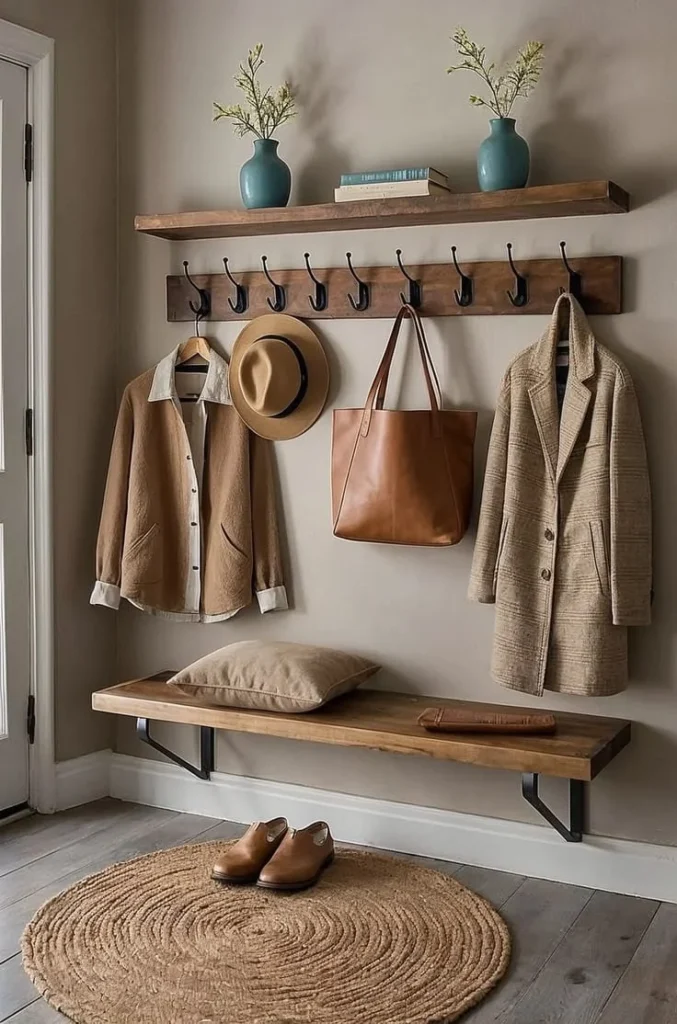
In most homes, coat hooks are purely functional — screwed into the wall wherever they fit, chosen for convenience rather than appearance. In a farmhouse foyer, hooks are a design decision. Vintage coat rack ideas treat hardware as part of the room’s overall visual identity.
The most effective farmhouse options:
- Wall-mounted plank racks — a single board of reclaimed wood with four to six iron hooks spaced evenly; simple, clean, and unmistakably farmhouse.
- Freestanding hall trees — a taller piece with hooks, a small upper shelf, and sometimes a mirror built in; useful when wall mounting isn’t an option.
- Railroad spike hooks — actual spikes mounted directly into wood; adds an industrial-farmhouse quality that feels genuinely earned.
- Cast iron schoolhouse hooks — classic double hooks in aged black or oil-rubbed bronze; subtle enough to work in almost any farmhouse foyer.
Whatever style you choose, consistency matters. Keep hook heights aligned, leave breathing room between them, and resist the temptation to fill every hook. A farmhouse foyer that looks intentional has more impact than one that looks busy.
Barn Door Entryway Design: Space-Saving Drama
Among all the farmhouse foyer ideas that have crossed from niche to mainstream, the sliding barn door has made perhaps the biggest impact. There are practical reasons for that. Barn doors don’t require swing clearance, which matters in tighter entryways. The sliding hardware — a black steel track with chunky rollers — stays visible and becomes a design element rather than something to hide.
In a foyer, barn doors typically separate the entryway from a coat closet, mudroom, or adjoining hallway. The door itself is the visual anchor.
| Style | Best For | Key Feature |
|---|---|---|
| Classic X-brace | Traditional farmhouse | Diagonal wood battens |
| Solid plank | Modern farmhouse | Clean, minimal appearance |
| Glass insert | Smaller entryways | Keeps natural light moving |
| Reclaimed wood | Rustic character | Natural color variation, history |
Keep the finish simple — natural wood stain or white paint. The hardware does enough work on its own; ornate doors compete with it rather than complement it.
Neutral Entryway Color Palette: Warmth Over Stark White
Color is one area where farmhouse foyer ideas frequently go wrong, and it usually comes down to the same mistake: choosing pure white. Pure white looks clean on a paint chip and cold on a wall. The farmhouse palette is defined by warmth, not brightness.
Farmhouse neutrals carry undertones of cream, yellow, or beige — never blue or sharp gray. A few combinations that consistently work:
White + Natural Wood
Sherwin-Williams Alabaster (SW 7008) on the walls, warm pine or oak floors. There’s a reason this pairing appears in so many farmhouse homes — it’s genuinely hard to get wrong.
Greige + Black Accents
Benjamin Moore Pale Oak on the walls with matte black light fixtures and iron hardware. It reads sophisticated without losing the warmth.
Cream + Sage
A creamy off-white with a sage green accent — a painted bench, a potted plant, or a single throw. It brings the outdoors in without going bold.
Soft Taupe + White Trim
A medium taupe wall with bright white trim and shiplap accents creates depth and dimension in a foyer that might otherwise feel flat.
Lantern Pendant Light Foyer: The Right Light Changes Everything
Lighting in a farmhouse foyer isn’t just about illumination — it tells people what kind of home they’re walking into. A lantern pendant light does this better than almost any other fixture because its silhouette carries so much historical resonance. Lanterns hung in entryways long before electric light existed. That visual memory is part of why they feel so right in a farmhouse foyer.
Look for these qualities in a farmhouse lantern pendant:
- A matte black or oil-rubbed bronze finish — avoid chrome or polished nickel, which read as modern rather than farmhouse.
- Clear glass panels that reveal a visible Edison bulb inside.
- A scale that feels slightly larger than expected — foyer ceilings can handle drama, and undersized fixtures look uncertain.
- A clean geometric silhouette — hexagonal, square, or cylindrical all work well.
If ceiling height is limited, a flush-mount or semi-flush lantern delivers the same aesthetic without crowding the space. In narrow entryways, a pair of wall sconces flanking a mirror is often the more proportionate choice — and it creates a pleasing symmetry that suits farmhouse foyer ideas well.
Galvanized Metal Home Decor: Bridging Industrial and Farmhouse
There’s a version of farmhouse decor that stays entirely soft — linen, wood, dried flowers, warm neutrals. And there’s a version that introduces an edge. Galvanized metal home decor belongs to that second version, and it’s one of the more interesting elements that modern farmhouse foyer ideas have embraced.
Galvanized metal — that zinc-coated steel with a dull silver sheen, the material of old farm buckets and watering troughs — brings a rougher texture into the space. In small doses, it sharpens the look without hardening it.
Common uses in an entryway:
- An old galvanized bucket repurposed as an umbrella stand near the door.
- Small galvanized planters holding trailing pothos or dried botanicals.
- A galvanized tray on a console table to corral keys, sunglasses, and mail.
- Wall-mounted galvanized bins as an alternative to traditional shelving.
One or two pieces work well. Beyond that, the effect starts to feel more industrial supply store than farmhouse, which defeats the purpose entirely.
Farmhouse Welcome Sign Ideas: Meaning at the Door
A welcome sign sits right at the edge of farmhouse decor that feels personal versus farmhouse decor that feels generic. The difference isn’t always obvious from the outside, but you feel it immediately when you’re standing in the space.
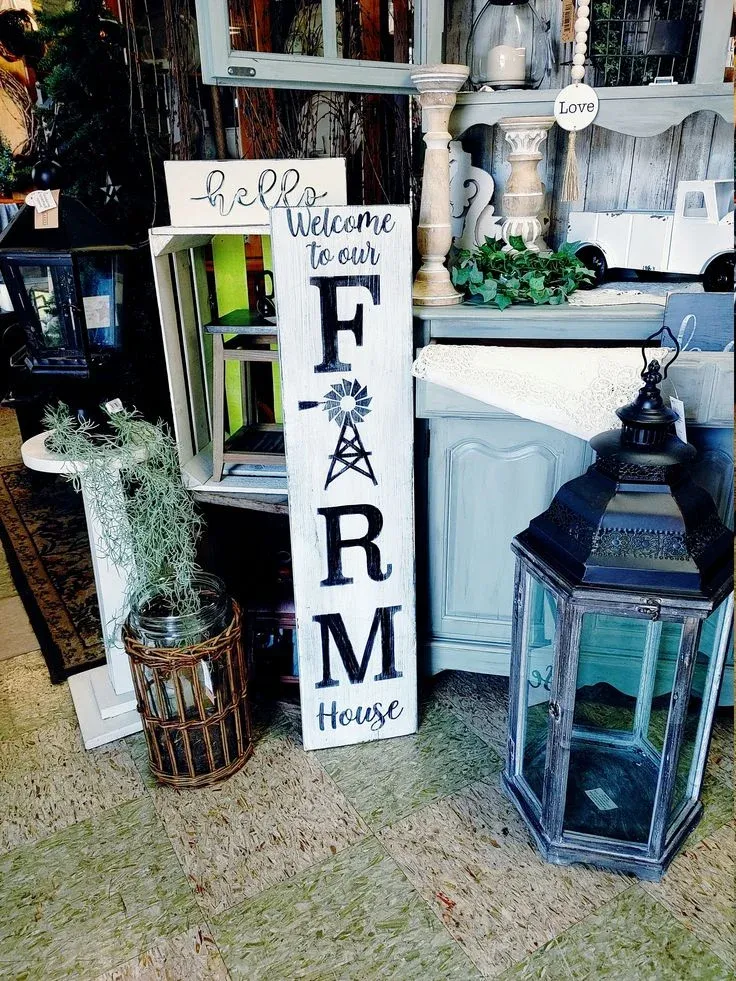
The farmhouse welcome sign ideas that hold up over time tend to be specific rather than mass-produced. A hand-lettered plank with your family name. A framed chalkboard that changes with the seasons. A set of metal marquee initials. Old reproduction seed company prints. Embossed tin with worn paint that looks like it came from a general store rather than a big-box retailer.
Hang your sign at eye level near the door, or lean it casually against the wall on a console table. Leaning tends to feel more natural — less like a decoration that was placed, more like something that simply belongs there.
Country Style Hallway Decor: Carrying the Look Forward
When a foyer connects directly to a hallway, the transition matters. Country style hallway decor extends the farmhouse palette forward so the home feels designed as a whole rather than room by room.
The most effective ways to carry the look through:
- Gallery walls — black-framed family photos, botanical prints, and vintage maps grouped together create warmth and personal history.
- Wainscoting or board-and-batten — adds architectural character in hallways that are otherwise plain.
- Runner rugs — a long jute or cotton flatweave in a natural tone ties the floor visually across the length of the hall.
- Open floating shelves — wood shelves with baskets, a few books, and small plants bring the layered texture of farmhouse foyer ideas into the corridor.
- Consistent hardware — oil-rubbed bronze or matte black throughout keeps the visual language coherent.
Hallways are often underdesigned. In a farmhouse home, they’re an extension of the welcome — and they deserve the same care as the foyer itself.
FAQ: Farmhouse Foyer Ideas
Q: What colors work best for a farmhouse foyer?
Warm whites, soft creams, greiges, and muted sage greens are the most reliable choices. Avoid cool-toned whites — they work against the warmth that farmhouse foyer ideas depend on.
Q: Do I need shiplap to achieve a farmhouse foyer look?
No. Shiplap is perhaps the most recognized element, but board-and-batten, wainscoting, a textured paint finish, or botanical wallpaper can all achieve a similar farmhouse quality without a single shiplap board.
Q: How do I make a small entryway feel farmhouse without overcrowding it?
Choose one statement piece and let everything else stay quiet. A wall-mounted plank rack, a compact bench with a basket, or a single lantern pendant each carry enough visual weight on their own. In smaller spaces, restraint is the most effective design decision.
Q: What’s the most budget-friendly farmhouse foyer upgrade?
Paint existing furniture in white or cream, swap hardware for black iron or oil-rubbed bronze, and add a jute rug. Those three changes cost relatively little and shift the entire character of the space.
Q: Can farmhouse foyer ideas work in a modern or contemporary home?
Yes — the modern farmhouse aesthetic was built for exactly that overlap. Clean lines, a black-and-white palette, and minimal clutter keep it from reading as rustic while preserving the warmth.
Q: What type of rug works best in a farmhouse foyer?
Jute, sisal, and cotton flatweave rugs in natural tones perform best. For more visual interest, layer a smaller patterned rug over a jute base — the combination adds depth without visual noise.
Q: How do I bring farmhouse style into a rental without permanent changes?
Lean on freestanding pieces — a hall tree, a freestanding coat rack, a console table. Use removable adhesive hooks for wall items. Rugs, textiles, baskets, and plants require no installation and have an outsized impact on the overall feel of the space.
Conclusion: Building a Foyer That Feels Like It Belongs to You
The best farmhouse foyer ideas have one thing in common: they don’t look like they were assembled from a shopping list. They look like they grew. A bench chosen because it fit the space and had the right weight. Hooks installed because the family needed somewhere to hang things. A rug added because the floors felt cold in winter.
That sense of gradual, purposeful accumulation is what makes a farmhouse entryway feel different from a room that was simply decorated. When function and aesthetics align — when every piece earns its place — the space stops being a foyer and starts being the first honest expression of your home.
Start with one element. Maybe it’s the shiplap wall you’ve been thinking about, or a bench that finally gives your entryway an anchor, or a lantern pendant that changes the quality of light the moment you walk in. Build from there, slowly and deliberately. The farmhouse foyer isn’t a project to finish — it’s a room to settle into.