Introduction: The Space You Walk Past Every Day
Your apartment entryway decor is doing one of two things right now. It is either setting a tone you genuinely love, or it is quietly working against you every time you step through the front door. Most renters fall into the second category — and many do not notice until they stop and actually look.
Think about it. The entry area is the first thing you see when you come home after a long day and the last thing you see before you head out in the morning. It shapes your mood in both directions, yet it tends to get the least design attention of any space in the apartment. More often than not, it becomes a landing zone — shoes piled near the door, bags dropped wherever there is room, mail slowly accumulating on whatever surface happens to be nearby.
Here is the thing: good apartment entryway decor does not require a large space, a renovation budget, or a cooperative landlord. What it requires is a clear plan, furniture choices that actually fit the space, and a few styling decisions made with some intention behind them. This guide walks through all of it — from small entryway ideas and smart storage solutions to console table styling and rental-friendly makeover approaches that hold up in real life, not just in design magazines.
Why Apartment Entryway Decor Matters More Than You Think
There is real psychology behind the way entryways affect how we feel at home. Environmental psychologists describe the area just inside the front door as a transition zone — a threshold space where the brain shifts from the outside world to the inside one. When that zone is cluttered, poorly lit, or chaotic, the transition never fully completes. You carry a version of outside stress with you into rooms that should feel like a refuge.
On a purely functional level, the entryway is the highest-traffic zone in any apartment. Keys, shoes, coats, bags, and mail all pass through this space at least twice a day, every single day. Without a clear system for handling them, they begin to pile up — on the floor, draped over chairs, pushed into corners. That low-level disorder has a way of spreading. Clutter near the door rarely stays near the door.
Putting genuine thought into your apartment entryway decor pays off in ways that go beyond appearances. A well-organized apartment entryway decor setup saves real time on rushed mornings, reduces the background noise of visual clutter, and changes how both you and your guests experience the home from the very first step inside. It is one of the highest-return improvements you can make to any living space — and the best part about apartment entryway decor is that it costs far less than most people assume.
Small Entryway Ideas That Work in Tight Spaces
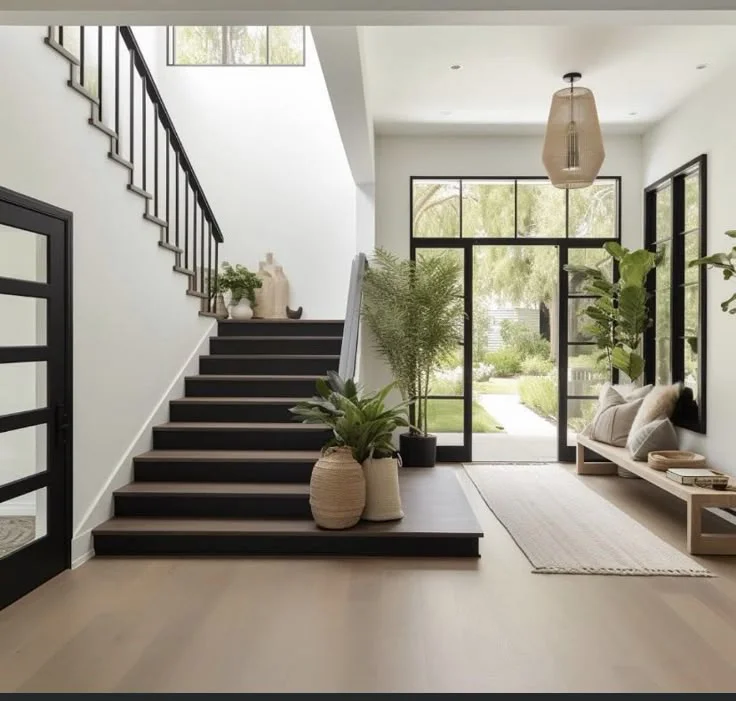
Most apartments skip the traditional foyer entirely. What you actually get is a strip of floor just inside the front door — sometimes three feet wide, sometimes narrower. The design challenge is genuine, but it is far from impossible.
Go Vertical, Not Horizontal
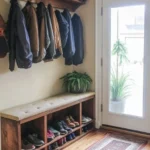
When the floor plan offers almost nothing to work with, the walls step in to do the heavy lifting. Wall-mounted hooks, floating shelves, and pegboard panels all draw on vertical space that would otherwise go completely unused. A well-placed row of hooks at shoulder height can handle several coats, a bag, an umbrella, and a set of keys without claiming a single square foot of floor.
Multi-Function Over Single-Purpose
Every piece of furniture in a small entryway needs to pull more than its own weight. A bench that opens for shoe storage, an ottoman that offers both a seat and a hidden compartment, a narrow console table with a drawer — these are the pieces that make limited spaces genuinely functional. Single-purpose furniture in a space this constrained is something most apartments simply cannot accommodate well.
The Mirror Rule
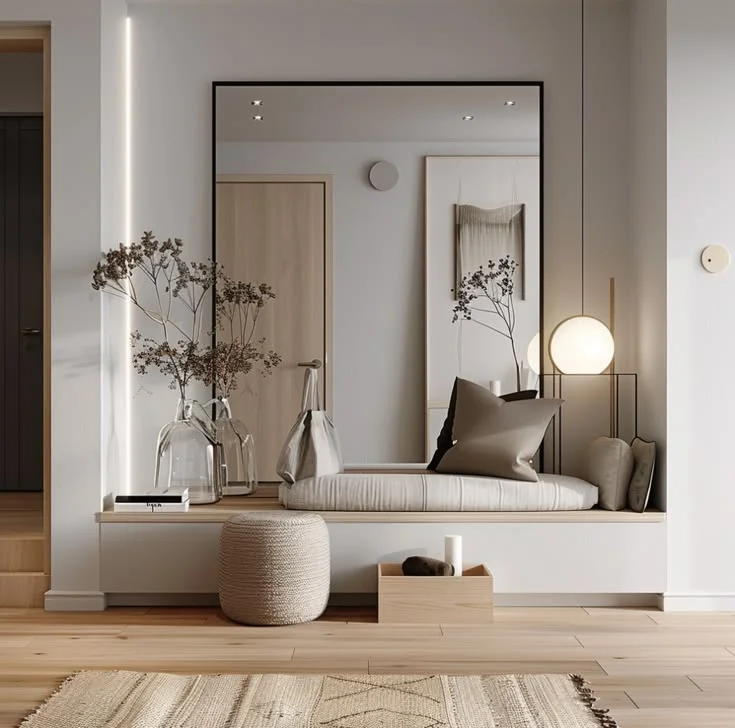
A mirror in the entryway is not a decorative luxury — it is a practical essential. It makes the space read as larger by bouncing light and adding visual depth. It gives you a final once-over before leaving. And when chosen thoughtfully, it becomes the primary design statement in the entire entry. A tall leaning mirror or a cleanly mounted one at eye level can take a bare strip of hallway and make it look like a considered, complete space.
Foyer Decorating Tips: Style With Restraint
If there is one principle that applies to foyer decorating more than any other, it is restraint. The instinct in a small space is often to fill it — hooks, art, plants, baskets, trays, all at once. In practice, that usually produces a space that feels busier and more cramped than before. Good apartment entryway decor is shaped just as much by what you leave out as by what you choose to include.
Pick One Visual Anchor
Before adding anything to the space, decide on a single anchor element. This might be a console table, a statement mirror, a piece of art on the wall, or a rug with a strong pattern. Everything else in the entry should support that one anchor — not compete with it. When a small space has multiple focal points all pulling in different directions, none of them lands with any real impact.
Color Cohesion
Choose one accent color and let it appear in two or three quiet ways throughout the entry. A warm terracotta rug on the floor, a small terracotta planter on the console shelf, and a terracotta ceramic dish as a key holder — three small touches that create a sense of design intention without any one of them feeling forced. The specific color matters far less than the consistency with which it appears.
Lighting Is Not an Afterthought
The overhead lighting in most apartment entryways is doing the space no favors — often too bright, too cold, and too unflattering. Switching to a warm-toned bulb in the 2700K to 3000K range takes a couple of minutes and costs very little if you already have the right bulb. Adding even one secondary light source — a plug-in sconce on the wall, a small lamp on the console, or battery-powered puck lights tucked under a shelf — moves the entry from simply functional to something that actually feels like a place you want to be.
Entryway Storage Solutions That Actually Solve Problems
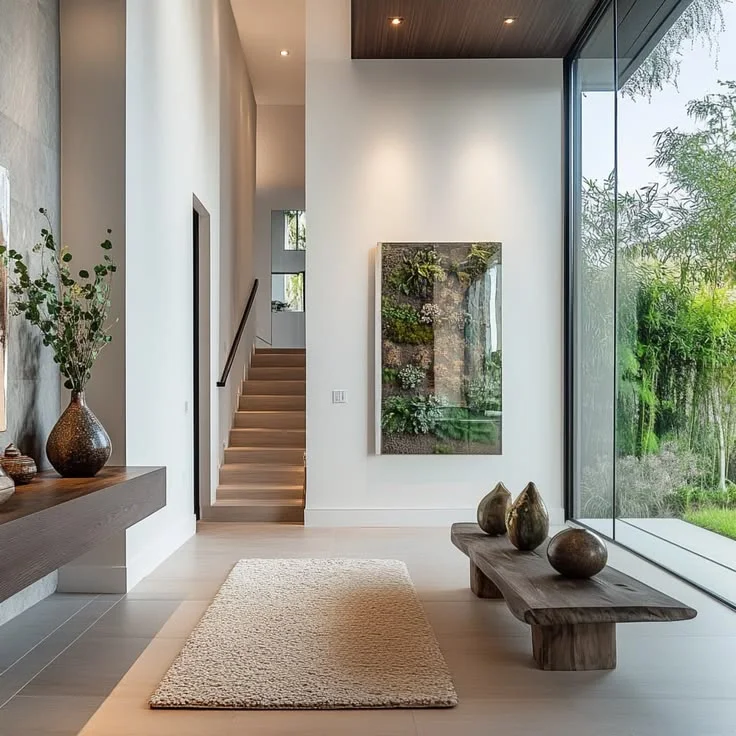
Storage is where apartment entryway decor gets honest. Without a clear system for the daily items that flow through this space, every surface and every inch of floor gradually becomes a catch-all. With the right storage approach, the entry begins to organize itself almost passively.
The Command Center Approach
Think of the entryway as a daily command center — the one place where everything you need to leave the house actually lives. Keys on their hook, bag on its peg, sunglasses in the tray, phone charger in the drawer. When every item has a fixed, designated spot, it naturally returns to that spot. The frantic morning search for keys stops happening. The transition in and out of the apartment becomes smooth instead of stressful.
This works because it is simple. A system with one location and one rule for each item is a system people actually follow. The more complicated it becomes, the faster it breaks down.
Baskets, Trays, and Bins
Open baskets and trays are among the most practical storage tools in apartment entryway decor — not because they hide things, but because they contain them. A woven seagrass basket near the door keeps shoes corralled without making the entry look like a shoe shop. A small tray on the console keeps keys, coins, and receipts from migrating across the entire surface.
Natural materials tend to read warmest in apartment entryway decor spaces — rattan, seagrass, jute, cotton rope. Metal or wire baskets fit better in spaces that lean industrial or modern. Either way, the goal for any apartment entryway decor is the same: give each category of item its own home, and the space maintains its order with almost no daily effort.
Over-the-Door Solutions
The back of the front door is one of the most consistently overlooked storage opportunities in any apartment. Over-the-door organizers — available in clear pockets, canvas, and metal configurations — can hold a surprising range of items: shoes, pet supplies, entry-area cleaning tools, accessories, bags. For renters in particular, these require zero installation, leave no marks whatsoever, and make a real dent in the storage problem without touching a single wall.
Apartment Hallway Decor: Turning a Corridor Into a Space
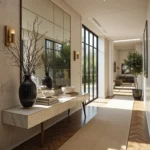
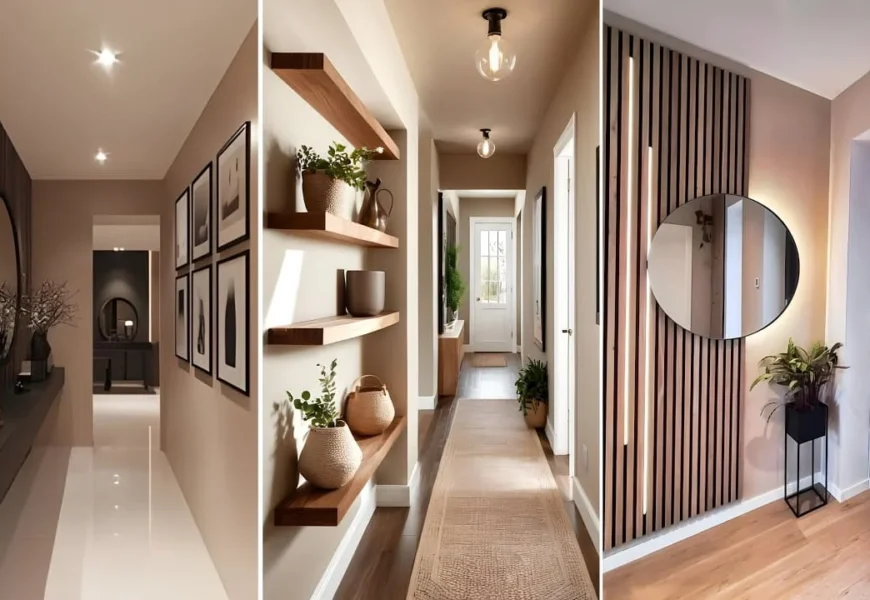
When an apartment entry opens into a long hallway rather than directly into a living area, the design problem shifts slightly. Long, narrow hallways have a tendency to feel like corridors you pass through rather than spaces you actually inhabit. Good apartment hallway decor changes that by building visual interest and a sense of rhythm along the entire length of the space.
The Zone Approach
Rather than treating a hallway as one continuous undifferentiated run, break it into distinct visual zones. Near the front door, the arrival zone handles the functional storage — hooks, a bench, a basket for shoes. Further along, a decorative zone with a framed print or a small plant creates a visual resting point. Alternating between functional and decorative moments draws the eye naturally down the hall rather than making it feel like a tunnel you have to get through.
Runner Rugs
A well-chosen runner rug might be the single highest-impact investment in apartment hallway decor. It adds warmth underfoot, introduces color or pattern, marks out the walking path clearly, and absorbs the sound of footsteps that can otherwise make a hallway feel hollow. Choose a flatweave or low-pile option that lies completely flat against the floor — both for safety and for ease of cleaning. Cotton dhurries, kilim runners, and indoor-outdoor flatweave options all hold up well in high-traffic hallways.
As a general rule, leave four to six inches of bare floor visible on each side of the runner. That margin creates a framing effect that makes the hallway read as wider and makes the rug itself look placed rather than shoehorned in.
Light Along the Length
A single overhead fixture at the entry end of a long hallway tends to leave everything beyond the first few feet in shadow. Plug-in wall sconces or battery-powered LED lights added at intervals along the length of the hall make an immediate difference — the space feels warmer, more open, and considerably more finished. Keep all light sources at the same color temperature so the hallway reads as cohesive rather than patchy.
Narrow Entryway Furniture: What Fits, What Does Not
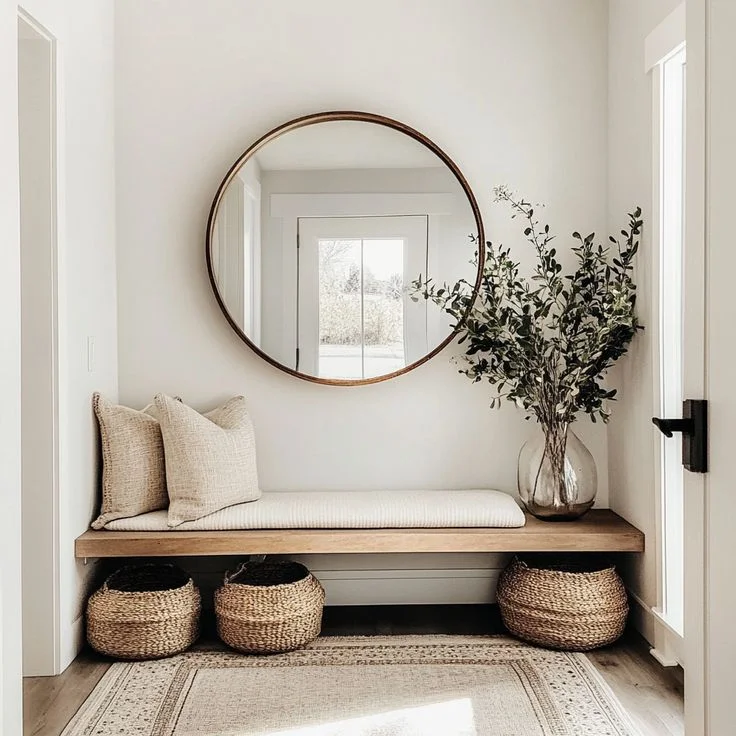
Selecting furniture for a narrow apartment entryway decor requires a more disciplined eye than most other rooms. Pieces that look perfectly proportioned in a showroom can physically block the walkway of a 36-inch-wide apartment entryway decor setup entirely.
The 12-Inch Depth Rule
For anything going against the wall in a narrow entry, look for pieces no deeper than 12 inches. That single dimension leaves adequate walking clearance in almost every apartment hallway configuration. Many furniture manufacturers now produce console tables, shoe cabinets, and wall shelving units built specifically in this depth range for entryway applications.
Secondhand and vintage markets are genuinely worth exploring here. Older homes were designed with hallways in mind, and antique demi-lune tables, slim console tables, and narrow sideboards from earlier eras were often proportioned exactly right for the spaces that apartment entryways now occupy.
Narrow Entryway Furniture: Quick Comparison
| Furniture Type | Typical Depth | Storage | Best For |
|---|---|---|---|
| Slim console table | 10–14 inches | Surface + lower shelf | Most apartments |
| Wall-mounted shelf | 0 floor space | Small items, decor | Ultra-narrow entries |
| Storage bench | 12–16 inches | Seat + hidden storage | Entries with sitting room |
| Narrow shoe cabinet | 10–12 inches | 8–12 pairs of shoes | Shoe-heavy households |
| Hall tree | 12–16 inches | Hooks + bench + mirror | Full rental-friendly setup |
| Pegboard panel | 0 floor space | Fully customizable | Maximum wall storage |
What to Avoid
- Console tables deeper than 14 inches — the extra depth costs more walking clearance than it returns in storage.
- Large floor lamps — they are unstable in high-traffic zones and create a persistent obstacle.
- Bulky armchairs or accent seating — these belong in living rooms, not apartment entries.
- Layered rugs — one well-sized runner always reads cleaner and safer than two overlapping pieces.
- Too many objects on any single surface — in a small space, each additional item compounds the visual noise.
Mudroom Alternatives for Apartments: The Function Without the Room
A mudroom exists to create a buffer between the outside world and the main living space — a zone where coats get hung, wet shoes get contained, and daily carry items get organized before they travel any further into the home. Most apartments do not have one. But the function it provides is entirely reproducible in a fraction of the space, if the right elements are in place.
The Mini Mudroom Setup
The essential components of a mudroom come down to four things: hooks for coats and bags, a place to sit while taking off shoes, storage for the shoes themselves, and a home for small everyday items like keys and transit cards. All four of these can fit within roughly six square feet when the furniture is chosen with the right dimensions.
A hall tree — a piece that typically combines a mirror, upper coat hooks, a narrow bench, and storage underneath — functions as a self-contained mini mudroom. Many are available as narrow as 24 inches wide, which means they can work in apartment entryway decor setups that seem too tight for any meaningful furniture at all. For an even more minimal footprint, a pegboard wall panel with hooks, small shelves, and bins achieves the same result using only vertical wall space.
Pet Owner Additions
For renters with dogs, the entryway carries a specific set of daily demands that general decor guides tend to gloss over. A dedicated basket or bin near the door for leashes and waste bags. A rubber-backed mat or boot tray for muddy paws. A hook positioned slightly lower than standard height for easy leash access on the way out the door. These are small additions, but they make the daily routine noticeably smoother and keep outdoor mess where it belongs — at the door.
Entryway Console Table Styling: Making It Look Intentional
In most apartment entryway decor setups, the console table is the visual centerpiece — the surface that guests notice first and the space that most directly communicates whether the entry feels designed or simply functional. Styling it well is the difference between a table that looks placed with purpose and one that just holds whatever lands on it.
The Three-Part Vignette
Interior stylists reliably group entryway vignettes in threes, with items at varying heights to create natural visual movement. The classic arrangement: something tall that draws the eye upward (a lamp, a tall vase, a sculptural plant), something at mid-height that holds the center (a decorative object, a piece of art leaning against the wall, a small figure), and something low that grounds the arrangement (a tray for keys, a few stacked books, a candle). The eye moves through this trio in a natural arc — high to mid to low — rather than landing flat on a row of objects sitting at identical heights.
Leave Room for Real Life
A console table styled purely as a display surface — with no practical allowance for the items that actually need to live there — will be covered in random clutter within days. Keys, incoming mail, chargers, and everyday carry items exist whether you plan for them or not. Build the vignette around a tray or small bowl that holds these things, and style the decorative elements around that functional center. The result looks just as considered, and it actually stays that way.
Seasonal Refresh
One of the simplest ways to keep apartment entryway decor feeling alive is to update the console table vignette four times a year. A small pumpkin and dried botanicals when fall comes around. Evergreen branches and a warm-toned candle in winter. Fresh flowers and lighter linens as spring arrives. These changes take twenty minutes and cost very little, but they consistently make an entry feel current and cared for throughout the year.
First Impression Home Decor: What Guests Actually Notice
Studies in environmental psychology and home perception point consistently to the same three factors driving first impressions in a home: the scent of the space, the quality of the light, and the level of visible clutter. What guests do not immediately register — despite what home renovation culture might suggest — is the price of the furniture, the specific brand of the rug, or the precision of the color palette.
This is useful information for anyone decorating on a realistic budget. The most impactful changes in apartment entryway decor are not necessarily the most expensive ones. A fresh-smelling entry, a warm and inviting light level, and the genuine absence of visual clutter will make a stronger first impression than costly furniture arranged in a disorganized space.
A few small things guests consistently notice, even if they never mention them:
- Whether the welcome mat is actually clean, not just present.
- Whether shoes near the door look organized or randomly dropped.
- Whether the overhead light feels harsh or comfortable.
- Whether the surfaces are clear or buried under daily accumulation.
- Whether the entry has a pleasant or neutral scent — or an unpleasant one.
These are all within easy reach of any renter, at essentially any budget.
Rental-Friendly Entryway Makeover: No Security Deposit at Risk
Rental agreements come with real restrictions. Most leases limit wall damage to small nail holes at most and prohibit structural changes of any kind. That used to mean renters had to accept whatever the landlord left behind. Now, with the rental-friendly decor market as developed as it is, creating a well-designed apartment entryway decor setup without touching the walls in any lasting way is entirely achievable.
Adhesive Solutions That Actually Work
3M Command products are the most reliable entry point for renter-friendly wall solutions. The largest Command hooks are rated to hold up to 7.5 pounds — enough for full coats, bags, and small-to-medium mirrors. The critical step most people skip is preparation: clean the wall surface with isopropyl alcohol, allow it to dry completely, press the adhesive firmly against the wall for a full 30 seconds, and wait the cure time before adding any weight. The majority of adhesive failures come down to skipping one of those steps rather than any deficiency in the product itself.
Adhesive picture-hanging strips work on the same principle and allow framed art and heavier mirrors to go up cleanly and come down without damage when applied and removed correctly.
Leaning Decor Is Always Rental-Friendly
Anything that leans rather than mounts sidesteps the installation question entirely. Leaning mirrors, ladder shelves, and artwork propped against the wall all look relaxed and deliberate while requiring nothing from the wall at all. A tall leaning mirror is particularly well-suited to compact apartment entryway decor because it also reflects light back into the space and makes the entry feel noticeably larger — two benefits from one piece of furniture.
Removable Wallpaper for a Bigger Statement
Peel-and-stick removable wallpaper has come a long way. Current options are printed well, apply smoothly, and remove cleanly when the instructions are followed. Applied to the wall behind a console table, or to a small alcove ceiling where the entry meets the hallway, it creates a visual moment that reads as genuinely designed. The preparation step matters here too — the wall needs to be clean, dry, and smooth, and the application should be slow and deliberate to avoid air pockets.
Freestanding Everything
Hall trees, freestanding coat racks, shelving units, and storage benches require no installation and leave no mark when they eventually move with you. A well-chosen freestanding piece often turns out to be a better long-term investment than built-in solutions precisely because it goes wherever you go — it is not left behind with the apartment when the lease ends.
FAQ: Apartment Entryway Decor
How do I decorate a really tiny apartment entryway?
Start with the walls rather than the floor. Wall-mounted hooks, a floating shelf, and a leaning mirror can accomplish everything a full furniture setup does while using almost no floor space at all. Keep the floor as clear as possible — one mat or one small tray at most — and let the wall do the organizational work.
What is the best furniture for a narrow entryway?
Anything no deeper than 12 inches. A slim console table, a wall-mounted floating shelf, or a narrow hall tree in the 10–12 inch depth range keeps enough walking clearance for daily use. Add wall-mounted hooks above rather than relying on a bulky freestanding coat rack.
How can I add entryway storage without drilling holes?
Over-the-door organizers, freestanding coat racks, hall trees, and Command-strip-mounted hooks all deliver real storage without touching the walls permanently. Leaning ladder shelves are also worth considering — they combine display and storage in one piece with no installation required.
What rug works best in an apartment hallway?
A flatweave or low-pile runner with four to six inches of floor visible on each side. Cotton dhurrie rugs, jute runners, and indoor-outdoor flatweave options are all practical choices that clean easily and hold up well in high-traffic hallways.
How do I make my entryway smell good?
A reed diffuser, a real plant, or a lightly scented candle placed on the console table each work well. More fundamentally, keeping the entry clean and dust-free matters — even a quality fragrance cannot fully compensate for an entry that has not been cleaned recently.
Can renters use wallpaper in the entryway?
Yes, with peel-and-stick removable wallpaper. Clean the wall thoroughly beforehand, apply slowly to avoid air pockets, and remove it carefully by peeling at a low angle when the time comes. Applied and removed correctly, it leaves walls in the same condition it found them.
How many hooks do I actually need?
One hook per person in the household, plus two. A two-person apartment typically needs a minimum of four hooks. Varying the heights — higher hooks for bags, lower hooks for jackets worn daily — keeps the arrangement organized and prevents everything from piling onto the same peg.
Conclusion: Small Space, Meaningful Change
Apartment entryway decor rarely makes it onto anyone’s priority list — and that is exactly why getting it right makes such a noticeable difference. It is the space that greets you every single day, twice a day, in every mood and in every kind of weather. When it works, you probably do not think about it much. When it does not, you feel it every time you reach the door.
The good news is that this is one of the most forgiving spaces in the home to improve. You do not need a large footprint, a renovation budget, or permanent changes to make it genuinely better. A few well-chosen hooks, a mirror that opens up the space, a tray that corrals the daily chaos, and lighting that actually feels warm — these are modest investments that return something real every day.
Start with one problem to solve rather than trying to overhaul everything at once. If the shoes are the issue, address the shoes. If the lighting makes the entry feel dim and unwelcoming, fix the lighting first. Small, deliberate improvements tend to build on each other, and an entry that felt like an afterthought can start feeling like a space that reflects who you are and how you want to live — without requiring much more than some clear thinking and a little patience.
That shift is worth more than most people expect.