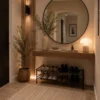
You’ve seen the photos. Deep green walls, a velvet sofa, a lamp glowing in the corner like a campfire. Then you look at your own white-walled room and wonder if you could pull off a moody living room without it feeling like a cave. Good news: you can. Searches for the look keep climbing, and the reason is simple. After years of bright white and cool gray, people want rooms that feel like a hug. This guide walks you through seven practical steps, from picking dark paint colors to getting the lighting right, plus fixes for small spaces, dim rooms and rentals. By the end, you’ll know exactly where to start.
What Makes a Moody Living Room Work (It’s Not Just Dark Paint)
A moody living room isn’t defined by a single color. It’s defined by a feeling: calm, enclosed and a little bit mysterious. One designer interviewed by Homes & Gardens describes it as an atmosphere rather than a palette, one that can feel cozy, contemplative or even exuberant depending on what you want from the room.
So why is everyone asking for it? Part of the answer is fatigue. Designers say the pull toward dark rooms is a reaction to the gray-and-white era, which left many homes feeling flat. The numbers back this up. UK searches for the look on Houzz jumped 135% year over year in early 2026, and interest in dark ceilings and forest green climbed alongside it. In the US, searches had already more than doubled by mid-2024.
Here’s the catch, though. Dark paint alone doesn’t make a room moody. It just makes it dark. The rooms that work share three things:
- Depth: deep, slightly muted color on the walls.
- Contrast: lighter or warmer materials to play against the dark.
- Glow: soft, low light from several sources.
Think of it like cooking. One strong ingredient isn’t enough, because the flavor comes from how everything layers together. Miss one and you get a cave. Nail all three and you get that hushed, hotel-lobby-at-night feeling everyone keeps pinning. The rest of this guide covers each one, in the order you should tackle them.
Choose Dark Paint Colors With the Right Undertone
Every moody living room starts with the wall color, so spend most of your thinking time here. The trick with dark paint colors is choosing shades that carry a little gray. A designer writing for House Digest recommends earthy picks like aged blue-gray, dark sage, forest green and classic charcoal, because the gray tones down the saturation and keeps the color feeling timeless. Whatever you choose, go properly dark. Medium tones tend to look muddy, like you stopped halfway.
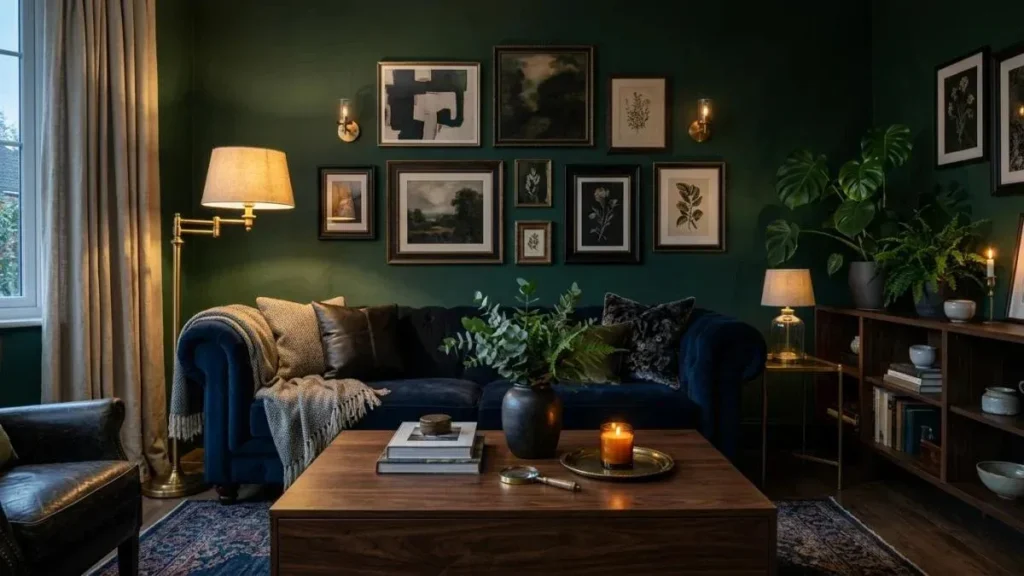
Dark green walls and deep navy
These two are the crowd favorites. Deep navy has been the go-to moody shade for years, and designers quoted by Homes & Gardens call dark blue a dependable base for a sophisticated, dramatic room. Dark green walls are the newer favorite, and they look gorgeous next to warm wood and brass.
Charcoal walls and moody neutrals
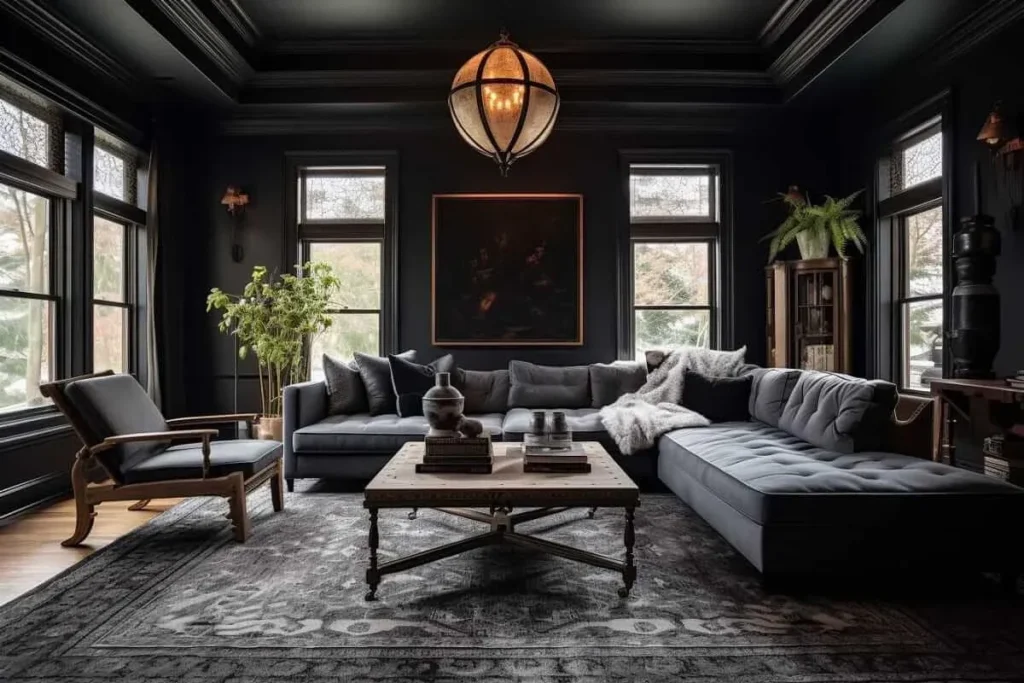
Not ready for a strong color? Charcoal walls and warm taupes give you the drama without the commitment to a bold hue. One designer in the Homes & Gardens piece notes that deep charcoal is replacing stark black in many palettes, and it’s easy to see why. It feels softer and far easier to live with.
Test before you commit
Buy two or three sample pots and paint large swatches on different walls. Check them in the morning, at noon and at night with your lamps on, because dark colors shift a lot under different bulbs. If you can, choose a matte finish too. It absorbs light instead of bouncing glare around.
Try Color Drenching for Instant Depth
Here’s a move that surprises people: painting everything one color can make a moody living room feel calmer and more cohesive, not smaller. That’s color drenching, and it’s been called one of 2026’s biggest paint trends. When the walls, trim and ceiling share the same shade, the corners stop shouting. Your eye has nothing to snag on, so the room reads as one soft, enveloping shape.
Match the trim
House Digest’s designer suggests painting the trim the same color as the walls, because the commitment feels upscale and holds the whole look together. If you want to go all the way, take the same color across the ceiling too.
Think about the ceiling
A dark ceiling lowers the visual height and creates a warm, sheltered feeling, according to Sherwin-Williams. If you want something a little less intense, color capping is a Benjamin Moore twist on drenching that carries color up toward the ceiling.
Add texture to the paint
Flat paint can look, well, flat. A limewash, Venetian plaster or Roman clay finish adds movement and a sense of age, which is why designers love it on dark walls. Even picture molding painted the same shade adds shadow and polish.
Keep furniture a shade lighter
Designer Andrea West suggests keeping the furniture and rug lighter than the walls, so the room has contrast. Think cream, camel, oatmeal or warm wood against your deep backdrop.
Let Layered Lighting Do the Heavy Lifting
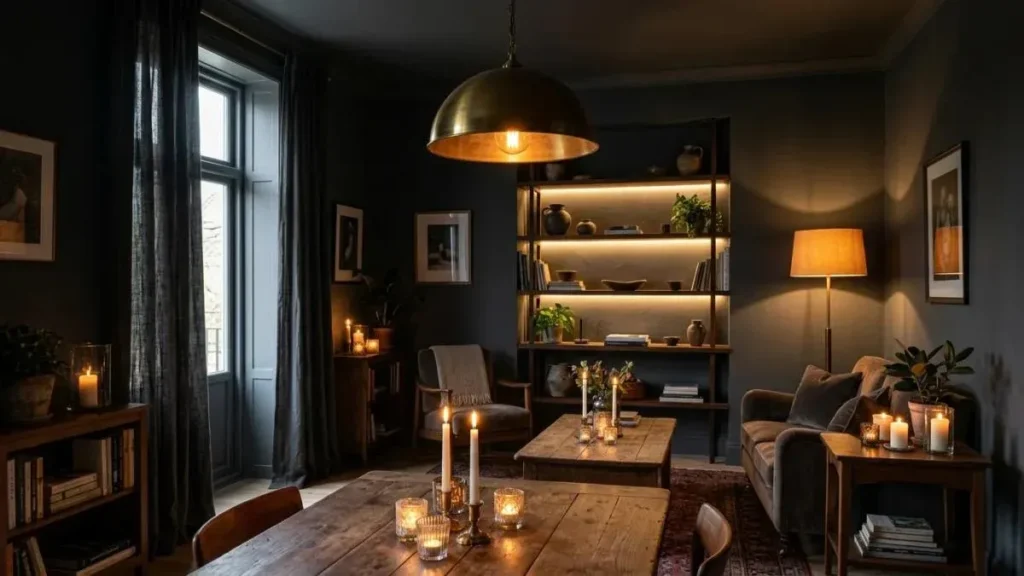
Here’s the part most people get wrong. They paint the room dark, leave the harsh overhead light on and wonder why it feels like a waiting room. A moody living room lives or dies by its lighting. Designers consistently recommend low, ambient light from many sources, not one bright fixture in the middle of the ceiling. Think of it like a campfire: you want pools of glow, not a spotlight.
Build three layers
For a moody living room, aim for at least three light sources at different heights. As a rule of thumb, that means a floor lamp, a table lamp or two, and something at eye level like a wall sconce or picture light. A designer quoted by Homes & Gardens recommends going dimmable and mixing floor lamps, table lamps and candles.
Pick warm bulbs
Bulb temperature matters more than you’d think. Look for warm lighting around 2700K. Cooler, bluer light at 4000K or above makes a dark room feel cold and institutional, while warm light makes deep colors glow. Put everything on dimmers, or use smart bulbs, so you can shift from “reading cozy” to “movie night” in one tap.
Light the walls themselves
Picture lights make art pop and wash the wall in soft light, while LED strips can make cabinets glow. These small touches keep a dark wall from swallowing the room at night.
Layer Velvet and Other Textures for a Cozy, Cocooning Feel
Dark paint gives you the stage. Texture is the cast. Without it, even a gorgeous moody living room can look like a flat black-and-white photo. Designers keep returning to the same fix: layer lots of different materials, and make sure they feel good to touch.
Velvet, leather and wool
A velvet sofa or pair of velvet armchairs is the easiest way to add richness. Leather and warm brass tones also help wrap up the look. Chunky wool throws and thick rugs soften everything, while brass in lamps, frames or a side table catches the light and stops deep colors from feeling heavy.
Dark wood and metallic accents
Natural wood is your best friend here. Stained walnut, oak and other dark wood tones bring warmth and grain that paint can’t. Mix them with black or antique gold metals, and maybe a little stone or marble, so no single material takes over.
Curtains, art and plants
Hang floor-to-ceiling drapes in a deep shade that matches or complements the walls, and skip the light, airy white curtains. Then layer art in antique or dark frames, and add real plants. Greenery pops against dark walls and keeps the room alive, which is exactly what stops gloom.
Don’t forget the sensory side. One designer says moody rooms are really about how a space feels, so a soft throw, a good candle and a subtle scent count just as much as the paint.
Balance Dark Walls With the Right Furniture and Art
Furniture is where people accidentally make a dark room heavy. Designers warn that a scheme with nothing but dark furniture, dim lighting and no relief just looks depressing and flat. The fix is simple: treat your walls as the dark note and let the furniture be the counterpoint.
Mix light and dark pieces
Pick a sofa in a mid or deep tone, like olive, rust or a rich camel, then add one or two lighter pieces such as a cream bouclé chair or a pale rug. Lightweight shapes with visible legs help too, because they let light pass underneath instead of sitting like a wall of bulk. A statement piece, like an oversized Chesterfield, can anchor the room, as long as the rest stays airy.
Let art do the talking
Dark walls make artwork look richer and whites look brighter, so this is the moment to hang the pieces you love. Go for a tight gallery wall with black, walnut or brass frames, or lean one large piece on a console for an easy, collected look. Add a mirror opposite a lamp to bounce the glow around.
Try an accent wall first
Nervous about going all in? One moody accent wall behind the sofa is a low-risk way to test the look. Dark teal or charcoal both work well, and you can always expand to the other walls later.
Make a Small Living Room or North-Facing Room Work
Two worries come up again and again: “Will it feel tiny?” and “My room barely gets sun.” Good news on both fronts. A moody living room can absolutely work in both, as long as you plan for light.
If your living room is small
A small living room can handle dark walls better than you’d expect. Deep color blurs the corners and edges, so the room can feel boundless rather than boxed in, a bit like looking at a night sky. To keep it from closing in, add a mirror or two, metallic accents and a lighter rug. And go easy on chunky dark furniture.
If your room faces north
North-facing rooms get cool, bluish light, so cool-toned darks can turn flat and chilly. Sherwin-Williams says dark colors can still work beautifully in these rooms. The catch is picking warm undertones. Pink or yellow bases bring warmth, while cool undertones tend to fall flat. Dark green with a yellow base, a brown-gray or a warm plum are safer bets than icy slate. Pair them with 2700K bulbs and plenty of wood. One Mumsnet user said a deep green-blue in their north-facing sitting room looked far better than the whites before it. Get the lighting right and a moody living room here can feel like a snug den rather than a cell.
Whichever applies, always test the paint on the actual wall first. A swatch that looks perfect in the store can look dull in your own light.
Get the Look as a Renter (No Painting Required)
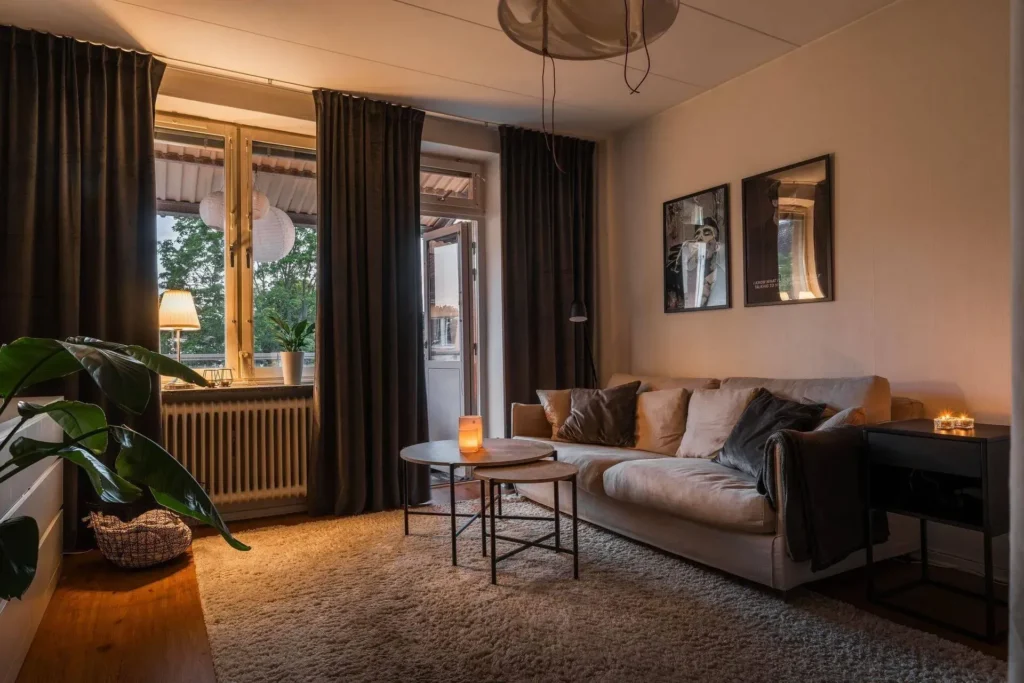
No landlord approval for dark walls? You can still build a moody living room with things that move out when you do. Apartment Therapy points to floor lamps and plug-in sconces as renter-friendly ways to get a soft, glowy look. You won’t need a paint roller for that.
Start with a single wall
If you can’t repaint, peel-and-stick wallpaper in a deep shade behind the sofa gives you a dark backdrop that comes off later, as long as your lease allows it. Pick a dark, patterned design for extra drama. If wallpaper is off the table, a big piece of art in a dark frame or a hung textile does a similar job.
Move the mood with soft goods
Deep curtains, a big dark rug, velvet pillows and chunky throws change the feel of a room fast, and they pack into a box when your lease ends. Add a leafy plant or two, and swap your overhead bulbs for warm, dimmable ones. For a quick test, try one dark corner first. A reading nook with a lamp, a velvet chair and a dark print will tell you whether you love the look before you commit.
FAQs: Moody Living Room
What colors work best for a moody living room?
Deep, muted shades with some gray in them work best: forest green, dark sage, navy, aged blue-gray and charcoal. Richer options like eggplant also work if you’re feeling bold. Avoid medium tones, which can look muddy. Always test samples in your own light before you buy a full can.
Will dark paint make a small living room look smaller?
Not necessarily. Deep color blurs the edges of a room, so the walls seem to fade back instead of closing in. The key is contrast and light: add mirrors, metallic accents, a lighter rug and several warm lamps. Skip heavy dark furniture everywhere, which makes any small space feel crowded.
Can I go dark in a north-facing room?
Yes, but choose warm undertones. Cool-leaning darks can turn flat and chilly in the bluish light a north-facing room gets. Try dark green with a yellow base, deep brown-gray or a warm plum, then add 2700K bulbs and wood tones. Sample on the wall first and check it at night.
How can I get this look as a renter?
Lean on things you can take with you. Use floor lamps and plug-in sconces for glow, then add dark curtains, a deep-toned rug, velvet pillows and framed art. If your lease allows, peel-and-stick wallpaper behind the sofa gives a dark backdrop without paint. Ask your landlord before sticking anything to walls.
How do I stop a dark room from feeling gloomy?
Balance is everything. Every moody living room needs contrast from wood, metal or stone, plus greenery and layered warm lighting. If it still feels heavy, add a mirror, a lighter rug or brighter artwork. Dark furniture in a dark room with weak lighting is what turns moody into depressing.
Conclusion
A moody living room isn’t about hiding in the dark. It’s about building a space you actually want to come home to, one that feels like a pause button after a long day. The recipe is simpler than it looks: deep, muted wall color, plenty of contrast, and warm light from several sources.
Here’s your next move. This weekend, buy two sample pots in colors that carry a little gray, and paint big swatches on different walls. Swap one overhead bulb for a warm 2700K bulb, and set up a lamp in the darkest corner. Check how the room feels at 7 p.m. That tiny experiment will tell you more than a hundred inspiration photos.
If the swatches make you smile, go for it. If you’re hesitant, start with a single wall, a velvet chair or a few lamps. The best moody rooms aren’t built in a day; they’re layered over time, one cozy decision at a time.
Check your room’s lighting tonight, then order those sample pots before the weekend.