You walk in the front door and the first thing you see is your bed. Your desk is three steps away. Dinner happens on the couch because there’s nowhere else to eat.
That’s studio life, and it’s great until every part of your day shares one box. The fix doesn’t need a contractor. The right apartment room divider can carve out a sleeping area, a work corner and a living zone in a single afternoon.
This guide covers what to check before you buy, seven divider types that work in a rental, what they cost, and where to put them. You’ll finish knowing exactly what to order and what to skip.
Why an Apartment Room Divider Beats a Real Wall
Real walls are permanent, expensive and, in a rental, completely off the table. An apartment room divider gives you most of the benefit with none of the commitment. It moves when you do. It costs a fraction of a build-out. And your landlord isn’t going to lose sleep over it.
Here’s why that matters. A visible edge changes how you behave in a space. When your bed is out of sight, the desk stops feeling like a place to nap. When your work corner has a boundary, closing the laptop feels like actually leaving the office.
A divider also hides what you’d rather not see: the laundry pile, the kitchen at 11 p.m., an unmade bed that guests spot from the doorway.
The best ones do double duty. They hold books, carry plants, add soft light or act as wall art. Apartment Therapy’s roundup shows how far this can go, with a clothing rack that holds decor instead of clothes and a rolling cart that doubles as kitchen storage.
Think of it like a good fence between neighbors. It doesn’t have to be a fortress. It just has to make the boundary obvious.
Before you shop, decide what the divider needs to do. Privacy? Storage? Light? One honest answer narrows the field fast.
Before You Buy: Check Your Lease, Ceiling and Exits
Three quick checks now will save you a return trip later.
Read Your Lease
Most leases never mention room dividers. They do care about holes, adhesive and anything fixed to walls or ceilings. Freestanding pieces are almost always fine. Anything screwed in is a gamble.
One property manager’s guide points out that renters can’t use many divider types because they need wall installation, and it suggests talking to your landlord before making changes. A two-line email costs you nothing.
Measure Your Ceiling
Floor-to-ceiling tension systems are popular for good reason. One tester says they adjust from about 4 to 10 feet, which covers most apartments. Still, drop ceilings and acoustic tiles deserve a second look before you install one. And textured concrete or carpet underfoot can make a pole wobble. Grab a tape measure and check.
Keep Two Ways Out
This one’s easy to forget. In a typical home fire, you may have as little as one to two minutes to escape once the alarm sounds, and the National Fire Protection Association recommends two ways out of every room, usually a door and a window.
So never let an apartment room divider block the only path to your door or window. Leave a clear walkway. Pick something you can push aside in seconds.
If your divider creates a new sleeping nook, smoke alarms should be in every bedroom and near sleeping areas, so make sure one still covers it. And keep fabric away from heaters and candles.
No-Drill Room Dividers That Work for Renters
Let’s start with what’s easiest. These need no tools and leave no marks.
Tension Rod Room Divider and Curtain Dividers
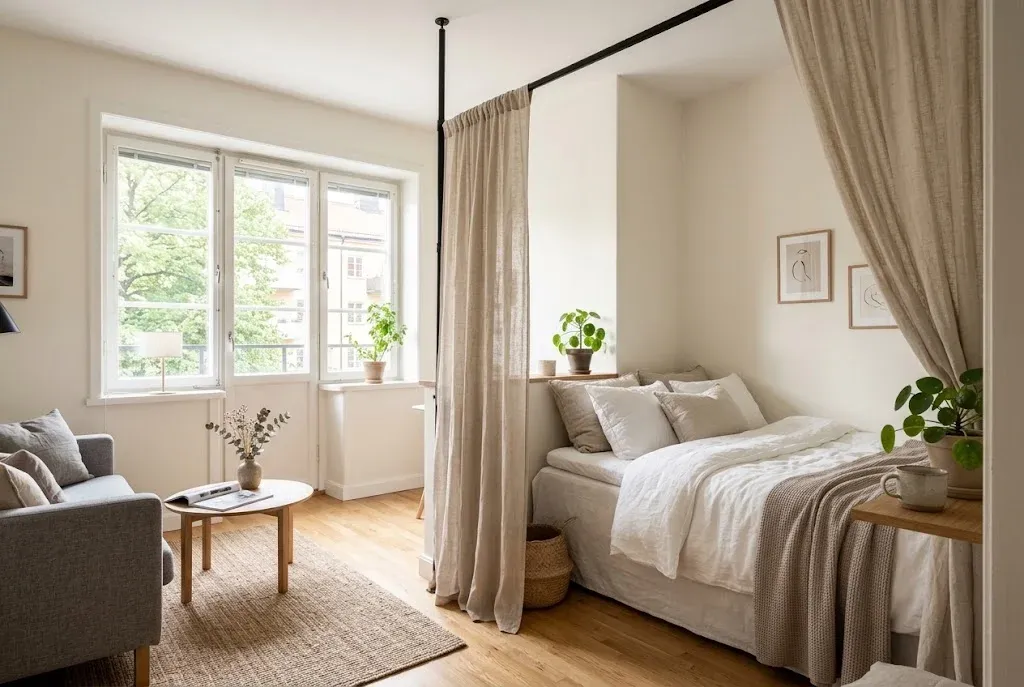
A tension rod room divider is a pole that wedges between floor and ceiling. Hang a curtain on it and you’ve got a bed nook in about ten minutes. Retail listings for these run roughly $40 to $56.
Fabric is where you can save. Simple muslin or painter’s cloth costs just a few dollars per yard, and clip rings make it easy to slide open and closed. Go light, though. Heavy drapery can turn a renter-friendly setup into a headache. A sheer-to-medium fabric hangs better and still lets some light through.
For most renters, a tension rod is the easiest apartment room divider to start with. If it doesn’t work out, you’ve lost a weekend and roughly the price of a nice dinner out.
Folding Screens and Freestanding Room Dividers
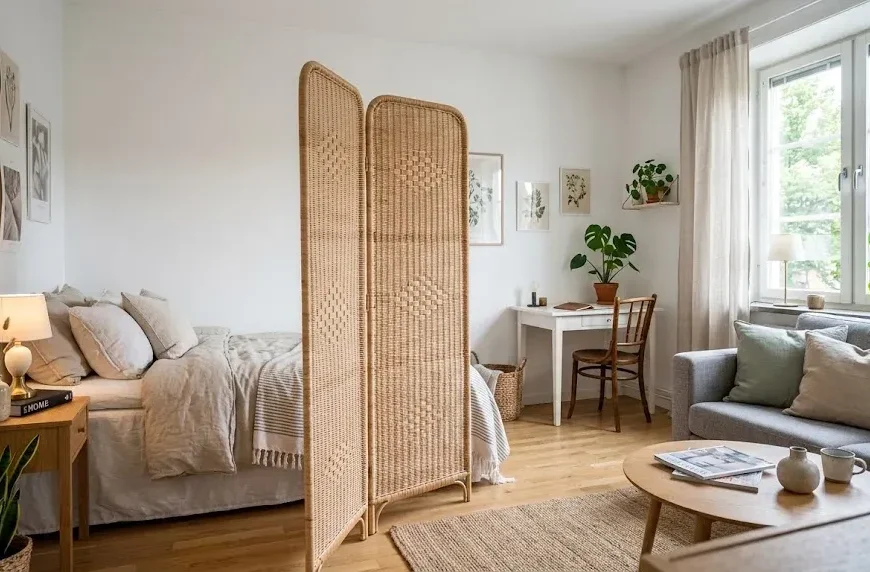
A folding screen is the classic for a reason. No installation, no holes, and you can fold it flat behind a dresser when friends come over. Honestly, a freestanding screen is the most flexible apartment room divider you can buy.
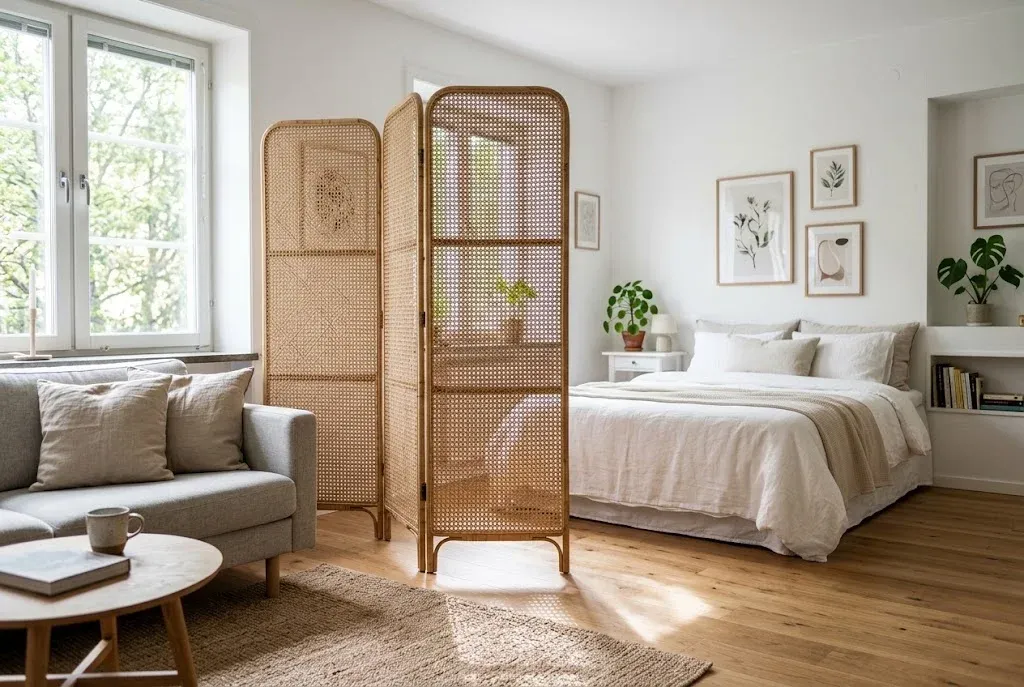
Material matters. Wicker or rattan panels help light travel evenly through the room. Solid fabric panels give you more privacy but can make a corner feel closed in. Bamboo looks great, although one reviewer’s bamboo panels started to creak slightly in dry winter air.
Look for lockable wheels if you plan to move it often. Check the footprint too. A narrow screen tips easily, so choose a wider base or a zigzag fold.
Which One Should You Pick?
- Tension rod and curtain: cheapest, best for a bed nook, needs a ceiling check.
- Folding screen: movable and ready out of the box, but can tip if it’s narrow.
- Rattan or bamboo screen: lets light through, offers less privacy.
If sleeping privacy is the goal, go with a curtain. If you rearrange often, buy a screen. If money is tight, muslin and a rod will get you most of the way there.
Bookshelf Room Dividers, Open Shelving and Slat Walls
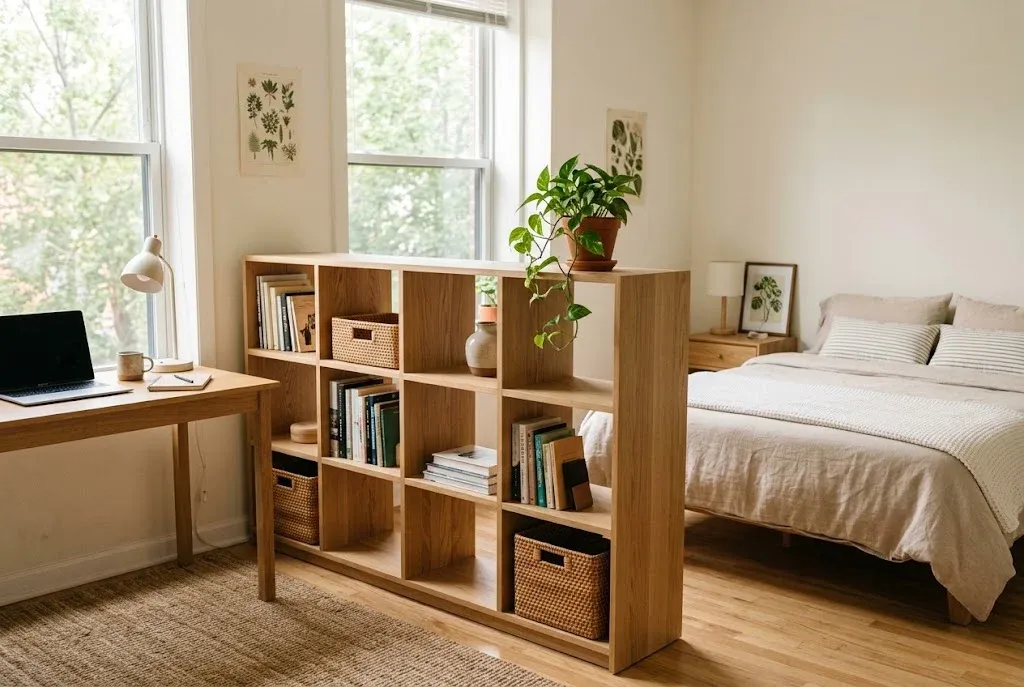
A bookshelf room divider solves two problems at once. It splits the room and gives your stuff somewhere to live.
Pick low and wide over tall and narrow. A waist- or chest-high unit separates zones without blocking light, and it’s far less likely to tip. Tall shelves are trickier in a rental because you can’t always anchor them to the wall. Whatever you buy, give it a firm push before you load it up.
An open shelving divider works best when it’s styled. Open cubbies demand constant editing, which is a poor bargain in a studio, so leave a few cubes empty or add baskets. If space is really tight, a cube shelf can work as both storage and screen.
Want something more architectural? Look at a slat wall divider. One UK supplier calls slat wall dividers the most popular option at the moment. They give partial privacy and feel contemporary. A sliding door divider goes further, since partially open sliding glass doors keep a space feeling light, but they need installation. That’s a conversation with your landlord, or a project for when you own.
If you own your place or have a flexible landlord, a slat wall or sliding door can turn your apartment room divider into a real design feature.
How to Divide a Studio Apartment, Zone by Zone
Start with how you actually live. Think about how you use the space day to day before you pick anything. Then give each activity a home.
Create a Separate Sleeping Area
The bed is usually what you want hidden. You don’t need a full wall to do it. In one 400-square-foot Los Angeles studio, a curtain at the foot of the bed was enough to create privacy.
Place your divider to block the line of sight from the front door to the bed, since that’s the view guests see first. Sleeping nooks are where an apartment room divider pays off most, and even a styled clothing rack can do the job.
Build a Home Office Nook
Put the desk with its back to the bed, then place the divider between them. A rug helps too, because a rug around 5 by 8 feet often anchors a compact studio zone.
Add a small lamp and a plant. The corner starts to feel like its own room, which makes it easier to stop working when the day ends.
Handle an Open Floor Plan
Kitchen and dining areas run together in many small apartment layouts. Furniture can section off a dining area to create a breakfast nook, and a rolling cart adds storage while splitting the space.
Your sofa can do it too. Keep it low, because a low sofa preserves sightlines across the studio. Sometimes the best apartment room divider is a piece of furniture you already own.
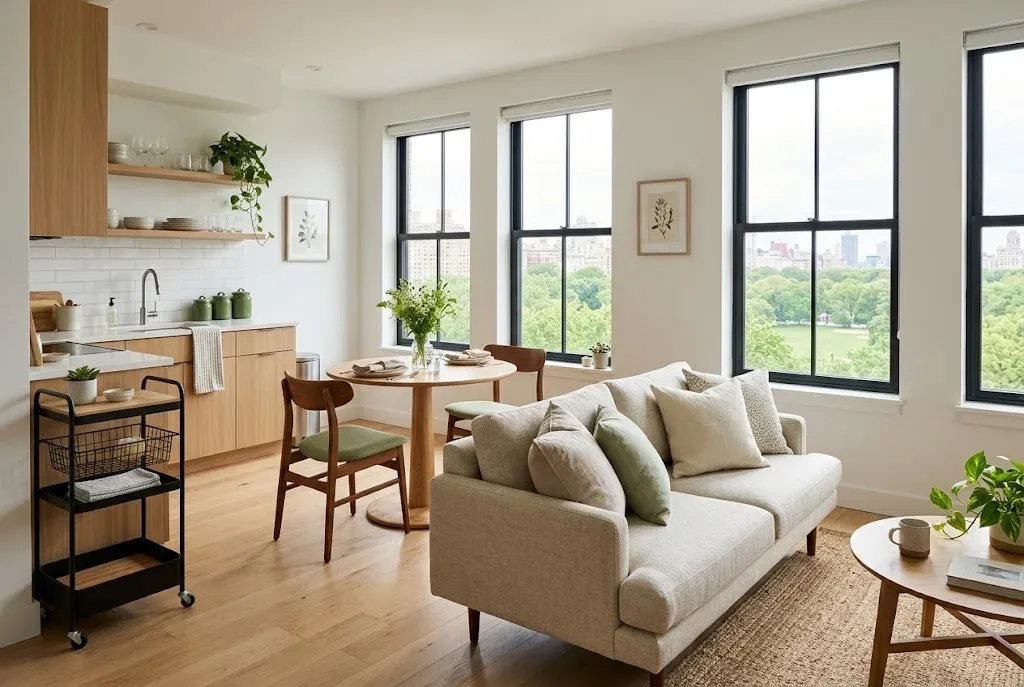
Light, Sound and Privacy: What Dividers Can and Can’t Do
Every divider trades something for something else. Knowing the trade upfront saves you regret.
Light. Solid panels block it. A black mesh divider can darken a room. If your studio has one window, choose rattan, rice paper or sheer fabric. As a bonus, a screen placed near a window casts shadows across the floor and walls through the day.
Sound. Let’s be honest. Felt panels soften some reflected sound but won’t make a studio silent. No apartment room divider will soundproof your bedroom, so set your expectations accordingly. If noise is the real issue, add rugs and soft furniture alongside the divider.
Privacy. Think in levels. A sheer curtain marks a zone. A woven or slatted screen gives partial privacy. Solid fabric gives you the real thing, at the cost of light.
What You’ll Actually Spend
You can do this on a small budget. A muslin curtain costs a few dollars per yard. A tension rod runs about $40 to $56. One 2026 roundup priced a basic rattan screen at $34.
Bookshelves, slat walls and sliding doors cost more and vary widely by brand and installation.
A reasonable budget for a basic apartment room divider is under $100 if you stick to curtains or screens. Spend more only if the divider also has to be furniture.
FAQs: Apartment Room Divider
Can I use an apartment room divider if my lease bans nails and screws?
Yes. Stick to freestanding options like folding screens, shelves or a tension rod system, none of which touch your walls. Skip anything that needs drilling. When in doubt, send your landlord a product link and get approval in writing.
What’s the cheapest way to divide a studio?
A tension rod and a curtain. Rods run roughly $40 to $56, and muslin costs a few dollars per yard. The whole setup stays under $100, and it comes down in minutes when you move.
Will a divider make my studio feel smaller?
Only if it’s too solid and too tall. Open shelves, rattan screens and sheer curtains keep light and sightlines moving. Keep the divider off your main walkway, and leave one side open so the room still reads as one space.
How tall should a room divider be?
It depends on the job. Waist-to-chest height splits zones and keeps light flowing. Around six feet blocks sightlines for a sleeping area. Floor-to-ceiling gives the most separation but also the most visual weight. Choose by purpose, not by the biggest option.
Is an apartment room divider a fire hazard?
It can be if it blocks an exit or sits near heat. Keep two ways out of every room clear, keep fabric away from heaters and candles, and make sure a smoke alarm covers any sleeping nook. Choose something you can push aside quickly.
Conclusion
Here’s the short version. Check your lease. Measure your ceiling. Keep your exits clear. Then match the divider to the job: a curtain for sleeping privacy, a screen for flexibility, a low shelf for storage, a slat wall when you can commit.
You don’t need a perfect setup on day one. The right apartment room divider is the one that fits your space, your lease and your routine, and you can always swap it later.
Here’s your practical next step. This weekend, measure your ceiling height, walk your exit routes, and sketch where your bed, desk and sofa want to live. Once you see the layout on paper, the choice usually gets obvious.