You painted the living room. Then the bedroom. Then you looked at the stairs, sighed, and told yourself you’d get to them later.
Sound familiar? Staircase wall paint is the job almost everyone puts off. The wall is tall, the floor slopes, and there’s a ladder involved. But it’s also the first wall guests see when they walk through your front door.
Here’s what you’ll walk away with: colors that work in dim stairwells, a finish that survives scuffs, real 2026 cost numbers, and a safe way to reach the top. No fancy tools, and no need to hire a crew unless you want to.
Why Staircase Wall Paint Needs to Work Harder Than Any Other Room
A bedroom wall gets touched maybe twice a week. A stair wall gets brushed by shoulders, backpacks, laundry baskets, and small hands grabbing for balance. That’s why staircase wall paint has to be tougher and more forgiving than paint anywhere else in your home.
Here’s what makes stair walls tricky:
- Height. The wall can climb twelve feet or more, so you need a real plan for reaching the top.
- Lighting. Most stairwells have one small window or a single ceiling light. The same color can look totally different at the bottom and the top.
- Angles. The bottom edge follows the stairs, so you’re cutting a diagonal line instead of a flat one.
- Traffic. Scuffs, fingerprints, and shoe marks build up faster here than in any other space.
Think of it as painting a hallway that’s been tilted and stretched. The basics are the same, but prep and product choice matter far more. Get those two right and the rest of the job feels easy.
Stairwell Paint Colors That Actually Work
Color is where most people freeze. You’re staring at a narrow space with odd lighting, trying to picture a shade on a wall you can barely reach.
Let’s simplify it. Staircase wall paint colors fall into three camps.
Light and Bright
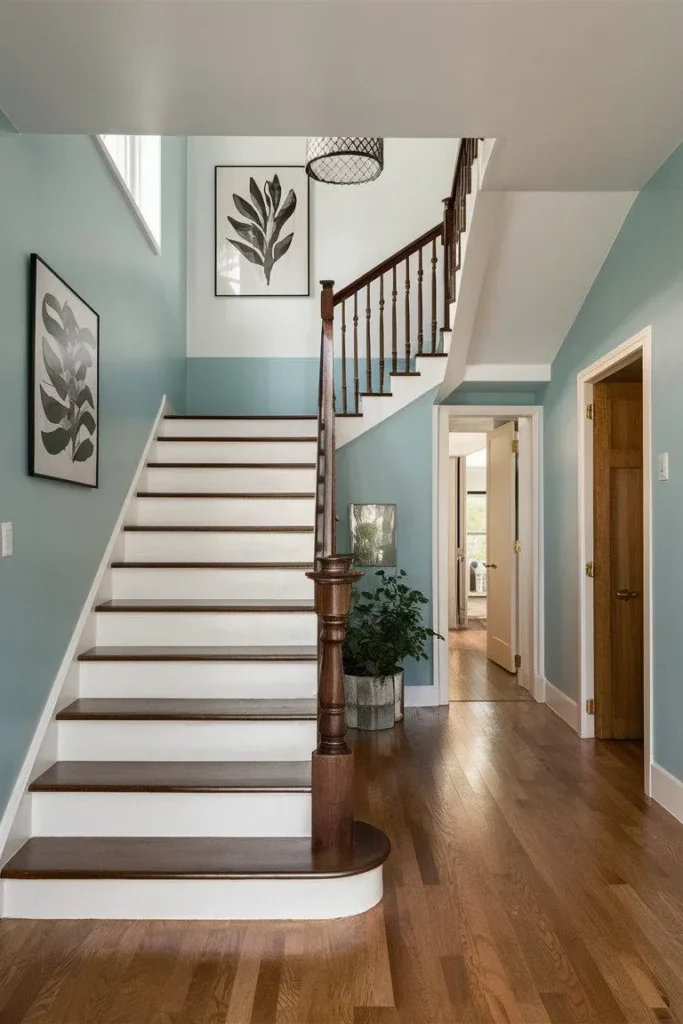
Warm whites, soft creams, and pale grays bounce light around. If your stairwell is dark, this is the safest bet. A light shade makes a narrow staircase feel wider and stops the top landing from feeling like a cave.
Mid-Tone and Moody
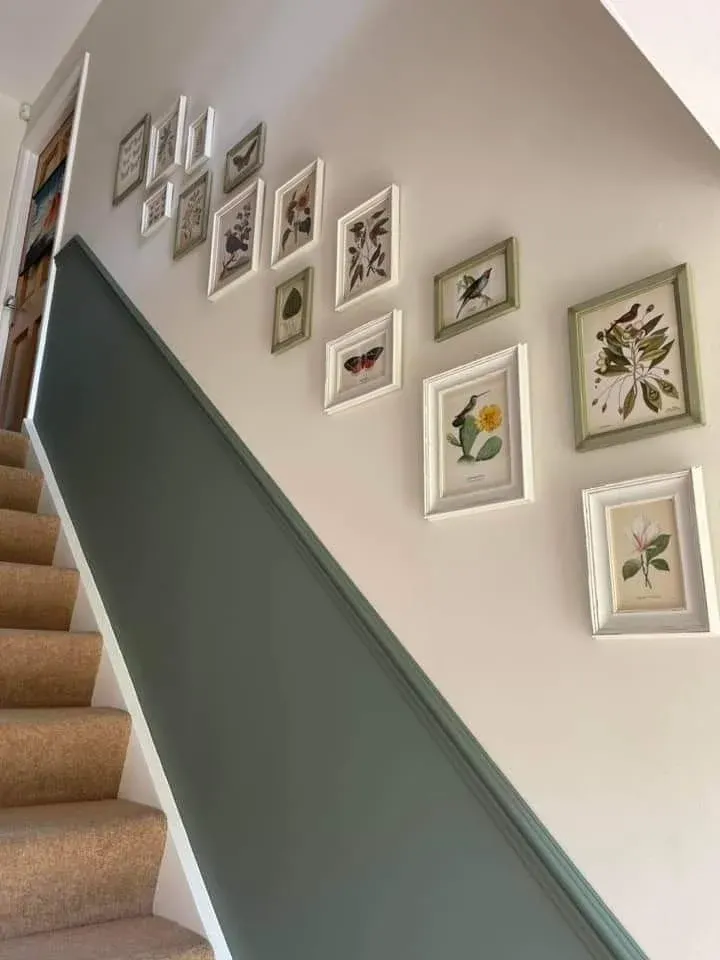
Greige, sage green, dusty blue, and warm taupe add personality without going overboard. They also hide fingerprints better than white, which matters when little hands are involved.
Deep and Dramatic
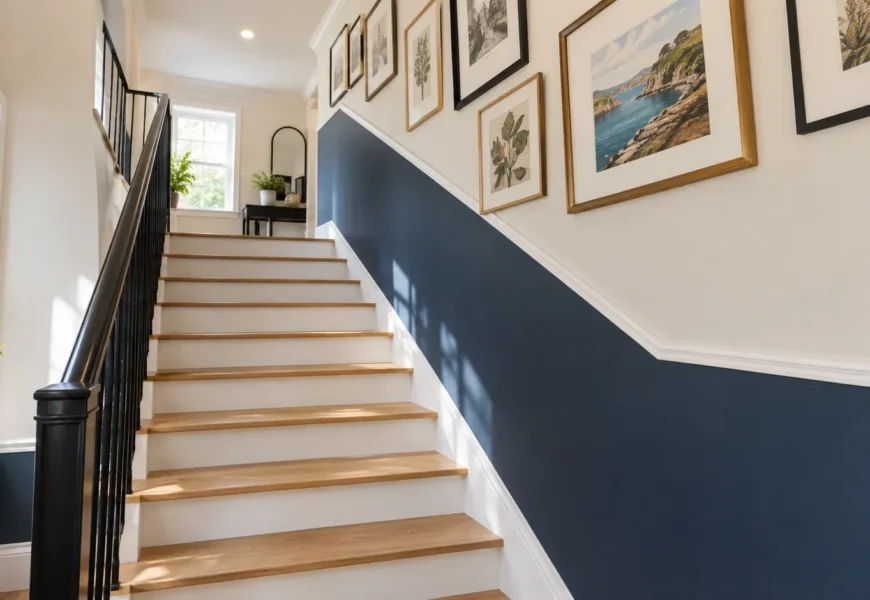
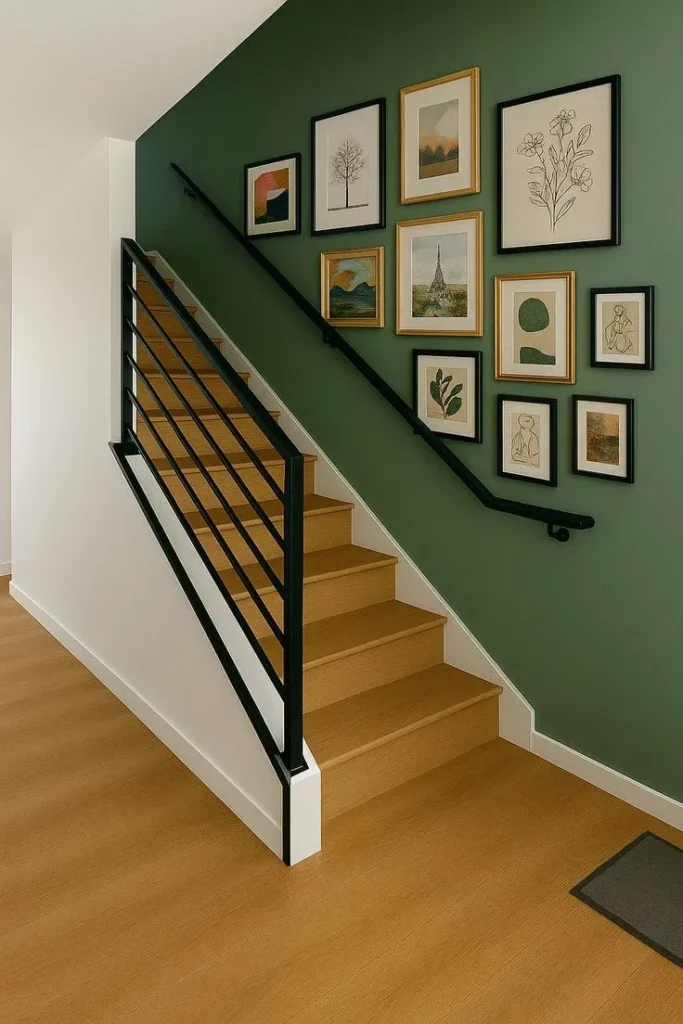
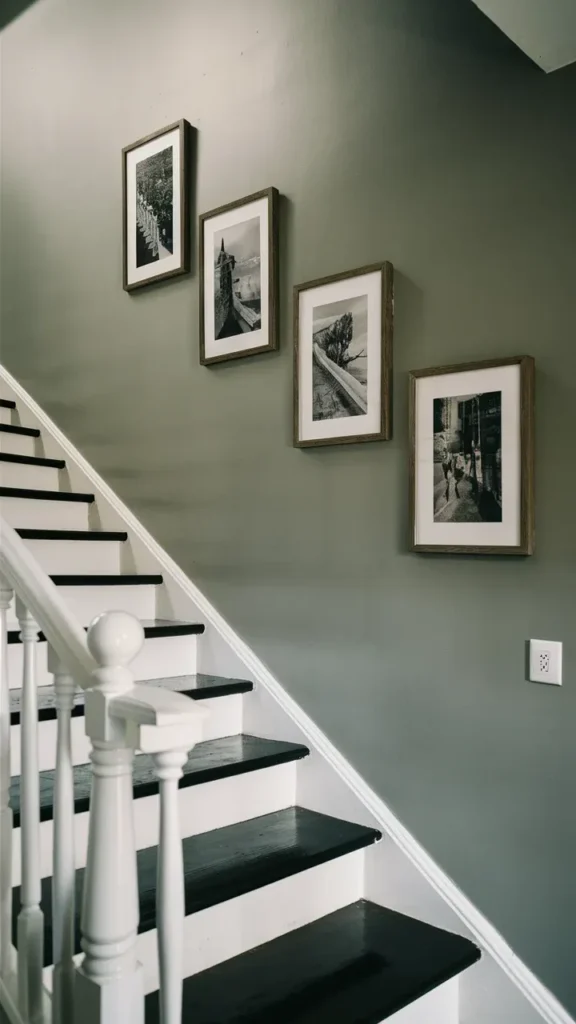
Navy, forest green, charcoal, and deep terracotta look stunning on stair walls, especially with white trim. Benjamin Moore points out that a bold, dark color adds drama and can turn the staircase into a centerpiece. It also makes framed photos pop.
If you follow Vastu, Berger Paints suggests Vastu-approved colours for staircases so energy flows well through the home. Soft yellows, creams, and earthy tones are popular choices.
A quick test. Paint a two-foot sample patch near the bottom and another near the top. Look at both at 9 a.m., noon, and 7 p.m. You’ll be surprised how much the color shifts. It’s a small step that saves you from buying five gallons of the wrong shade.
Hallway and Stairs Paint: Keep the Whole Path Flowing
Most staircases connect to a hallway, an entryway, or an upstairs landing. If your staircase wall paint is one color and the hallway is another, you get a hard visual break where they meet. Sometimes that works. More often it looks like two different houses stitched together.
When choosing hallway and stairs paint, try one of these approaches:
- One color throughout. The simplest option. It makes the whole path feel like one continuous space.
- Same family, different depth. Use a lighter version in the hallway and a slightly deeper one on the stairs.
- Neutral base with one feature wall. Keep the hallway plain and let the stair wall carry the color.
Where do you stop? End the color at an inside corner, never in the middle of a flat wall. Lines that stop at corners look planned. Lines in the middle of a wall look like you ran out of paint.
Want a proven staircase wall color combination? Berger suggests grey as a base with mustard accent blocks, or beige with an olive green feature wall. Both pair a calm color with a bolder one, which is the formula behind most good schemes.
Here’s a simple way to make staircase wall paint feel intentional: pick your main color from the adjoining room, then go one shade lighter or darker on the stairs. It keeps everything cohesive without looking matchy-matchy.
Stairway Accent Wall: Give One Wall the Spotlight
Sometimes the smartest move is not painting everything. A stairway accent wall gives you the drama with a fraction of the work.
The long wall running alongside your stairs is the ideal candidate. It’s big, it’s visible from several rooms, and it often faces the front door.
Here’s how to pull it off:
- Pick the longest uninterrupted wall. Skip walls with lots of doors or windows.
- Go at least two shades deeper than the surrounding walls. Anything closer looks like a mistake.
- Keep trim white or neutral. It frames the color and keeps edges crisp.
- Add something to look at. A gallery of frames, a long mirror, or a row of pendant lights turns a painted wall into a design moment.
The landing is another great spot. Benjamin Moore recommends a gallery wall, a statement mirror, or plants at the landing, and suggests using paint color to amplify the effect.
For a color block staircase, paint a tall rectangle or arch behind a bench or a piece of art. It’s less work than a whole wall and looks custom. Not sure about going bold? Pick a muted version of the color you love. Dusty green is easier to live with than forest green.
Two-Tone Staircase Wall Paint: Worth Trying?
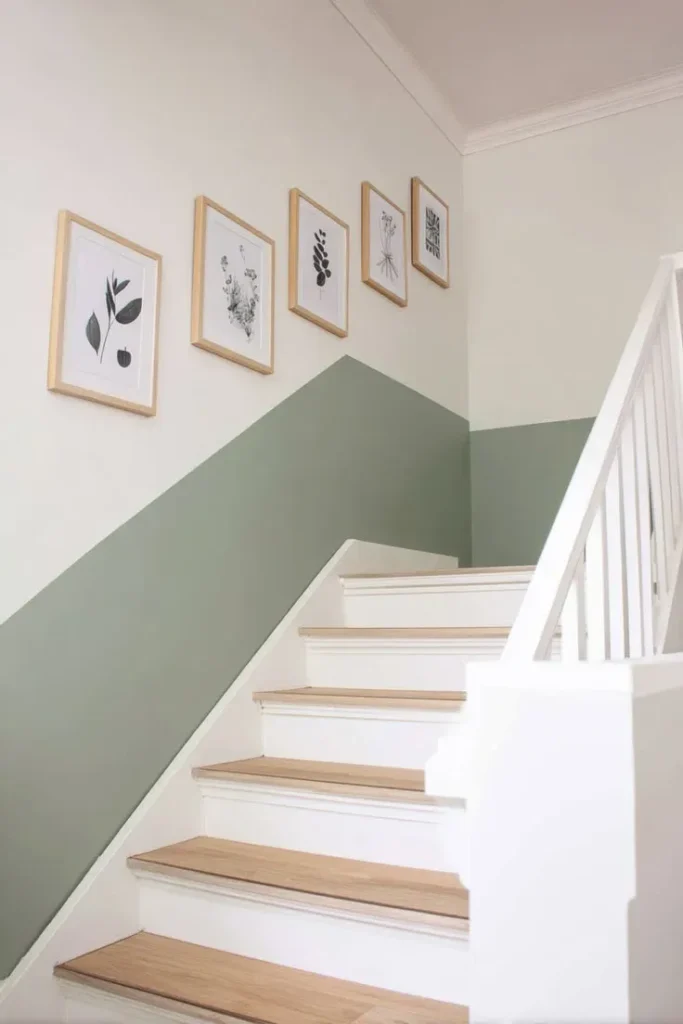
Two-tone walls used to mean a chair rail and a dated wallpaper border. Not anymore. Two-tone staircase wall paint is now one of the easiest ways to add depth to a stairwell.
Here are three styles worth knowing:
Horizontal split. Paint the lower third or half of the wall a darker color and the top a lighter one. Scuffs happen mostly at hip height and below, so the dark section hides them where they matter.
Diagonal, following the stairs. The dividing line runs parallel to the staircase. It looks striking, but the line has to be dead straight. Use a laser level or a chalk line.
Color block. A rectangle or arch behind art or a bench at the landing.
If you have kids or pets, go with the horizontal split. The darker bottom takes the abuse and the top stays bright.
One trick for crisp lines: press painter’s tape down firmly with a putty knife, then brush a thin coat of the base color along the edge first. Any bleed will match the wall underneath, so it disappears. It’s an old painter’s trick and it works every time.
Best Paint for Staircase Walls: Sheen and Washability
Now for what goes on the wall. Picking the best paint for staircase walls comes down to sheen and durability.
Which Sheen Should You Pick?
Most painters point to satin for stairwells. One painting company says satin holds up better to scuffs and hand marks in hallways and stairwells. But there’s a catch worth knowing.
Satin’s extra reflectivity can make patched spots and roller overlap stand out, especially under stairway lighting. Touch-ups can also dry to a slightly different sheen, so repairs catch the light. If your walls have dents or uneven texture, fix them first, or consider eggshell.
There’s also a newer option. Premium paint makers have engineered matte finishes that handle handprints and scuffs better than older formulas. If you love the soft look of matte, a scrubbable premium line may work.
Here’s a quick guide:
- Flat or matte: Best for ceilings and low-traffic walls. Choose a scrubbable formula for stairs.
- Eggshell: A gentle glow that hides flaws better than satin.
- Satin: The durable, easy-to-clean workhorse for busy walls.
- Semi-gloss: Save it for trim and handrails.
Why Washable Paint for Stairwells Pays Off
Washable paint for stairwells saves you from repainting every couple of years. Look for labels like “scrubbable,” “stain-resistant,” or “scuff-resistant.” One 2026 cost guide says premium lines earn their $75 to $116 per gallon in stairwells through scrubbability and stain release. That’s steep, but a tougher formula means fewer touch-ups.
Paint isn’t one-size-fits-all on a staircase. One paint retailer recommends floor paint for treads, scuff-resistant paint for risers and walls, and durable alkyd paint for handrails and balusters. Use scuff-resistant staircase wall paint on the walls, and a harder enamel on the trim and rails.
Water-based (acrylic or latex) is the modern default. It dries fast, smells less, and cleans up with soap and water.
How to Paint High Stairwell Walls, Step by Step
This is the part that scares people. Break it into small steps and it’s manageable. Here’s how to paint a staircase wall safely.
Step 1: Decide If It’s a DIY Job
Be honest about your comfort with heights. Benjamin Moore advises hiring a professional if the wall or ceiling is over ten feet or you’re uneasy on ladders. If you do go DIY, use a multi-position ladder with leg levelers, not a stepladder balanced on the stairs.
Step 2: Prep the Wall
Wipe walls with warm water and mild detergent. Fill nail holes, sand smooth, and vacuum the dust. Cover the stairs with canvas drop cloths, not plastic. Plastic is slippery.
Living in a pre-1978 home? Test for lead before sanding.
Step 3: Tape and Prime
Tape the trim, the stringer, and the switches. Prime if you’re covering stains or going from dark to light. Otherwise, a paint-and-primer product works, and previously painted walls generally don’t need prime.
Step 4: Cut In at the Top
Use an extension pole for the ceiling line. One pro suggests brushing about three inches down from the ceiling first, so the roller never has to get too close.
Here’s a shortcut. One homeowner painted the wall the same color as the ceiling, which meant trimming the top edge didn’t have to be as careful. If you’re going light, it’s worth considering.
Step 5: Roll from Top to Bottom
Attach a roller to an extension pole and work in three-foot vertical strips. Homes & Gardens notes that starting at the top and working down means you’re not resting a ladder or pole on wet paint. Also, painting top to bottom lets you cover any drips as you go.
For the ceiling, Benjamin Moore recommends a dead-flat ceiling paint that hides imperfections and reduces lap marks and splatter.
Step 6: Second Coat and Cleanup
Wait the time on the can, usually two to four hours, then apply a second coat. Pull the tape while the paint is slightly tacky for the cleanest line.
Plan a full weekend if you’re going solo. One day for prep and priming, one for paint. And don’t paint alone on a ladder. Have someone nearby to steady it and hand you tools.
What Does It Cost in 2026?
Costs vary a lot by region and height, so treat these as ranges.
Angi’s 2026 data puts professional stairway wall painting at $350 to $1,125, with most people paying about $500. Another guide is higher. Improovy lists $780 to $1,540 for stairway walls and says lofted or high ceilings can add 20% to 40%.
Doing it yourself changes the math. A gallon covers about 400 square feet in one coat, and prices run from $15 to $60 per gallon. Most stairwells need one to two gallons. Add primer, tape, and drop cloths, and a DIY job often costs a fraction of a pro’s quote.
Old home? Lead-safe work in a pre-1978 house can add $250 to $750. Budget for that before you pick up a sander.
Common Mistakes to Avoid
Even careful DIYers slip up on stair walls. Watch for these:
- Skipping the sample patch. That perfect gray can turn purple in your lighting.
- Rushing the tape. Sloppy edges are almost impossible to fix later.
- Choosing flat paint for high-traffic areas. It looks lovely for two weeks, then shows every mark.
- Ignoring trim and ceiling. Fresh walls next to yellowed trim make everything look older.
- Balancing a ladder on the stairs. Use a leveling ladder or rent a platform.
FAQs: Staircase Wall Paint
1. What is the best finish for stair walls?
Satin is the most common pick because it resists scuffs and wipes clean. If your walls have flaws, eggshell hides them better. Premium scrubbable matte is a newer option. Whichever you choose, sand and fill first, since higher sheens show every dent.
2. How much does it cost to paint stairway walls?
Professional quotes in 2026 typically run from a few hundred dollars to about $1,500, depending on height and region. DIY paint alone is often $15 to $60 per gallon, and most stairwells need one or two gallons plus supplies.
3. Should the ceiling match the walls?
It can. Painting both the same color makes the space feel cozy and makes cutting in easier at the top. For a taller, airier look, keep the ceiling white. Use a flat ceiling paint either way.
4. How long does staircase wall paint last?
A quality staircase wall paint in a scrubbable satin or eggshell usually lasts five to ten years, depending on traffic and cleaning habits. Kids, pets, and direct sun shorten that. Wipe marks gently and touch up small spots as they appear.
5. Do I need primer on stair walls?
Not always. If you’re repainting a similar color over clean, sound walls, a paint-and-primer works. Use a separate primer when covering stains, dark colors, bare drywall, or patched spots for even coverage.
Ready to Start? Here’s Your Next Move
Painting a stairwell doesn’t have to be a headache. Choose a color you love, pick a scrubbable finish, and prep like you mean it. The best staircase wall paint decision comes down to durability, lighting, and a little patience.
This weekend, grab two or three sample pots and brush them on the wall. Live with them for a few days and check them morning and night. That one step will save you from an expensive regret.
Once you’ve picked a winner, block out a full weekend and follow the steps above. You walk past that wall every day, so it’s worth doing right. If the height makes you nervous, get a quote from a pro. It costs less than most people expect, and you’ll sleep better.