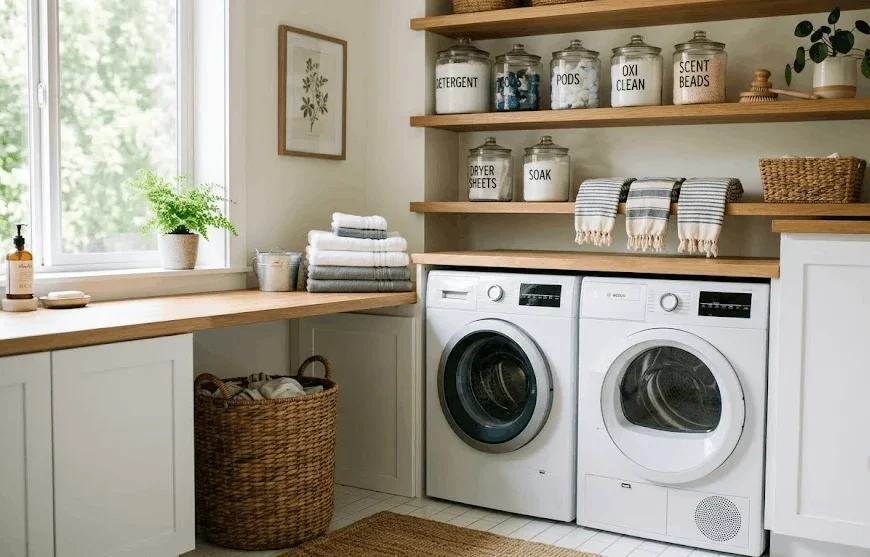
If your laundry room looks like a crime scene by Wednesday — detergent bottles knocked over, a mountain of mismatched socks, that one shirt that’s been “drying” for three days — you’re not alone. Most laundry rooms weren’t designed, they just happened. A washer and dryer got shoved into a closet or a corner, and nobody thought past that. That’s exactly why laundry room organization matters so much more than people give it credit for. Get the system right once, and you stop fighting the same battle every single week.
This isn’t about turning your laundry room into a Pinterest shoot. It’s about building a space that works with you instead of against you, no matter how small it is.
Why Laundry Room Organization Actually Saves You Time
Here’s something most people don’t think about: the average household does around 400 loads of laundry a year, and each one takes about 26 minutes of actual hands-on work — not counting the wash and dry cycles themselves. That’s sorting, loading, unloading, folding, and putting away. Add it up and Americans spend more than 62 hours a year just doing laundry.
What this means is that a disorganized laundry room doesn’t just look messy — it actively adds minutes to every single load. Hunting for the stain stick, digging through a junk drawer for dryer sheets, or walking to another room to grab hangers all eats into that time. Laundry room organization isn’t a nice-to-do project. It’s a direct trade for your time and sanity, and the payoff shows up every single wash day, not just once.
The good news is you don’t need a renovation to fix it. Most of what’s broken about a messy laundry room comes down to three things: layout, sorting, and storage. Fix those, and everything else tends to fall into place.
Small Laundry Room Layout: Work With What You’ve Got
Here’s why this matters first: no amount of cute bins will fix a room where you can’t actually move. A smart small laundry room layout starts with clearance, not decoration.
Before you buy a single organizer, check how your doors swing — the room door, the appliance doors, and any cabinet doors you’re planning to add. A front-loading washer with a door that bangs into a cabinet is a daily annoyance you’ll regret. Designers call this the most overlooked mistake in laundry spaces, and it’s an easy one to avoid if you measure first.
A few layout moves that consistently work in tight rooms:
- Stack your washer and dryer if you have the ceiling height. It frees up an entire wall for shelving or a cabinet.
- Think in zones, even in a closet: a spot for sorting, a spot for supplies, and a spot for folding, even if that “spot” is just a fold-down shelf.
- Leave a walking path. If you can’t stand comfortably between the machines and the door, storage should go up, not out.
Once the layout supports how you move through the room, the rest of your laundry room organization plan gets a lot easier to build.
Build a Laundry Sorting System That Actually Works
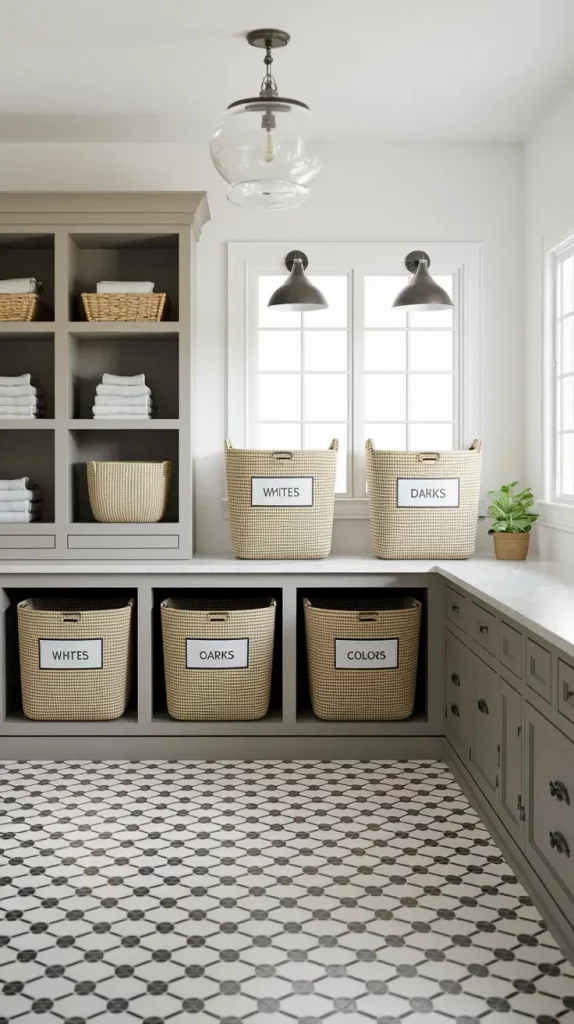
A pile on the floor is not a system — it’s just a pile that happens to be sorted by whoever gets around to it. A real laundry sorting system removes the decision-making from laundry day entirely.
The simplest version: three bins or bags for whites, darks, and colors, placed somewhere clothes naturally end up, like a bedroom hamper or a hallway nook, not just the laundry room itself. If you have kids, giving each person their own labeled bin for clean laundry (instead of one giant basket) cuts down on the “whose sock is this” arguments and saves you from re-sorting clean clothes twice.
For small spaces, a rolling three-tier cart with wheels works better than fixed bins — you can tuck it against a wall when it’s not laundry day. If you deal with a lot of delicates or dry-clean-only items, add a fourth, smaller container just for those, so they never end up shrunk in a regular wash.
The goal of any sorting system is simple: by the time laundry reaches the machine, no decisions are left to make. That’s the whole point of good laundry room organization — removing friction, not adding steps.Once the sorting happens automatically, laundry day stops feeling like a task you have to think about.
Kids and other family members can follow the system too, as long as the bins are labeled clearly and placed somewhere easy to reach. It also means you can start a load the moment you have five free minutes, instead of digging through a mixed pile first. Over time, this small shift is what turns laundry from a dreaded chore into just another quick, automatic part of the day.
Utility Room Shelving and Vertical Storage Ideas
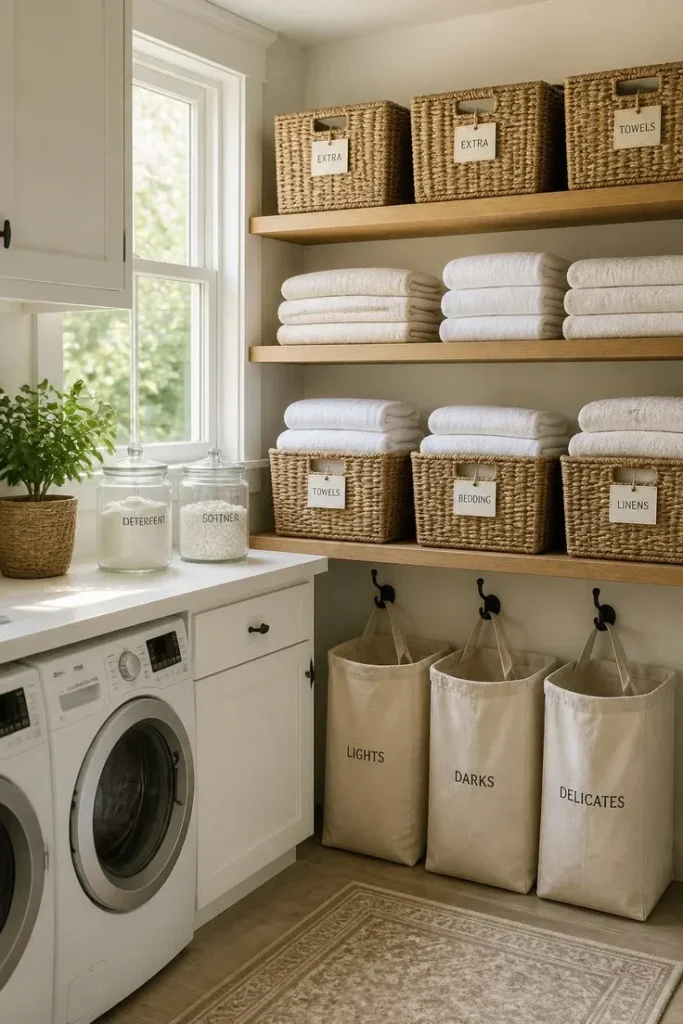
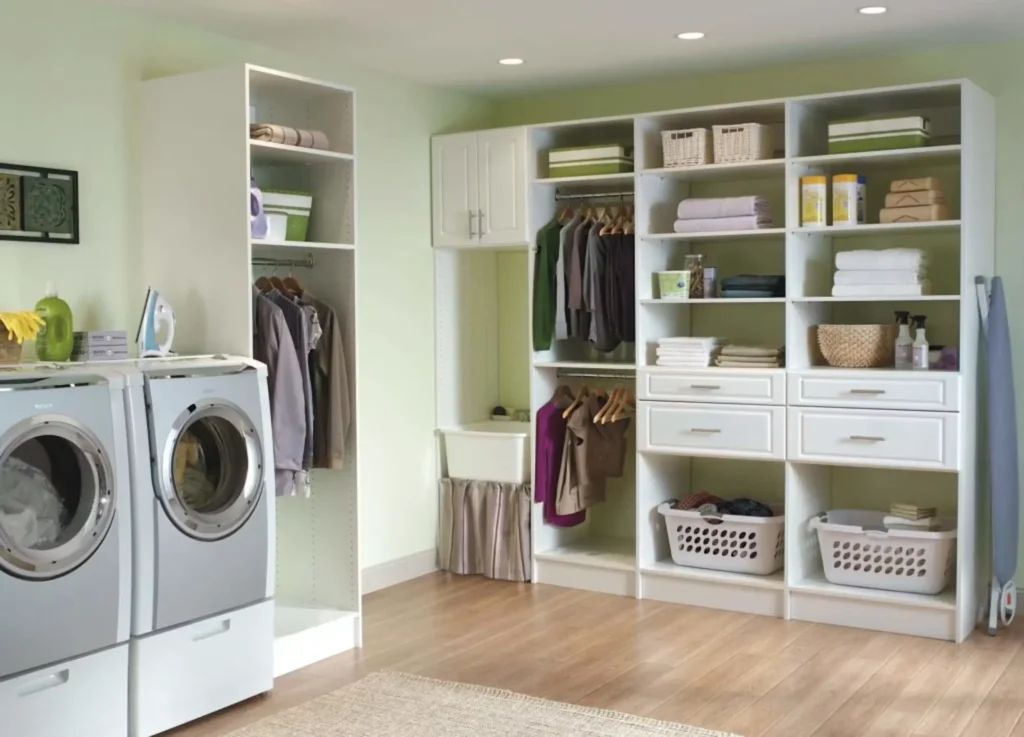
If your laundry room is small — and most are — the walls are your best friend. Utility room shelving above the washer and dryer keeps detergent, dryer sheets, and stain removers within arm’s reach without eating up any floor space.
A few spots people consistently forget:
- The gap between machines and the wall. Slim rolling carts (sometimes just a few inches wide) fit perfectly here and hold detergent, dryer balls, or cleaning supplies.
- The space above the door. A single floating shelf here is great for rarely-used items like an iron or a first-aid kit.
- The gap between upper cabinets and the ceiling. This is genuinely wasted space in most homes and can hold bulk paper towels or extra detergent.
One thing worth knowing before you commit to open shelving everywhere: professional organizers actually warn against it. Open shelves look great in photos, but in daily use they collect clutter fast, and every bottle becomes visible clutter the moment it’s used. A mix of a few open shelves for daily-use items, plus closed storage for everything else, tends to hold up better than an all-open setup.
Laundry Room Cabinets vs. Open Shelving
This is one of the bigger decisions in any laundry room organization plan, and there’s no single right answer — it depends on how the room gets used.
Laundry room cabinets win if you want a clean, hidden look and have kids or pets who shouldn’t have easy access to cleaning chemicals. Upper cabinets that go all the way to the ceiling also add real storage without taking up more floor space — you just need a step stool for the top shelf.
Open shelving wins if you use certain items daily and don’t want to keep opening doors, or if you’re renting and can’t install permanent cabinetry. A middle-ground option that works well in small spaces: closed cabinets for chemicals and bulk supplies, with one open shelf for the items you actually grab every time you do a load.
Whichever you choose, labeling containers makes a bigger difference than the storage type itself — anyone in the house should be able to find what they need without asking.
Detergent Storage Solutions and the Products Zone
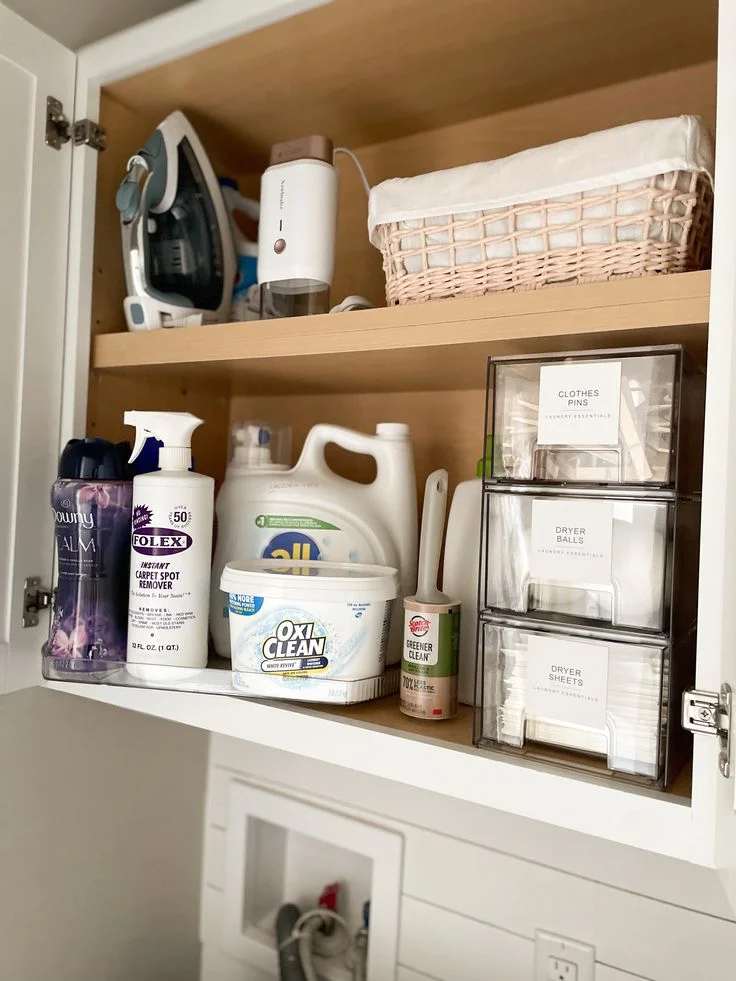
Detergent, stain sticks, fabric softener, dryer sheets, and whatever DIY spray you swear by — these products multiply fast if they don’t have a dedicated home. Good detergent storage solutions usually come down to containment, not more shelves.
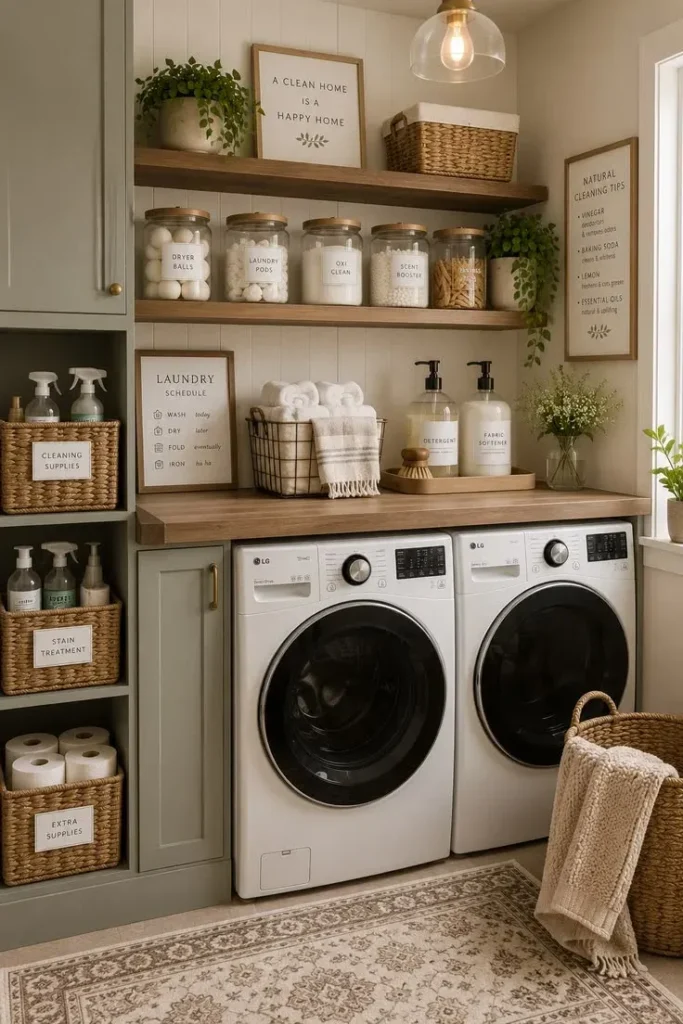
Decanting liquid detergent into a labeled pump dispenser keeps counters and shelves from turning sticky, and it looks a lot more intentional than the original jug. A small caddy or turntable (a lazy Susan works surprisingly well here) keeps smaller bottles from tipping over every time you reach for one. If you’re short on shelf space, a slim rolling cart between the washer and dryer can hold your entire “wash day kit” in one place.
The rule that actually sticks long-term: one designated spot per product category. Stain treatment goes in the same spot every time. Detergent goes in the same spot every time. That consistency is what keeps a laundry room from sliding back into chaos two weeks after you organize it.This is honestly the backbone of good laundry room organization — habits matter more than the containers you buy.
It doesn’t matter how nice your bins look if you’re not putting things back in the same place every time. Labeling each spot removes the guesswork, so even other people in the house can follow the system without asking you where things go. Once that consistency becomes automatic, the whole room basically maintains itself with almost no extra effort.
Set Up a Folding Station in Your Laundry Room
A shocking number of laundry rooms have zero counter space, which means clean clothes end up dumped on a bed, a couch, or the floor to fold. A folding station in the laundry room, even a small one, changes that completely.
If you don’t have room for a full counter, a fold-down shelf mounted to the wall works well and tucks away when you’re not using it. A butcher block placed over a front-loading washer and dryer (they’re the same height, so this works nicely) instantly creates a folding surface without extra construction. Even a simple table that slides into the room on laundry day is better than nothing.
Pair the folding station with a hanging bar nearby — mounted between cabinets, on the back of the door, or as a tension rod above the machines — so wrinkle-prone items can go straight from dryer to hanger. That one addition alone cuts down on ironing more than almost anything else in this list.
Laundry Closet Makeover Ideas for Small Spaces
Not everyone has a laundry room — plenty of people are working with a laundry closet instead, and that comes with its own challenges. A laundry closet makeover doesn’t need a full renovation to make a real difference.
Start with what’s inside the doors: an over-the-door organizer is one of the best small-space fixes available, and it holds everything from spray bottles to lint rollers without taking up an inch of floor space. If your washer and dryer are stacked, add a slim vertical shelving unit beside them — even six inches of width can hold a surprising amount.
Swapping solid doors for perforated or louvered panels helps with ventilation and adds a little visual interest to what’s usually the most boring closet in the house. And if the closet doesn’t have a door at all, a simple curtain on a tension rod hides the mess instantly and costs almost nothing.
This kind of small swap is a great example of laundry room organization done right without spending much at all. You don’t need a full remodel to make the space feel more intentional — sometimes it’s just about softening the transition between rooms.
A curtain also gives you flexibility that a solid door doesn’t, since you can tie it back on laundry day for easier access. And if you ever want to change the look later, swapping fabric is a lot cheaper and easier than swapping out doors or hardware.
Mudroom Laundry Combo Tips
If your laundry room doubles as a mudroom — which is increasingly common in newer homes — the organization challenge doubles too. You’re not just managing detergent and socks; you’re managing shoes, coats, backpacks, and dog leashes in the same square footage.
The fix is strict zoning. Keep laundry supplies on one wall or in one cabinet run, and keep mudroom items (hooks, shoe storage, bins) on a separate wall entirely. Bench seating with storage underneath is a great multi-tasker here — it gives people a place to sit while pulling off boots, and the space underneath can hold extra laundry supplies or off-season items. A shared space works fine as long as each “job” the room does has its own clearly defined zone, instead of everything blending into one messy catch-all.
Laundry Room Decluttering Tips to Keep It That Way
Every laundry room organization system eventually gets tested by real life — half-used dryer sheet boxes, mismatched socks nobody claims, and the growing collection of “maybe I’ll use this someday” cleaning products. A few laundry room decluttering tips make a real difference here.
Keep a donation bin and a lost-and-found bin right in the room. It sounds small, but it stops random items from cluttering shelves indefinitely, since they have a clear next step instead of sitting there. Do a quick five-minute reset once a month: toss empty bottles, check expiration dates on stain removers, and consolidate half-full containers. And be honest about what you actually use — if a gadget or product has sat untouched for six months, it’s taking up space that could go to something you reach for weekly.
This is really the maintenance side of laundry room organization, and it’s the part most people skip. A system only works as long as you keep resetting it — otherwise even the best setup slowly drifts back into clutter. Set a recurring reminder on your phone so the monthly check never gets forgotten in the shuffle. Over time, this small habit is what separates a laundry room that stays organized from one that just looks good for a week.
FAQs: Laundry Room Organization
Do I need a big budget to organize a small laundry room?
No. A tension rod, a few labeled bins, and an over-the-door organizer cost very little and solve most small-space problems. Save bigger purchases, like cabinets, for later once you know what you actually need.
What’s the best laundry sorting system for a family of four?
A three-bin system for whites, darks, and colors, plus individual bins for clean laundry per family member, works well for most households and cuts down on re-sorting clean clothes.
Is open shelving a good idea for laundry room organization?
It works well for daily-use items but tends to collect clutter over time. A mix of a couple of open shelves plus closed cabinets usually holds up better long-term than an all-open setup.
How do I organize a laundry closet with no extra space?
Use the door. An over-the-door organizer, a slim rolling cart, and vertical wall-mounted storage make a real difference without needing any floor space at all.
Where should I store detergent in a small laundry room?
Decant it into a labeled pump dispenser and keep it on a shelf or in a slim cart directly beside the washer, so it’s always within reach on wash day.
Conclusion
None of this requires a full renovation or a big budget. Good laundry room organization comes down to a handful of decisions: a layout that lets you move, a sorting system that removes guesswork, storage that matches how you actually use the space, and a folding spot so clean clothes don’t end up on the bed. Start with one section of this list — maybe just the shelving above your machines, or a three-bin sorter — and build from there.
Pick one thing from this list and do it this weekend. Even one small change, like adding a labeled detergent caddy or a hanging bar, is enough to make wash day feel less like a chore and more like something you can actually stay ahead of.