If your small laundry room feels more like an obstacle course than a functional space, you’re not imagining it. Between the washer, dryer, detergent bottles, and that one basket that never gets folded, tiny laundry spaces fill up fast. The good news? A small laundry room doesn’t have to feel cramped or chaotic. With the right layout and a few smart storage choices, even a closet-sized space can work harder than a room twice its size. Here’s what actually works, based on what’s trending in 2026 and what real homeowners keep coming back to.
Why Every Small Laundry Room Needs a Real Plan
A small laundry room without a plan turns into a dumping ground within a month. That’s just how it goes — there’s no room for “figure it out later.” Every inch has to earn its keep.
Here’s why this matters more now than ever: laundry rooms have become a bigger deal to buyers than most people realize. A NAHB survey on what home buyers really want found that a laundry room ranked among the most-wanted home features, with 87% of buyers rating it essential or desirable — ahead of even an energy-efficient kitchen. That’s a strong signal that this “forgotten” room deserves real design attention, not just leftover space behind a door.
What this means for you: treat your small laundry room like a mini command center, not an afterthought. Start with a layout that accounts for washing, drying, folding, and storage — even if you only have a closet to work with. Even a single shelf placed at the right height can change how the whole room functions day to day. Think about the last time you actually used the space — where did you get stuck? That’s usually the first clue to what needs fixing.
Small tweaks, like moving the hamper closer to the door, often save more time than a full remodel ever would. You don’t need a big budget to make this work — you need a plan that matches how you actually move through the room. Once the flow makes sense, even the tightest space starts to feel like it was designed on purpose, not squeezed in as an afterthought.
Compact Laundry Room Ideas That Maximize Every Inch
When square footage is tight, compact laundry room ideas focus on one thing: going up instead of out. Floor space is limited, but walls and ceilings usually aren’t being used at all.
Here’s what tends to work best:
- Open shelving above the machines for detergent, dryer sheets, and stain remover.
- Wall-mounted drying racks that fold flat when not in use.
- Slim rolling carts that tuck into gaps beside the washer.
- Pegboards for hanging brooms, mops, and ironing boards.
For urban apartments especially, this vertical-first thinking is showing up everywhere. Design trends this year are leaning into “invisible laundry” setups that conceal appliances behind pocket doors in hallways and kitchens, alongside multifunctional command centers that merge laundry with mudrooms and even pet-washing stations.
You don’t need a mudroom combo to borrow the idea — just think about what else that space could quietly do for you. A small laundry room next to a bedroom could double as a spot for hanging tomorrow’s outfit or drying delicates overnight. Even a narrow hallway laundry setup can borrow a hook or two for coats without feeling like it’s stealing space from its main job.
The point isn’t to cram in extra functions just because you can — it’s to notice what’s already happening near that space and let the design support it. A small laundry room works best when it stops feeling like a separate chore zone and starts feeling like part of the home’s natural flow.
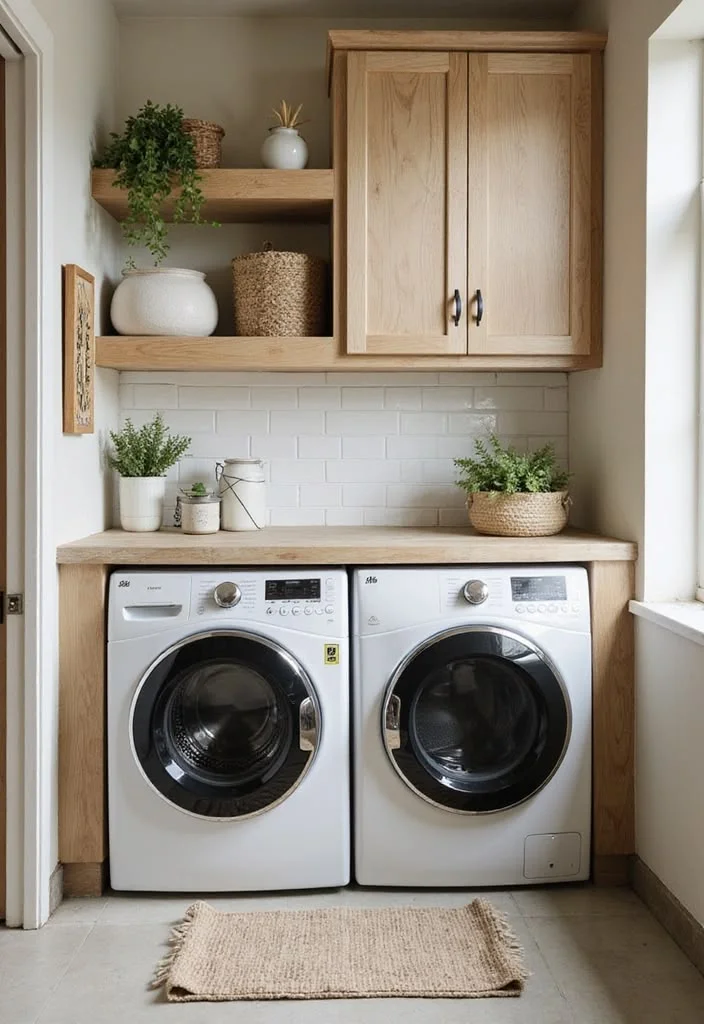
Stackable Washer and Dryer: The Single Best Upgrade for Tight Spaces
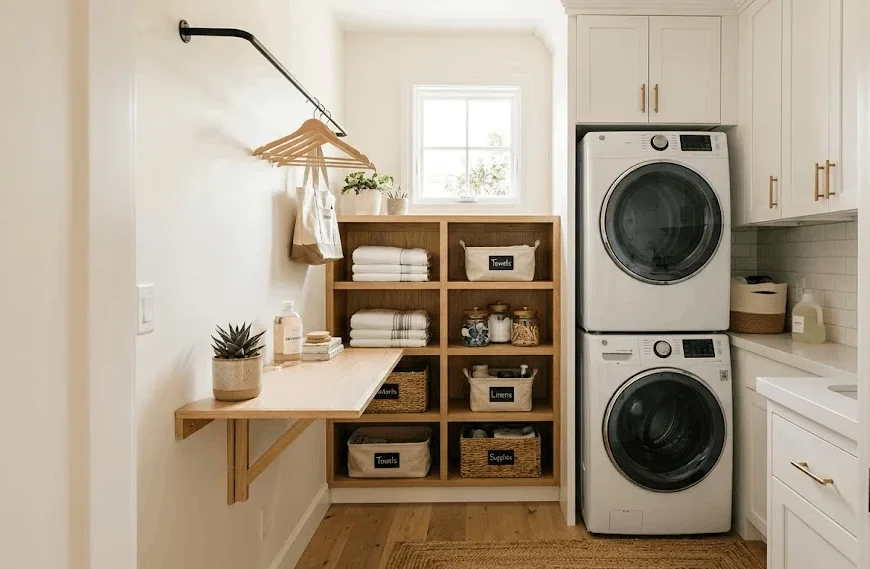
If there’s one change that transforms a small laundry room faster than anything else, it’s switching to a stackable washer and dryer setup. Side-by-side units eat up double the floor space for zero extra benefit in a tight room.
Stacking frees up an entire wall’s worth of room — space you can use for a counter, shelving, or even a small folding station. It’s especially useful in:
- Hallway closets.
- Under-stair nooks.
- Apartment utility closets.
- Bedroom-adjacent laundry setups.
Interestingly, some designers are predicting even more of this in the near future. One designer, Libby Baker Speight of Baker Design Co., expects laundry rooms to trend slightly smaller overall, with homeowners opting for multiple smaller laundry setups instead of one large room — for example, a main laundry room downstairs paired with a small stacked-unit closet near the bedrooms for everyday use.
That’s a good reminder that “small” isn’t a compromise anymore — it’s becoming a deliberate choice. It also means builders are starting to design homes with this flexibility baked in from the start, rather than treating laundry as one fixed room. For homeowners, that shift opens up options that didn’t feel practical before — like turning an unused hallway closet into a second laundry spot.
A small laundry room tucked near the bedrooms cuts down on the walk back and forth with baskets of clothes, which sounds minor until you’re the one doing it daily. This approach also makes sense for multi-story homes, where hauling laundry up and down stairs adds up fast over a week. As this trend grows, expect to see more homes built with two smaller laundry setups instead of one large central room — proof that a small laundry room isn’t a fallback, it’s often the smarter choice.
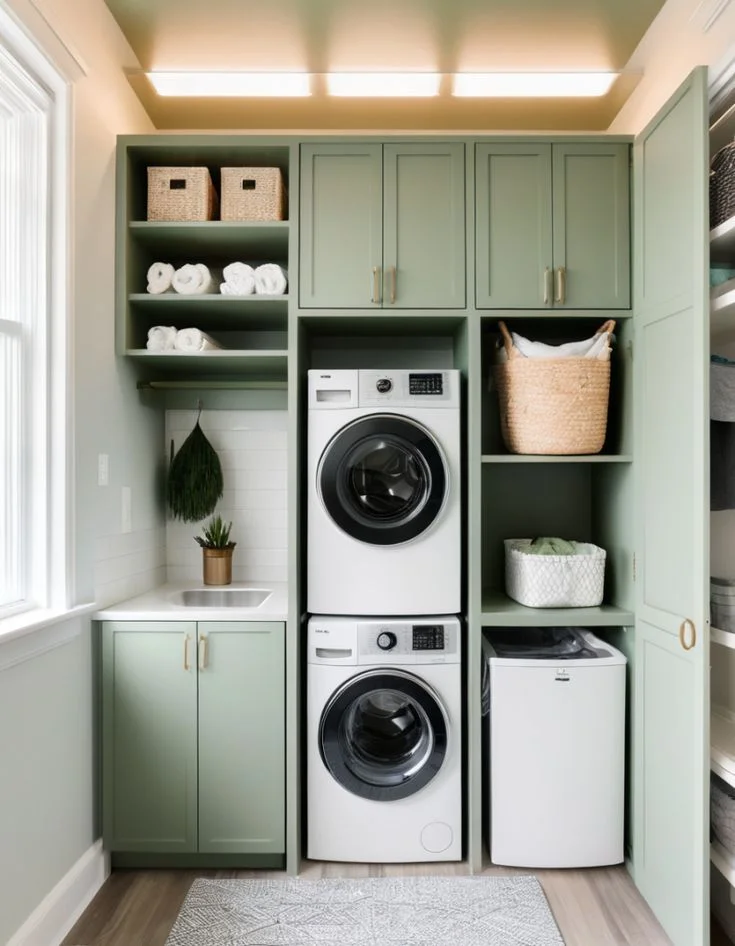
Small Laundry Room Storage Solutions People Actually Use
Storage is where most small spaces fall apart. You either have too little of it, or what you do have is the wrong shape for the room. Good small laundry room storage solutions aren’t about buying more bins — they’re about matching storage to how you actually move through the space.
A few ideas worth stealing:
- Pull-out wire baskets for sorting darks, lights, and delicates.
- Narrow rolling carts (the kind sold for kitchens) that slide beside the dryer.
- Over-the-door organizers for spray bottles and lint rollers.
- Labeled bins so guests and kids know where things go back.
What this means practically: don’t buy storage first. Walk through your actual laundry routine — sorting, washing, drying, folding — and only add storage that supports a step you already do. It sounds obvious, but most people buy bins and baskets before they even know where the bottleneck is.
Spend a week just noticing where clothes pile up or where you keep setting things down out of habit. That one spot is usually telling you exactly what kind of storage you actually need. A small laundry room has zero room for guesswork, so every basket or shelf you add should solve a problem you’ve actually seen happen, not one you’re imagining might come up.
Laundry Closet Organization for Zero-Room Setups
If you’re working with an actual closet rather than a dedicated room, laundry closet organization is its own challenge. There’s no floor space to spare, so everything has to live on the walls or above the machines.
Here’s a simple approach that works in almost any closet:
Use the Space Above the Machines
Install a shelf or shallow cabinet directly above the washer and dryer. This is prime real estate that most people leave empty. It’s perfect for detergent, dryer balls, and stain sticks.
Add a Tension Rod for Hang-Drying
A basic tension rod mounted just inside the closet door gives you an instant hang-drying spot without taking up any floor space.
Keep the Door Itself in Play
An over-the-door organizer or hooks on the inside of the closet door can hold ironing boards, spray bottles, or a small trash bin.
Space-Saving Laundry Room Design Choices That Make a Small Room Feel Bigger
Beyond storage, the actual design choices you make matter more in a small laundry room than almost anywhere else in the house. Good space-saving laundry room design leans on light colors, clean lines, and materials that don’t visually clutter the room.
Designers keep pointing to the same tricks:
- Light or white cabinetry to bounce light around and make the room feel larger.
- Matte finishes instead of glossy ones, which hide fingerprints and water spots.
- A single accent wall instead of an all-over pattern, to avoid visual overload.
A minimalist white-and-wood combination has become one of the most popular directions for small laundry rooms this year, since white cabinetry makes the room look larger and brighter while natural wood shelving adds warmth without adding visual clutter. It’s a simple formula, but it works because it doesn’t fight the room’s size — it works with it.
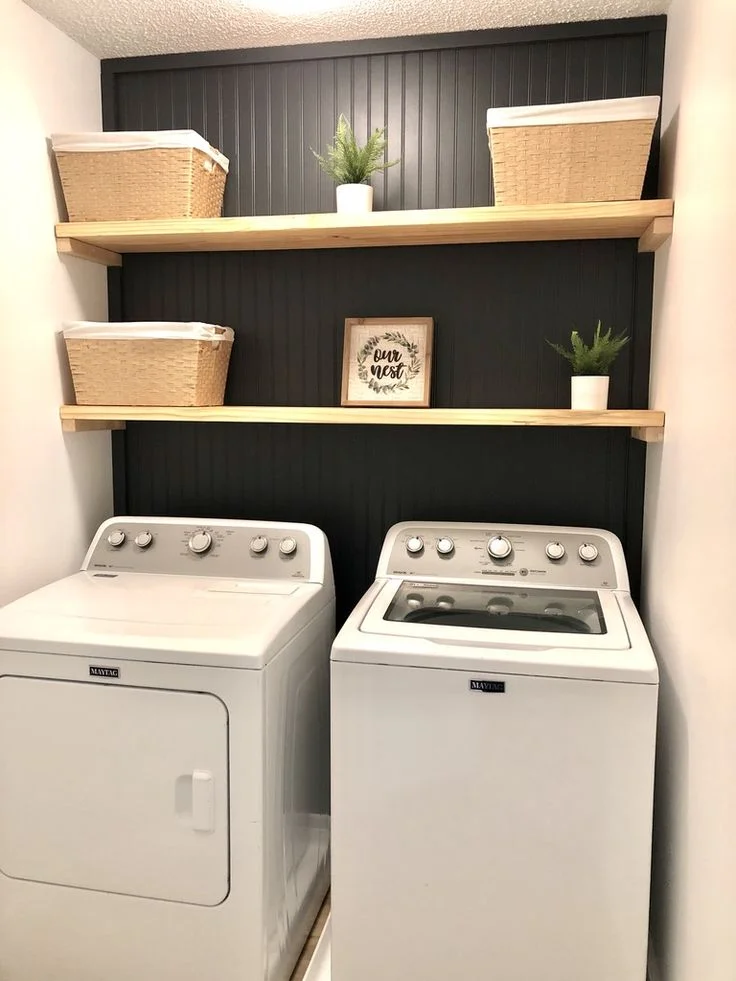
Small Utility Room Layout: Where to Put Everything
Getting the small utility room layout right comes down to sequence. Think about the order you actually use the room: dump clothes, wash, dry, fold, put away. Your layout should follow that same flow.
A workable order for a tight space looks like this:
- Hamper or sorting station near the entrance.
- Washer and dryer (stacked if possible) along the back wall.
- A narrow counter or fold-down shelf beside the dryer.
- Storage above and below for supplies.
- A hook or small rod near the door for hang-drying.
If you only remember one thing from this section: don’t let the layout fight the workflow. A pretty room that makes you backtrack three times to fold a towel isn’t actually saving you space — it’s just moving the frustration somewhere else.
A good test is to physically walk through your routine before committing to a layout — you’ll spot the awkward steps fast. Function should always win over form when the two are in conflict in a tight space.
Laundry Room Shelving Ideas That Don’t Eat Floor Space
Floating shelves are doing a lot of heavy lifting in small spaces right now, and for good reason. Laundry room shelving ideas that skip cabinets in favor of open shelves tend to make tight rooms feel more open, not less.
A few configurations that work well:
- Floating shelves above the folding counter, spaced 10–12 inches apart.
- A single long shelf that spans the width of the room, holding baskets instead of loose items.
- Corner shelving in oddly-shaped rooms where a full cabinet won’t fit.
The tradeoff is obvious — open shelves show clutter more than closed cabinets do. The fix is simple: use matching baskets or bins on the shelves so everything looks intentional, even if what’s inside is a mess.
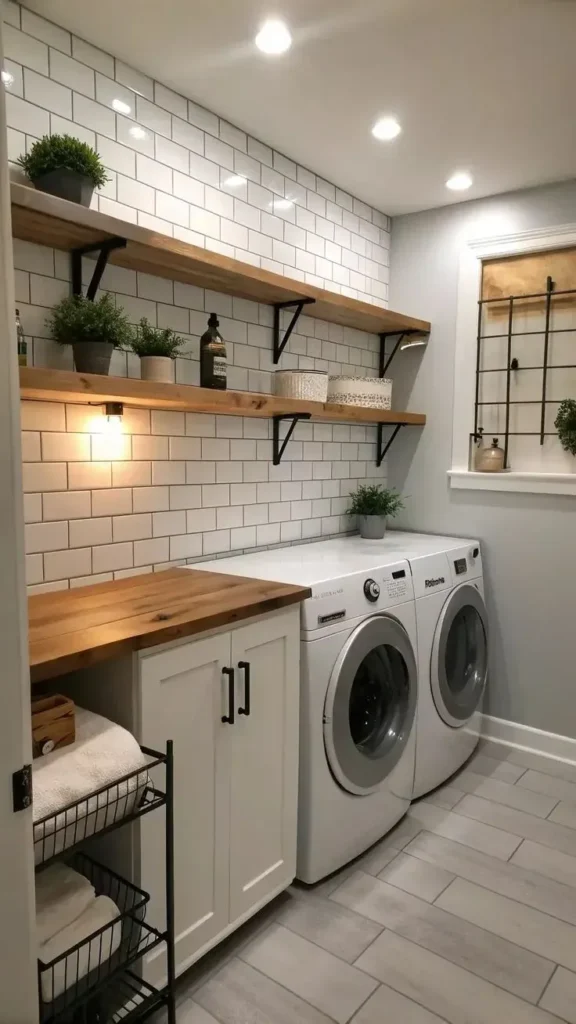
Tiny Laundry Nook Ideas for Apartments and Rentals
Not everyone has a laundry room at all — plenty of people are working with a tiny laundry nook tucked into a hallway or kitchen corner. The good news is that renters and apartment dwellers have more options than they think.
For a nook setup:
- A rolling cart with a fold-out top can double as a folding surface.
- Tension-mounted curtain rods hide the whole setup behind a curtain when not in use.
- Portable drying racks that lean flat against the wall save space when not drying anything.
This kind of setup proves that a small laundry room doesn’t need four walls to function well. Even a 3-foot-wide nook can handle a full laundry routine if it’s organized right. What matters more than square footage is whether every step — sorting, washing, drying, folding — has a designated spot, even a tiny one.
A nook with a fold-down shelf and a rolling cart can outperform a larger room that’s poorly laid out. This is especially good news for renters, who often can’t knock down walls or add square footage even if they wanted to. A small laundry room proves, again and again, that smart organization beats extra space almost every time.
Laundry Room Cabinet Solutions Worth the Investment
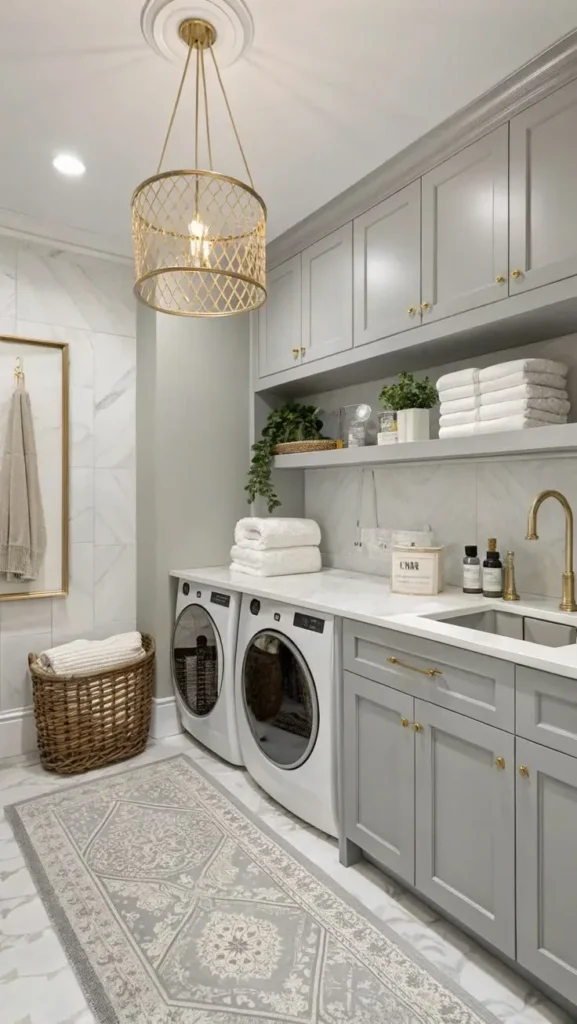
If you’re going to spend money anywhere in a small laundry room, cabinets are usually where it pays off. Good laundry room cabinet solutions don’t just store things — they visually clean up the whole room by hiding clutter behind doors.
Look for:
- Shallow upper cabinets (12 inches deep or less) that don’t crowd the room.
- A cabinet with a built-in hamper pull-out for dirty clothes.
- Matching cabinet fronts on appliances for a seamless, hidden-appliance look.
That hidden-appliance trend isn’t just aesthetic preference — it’s becoming a real design direction. Designers are increasingly tucking washer and dryer units behind cabinet paneling to create a more seamless look, rather than leaving the appliances as the visual focus of the room. In a small space, this matters even more, since visible appliances tend to make a tight room feel smaller and more utilitarian than it needs to.
Compact Washer Dryer Combo Units: Are They Worth It?
For the smallest of spaces, a compact washer dryer combo — a single unit that washes and dries in one drum — might be the only realistic option. These units are smaller than a standard side-by-side setup and don’t require stacking or venting in some cases.
The upside: they fit almost anywhere, including closets barely wider than the unit itself. The downside: cycle times are longer, and capacity is smaller than a traditional set. For a single person or couple doing smaller loads, that tradeoff is usually worth it. For a family of four doing laundry daily, it might feel limiting fast.
If you’re on the fence, ask yourself how often you actually do large loads. If it’s rare, a combo unit might be the smartest space-saving decision you make for your small laundry room.
FAQs: Small Laundry Room
1. What’s the best layout for a small laundry room?
Follow your actual routine: sorting near the entrance, washer/dryer along the back wall, and a small counter or shelf for folding. Keep storage above and below the machines.
2. Should I stack my washer and dryer in a small space?
Yes, if ceiling height allows. Stacking frees up an entire wall for storage or a folding counter, which is usually the biggest win in a tight room.
3. What colors make a small laundry room look bigger?
White or light cabinetry paired with natural wood accents tends to work best. It reflects more light and avoids the visually heavy look of dark colors in a tight space.
4. Is a washer dryer combo unit a good idea for tiny spaces?
It can be, especially for singles or couples with smaller loads. Cycle times run longer and capacity is smaller, so it’s less ideal for daily family laundry.
5. How do I organize a laundry closet with no floor space?
Use the space above the machines for a shelf, add a tension rod for hang-drying, and use the inside of the closet door for hooks or an organizer.
Conclusion
A small laundry room isn’t a limitation — it’s a design challenge with a lot of good solutions already worked out by people who’ve been there. Whether you’re dealing with a closet, a nook, or an actual small room, the same principles apply: go vertical, match your storage to your routine, and don’t be afraid to hide what you don’t need to see.
Start small. Pick one idea from this list — maybe it’s finally stacking your washer and dryer, or adding a shelf above the machines — and try it this weekend before tackling the whole room at once.