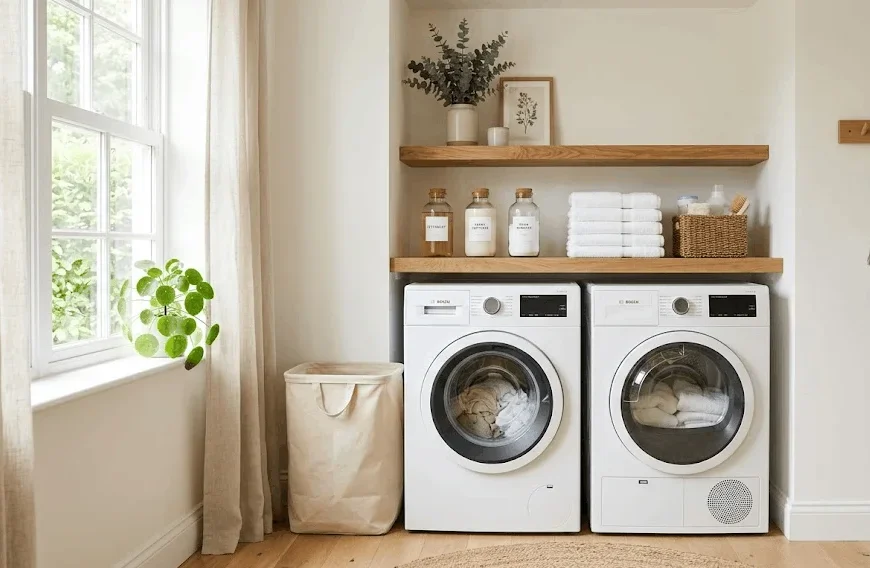
If your laundry room looks like a detergent bottle graveyard, you’re not alone. Between the stain remover, the dryer sheets, the mystery sock pile, and whatever else has landed on top of the washer, things get messy fast. That’s exactly why laundry shelf ideas keep popping up in every home renovation search—people just want a place to put stuff that isn’t the floor.
The good news? You don’t need a full remodel. A few well-placed shelves can turn a chaotic corner into a space that actually works. By the end of this, you’ll know which shelf styles fit tight spaces, how high to mount them, and what to avoid if you’re renting.
Why Laundry Shelf Ideas Matter More Than You Think
It’s easy to dismiss shelving as an afterthought, but laundry shelf ideas are often the difference between a room you dread and one you don’t mind walking into. Most laundry rooms are small—closets, really—so every inch of wall space matters.
Here’s why this matters: when there’s no dedicated storage, things pile up on top of the washer and dryer. That clutter isn’t just an eyesore. It makes doing laundry take longer because you’re constantly hunting for the stain stick or moving bottles out of the way. A little vertical storage fixes that instantly.
Think of it like your kitchen counter. Nobody wants everything sitting out—you want a cabinet or shelf for it. Your laundry room deserves the same treatment, even if it’s the size of a closet.The same logic applies here: without a plan, flat surfaces become dumping grounds.
That’s really what good laundry shelf ideas come down to—giving every bottle, basket, and bin a proper home instead of a random spot. Once everything has a place, the whole room feels calmer, even if the square footage hasn’t changed. It’s a small shift, but it’s the one that makes laundry shelf ideas worth trying in the first place.
Laundry Room Storage Solutions for Every Layout
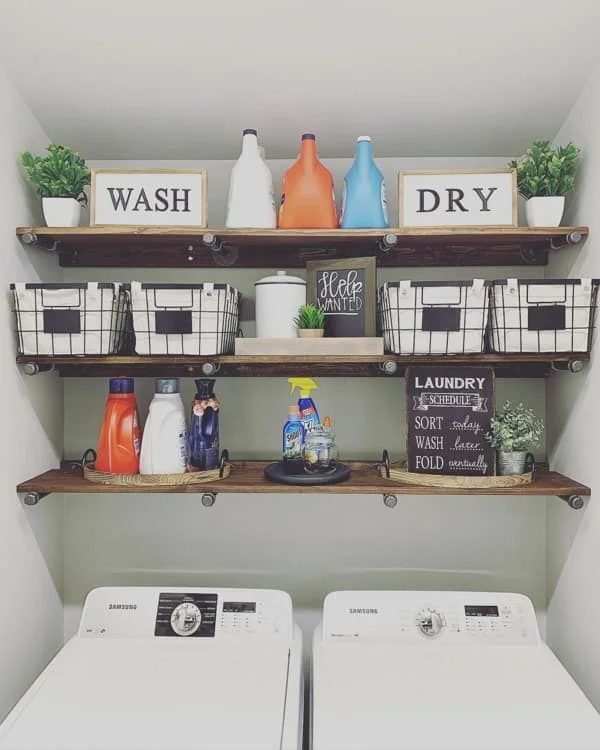
Not every laundry room looks the same, so laundry room storage solutions need to flex depending on what you’re working with.
If you have a full room: You’ve got options. Open shelving along an empty wall, a countertop with cabinets above, or even a rolling cart tucked beside the machines all work.
If you have a closet setup: Space is tighter, so go vertical. A narrow shelving unit that reaches the ceiling gives you way more storage than a single shelf ever could.
If your washer and dryer are stacked: You’ll want side shelving instead of anything overhead, since there’s no flat surface up top.
Whatever your layout, the goal is the same: get things off horizontal surfaces and onto the wall.That one shift changes how the whole room functions. Once your supplies aren’t piled on top of the machines, you actually have counter space to fold clothes or set down a hamper. It also makes cleaning easier, since there’s nothing to move before you wipe down a surface.
This is really the core idea behind most laundry shelf ideas that work long-term—they’re not about adding more stuff, they’re about giving what you already own a fixed spot. Try it in even one corner of the room, and you’ll notice the difference the next time you’re in there doing a load.
Above Washer and Dryer Storage: The Most Popular Fix
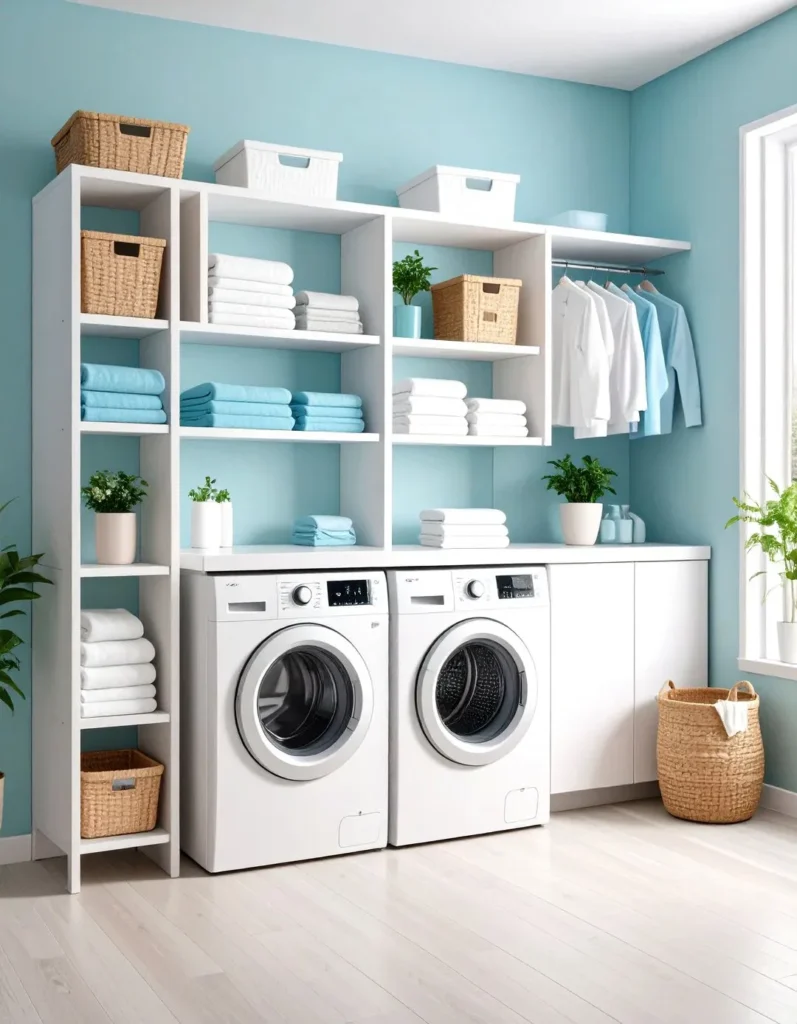
Ask anyone doing a laundry room refresh, and above washer and dryer storage is usually the first thing they add. It makes sense—that space is almost always empty, and it’s right where you need your supplies.
A single floating shelf mounted about 12-15 inches above the appliances gives you a spot for detergent, fabric softener, and a basket for miscellaneous items. If you want more capacity, stack two shelves with about 10 inches of clearance between them so tall bottles still fit.
One thing people forget: check the weight rating before you load it up. A basic wood shelf with hidden brackets typically holds 30-50 pounds, while heavier-duty units built for laundry rooms can handle up to 200 pounds—plenty for detergent jugs and storage bins.It’s an easy detail to skip when you’re excited about a new setup, but it’s the one that saves you from a shelf pulling out of the wall six months later.
If you’re storing anything heavy, like a stack of jumbo detergent jugs or a full laundry basket, go with the higher weight rating even if you don’t think you’ll need it. It’s always better to have extra capacity than to max out a shelf on day one. This is one of the small details that separates laundry shelf ideas that hold up over time from ones that end up as a Pinterest fail. A quick check of the label before you buy saves you the hassle of remounting everything later.
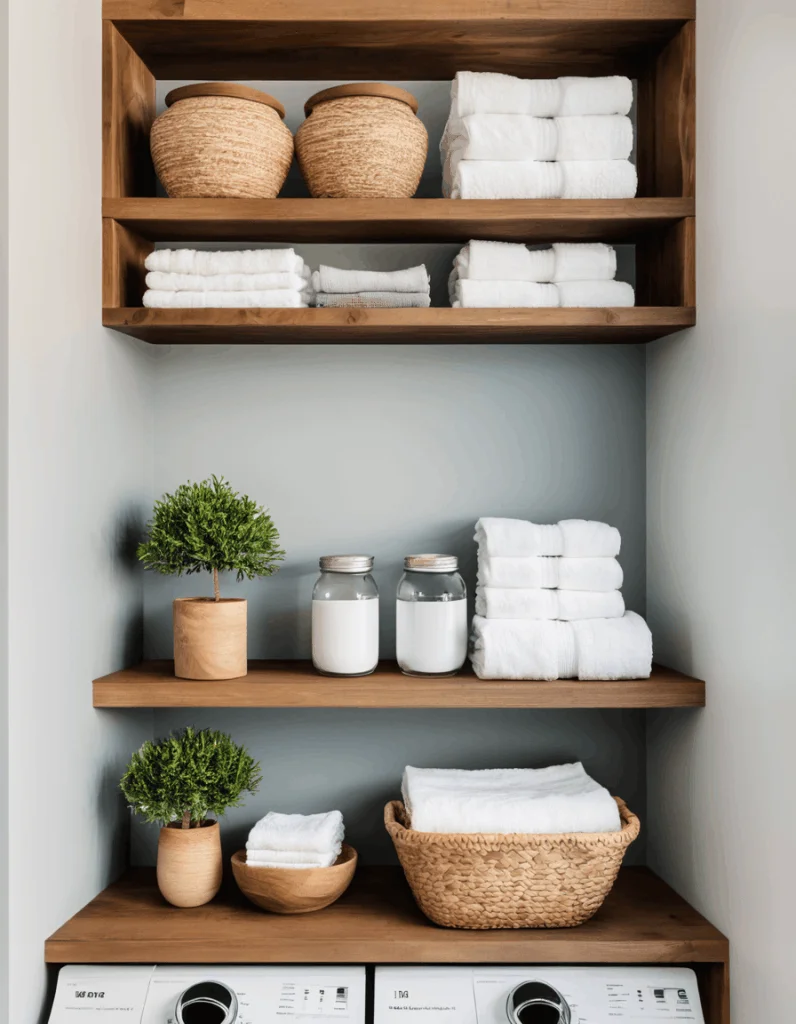
Floating Shelves for Laundry Room Walls
Floating shelves for laundry room spaces are popular for a reason—they look clean and don’t eat up floor space. Because there are no visible brackets, they give even a cramped laundry closet a more finished, intentional feel instead of looking like an afterthought.
A few tips if you’re going this route:
- Mount shelves at 5-6 feet high so they’re easy to reach without blocking your workspace below.
- Stick to matching containers or labeled bins so the shelf looks curated instead of cluttered.
- Add a small lip or edge if you’re storing anything that could roll off, like spray bottles.
If you want to make the shelf feel more designed, try backing it with peel-and-stick wallpaper or a leftover paint sample. It sounds small, but it turns a plain board into something that looks like it was planned, not just added on.You don’t need much—a single sheet of wallpaper or a sample-size paint can usually covers the space behind one shelf. Pick a pattern or color that echoes something else in the room, like your towels or a nearby wall, so it feels tied together instead of random.
This trick works especially well if your shelf is open and visible, since the backdrop becomes part of the display instead of just blank wall. It’s one of those laundry shelf ideas that costs almost nothing but changes how finished the whole space looks. Even a bold pattern works here, since it’s a small area and won’t overwhelm the room. If you’re renting, this is a safe way to add personality without painting an entire wall. Once it’s up, the shelf stops looking like an afterthought and starts looking like part of the original design.
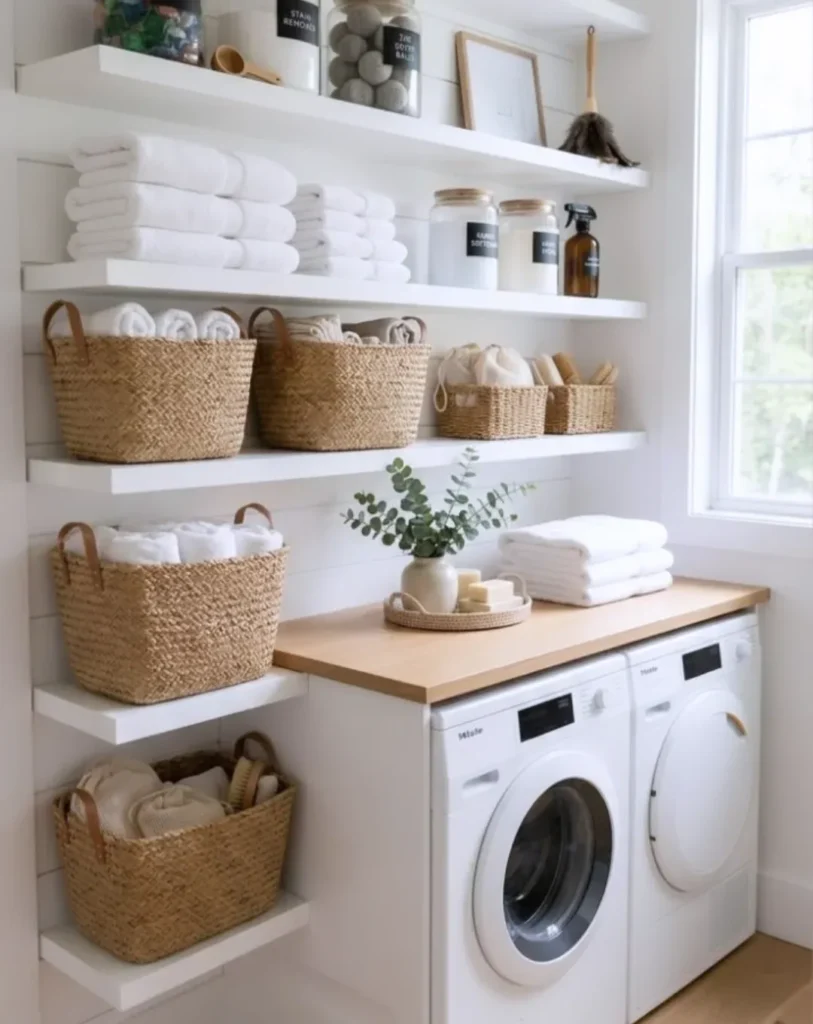
Small Laundry Room Organization Without Renovating
Small laundry room organization gets tricky when you’re working with a literal closet, but that doesn’t mean you’re stuck. A few low-effort swaps make a real difference:
- Vertical wire shelving works especially well next to stacked units, since it slides into narrow gaps other furniture can’t.
- Rolling carts with wheels let you tuck extra storage away when you need floor space and pull it back out when you don’t.
- Door-back storage turns the back of your laundry door into hanging space for hangers, small bottles, or a lint roller.
- Wall-mounted racks that fold flat give you a drying spot without permanently taking up room.
None of these require power tools, which makes them great if you’re renting or just don’t want to commit to anything permanent.That’s a big deal if you’ve ever dealt with a landlord who’s picky about wall damage or a lease that docks your deposit for extra holes. Adhesive strips, tension rods, and freestanding units let you get the same organized look without touching the drywall at all. And if you move in a year, everything comes with you—nothing gets left behind or patched over.
This flexibility is exactly why so many renters gravitate toward these particular laundry shelf ideas over built-in options. You can also test out a layout for a few weeks and adjust it if it’s not quite working, something you can’t easily do once a shelf is drilled into the wall. It’s a low-risk way to figure out what your laundry space actually needs before committing to anything more permanent. Once you know your routine, you can always upgrade later if you end up staying long-term.
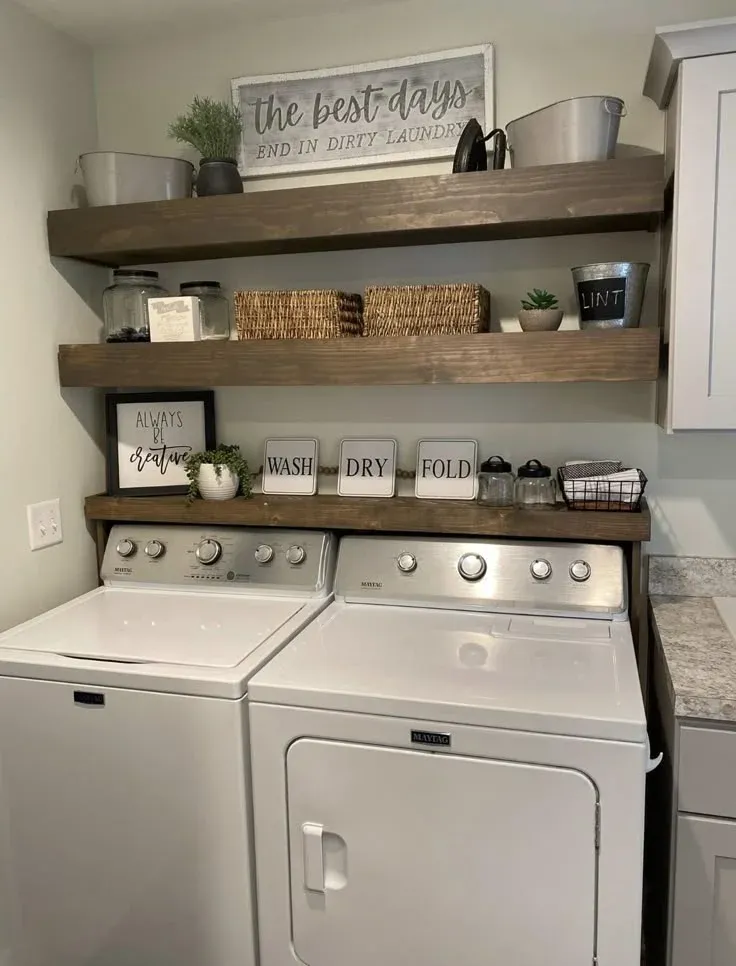
DIY Laundry Shelves for Renters and Budget Projects
You don’t need to spend a lot to get good storage. DIY laundry shelves are one of the cheapest upgrades you can make to this room, and most projects cost under $50 if you already have basic tools.
A simple version: cut a piece of plywood to your desired width, paint it to match your wall, and mount it with L-brackets. If you want the “floating” look without visible hardware, use concealed floating shelf brackets instead—they’re inexpensive and widely available at hardware stores.
For renters, skip the drilling entirely. Adhesive-mounted shelving or tension rod shelving units fit inside a laundry closet without touching the walls, and they come down clean when you move out.Just double-check the weight limit on adhesive strips before loading them up, since they hold less than a drilled-in bracket.
Tension rod units tend to be sturdier if you’re storing heavier items like detergent jugs or a stack of towels. Both options set up in under an hour, so you don’t need to block off a whole weekend for the project. They’re some of the easiest laundry shelf ideas to try first if you’re not sure how much storage you actually need. And if you do end up buying a home later, you already know exactly what worked and can go bigger with confidence.
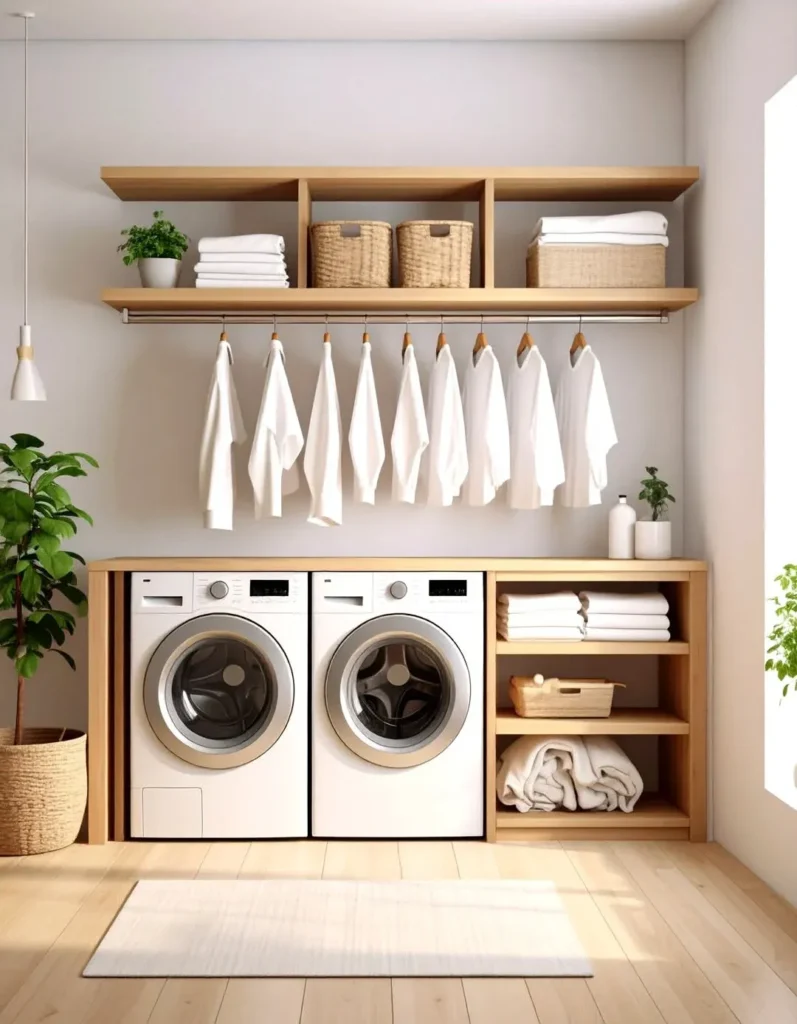
Laundry Room Shelving Units: Built-In vs. Freestanding
When people search for laundry shelf ideas, they’re usually deciding between two paths: built-in shelving units or freestanding pieces you can move.
Built-in laundry room shelving units look more polished and use wall space efficiently, but they’re permanent—not ideal if you’re renting or planning to move soon.
Freestanding units, like a wire shelving tower or a slim wood cabinet, give you flexibility. You can rearrange them, take them with you, or swap them out if your needs change.
If you’re not sure which to pick, ask yourself one question: do you own this space long-term? If yes, built-in wins on looks and function. If no, freestanding is the safer bet.There’s also a middle ground worth mentioning: some freestanding units are built sturdy enough that they look almost as polished as built-ins once they’re styled. If resale value matters to you, built-in shelving can also be a small selling point when it’s time to move.
On the flip side, freestanding pieces let you take your investment with you, which matters if you’re not staying put. Either way, matching the choice to your actual living situation—not just what looks nicest online—is the smartest way to land on laundry shelf ideas that actually make sense for you. Once you’ve picked a direction, the rest of the decisions, like material and finish, tend to fall into place pretty quickly.
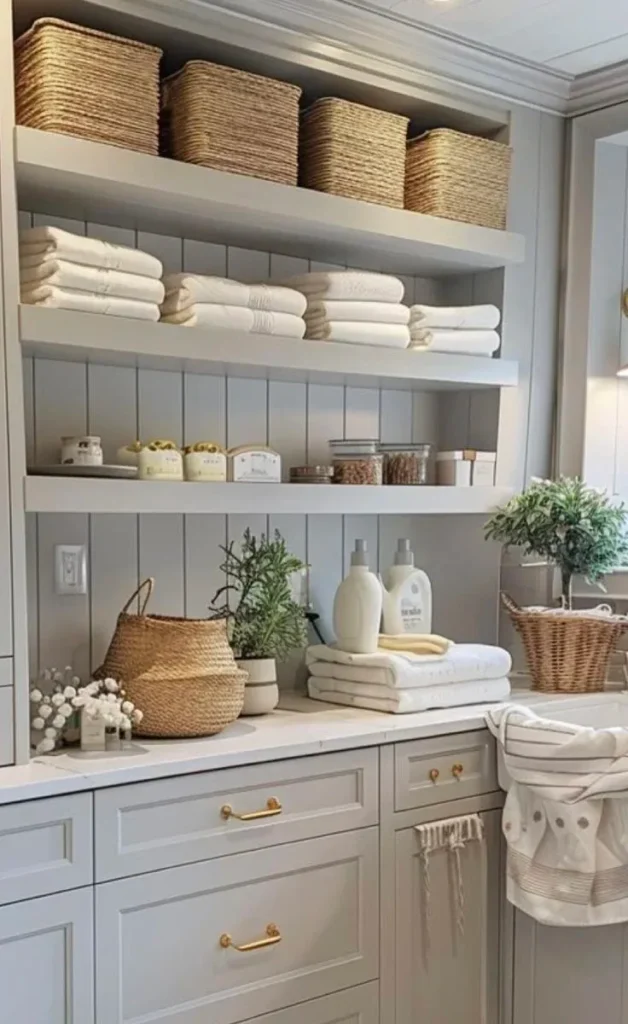
Laundry Closet Organization Ideas for Tight Spaces
Closets present their own challenges, so laundry closet organization ideas usually focus on using height instead of width. A few things that work well in a tight footprint:
- Ceiling-height shelving that stores rarely-used items up top and everyday supplies within reach.
- A slim rolling cart squeezed into any leftover gap beside the machines.
- Hooks on the inside of the closet door for a broom, dustpan, or hanging bag.
Since you can’t spread out, stacking storage vertically is really your only real option—but done right, it can hold just as much as a full room would.
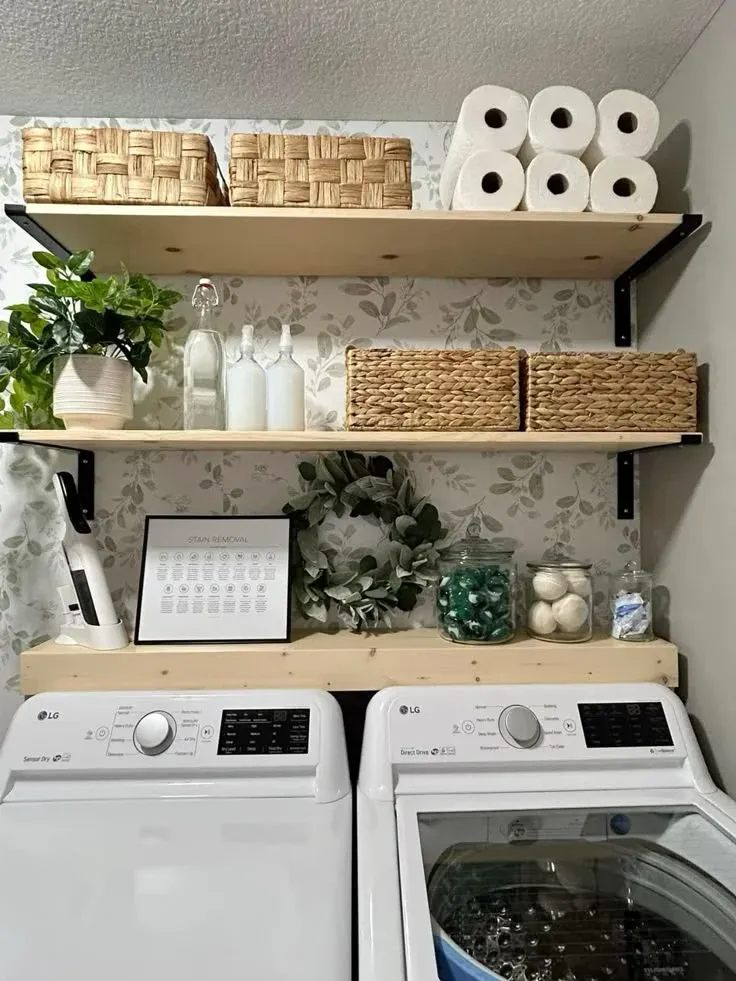
Laundry Room Cabinet Ideas If You Want a Finished Look
If open shelving feels too exposed for your taste, laundry room cabinet ideas give you the same storage with a cleaner, more finished appearance. Upper cabinets hide clutter completely, which is great if you don’t want detergent bottles on display.
A common approach: install upper cabinets that match your existing kitchen cabinetry (if the laundry room is nearby), and add trim along the top to make them look built-in. It’s a small detail, but it makes the whole space feel more intentional rather than pieced together.
If cabinets alone feel too closed off, combine them with one open shelf underneath for things you use daily, like stain remover or dryer balls.
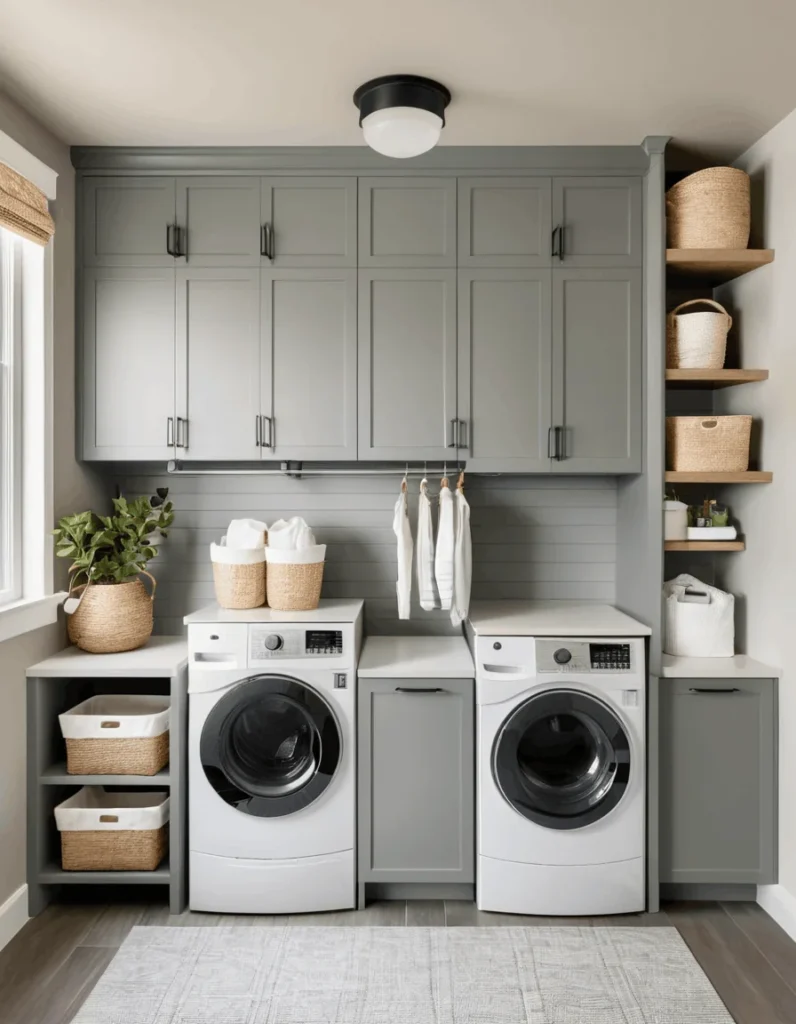
Wall-Mounted Laundry Storage Beyond Shelves
Shelves aren’t the only wall-mounted laundry storage option worth considering. An ironing board holder mounted to the wall or door saves real floor space, and it sets up in seconds when you need it.
Pegboards are another underrated option—they let you hang small bins, hooks, and tools exactly where you want them, and you can rearrange the layout anytime without new holes.
Open Shelving Laundry Room Styling Tips
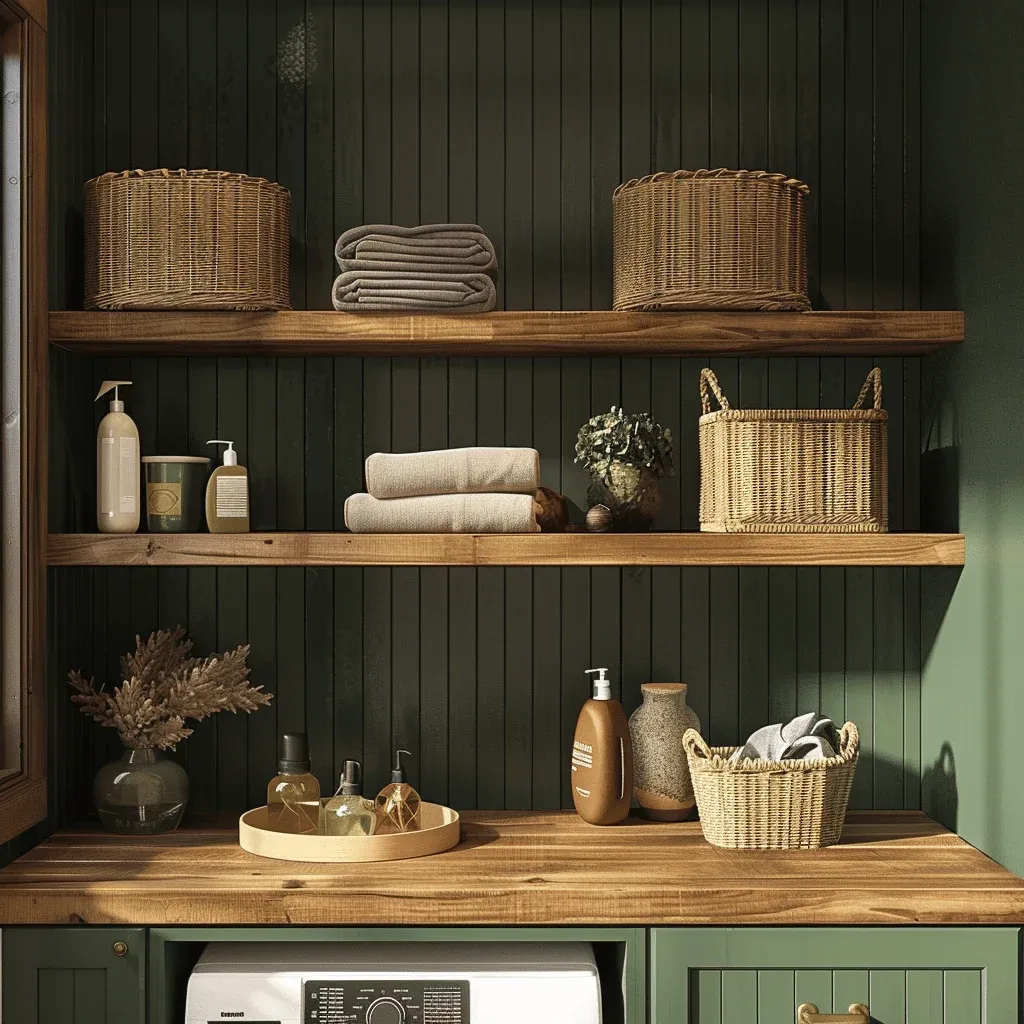
If you’ve settled on open shelving laundry room storage, styling makes a bigger difference than most people expect. A shelf full of mismatched bottles looks cluttered no matter how well-organized it actually is.
Try transferring detergent and softener into matching pump bottles, and group similar items in bins with simple labels. It takes twenty minutes but makes the whole shelf look put-together instead of thrown up as an afterthought.
FAQs: Laundry Shelf Ideas
How high should I mount a shelf above my washer and dryer?
Most people mount shelves 12-15 inches above the appliances, or 5-6 feet from the floor for standalone wall shelves. This keeps items reachable without blocking access to the machines below.
What’s the best laundry shelf idea for renters?
Adhesive-mounted or tension rod shelving units are your best bet since they don’t require drilling. They hold up well for everyday laundry supplies and come down cleanly when you move.
How much weight can a floating laundry shelf hold?
Basic wood shelves with hidden brackets typically hold 30-50 pounds, while heavier-duty units rated for laundry rooms can support up to 200 pounds, depending on the bracket and wall anchor type.
Are open shelves or cabinets better for a laundry room?
It depends on your style. Open shelves are cheaper and easier to install, but require some tidiness. Cabinets cost more but hide clutter completely if you’d rather not see your supplies.
What can I use instead of shelves in a tiny laundry closet?
Vertical wire shelving units, rolling carts, and door-back organizers all work well in tight closets since they use height instead of floor space.
Conclusion
At the end of the day, laundry shelf ideas don’t need to be complicated. Whether you go with a single floating shelf above the washer, a full wall of cabinets, or a rolling cart tucked into a closet, the goal is the same: get your supplies off the floor and off the top of your machines. Start small if you need to—one shelf above the appliances is often enough to change how the whole room feels. Once you see how much easier laundry day gets, you’ll probably want to add more.
If you’re tackling this weekend, measure your space first, decide between open or closed storage, and pick up a basic shelf kit or a few matching bins to start.