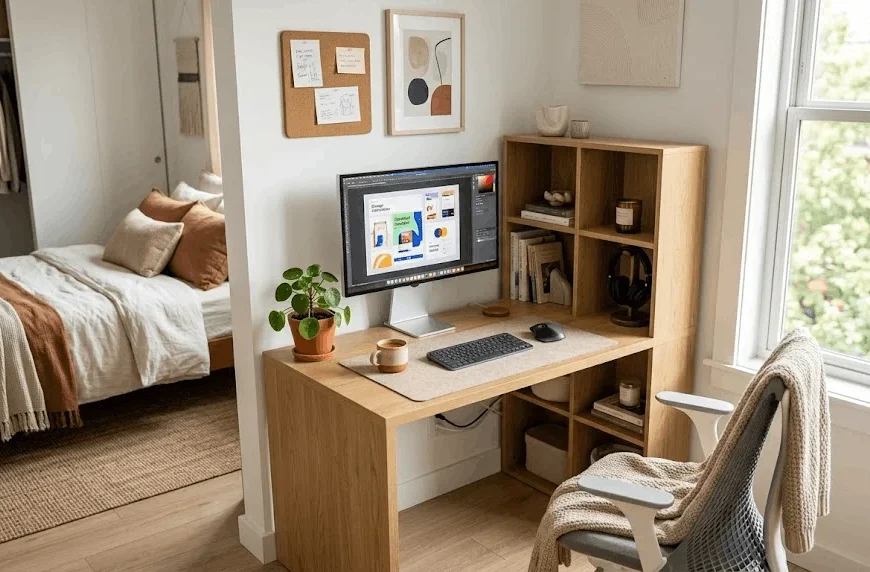
So your room is small. Maybe it’s a studio apartment, a shared bedroom, or just a spare corner you’ve been ignoring for months. You need a workspace — but you don’t want a desk that swallows half the room.
That’s exactly where a small corner desk comes in.
In this guide, you’ll learn how to pick the right one without wasting money, what sizes actually work in tight spaces, which materials hold up over time, and how to set it up so it feels like a real workspace — not a folding table shoved into a corner.
Let’s get into it.
Why a Small Corner Desk Is the Smartest Furniture Buy for Tight Spaces
A small corner desk does something most furniture can’t — it uses dead space. That awkward corner near the window? The weird angle between two walls in your bedroom? That’s prime real estate most people completely ignore.
According to a 2024 Buffer report, 62% of remote workers set up their home workspace in a bedroom or living room — not a dedicated office. That means millions of people are working on kitchen tables, couches, or worse, their beds. A compact corner computer desk solves this without demanding a room makeover.
Here’s what makes corner desks different from regular desks. A standard rectangular desk sticks out from the wall and cuts into your walking space. A corner desk tucks in. It follows the natural shape of the room. You keep your floor space. You keep your sanity.
And the best part? Even a small corner desk gives you more actual surface area than a mid-sized straight desk. The triangle shape creates depth. You can put your monitor in the middle, keep your notebook to the left, your coffee to the right — and still have breathing room.
For anyone living in a studio apartment or a compact bedroom, this is not a luxury. It’s a practical decision that pays off every single day.
What “Small” Actually Means — Sizes Explained Simply
This is where most buying guides fail you. They say “small” without ever telling you what that actually means in inches or centimeters. Let’s fix that right now.
The Three Size Zones
Compact (Under 40 inches per side)
This is your true small corner desk territory. Each arm of the desk is under 40 inches wide. Great for laptops, a single monitor, and a notebook. Fits easily in bedrooms and dorm rooms. IKEA’s MICKE corner unit and similar options fall here.
Mid-Small (40–48 inches per side)
Still space-saving but gives you a bit more room to spread out. Works well as a small corner desk for home office setups where you might have a monitor plus peripherals. Fits most standard bedrooms comfortably.
Compact L-Shaped (48–55 inches per side)
Technically a small L-shaped desk for bedroom use — bigger than a corner desk but designed with the same angle logic. Good if you work from home full-time and need dual-monitor space.
Depth Matters More Than You Think
Most people focus only on width. But desk depth — how far it sticks out from the wall — changes everything. A depth of 19–22 inches works for laptops. If you use a desktop monitor, aim for at least 24 inches of depth so the screen sits far enough from your face.
And if you wear glasses or have any eye sensitivity, that extra depth matters even more — sitting too close to a monitor causes headaches faster than most people realize. A good rule of thumb is the arm’s length test: sit down, extend your arm forward, and your fingertips should just barely touch the screen. If they don’t reach, you’re at a safe distance. If your whole palm is flat against it, scoot back or get a deeper desk.
Always measure your corner before buying. Tape out the dimensions on the floor first. Live with it for a day. You’ll immediately know if it’s too big.
The 4 Best Types of Small Corner Desks (And Who Each One Is For)
Not every corner desk works for every person. Here’s how to match the desk type to your actual situation.
1. Floating Corner Desk (Wall-Mounted)
A floating corner desk wall-mounted option is the most space-efficient choice you can make. It’s literally attached to the wall — no legs, no bulk underneath. The floor stays completely clear.
Perfect for: Studio apartments, minimalist setups, renters who want flexibility.
The downside? Installation takes 30–45 minutes and you need to hit wall studs. Not ideal if you move often or rent with strict rules about drilling.
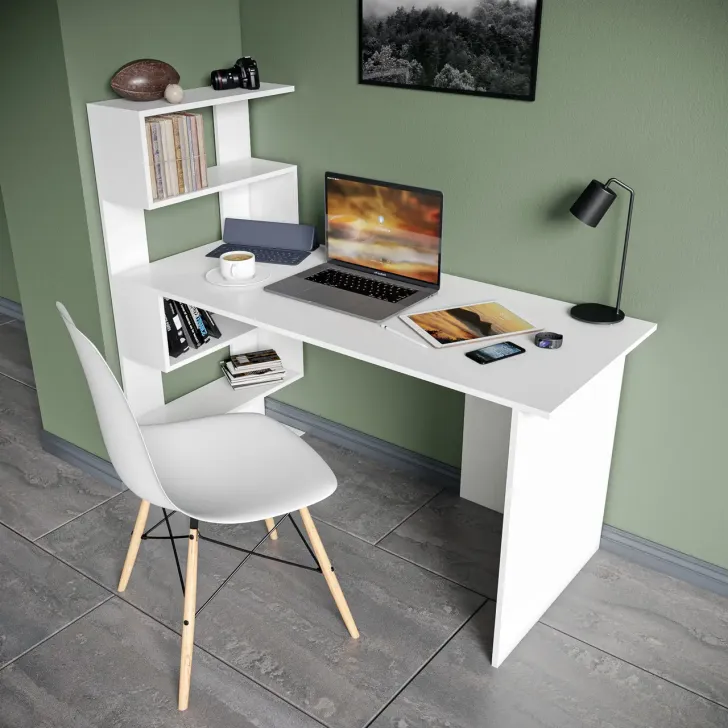
2. Mini Corner Desk With Storage
A mini corner desk with storage gives you a shelf, a drawer, or a hutch built right in. Everything stays in one spot — chargers, notebooks, stationery, whatever you usually pile up next to your workspace.
Perfect for: Students, people who work with physical papers and books, anyone who hates clutter on the surface.
Look for designs where storage goes upward, not outward. Vertical storage keeps your footprint tiny while giving you room to organize.
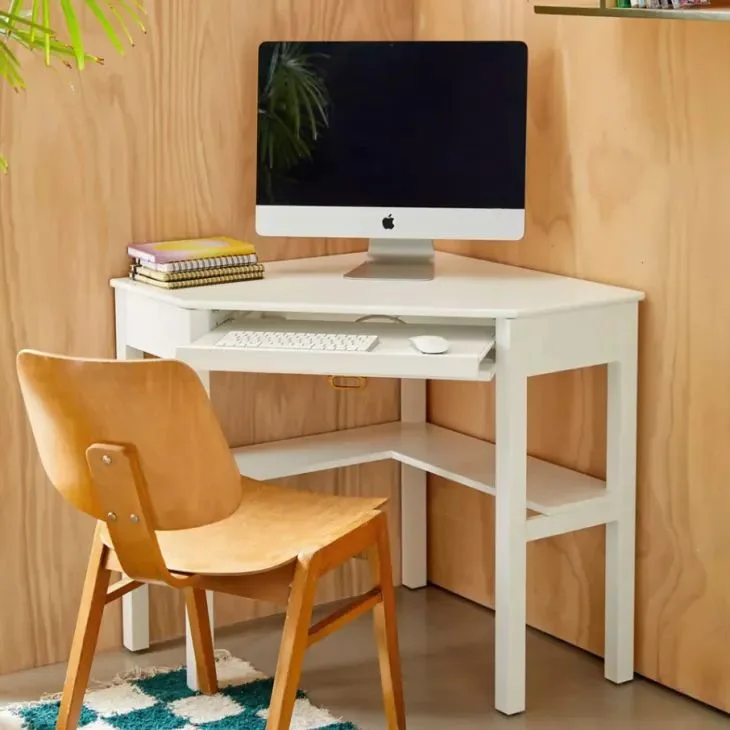
3. Space-Saving Corner Writing Desk
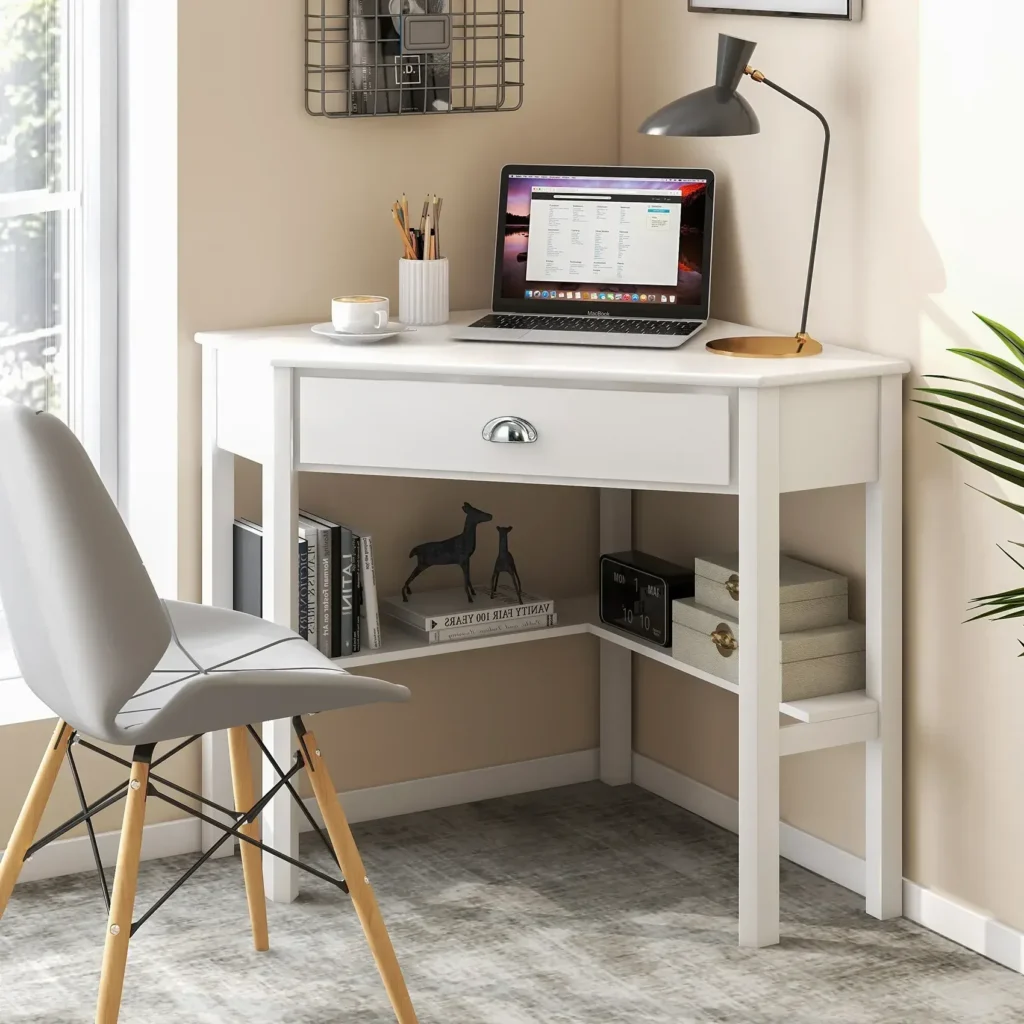
Clean, simple, no frills. A space-saving corner writing desk is just a surface and four legs. No drawers, no shelves, no hutch. It’s lightweight, easy to move, and usually the most affordable option.
Perfect for: Writers, students, anyone who works purely on a laptop and doesn’t need to store much.
These often come under the $100 mark and are easy to assemble. If you’re setting up a corner desk small spaces apartment situation, this type gets the job done without overthinking it.
4. Corner Desk With Hutch Small Design
A corner desk with hutch small configuration means the desk has a raised shelf unit sitting on top of it. Think of it like a bookshelf and desk combined. You get serious vertical storage without taking up extra floor space.
Perfect for: Home office workers, people managing paperwork, anyone who needs a monitor plus storage in the same footprint.
Just check the hutch height before buying. Some are so tall they feel like walls. Look for open hutch designs — they feel airier and don’t make the room feel smaller.
Materials: What to Actually Buy and What to Skip
Small corner desk footprint wood options are everywhere — but “wood” is a broad term that covers everything from solid oak to paper-thin particle board. Here’s what you need to know.
And honestly, the difference between a desk that lasts two years and one that lasts ten years almost always comes down to this one decision. Most people only notice the finish and the price tag — they never think to check what’s actually inside the board until the surface starts bubbling or a leg wobbles after six months.
MDF and Engineered Wood
This is what most budget corner desks under $100 are made of. MDF (medium-density fiberboard) is smooth, takes paint well, and looks clean. It’s not waterproof and doesn’t love humidity, but for a dry indoor workspace it works fine.
Good for: Budget buyers, renters, anyone who upgrades furniture every few years.
Solid Wood
Heavier, more durable, and genuinely better looking over time. Solid wood handles wear well and doesn’t sag under monitor weight. The trade-off is cost — solid wood corner desks typically start around $200–$300.
Good for: Long-term setups, people who want the desk to last 10+ years.
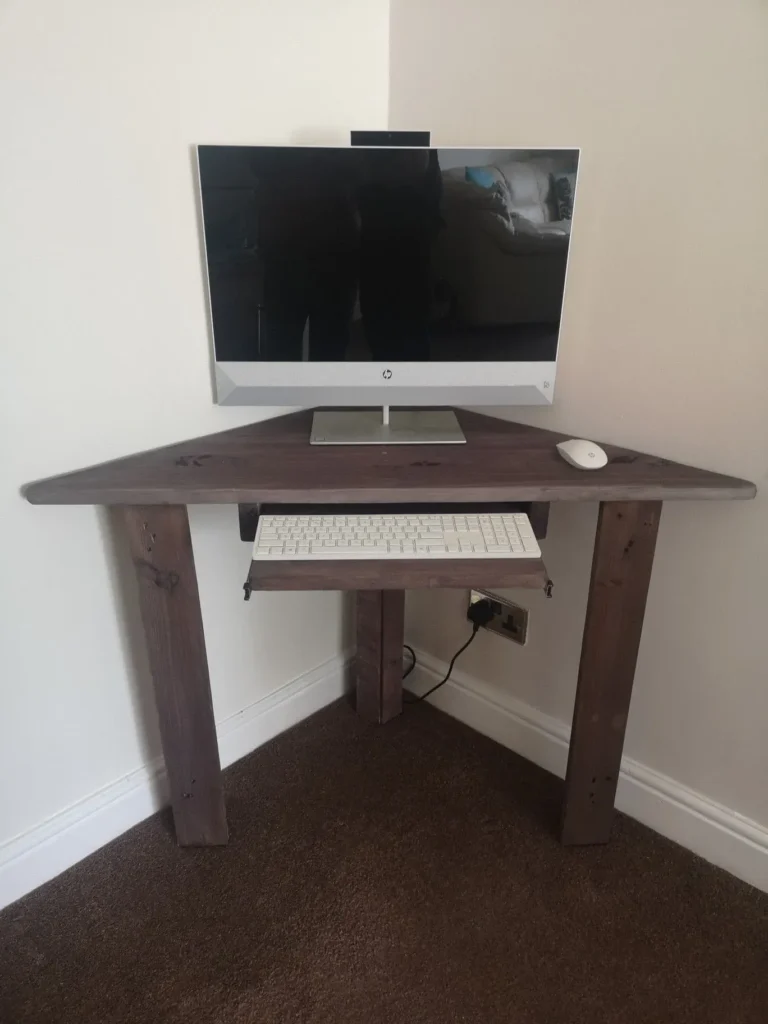
Metal Frame with Board Top
A metal frame desk gives you stability without the heavy weight of all-wood construction. Many compact corner computer desk options use this hybrid approach. The legs are steel, the surface is MDF or particle board.
Good for: People who move apartments often. Lighter to carry, easier to reassemble.
Setting Up Your Small Corner Desk the Right Way
Buying the desk is step one. Setting it up properly is what actually makes it work. Think of it like buying a good pair of running shoes — if you never tie them right or break them in properly, they’ll feel awful no matter how much you spent.
Most people unbox the desk, shove it into the corner, and wonder why their workspace still feels chaotic and uncomfortable three weeks later.
Corner Desk Cable Management First
Before anything else — cable management. This is the most-complained-about problem on Reddit for corner desk users and almost no buying guide addresses it properly.
Run cables behind the desk before pushing it into the corner. Use adhesive cable clips along the back wall. A simple cable spine (costs about $10) keeps everything bundled. Once the desk is in the corner, you can’t easily reach behind it, so plan this before you slide it in.
Ergonomic Small Corner Desk Setup
Your monitor should sit at eye level or just below. The top of the screen should be roughly at forehead height when you’re sitting straight. Most people set monitors too low, which causes neck strain within a few weeks.
For an ergonomic small corner desk setup, place your monitor in the middle angle of the corner — the point where both walls meet. That’s where you have the most depth. Your keyboard and mouse go slightly forward, toward you.
Your chair matters as much as the desk. If you’re working serious hours, don’t save money on the chair to spend it all on the desk.
Lighting and Positioning
Natural light is ideal. Position the desk so light comes from your left side if you’re right-handed (or right side if left-handed) to avoid glare and shadows. Avoid sitting with a window directly behind your monitor — it creates glare that strains your eyes.
A small LED desk lamp does the job if natural light isn’t available. Clip-on monitor lights are especially useful for small corner desk for home office setups where ceiling lighting is poor.
Small Corner Desk Ideas for Specific Rooms
For the Bedroom
Keep it minimal. A space-saving corner writing desk in white or light wood keeps the room feeling calm. Avoid bulky hutch designs in bedrooms — they dominate small rooms visually. A floating corner desk wall-mounted option works beautifully here if you can drill.
For a Studio Apartment
Your small corner desk is pulling double duty in a studio. It’s your office AND your personal space. Look for a corner desk with storage so everyday clutter has somewhere to go. Keep the color palette neutral so it blends into the room rather than standing out.
For Kids and Students
A narrow corner desk for kids room should have rounded edges, be height-adjustable if possible, and have at least one drawer for school supplies. Kids’ rooms change fast — an adjustable height corner desk means the furniture grows with them instead of being replaced every two years.
Home Office Corner Desk Ideas That Actually Work
If you’re working from home full-time, your small corner desk needs to work harder. Here are three setups that real WFH users swear by on Reddit and interior design forums.
The Minimalist Setup: One monitor, one laptop stand, one small lamp. Floating corner desk. Nothing else on the surface. Everything tucked away after work hours.
The Dual-Monitor Setup: Mid-small corner desk (40–48 inches), monitor arm instead of stands (saves serious surface space), one cable management spine, and a small shelf unit to the side — not on the desk itself.
The Student-Meets-WFH Setup: A small corner study table with a hutch. Textbooks go up top. Laptop and notebooks sit on the surface. One drawer for chargers and pens. This keeps everything in one corner without spilling into the rest of the room.
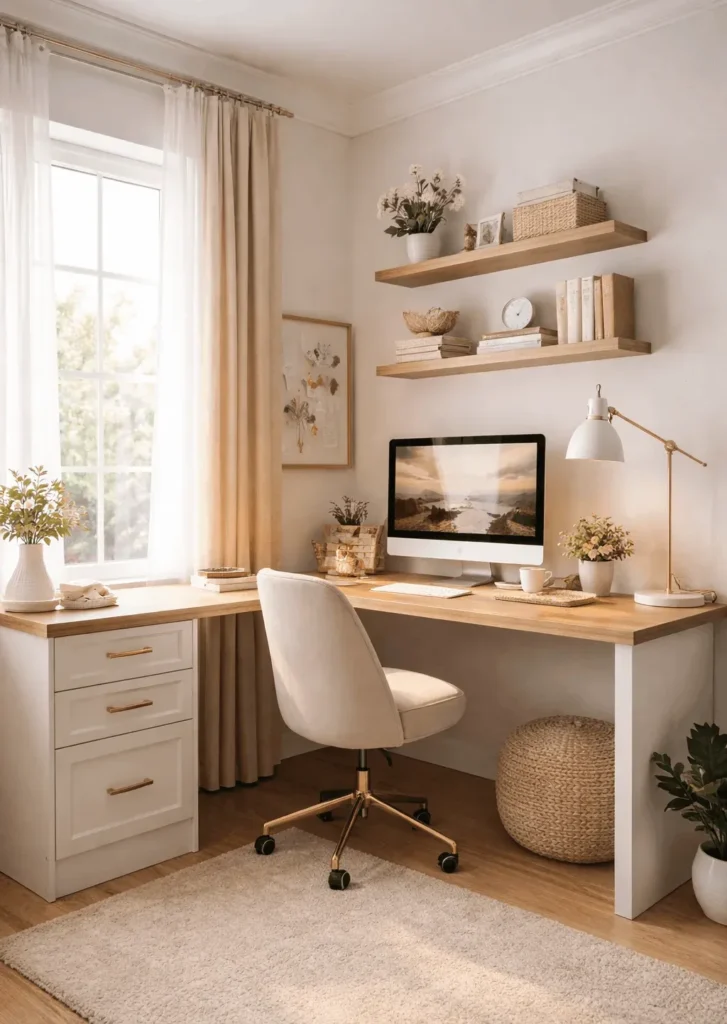
What to Spend: Budget Breakdown
You don’t have to spend a fortune. But you do get what you pay for at the extreme low end.
Under $80: Particle board construction, basic design, short lifespan. Fine for light laptop use.
$80–$150: MDF or engineered wood, better finish, more style options. This is the sweet spot for most buyers looking for a budget corner desk under $100–$150 range.
$150–$300: Better materials, metal frames, storage options, longer warranties. Worth it if this is a long-term setup.
$300+: Solid wood, standing desk options, premium brands. For people treating this as a real investment in their workspace.
The best small corner desk 2025 isn’t necessarily the most expensive one — it’s the one that fits your corner, your workflow, and your room’s feel.
FAQs: Small Corner Desk
Q1: What size should a small corner desk be for a bedroom?
For most bedrooms, look for a corner desk where each arm is between 36–47 inches wide. This gives you enough surface for a monitor and laptop without taking over the room. Always measure your actual corner with a tape measure before ordering — don’t rely on “small” in the product title alone.
Q2: Is a corner desk actually better than a straight desk for small rooms?
Yes, in most cases. A small corner desk uses wall space that would otherwise be empty. It keeps floor space open and usually offers more surface area than a straight desk of similar price. The triangle shape naturally organizes your workspace too — monitor in the middle, items to each side.
Q3: Can I put a small corner desk in a living room without it looking out of place?
Absolutely. Choose a desk that matches your existing furniture finish — wood tone or color. A floating corner desk wall-mounted option looks especially clean in living rooms because it has no visible legs. Add a small plant or lamp on top to make it feel intentional, not like office furniture invading your home.
Q4: What’s the difference between a corner desk and an L-shaped desk?
A corner desk is designed to sit in a corner and typically has two equal or near-equal arms meeting at an angle. A small L-shaped desk for bedroom use is similar but usually has one longer arm and one shorter one. L-shaped desks tend to be bigger overall. If space is tight, a true corner desk is usually the more compact choice.
Q5: How do I manage cables on a small corner desk?
Plan it before the desk goes into the corner. Run your cables first, use adhesive clips along the back wall, and group cords with velcro ties or a cable spine. Once the desk is pushed in, reaching behind it is a hassle. A small grommet hole in the desk surface also helps route cables cleanly from surface to floor.
Conclusion
Here’s the honest truth: a small corner desk is one of the highest-return furniture decisions you can make in a compact space. It turns a dead corner into a functional workspace. It keeps your floor open. It organizes your room without demanding a full redesign.
Whether you’re a student cramming into a dorm room, a remote worker in a studio apartment, or a parent setting up a homework spot for your kid — there’s a corner desk that fits your situation perfectly.
Measure your corner this weekend. Tape out the dimensions on the floor. Then use the size guide and type breakdown in this article to narrow your choice down to two or three options. Read recent reviews, check the depth measurement, and plan your cable setup before the desk arrives.
That’s all it takes to get this right. Your corner is waiting.