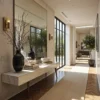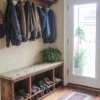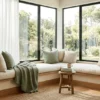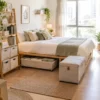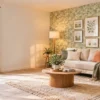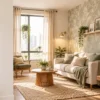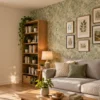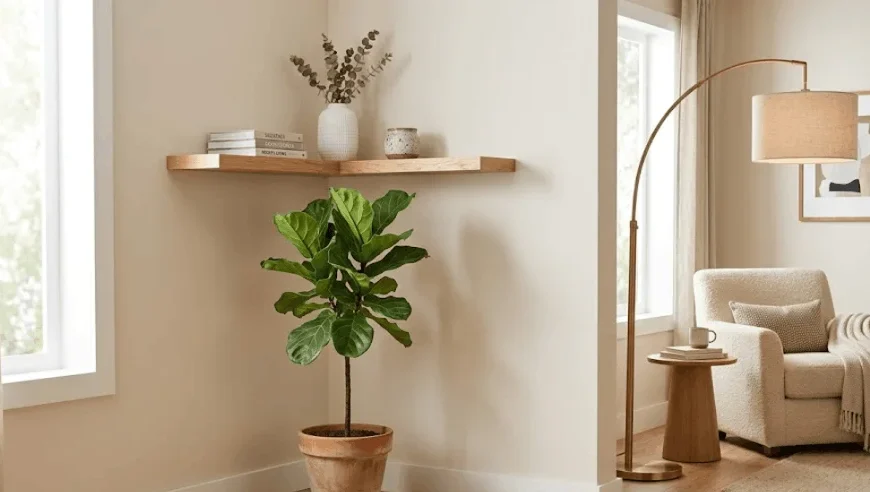
Every home has them — those awkward, forgotten corners that sit empty for months, sometimes years. Maybe it’s the spot behind your sofa that catches shadows, the gap beside the bookcase you keep meaning to address, or that bare bedroom angle you’ve mentally flagged a dozen times without ever acting on it.
These spaces feel like a puzzle without a clear answer. But here’s the thing — empty corners are some of the most underused opportunities in home decorating. With a small amount of effort and the right approach, they can shift from being the weakest part of a room to quietly becoming its best feature.
This guide walks through 15 of the most practical, stylish, and genuinely achievable empty corner ideas — the kind that work in real homes, not just on mood boards.
Why Empty Corners Deserve More Attention Than They Get
Most people focus on the center of a room — the sofa arrangement, the rug placement, the main lighting. Corners get treated as leftover space. But that’s actually a mistake from a design standpoint.
Corners are structural anchor points. When you walk into any room, your eye naturally moves around the perimeter. A bare corner creates a visual pause — the kind that registers subconsciously as “something’s missing.” Interior design research consistently shows that rooms feel more organized and complete when corner spaces are thoughtfully used. It’s a subtle psychological effect, but it’s real.
A well-styled corner signals that a room is finished. A bare one signals that it isn’t — even when everything else looks great.
So before you invest in new furniture or repaint walls, spend a few minutes looking at your corners. The return on that investment is often higher than people expect.
1. Build a Cozy Reading Nook
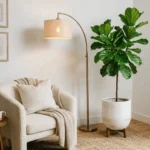
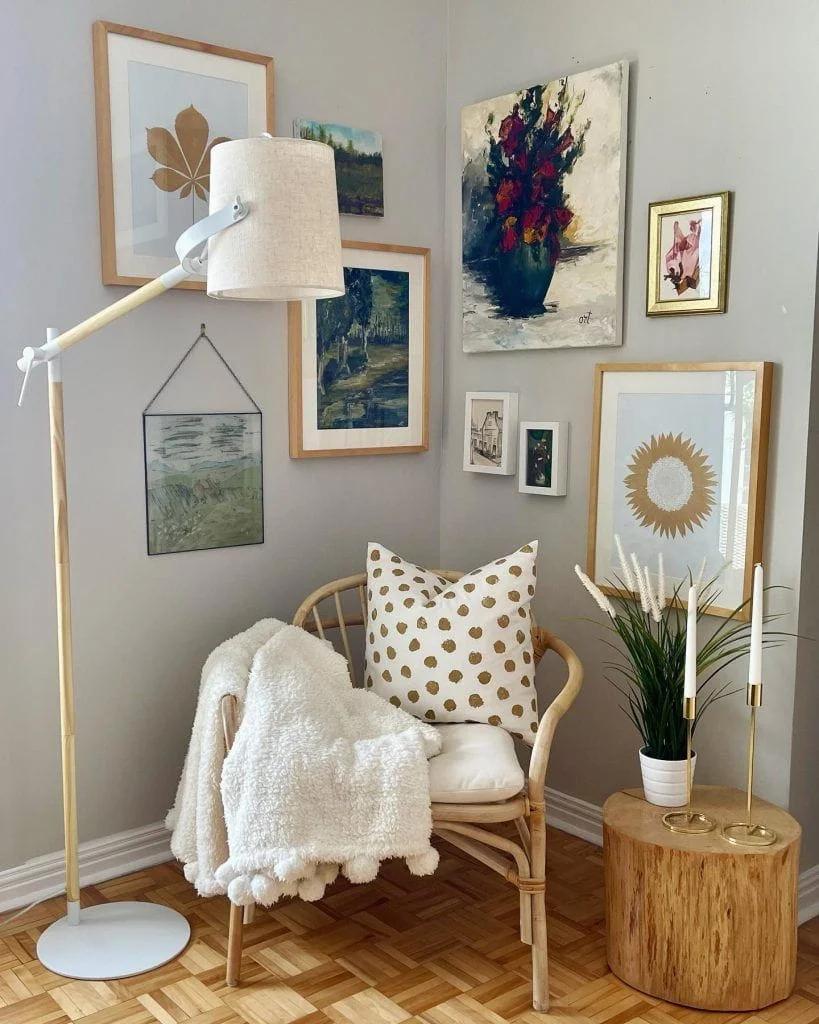
Turning a bare corner into a reading nook is one of the most satisfying empty corner ideas because the result feels genuinely personal. It doesn’t take a renovation. A comfortable armchair, a floor lamp positioned to arc over the seat, and a small side table for a book and a drink — that’s the foundation.
What makes it work is layering. A throw blanket adds warmth. A couple of cushions add texture. A small rug placed under the chair separates the nook visually from the rest of the room, giving it a sense of its own defined space.
A few things worth keeping in mind:
- A chair with a high back carries more visual weight and feels more intentional.
- If the corner gets natural light, orient the seat toward it — reading in daylight is always better.
- If it doesn’t, warm-toned bulbs in the lamp make the space feel inviting rather than dark.
- Keep the side table small — the corner shouldn’t feel crowded.
This works particularly well as a cozy reading nook idea in bedrooms and living rooms, where a dedicated quiet corner can genuinely change how you use the space day-to-day.
2. Use Corner Shelves to Add Storage and Style
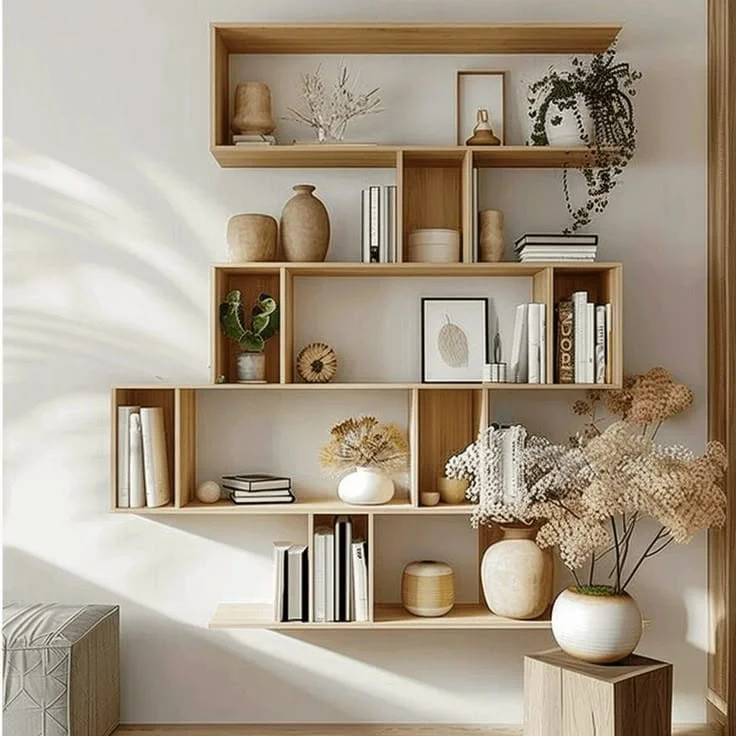
Corner shelf ideas have remained consistently popular for a straightforward reason — they solve two problems at once. They fill the corner, and they add storage or display space without taking up floor area. That combination is hard to beat, especially in smaller rooms.
There are two approaches worth considering:
Floating corner shelves are mounted directly to the wall. They create a clean, built-in look and work well in living rooms, bedrooms, and kitchens. Style them with a mix of books, plants, candles, and a few meaningful objects. Avoid filling every shelf with the same category of item — variation makes the display feel more natural.
Freestanding corner shelves — typically ladder-style or tiered units — lean into the corner without any wall mounting. They’re ideal for renters, easy to reposition, and tend to be sturdier for heavier items like books or records.
For both options, limiting the color palette across displayed items to three or four tones keeps things looking cohesive. Too many colors makes shelves look busy; too few makes them look cold.
3. Bring in an Indoor Plant Corner Display
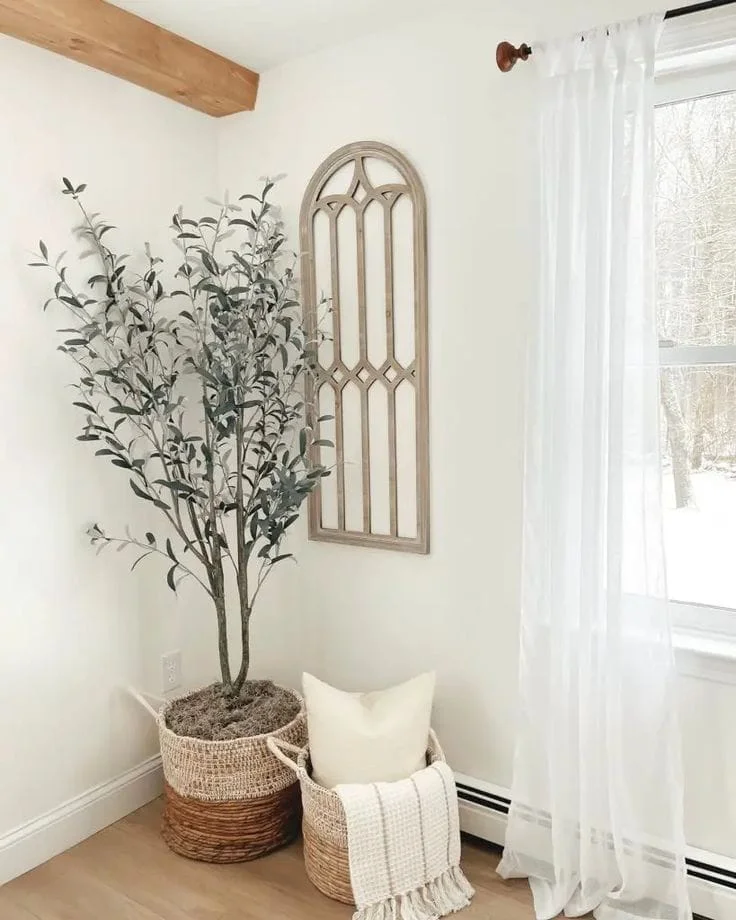
An indoor plant corner display is one of those empty corner ideas that works across almost every interior style. Whether a room is modern, bohemian, Scandinavian, or traditional, plants bring something that manufactured decor rarely does — organic texture and a sense of life.
Tall statement plants are particularly effective here. Fiddle-leaf figs, snake plants, and bird of paradise all fill vertical space naturally and hold visual weight on their own. For those without strong plant care habits, high-quality large-leafed artificial plants have improved to the point where they’re genuinely difficult to distinguish from real ones.
For a layered display that feels intentional:
- Use a plant stand or tiered planter to create height variation.
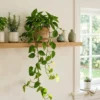
- Pair a large floor plant with a trailing plant on a nearby corner shelf.
- Use terracotta, ceramic, or woven basket planters for warmth and texture.
- If natural light is limited, choose low-light varieties like pothos or ZZ plants.
Beyond aesthetics, real plants improve air quality and have been shown to reduce stress — which makes this one of the few decor decisions that genuinely serves both function and atmosphere.
4. Add a Corner Desk or Workspace
The shift toward remote and hybrid work has made home office setups a practical necessity for a lot of people. An empty corner is often the most logical place to build one — it’s out of the main flow of the room, uses otherwise ignored space, and can be closed off visually when the workday ends.
Corner desks are designed specifically for this geometry. An L-shaped corner desk gives considerably more usable surface than a standard desk while fitting into space that furniture typically can’t use. The diagonal footprint makes the most of what the corner has to offer.
For a workspace that stays functional:
- Mount a monitor arm to clear surface space for other tasks.
- Add a pegboard or floating shelf above for supplies and organization.
- Use cable management to keep wires from becoming visual clutter.
- Choose a chair that’s proportional to the corner — an oversized chair makes a small corner feel cramped.
- A task lamp with adjustable brightness is worth the small investment.
Even in a bedroom, a corner desk creates a defined work zone that helps mentally separate productive time from rest — something a lot of people working from home struggle with.
5. Install a Corner Wardrobe or Storage Unit
Bedroom corner organization through dedicated storage is one of the most practical uses of corner space in the home. Bedrooms almost always have corners that go unused, and that wasted vertical space represents real storage capacity.
A corner wardrobe uses the full height of the room — often the most underutilized dimension in any bedroom. Built-in wardrobes look seamless and can add property value, but freestanding options are significantly more affordable and don’t require any construction.
Smaller-scale corner storage solutions include:
- A corner coat rack near an entryway for jackets, bags, and keys.
- A corner hamper in a bathroom or bedroom.
- A corner cabinet with doors in a living room for hidden storage.
- Open corner shelving with woven baskets for a mix of function and display.
The key principle with corner storage is intentionality. A storage unit that matches the room’s color palette feels like part of the design. One that doesn’t feels like it was placed there because there was nowhere else to put it.
6. Create a Gallery Wall That Wraps the Corner
Standard gallery walls run flat across a single surface. Wrapping artwork and frames around a corner is a much less common approach — and because of that, it tends to have a noticeably stronger visual impact.
The reason it works is that it draws the eye into the corner rather than past it. It creates a sense of depth that a flat arrangement doesn’t achieve, and it gives the corner a genuine focal point.
Tips for making a corner gallery wall work:
- Place a central anchor piece at eye level, slightly off-center from the corner itself.
- Use frames in different sizes but keep to one or two finishes — black, gold, or natural wood.
- Mix art prints, photographs, and mirrors for variety and depth.
- Leave at least two to three inches between frames so the arrangement can breathe.
- For rented spaces, removable picture-hanging strips protect walls and hold surprisingly well.
This approach works especially well in hallways, dining rooms, and living rooms where corner walls are most visible as you move through the space.
7. Set Up a Bar or Coffee Station
A dedicated drinks corner has become one of the more desirable empty corner ideas in living and dining rooms. It gives a functional purpose to the corner while adding a layer of personality to the room.
A bar cart works well if you want flexibility — it can be repositioned easily. A small console table or a purpose-built bar cabinet creates something more permanent and considered.
A well-styled drinks corner typically includes:
- A surface for bottles, a decanter, and glassware.
- Hooks or small shelves for tools and accessories.
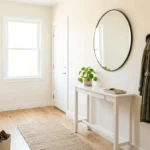
- A mirror or framed print behind the setup to add depth and visual weight.
- A small lamp or LED lighting beneath a shelf for evening ambience.
- A tray to organize bottles and prevent the surface from looking scattered.
The same structure works equally well as a coffee or tea station. A corner shelf with a coffee machine, a selection of mugs, and a small plant becomes a morning ritual rather than just a functional setup.
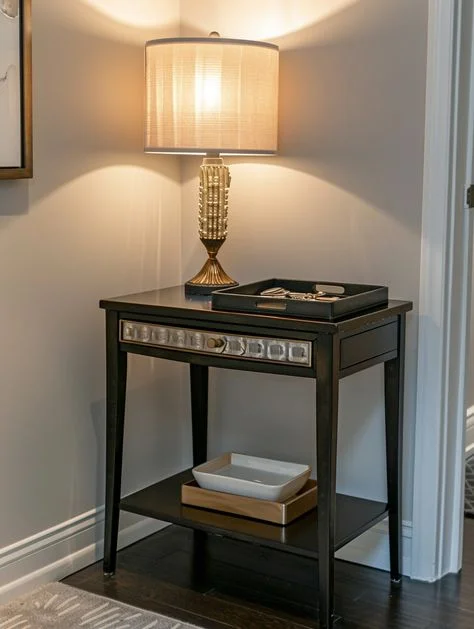
8. Add a Floor Lamp for Instant Ambience
There are moments when the best empty corner idea is also the most straightforward one. A carefully chosen floor lamp can shift a corner from being a visual gap in the room to being an intentional design detail.
Arc floor lamps are particularly effective for corners. They extend light outward over nearby furniture rather than directing it straight up, which makes them practical for reading or relaxing and adds a sculptural quality to the space.
Pair a floor lamp with:
- A small side table and a potted plant.
- A stack of coffee table books on the floor.
- A single decorative object — a ceramic vase, a lantern, or a woven basket.
A well-chosen lamp base — in marble, brass, rattan, or another textured material — functions as a decorative object even when the lamp is switched off. This is one of the empty corner ideas that can be executed in an afternoon and makes an immediate difference.
9. Use a Corner for a Pet Nook
For pet owners, designating a corner specifically for animals is one of the most practical empty corner ideas that also tends to look better than the alternative — a pet bed placed wherever there happened to be floor space.
A styled pet corner can include a freestanding pet bed, a wall-mounted cat tree, or a dog crate dressed with a cushion and a small plant on top. When the materials and colors are chosen to complement the rest of the room, it looks like a design decision rather than a practical compromise.
The added benefit is containment. A defined pet corner keeps animal bedding, toys, and accessories in one place, which makes the rest of the room feel noticeably less cluttered.
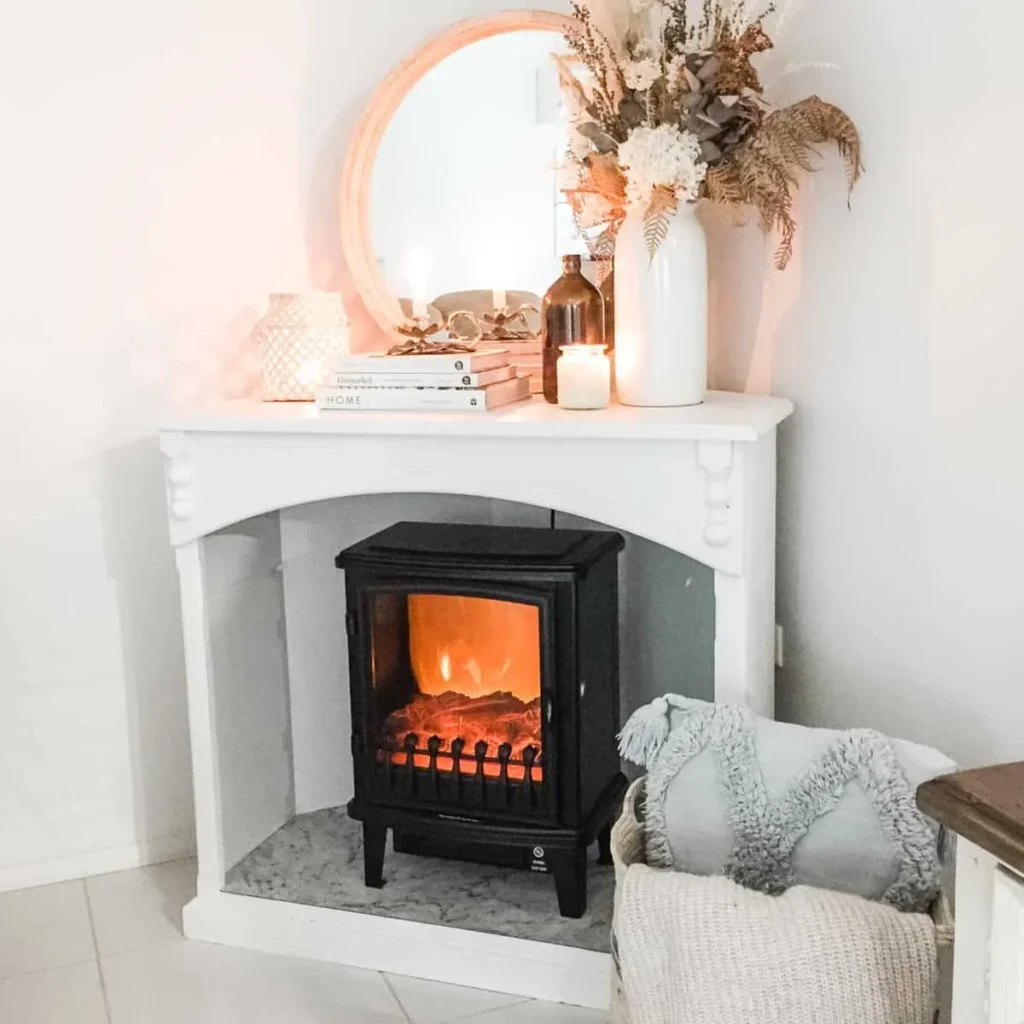
10. Try a Corner Fireplace or Faux Fireplace
Few things change the atmosphere of a room as dramatically as a fireplace — and a corner is often the most practical place to install one. This is one of the empty corner ideas that genuinely redefines a room rather than simply improving it.
Electric corner fireplaces are far more accessible than they used to be. They require no structural work, fit into most corners, come in both wall-mounted and freestanding formats, and offer realistic flame effects with optional heating. For the investment, the impact on a living room is significant.
If an actual fireplace unit isn’t practical, a styled mantel shelf mounted in the corner — layered with candles, greenery, and mirrors — creates a similar focal point with no installation required.
11. Dedicate a Corner to Exercise
A single bedroom corner is usually enough space for a functional workout setup. A yoga mat, resistance bands, a foam roller, and a small shelf for equipment can make an empty corner into a compact wellness space that actually gets used.
Wall-mounted hooks keep equipment organized and off the floor. Adding a mirror to this corner serves a dual purpose — it’s useful for checking form during a workout, and it reflects light in a way that makes the room feel larger. The mirror alone often justifies the corner treatment.
12. Style a Corner with a Sculptural Object
Not every corner needs furniture or storage. Sometimes the best empty corner ideas are about placing a single strong object and letting it do the work on its own.
A tall ceramic vase, a floor sculpture, a striking piece of driftwood, or an oversized lantern can anchor a corner visually without adding any functional weight. This approach suits modern and minimalist interiors particularly well, where restraint is part of the design language. One well-chosen object in a corner says more than several average ones.
13. Build a Kids’ Activity Corner
In family homes, a dedicated corner for children is one of the most functional empty corner ideas that keeps creative chaos contained. A low bookshelf, a small table and chairs scaled to the child’s size, and a pegboard for art supplies give children a defined space that’s theirs — which tends to mean they actually use it.
When the colors and materials are chosen to work with the rest of the room — neutral tones, quality pieces — a kids’ corner doesn’t disrupt the space visually. It becomes part of it.
14. Hang Curtains to Create a Corner Nook
Using curtains to define a corner is one of the more creative empty corner ideas on this list. A curtain rod mounted between two walls, or on a ceiling track, creates a soft enclosure that turns the corner into a private space within the larger room.
This works especially well for reading corners, meditation spaces, or children’s play areas. The curtain adds texture and softness to the room while giving the nook a sense of separation — without the permanence or cost of an actual wall.
15. Add a Tall Bookcase
A floor-to-ceiling bookcase is one of the most timeless empty corner ideas — it uses the one dimension that most furniture ignores — vertical space. It fills the corner, creates a built-in appearance, and turns a collection of books, plants, and personal objects into a considered visual feature.
Bedroom corner organization around a tall bookcase works well when:
- Lower shelves use baskets for hidden storage.
- Books are grouped by color or size for visual consistency.
- Personal objects and small plants are placed at eye level where they’ll be seen.
Among all the empty corner ideas in this guide, a tall bookcase may offer the best combination of function, aesthetics, and long-term value — especially in living rooms and home offices where storage and display both matter.
Comparison: Popular Empty Corner Solutions at a Glance
| Corner Solution | Best Room | Budget Range | Difficulty |
|---|---|---|---|
| Reading Nook | Living/Bedroom | $150–$800 | Easy |
| Floating Corner Shelves | Any Room | $30–$200 | Easy |
| Indoor Plant Display | Any Room | $50–$300 | Easy |
| Corner Desk | Bedroom/Office | $150–$600 | Easy |
| Corner Wardrobe | Bedroom | $200–$2000+ | Medium |
| Gallery Wall | Living/Hallway | $50–$400 | Easy |
| Bar/Coffee Station | Living/Dining | $100–$600 | Easy |
| Floor Lamp | Any Room | $60–$400 | Easy |
| Electric Fireplace | Living Room | $200–$1200 | Medium |
| Tall Bookcase | Living/Office | $100–$800 | Easy |
FAQ: Empty Corner Ideas
Q: What is the easiest way to fill an empty corner?
A floor lamp paired with a small plant and a side table is the quickest, most affordable fix. It takes under an hour to set up and works across every room style.
Q: How do I make a small corner look bigger?
Use vertical elements — tall plants, floor-to-ceiling shelves, or an arc lamp. Place a mirror nearby to reflect light and keep the color palette on the lighter side. Avoid crowding the space with too many pieces.
Q: What furniture works best in a corner?
Furniture built around corner geometry performs best — L-shaped desks, corner shelves, corner wardrobes, and accent chairs designed for angled placement. These pieces were made to work with the space rather than against it.
Q: Can I decorate a corner on a small budget?
Yes, and often very effectively. A secondhand armchair, a thrifted bookcase, or a few well-chosen plants can completely change a corner for very little money. Focus on one anchor piece rather than multiple smaller ones.
Q: How do I style a corner without making it look cluttered?
Follow the rule of three — group items in odd numbers, vary heights, and leave breathing room between objects. Choose a consistent color palette and resist the temptation to fill every inch.
Q: Are corner shelves hard to install?
Floating shelves require basic wall drilling and a level — most people can manage it with a standard toolkit. Freestanding options need no installation at all and are the better choice for renters.
Q: What plants work best in a corner?
For low-light corners: snake plants, pothos, and ZZ plants. For brighter spots: fiddle-leaf figs, bird of paradise, and rubber plants. All of these grow well as floor plants and naturally fill corner space.
Conclusion
Empty corners are rarely a design problem — they’re a design opportunity that hasn’t been acted on yet. Every one of these empty corner ideas can be adapted to different budgets, different room sizes, and different personal styles. None of them require major renovation or significant investment.
The most important step is simply deciding what the corner should do. Once you know whether it needs to be functional, decorative, or a combination of both, the right approach usually becomes clear on its own.
Start with one corner. Pick one of these empty corner ideas that genuinely fits your space and your lifestyle. A well-styled corner often has an effect on the room that goes well beyond its physical size — and once you see the difference, the other corners in your home tend to get a lot more attention.