Introduction: Why Open Terrariums Are Worth Your Attention
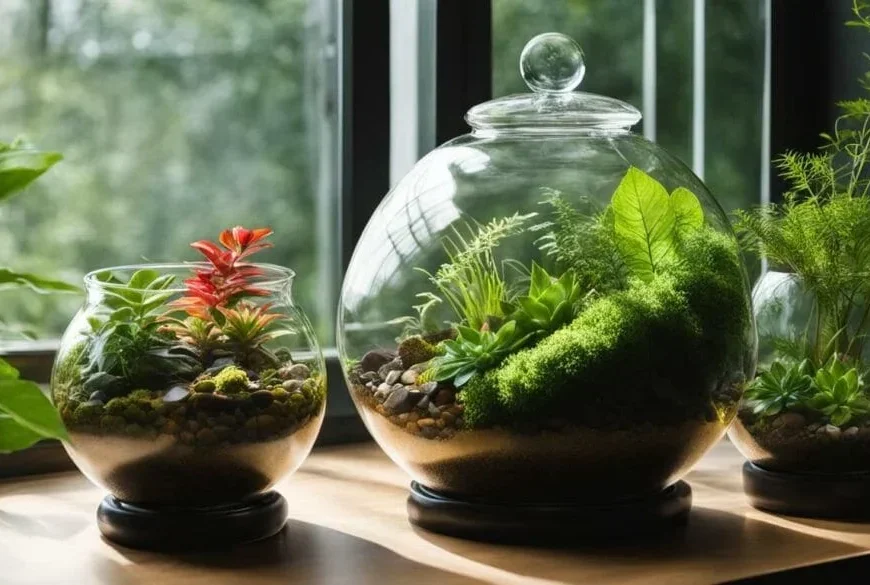
There is something quietly rewarding about a terrarium placed on a sunny windowsill. It sits there, self-contained and unhurried, like a small piece of the natural world you brought indoors. And when that terrarium is open — no lid, no sealed glass — it becomes one of the most manageable plant projects a person can take on.
Open terrariums are simply glass containers without a cover. Air moves freely through them, moisture evaporates naturally, and the growing environment stays dry enough for plants that genuinely prefer it that way. There is no humidity to monitor, no condensation to worry about, and no complicated maintenance schedule to follow.
The best open terrarium plants are not just survivors in this kind of setup — they actually do better here than almost anywhere else. They are adapted to shallow soil, irregular watering, and bright conditions. When you match the right plants to this environment, the results are striking and long-lasting.
This guide walks you through everything you need to know — which plants to choose, how to layer your container, what mistakes to avoid, and how to keep your terrarium looking its best through every season.
What Makes a Plant Ideal for an Open Terrarium?
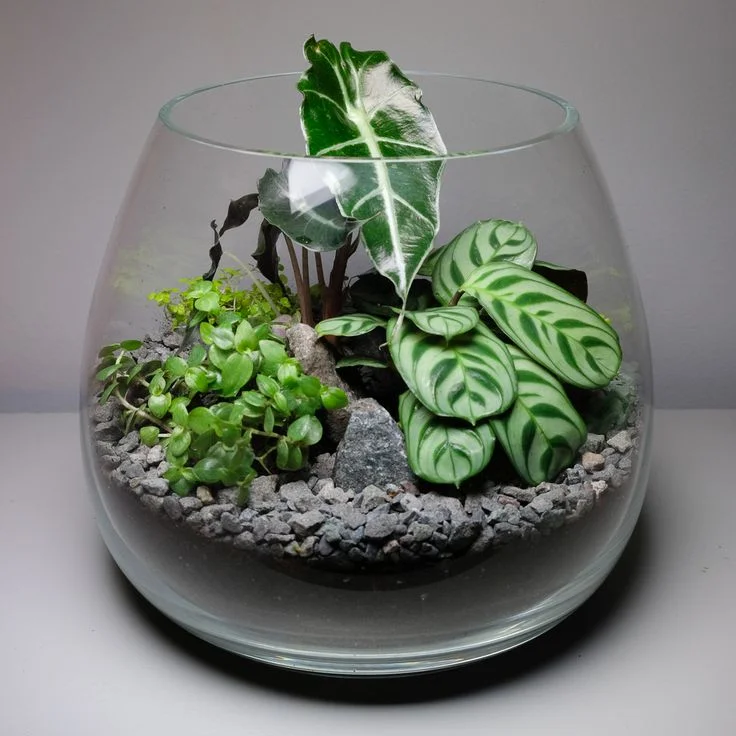
Choosing plants without understanding their needs first is where most people go wrong. Not every plant that looks small and pretty will survive inside a glass container with no lid and fast-draining soil. The ones that do share a very specific set of qualities.
The best open terrarium plants consistently share these traits:
- Low water requirements — They hold up fine between waterings and do not rot when the soil dries out completely.
- Compact growth habits — They stay within their boundaries and do not outgrow the container within a few months.
- Tolerance for shallow soil — Most open terrariums do not have much soil depth, so the plant’s root system needs to be manageable.
- Preference for good airflow — They come from climates where humidity is low and air circulation is constant.
- Visual interest — In a small display space, texture, color variation, and form carry a lot of weight.
Plants that originate from desert, arid, or semi-arid regions are the most natural fit. Succulents, cacti, air plants, and select ornamental grasses all belong in this category. They evolved under tough conditions, which makes them surprisingly easy to grow in a controlled indoor setting.
Best Open Terrarium Plants: The Complete List
1. Echeveria — The Crown Jewel of Succulent Terrariums
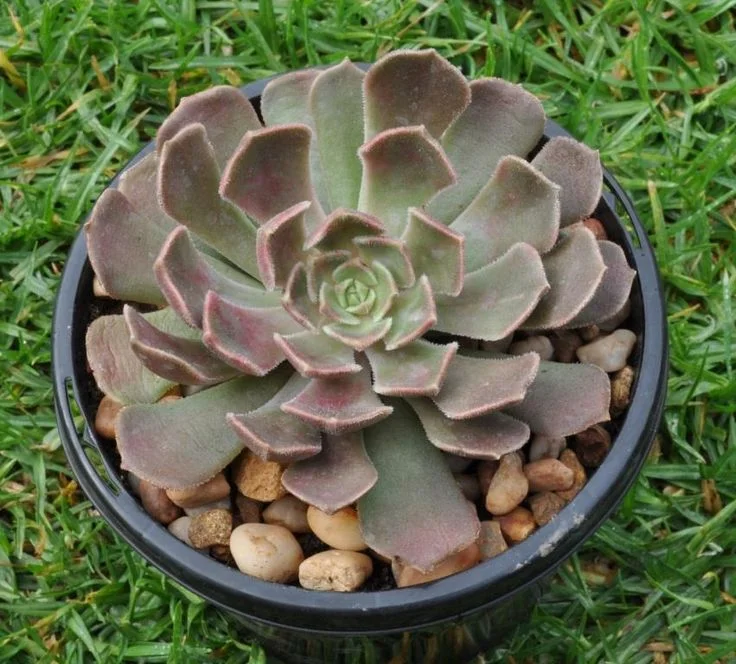
Ask experienced terrarium growers which plant they reach for first among the best open terrarium plants, and Echeveria comes up more than any other. These rosette-shaped succulents are available in a wide range of varieties — from the silvery-blue Echeveria elegans to the deep, purple-tipped Echeveria ‘Black Prince’ — and each one brings a different visual personality to a glass container.
What makes Echeveria so well-suited to open terrariums is its size and structure. Most varieties stay under six inches in diameter, which means they fit comfortably even in smaller containers. Their fleshy, water-storing leaves mean they handle gaps between waterings without any visible signs of stress.
Care tips:
- Water only after the soil has dried out completely.
- Place in bright, indirect light or direct morning sun.
- Use a cactus or succulent potting mix with added perlite for drainage.
- Avoid misting — water sitting on the leaves encourages rot.
Echeveria genuinely earns its reputation as one of the best open terrarium plants for beginners. The visual payoff is immediate, and the care demands are low enough that even irregular attention does not set the plant back significantly.
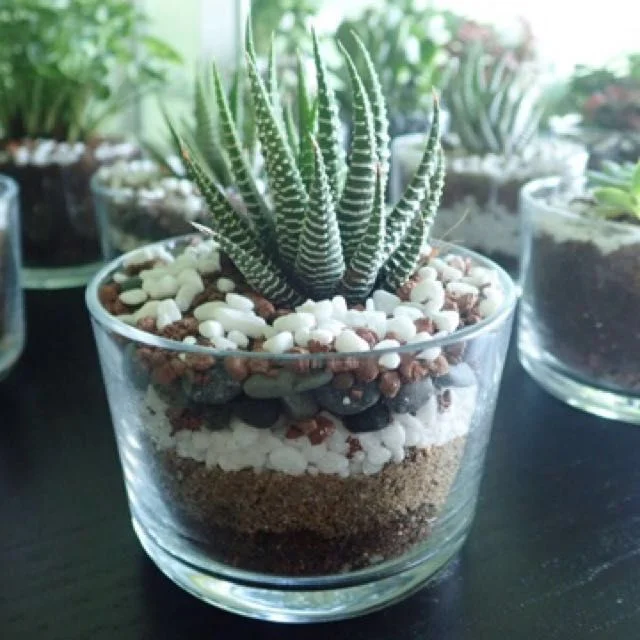
2. Haworthia — The Low-Light Succulent
One of the more common challenges with open terrariums is placement. Not every home has a bright, sun-drenched windowsill available, and most succulents are unforgiving in low light. Haworthia is the exception that solves that problem neatly, which is exactly why it ranks among the best open terrarium plants for indoor spaces.
This small, architectural succulent tolerates indirect light and even the kind of ambient lighting found in offices and interior rooms. Varieties like Haworthia fasciata — commonly called the Zebra Plant — and Haworthia cooperi, with its semi-transparent leaf tips, bring strong visual interest without demanding much from their environment.
Why it works in open terrariums:
- Handles indirect and lower light better than most succulents.
- Grows slowly, so it stays within its space for a long time.
- Drought tolerant — does not need frequent watering.
- Generally pest-resistant and quite hardy.
If your terrarium lives away from a window or in a spot that receives filtered light for most of the day, Haworthia is a reliable and attractive solution.
3. Cacti — Bold, Structural, Drought-Tolerant
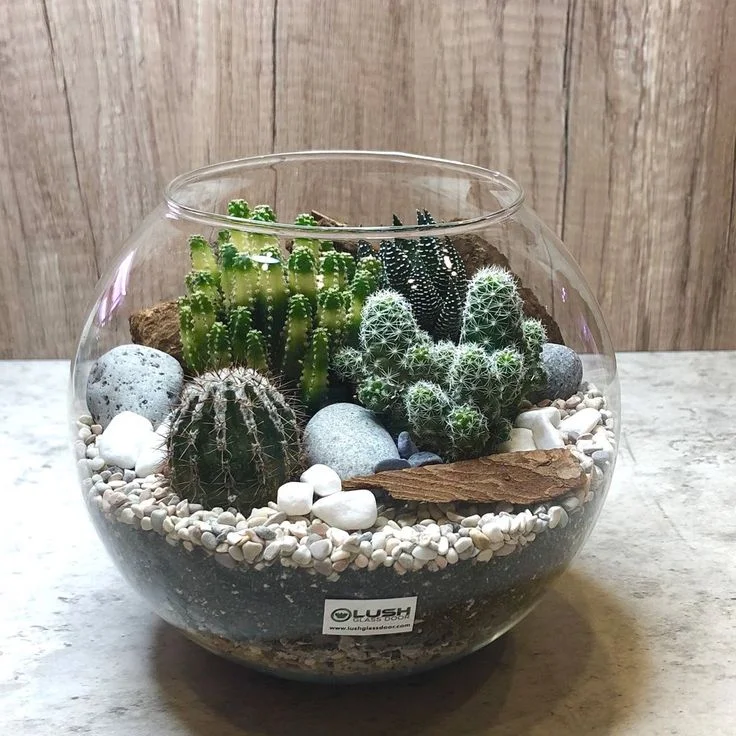
Few plants embody the idea of drought tolerant terrarium plants as completely as cacti. They store water inside their thick stems, draw on those reserves over long dry periods, and ask very little from the person growing them. In an open terrarium, where evaporation happens quickly and the soil stays dry, that self-sufficiency is a genuine advantage.
Several small cacti varieties work particularly well in glass containers:
- Mammillaria — clusters naturally, globe-shaped, produces rings of small pink flowers.
- Gymnocalycium — low-growing and wide, well-suited to shallow containers.
- Rebutia — stays compact, flowers freely in spring with vivid color.
- Notocactus — grows upright without taking up too much horizontal space.
One important point: cacti need real light. Place your terrarium near a south or east-facing window. Without adequate light, cacti begin to stretch toward the nearest source — a process called etiolation — which distorts their shape permanently.
These are among the best open terrarium plants when the goal is strong visual drama with almost no ongoing maintenance.
4. Air Plants (Tillandsia) — No Soil Required
Air plants occupy a genuinely different category from everything else on this list. While most of the best open terrarium plants grow in soil and follow predictable care routines, air plants are epiphytes — plants that grow naturally without soil, anchoring themselves to trees or rocks and absorbing moisture directly through their leaves. Inside an open terrarium, this quality opens up creative possibilities that soil-based plants simply cannot offer.
You can position Tillandsia on driftwood, press them into cork bark, or rest them against decorative stones. They bring movement, unusual form, and a sculptural quality to any arrangement.
Popular Tillandsia varieties for terrariums:
- Tillandsia ionantha — small and compact, turns red at the tips when it blooms.
- Tillandsia xerographica — large, silvery, and rosette-shaped with strong visual presence.
- Tillandsia caput-medusae — dramatic and wild-looking, with curling tentacle-like leaves.
- Tillandsia bulbosa — distinctive bulbous base and slender, curving leaves.
Care routine:
- Mist lightly two to three times per week, or soak the plant for 20–30 minutes once a week.
- Always shake off excess water after soaking — pooling moisture at the base causes rot.
- Keep in bright, indirect light.
- Never allow them to sit in standing water.
Air plants for open terrariums bring a level of creativity to the display that feels more like arranging a piece of art than maintaining a houseplant.
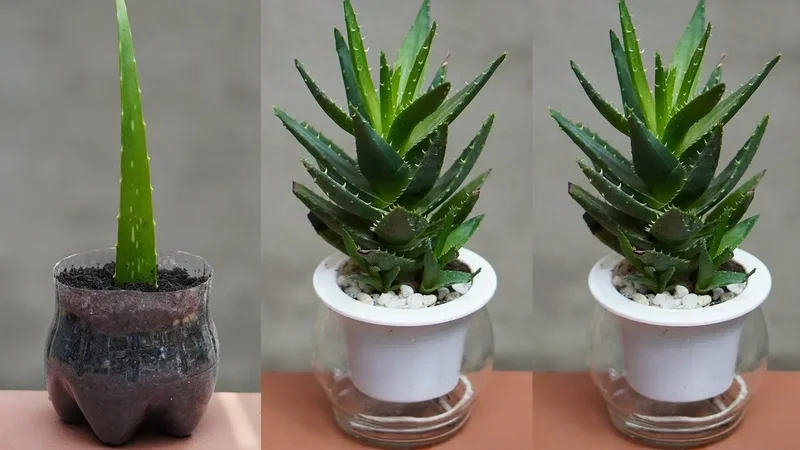
5. Aloe Vera — Practical and Beautiful
Aloe vera earns a place in the open terrarium conversation for more than just its appearance. Yes, it is a visually interesting plant with striking, fleshy leaves edged in small serrations. But it is also one of the most useful plants to keep nearby — the gel inside its leaves has been used for centuries to soothe minor skin irritation and burns.
Young aloe plants stay compact for roughly one to two years, making that early stage their ideal terrarium window. During this time, their upright, pointed growth adds useful vertical structure to arrangements that would otherwise sit flat across the container.
Growing conditions:
- Full sun to bright indirect light.
- Sandy, well-draining soil — regular potting mix holds too much moisture.
- Water deeply every two to three weeks during the growing season.
- Cut watering back significantly in winter — once a month or less is often enough.
Aloe vera is among the best open terrarium plants precisely because it serves two purposes at once — it looks good and provides something genuinely useful.
6. Sedum — Ground-Covering Texture
Sedum is a wide-ranging genus that includes everything from tall, upright varieties to low, creeping types that spread across the soil surface like a living carpet. For open terrariums, the ground-covering varieties are the most useful. They fill space beautifully without growing tall enough to crowd out neighboring plants, making Sedum one of the best open terrarium plants for creating a full, layered arrangement.
Sedum acre (commonly called Goldmoss Stonecrop), Sedum rubrotinctum (known as the Jelly Bean Plant for its rounded, bead-like leaves), and Sedum dasyphyllum are all excellent options that add color and textural variety to glass container arrangements.
What makes Sedum particularly interesting:
- Several varieties shift color under stress — turning red, orange, or deep purple in response to strong light or dry conditions.
- It propagates effortlessly from leaves that fall to the soil surface.
- It grows quickly enough to fill empty gaps but not so aggressively that it overtakes the container.
- It handles both summer heat and occasional cold without significant complaint.
7. Sempervivum — The Hen and Chicks Plant
Sempervivum — most people know it by its common name, Hen and Chicks — is a cold-hardy succulent that grows in tight clusters of rosettes. The main rosette, referred to as the hen, steadily produces smaller offsets around its base. These are the chicks, and they gradually spread outward to fill whatever space is available.
Inside an open terrarium, that natural spreading behavior becomes an asset rather than a problem. The plant fills the container organically over time, creating layers of overlapping rosettes in colors that range from soft green to deep burgundy, depending on the variety and growing conditions.
Sempervivum tectorum is the most widely available species, but hybrid cultivars have expanded the color palette considerably in recent years.
Standout traits:
- Survives outdoor freezing temperatures — one of the most cold-hardy succulents available.
- Thrives in poor, rocky, nutrient-light soil.
- Needs very little water once it has established itself.
- Propagates on its own — the colony expands without any input from you.
8. Faucaria — The Tiger’s Jaw Plant
Faucaria tigrina is not as well-known as most entries on this list, but it is steadily building a following among people who enjoy plants with strong character. Commonly called Tiger’s Jaw, it is a compact succulent from South Africa with thick, triangular leaves edged in soft, tooth-like projections that genuinely do resemble a partially open jaw — and that distinctive quality makes it one of the best open terrarium plants for anyone who wants something truly different.
It holds its own as a conversation piece simply by sitting on a shelf, but in autumn it produces bright yellow, daisy-like flowers that look almost too large for such a small plant. That contrast between the tough, spiky exterior and the cheerful blooms is part of what makes it memorable.
Care requirements:
- Full sun to bright indirect light.
- Well-draining succulent mix.
- Water sparingly — it handles dry periods well.
- Reduce water significantly in summer, when the plant enters a rest period.
9. Lithops — Living Stones
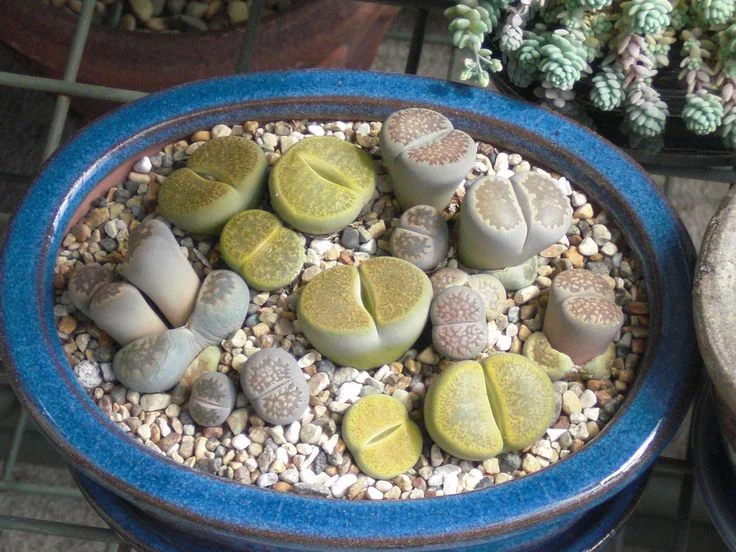
Lithops may be the most quietly fascinating plants available for any open terrarium. These are true desert plants, originating in the dry regions of southern Africa, and they evolved a very specific survival strategy: they look almost exactly like small, rounded pebbles. That camouflage evolved to deter animals from eating them, and it works so well that people sometimes walk past a pot of Lithops without realizing there are plants in it.
Each plant is made up of two fused, swollen leaves with a narrow slit running down the center. Once a year — usually in autumn — a daisy-like flower pushes up through that slit. It is a slow, deliberate event, and watching it happen over the course of a few days has its own particular satisfaction.
What you need to know before growing Lithops:
- They have very specific watering periods — water only in autumn and again in early spring.
- Do not water during summer dormancy or while the plant is flowering in winter.
- Drainage must be sharp — damp soil causes rot quickly.
- Full sun is non-negotiable for healthy growth.
Lithops are not the most forgiving choice for beginners, but for someone who appreciates the challenge and the payoff, they are unlike any other plant in a collection.
10. Zebra Grass (Miniature Varieties) — Textural Contrast
When every plant in a terrarium shares the same general form — low, rounded, fleshy — the arrangement can start to feel monotonous, even if the colors vary. Adding a small ornamental grass changes that immediately. It introduces movement, height variation, and a loose, naturalistic quality that softens the overall look — a combination that makes ornamental grass one of the most underrated choices among the best open terrarium plants.
Miniature Zebra Grass (Miscanthus sinensis ‘Zebrinus’ in smaller cultivars) and Blue Fescue (Festuca glauca) both work well in larger open container arrangements. They prefer well-drained soil and good airflow — conditions that open terrariums already provide — and they bring a sense of the outdoors into the composition that purely succulent arrangements sometimes lack.
How to Layer an Open Terrarium Properly
Selecting the right plants matters, but so does how you build the container itself. Even the best open terrarium plants will deteriorate if the drainage is wrong. Roots sitting in damp, stagnant soil is the fastest route to plant loss in any terrarium setup.
Proper open terrarium layering:
| Layer | Material | Depth |
|---|---|---|
| Bottom | Gravel or lava rock | 1–2 inches |
| Optional | Activated charcoal | Thin layer |
| Soil | Cactus/succulent mix | 2–3 inches |
| Top dressing | Sand, pebbles, or fine grit | Thin decorative layer |
The gravel at the bottom creates a reservoir where excess water can settle below the root zone. It is not optional — it is the layer that protects everything above it. The activated charcoal is debated among enthusiasts, but it does help manage odor and slow bacterial growth in an enclosed space.
Common Mistakes to Avoid
Even people who have grown plants for years make avoidable errors with open terrariums. Most of them come down to the same basic misunderstanding: treating these plants like ordinary houseplants.
Overwatering is responsible for more terrarium failures than anything else. The plants in an open terrarium are drought tolerant by nature. When in doubt, hold off on watering for another few days. The soil being completely dry is not a problem — it is the correct condition before watering.
Using regular potting soil is a common beginner mistake. Standard potting mix holds moisture far too long and compacts over time in small containers. A dedicated cactus or succulent mix with added perlite gives roots the drainage they need.
Mixing incompatible plants undermines the whole arrangement. Ferns and moisture-loving tropicals need humidity and consistent watering — conditions that will harm succulents. Stick to plants with similar environmental needs.
Placing the terrarium in low light is a problem because most of the best open terrarium plants are sun-preferring species. A spot with poor light will slow growth, cause stretching, and gradually weaken the plants. A north-facing windowsill is rarely enough.
Overcrowding is tempting because a full, lush container looks appealing immediately. But plants packed too close together compete for root space, and the arrangement becomes unmanageable within a few months.
Seasonal Care for Open Terrariums
A terrarium is not a set-and-forget project, though it is closer to that than most indoor gardens. Adjusting your approach across the year keeps the plants healthy through changing light and temperature conditions.
Spring and Summer — Active Growing Season:
- Water slightly more often, but still allow the soil to dry completely between sessions.
- Apply a diluted liquid cactus fertilizer once a month.
- Check regularly for pests, particularly mealybugs, which tend to appear in warmer months.
Autumn and Winter — Dormancy Period:
- Reduce watering significantly — once every three to four weeks is usually sufficient.
- Stop fertilizing entirely.
- Move the terrarium closer to windows as natural light decreases.
- Keep the container away from cold drafts near window glass, which can stress desert plants unexpectedly.
Best Containers for Open Terrariums
The container shapes the entire visual outcome. The best open terrarium plants look quite different depending on what surrounds them.
Popular container styles:
- Geometric glass terrariums — angular and modern, well-suited to two to five plants.
- Fish tanks or repurposed aquariums — wide and horizontal, ideal for landscape-style arrangements with multiple plant layers.
- Wide-mouthed glass bowls — casual and accessible, easy to plant and easy to maintain.
- Vintage glass cloches — elegant and refined, best used to highlight a single statement plant.
- Repurposed glass jars — informal and creative, particularly effective for displaying Tillandsia.
Regardless of which container you choose, make sure it is deep enough to accommodate a proper drainage layer beneath the soil. Without that depth, even the right plants will struggle.
FAQ Section
Q1: What are the best open terrarium plants for beginners?
Echeveria, Haworthia, and air plants (Tillandsia) are the strongest starting choices. They are forgiving of inconsistent care, widely available at most garden centers, and visually impressive without demanding much attention.
Q2: How often should I water plants in an open terrarium?
During the growing season, most plants need water every one to two weeks. In winter, that drops to once every three to four weeks. The most reliable approach is to check the soil first — if it is still damp at all, wait.
Q3: Can succulents survive in open terrariums without drainage holes?
Yes, with proper preparation. A gravel drainage layer at the bottom of the container compensates for the absence of drainage holes. That said, watering discipline becomes more critical when there is nowhere for excess water to escape.
Q4: Do open terrarium plants need direct sunlight?
Most thrive in bright indirect light or a few hours of direct morning sun. Cacti and Lithops prefer stronger, more direct exposure. Haworthia is the notable exception — it performs well in lower light conditions that would stress other succulents.
Q5: What is the difference between open and closed terrariums?
Open terrariums have no lid and create a dry, well-ventilated environment suited to succulents and cacti. Closed terrariums trap moisture and build humidity, making them suitable for ferns, mosses, and tropical plants that need consistent dampness.
Q6: Can I mix different succulents in one open terrarium?
Yes, and mixing species generally produces more interesting results than planting a single variety. Choose plants with similar light and water requirements, and pay attention to final size so one plant does not eventually crowd out the others.
Q7: How do I prevent mold in an open terrarium?
Mold is uncommon in open terrariums because airflow prevents the kind of moisture buildup that causes it. If it does appear, reduce watering immediately, remove any affected material, and ensure the container receives adequate light and ventilation.
Conclusion: Start Small, Choose Well
Building an open terrarium does not require a large budget, a lot of space, or years of gardening experience. It requires choosing the right plants, setting up the container properly, and understanding that these plants genuinely prefer less intervention rather than more.
The best open terrarium plants — from Echeveria and Haworthia to air plants and Lithops — share one defining quality: they are adapted to conditions that most houseplants would find difficult. Dry soil, bright light, and infrequent watering are not hardships for these species. That is their natural environment.
Start with two or three plants rather than filling the container immediately. Watch how they respond to the light in your space. Adjust watering based on what you observe, not on a fixed schedule. Over time, you will develop a sense for what the arrangement needs, and the terrarium will reflect that attention.
A well-chosen open terrarium does not just survive indoors — it thrives quietly, holds its shape beautifully, and adds something genuinely alive to the space around it. That combination of low effort and lasting visual reward is exactly why so many people, once they build one, go on to build several more.