You know that one corner in your living room — the one that just sits there, collecting nothing but awkward energy? You’ve probably walked past it a hundred times thinking, “I should do something with that.”
Here’s the thing: a well-styled corner plant display is one of the easiest, lowest-cost ways to completely change how a room feels. No renovation required. No Pinterest degree needed. Just the right plants, the right setup, and a few simple styling tricks that most people don’t know about.
In this guide, you’ll get practical corner plant arrangement ideas — whether your space is tiny, dark, rental-friendly, or wide open. Let’s get your corners working for you.
Why a Corner Plant Display Changes a Room More Than You Expect
There’s a reason interior designers always have plants in corners. Empty corners are what designers call “dead zones” — your eye lands there and finds nothing. That creates a subconscious feeling of imbalance in the room.
A corner plant display fixes this by adding vertical interest, softening sharp angles, and bringing in natural texture that no piece of furniture can replicate.
And it’s not just about looks. More than 62% of urban households now show a preference for indoor greenery specifically to enhance their living spaces — and it makes total sense. Plants calm a room down. They make it feel lived-in rather than staged.
The global indoor plant market reflects this shift too. Valued at USD 16.1 billion in 2025, it’s projected to hit USD 25.2 billion by 2035 — people are investing in greenery like never before. And demand for low-maintenance indoor plants has surged 33% among millennials in urban regions, which makes sense given how many of us are working with apartments, not mansions.
The corner is where that investment makes the biggest visual impact. Here’s how to do it right.
1. Start With a Tiered Corner Plant Holder — It Does the Heavy Lifting
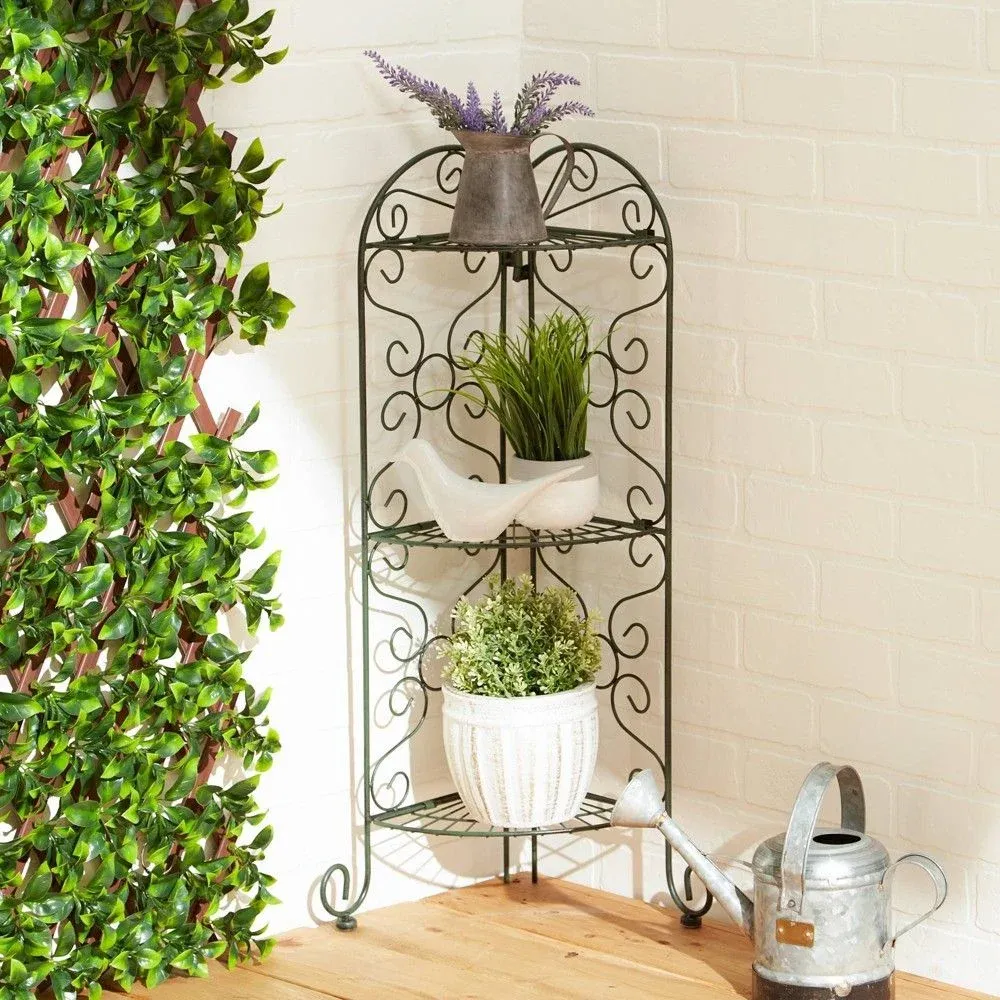
If you’re not sure where to begin, a tiered corner plant holder is your best first move. It’s the workhorse of corner plant styling.
Why? Because it solves three problems at once: it gives you height variation, lets you display multiple plants without crowding, and keeps everything contained and tidy.
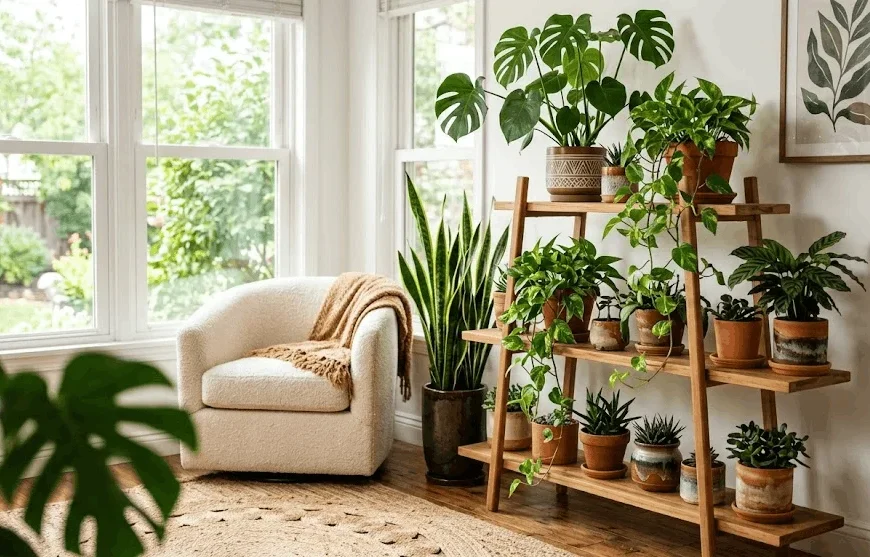
The setup is simple. Place your largest plant on the bottom shelf, medium plants in the middle, and small trailing plants or succulents on top. The trailing vines will cascade downward and tie the whole thing together visually.
Which Plants Work Best Here?
- Bottom: Snake plant, ZZ plant, rubber tree, or a small monstera.
- Middle: Peace lily, calathea, or a small fern.
- Top: Pothos, string of pearls, or a small succulent.
Pothos is genuinely hard to kill, and its vines falling over the edge of a tiered stand look effortlessly styled — not forced. If you’re a beginner, start with pothos and build your confidence from there.
The key tip most people miss: don’t use matching pots. Mix terracotta, ceramic, and woven basket textures. It looks curated, not cookie-cutter.
2. The Wooden Corner Plant Display Stand: Timeless and Versatile
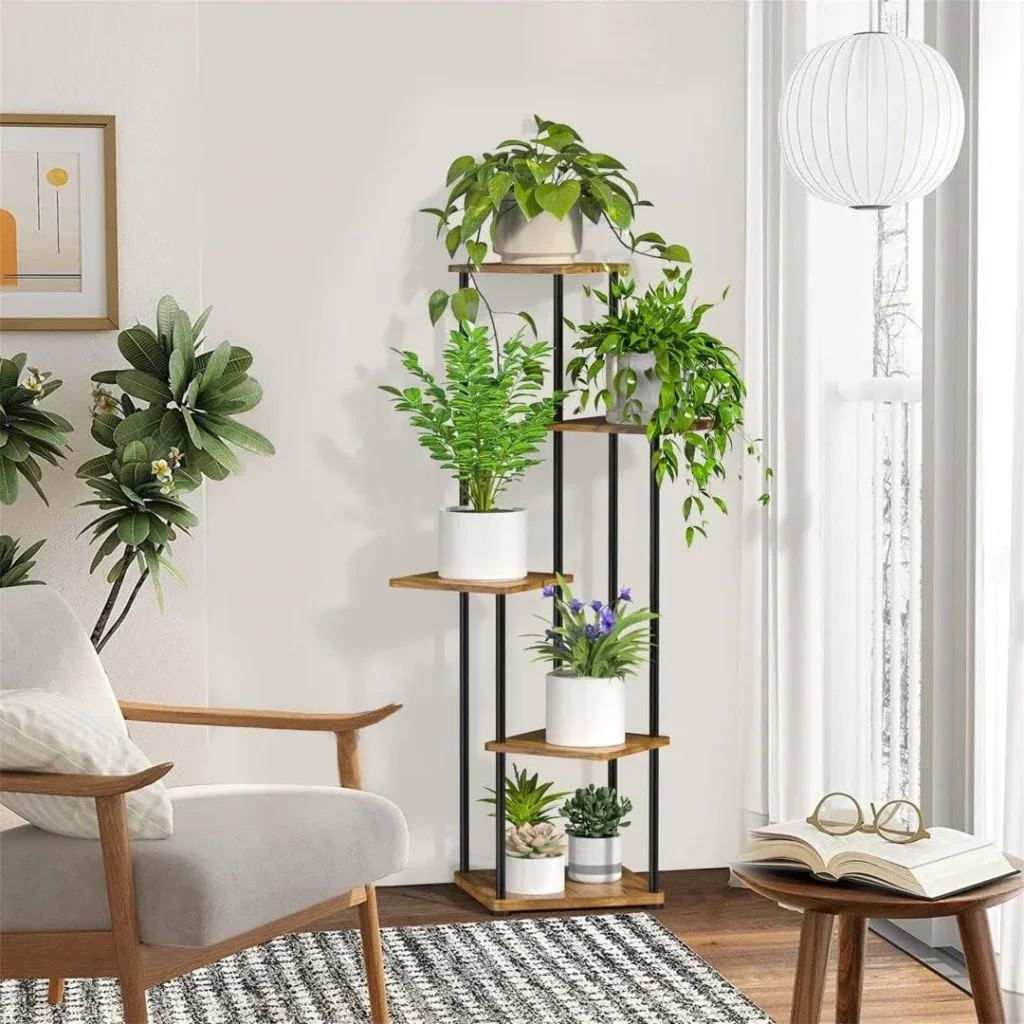
A wooden corner plant display stand hits differently compared to metal or plastic. It brings warmth. It works with almost every interior style — Scandinavian, boho, farmhouse, even modern minimalist if you keep the lines clean.
Ladder-style wooden stands are particularly popular for corners right now. You lean them against the wall, load up the rungs with pots of different sizes, and you’ve got instant height without taking up much floor space.
Here’s a real-world tip: if you have a darker corner, choose a light natural wood tone like ash or pine. It reflects more light and prevents the whole setup from looking heavy. If your corner gets decent natural light, a darker walnut-toned stand creates that moody, lush atmosphere that looks incredible on camera — and in real life.
A wooden corner plant display stand also works beautifully outdoors. On a covered patio or balcony, sealed or treated wood handles the elements while giving your outdoor corner plant display a natural, garden feel.
3. Use an Indoor Corner Plant Shelf for a Modern, Space-Saving Look
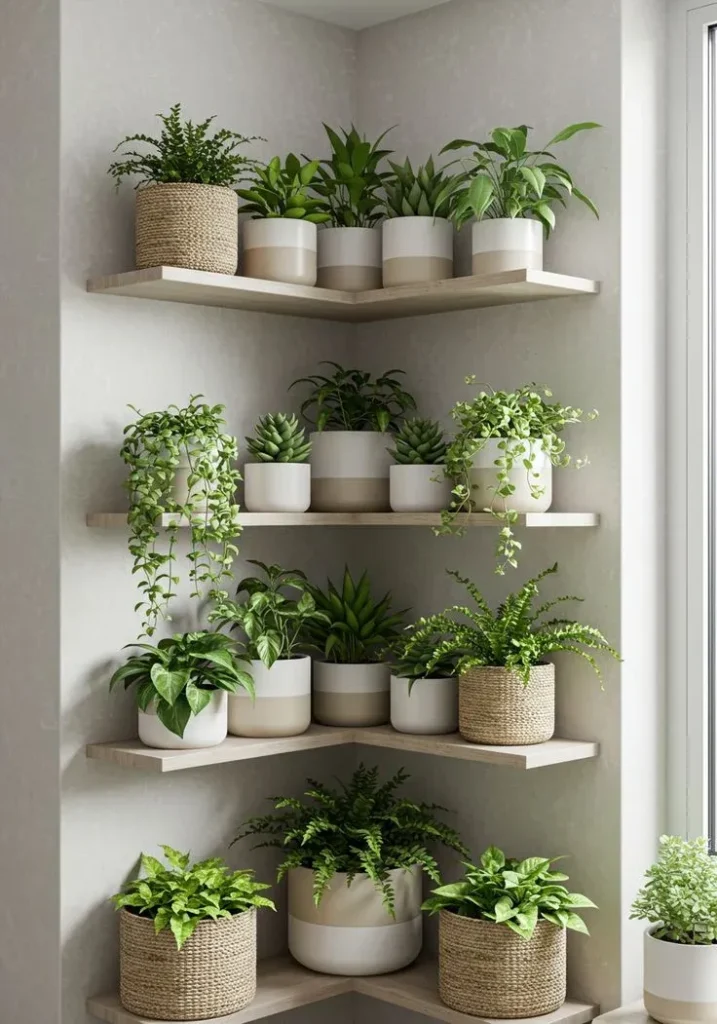
Wall-mounted shelves are genuinely underused in corner plant styling. Most people think of shelves as running along one wall — but floating corner shelves are specifically designed for that triangle of space where two walls meet.
An indoor corner plant display shelf setup gives you vertical plant real estate without touching the floor at all. This is perfect for:
- Renters who can’t nail big holes in walls (use minimal-damage hooks).
- Small apartments where floor space is precious.
- Kitchens and bathrooms that need greenery but have no room for stands.
Style tip: use odd numbers. Three shelves look more intentional than four. And on each shelf, group plants in threes — one tall, one medium, one small. Interior designers call this the “rule of three,” and it works every single time.
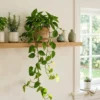
For plants, trailing varieties like pothos and ivy on the upper shelves create a cascading waterfall effect as their vines grow. Pair them with compact plants like air plants or small succulents on lower shelves for balance.
4. Go Big: The Statement Corner Floor Plant Display
Sometimes the right answer is one big plant. Not five small ones. Just one dramatic, floor-level specimen that owns the corner.
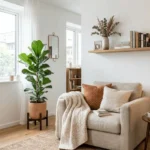
A corner floor plant display built around a single statement plant is perfect for living rooms and entryways. The plants that work best here are ones with presence: fiddle leaf fig, monstera deliciosa, bird of paradise, large rubber plant, or a tall dracaena.
Place it in a pot that’s slightly oversized — this grounds the plant and makes it look intentional, not just dropped there. Woven seagrass baskets are very popular for this right now, and for good reason: they’re affordable, lightweight, and look great.
You can build around it too. Add two or three smaller plants at the base — low ground cover types or compact ferns — to fill in the space around the main plant’s stem. This creates a layered, full look without needing a stand or shelf at all.
One thing to check before committing to a tall plant in a corner: light. Fiddle leaf figs are notoriously dramatic about inadequate light. If your corner doesn’t get indirect light for at least a few hours a day, choose a snake plant or a ZZ plant instead. Both can handle low-light corners and still look impressive at height.
5. Living Room Corner Plant Decor: How to Style It Around Your Furniture
Your living room corner plant decor shouldn’t exist in isolation — it should feel like it belongs in the room.
The most common mistake? Putting a single plant in a corner and expecting it to look styled. It usually just looks lonely.
Here’s how to integrate your corner plant display into your living room:
Frame the sofa. If your sofa sits near a corner, place a tall plant behind one end of it. The plant becomes a natural frame for the seating area. Fiddle leaf figs and rubber trees are classics for this.
Match textures. If your sofa is in a natural linen or a warm neutral, choose pots in earthy terracotta, raw wood, or cream ceramic. If your furniture is more sleek and modern, go for matte black planters on a metal stand.
Add a small side table. A plant doesn’t have to stand alone. Put a small side table next to a tall floor plant and add a lamp, a candle, and one or two smaller plants on top. Now you have a proper corner vignette — not just a plant.
This approach works especially well for corner plant display for multiple plants because you’re layering different heights across furniture and the floor naturally.
6. Small Corner Plant Display: What to Do When Space Is Tight
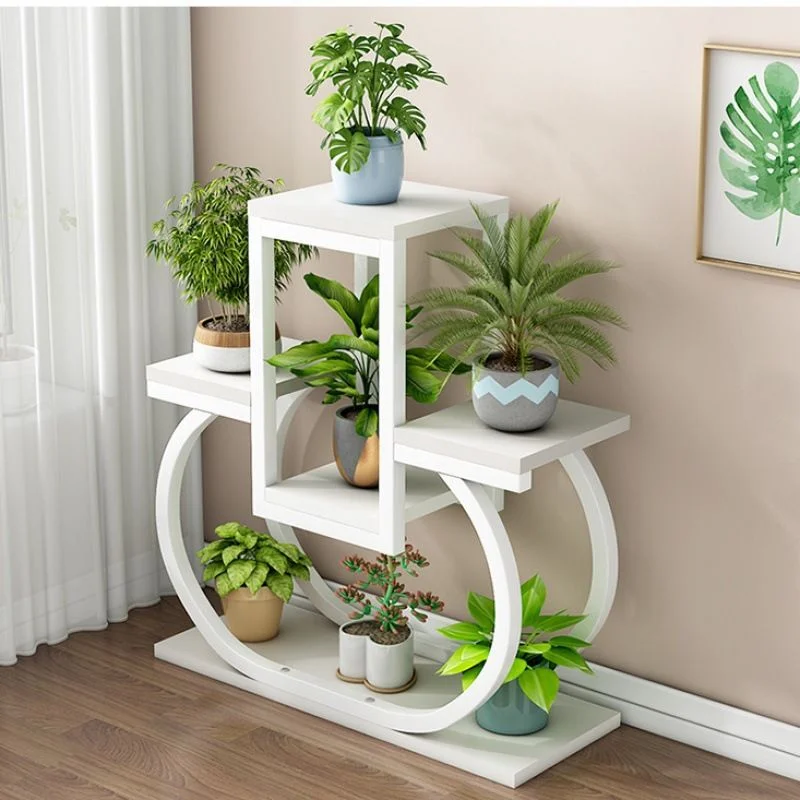
Limited floor space doesn’t mean you have to skip the corner greenery. A small corner plant display in a compact apartment, office, or bedroom can look just as intentional — sometimes more so.
Here are your best options when space is tight:
Hang instead of stand. A macramé plant hanger in the corner — hung from the ceiling or a wall hook — takes up zero floor space and adds incredible texture. Pothos and string of pearls are perfect for this.
Go vertical with a narrow stand. Some corner stands are designed specifically to fit in tight spaces with a small footprint. Look for triangular-base stands that tuck snugly into the corner without extending into the room.
Use the wall itself. A small pegboard in the corner with hooks and small shelves lets you arrange mini pots in a completely custom layout. You can rearrange as often as you like.
Even a single trailing plant on a wall-mounted hook in a small corner can transform the feel of the room. Don’t underestimate what one well-placed plant can do.
7. Outdoor Corner Plant Display: Don’t Ignore Your Patio or Balcony
Most corner plant display guides stop at the front door. But your outdoor corner plant display is one of the highest-impact styling opportunities you have.
Patio corners, balcony corners, and garden nook corners all respond brilliantly to plant styling — and the rules are mostly the same as indoors, just with different plant choices.
For an outdoor tiered stand or wooden ladder in a covered patio, try:
- Large scale: Birds of paradise, bamboo, canna lily.
- Mid level: Ferns, bougainvillea (climbing), petunias.
- Ground level: Hostas, ground cover succulents, ornamental grasses.
If your outdoor corner gets full sun, that opens up a whole new range of flowering plants. If it’s shaded most of the day, ferns and hostas are your best friends — they’re lush, low-maintenance, and actually prefer shade.
Weather-resistant pots matter here. Terracotta cracks in frost; lightweight fiberglass or resin pots look just as good and survive the elements far better. For the stand itself, look for powder-coated metal or treated hardwood if it’ll be exposed to rain.
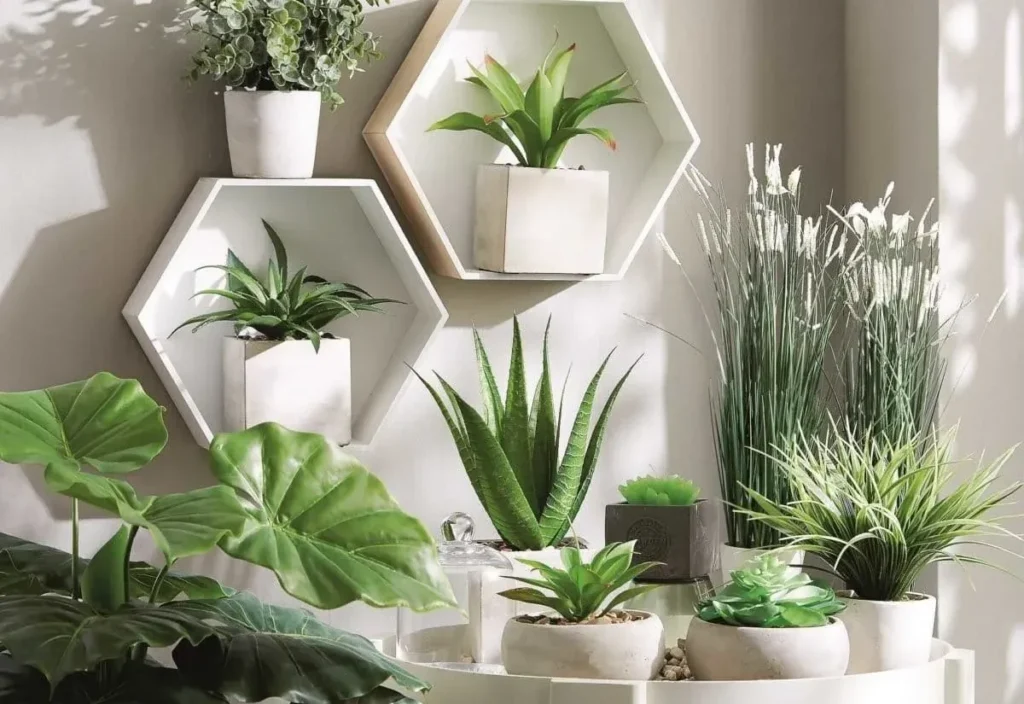
8. Corner Plant Arrangement Ideas: The Styling Rules That Actually Work
No matter which setup you choose, these corner plant arrangement ideas will make the difference between “plants in a corner” and “wow, that looks amazing.”
The Height Rule: Your display should have at least three distinct height levels — tall, medium, and low. This creates visual movement and stops the arrangement from looking flat.
The Odd Number Rule: Group plants in odd numbers (3, 5, 7). Even numbers feel static. Odd numbers feel dynamic and natural.
The Texture Rule: Mix leaf shapes. Pair a big-leafed monstera with fine-leafed ferns and round-leafed pothos. Contrast is what makes a plant arrangement look styled rather than random.
The Rotation Rule: Rotate your plants a quarter-turn every two weeks. Plants grow toward light, and rotating keeps them even — and keeps your display looking balanced.
The Colour Rule: Stick to a pot palette of two or three complementary tones. Mixing ten different pot colours kills the aesthetic. Earthy neutrals — terracotta, cream, black, natural wood — work with everything.
9. Best Low-Light Plants for Your Corner Plant Display
This comes up constantly: “What plants actually survive in a dark corner?”
Here are the tried-and-tested options that genuinely thrive in low-light corners:
- Snake plant (Sansevieria): Basically indestructible. Tall, architectural, and survives weeks without water.
- ZZ plant: Glossy, dark green leaves. Handles neglect like a champion.
- Pothos: Trails beautifully, tolerates almost any light level.
- Cast iron plant: Named appropriately — nearly impossible to kill.
- Peace lily: One of the few flowering plants that actually prefers low light.
If your corner truly gets almost no natural light and you love the idea of a lush corner plant display, consider adding a small LED grow light. They’re cheap, energy efficient, and in 2026 there are plenty of stylish options that don’t look clinical.
10. Common Corner Plant Display Mistakes to Avoid
Before you go shopping, here’s what trips most people up:
Choosing the wrong size pot. A tiny plant in a giant pot looks lost. A large plant in a small pot looks unstable and will outgrow it fast. Match pot size to root ball size, then go one size up.
Ignoring the corner’s light. A fiddle leaf fig in a dark corner will slowly decline no matter how good it looks on day one. Always check your corner’s light levels before choosing plants.
Overcrowding. More plants doesn’t always mean better. Give each plant room to breathe — and room to grow. A slightly sparse display today looks lush in six months.
Matching pots too precisely. Identical pots in a row look like a garden centre, not a styled home. Mix materials while keeping colours cohesive.
FAQs: Corner Plant Display
Q1. What is the best corner plant display for a small apartment?
For tight spaces, a narrow tiered stand with a small footprint or a wall-mounted indoor corner plant shelf is ideal. Hanging planters also work brilliantly — they use vertical space without touching the floor, leaving your room feeling open. Pothos and trailing string of pearls are perfect for hanging displays in small apartments.
Q2. Which plants are best for a dark corner plant display?
Snake plants, ZZ plants, pothos, cast iron plants, and peace lilies are the top choices for a corner plant display in low-light conditions. They genuinely thrive in indirect or limited light and require minimal watering. Avoid plants like fiddle leaf figs or monsteras unless you can supplement with a grow light.
Q3. How do I style a corner plant display for multiple plants without it looking messy?
Stick to three height levels, odd numbers of plants, and a consistent pot colour palette. Mix leaf textures but keep the containers cohesive. Use a tiered corner plant holder or combination of floor plants and floating shelves to separate levels clearly — this stops it from looking cluttered.
Q4. Can I create an outdoor corner plant display on a shaded balcony?
Absolutely. Ferns, hostas, impatiens, and caladiums all thrive in shade. Use a weather-resistant stand (powder-coated metal or treated wood) and lightweight resin pots to handle outdoor conditions. A shaded outdoor corner plant display can be just as lush and beautiful as a sunny one with the right plant selection.
Q5. How often should I rotate plants in my corner plant arrangement?
Rotate plants a quarter-turn every one to two weeks. This ensures even light exposure on all sides, which keeps growth balanced and prevents plants from leaning dramatically toward a light source. It also keeps your corner plant arrangement looking symmetrical and well-maintained over time.
Conclusion
Every home has dead corners. The good news is that fixing them requires zero renovation, minimal budget, and just a bit of intentional styling.
Whether you start with a tiered corner plant display on a wooden stand, a single dramatic fiddle leaf fig on the floor, or a trail of pothos hanging from a macramé hanger — the most important thing is to start.
Pick one corner this weekend. Choose one plant you love. Get the right stand or shelf for your space. Then build from there. A living room corner plant decor moment you’ll be proud of is closer than you think — and it starts with just one plant in the right spot.