You open the corner cabinet looking for that one pot. You reach in, feel around in the dark, knock something over, and eventually give up. Sound familiar?
Kitchen corner storage is one of those problems every homeowner faces but nobody talks about enough. That awkward dead zone where two cabinet runs meet? It’s secretly one of the biggest storage opportunities in your entire kitchen — you’re just not using it right yet.
In this guide, we’ll walk through the best kitchen corner storage solutions available right now — from classic lazy Susans to clever pull-out systems — so you can stop losing things in the back of your cabinets and start cooking without the chaos.
Why Kitchen Corner Storage Is Harder Than It Looks
Most people assume their corner cabinet is just “bonus space.” In reality, it’s often the most underused part of the kitchen.
Corner cabinets look generous from the outside. Inside, they become dark, awkward caves where items disappear. Homeowners shove bulky items into the back and forget about them entirely. The real problem isn’t that corner cabinets are too small — it’s that they’re badly designed for access.
Here’s the thing: a standard 36×36-inch corner cabinet holds around 12 cubic feet of theoretical volume. That’s a lot of space. A well-designed kitchen corner storage system can unlock nearly all of it. A poorly designed one wastes most of it.
The good news? You don’t need a full kitchen remodel to fix this. Most of the solutions below are either affordable add-ons or simple swaps you can do on a weekend.
1. The Lazy Susan Turntable — The Classic That Still Wins
If you haven’t tried a lazy Susan yet, this is probably where you should start.
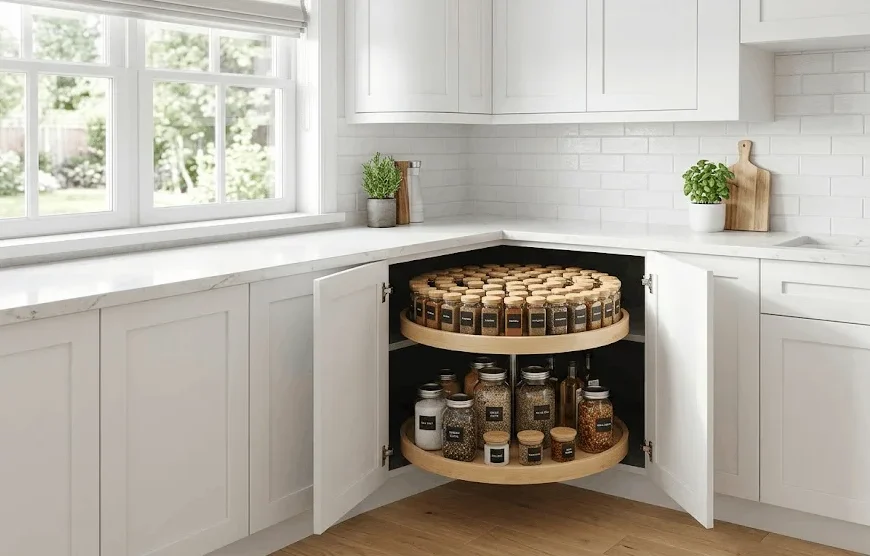
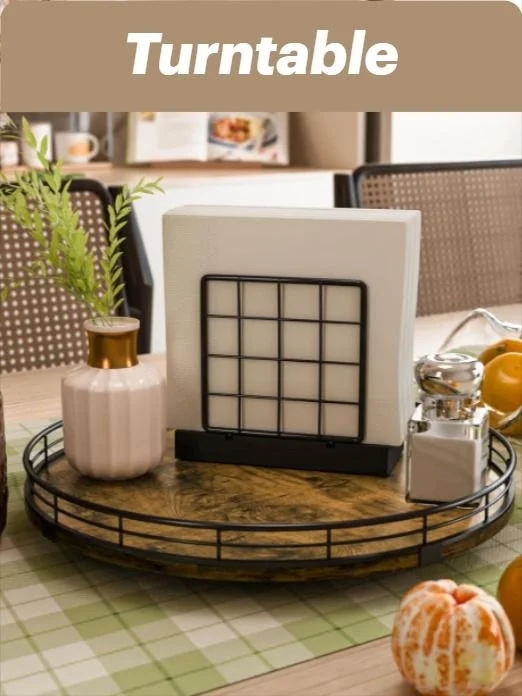
A lazy Susan turntable sits inside your corner cabinet and rotates 360 degrees, so instead of digging into the back, you just spin the shelf to bring everything forward. It’s the kitchen equivalent of a revolving door — simple, fast, and surprisingly effective.
A lazy Susan is one of the best corner cabinet organizers around. Its rotating design allows you to get what you need without reaching back or rummaging through your stuff. “A glide-smooth turntable allows you to access items in the back without having to dig through piles of pots or pantry supplies,” says home decluttering expert Tina Priestly.
They come in several shapes — kidney, D-shaped, pie-shaped, or full-round — so you can match the lazy Susan to your cabinet’s layout. Two-tiered models work especially well for spices, oils, and condiments. For larger base cabinets, a full-round lazy Susan with a raised lip keeps heavier items like canned goods or mixing bowls from sliding off.
Best for: Spices, oils, condiments, small pantry items, dry goods.
Budget range: $20–$80 for a quality insert.
2. Pull-Out Corner Drawers — The Modern Upgrade
If the lazy Susan is the classic choice, the pull-out corner drawer is the 2025 upgrade.
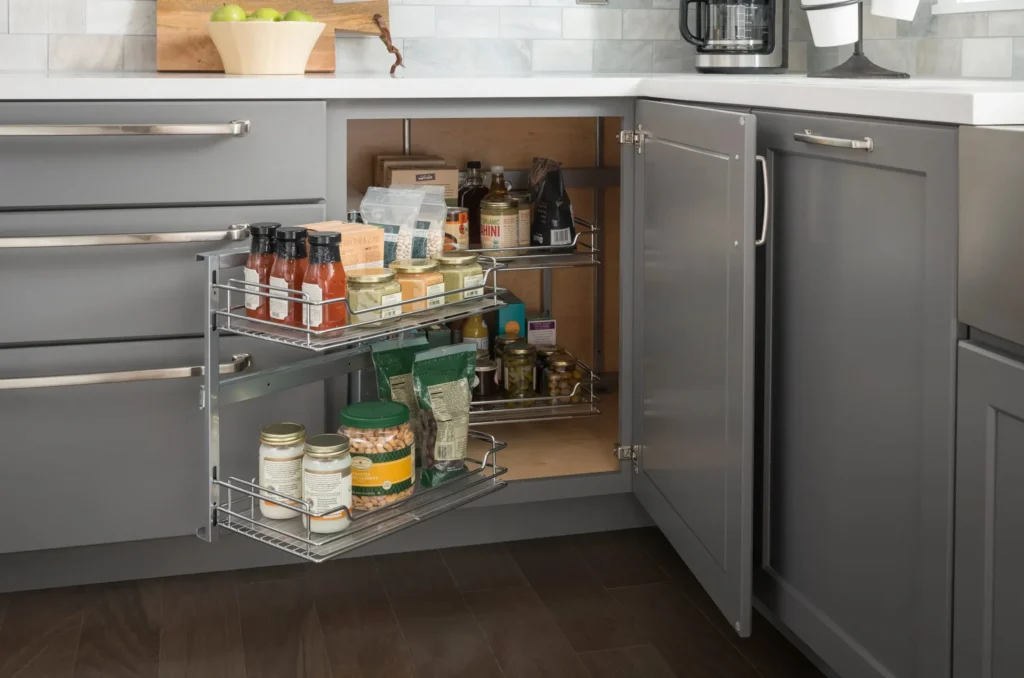
Pull-out shelves and sliding trays are some of the best corner cabinet storage solutions, especially for blind corner cabinets. They slide out easily and use the full depth of the cabinet without sacrificing accessibility. “These allow you to access deep cabinet space easily while keeping it all within arm’s reach with a gentle pull,” says Priestly. “This is excellent for storing heavier items, such as cast-iron pots and pans or large mixing bowls, that are difficult to lift from the back of a cabinet.”
Unlike a lazy Susan, pull-out corner drawers slide straight toward you — no spinning, no awkward angles. You see everything at once, grab what you need, and slide it back. They’re especially useful as a kitchen cabinet space saver when you’re working with deep base cabinets that swallow things whole. No more getting on your knees and blindly reaching into the back of a cabinet hoping to find the right pan — everything comes to you instead.
And that visibility factor is bigger than it sounds. When you can see every item at a glance, you stop buying duplicates, you waste less food, and cooking actually becomes faster and less frustrating — which is exactly what good kitchen corner storage should do for you every single day.
Some higher-end versions use a “magic corner” mechanism — when you open the door, one set of shelves slides out, followed by a second set from deeper inside. This system uses nearly all the space that usually goes unused and is perfect for heavier cookware or bulky kitchen tools.
Best for: Heavy pots, baking trays, cookware, bulky appliances.
Budget range: $60–$200+ depending on mechanism type.
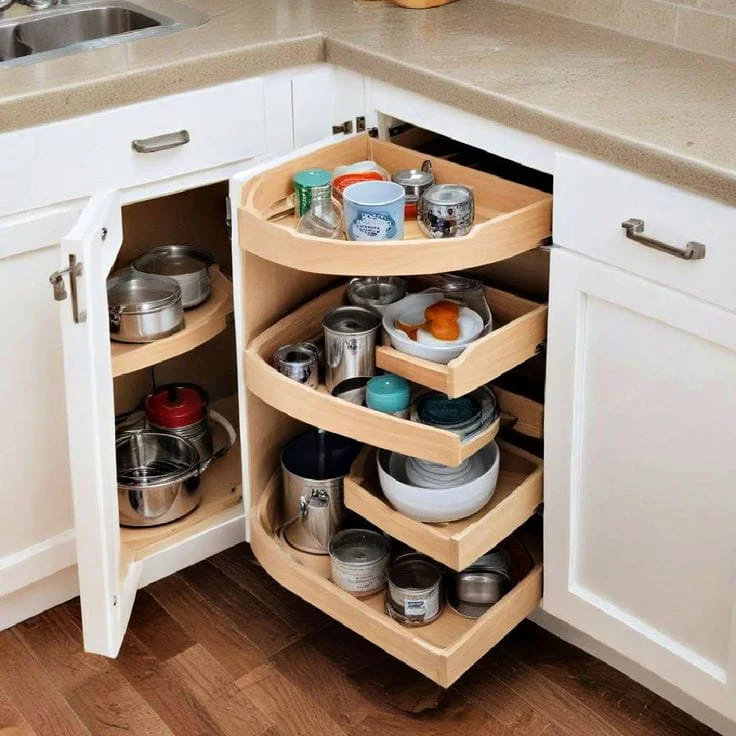
3. Blind Corner Cabinet Solutions — Don’t Ignore This Problem
The blind corner cabinet is the trickiest type to deal with. It’s the one where the cabinet extends behind the adjacent cabinet, and you literally cannot see what’s inside without crouching and reaching in at an angle.
A diagonal cabinet will help you take up the entire corner space, and is a good choice if you’re planning on assembling kitchen cabinets yourself. But if you already have a blind corner and can’t remodel, swing-out trays are your best friend.
Swing-out trays attach to the cabinet door and frame. When you open the door, the shelves swing toward you rather than staying hidden at the back. This makes it easier to access cookware, lids, and small appliances. It’s especially useful for blind corner cabinets where space is hard to reach, and the smooth motion reduces bending and awkward stretching.
Another solid blind corner cabinet solution is the half-moon lazy Susan — designed specifically to work with the irregular shape of a blind corner opening.
Best for: Blind corners in L-shaped or U-shaped kitchen layouts.
Pro tip: Before buying any blind corner insert, measure your cabinet opening carefully. Full-extension magic corner units require a minimum 18-inch-wide door opening to operate correctly.
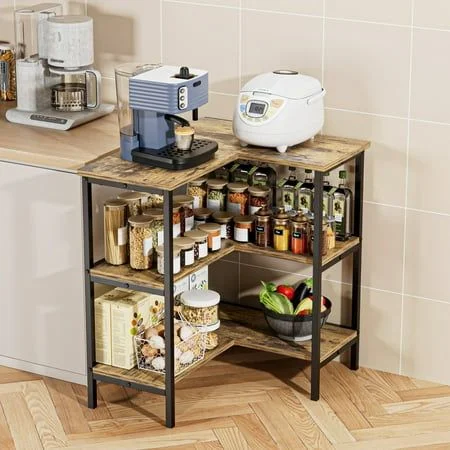
4. Corner Shelf Unit for the Kitchen — Going Vertical
Not all kitchen corner storage has to be inside a cabinet. Open corner shelf units are one of the easiest ways to add functional storage without any major construction.
A corner shelf unit in the kitchen uses vertical wall space — the most underused dimension in most kitchens. You can mount floating shelves in a stacked L-shape, going up from counter height toward the ceiling.
Open shelves in kitchen corners are a stylish solution for storing dishes, spices, or even plants. The corner design maximizes unused vertical space, giving your kitchen a more open, airy feel.
This approach works brilliantly in small kitchen storage setups where floor and cabinet space is tight. Keep the shelves organized with matching jars, labeled baskets, or simple ceramic containers, and the corner becomes a design feature rather than dead space.
Best for: Spices, jars, small plants, decorative cookware, everyday dishes.
Budget range: $30–$150 for floating shelf kits.
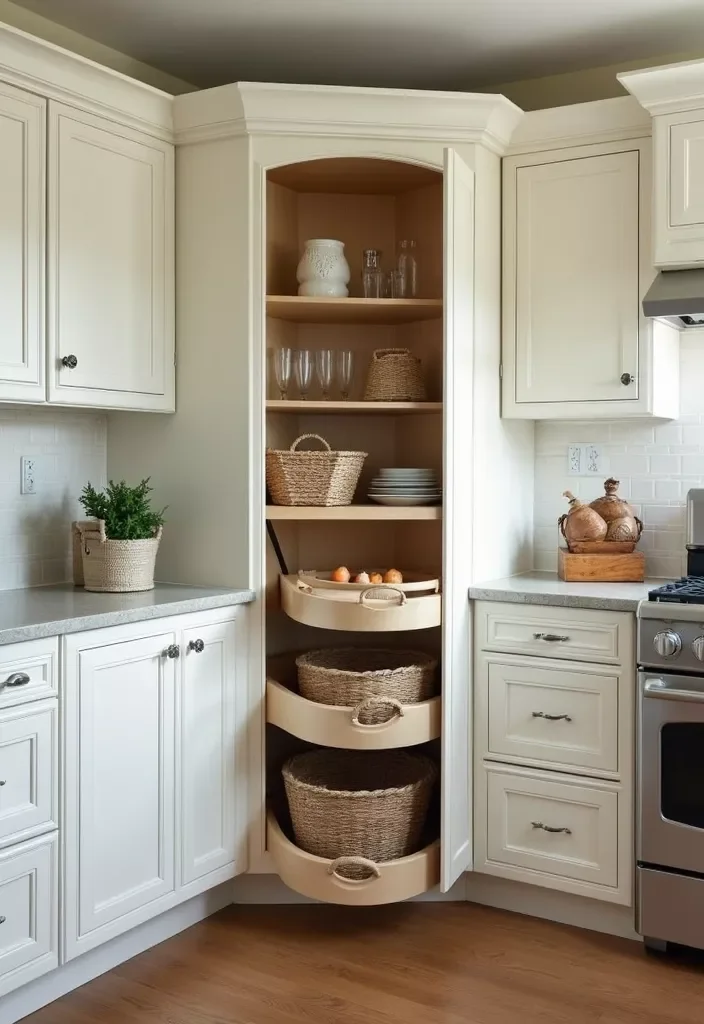
5. Kitchen Pantry Corner Rack — For the Deep Pantry Zone
If you have a larger kitchen or a dedicated pantry corner, a full-height kitchen pantry corner rack can completely transform how you store dry goods.
Think of it like a mini grocery store inside your kitchen. Layered lazy Susans make the whole setup feel ridiculously efficient — almost like browsing a tiny gourmet shop right at home. But for a corner pantry, you can go bigger — wrap-around shelving that follows the walls from floor to ceiling, with deeper shelves at the bottom for bulk items and narrower ones at the top for lighter goods. This is where kitchen corner storage truly earns its place as the hardest-working zone in your entire cooking space.
The secret is treating every inch as intentional, not accidental. Once you commit to a proper system — labeled containers, grouped categories, consistent heights — the corner stops feeling like a dumping ground and starts feeling like a well-run kitchen station. And honestly, once you experience a fully optimized kitchen corner storage setup, you’ll wonder how you ever cooked without it.
The key to making a compact corner pantry work in a small kitchen is customizing the space — think narrow shelves, built-in organizers, and easy-to-access storage.
Label everything clearly. Group by category — baking supplies together, snacks together, canned goods together. This prevents the common issue of things getting buried and forgotten, which leads to buying duplicates and wasting money.
Best for: Dry goods, canned food, cereals, baking supplies.
Pro tip: Add a small LED strip inside the pantry corner rack. It makes a massive difference in visibility.
6. Under-Sink Corner Organizer — The Forgotten Zone
Most people treat the under-sink cabinet as a dumping ground. Cleaning sprays, old sponges, plastic bags — it all piles up into chaos. If your sink is in a corner, you’re dealing with double the awkward space.
An under-sink corner organizer typically uses adjustable tiered shelving that works around the plumbing pipes. Some versions include pull-out trays so you’re not constantly reaching past the drain pipes to grab something from the back.
This is one of the most overlooked small kitchen storage ideas, but it pays off fast. Once you clear out the clutter and organize this zone properly, you’ll free up meaningful counter and cabinet space elsewhere in your kitchen.
Best for: Cleaning products, dishwasher tablets, sponges, bin bags.
Budget range: $20–$60 for good adjustable under-sink organizers.
7. Corner Cabinet Organizer Inserts — The Budget-Friendly Fix
Not ready to install a full pull-out system? No problem. A simple corner cabinet organizer insert can make a big difference without any tools or drilling. In fact, this is one of the easiest entry points into better kitchen corner storage — no contractor needed, no weekend-long project, just a smart insert and a little reorganizing.
These affordable organizers come in wire racks, tiered shelves, stackable bins, and rotating trays — so there’s something that fits almost every cabinet shape and size. You don’t have to spend hundreds to fix a frustrating corner. Sometimes a $25 insert from your local home store solves 80% of the problem overnight. Think of it as testing the waters before committing to a bigger kitchen corner storage upgrade down the line — low risk, high reward, and completely reversible if you change your mind later.
These are freestanding tiered racks, stackable bins, or wire shelf expanders that sit inside your existing corner cabinet. They’re not as slick as built-in systems, but they work — especially if you’re renting or just want a quick fix.
Adjustable shelf inserts help you customize the inside space. You can raise or lower shelves depending on what you store. This is helpful for tall glasses, pitchers, or storage jars. It prevents wasted vertical space in deep corner cabinets.
Pair a tiered insert with clear containers and labels, and your corner cabinet becomes genuinely usable. Think of it like adding shelves to a deep wardrobe — suddenly the back half of the space comes to life.
Best for: Renters, quick fixes, limited budgets.
Budget range: $15–$50.
8. Corner Drawers — If You’re Remodeling
If you’re doing a full kitchen renovation, seriously consider corner drawers. These are custom cabinet drawers built at a diagonal angle to fit neatly into the corner.
Instead of reaching into a deep cabinet, you simply pull the drawer straight out. Corner drawers are great for utensils, towels, or smaller pantry items. They also give the kitchen a clean and modern look.
The downside is cost — this is a remodel-level solution that usually requires custom cabinetry. But if you’re already spending money on kitchen space optimization, corner drawers are one of the smartest investments you can make. They look seamless from the outside and are incredibly satisfying to use every day.
Best for: Full kitchen remodels, modern kitchen designs.
Budget range: Part of custom cabinetry cost.
9. Go Vertical — Floor-to-Ceiling Corner Storage
When horizontal space runs out, go up.
The ultimate way to make the most out of a kitchen corner is by adding floor-to-ceiling shelving. Whether you close them off with a custom glass door or leave them exposed, having a full wall with angled shelves is perfect to organize spices, utensils, and décor.
Floor-to-ceiling corner shelving works especially well in kitchen corner storage for small kitchens where every square foot matters. Wall-mounted shelves and tall cabinets can dramatically increase storage capacity without consuming precious floor space. You’re essentially adding a full extra dimension to your kitchen without changing the footprint at all.
Use the lower shelves for heavier items you grab daily, mid-level for regular pantry items, and the higher shelves for seasonal items or things you rarely need.
Which Kitchen Corner Storage Solution Is Right for You?
Here’s a quick way to decide:
- Tight budget, quick fix: Corner cabinet organizer insert or lazy Susan turntable.
- Blind corner problem: Swing-out trays or half-moon lazy Susan.
- Heavy cookware: Pull-out corner drawer or magic corner system.
- Small kitchen: Open corner shelf unit + vertical storage.
- Full remodel: Corner drawers + floor-to-ceiling shelving.
The best kitchen corner storage solution is the one you’ll actually use. Start with the problem that frustrates you the most — whether it’s the blind cabinet, the cluttered under-sink zone, or the pantry corner that’s become a black hole — and solve that one first.
FAQs: Kitchen Corner Storage
Q1: What is the best kitchen corner storage solution for a small kitchen?
For small kitchens, an open corner shelf unit or a lazy Susan turntable gives you the most storage gain with the least cost and effort. Vertical floating shelves are especially powerful since they use wall space rather than floor space, which is precious in a compact kitchen. Kitchen corner storage doesn’t require a big budget to work well.
Q2: How do I fix a blind corner cabinet?
The most effective blind corner cabinet solutions are swing-out tray systems or a half-moon lazy Susan designed for blind corners. Pull-out shelves also work well. The key is to choose a mechanism that brings the back of the cabinet toward you, rather than making you reach in blind.
Q3: Is a lazy Susan or pull-out shelf better?
It depends on what you’re storing. Lazy Susan turntables work best for lighter items like spices, oils, and condiments. Pull-out corner drawers are better for heavy cookware, pots, and bulky appliances. If your corner cabinet is deep and wide, a pull-out system is generally more practical.
Q4: Can I add corner storage to an existing kitchen without remodeling?
Yes, absolutely. Most corner cabinet organizer inserts, lazy Susans, and freestanding corner shelf units require no drilling or permanent changes. They’re designed to drop into existing spaces and work immediately — making them perfect for renters or anyone who wants a quick improvement.
Q5: What should I store in kitchen corner cabinets?
Lower corner cabinets are best for heavier items — pots, pans, mixing bowls, or small appliances. Upper corner cabinets work well for dry goods, spices, glassware, and lighter pantry items. Keep frequently used items near the front, and use the back of the cabinet (via pull-outs or turntables) for things you need less often.
Conclusion
Kitchen corners don’t have to be the most annoying part of your kitchen. With the right kitchen corner storage approach, they can become some of the most hardworking areas in your entire cooking space.
Whether you go with a $25 lazy Susan turntable or invest in a custom pull-out corner drawer system, the principle is the same: stop letting those awkward angles waste your space, and start designing corners that actually work for you.
Start small if you need to. Pick one corner this weekend, clear it out completely, and add one organizing solution. You’ll be surprised how much calmer the whole kitchen feels when that one dead zone finally has a purpose.