You’ve arranged your sofa perfectly. The rug is centered. The coffee table looks great. But then there’s that corner — just sitting there, empty, a little sad, silently judging your entire living room.
Sound familiar? You’re not alone. Corners are the most overlooked spots in any home. Most people either stuff a random plant there and call it done, or leave it completely bare. But here’s the thing — that corner is actually prime real estate. With the right living room corner decor, it can become the most interesting part of your entire space.
In this guide, you’ll get 10 practical, real-world ideas — from cozy reading nooks to floating shelves to statement plants — that work in small apartments and large family rooms alike. Let’s fix that corner once and for all.
Why Living Room Corner Decor Is Harder Than It Looks
Before jumping into ideas, let’s talk about why most corners end up looking like an afterthought.
The number one problem? Scale. Designer Nate Burkes puts it bluntly — people either put a tiny plant in a giant corner or shove a massive chair into a tight spot. Neither works. Your living room corner decor needs to feel like it belongs there, not like it got banished to the corner as punishment.
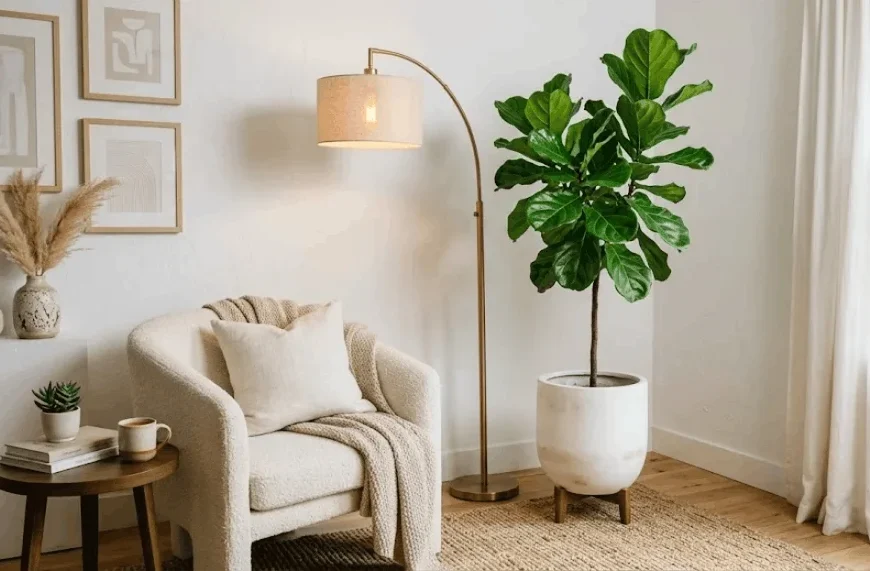
The second problem is what designers call the “single item trap.” You put one plant in a corner and it looks lonely. One lamp and it looks unfinished. Great corners almost always use three layered elements — a tall anchor piece, a mid-height item, and a small decorative detail. Think: tall plant + floor lamp + a ceramic pot or book stack. That combination is what separates a styled corner from a storage dump.
Keep this layering rule in your head as you go through these ideas. It will change everything.
1. Build a Cozy Reading Nook Corner
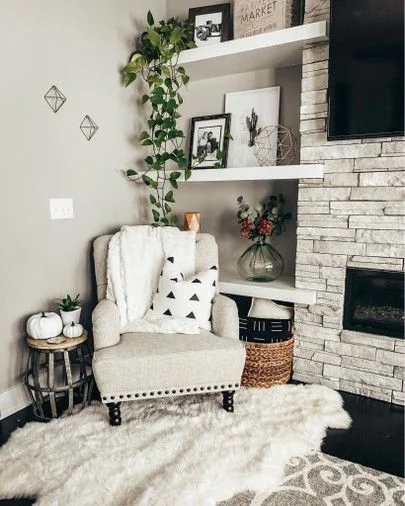
A cozy reading nook corner is hands down the most functional thing you can do with an empty living room corner. And it doesn’t take much to pull it off well.
Start with a comfortable accent chair — something with a bit of personality, not just whatever was on sale. An armchair in a warm tone, a curved velvet seat, or even a simple linen slipper chair works great. Place it at a slight angle into the corner rather than flat against the wall. That diagonal placement instantly makes the corner feel intentional.
What to Add Around the Chair
- A floor lamp directly beside or slightly behind the chair — warm bulb, 2700K color temperature (this detail matters more than people think).
- A small round side table within arm’s reach.
- A low floating shelf or a leaning ladder shelf nearby for books.
The whole setup can cost less than $300 if you shop smart, and it gives the corner a reason to exist. Bonus: if you have a window nearby, position the chair to catch natural light. That small detail makes the nook feel genuinely inviting instead of staged.
2. Use the Floor Lamp as the Anchor Piece
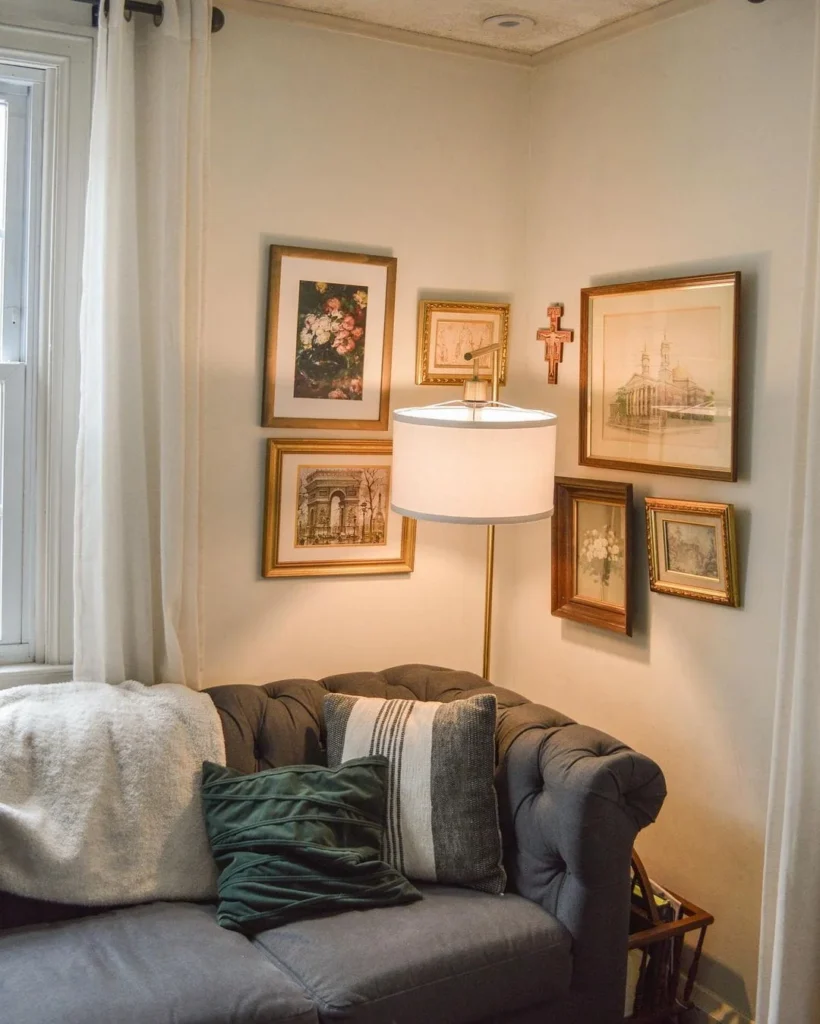
Most people add a floor lamp as an afterthought. Flip that thinking. For living room corner decor, the floor lamp can actually be the anchor — the statement piece everything else builds around.
An arc lamp that sweeps out over a seating area brings drama without taking up floor space. A tripod lamp with a linen shade brings warmth and texture. A sculptural brass floor lamp works beautifully in 2026’s trending aesthetic of layered, tactile, personality-driven interiors.
Floor Lamp Corner Placement Tips
The most common mistake with floor lamp corner placement in the living room is pushing the lamp directly into the corner at a 90-degree angle. Instead, pull it slightly forward — about 6 to 8 inches from the wall — so it casts light into the room rather than just illuminating the wall behind it.
Pair the lamp with something lower nearby: a small plant, a stack of design books, or a ceramic sculpture. That contrast of tall lamp and low object creates visual balance without clutter.
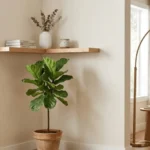
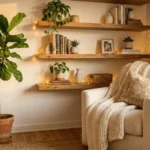
3. Install Floating Corner Shelves
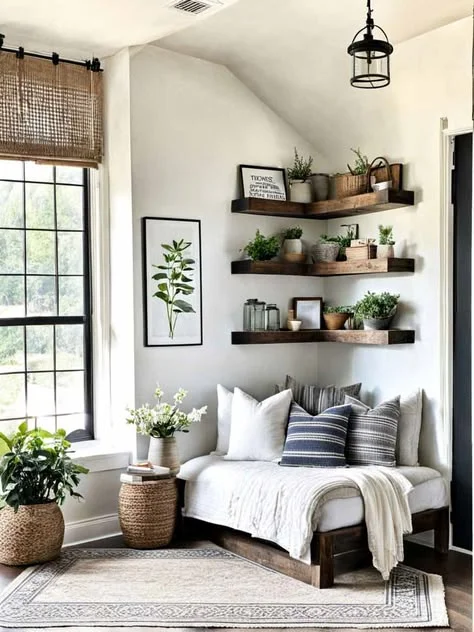
If you want storage and style, floating corner shelves are one of the smartest moves you can make. They use vertical wall space that most people completely ignore and add personality without eating into your floor space.
Floating corner shelves decorating tips that actually work:
- Install them at varying heights rather than evenly spaced — uneven spacing looks more curated and less like IKEA.
- Mix what you display: one shelf with books, one with a small plant and a candle, one with a framed photo or small art print.
- Leave some empty space on each shelf — negative space is not wasted space, it’s breathing room.
- For renters, heavy-duty Command strips rated for 12–16 lbs can hold lightweight corner shelves without drilling.
The key is treating the shelves like a small gallery, not a storage unit. If it starts looking like clutter, pull half of it off. Less always reads better from across the room.
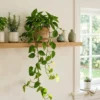
4. Try a Statement Indoor Plant
A tall indoor plant is probably the most popular living room corner decor choice — and for good reason. It adds height, texture, life, and color all at once. The problem is most people pick the wrong plant or style it wrong.
For indoor plant corner display in your living room, go tall and go bold:
- Fiddle Leaf Fig — classic, dramatic, loves bright indirect light.
- Monstera Deliciosa — wide tropical leaves, grows fast, very forgiving.
- Rubber Plant — deep green or burgundy leaves, tolerates lower light.
- Indoor Olive Tree — wispy and light, great for a boho or Mediterranean look.
Put the plant in a pot that actually matches your room. A beautiful plant in a cheap plastic nursery pot loses 80% of its visual impact. Invest in a quality ceramic pot, a woven rattan basket, or a footed planter that suits your style.
If your corner gets very little natural light, go for a high-quality faux plant. A well-made faux fiddle leaf fig looks stunning and requires zero maintenance. For living room corner decor, faux plants have come a long way — today’s versions are almost indistinguishable from the real thing. Pair it with a warm floor lamp nearby to mimic the glow of natural light. Finish the corner with a stylish pot and a small decorative object at the base to make it look completely intentional.
5. Create a Corner Gallery Wall
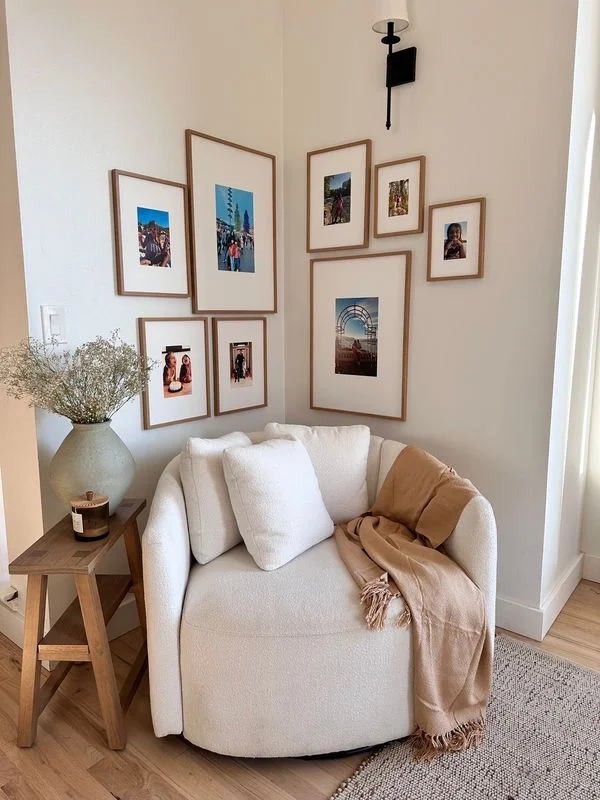
A corner wall art and gallery display is one of those ideas that looks complicated but is actually very forgiving once you start. The corner itself becomes the framework — you’re just filling two walls that already meet at a natural boundary.
For a corner gallery wall that looks intentional:
- Mix frame sizes — at least one large frame (16×20 or bigger) anchors the arrangement.
- Keep frame colors consistent: all black, all white, or all natural wood.
- Wrap artwork across both walls rather than keeping it flat on just one side — that wrap-around effect is what makes it feel like a corner moment, not a wall moment.
- Black-and-white photography, botanical prints, and abstract art all work well here.
You don’t need expensive art for your living room corner decor. Printed photos from your own travels, downloaded prints from free sites like Unsplash, or even pages torn from a beautiful coffee table book (framed properly) all work beautifully.
6. Set Up an Accent Chair Corner
An accent chair corner setup in the living room is different from the reading nook idea — this one is more about adding a seating moment that’s visual and functional, without necessarily committing to a full reading corner.
The accent chair here acts as a style statement. Think about a chair in a contrasting color or texture to your main sofa — a mustard yellow against a grey couch, a cognac leather against a linen sofa, a curved velvet piece against straight-lined furniture.
Place the chair at a 30 to 45-degree angle to the wall. Add a small side table and something tall behind it — either a lamp or a plant. That trio creates a complete corner vignette that looks like it was designed, not assembled randomly. This is honestly one of the simplest rules in living room corner decor that most people never hear about.
The angled chair does most of the heavy lifting — it signals that the corner was thought about, not just filled. Choose a side table that sits just at arm height so it feels functional, not decorative for the sake of it. A small tray on top with a candle, a coaster, and one tiny plant ties the whole vignette together without adding clutter.
7. Add Corner Shelf Ideas for More Storage + Style
The corner bookshelf is a classic for a reason. But in 2026, corner shelf ideas for the living room have gotten much more interesting than the standard corner unit from a furniture store. Today, living room corner decor is less about filling space and more about creating a moment that reflects your personality.
A floor-to-ceiling built-in painted the same color as your wall looks incredibly sophisticated and costs far less than most people assume. Ladder shelves leaning casually into the corner bring that relaxed, collected-over-time feel that no flat-pack unit can replicate. Mix your shelf styling with books, small plants, candles, and one or two personal objects — that combination is what separates a styled corner from a storage wall.
Some options worth considering:
- Floor-to-ceiling built-in corner shelves — the most dramatic option, works in both modern and traditional spaces.
- Ladder shelves leaning into the corner — great for renters, easy to move, looks very intentional.
- A corner console table with a shelf below — gives you display space on top and hidden storage below.
- A small chest of drawers tucked into the corner — practical storage that also acts as a surface for styling.
Paint a built-in bookshelf the same color as your wall for a seamless, sophisticated look. It disappears into the room while still filling the corner beautifully.
8. Small Living Room? Use Vertical Space
If you’re working with a tight corner, the solution is almost always to go up, not out. Small ideas that work are almost always vertical ones.
A tall narrow lamp, a slim ladder shelf, a single tall plant, or stacked floating shelves all draw the eye upward. This is the golden rule of small living room corner decor — make the ceiling feel higher and the room feel less cramped. Avoid low, wide furniture in small corners — it shortens the visual height of the space and makes the room feel smaller, not bigger.
The two-thirds rule is your guide here: your corner element should fill roughly two-thirds of the vertical wall height. In a standard 8-foot ceiling room, that means your tallest piece should hit around 64 inches. Shorter than that and the corner feels unfinished. Taller, and it starts to feel crowded.
9. Go Rustic With Layered Textures
Rustic living room corner styling ideas are having a major moment in 2026. The design world is shifting away from the sterile, beige-everything aesthetic toward something warmer, more tactile, and more personal.
A rustic corner works beautifully with:
- A reclaimed wood ladder shelf or chunky wooden bookcase.
- Woven baskets at floor level (great for throw blankets or magazines).
- Terracotta or stoneware pots for plants.
- Warm Edison-bulb lighting.
- Linen, wool, or macramé textiles nearby.
You don’t need to commit to a full rustic style across your whole room. A corner done in warm wood tones and natural textures can coexist perfectly with a more modern main seating area. Think of it as adding a warm, grounded counterpoint to the room.
10. Plan Your Living Room Corner Furniture Arrangement First
Here’s the thing most decor articles skip entirely: before you buy anything, you need to think about living room corner furniture arrangement at the room level.
Ask yourself: does this corner need to work with the seating area, or stand independently? A corner adjacent to your sofa should flow naturally from it — similar colors, complementary textures. A corner on the opposite side of the room can be a completely different vibe and act as a visual counterpoint.
Also think about traffic flow. A corner near a doorway needs furniture that doesn’t block movement. A corner beside a window benefits from light-loving plants or a reading chair. A dark corner away from windows is best served by a lamp as the anchor piece.
Great living room corner decor starts with a plan, not a shopping cart.
Common Corner Decorating Mistakes to Avoid
Before you start rearranging furniture, here’s what trips most people up:
- One item only — a single plant or lamp always looks unfinished. Layer at least three elements.
- Wrong scale — tiny decor in a big corner or oversized furniture in a small one both look off.
- Ignoring the ceiling — tall corners deserve tall elements that acknowledge the vertical space.
- Over-decorating — a cluttered corner is worse than an empty one. Edit ruthlessly.
- Wrong bulb color — warm white (2700K) makes a corner feel cozy; cool white (5000K) makes it feel clinical.
FAQs: Living Room Corner Decor
Q1: What is the easiest way to decorate a living room corner on a budget?
Start with what you already own. Pull a plant from another room, grab a floor lamp from the bedroom, and stack a few books. The three-element layering rule works regardless of budget. Once you have the arrangement right, upgrade individual pieces over time. A $30 plant in a $20 pot can look stunning in the right corner.
Q2: What should I put in a small living room corner?
Go vertical. A slim floor lamp, a narrow ladder shelf, or a single tall plant fills the space without overwhelming it. Avoid low, wide furniture in small corners — it makes the room feel shorter and more cramped. The goal with small living room corner decor is height, not width.
Q3: How do I make a corner look intentional and styled?
Use at least three layered elements at different heights. A tall anchor piece (lamp or plant), a mid-height item (shelf or side table), and a small decorative detail (candle, ceramic, small framed print). That variation in height is what makes a corner look designed rather than accidental.
Q4: Are floating corner shelves hard to install?
Standard floating shelves require basic drilling. But for renters or anyone avoiding wall damage, heavy-duty Command strips rated for 12–16 lbs can hold lightweight shelves securely. Leaning ladder shelves are another completely no-damage option that look excellent in most styles.
Q5: What plants work best for living room corners?
Tall varieties work best: Fiddle Leaf Fig, Monstera, Rubber Plant, or an indoor Olive Tree. Match the plant to your light conditions first — then worry about aesthetics. If the corner gets very little light, a high-quality faux plant is a genuinely good option and requires zero upkeep.
Conclusion
Corners don’t have to be the forgotten spots in your home. With the right approach to living room corner decor, they become some of the most character-filled parts of your entire space.
Whether you start with a cozy reading nook, a statement plant, floating shelves, or a layered accent chair setup — pick one corner this weekend and commit to the three-element layering rule. Anchor piece. Mid-height item. Small detail. That simple formula works every single time.
You don’t need a big budget or a designer. You just need a plan and a willingness to treat that corner like it matters — because it does.